
Episode 629 · Film year 1939
Ninotchka (1939)
- Special Guest
- Joseph McBride
- Guest Co-Hosts
- Otto Bruno, Robert Bellissimo
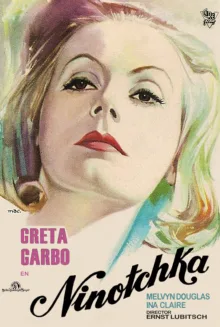
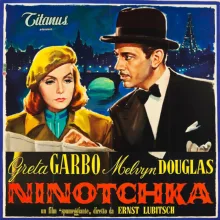
Show notes
Professor Joseph McBride -- author of How Did Lubitsch Do It? (opens in a new tab) and Billy Wilder: Dancing on the Edge (opens in a new tab) -- talks about these two talented men and what happened when they worked together.
Labels: Billy Wilder Ernst Lubitsch Greta Garbo Joseph McBride Melvyn Douglas Otto Bruno Robert Bellissimo
Transcript
An automatic transcript, tidied into paragraphs. It has not been proofread, so names, titles and spellings may be wrong, and it does not say who is speaking.
Show the transcript (about 26,000 words)
Hold your ears, folks. It's show time. People pay good money to see this movie. When they go out to a theater, they want cold sodas of hot popcorn and no monsters in the projection booth.
Everyone pretend podcasting isn't boring. Running off. Go to bed. Little father.
We want to be alone. Please. You like me just a little bit. Your general appearance is not distasteful.
Thank you. The whites of your eyes are clear. Your cornea is excellent. Your corny is terrific.
Love isn't so simple. Ninotchka, Ninoska. Why do doves Bill and cool? Why do snails the coldest of all creatures circle interminably around each other?
Why do Mars fly hundreds of miles to find their mates white of flowers? Slowly open their petals on Inka. Surely you feel some slight symptom of the divine passion. A general wand in the palms of your hands.
A strange happiness in your limbs, opponent of the lips that isn't thirst but something 1000 times more tantalizing, more exalting than thirst. You're very talkative. Welcome to the projection booth. I'm your host, Mike White.
Joining me once again is Mr Otto Bruno. Hey, Mike, how you doing? Hey, Robert Also back in the booth is Mr Robert Bolio. Hello, comrades.
On this episode, we are looking at Ernst Lubitz's 1939 film Nano, written by Charles Brackett, Billy Wilder, Walter Reisch. And based loosely on a story by Milkier Lengel, the film stars Greta Garbo as the titular Ninotchka, a stern Soviet sent to Paris to supervise the sale of jewels seized from a Russian noble woman, Grand Duchess Swana. It's a bit of a pygmalion story. As Ninotchka learns to embrace the decadent ways of the West.
We will be spoiling the film as we go along. So if you don't want anything ruined, turn off the show and come back after you've watched it, we will still be here. So Otto, when was the first time you saw Naka? And what did you think, sir?
Well, you know, I was thinking about that today because as a longtime listener of the projection booth, I know that you always ask that question first. I'm pretty positive that I came the little bit through Wilder because I was a big, I still am a big Billy Wilder fan. And the first Wilder biography I read was a got by a guy named Maurice Zola or Zola. And I remember Wilder praising Lubitz and made and it made me feel like, oh, I got to see some of this guy's films and I can't remember if the first film I saw was it was either Anoka or to be or not to be.
But I loved it the first time I saw it, I think I've seen it now, probably a dozen times or more. I think. I think it's a really, it's one of those great films because it should not really hold up today in some ways when you think about the screenplay, but like, all great films, the more things have changed, the more this film somehow still seems to hold up and is still funny and trenchant. And it's got that trademark wittiness that you don't know if it really comes from Brackett or Wilder or you don't know if it comes from Lubis or in this case, you don't know if it comes from Walter Wright, but you certainly know it when you hear it and personally, I love it when I hear it.
So I love this film. And Robert, how about yourself? This was a first viewing for me. So I watched it about a week and a half ago and then I watched it again last night and in general, I'm very new with Lu B.
So I've, I had only seen shop around the corner and a couple of others before, but it's been such a treat just going through his filmography because he is such a good filmmaker and the writing is just brilliant and it 's, they're so thought provoking at the same time, particularly this one. So when I first saw this, I really enjoyed it and it really, at the same time left me in a good way, perplexed because I thought, well, what is he really getting at here? Are we, is this a total embrace of capitalism and a satire against communism or is it about a satire making fun of both sides of these political views or, you know, with the love story at the center of it?
What are we getting at here? And I found myself the other night after watching it again, not even being able to sleep because I was just wrestling with all of these themes. And sometimes when I, when I've been watching a loop, these lub films, he hits on so many different tones like it to be or to be or not to be for example. And I think how can this work?
But yet he makes it work and that's just Reno of writing and that he particularly at this one and he's so daring and so smart and so emotional and powerful. At the same time, I just loved it. I thought the performances were great. I thought the, I really think it's an underrated.
Never even heard of it before. I look at your list list last year, Mike that you and something attracted me to it. Never even heard of it. So hopefully more people are gonna be talking about this film because I think like auto set, I think it holds up.
Well, it was a really ironic that you guys were just on the rules of the game episode, another film from 1939 and another film that required a title card to go up before it to say, hey, things have changed since we shot this film, we have been plunged into World War and this one, you know, we put on the title card right before release as opposed to with rules of the Game, they put it on several years later when the film was being restored. And, hey, this has nothing to do with World War Two Wink Wink kind of a thing.
And this one, they're very much, hey, this was before World War Two broke out. So we can set this movie in Paris. We can talk about the Russians and Germans not getting along. There's a very pointed moment in here about that.
So, yeah, it's, it's really kind of neat that we're talking about this other 39 film. Also a comedy, you know, I think the Rules of the Game is a little bit more serious but has definite comedic moments. But this one, it's neat because it's not a screwball comedy. I would say it's more of a comedy of manners and it's really got characters that I don't think that I would like them in another circumstance, especially the Melvin Douglas character where he's this kept man and he 's talking with the Duchess Swana at the beginning about this what is it?
A Diamond platinum watch with Diamond numbers on it? And he's just like basically her lap dog. And did I do a good enough job that I get to have this thing. Why didn't you come last night, darling.
I was looking after your interests. What did you win? We can forget horse racing, roulette, everything. Oh, what is a Robert?
You remember the platinum watch with the Diamond numbers? You'll be in a position to give it to me now. Oh, darling, you're so good to me. We can be rich if you say the word.
I had dinner with the Gizo last night. Oh, that's awful. Newspaper. People.
You'd be surprised how many nice people died with the Gizo. What a gruesome proof of the power of the press. Mr Swan. I sold Mr Gizo the idea of publishing your memoirs in the gazette Parisian.
What the life and loves of the Grand Duchess Swana of Russia. No, Leon. But darling, we won't have to worry about our future. If you're willing to raffle off your pa.
He's not somebody that I would find appealing, but he very quickly becomes a compelling person in this and same thing with Ninotchka takes us a while for her to show up in the story. But when she does so cold but so hilarious, just the dourness that Greta Garbo presents. And I think this might one of the few Greta Garbo movies I've seen. I know I saw Queen Christine, but I don't think I've seen too many other Garbo films.
You're right about the Malvin Douglas character. He really is a sleazeball when we are first introduced to him, he throughout the chords of the film, you know, as you describe Garve coming out to the scene as this very do humorless cog in the machine of society, as she says, he has to, he actually changes her and breaks her shell ultimately through laughter. But she changes him because he surprises himself by actually falling in love with a woman as opposed to just using a woman for whatever he can get out of her. And that's kind of the interesting aspect of his transformation is that he kind of his business.
I mean, he was a Gigolo. So his business was love and getting women to fall in love with him and support him. And yet he's changed as a person when lo and behold, he actually falls in love with a woman who wanted nothing to do with him when she first meets him. So that I thought that was pretty funny.
I totally agree with that, which I found so fascinating when those changes come because they seem to both change in that exact same scene in the diner where he falls off his chair. And that's when we begin to see her laughing. And first time, you know, garble laughs the first time we see her crack a smile is in that scene when she, when she cracks up and there's a huge change from him because he's such a con man and a performer and confident with the ladies and expecting that his charms and his wit and his, you know, bourgeois status is gonna win people over and it does not work on this woman and the falling on his ass.
It's interesting that he also starts to laugh because I, and I wondered, I, you know, I think it's open to interpretation. I thought here's this guy who, who seems to only take pleasure in getting his, what he wants from his performances. And here he is where he get, everyone laughs at him when he is not playing, seeing the characters he plays in life. And I thought the fact that he laughs and she's laughing is so interesting because now she's falling for him.
She's beginning to see some good things about the Western capitalism. And he is now starting to let go of all those characters he plays. And then we start to see that great scene with the butler right after where, you know, he finds the Karl Marx book in his diner. So I was fascinated by that just in terms of how their relationship developed and of course how that also played into them, seeing their own politics in a different light as well.
So there's just so much to this film I mean, you could just talk about it endlessly, but that's, that was a major scene for me with that diner scene. I don't know. I don't know if, if that's where you guys found that was a huge turning point. Between that and the champagne which really loosens her as well.
And I'm trying to remember where the revelation that she bought that hat comes in because that's a major thing because that's such a Mark of Western decadence, this ridiculous hat. And I like how hats signal that the three Soviet emissaries are changing because they're wearing those very, you know, Soviet style hats. And then next thing, you know, they're wearing top hats and bowlers. But going back to that whole thing of Melvin Douglas's seduction of Ninotchka, it is so important that he doesn't know who she is and that he hasn't found out that the extra emissary that is being sent along is a woman has no idea that it's her and that he just hears her talking and he's like, oh, I love Russians and just kind of goes from there and then she becomes that challenge to him to make her laugh, to break that facade but not aggressive.
It's not like this is some sort of, he's not some sort of pickup artist like he doesn't start nagging her or anything, you know, he's not, he's a sleaze ball, but he's not that big of a sleazeball. And then, like you said, he changes just as fast as she changes. And yeah, that he's reading marks all of a sudden and then starts talking to his butler. Like, don't you ever, you know, get sick of this?
And he is smitten initially by her total indifference to him and she plays it so well. Just that dourness and I also love that she is making great points too when she comes in and sees her comrades and they're in this luxurious royal suite and she starts talking about, you know, how much does this cost a day? And well, at first she says a week and they're like no a day, 2000 francs a day and she's like a cow costs 2000 francs. If I stay here for a week, that 's seven cows, you know, just to rid that into regular terms.
And then you think about that like for you and me and Otto for just like, well, gosh, I couldn't stay someplace that costs that much and to look around at these rooms and just see how luxurious they are. And plus they get two rooms because she gets the royal suite and then they get put into another room or they take another room to give the Comrade her own space and is a of course, take that big room because it's the only place that has a safe, big enough for all of those jewels and that whole thing too of the jewels being seized by Russia and really the countess, she really has dibs on those jewels.
Those are her jewels passed out to her, from her mother, from her grandmother. But by the end of the film, you're just like, no, no, those belong to the Soviet people. But they were paid for by the blood of the people with. I would disagree a little bit and maybe, might, maybe you agree with Robert, but I disagree.
I don't believe that this film comes down on the side of capitalism. In fact, no, what I love about this film is that is a balance in terms of all this because there is more than enough satire and criticism to go around for communism, capitalism and the aristocracy in this film. And all of them get punctured in this script at some point or another. I mean, when she's, when they meet her at the train station, they ask her how are things in Moscow?
And she says. The last mass trials were a great success. There are going to be fewer but better Russians. That's an amazing laugh line.
That's not funny at all. I mean, you're talking about killing people and it is a, it's a laugh line. So, I mean, that's attacking, you know, that whole Bolshevik idea of the revolution. But the my favorite puncher at capitalist is when you have the middleman jeweler in looking at the jewels and he, yeah, he's low balling them on what he's willing to give them.
And he says something like I'm gonna lose money on it myself. And the wife says, capitalistic methods, they accumulate millions while taking loans after loss. And that literally is the exact same as that, you know what we're told about. What is the thing that the Duchess make some bitchy remark to Greta Garbo in the restaurant when that the, is that what they're wearing in Moscow this year?
And Garbo says, no last year. And she says before the revolution, we wouldn't have been able to wear an off the shoulder gown because we had to cover up the lash marks Homi. And the lady says, yes, we, I don't know why we ever let them use those lashes when their guns were so much more effective. That was great.
I think the great thing about this film is that Angry Side is attack and I, that's why the film is so palatable in a way is because it's not, and it's not, you know, it's not heavy handed because you're not falling on one side. It's not propaganda for any one group, you're attacking all the groups. And of course, then there's that the other grape line in the restaurant when Melvin Douglas sends to her, just laugh or laugh at what she says. Well, it just at the absurdity of all of us.
So, you know, we take ourselves too seriously, which again can go for all of these groups. For me personally, I thought that how it, how perfectly that went with Greta Garbo because I'm not a huge Greta Garbo. And I think everyone takes Greta Garbo a little too seriously. I never saw the big appeal, but that's just me.
But, yeah, that 's what I'd love the balance of this Bill. I hope I didn't give the impression that, that I, that I felt it was falling more, a again for capitalism. But I think that is, well, this is interesting because clearly at the time, people thought that and I wondered why they thought that. And I was really thinking about this and that article I sent both of you guys, apparently this, this in Italy in the late forties, this, but they use the demo, the, so the Christian Democrats used this film as a tool to win an election and beat the Communists and it was banned in Russia.
And the tagline was, I don't know if they promoted it this way, but the guy who came up with the story pitched it to Grada Garba by saying, you know, Communist goes to France and finds that capitalism is not so bad, right? So I thought, OK, and I thought, well, why? Because it was clear to me that it was pretty valid in terms of making fun of communism and capitalism. But I think with when it's, when it's hitting at capitalism, it was it was not that it was more sophisticated or more nuanced or subtle than it was when it was hitting against communism.
But I think with, when it was hitting against communism, it popped out much more. Mainly because of the three Russian guys because they were embracing it so much. They loved France. They, the three maids, the French maids with the cloth every time I was dying when they closed the door and the one woman comes in and you hear them like cheering and then, and then she comes back with three more and then the cheers are even louder.
I was howling. That was much more obvious. Whereas you don't see anyone from France going to Russia later and saying, oh my God, this is amazing that they have to share rooms and share food and rations, right? No one does that.
So I don't know if that, if that was your to me, it just, it's not that he hits you over the head with anything but it just popped out more. So I can see why maybe people think this was hitting more for capitalism and against communism. I don't know what you guys thought even though it's not. But it's.
Interesting because at this time, 1939 before the Soviets and Germans signed a pact of, I think it was a non aggression pact. Obviously, Germany is gonna turn on them and you know, invade them later on much to their mistake. But this is pre red scare. You know, we, this is what are we 22 years after the revolution is taking place where, yeah, there's a lot of fear of the Soviet Union.
There's a lot of sympathy for the Soviet Union. There's a lot of people and I'm talking, especially in Hollywood that were very pro Soviet pro Communist and just really thought that that was the way to go. And I'm not saying that that's wrong or anything, but this is pre mccarthyism. This is Pre Hollywood 10, all of these kind of things.
So at this point in history, it's not OK to like the Soviet Union necessarily, but it 's definitely much more embraced than it would be even five years, seven years, 10 years after this. This is obviously Pre Malta, pre you know, Stalin sitting down with Churchill and FDR and we already know that Stalin isn't the best guy in the world. But we, I don't think we know the horrors of Stalin as much as we would later on and find out a lot more about that. But yeah, it was, it was interesting that we could have jokes about Russians.
You know, this is, this is way before, you know, my father was a Communist type of propaganda movies from the United States where we're just like, oh my God, you know, it's invasion of the body snatchers. They're going to come in and take our freedoms and we're all going to be automatons kind of thing. Like here, the Russians have a sense of humor. Those three Russian delegates are amazing.
Oh my God, they're so funny and they were all regulars of Lu Bitch. And then they became regulars of Wilder as well. I mean, especially Felix Prest who plays probably the most prominent of the three guys. He 's so good.
I love him so much. Sart is, this is the guy who in this film I think of the, he is sort of the most poignant and of course he's, he's, he plays that part in the shop around the corner. Oh, my God. You love him in that film?
No, Brassard is one of my all time is one of my all time favorites. But yeah, the interesting thing though, Robert made a great point about those three guys, which I didn't really think about, but the fact is that those three guys embrace the decadence. She never embraced the decadence, but she will give them in to the point that, oh, maybe there is a play, maybe there is a reason to maybe loosen up a little bit, you know, once she falls in love with Leon and all that. But she, even when she goes back to Russia, she is still sort of for lack of a better term.
Towing the poverty line tells her roommate, oh, you missed a great parade and all this stuff. And she tell them all. Do you know? Don't say that, don't say this.
We're still, you know, she called the parade inspirational. Right. Exactly. So, she, that's what I found so interesting.
She never quite gives over the way, as you say, Robert, the three of those guys. It all I can think of is that they embraced the decadence, they loved the decade of it all. And that was what was different between them and the Naka herself. So, in that sense, that's really an excellent point too is that you're right at this point in time, we weren't really, we weren't really saying too many negative things about the Communists and Hollywood films.
So now I am kind of fascinated that this got through, by the way, I looked it up today that the non aggression pact between Germany and Russia was signed in late August of 1939 and Germany invades Poland on September 1st. So literally like a week after we signed that with Russia, they invaded Poland. And then it would be what, less than a year before they, before they go to war against Russia, I think. And then yes, throughout the war years, we can't say anything negative on film about the Russians or the Chinese because we're, they're both our allies.
When it took a long time for us to say anything bad about Germans. There was a lot of, you know, I think, you know, another Lewis film that we talked about on the show a few years ago to be or not to be. He's one of the first people that is openly saying the Germans are not good. People and that was so daring.
Yeah. Before that, it was very much like, do not say anything about these Germans, which was Wild. Because the European markets meant so much to them financially. One of the things I read, this week was saying that that herself did not really bring in that much money in ticket sales in America, but she did in Europe.
So those foreign sales that, yeah, that's the reason they were. So that's why they dragged their feet with saying anything against the Nazis until like 1939. I think it's the first time when Warner Brothers comes out with the film confessions of a Nazi spy with Edward G Robinson. But the first real attack, believe it or not on Hitler comes from the three.
I believe it. I thought you're gonna say Chaplin, but it's not Chaplin. The three Stooges did parody of Hitler right before Chaplin thing came out two months before theirs was obviously a Columbia short. It wasn't a feature.
But yeah, that's really a great point that this, now that I think about it that they kind of criticized Russia as much as they did in this picture. And of course, the not so funny thing is that all these screenwriters and directors and everybody were kind of told by the studios to make these pro Russian and pro Chinese films during the war. And then these are the exact same people who are then called up in front of or saying, oh, you were spreading this Communist problem in. What a 3 60 unbelievable 1 80.
Actually, I always get those. I mean, imagine just two years prior to this, there was a film with Claudette Colbert and Charles Boyer Tovarich, which is obviously Comrade or friend in Russian based on a play and lit was the director. I mean, we were fine with Russia at this time. We were just, oh yeah, sure.
We'll make this comedy. Russia will make this comedy about this Russian lady Nano and you've got Lubis and Wilder and I'm not sure about Brackett or anybody else, but at least those two have flee from Nazi Germany. They saw the writing on the wall and so many of these Walter Reisch did as well and they all see the handwriting on the wall and it was just like we have to get the heck out of here. And then, you know, there's that nice little Jab against Germany in here when they're trying to find this new Comrade who's coming to join them and they're waiting there on the train platform and they think, oh, it 's this guy and he walks up to somebody and says Heil Hitler and they're like, oh, no, not him my side says that, that, that was really even the way he said, he's like, that's not him.
But that earlier point, you both brought up, which I thought when I was watching this, I thought, oh my God, God, this is why this film is still holds up. So well, when the middle man was negotiating the purchase of the jewels and he talks about, well, we have to make all these loss and we're gonna, it's just gonna be a loss for us. And the other guys say that, you know, again, talking capitalist methods, methods, they, you know, accumulate wealth by by having all these losses. And right now, even in, you know, with inflation, the way it is and in the grocery store chains making, you know, ba even here in Canada, they, the government questioned the CEO S of a number of these grocery chains and that is exactly what they went through their spreadsheet of their quote unquote losses.
We spent this, we spent that this cost this much more at this cost. They went and then they're like, well, look at how much money we're spending. And one of the politicians was like, well, how much profit is too much profit? Like their profit margins are, you can't say that you're, you're losing when you're profits are, are like millions more.
But that's what they do. And so I thought, wow, he really got to the core of that method. And that, and he makes it so funny at the same time, which is the genius of the humor because they're not just comedic bits. They say so much about what the people are thinking or what their personality is even down to the porter when she gets off the train.
And she's why, why does the porter, why does this guy have to take my bag bag? Well, that's his job. And she's like, well, this is a social injustice is, and then he says, well, it depends on the tip. And I thought, you know, here's this guy who had, you know, maybe 56 lines in that, that whole exchange.
And yet we see so much about who he is that he doesn't, you know, he doesn't care about, at least from what we see of him anyways, he's not, you know, political or thinking about, you know, injustices. He's just here to make a good payday. So what, you know, in other words look like, I'm just here for a, for a tip, like which I thought was showed the you know, perhaps you could interpret it as people, people accepting so little and not being, not realizing that they're perhaps being ripped off, which we certainly see with the butler later because that was much, you know, much clearer.
Of course, when, when he's like, you know, this is when we see Leon start to change. And he said, well, don't you think it's unfair that you are, you know, have to wait on B and B my and all this kind of stuff. And then he's like, well, sir, you know, I know you haven't paid me in two months, but the thought of splitting half my bank account just would make me puke or something. And I just thought, you know, again, just the lies that people are fed and they begin to believe that they're not worthy of anything more, even though they're working full time or what have you and we see that all the time.
I mean, people, you know, just unfortunately believe are misguided, right? So I thought he just in even those little supporting role, everybody said so much about who, what they believed in the smallest of parts, which was, again, the writing is just brilliant. I love when she first meets the butler and she says, is this what you call the butler? Good evening.
This man is very old. You shouldn't make him work. He takes good care of that. He looks sad.
Do you whip him? No, but to me a thought makes my mouth water, the. Day will come and you'll be free. Go to bed, little father.
We want to be alone. This is the kind of film where I want, I want to write down all the lines like if, particularly if you're gonna review it. I'm like I wanna mention this. I wanted to mention that.
But then I'm like, well, then I'm just gonna be doing lines. But all the films I watched of Blue b, all of them. I was like, these, you know, these lines are just so smart. And again, if they're not just punch lines, you do have to for a second, think about the joke and then it's that, oh, I see what he's getting at.
I mean, sometimes they're obvious but the ways in which he invites the audience to read between the lines and think about the film a little more is really, it's, I mean, that doesn't exist anymore. Can't think of anyone who even touches that. Now, it 's. Really intelligent and witty and you have to be, first of all, I think in order to write like that, you have to be really well read and keep in mind that these guys were, were well read and were growing up in a world where if you were lucky enough to get an education, it was a classical education.
So you study and the Romans and the philosophy and all this stuff, I mean, these, these were really, yeah, you're never gonna get this kind of writing again. It's which, and it's a shame. But you see so much of this then later on in a lot of the Wilder films that these kind of lines and humor that come up, I mean, even the joke that Leon tells by a. Man comes into a restaurant.
He sits down at the table and he says, waiter bring me a cup of coffee without cream. Five minutes later, the waiter comes back and says, I'm sorry, sir. We have no cream. Can it be without milk?
So you don't think that's funny? No, it seemed funny to me when I first heard it. Maybe the trouble isn't with the joke. Maybe it's with you.
I don't think so. I had to look it up, you know, I was like, cause I was like, well, what does that mean? And I know that we, I share that or I just, just a shout out to Aaron Schuster or Shuster who wrote this great review of this film and he explains it and people have different interpretations about it about what that joke means. So I don't know what you guys thought, but I had a, I had a sort of somewhat of a variation on it but it's not like a cut and dry joke.
I treated it as being that even that was kind of a joke on the different stratospheres of wealth and money, you know. Well, we can't bring it to you without cream. But how about without? It's like, it's always like rich guy going in saying, can I have something without creed?
It's always like that guy in the joke was kind of like Leon in this restaurant where he was now a working man. He was a wealthy guy. He's pretending to be like, oh, this is where I come all the time though. We've never been there and he would go into a place like this and ask with or without creed.
But they would never had creed because they thought it's a working man's place. It's too expensive. So, like, it was all right. If we bring it without milk, I mean, you know, and you, and I took that also, I assume that that was why it was so funny because all the working men behind them, laugh at it.
You know, it's interesting, you know, Wilder said somewhere which I think I'd have the exact quote somewhere about how Rubi oh Michael play. I don't know if you guys saw this in the readings, but all three of these guys Brackett Wilder and Wright wanted Lubis Naim on the film. He, they wanted him credited as a writer and the studio and the writers, Gilbert was just starting at that point would not allow it. But that, but think about what that means.
If you have the three writers who are saying, oh, the director really deserves credit on this too. Oh, yeah. When usually it's the other way around where there's a lot of infighting. And I know Mike, you read the book, the Brother Mankowitz because I listened to the writer on your show because I had her on as well.
And that happened to Joe Mankowitz all the time. There was arguments, you know, they had to take it to the union and then apparently I think the rules used to be, I don't know what it's like now, but you could not direct and be the co writer or the sole writer or something like that. I'm probably not getting that. Exactly.
Right. But anyways, there was always a lot of arguing, but you're right. Otto. Could you imagine, like all these writers being, like, put the director's name on the thing.
And Wild, they said they would come up with an ending and Lubis would look at it and they thought they came up with this great ending for a scene and then he would top it and they did resent it because it was so good. It was a whole thing of one upsmanship for these writers. No, this is funnier. No, this is fun and just, you know, it's not like these modern comedies where, well, well, we'll just leave in every single line, you know, it's, no, you have to pick the best one and that.
And, yeah, exactly. And they're fighting about which joke lands best and that's what we're getting is the, and I know I'm making a pun here a cream of the crop as far as this writing goes. And apparently the stuff in the third act when they go back to Russia, a lot of that was lube and actually pulling from his experience being in Russia because he went there for, I think it was what, 19 days or something before he left and did not have a good time in Russia when he went there. And a lot of the whole things of, you know, multiple people living in the same place and not being able to trust your neighbors.
And just some of these things came from his experience and was able to in inject that into a film, which I thought was great. Apparently the couple he stayed with when he went to Russia did not appreciate in putting next. And you know. Well, I'm not surprised, I'm not surprised about that, but just to backtrack a little bit to the cream joke was I thought the fact that the working class men in the restaurant were laughing because it, I took it also as just a step further that it's a, it's a joke against rich people because I mean, I it's sort of almost like, you know, the cream with the co the black coffee without cream is a rich man's black coffee and black coffee without milk is for lower class or poor.
So I almost envisioned it like here's this, you know, snob goes into like a diner and says put it without cream letting everyone know he's got money and then maybe the waiter as of like dig to say to him, well, we have it without milk buddy. You know. So I thought, yeah. Well, what, what the waiter does this on purpose or not?
It's definitely a joke but of the joke. Definitely the rich guy. It was assumed. Yeah, for sure.
It's funny that Leon even knew that. But he's such because he's like this aristocrat. And what, what, what I also thought was interesting about Leo. Was that off the top?
I thought, well, maybe he's broke because he's talking about getting rich off her memoir. And then I'm like, he's not broke. And I thought again, that was another thing that was so true because, you know, people that I've known who, who have, you know, let's say, not necessarily super wealthy but are, are have a good amount of money. I find they complain about not having money the most.
And so, and I'm, and I'm thinking really like, you're, what do you, what do you, what do you're complaining that about that? You can't get your extra, I don't know, trip this summer or whatever. And it's like, and I thought that was, I wonder if that's what he was getting at because this guy is like, man, you know, Leon's talking about getting rich. I thought, what do you need to?
You're, you're an aristocrat, you've got a butler. You don't work. At least I misread it. His only source of income was her, was the accountant.
Right. Right. That's all the money. But wasn't he an aristocrat?
Wasn't he part of like an aristocrat. The world was filled with broke aristocrats at that point. I say, ok. Yeah, just because you had the title count didn't really make you anything at this point.
Yeah. So maybe he was trying to even con her, like, maybe he knew that she had, you know, that by saying, well, you know, you can get rich because he says rich, he doesn't say rich or I assume she was rich. Maybe she's not rich. I don't know, maybe she wasn't, did they seem rich?
I'm not exactly sure of her. Of Swana income, but she seems very well off. But I think when she fled from Russia from the revolution that she probably took a lot of stuff with her. Just not these jewels.
That's what I assumed. And the fact that he had a butler, I mean, if you have a butler, you gotta have some coin. Yeah, but he had. That he hasn't paid in two months.
So not only was he a account but the guy who first hears that these Russian emissaries are there with her jewels. The waiter, he's a co we visit her Calver that the maid introduces him as cal such and such. He's working as the waiter. So, yeah, Leanne doesn't have any money except, oh.
That's right. That's right. That 's so interesting, isn't it? I mean, there's, I mean, there's so many details in this film, like, kind of like with the rules of the game, not that kind of a film, but it's, you have to see it again and again, because we have a thick plot.
We have so many characters and there's, and there's so, it's, there's so many details, so many points of views that you'd have to see it. I mean, you'd have to see it. It's like we said, you've seen it once, you haven't seen it, you have to have seen it at least twice. So I had a very different experience the second time.
So the third, I'm sure I'll have another different one. I've seen that waiter slash count described as a white Russian before, not the drink, obviously. And I don't think because there's different terms for white Russians and one of them is people that live, not necessarily in Russia, but more in Poland and Moldavia and these kind of things. But I think that in this case, they're talking about the White movement, the whole thing of the anti Communist or anti Bolshevik people that were kind of counter revolutionaries to the revolutionary movement.
And I think that's why a lot of white Russians moved out of Russia is because they were on the wrong side of the revolution, so to speak, you read Russia, right? Yeah. And I don't think it's any coincidence that Leon, the Melvin Douglass character is named Leon as in Leon Trotsky. I think it's very pointed that Leon is a great name for this character.
And of course, you know, I'm sure by reading that, that Douglas was not the original guy, I guess, like William Powell was the original guy. Then he got sick and then Luch went to Cooper tearing it down, which is. Kind of funny because I was getting, I was getting a lot of ball of fire vibes from this. I think it was the whole idea of the funny old men that are trying to put together that slang dictionary really reminded me of the three Russian emissaries, especially.
You've got that fire cracker of Barbara Stanick in there. And then this one, you've got Garbo as the center of their world. I haven't seen that one. What's it called?
Ball of Fire? Yeah, that was Howard Hawks directed. So, just two years after this, I. Love Wild Fire and I love this movie but I did not make that connection.
But that's interesting. What's so interesting about the love story, you know, because she falls for him. She falls in love with him. And it's interesting because I often wonder, I mean, I don't see, especially now Jesus or in such divisive times.
I can't imagine you being a, let's say, a Donald Trump supporter and then, and falling for someone who was a Communist. I mean, I think it would be like, it would be like one in a how that could happen. And it made me wonder about political, you know, people having political differences, whether or not you, I mean, maybe you would be attracted to someone but how far that could go. But what I thought was interesting here was that, I mean, Leon doesn't, he doesn't say anything necessarily where he's, he has strong political views, he's comfortable in the way whereas she clearly does.
But at the, but I felt that the love story was kind of getting at the fact that, you know, he does listen to her and you, that would like not that he becomes a Communist and he does change, you know, he, you with the butler, of course, he's, he 's got the Karl Marx book and everything and she is seeing, you know, some good in this system as well. And so I thought, well, you know, maybe they don't necessarily jump ban bandwagons of their political views but they do listen, they do communicate, they do hear each other out.
And I thought, well, and they, there's some kind of middle ground. I mean, I think the film is ultimately saying maybe we could find some kind of a middle ground here because there's some good things on both sides here and if we just listened more and communicated more and loved each other more, and I think that really could you imagine if we did that today where we'd be, you know, but it 's very, very hard. So, because I thought, well, there's got something to this love story. It's not just a love story plopped in the middle of these, making fun of politics.
I really saw it as embracing something about human communication as well as, you know, let's all hear each other out. We all have different opinions. We don't have to cut each other's heads off because we don't agree. I don't know what you guys thought.
Yeah, I definitely see them learning from each other and kind of coming to a shared appreciation and I think, you know that to be flip about, but I think it's that kind of love conquers all type thing. Just it doesn't matter what your politics are. Once you've got that attraction, you've got that attraction. And they, oh my God, the scene where she's feeling guilty about enjoying herself so much and then they put her up against the wall and shoot her.
Oh, I love, she puts the blind, you know, he puts the blindfold on her and the way he lifts up the blindfold and kisses her and then uses the cork from the champagne as the shot and the way she collapses down to the ground. I, that is a brilliant, brilliant scene so well done. Because of my personality and my personal beliefs. Her lying.
No one can be so happy without being punished is one of my ignorance in the film. Brilliant lying. I felt that Melvin Douglas' Leon was pretty much a polit. I don't think he gave as about politics at all.
He, all he heared about was his own cardinal pleasures. And, you know, that's, that 's it. That's all he was really interested in and he was thrown off by the fat that he fell in love with it. Like he never would have conceived of actually falling in love with anybody because it wouldn't have served his purposes in any way.
And his purposes was just to have a good time. I imagine if he had to choose though, he would, if he had to be put in a political situation where, you know, if you got, if you, if you will you go to Russia or will you stay here if you had to go to Russia? I think, you know, that he certainly, you even, I think people, even if people are not political, they're, they're subconsciously, you know, have views that they may not necessarily be aware of where if they can push, comes to shove, I'm sure he'd be like, well, I'm not embracing communism, but at the same time, I just felt that he, she does get through to him a little bit.
She does, he, you know, she does get the wheel spinning in his mind about what she's all about politically speaking. The post original script. He has a business deal that falls through and he turns to the bottle and becomes a drunker and at the end of the film, he goes back to Russia with her. That was the, that was the initial scream which got completely changed by Rope Brackett Wild Rice.
But that was the original screenplay by Berman. And, oh, I can't remember the other guy's name, Sn Berman and somebody else who were originally assigned the screenplay. And Lubitz came in and he didn't really like what they had. So Lubis went and hired Reich to come in and help him rewrite their Crabb.
And then even after he, they did their draft of it, the two of them did their draft of it. Then he told MD M that he wanted them to borrow on loan from Paramount Brackett. And Wild and Bracken and Wilder came over and according to Billy Wilder, they had everything pretty much done, but they were still having trouble with the setup of the film the 1st 20 minutes. And he said that and Wilder said Lubitz used to do this all the time where he'd go into the toilet and then he'd come out of the toilet and he said, I got it.
He's like he said, it's the hat, the hat, she sees the hat when she comes in. She makes that comment about the hat about who would make their women wear this. It won't be long now comrades because this civilization is so pathetic if this is what they want their women wearing. And then she, of course, the problems to that hat, the formality of it later on.
So really, yeah, that apparently from what the original draft was, what it ended up being was, as we said earlier, a complete 1 80 a totally different story. Well, what was so interesting about that hat was, it wasn't a simple symbol like the top hats were, you know, you and he, and he even has a shot of those guys' hats on the hat Rack and then it dissolves to the top hats and then like, it's such a rich guy's hat. But that, that hat is, she's, she, I mean, from a subjective, obviously, maybe some people would think that is a nice Fancy hat, but that is a really ridiculous hat.
And the fact that she embraces it was is almost like it feels, feels as if, oh, this is an embrace of this capitalistic society. But obviously he's, he's, he's making you think a little bit because you're looking at that and thinking really that hat looks like crap. And so it's like whatever she's embracing, there's something off about this, you know, and if she 's going to truly embrace capitalism, she's gonna be going down a bad road. So I think the fact that he makes that look such like a, such a strange hat is sort of giving that the audience that wink of like something's not right.
That is something, there's some good things changing about her. But she may be going down a bad road here. It's just this, if it 's hard to articulate, but I don't know if that anything about that particular hat stood out to you guys. I thought that was an interesting choice.
Well, that hat, I mean, when we were watching this film again yesterday, my wife's like, that looks like a Duns cap. And I'm like, yeah, I can kind of see that and reading articles about it. There are people that are like that hat wouldn't protect your head. It looks like it's hollow on the top.
If it started to rain, the rain water would just pour right down under your head. You know, it's not meant for being useful. It's not utilitarian. It is completely just fluff.
It is what it is. And apparently Garbo was the one that designed that or sketched it out. Well, then I didn't know, I don't think, yeah, I don't think her buying of the hat in any way. At least for me, the way I read it was not that she fell in love with the hat.
But remember we are shown that she bought the hat in the scene right after the restaurant scene after and she, so I see it as her embracing the frivolousness because I believe she even says something to him when she goes over and she's wearing it and she kind of makes a joke about the hat that she's wearing. So I don't think it was in any way like this hat that she was enamored with and had fallen in love with it, but couldn't admit it. I think it was that she was literally just embracing the criminality of it, all this system.
But you just, in terms of what you mentioned earlier, Mike with, when she talks about how guilty she was about happiness. It's interesting because she doesn't attach guilt to or shame to sex, which I thought was fascinating and there's, she has no taboos around it. I mean, it's just, and she cuts right to the chase because here 's Leon with his deductions and his performances. I mean, people do that generally.
I mean, what if you need something, you know, even asking nicely is a tactic. So, but I mean, he sort of is a little more conscious of his tactics that he uses and he thinks he has to woo and she's just like, no, she's like, you know, you're attractive enough or whatever she says something that, that, that's what she says. But along those lines and she just, it's like, let's cut to the chase, you know. Oh, I'm attracted to you.
You're attracted to me. Let's let's have sex. And I thought that was interesting because yeah, it's, it's a need, it's a human need and just like eating just like drinking and even she even comments about when he asks her, hey, do you want anything to eat. And she said, I don't know, I've added all the calendar calories necessary for the day.
And so, and apparently, the, I forget who was, I don't know if it was Lennon who said, well, you know, about sex, like sex is like drinking of water. It's like me, it's a necessity. And so I just thought that's, that was really empowering that she sort of is in control in a sense of like, you know, I'm not gonna, I'm not gonna let you know, control me or try to win me over or I'm, I see through your sticks. It's like, let's just, let's just cut to the chase.
And I think even today, that would be, that would be hard. I mean, there is such taboos around sex and I, if we saw female characters so casual about sex, I think even today, people would be a little, a little stunned, you know, we're still, it's not, you know, in the sixties and seventies things got a little casual about sex and then the eighties came around and everyone couldn't look at it because she's. Like that at that point. By the, of exactly what you just said, she's still looking at it as a utilitarian exercise for that point long, had not yet entered into it.
Now, later on, I don't know if, if her attitude maybe been quite the same, but at that point, yeah, at that point she's just looking at it the way you would, send, a horse to stud or something. You know, it was not, it had nothing to do with love in that in feet because at that point she had not actually, you know, the wall she'd had up around her had not come down yet. She's guilty about feelings but not guilty about anything that's necessary. Which I thought was interesting because it's like, you know, we, everything that we do has to just be out of necessity.
And so feelings don't matter. So I thought that was really interesting for her, for her character. But at the same time, they don't even portray her Communistic views as totally cold because when she gets drunk at the party, she, you know, and they're hitting the dance for, she's like Frenchman comrades and it's like she's gonna give a speech and he's like, shut the fuck out, you know, what are you gonna say? And then, you know, when she goes to the bathroom and tells all the people working in the powder room to go on strike, I just thought I was so fascinated because she has, she's, it's not, she's just, she's not just falling in line.
She has passionate view about, about what she believes. And again, I thought that was really unique because it looked as though at a certain point it looked as though, oh, she's just going to embrace the West and stay there. And I like how he made it messier and more, it's not gonna be that simple. That's like the Hollywood version.
Well, speaking of the Hollywood version, I'm really glad that Countess Swana is such a good villain in this and I'm so glad that this didn't become in modern romance movies. There's always that moment where there's a misunderstanding between the man and the woman and they break up for a while. But then they realize no, we're actually great for each other and they make it, you know, it's that boy loses girl, boy gets girl back type of thing. And in this one, I was like, oh my God, this could go wrong so easily.
Leon could go to Kawana and say, listen, they've got the jewels in their room. I can sneak in there and get these jewels and we are on easy street or how about I work with this Nano and talk her down off of this price or something. You know, they're turns into trouble, trouble in paradise a little bit, but they don't go that way. And then even when the jewels end up missing, it's count of Swan.
I was like, oh no, I'm the one that took him. You think Leanne took him? No, I'm the one that took them. And there's never that moment of misunderstanding.
There's, there's no time after they get together where he does not love her. And I'm just like, like, wow. And then he's just trying to prove it, prove it, prove it to the point where he's like, I have to get her out of Russia or I want to go to Russia and he can't get into Russia because you've got that Russian official. That's just like, no, no, Visa.
Who's that? George Tobias? I think it is. Yeah, he punches him in the nose.
And I'm like, thank you for saying that because that is the part of screwball comedies that always kind of annoyed me. And I thought the same exact thing last night when I was watching this, that I love the fact that she comes to her the next day and says, oh, lean didn't take them. So and so took them for me because he knew that they were there. You were very careless and leaving everything open and he came in and took them.
It was that Russian again, I was the waiter who was again some count something or other. I don't know. Well, what was interesting there was that she didn't even have to do that because even if she took those jewels and I think NNA says that to her, she like, well, you can't just take it. We're going to trial.
Maybe there's a couple of things there, maybe he's making the audience think it's gonna go with the normal screwball comedy rou. But then he's like, we're not going there and it puts the audience off balance because you can't get ahead of it. You can't predict what's going on. And I just thought, well, she probably did that to be, you know, possibly to humiliate her.
Say, like, look at what I just did. You got, you think you're so cold and controlling and on top of things and I found a way to pull one over on you and I thought again, yeah, you're right. I mean, she, I mean, she is sort of the villain of the piece and what was interesting was that in that same scene, you know, she talks about how she lost all the Russian people and then a little later she talks about, you know, holding this thing up in the court for the next couple of years and I guess she would delay trials or whatever so that, you know, the, so the people in Russia wouldn't have any money.
And I'm like these are your people, you want them to, she clearly, they give you shit. It 's all about winning and then of course winning Leon, you know, sorry, trying to ruin the relationship that she sees happening between Leon and the Naka, which again brilliant. But she even underestimates that the power of that relationship because she goes to make the Naka leave are still mean that Leon will just automatically come back to her. He's going to her that morning to tell her I hate to tell you this, but it's hard for me to believe myself when I've actually fallen in love.
And, you know, this is over between us and even she says, wait a minute, is this some sort of regeneration? Like, are you actually changing as a human being like that surprised her because she had just gone through this, making this plot up to get rid of the NASA and ultimately getting rid of her, didn't change anything because he was still in love with her and she wasn't going to give him back anyway. So she underestimated the power of that relationship on because right, when she really, really is Swana, really capable of loving anything or anyone.
But I don't and I thought it was so interesting because when we first see her, she's looking in a mirror, you know, so it 's that vanity, she's constantly looking at her in mirrors and she's, and she's, again, she can never just be direct everything like that scene with Greta Garbo. I didn't even know what the hell she was talking about and she almost tries to make fun of Greta Garbo by say, acting as if Greta Garbo when known as which she's talking about and I love her. She's like, no, I got it. You gave her a dog or what are you, Bill?
We can be proud of our country. He had a triumph for the dog show. He won another blue ribbon and bit the judge. I bought him the Lovett little sweaters as a reward.
You should see him starting down the street and he looks like a little boulevard. You see, can Dago gave me punchy for my birthday? You must have said for weeks before you found everything his divine is punchy, didn't you lean man? Oh, poor madam Yao.
Here we are talking in mysteries. I'm sure you wonder what it's all about. Not at all. I understand perfectly KD go gave you a dog.
You made it very clear, madam. Oh dear me. I must be losing my fines. That's the genius of his writing.
It's never just explicit. People are never just like, you know, that's where it becomes soap, right? Where everyone, people just say what's exactly on their mind and everyone's exactly explicit with what they mean. And he makes everything passive aggressive and people are like that in life.
We never just say we don't know necessarily know what we feel or what we mean. So some subconscious often. So that really stood out to me just in that scene. I thought, wow.
I love the way that they play around with Garbo and her persona at this point because Garbo, you know, I know. Otto, you said you weren't a big fan of hers. I have only seen that like I said, Queen Queen Christina and then the Joyless Street. And I think maybe that's it.
I think I, and she was huge. You know, she was a major star and I love that her famous line and I don't even know if she actually says I want to be alone or if she says I want to be left alone in Grand Hotel. I want to be alone. We want to be alone.
But one day I shall find myself alone, but I want to be alone and I shall probably be quite alone. Maybe you'd rather be alone. We were afraid. You might be getting pretty lonely.
It seems so no more than usual. I just want to be alone. You want to be alone, Comrade? No, but that became like the play it again, Sam for Greta Garbo.
And in this movie, there 's at least two times where she talks about being alone and especially when there's the butler, there's Melvin Douglas, there's her and she's like, we want to be alone and I'm just like, OK, they're totally playing up into her persona here, which is great. And just, you know, I think you guys mentioned it before. The first time that she talked in movies when sound came in the tag line for the movie was Garbo speaks Garbo Talks and this one, it was Garbo laughs and they had that before they even wrote the script.
They're just like this is how we're going to sell this movie. You know, this was the tagline that inspired a great work of art. And what a laugh too. I mean, her face, I thought she was incredible in this and when, when she's cold she's just dead cold.
And when she laughs, si mean, she just looked like another person. I thought her behavior, it was just night and day and it was so perfect for this part. So again, I could only go by this film. I know.
Otto, you said you weren't too crazy about her, but I'd have to see her other movies because. She was so celebrated. And what the guys who came from Germany too who had worked with her. There can't remember if it was Max Reinhart's son or if it would, might have been re I can't remember who, but one of them even said all of her performances were pretty much one note and this one stands out because of, you know, because of the fact.
And by the way, I don't want us to leave this fashion without mentioning the fact. At least for me, I think it's significant that what changes her is laughter and my earlier about, about this, you know, there was, it sort of reminded you of a ball of fire. And what I thought about last night when I was watching this again because I hadn't seen it in a couple of years was the connection with Sullivan's Travels, which was also 1941. It came two years after this and that of course, is the Great Sturgis film where he's basically Joel Mccray is basically playing Sturgis, this guy who has been making all these hit comedies and he feels like he, his life because all he 's doing is making comedies and he wants to do this important serious work and he goes out to try to meet the real people.
And then what he discovers is that what's most important to those real people and what they need more than anything other than money is laughter is some lift their spirits. And I just think it's, I don't think it's an accident that what transforms her in this even before love is laughter. That's just how I'm reading it. But, oh, I totally agree.
And I know in that, that article I read, he talk, he talks about just in terms of comedy is that, you know, Leon thinks that he's funny because of his stories. And, but really what is funny is the surprise, right? The spontaneous when people are not trying to do something, but when they happen organically and so the fall is funny because it's so surprising. It's not because he fell on his ass.
I mean, it is that from maybe the workers and maybe her to an extent, but also because it was just such a surprise and I thought that was really a really clever point that again, I wouldn't have looked at it that way. And of course, it's the double meaning of he falling and falling in love, which must have been intentional. Yeah, there's a lot of intentionality in here, just like when they go back to Russia and they are meeting back at Ninotchka Place where she lives with at least two other people. Plus they seem to have like a common bathroom.
You've got the guy who's coming through and, you know, and they all have to stop talking when he comes through. But that whole thing of we'll each bring an egg and we'll make an omelet and then poor Bozano, his egg breaks and then to read about, you know, the Soviet, I can't remember the politician's name. It was just like, oh yeah, you can't make an omelet without breaking some eggs. K Kaganovich is the guy's name and I'm just like, OK, well, that, yeah, that, that's good.
Yeah, they're in that case, it's breaking skulls basically. You know, you can't make a new co country without breaking a few skulls, Comrade. Sorry about that. So, like I said, the purges and all this, you know, they were known the fewer but stronger Russians, right?
Fewer but better Russians there. But we, I can't believe we haven't talked about the fourth build person in this movie, Bella, The Ghost. I didn't even recognize him at first who was a for all of, I mean, not, is he even on screen for five minutes? I don't even know.
It's gotta be, it's gotta be at four, at 43 or four minute scene at most. That was Wild. And they, because they talk about this resin and a lot throughout the entire thing. They're just like, you know, oh, you want, you want to talk to the guy that we sent last time?
Well, you're gonna have to talk to his widow, you know, just like resonant is not to be trifled with, but he loves Nano when she comes in and she's done all of this work and has put together this huge report for him. And he's just like, how did you do this so quickly? And she 's like, I do not need sleep. I didn't know if I'm reading too much into this.
But, you know, they were, they could kind of be playing up his, by that time, his, even at that point in 1939 he was Dracula. And what, what is Dracula? Dracula sucks the blood out of you? I figured that's why he was cast a ster.
And so I thought that kind of maybe played it. I mean, I thought that was incredible passing to with that. That scene you mentioned with when they break eggs. That that was another thing about her is that when you see her marching, she seems so sad, but it's not necessarily because she's back in Russia.
It's because she's missing Leon. And even if you see her in the apartment, you know, that one woman I really admired the nightgown she had and she's like, take it, you know, like, and which again was so that Communist, you know, like, I'm not, I'm not attached to possessions. Go ahead and take it. And the same with the omelet, like you mentioned Mike when the, when the one egg broke, she 's like, hey, there's plenty of so even though she's crying at the end and, you know, and we hear it was funny at the same time, we hear one guy snoring, one guy coughing because they're all in the same room again.
It pops out as, oh, look at these ugly Communists, look at the way they live, which is true. But at the same time, she 's not crying about that. She's just crying because he's out of her life. Which man, a nuance is brilliant.
The one joke, I don't know if it lands or not. It feels like the, because I read the screenplay and the movie ends, the three delegates. Aronoff Bojinov and Kolski have gone to Turkey or Constantinople and they're there and they're getting in all these, this trouble and resin and is like, you have to go save these guys again and they've come to find out, oh, Leon's there. And he's the one that helped write a, write The Telegraph about how awful we are being here in Constantinople in order to have this machination happen to send her to them.
It basically the screenplay ends with them coming together and you know that they're gonna be a couple and that's it. In the movie version. They tack on that one little joke at the end where it's their restaurant and it's Bono. Iol Bonoff Kolski, but Kolski name isn't lit up.
And then you see Kolski with a placard saying that he iron off and Bono are being unfair to capital and you get a little, yeah, you get like a little hint of what's that Russian song? Oakar black eyes or whatever it is. I just realized like Russians where that song where I know that song from mostly is from my man Godfrey and like there's another Russian character inside of that and he's singing that song in that movie. So I guess Russians were pretty popular at this time.
But that was, that last shot was just again, it's sometimes, I wonder, well, how could people have at the time? You know, this swung an election in favor of the Christian Democrats. And I'm like, look at that last shot if you don't see that as a big joke against capitalism. I don't, I don't know, I mean, people, people gotta stop looking at things casually.
I think, you know. I thought it just proved that absolute power corrupts. Absolutely, basically. And power is eventually corrupted and it's just gonna keep happening and now here's a strike and who knows what that will lead to.
There's even a joke they made when, because at one point, you know, they're, there's, they're, they're so sad that they're not in Paris anymore and when she gets them to look out the window and he, one of the guys mentioned seeing a bird that must be from France. Just see people look from here. Can you blame them? At least the Mayday parade is over.
That's another thing. It's spring, the same spring we had in Paris just as good. Even the swallows are bad. Really?
Yes, that's right. Maybe it's the same swallow. He's on Paris. Yes, it is.
It is. He must have been in Paris. You can see it in his whole attitude. He just picked up a crumb of our black bat, shook his.
Head and dropped it. It reminds me of the rules of the game a little bit. We just get these, these casual conversations but they're, everything we're hearing is speaks volumes. Every line is a choral memorable line almost falls into the category of a Casablanca or a Godfather or you know, where there so many, so many memorable line this came out in 1939 1939 is one of those banner years for movies.
People still talk about 1939 as being just this Mark of the golden age of Hollywood. You know, Wizard Of Oz. Gone with the wind stage coach, Mr Smith goes to Washington hunchback of Notre Dame Oklahoma kid. You know, just so many movies that we still talk about today.
A lot of people including Greta Garbo were up for Oscars this year and Gone With The Wind just wiped them out. It was one of those years, like Silence of the Lambs or everything and everywhere all at once where it just dominated the Oscars and very few other films won apart from Gone With The Wind. Another year, the Oscars got it all wrong, which is every year. Imagine that.
Imagine that. And after that, it g apparently was the guy who was originally supposed to direct this film and he lost because he wanted to direct all of the Wind. And then as we all know, he got fire from God the Wind because Gable was afraid of Coker who was known as a woman's director that afraid he would give the picture to Lee, which it was gonna be hers. Anyway, Kuker ended up directing, I believe, another great film from 1939 called The Women.
Yeah. So apparently Kar's one big contribution to this film was that he cast Eina Clare as Countess Swana. That was his choice. Apparently one thing that I noticed with the, with the, I mean, this is 39.
So now we're in the when the production Code became so strict post 35. And one thing I noticed was that even in his pre Code films, his kid, he always like, they seem coded, everything was never, nothing was ever direct. Or if you watch other pre Code, they will say sex, they will. It 's blatant and he always like he was pre Code.
He was doing the coded dialogue before the writers had to do it. But that's a part of his genius. That's probably why he succeeded so much. Even after 35.
They all used to say that bitch rather than showing you two plus two equals four and telling you, rather than telling you two plus two equals four, what he did was show you two plus two and then he let the audience add it up in his mind. And Wilder said it was always obvious, but it was not dated outwardly by doing so, not only was every the sub the humor more subtle and everything, but he also made the audience feel smarter. He thought he made them matter about themselves like they were figuring things out even though he set it up.
So they would obviously figure one of my favorite Wilder stories was when he told about the making of the seven year itch, which he made from a Broadway play and in the Broadway play, apparently because I've never seen it done on stage. But in the play, the young girl and the, and the married guy sleep together that one night. And of course Hollywood wouldn't let Wilder do that in the film. And Wilder says in one of the books he's like I tried to do it because, you know, Wilder had in his office, a sign that I would luid do it.
What I wanted to do was I just begged them to let me show a picture of a woman's hair pin. On the bed to get the message across. Right. And they wouldn't let him do it.
But he's like, that's what Bovi would have done because it was so subtle but so obvious and simple, you know. Close the door. He was like the king of the closed doors, right? Two people go into a room, close the door and then wait, wait, wait, you know, we're not saying anything is going on in there but yet they totally are.
Kind of the offscreen action that you're not seeing but you're a man in it. I mean, even, even with the French maids in this film, I mean, I don't think anything happened physically but the one, when the one woman come out, she 's kind of like, she looks a little disheveled shovel. I'm, I was like, what is the hell did they do? I love that.
They, she comes back with the two other cigarette girls and then when comes out and she's like, you have been smoking too much and you've been smoking really? And just, just the way they cheered just like, yeah, like, I was like, they're at a sporting arena, like it was hilarious. Or you see the three made that are the three cigarette girls. They talk about it outside of before they go in saying that if you ring three times, they signed up a French maid and I think it's sr says, let's go call nine times or something.
All right, guys, let's go ahead and take a break and we'll be back with an interview with Joson McBride, the author of the books, Billy Wilder Dancing on the edge. And how did Lubitz do it? And we'll be back with that right after these brief messages. Hello, everyone.
This is Malcolm Mcdowell. I just want to say that this is a request to listeners of the projection booth podcast to become patrons of the show via patreon dot com, patreon dot com slash projection booth. That's pretty simple. I think you can do that.
It's a great show and Mike, he provides hours of great entertainment. So now it's time to give back my little dries settle down and take a listen and have a sip of the old Mac and then you'll be ready for a little of the old in out in out real horror show. Bye bye, Professor McBride. We are talking about Nano, which is kind of a intersection here between two of your subjects.
Obviously, you've written about so many things over the years, but I know we talked at one point about how did Lubitz do it from 2018, your book on him. And then since then you've done Billy Wilder Dancing on the edge from 2021 both published by Columbia University Press. Where were each of them at this point in their careers when Inoa came together, both. Of them were been in a transitional stage.
Lu was considered the leading director in Hollywood for a long time. Although his career was a little shaky in the late thirties because the Code had come into effect in 1934 which affected him strongly because one of his fortes was sexual suggestion in Innuendo. And he developed a style of Ellipsis and subtlety and you had to manage to get a lot of across without being crude or vulgar and the censors, one of them complained. He said, we know what he's saying, but we can't figure out how he's saying it.
So we can't censor it. He elevated American cinema to a much more adult level when he came here in 1922 and revolutionized the romantic comedy with the marriage circle in 1925 was his most influential film. And he helped invent the musical in 1929 with the love parade et cetera. But some of his films, his films did well at the box office was not great because they were considered rather highbrow.
But by the late thirties, the more general kind of romantic comedy was an eclipse to some extent. Because after the Code came in, Lubitz took a hiatus to try to figure out how to of his career. And he in he created more invisible style in the Hollywood method that a lot of filmmakers worked in this invisible mode where you're not supposed to be aware of the camera. His pre Code work, the camera is quite mobile and points to you in different directions and epitome of that style is trouble in paradise.
In 1932 really probably the greatest romantic comedy I ever made. But he does a lot of wizard wizardly tricks with the camera, but always in the service of the story. But then he had to be even more subtle and he came back with Angel in 1937 which is an amazing film because I don't know. It's about a woman, upper class woman played by Marlena Dietrich who is married to an important British statesman and she nips off to Paris to go to what is unmistakably a brothel for kicks and she has a double life and it's like Lubis be in a sense and it's amazing.
He got away with that in 1937 and it's so subtle. It's a masterpiece of subtlety and it's just, it had some problems with the sensors, but he did some reshooting and re cutting and it 's a very good film. But because of the Code, Andrew Cris pointed out that what happened was just showing people having any kind of sexual relations was more difficult even than before. And so they, the screwball comedy came out of that where people express their sexual attraction with hitting each other and pushing each other around and violence.
There's a line in which the psychiatrist and Howard Hog is screwball comedy bringing up baby says the love impulse and man expresses itself in terms of conflict. And that really captures the genre. So Lubitz tried to do that and it was not really congenial for him because he was more gentle and romantic and he did Bluebeard's eighth wife, 1938 Paramount film. And it's a very uncharacteristic film, very unpleasant film.
In my opinion, it's Claude Colbert and Gary Cooper hitting each other, pushing each other around and just, and when you see the trailer, it's shocking that Paramount was saying here's the Livi touch and they're slugging each other and it's extremely unpleasant. Paramount dropped. Libi at that point, the studio was at some shaky financial times in the thirties too. And they just felt that he was or not as some of these other filmmakers such as Capra and Hawks and whatever.
So he was without a project in 1938. Now we get to Billy Wilder. Wilder was a refugee from Hitler. He jokes that Lubitz was one of the talented ones who came voluntarily to America.
He didn't have to flee and he, but Lubitz was also Jewish, but he was in America long before the Nazi regime took power, but Wilder had to flee. He was a screenwriter and journalist in Berlin. And he went to Paris co directed a film. Then he fortunately got into America to work at various studios, Columbia starting and then other ones and, but he was a junior writer and he didn't know the language English.
He had to learn laboriously and it's, he said it's very hard for a writer to write in a new language. Joseph Conrad did it, but it's really hard and the did it. Wyler learned by listening to radio shows, entertainment shows and sports programs and dating American women and reading comics books and all kinds of stuff. And he got very adept in American lingo, but he was struggling as a screenwriter and my book on him, one of the things I wanted to do is look at all this work that he did in both Germany and America in his formative period before he became a director again.
In 1942 most people hadn't looked at these films or written about them, but they're an odd lot. Partly he was stereotyped as a middle European operetta kind of writer, which is, it's, it's funny when you look at his body of work, he was involved in a lot of musicals or semi musicals and you don't think of him as director of musicals. He did one flat out musical Emperor Waltz, which is his oddest film, but he worked on various European confections for the studios and then he worked on some other kinds of shows, poor things, but often he was rewritten or had to work with other collaborators.
And most of the films are not particularly good. And there's one called Champagne Waltz, which is interesting because it has the Billy Wilder, recognizable male character played by Fred mcmurray, who's a kind of wise cracking American jazz musician who's in Vienna and he's competing with the old Vietnamese tradition of Strauss Waltzes and things and it's a very clever film, but it was rewritten and Wilder was very disappointed by that, but he was hooked up at Paramount by a guy named Manny Wolfe, who was their story editor, who was a very smart guy, obviously because he hooked Wilder up with Charles Brackett.
Brackett was a senior writer. He had been a writer for the New Yorker and he was part of the Algonquin Roundtable, a very conservative man. He was a Republican. He was a bank president, came from a wealthy family and, but he was a man from the literary world and he was of course highly fluent in English, which Wilder wasn't so Wilder leaned on him for that.
Wilder was very clever with the language, but he always felt he needed a collaborator. Even in later years, he worked with Brackett for a long time. And then he worked with I a all time and after a period where he worked or his pupil, but he felt more comfortable with collaborator. So Brackett helped him a lot.
And they were teamed, they didn't get along very well. They were seen as the quote happiest couple in Hollywood, which was an illusion because when Brackett's diaries came out a few years ago, they were full of animosity toward Wilder. From the very beginning. He was fascinated by Wilder, but he also didn't like certain abrasive aspects of his personality and some of the, his leftist point of view, et cetera.
So they were an odd couple and they sparred and Brackett keeps saying I want to get out of this relationship and it's like a bad marriage where you keep threatening to leave and you never get out. And they finally broke up over the hearings in 1947 where Wilder was defending very bravely for an immigrant, the civil rights of blacklisted people and writers who defended their right to freedom of expression and Brackett was against those writers and they had some furious arguments and decided not to work together again.
But they did one more film after they were working on a foreign affair at the time. And then they did Sunset Boulevard and broke up. But so in 1937 Manny Wolf sent them in to see Lubis and Lubis was looking for kind of fresher writers and he knew Wilder a little bit and WIlder Lubis didn't like to work with Germans a lot because he was German and he felt that he didn't want to be typecast as working exclusively with people his own background. So he was not eager to hire Wilder, but they got along.
They clicked and this meeting went well and they wrote Blue Beard sas wife for him. And as I said, it wasn't what I think is a good Lubis film. It has Wilder 's brash point of view very clearly in the sort of brace of wisecracking style. I think Wilder, part of what I say in my book is he used the closet romantic.
He was much more romantic than people realized because he had this era of being this tough guy wisecracking, cynical. They use the word cynical a lot with Wilder. And one time I unthinkingly used it with him. And I said something about beneath your cynicism is romanticism.
And he said, if I'm cynical, what adjective do you have for pecking pop pictures? And he said every play by Ibson was cynical. Every play by Sternberg was cynical. And I said, I don't mean to stigmatize you with that word.
So one thing I do in my book is to try to show that he was Diamond called a disappointed romantic that he had been hurt a lot. He was a Jewish outsider and Anti Semitic Vienna and then Berlin and persecuted and came to America. So he was, he developed a veneer for self protection. But underneath it was romantic and it came out in his later work very strongly.
But so then we have Ok. It's, they're working well with Lu and the came to be through a weird series of musical chairs. Originally George Kor was going to direct this film. Gottfried Reinhart started the project.
He was Max Reinhart's son. Max was the great theater director in Europe who Lubitz had worked for. But Max Reinhardt wanted to do a comedy with Garbo at MGM and they were going to sell it with the slogan. Garbo laughs, One of the most famous ad lines ever.
She had actually laughed in a couple of films before, but she was known for her tragedy and he had a whole series of writers. There were 10 writers who worked on this project before Brackett and Wilder came in and some of the people contributed certain elements that wound up in the film, but the script was not coming together. Qar left to do Gone with the Wind and then he got fired from that and Lubis was going to do the women at MGM from the Claire Booth loose play. And then when Kuker was fired, he took over the women and Lu wanted to do the shop around the corner, which is this beautiful film he made in 1940 for MGM.
Small scale warm human comedy about people working at a shop in Budapest. And oddly enough, he couldn't get it made at studios. They were, they thought it was too gentle for that, too unglamorous for that period. So he can, he contrived a way to do it by going to MGM and saying, I'll do na na if I could also do shop around the corner as a kind of lower budget film.
And that's what happened. And so it wound up being the perfect director for the perfect project. And Livi had always wanted to work with Garbo and they just hadn't found a project and she was, she said, while she was working with him, she said he's the first and only great director I've had at Hollywood, which is quite a compliment. And so Brackett and Wilder worked with Levitch and Walter Reisch, who is a very good screenwriter who Wilder had worked with back in Berlin.
And they wrote one, it was really one of the greatest screenplays ever written. And Brackett and Wilder both said later that they thought Lubis deserved writing credit on this film. And they actually petitioned the three writers, petitioned the Writers Guild then called the Screenwriters Guild to actually give Libit one of the writing credits. And the gall turned it down because they were, they had just been formed and one of their big issues was credit because the studios were prone to give credit to producers and directors and the brother-in-law, the producer or whatever.
And so the Guild was very strict about giving credit to directors. So they said no, but both Brackett and Wilder said the truth be known. Luch always collaborated on his films and The Wilder actually said, he's the greatest writer who ever lived. So we can talk all about that process.
But I wanted to bring your listeners up to how did this film come to be? And actually, now to just finish your question, this catapulted Billy Wilder into the big time, both this and Bluebird's ex-wife, but especially this one because here's a writer who had just come to Hollywood six years before. But by 1939 he's writing a classic film that was a big head and got a lot of recognition and made him an important screenwriter, Levitch was back on track making very popular film and his kind of film and he had worked out how to do it in the New Hollywood of the Code and it's very sexy but extremely subtle and, but it's also very, as Billy Wilder said, do Luch touch.
He said the village idiot can figure it out, but it makes you feel very intelligent because it 's clear that you put your brain to work and Lubis say one plus one equals 42 plus two equals four. But Wilder said, Luch just gave you two plus two and you have to add it up yourself. And he said, if you do that, they will love you for it. He had become at the top rank of directors again and it's one of his great masterpieces.
So it really put them both in the highest rank again. And helped both of their careers a lot that, like they had a really good working relationship. Yeah, Wilder and Libit became good friends. They didn't work together again after Naka, partly because Wilder was at Paramount and Luch had split with Paramount.
But Wilder even moved in with Luch for a while. Lubis had a serious heart attack. In 1943 his health started to fail and Lube WIlder moved in with him and took care of him and it was a real father, son, mentor mentee relationship and tremendous respect. And Wilder has this famous sign on his wall.
Saul Steinberg did this beautiful calligraphy. How would Lubis do it? He had that sign on his wall throughout his later career. He would always, he set off and try to think how not always, he didn't try to imitate Levitch as much as two things that Levi would approve of.
He said, because it's very hard to imitate Levitch even if you try. He said it's, it'll be like Levitch, but it'll never be Luch. It's a certain secret formula that Levi had. That was just wonderful.
Are you aware of what Levitch brought to the screenplay versus what the other writers had put in there already? Luch. Most people didn't know this. He was a Russian citizen when he was born because his father had fled Russia because they were having programs against Jews.
And he ironically felt that Berlin was more hospitable to Jews and Levi's parents died before Hitler took over. But the whole neighborhood where Lubis came from was all the Jews were killed either there in concentration camps. But so Lubitz was a Russian citizen. And so that exempted him from service in the Great War and saved his life.
And we're glad he didn't become cannon fodder like so many German soldiers and people from other countries that so he instead he worked in the theater and films and became a director during that period and a movie star. But so when he has a Russian commissar played by Garbo, coming to Paris to sell jewels, that the czarist regime had these very valuable jewels and the Soviets needed money. And so Levi could really relate to a Russian person. Although the gag, a lot of the humor and the comes from the fact that she has no sense of humor at the beginning and then she learns under the total of this kind of worthless Parisian Gigolo played by Melvin Douglas who is very much a Billy Wilder kind of guy.
Wilder had worked as a tea dancer. They called it in Berlin dancing with ladies for tips at night hotels. He wrote a great series called Waiter Bring Me a Dancer, which kind of made him famous in Berlin journalism. It would make a great movie.
It's all about what it's like to have that job and it's like being a Gila. But he makes a point of saying he never had sex with these women. But he told me the series was semi fictional and semi authentic, but it was wonderfully written. But anyway, Lubis also had gone to Russia Soviet Union for his honeymoon with his second wife.
He seems like maybe an odd place to go for your honeymoon in 1936 to Stalin's Russia. And he was horrified by what he found in Stalin's Russia and he was a liberal. But unlike a lot of people on the left liberal side in Hollywood, he was under no illusions about Stalin's brutality. And he was horrified when you cut the trip short.
And Levi was said to have modeled Dana's initially humorless character as a slavish Communist. I like on the actress and writer EOR Von Ween Heim, who we visited in Moscow in as she was called, was the wife of Gustav Vhe who had acted for Livi and Cole Hazel's daughters and Romeo and Juliet, they'd been living in Moscow since 1933 as dedicated adherence to communism. And when finally caught up with NNA in the 19 seventies, she proved its validity. But denouncing that film in her memoirs is quote, a counter revolutionary concoction.
So he had found his model for Nana and Paris was the place that he loved. And there was a famous quote from him. He says I've been to Paris France and I've been to Paris Paramount and I prefer Paris Paramount. Paris Paramount was the concoction the artificial studio creation.
And he loved making films set in Europe. Most of his films made in America are actually set in Europe, partly because he could get away with more because the audience would think, oh, those naughty Europeans, they were more sophisticated about sex and adultery and more cosmopolitan. And so he could live for setting. So it's, you can see his trademark all over that.
And, but then you have Billy Wilder coming along Wilder and Brackett brought, I think a lot of the topical political satire Luch late in his life was assessing his work. He said for satire, I've never done anything better than the political accommodation and political satire and a love story. So you mentioned that Lubis actually started out life as a Russian citizen much like Naka herself in 1935. Long after he had come to America, the Nazis stripped Jewish Berliners of their German citizenship.
He had become a German citizen over the years and he didn't become an American citizen until 1936. And that was probably triggered by what happened with the Nazis and he had come to America in 1922. So he had this affinity with Russia. And the reason he went to Russia on his second honeymoon was his second wife was Russian ancestry too.
And but he was really horrified by what he saw there in Stalin's Russia, their cruelty and the privation, Nana has some very funny and sharp gags about how everybody has to live in one apartment and there's no privacy and, but the film, what the film does satirizes both sides of the ideological divide in somewhat even handed way, which is quite remarkable gives the best arguments for both NASA and Leon Frank Capra, as I've mentioned before said that you should give your villains the best arguments you can give them.
And NASA's not really a villain, but she's a humorless foil at the beginning. And she has good arguments about the achievements of the Soviet Union and about the cruelty of the czarist regime. And there's the exiled white Russian aristocrat who's living in Paris, very cruel. She yearns for the good old days where they could whip peasants and that kind of thing.
And so it revolves around selling the diamonds that they took from the white Russian woman originally in the Pre Lubis run up to Nana originally in the Pre Lubis version of NASA 's, they were working on it. She came to Paris to sell a nickel mine and Walter Reisch, one of the three credited screenwriters changed it to diamonds. And Lubis liked that because he said you can photograph them sparkling on the tits of a woman which is very, very Libi and racy, but also very good visual thing. It's if you have a nickel mine, you have to envision it in your head and it's not as interesting as diamonds or an object.
It's a macguffin in the Hitchcock an interim. The countess is very cruel and NASA is not that cruel and, but she's tough. She talks about how she killed a young man during the violent period. And so she gives good arguments for Soviet Russia.
But also Levi and Wilder highlight the bad aspects of stalinism in ways that were very unusual for American films back then when there was still a lot of sympathy or confusion that blinded people to the crimes of Stalin. Billy Wilder created many of the anti Soviet gags. And he was the kind of guy who he's seen 123, he loved to mock both sides. Scouters shot.
He didn't spare anybody in his political satire. And he was asked Michelle Sima if he worried about that with 102 3. And he said now when the revolution comes, they'll line me up against a solo fae wall and shoot me and that's fine with me. He liked to be attacked from all sides.
But many of the anti Soviet gags in the film came from Billy Wilder who was equal opportunity satirist. He attacked all sides in 123. For example, it's a similar film has some affinities with Nana. But he was concerned as liberal leftist that he had offended the US sr and he said to Life Magazine in 1944 he said, I've always wanted to see Odessa and I'm now I'm afraid we never will.
And his writing partner Charles Brackett says I can last a long time without seeing Odessa and Brackett that's revealing because Brackett was a right wing conservative and that's the source of much of the antagonism between them Wilder, as I mentioned was anti Huac when they had their big hearings in the fall of 47 against Hollywood and he was furious at one point. He said, I spit upon the Congress of the United States, which is a strong statement. He was immigrant, you know, he loved America, love the freedom and democracy we had here.
He said the best thing about America was the Supreme Court and today he would have a different view. I'm sure I Brackett had a bitter argument. That was the cause of their split because Brackett was defending Huac. Now Lubis at the very end of his life was criticizing hi at a party.
They were talking and he was very against the red scare even though he was, he had pulled out of the Hollywood anti Nazi League for a while after coming back from Russia because he didn't want to be involved in anything that supported Stalinist Russia at all. Even though of course, he was strongly anti Nazi and helped a lot of refugees come to Hollywood. And, but no, so the film gives both sides criticisms and compliments and Leon defends capitalism in a way that is appealing. But also, Nana says that he's the product of a doomed culture.
And we can see what she's talking about that. He's a frivolous playboy living off the lap of the land. He's also defending luxury, which is very little. She and Luch loves luxury and good living.
And when the NASA changes clothing from her severe commissars outfit to a gown, it 's very touching because she feels awkward. It's like a girl going to her first prom. And, but there's a certain masquerade theme that runs through Levi's work in Wilder too. And that comes from being in exile, exiles by their very nature have to masquerade in a new culture.
They have to speak a different language and learn different mores and wear different clothes. And it's, that's a big theme in both men's work. But so the film leans more toward the capitalist side, which is not surprising. But at the end of the film, NASA is in exile, she goes to Istanbul and there's a funny Cota where she and the three connoisseurs start a Russian restaurant in Istanbul and Leon is there too.
And so she's left Russia behind. But her last line in the film in close up is no one shall say Nanako is a bad Russian. So he's not having her demean her country particularly even as she says, things that are, that make it sound bad. So it's a fine balance and that 's a good sign of sophisticated satire I think.
And Levitch pulls it off. He said it was his best work as satire in his career. He blended political satire and romantic comedy, which he felt was a difficult thing to do. This marked a huge step for Wilder just working with Luch.
Put him in the top class Hollywood screenwriters, but he received his first Oscar nomination for this film. He and Racket and Reich, another thing about Brackett and Wilder, I think that Ninotchka is a subtle satire of Charles Brackett by Billy Wilder because she's conservative compared to Leon in some ways. And she's humorless Brackett, which of course, but it's like a foreign affair where Wilder is mocking the right wing congresswoman played by Jean Arthur. I think there's similarity between those two characters and they're both sly parodies of his writing partner and also Wilder's first wife, Judith Kaus Balkin was conservative.
And so he was aware of what like she left with a conservative woman. But there 's a wonderful story. Let me just read this quote Wilder remembered on the way back from the Long Beach preview of Nano in a studio limousine with the screenwriters and M GM executives. The director was reading aloud the audience preview cards for out and here's Wilder speaking very good, brilliant 20 cards.
But when he comes to the 21st card, he starts laughing as hard as I ever laugh and we say, what is it? He keeps the cards to himself. He does not let anybody even look. Then finally he calms down a little and starts reading.
And what he read was I have the card. It said, quote, great picture funniest film I ever saw. I laughed so hard. I peed in my girlfriend's hands.
That 's, that's a wonderful coda to the whole story of. No. Yeah, there are so many good lines in there. The whole thing about the fewer Russians but better Russians.
Yeah, that's an important comment to talk about that line became somewhat controversial later. But Brackett in 1952 he was defending the film's political viewpoint during the mccarthy era and he wrote, this happens to be a line tossed into the script by Ernst Lubis. But I sprang to his defense with Artur as with Billy Wilder, could a single sentence better compressed in human Russian point of view. Could that point of view be held up to ridicule it in a healthier way.
One of the first things she says when asked about conditions in her country, she says the last mass trials were a great success. There are going to be fewer but better Russians. So people assumed that Billy Wilder wrote that, but he didn't. Lewis had a keen political sense and a lot of people think Lubis was alit, he didn't take a lot of political stances in his daily life.
But one of the critic wrote that this film is part of a trilogy of political films he made during the thirties. He said trouble in paradise is about the crisis of capitalism. And then the two competing solutions to that crisis were communism and Nazism. And he made his comment about communism versus capitalism.
And then, and then to be or not to be, he made a film about fascism. And so the film is very political and Wilder, no doubt supplied a lot of the political moxie to this story. I'll just give credit to for another writer. The person who actually triggered this project was a Hungarian dramatist and Male Langel.
And when Gottfried Reinhardt initiated the project at MGM, he had a three sentence pitch by Langel Russian girl saturated with Bols Bolshevik ideals goes to fearful capitalistic monopolistic Paris. She meets romance and has an uproarious good time capitalism, not so bad after all. And that is really the tone of the film and that's what it's about. And Leo also supplied the story material for three other major Libi films, Forbidden Paradise in the silent period, which is a marvelous political satire Angel, which is based on a play that he wrote and to be or not to be, which was a story that he had originated.
So this man who was a dramatist and screenwriter, Hungarian deserves a lot of credit for Levi's work. And Levi was great working as writers, he revered them and his films are writers, films. The not as I write in my book is a writer's film as much as the director's film, but there's nothing wrong with that. And some people, I mistakenly thought that the direction is not very accomplished or spectacular, but it's actually very subtle when you look at the camera work is full of a lot of subtle dolly shots and moving camera shots and it's just very non showy but beautiful.
Perfect Truffaut once said, if you could say there's useless shot in any movie film, I call you a liar. Nothing in there for purposes of just pure decoration. It's all done for a purpose. Now, I had read that Melki had written a stage play that this was based on, is there any truth to that or was it just the three?
You may be thinking of forbidden paradise, which is based on a play era called Dear and Angel, which is based on a play by the of that name. But this was the pitch that he sold to MGM. Just the story idea that he had. But it all starts with a script and that's the genius of the writer.
Yeah. And as far as direction, there are some great visual jokes in the movie. The whole thing of Melvin Douglas taking the elevator to the top of the Eiffel Tower as she starts up the stairss and that she actually beats him to the top. I love that.
Yeah. And that's a wonderful setting for a love story. And that was in the script before Rack and Wilder came along. But they was roughed out that they go to the Eiffel Towers.
She's going to study it as a feat of great engineering and that 's the humor of the thing she's talking about the mechanical nature and he's talking about love and they're talking across purposes and they both find common ground. But what to give an example of what Luch contributed, Billy Wilder often pointed this out. They worked for a long time. He spent weeks trying to figure out how to dramatize Naka being converted from just a really strict Communist to somebody who likes luxury and capitalistic trappings.
And they were struggling, they couldn't figure it out. So he said, Livi one time went to the bathroom there at his house and he came out after a while. He said, boys, I've got it. It's the hat.
And he said, so if you remember in the film, early in the film, when Nana goes to the Fancy hotel in Paris, there's this silly looking women's hat, sort of a conical hat looks like a cone head kind of thing in a glass case. And she stops and she says, what 's that? And one of the comics are guys who she's with says, what's a hat Comrade? That's a, what is that?
And she shakes her head and she says, what kind of a civilization would allow women to put things like that and on their heads. And she says it won't be long now comrades. And then there's a second scene later when she's alone walking through the lobby and she just stops and looks at the hat quizzically, but in a little more kind of mellow way. And then the combination is Wilder called it the famous Libi key scene.
She goes into her suite at the hotel, she locks the door and she goes down under knees and in this dresser and she pulls out the hat, she's bought the hat. We never see her, buy the hat. That's the kind of Lu Bitch in the Ellipsis. And she's sitting there looking at herself, she puts the hat on her head and she looks in a mirror and she looks very silly and it's funny and sad and it's a German language interview with WIlder Volcker Schlondorff did a very good interview and in their Wilder comments in German and we know this woman has been in Schlondorff, Ens Besso Stick, which means corrupted or damaged.
And Wilder doesn't disagree. And in another interview, he says she's fallen into the trap of capitalism and we know where we're going from there. And I think that shows a subtle but important difference between Levi and Wilder that Wilder is fascinated with people being corrupted and the kind of complex process of innocent being corrupted is in some ways, a good thing in his view, in some ways, it's damaging thing. It can go either way and it's very complex and that's the subject matter of most of his films actually.
But in this film, he sees her as being corrupted. Whereas Lubitz loves luxury. If you look at his work all the way through. His parents ran a women's tailor shop in Berlin.
And he started out being a shop apprentice and his early films were comical films where he played an inept shop apprentice in his luxury clothing shops. And so his films are very attentive to beautiful costumes, beautiful settings. Paris Paramount to him was a luxurious place that you would love to live in. And so there's this subtle conflict, but that's what this film is about.
It's about corruption versus discovery of love and romance. And also important to realize the Naka is an ideologue and humorless for quite a while. But she's not a prude, she's willing to have sex and she sees sex though as a very natural mechanical function, divorced from romance is great love scene in the film where she comes to see Melvin Douglas wearing the silly hat and she looks very embarrassed and it's a very sweet scene and they have this scene where they start kissing and it's beautifully done tender scene.
But he's talking about love. And it's ironic that this Gigolo is talking about love and romance and she's putting it all in mechanical terms, but he's kissing her and she's getting sexually excited and it's just beautiful. It's just lovely, but it's still, she hasn't loosened up. Totally.
Another great scene is when she laughs for the first time in the film, it's just wonderful where they go to a worker's bistro is where she likes to eat lunch. And Melvin Douglas follows her there and he pretends that he eats there all the time, which is a lie. And, but the proprietor comes over and says, oh, great to see a new customer. So he should tell her story.
But before that, he's waving to all these rough working guys and they're oh, hello. So anyway, he's sitting with her and she's just mechanically eating her vegetables. And when she orders, I forgot if it's beets and carrots or something like that. And the guy has a great line.
He says, madam, this is a restaurant, not a meadow and, but she's eating this stuff. He's trying to desperately make her laugh. So he's telling her some bad jokes and like a kind of car Vaudevillian and some of them are not funny and some of them he screws up and it's just a wonderful scene. And finally he gets angry that she's not laughing and he leans back in his chair and he's scolding her and the chair slips and he does a big crap fall and it shows all these guys laughing at him and in the script, it says there's a moment where she looks and then she breaks into laughter.
But I think another subtle but beautiful touch is Lewis and his editor Jane Roo cut when she's in the midst of laughing, there 's no pause. She's just roaring with laughter. It's just one of the moments that sort of shrills the soul as somebody said about the ending of Chapin City Lights. It's one of the great movie moments as she's laughing.
But the topper Wilder said, Luba always topped his jokes. Melvin Douglas doesn't think it's funny because he's the butt of the joke. He's on the floor and he has to get up and he's made ridiculous. And so he sits with her and then he finally laughs and then they both roar with laughter.
It's a wonderful scene. And from that point on, she's a changed different person for the better. And he is too. He is too.
He learns a lot from her. When was the first time you met Billy Wilder in 1974? I was a young reporter in Riverside California. I've been writing about him since I guess 19 seventies is the first time I wrote about him, Michael.
We and I were writing for film Quarterly and we reviewed The Private Life of Sherlock Holmes, which I think is a great late Wilder film. And we defended that from American critics didn't appreciate it because it was very romantic when American films became very sexually free and the language loosened up everything you could do anything. Almost Wilder went the opposite direction and counterintuitively, he went into the more romantic direction and people couldn't relate to that. And in the early seventies, if somebody called you romantic, they were insulting you.
This, this is the period of free love and I was supposed to be divorced from romance and Wilder. His whole body of work is just the scene. I mentioned that sex and romance should not be separated. He's critical of people who try to do that.
And so then we reviewed Avanti and I Love Avanti. It's possibly my favorite Wilder film that was dismissed in America's old fashioned romantic film. It's the most Lubis film he ever did. He kept trying to do Lubis and with various various degrees of success.
But Avante is true, I believe. But so I went in 1974 he was shooting the front page based on the Ben E Charles macarthur newspaper play, which I loved and I went the chance to go on the set and watch him shoot for a day, which was wonderful. And I interviewed him and I interviewed Il Diamond and Jack Leman Walder mouth out the cameraman and the producer and it was just terrific and I've saved my notes so that I published the interview in sight and sound and the Boston real paper. But I had a lot more material that I saved and made use of in my book.
And then I interviewed him numerous times over the years and I did a big interview with him with Todd mccarthy in the 19 eighties for film comment over a two day period, we did a long interview a lot about his later work. And then I gave him the career achievement award from the Los Angeles Film Critics Association in 1995 which I had advocated for. And I sat with him and Jack Lemon and gave the speech honoring him. And when he died, I rewrote that for a tribute in the Writers Guild magazine.
Put that on the cover. Thank you, Mr Wilder. Recall it. And Billy Wilder's widow, Audrey was so touched by that, that by the writers' Guild paying tribute to him as they well, should that?
She gave all his scripts to the Writers Guild Library. So I got to know him quite well. And it was a wonderful interviewee, former newspaper guy. It's one reason we got along because old newspaper guys got along.
And even when I was 27 I was an old newspaper guy. I've been doing this since 1960 it's like when I met Samuel Fuller, he and I clicked immediately to talk the same language and I knew Billy Wilder 's work really well. So we had some really good talks over the years. And, but anyway, it was really a treat to dig into his life and work and both the Livi and Wilder books.
I wrote them partly because they're fun and there's nothing more fun than writing a book on Ernst. Livi. It's just such a pleasure when I wrote my Frank Capra book, which took 7.5 years. It was great challenge and very engaging on a craft level, but very sad, very tragic because his life was a real tragic failure.
After 45 years of success, he had 45 years of downhill failure. But Lubis was just a joy and, but I wanted to see all these films that have not been seen widely in America until recently actually. And I'm now working with Korber doing audio commentaries on a lot of Levi's German silent films we've been doing, oh, I don't want to be a man, your oyster princess when I was dead, which is an unusual black comedy he made in Germany and some other ones too. And Madam Duberry is coming out eventually.
And a lot of these films had not been seen much in America. And I went to Europe twice to see Lubis films and wanted to cover his entire body of work, his books before that on Lubis. Most of them, either about his German work or his American work. Most people just knew his American work and I felt you couldn't understand them fully unless you could encompass both in one book.
And I started actually writing, I thought it was a clever idea to write a book on Lu Bitch and Wilder together. And so for about a year, I was doing that and then I realized first of all, it would be way too long because they both had huge careers, but also they were as different as they were similar. There was strong differences too. And so I put that aside and when I finished Lubitz, I went back to Wilder and spent two or three years or whatever it was finishing that book.
And that was a real pleasure too to see his German films. So I went back to Europe to see some of his films to go around where he came from and just like I had done with Luch and also to see a lot of the Hollywood films that were neglected Wilder's films. So I wrote about the whole body of work. Again.
Also his journalism, since I'm a journalist and Wilder, very important part of his life was he was a journalist in both Vienna and Berlin. And when I was doing my book, there were two, there are two books on his, of his journalism. One Vienna, one in Berlin, both in German. And I read those.
They've since there's an English volume, no Eisenberg edited one volume collection of Wilder's European journalists. And it's not complete, it's good. So he was a good journalist, not a super great journalist, but he was good. But a lot of that influence his work you can see in embryonic forms, certain ideas that he will expand into films later on.
Some like it hot. The girl's band coming to town on the train stemmed from a group of British girl dancers called the Tiller. Girls who came to Berlin and Billy Wilder had a roast with one of them. And it's very similar in some ways to something like an and you can see a lot of those ideas percolating in his journalism and also his tone, his view of the world, a modern tone.
But I had a wonderful time working in his work because I've just adored his work for a long time. But it's an attempt to make people see him in a different way. And I think it's helped to do that. There are, there are people who don't like Billy Wilder because they think he's too cynical.
And I think frankly, I think those people are Hall Annas generally. What do they think? And we live in a pretty harsh world and Billy Wilder, I think Molly Haskell wrote my book that his work is only grown in stature and over the years because people realize first of all, he was so honest and so sharp in his political satire, but also they understand his true nature better that he was a romantic, fighting against succumbing to cynicism and despair. And so he in some ways he's more respected now, but there are pockets of resistance.
So I know you're working on the key disc with the lube films. You as we're recording this year, wrapping up your school year. What else are you working on? Because you are always working on something.
Well, I'm trying to figure out what I'm gonna do next. I had four books out almost simultaneously. About a year ago. I, the Billy Wilder book came out from Columbia in October 21.
Then I did a book. I've been working on off and on for a long time called Political Truth, The Media and the Assassination of President Kennedy. And it's a book I'm very proud of and means a lot to me. And it took about a, oh maybe a year to finish, but I've been planning it since the nineties and I've been studying the assassination ever even before it happened.
I wrote a short story about it in 1961 for my high school English class. I was a Kennedy volunteer in the 1960 campaign and recognized meeting him up close that he was very vulnerable and I was a student of the Lincoln assassination. So I wrote a short story about his assassination. And so I've been studying it ever since then.
We've been lied to by the media and that's what that book is about Political Truth. It's about how the mainstream media have perpetuated a myth, this lone gunman with no motive killing Kennedy. I had read an earlier book called Into The Nightmare. My Search for the killers of President John F.
Kennedy and Officer JD Tippett. So that's actually my main interest in life is the Kennedy assassination. Whether I'll do another book on that subject. I don't know, but I keep researching it.
And then I also, in that period, around 21 22 I had a new edition in my book, whatever happened to Orson Welles, a portrait of an independent career. I added a section on Two Wells films that had come to light since the book was first published. The other side of the Wind is Testament Film on Hollywood, which I'm in as an actor and I helped complete it. I was a consultant on the completion and also too much Johnson, his early film that miraculously was rediscovered in a warehouse in Italy.
It was pre citizen Kane film that he did. And then I did a little book on the Coen Brothers called The Whole Human Comedy Life according to the Coen Brothers. So I was working like a demon getting four books out in one time. And I thought I'd take a little break after that and regroup and try to think of what I'd like to do next.
I think he deserved a little bit of a break after that. Yeah, that was a bit much. I like to work hard and I'm efficient. But when you're doing four at the same time, it's like the work overlap sometimes.
Which book am I working on tonight? I've got to do this and I've got to do. There's so many tasks involved. Actually, there is a book that is in the works that I've been working on since then, my John Ford critical study that I wrote with Michael Wellington in 1974.
But actually, we wrote it in 69 to 71 and we sold it to the British Film Institute sent them a two series. They had a very good two series of film books back then. And, but it didn't come out till 74 because the British publisher Sucker and Werber claimed they couldn't find an American publisher. That's how Lo Ford's status was at the time, although that was not in the contract.
So I get the book out. So it came out in 74 and we put a lot of love and lead into that book and it was reprinted later and then it went out of print. And so I had this desire to get the book back into print. And my colleague Mike Wilmington died in 2022.
Unfortunately, he had quite a good career. He was a critic for the Chicago Tribune for quite a while. And he also wrote for the Los Angeles Times, taught me a lot about films and acting in particular. He was a terrific actor and I directed him on stage in a zoo story twice in Wisconsin where we came from.
And so we back then, I thought John Ford is such a big subject. I need a collaborator to help write this book. So we did that together. And so I've updated that for the University Press Of Kentucky, which I've published books with before on Wells and Hawk.
And I've added a long ambitious section on Ford's silent films because we now have 27 Ford silent films in Hall or in part. And back when we did our book, there are only about 12 known to exist and we wrote about one in detail, straight shooting, his first feature, but there are enough in existence now, although a lot are lost that I could provide an overview, his creative development and with the help of other sources and also having read some of the scripts of this, of his silent films in his papers in Indiana, for example.
And all the research I did for my biography searching for John Ford. And then I did essays on three controversial topics about Ford. One is about Ford's view of race. Another is Ford and Irishness.
And third is about Ford's use of comedy and people who don't like Ford often say, I don't like his comedy. I don't like the slapstick fighting drawing, et cetera. So I, but I think the comedy is very integral to his work. The tragedy and comedy mixture is so characteristic of John Ford and his view of the world that I advocate for that point of view.
And I put that piece into the book too. So it's got a lot of new material, a lot of new photographs and frame enlargements that'll be out in December Professor McBride. Thank you so much for your time. I always appreciate talking with you.
Well, it's great to talk to you, Mike. It's, you know, so much and it's always a pleasure to take your questions and hear your thoughts and they stimulate so many things in my mind. So, thank you very much. All right, we are back and we are talking about Nano and like I say, almost every episode, any good film deserves a remake, depends on how good or bad the remake is.
Now. There were at least three remakes of this one for TV, in 1970 60 in the US. And I cannot find hiding or hair of that one in 1965 which was made for West German TV. And I'm guessing that plays more with the whole East West divide.
I mean, here we are in West Germany in 1965. I'm seems like it would be pretty obvious target there's 10 minutes available on YouTube that you can watch. No subtitles and you can buy the, I think it's Pal VHS of that on some Polish auction sites, but I didn't do that because my worldwide VCR is not readily available to me anymore. The one remake that you can find very readily is the musical Silk Stockings which stars Fred Astaire and Sid, sorry, Sid Sherise basically as Leon and Nano.
But man, O Man, do they change it radically. But at the same time there are exact moments that are 100% from Ninotchka into silk stockings and sometimes they'll even take a joke and they'll replay it in a different way. There's the joke of Melvin Douglas taking the elevator to the top of the Eiffel Tower while Ninotchka is walking up the stairs and she manages to get to the top before him. Same thing happens in this when she comes to the hotel where the three emissaries are and she's got her luggage and she starts walking up the stairs and they're like, oh, you can take the elevator.
She's like no need Comrade. And then of course, she beats them up to the top. She's faster than the elevator. I was very happy to see Peter Lori in Silk Stockings, but he doesn't get a whole lot of stuff to do.
This was kind of that latter day kind of chunky Peter Lay didn't have the presence that he did before. I mean, this is prior to his work in those Roger Corman films, which I love. But yeah, he just didn't have a whole lot of stuff going on. And then I gotta say Fred Astaire just didn't have the same Vim and Vigor as Melvin Douglas.
I really like Douglas a little bit more as far as the performance. I think the performances are, is what really gets me with Nano compared to Silk stockings, the silk stockings. I haven't seen it in quite a while. I watched some clips online on YouTube.
But isn't there a wine in the noa where they mention silk stockings? Because then vent, vent scene is replaced in silk stockings is basically, it's the hat sea with, you've seen the Naka trying on the hat in silk stockings. You see Sid Sheri trying on the silk stockings. And of course she does a dance to this, which is essentially a strip tease, which quite erotic and basically in that day and age for me, anything Sid Cherise did was right.
It because she was a gorgeous woman and she met a dancer and she, I mean, you know, if you, for anyone who is not quite sure of who Sid she is, if you've seen singing in the Rain, she plays in that fantasy scene that Gene Kelly had about, you know, gotta dance. She plays the Gun Mall, the Gangsters mall in that long extended ballet. She was a woman and an incredible, incredibly disciplined dancer. But that scene, I did watch that scene in silk stocking where she's trying out the stock and that's probably the most memorable scene of the whole film.
I would, I like, I didn't know there was a remake in or three remakes. And so you mentioned it yesterday, Mike. So I didn't get a chance to see them, but I took it from your lack of enthusiasm about when we were talking through email that maybe they weren't the best. But I'm intrigued by this sister strip.
So maybe I will check. It's like if there's something titillating. I mean, it's by no means, is it a bad movie? And it was based on a musical that was playing Cole Porter wrote the song.
So, you know, decent songs. Not as good as the stuff that he would write when he was trapped under a horse or anything, but still some pretty decent songs. I like that. They have the Pre Paris sequence with, here's George Tobias back.
He was the one that was refusing a visa to Melvin Douglas. In this one, he is basically playing the Bella and the Goi type character. He's the one that sends Siri to Paris to help out these three guys, the whole thing with the jewels is gone. It's basically there's a composer that he wants to bring back to Russia and the composer doesn't necessarily want to flee the country.
He just kind of enjoys the freedom of Paris. He's not like super anti Communist or anything. And he eventually gets sent back and we play out somewhat of the same thing with the whole idea of the guys going to another country and they open up a restaurant. But this one is a place with a dinner theater.
So we've got Fred Astaire up on the stage when she comes in and realizes, oh, it's Steve is here. It's not Leon anymore. It's Steve is in this one. I think this is one of the last movies that Fred Astaire danced in.
He went to do more serious stuff after that, but he still had the moves and the woman that plays kind of the Swan, a character because there is the other woman in here, Janice Page. She's pretty amazing. She, and talk about great looks as well. I mean, she's no Sid Sherise but she, you know, is nothing to kick out of bed either.
My goodness. Ok. I'm sold on seeing this. I'll tell you just how incredible Janice Page it is.
She is still alive at the age of 101. Yeah, she turned one. I think she turned 101 this fall. I think she turned 100 last September or something.
Yeah, she's had quite a career. There's a great song in here where she's talking about how things don't matter in the movies anymore because they've got wide screen and stereophonic song and sound and it becomes this big song and dance between her and Fred Astaire. That's a real standout for me. That and when they go back to Russia, there's a song called the Red Blues and that one really swings as well.
And there 's some really good choreography in that, that sequence I've mentioned Queen Christina twice that being one of the few Garbo movies that I saw that was directed by Ruben Maul, who also directed Silk Stockings. Talking about a small world. Right. Yeah.
Really? He must have been an MGM director for life. There's some interesting things in here. Like, what makes the composer really mad is that they take one of his songs and they basically turn it into almost like a rock and roll number.
The music that he's providing is for a film about Napoleon and Janice Page is playing Josephine and she's singing this song about being Josephine and that really makes the composer mad because it's like a real hip number. But then when he gets to Russia, he basically brings rock and roll back with him. And that's when the Red Blues starts up as when he's doing that in their apartment and they have that same neighbor who walks through and everything has to stop when the neighbor comes through. It's very, very, very cartoonish when that happens in a great way.
I've seen that movie before, but I haven't seen it in many years. So I'll have to go and try to find it again. Yeah, it's not as easy to find as you would think, but it's definitely a lot easier than finding the 65 West German version or the 60 TV version. Though I did find a copy of the 1973 movie called Even Nano Takes Off Her Panties, which was an adult film.
I was very surprised when my search for that movie took me right over to hamster. I was like, oh, ok. And that was a Russian dub of the film. So as the credits are going, you can hear the Russian narrator reading that because the Russians don't tend to subtitle as much as they tend to dub.
So as soon as people started talking, I'm hearing, I think I was hearing German, but I was also hearing Russian over it. So it was very, very odd. That one that sounds like a winner right there. A man is mistaken as a pimp because he's going around with three women and people think that they're his stable.
No subtitles for that one either that I could find. So believe me, I've tried to find them. That it doesn't sound like it need subtitles. It's got a great poster.
I'll tell you that too. All right guys, let's go ahead and take another break and play a preview for next week's show. This little mommy had five kids, this little mommy couldn't have none. So her ex con husband just borrowed one and the fun has just begun.
I've been taking these Huggies and whatever cash you got. Hold on. We're gonna go pick up racing Arizona rated PG 13. That's right.
We'll be back next week with a look at Raising Arizona until then I want to thank this week's co-host Otto and Robert. So, Otto, what has been keeping you busy lately, sir? And just working on a new book, which will be based on a film personality of note and I told you like, but I'm still not telling anyone else. There are many other talented people who have written about Luz.
Now I've had still doing the radio show and actually teaching, teaching courses coming up on Bolgar and the Twilight Zone. Yeah, stuff like that. So, as a, as a matter of fact, I am doing a class showing and discussion of Menno at the end of this month. So I'll be taking, I'll be stealing all of your guys in white and be mounting it back to my class.
Well, I'm glad that we could help. Don't put this out until next month then. And Robert, how about you? Well, I got my YouTube channel keeping me busy, which is as similar as to Mike where we with guests review films and really explore how the storytellers ST told the stories as opposed to just reviewing it.
But we really go deep into our reviews. And I also interview people who work in film, television theater among other areas of the art. So I do about 4 to 6 episodes per month that you can go to YouTube dot com slash Robert Palio at the movies to check it out. Give me a sub, please subscribe as well if you can.
And I'm also, I'm an actor and I teach acting. So I teach virtually still in the somewhat post pandemic world, still online. So if you're looking for a class, you can go to our Beli dot C A and my social media handles Twitter is at RB at the movies and Instagram is at Robert Beli at the movies as well as Facebook. And for my acting class, it is at actor underscore teacher on Instagram.
Oh, Mike, I shouldn't mention the Barony Miller book that you can still get it Bare Man or media. One of the best books I have in my collection. And I think you know a little bit about Barney Hill. Yourself, Mike.
I'm learning and I won't ever know as much as you do, but I'm trying to learn. Well, thank you so much guys for being on the show. Thanks to everybody for listening. If you want to hear more of me shooting off my mouth, check out some of the other shows that I work on.
They are all available at weirding wayed dot com. Thanks especially to our Patreon community. If you want to join the community visit patreon dot com slash projection booth. Every donation we get helps the projection booth take over the world.
We got the red blue. Yeah, and that's what we said and yeah, I.
Watch
Music credits
- "The Red Blues" - Cole Porter
Links & resources
Related episodes
Episodes that share keywords with this one.
To Be or Not to Be (1942)
Shared: Director Ernst Lubitsch, Composer Werner R. Heymann, Sig Ruman
Joseph McBride, Lutz Bacher, Ken Stanley, Paula Guthat
Trouble in Paradise (1932)
Shared: Director Ernst Lubitsch, Rolfe Sedan, Romantic Comedy
Joseph McBride, Lutz Bacher, Ken Stanley, Paula Guthat
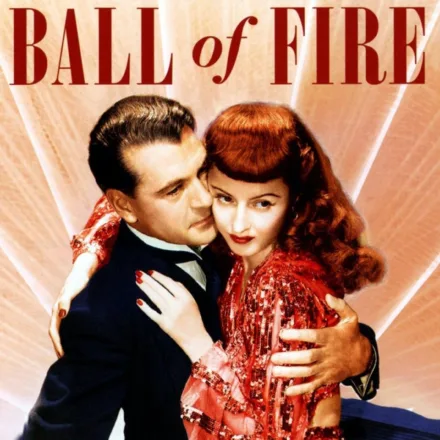
Ball of Fire (1941)
Shared: Writer Billy Wilder, Writer Charles Brackett, Romantic Comedy
Joseph McBride, Kat Ellinger, Maitland McDonagh

Sunset Blvd (1950)
Shared: Writer Billy Wilder, Writer Charles Brackett, Billy Wilder
Steven Cohan, Jeffrey Schwarz, Agatha Luz, Philip Marinello
Buddy Buddy (1981)
Shared: Writer Billy Wilder, Metro-Goldwyn-Mayer, Billy Wilder
Miles Chapin, Kat Ellinger, Heather Drain
Strange Brew (1983)
Shared: Metro-Goldwyn-Mayer
Dave Thomas, Lynne Griffin, Craig Bierko, Skizz Cyzyk
Comments
No comments yet.