Episode 107 · Film year 1988
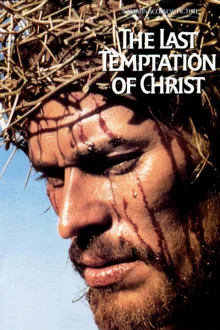
The Last Temptation of Christ (1988)
- Special Guests
- Michael Ballhaus, Darren J. N. Middleton
Show notes
Just in time for Easter, we're looking at Martin Scorsese's The Last Temptation of Christ. Initially slated for release in 1984, the film was derailed for years. We examine the history, the controversy, and the film.
Labels: Barbara Hershey Harvey Keitel Martin Scorsese Michael Ballhaus Religion Willem Dafoe
Links & resources
- Buy Scandalizing Jesus? by Darren J. N. Middleton (opens in a new tab)
- Buy Film, Faith, and Cultural Conflict: The Case of Martin Scorsese's The Last Temptation of Christ by Thomas Robin Riley (opens in a new tab)
- Buy Hollywood Under Siege: Martin Scorsese, the Religious Right, and the Culture Wars by Thomas R Lindlof (opens in a new tab)
- Buy The Last Temptation of Christ by Nikos Kazantzakis (opens in a new tab)
- Buy The Last Temptation of Christ on Blu-ray (opens in a new tab)
- Buy Passion: Music for the Last Temptation of Christ by Peter Gabriel (opens in a new tab)
- Check out the works of Bart D. Ehrman (opens in a new tab)
Related episodes
Episodes that share keywords with this one.

After Hours (1985)
Shared: Director Martin Scorsese, Cinematographer Michael Ballhaus, Victor Argo
Tim Luz, Chris Stachiw

Blue Collar (1978)
Shared: Writer Paul Schrader, Harvey Keitel, Universal Pictures
Paul Schrader, Maitland McDonagh

The Bitter Tears of Petra von Kant (1972)
Shared: Cinematographer Michael Ballhaus, Michael Ballhaus
Kat Ellinger, Heather Drain

Cat People (1982)
Shared: Writer Paul Schrader, Universal Pictures
Paul Schrader, Josh Hadley, Heather Drain

Comments (4)
Dusty Another great episode, guys! I loved hearing the behind the scenes angle with the DP, and some scholarly thoughts as well. There was a very interesting question raised: Is this a movie for secular people? I would say wholeheartedly yes. I knew nothing about the controversy, but I had my own assumptions about "the Jesus story." (Picture a bad Sunday School cartoon.) The movie fascinated me because of Christ's admissions of doubt and his over all humanity. I haven't read the book yet (good luck, Mike!) I would love to find a copy, but it might end up being used as an unfortunate door stop. It is on the bucket list, though. Great job!Rob St. Mary Dusty, Thanks! I've always loved this film - the humanistic feeling we get of a man struggling, a great story. Glad you liked the show! Best to you! KEEP LISTENING! CHEERS! Rob St. Mary co-host of "The Projection Booth"
Anonymous Glad to hear you guys talking about this superb film, but I really wince hearing your comments about atheism. I'm probably an atheist too, but I have respect for things that have stood the test of time. For all the inconsistencies and faults of organized religion, it has without question done that. Am I smarter and more omniscient than the billions of believers in the world? I wouldn't bet on it, and I wouldn't advise anyone else to do so either. So when I hear comments that are so casually dismissive of belief, even though I too am a skeptic, I really do wince at the casual presumptiousness of it all. The comments then transition into a discussion of church and state, evidently to make the point of how dangerous religion can be. Given the linkage of church and state in England and Europe and the experience of our founders, and given the close association of the church with power in the old world, it is not surprising that our founding documents want to keep religion and state apart. But to think that this was because of a concern about the *values* of Christianity is to be deeply, deeply mistaken. This separation came out of a concern that establishment of religion could lead to foreign interference in American affairs and divided loyalties (e.g. from the Pope), extreme factionalism and the use of religious doctrine to target religious minorities. In other words, the concern was not about the principles of Christianity but about minimizing the power of, and the potential for abuse in, the central authority of government. This is evident from the formulation of the Constitution: Congress shall make no law concerning the establishment of religion. But any State was free to do so (whether the Supreme Court was right to impose that restriction on the states as well, which only came later, is another point). But here's the point: the concern was an over-strong central power. So you have to follow the money people. Don't be focused on the threat of religion when the power has shifted away from religion. We have little to fear from the Pope these days. These days, the concern that would scare the founders, and what you and others who love freedom should be concerned about, is the size and power of the federal government itself. This dwarfs any concern or fear from any organized religion on the planet today. It staggers me that people continue to focus on that when the power, and therefore the abusive potential, has so entirely shifted to the central government itself.Rob St. Mary Thanks for checking out the episode. Thanks for the comments. We love to hear what people have to say about our takes on the film and the larger discussion. ALL THE BEST! Rob St. Mary co-host of "The Projection Booth"