
Special Report · Film year 2026
Stranded on Earth (2026)
Show notes
Before E.T. the Extra-Terrestrial (1982) there was Night Skies, a rural alien-horror movie that Steven Spielberg developed, spent roughly $700,000 on, and walked away from.
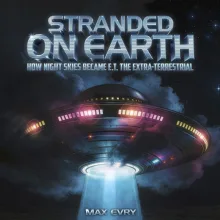
Max Evry, author of A Masterpiece in Disarray: David Lynch's Dune, returns to The Projection Booth to talk about his new book, Stranded on Earth: How Night Skies Became E.T. the Extra-Terrestrial, out October 27 from 1984 Publishing. A new book, a new look at old Spielberg.
Mike White and Evry dig into:
Why Spielberg traded a sinister project for a personal story about a lonely kid and an alien, and how the friendship at the heart of Night Skies became the whole of E.T.
The Rick Baker saga: his working aliens, the blowup that sent Spielberg to Carlo Rambaldi, and how much of the creature came from Baker.
Ron Cobb, John Sayles, Tobe Hooper and the myths the book corrects.
After School, the R-rated middle-school comedy from Bob Gale and Robert Zemeckis.
How ideas migrated into Poltergeist (1982) and Gremlins (1984), and whether Night Skies could work after Disclosure Day (2026).
If Spielberg never lets a good idea die, what happens when someone writes down where they went?
Transcript
An automatic transcript from Spreaker. It has not been proofread, so names, titles and spellings may be wrong, and it does not say who is speaking.
Show the transcript (about 12,500 words)
Hold your ears, folks. It's showtime. People pay good money to see this movie. When they go out to a theater, they want cold sodas, hot popcorn, and no monsters in the projection booth. Everyone pretend podcasting isn't boring.
Turn it off. Turn it off! Hey folks, welcome to a special episode of The Projection Booth. I'm your host, Mike White. On this episode, it is the return of Max Every.
He is back. Talking about his new book, Stranded on Earth, How Night Skies Became E.T. the Extraterrestrial. The last book that Max did was all about Dune. I... I think we had him on the episode talking about Denis Villeneuve's Dune.
His work is fantastic. He really hits that sweet spot of films that were made, films that were not made, and how things change between one and the other. Pretty much exactly what I like to do here on the show. So, can't recommend this book enough. Really, you owe it to yourself to dive into that.
Such an interesting time of film history, at least for somebody that grew up When I did, hopefully it'll be interesting for you as well. Perfect stocking stuffer, I have to say, for the film lover in your life. And for you, too. Buy two, give one away. Enjoy.
Well, Max, I love unmade projects. You probably know that by listening to the podcast. Probably know when we talked about Dune. I'm sure we talked about Hodorowski's Dune as well. This was really hitting my sweet spot, and I'm so curious, how did you decide to make this your follow-up to your Dune book?
Oh, that's a good question, Mike. Well, to me, Dune was such a. To me, it was like a hidden landmark science fiction film that actually was incredibly important, not just as a... as a failed thing or a black sheep in David Lynch's filmography. I'm like, no, this is actually a really landmark movie that is, you know, pretty special for a major studio blockbuster at the time, you know, even in its compromised state, it's really, you know, I think it did have a downstream influence and, you know, even leading up to what Denny did, there's definitely some Lynch DNA in what Denny did. You know, I think, I think even what is the tagline that they used in the advertising for the first Dune in 2021?
Was it the spice must flow? It's like, yeah, that's not a Herbert line. That's a Lynch line, you know? So yeah, so that, that was, you know. It was just this weird pocket of pop culture that I had stumbled upon. that nobody had exploited yet to its fullest potential.
And that is why that book found such an incredible audience. I mean, it's still doing well today, that book, A Masterpiece in Disarray. And yeah, I still get fan letters, all that stuff. And it's like, yeah, that kind of set the bar really high for, you know, what, if anything, I was going to do, you know, for a follow-up. And then, I mean, I had always been fascinated with Night Skies.
And the idea that E.T. Had begun life as an almost entirely 180-degree different film, a rural... alien horror movie, you know, a blood-curdling, you know, sinister film. And, yeah, I mean, that had always fascinated me, and I'd read the script and all that, and then I just happened to get the opportunity to interview John Sayles. I believe it was for Lone Star coming to Criterion. And, like, it just, like, I don't even think it occurred to me until five minutes before the interview, like, oh, I'll mention Night Skies.
Like, he hardly ever talks about that. Let me ask him a couple questions. And we talked about it for like five minutes and it was really fun and it was over. I just had this like lingering thing of like. There's more to this.
This is really interesting. I think there's a book here. I really do. And for some reason, nobody has ever touched this. And yeah, so it was like, you know, the answer to the question, is there a landmark science fiction movie that remains unexplored without 50 documentaries and 50 books about it.
And yeah, and that is Night Skies and E.T. And God bless, you know, like there have been books and documentaries about E.T., but they're all official. They're all, you know, they all to a certain extent soft pedal certain things, not least of which is Night Skies, which, you know, at best gets a page or two. In any book about E.T. And its development, you know.
And yeah, and this is the inverse of that. This is, you know, we're going full bore, you know, like, and we're actually even going before Night Skies 2 and talking about, you know, Spielberg's high school movie Firelight, which was also about aliens. And we're talking about Close Encounters and some of the elements of Night Skies that you can see in Close Encounters sort of bubbling to the surface and lots of other unmade projects. Yeah, it was, you know, this was such fruitful ground. And it was also, you know, it made it like a nightmare to write.
Like, this was not a fun book to write at all, because it was like spinning eight plates at once. You know, it's like, I got to cover Close Encounters. I got to cover Gremlins and Poltergeist and, you know, and, you know, and E.T. And all these different things. And of course, you know, when you're, when I was doing Dune, I had three dozen people who'd worked on Dune.
I had like, you know, yeah, I've talked to this person and that gave me momentum. And this book was impossible to get momentum. It was, you know, it was like starting from scratch almost every time I reached out to somebody. Yeah. And, you know, there were some people who latched onto it right away.
And then there were other people like Rick Baker, who we didn't get until the book had been announced. And the book had been edited. Oh, wow. So that was a real squeaker, getting Rick Baker in here. And I remember for months and months working on this project, I became more and more depressed because I couldn't get Rick.
And I felt Rick was just so integral, if not central, to the story. You know, he is in many ways, you know, sort of the person that the whole thing revolves around. And, you know, the fact that, you know, he's still with us and is still able to talk about it. You know, I just felt like there was no excuse to not get him. And yeah.
And then, I mean, like, I had a friend who I'd been like, oh, my God, I'm going to hang myself if I don't get Rick Baker. And for months and months, he heard me moaning and bitching. And then, like, he read the book and he's like, oh. I get it. You needed Rick Baker really bad.
So, yeah. Yeah. So. But yeah, I hope that the book will be a really fun experience for readers because it's. An odd book.
I don't know if I've ever read a book that anybody else has done like this, where it's almost like one of those hyperlink stories like Cloud Atlas or Babel, where it's like, you know, you're seemingly... you know, each chapter is almost like a different thing. Like here's a chapter about close encounters. Here's a chapter about Kelly Hopkinsville, you know, and then, you know, but, but, but my God, it accumulates and it builds, you know, and it is one story being told sort of, you know, in a, in a, in a, in a mixed up zombie kind of way. Yeah, it's really, it is a strange story. It's almost like a palimpsest or something where it's like, okay, we start with this, but then we overwrite it with this other thing.
I mean, even just like, you know, when I did a Close Encounters episode and reading the original Schrader script, and it's like, wow, this could have been so different, and this is so much more cynical. And it's like, there's always that balance of Spielberg as far as, is he going to be, you know, a Jaws Spielberg, a Temple of Doom Spielberg, or is he going to be an always Spielberg? Like, which Spielberg are we getting today? Yeah, yeah. No, yeah, I was telling somebody else there's a There are different Spielbergs, and there's one Spielberg I particularly don't like, who I call Kenny G.
Spielberg, where he's just, yeah, like, you know, it's like, always, Bridge of Spies, Amistad. He's just lobbing it so hard down the middle that, you know, it's almost like he's making it for nobody. But, like, yeah, yeah. I'm still not sure where Disclosure Day falls in that, because it's like, that's such a strange movie. Like, it doesn't work, but it's like, it's so strange. that I can't quite call it Kenny G like he's definitely trying to do something there yeah.
It was so interesting for him to go back to Aliens after so many years, when he did, obviously, you know, Close Encounters and E.T., like, so close together, and then, yeah, playing in the horror field when it comes to things like Poltergeist and even Gremlins. I mean, just to keep all of those threads straight must have driven you kind of crazy. I mean, yeah, I'm still kind of I'm still trying to decrazify myself. Yeah, it's a it's you know, it is a maddening story. It's interesting because it's like that Steven Spielberg and Donald Trump have very little overlap in terms of the kind of people they are, but they are both billionaires.
And the other thing that that binds the two of them is they both flood the zone. Like they both just are involved in so much stuff. In Donald Trump's case, it's crimes. In Steven Spielberg's case, it's movies. And there's so many projects that he, you know, he had his fingers in, some of which went, some of which didn't, some of which evolved into other.
Things, you know. But it's interesting because he never, he never lets a good idea die. And that's sort of a common thread throughout the book. It's like, you know, this comes from this, this comes from that. Yeah.
And then he always puts a twist on it, which is fun. Absolutely. And then, unfortunately, not everybody from this story is still alive, with Melissa Matheson being one of the prime examples. I mean, she would have been such a fascinating person to interview, I'm sure. Oh, yeah.
Yeah, yeah. I mean, yeah, it saddens me a little bit that a lot of what's written about Melissa Matheson focuses on her personal life, which I intentionally did not do in this book. partly because I have two daughters, and it's, am I going to write about, you know, one of the few, you know, prominent genre screenwriters of the 80s and 90s, or am I going to write about her sex life, you know, and who she was married to, and this and that. No, like, I really wanted to approach her. As an artist, and as, you know, a great example of someone who, you know, kind of came out of nowhere, you know, really. She came from a.
Prominent family, but it's like, you know, at that point in time, like I say, like she had done sort of some rewrite on Black Stallion. You know, some people like to say, oh, she wrote Black Stallion. No, she rewrote it a little bit, you know, and then she had written a little bit on the escape artist. But she really hadn't, you know, she hadn't done much of anything and she almost dropped out of the business entirely. And then Spielberg just, you know, you know, he not only wanted her, he worked on her and convinced her to get on board this project, you know, because he saw something in her that she could bring.
And she did bring quite a lot to it, I. Think, you know, even beyond what Spielberg had conceived, you know, because like anytime Spielberg does a movie, whether he's credited or not, he does, he is involved in the writing process and sort of the ideation process. You know, yeah, which is why I, You know, I have a prominent warning at the beginning of the book, like, please do not misconstrue this book as me trying to say Spielberg stole anything. Because chances are really good he probably came up with a lot of these ideas. You know, so.
Exactly. And to kind of go back to the dune of it all, I mean, that was one of my favorite parts of the Hardorowski Dune documentary, it's like, well, look at where these things went to. Look at how Alien was affected by the failure of Hardorowski's Dune. Look at how these films were affected by that. And that really kind of comes through in this book as well, where it's this idea went to over here and this idea went over here.
And it's just great to see that migration of ideas. Like you said, Spielberg will never let anything die. It's so interesting to even read those story conferences of Raiders of the Lost Ark And it's like, well, we're not going to use this. It's like, yeah, but you use it in Temple of Doom. You know, you're not going to use this, but maybe you'll use it in The Last Crusade.
He's always recycling his own stuff. Yeah. And yeah, and that's what's really fun about this book is you read Wikipedia entries and you read, you know, other, you know, books and things mentioning, you know, Night Skies, you know, and that it went into Poltergeist and it went into Gremlins. It's okay. What?
How? Why? You know, where? When? You know, like, can we actually get some specifics there?
And then that's sort of what my book does that I don't think any other book has ever, you know, really touched. And it's, yeah, and we clear up a lot of misconceptions as well. There was this whole thing about, you know, like Spielberg was choosing between Ron Cobb and Tobey Hooper to direct Night Skies. And that's not true at all. Like, the project was originated by Ron Cobb.
It was his project all the way. But at a certain point, Ron Cobb was away in Spain and they were looking at other directors, you know, and I mentioned Toby Hooper was one of those people that he reached out to. I mentioned another director who I won't spoil, but it's in the book. Yeah. And yes, I think that was, you know, it's good to clear up these things because, you know, yeah, like, you know, these people.
Are dropping like flies. This movie is 45 years old. You know, like, yeah, like the ground is falling out from under me as I'm writing this thing. I mean, like, yeah, like, I mean, that's why the first person I interviewed for it was Frank Price, because he's 94 years. Old at the time.
And then he died at age 95. So, yeah, it was like, well, we got him, you know, you know, again, at the last minute. And it's like, yeah, I think, you know, and this is something I sort of wrestled with, too, is this sort of like, well, what is my responsibility. To Steven Spielberg? You know, if this is not how he wants this project perceived through the lens of this thing, well, you know, then what is my responsibility to him?
And I think my responsibility is very little because, you know, yes, he is a billionaire five times over and he can, as I like to say, Max Zivri was last seen on Tuesday at 8 p.m. You know, like that could happen. But, you know, but I think at the end of the day, I don't believe, you know, that, you know, I think he's one of the good ones. And I think that, you know, even if this is not how he wants this project perceived or remembered, I think it's important. To get it down.
And I don't think it hurts E.T. At all. I think it only enhances it. And I think, yeah, and I hope that Spielberg will maybe embrace, you know, the history that I'm trying to tell here and the you know, yeah, even if it doesn't quite jive with, you know, sort of the Papa Spielberg family-friendly image of him, you know. But I mean, that's what's, I mean, this is the Spielberg that I like.
This is the sort of the Wild Oats period of Spielberg from 78 to 82, you know, where he was really going for some darker, you know, wilder things, particularly 1941, which is a really crazy movie. And we also talk about This other project that E.T. evolved out of, which was a R-rated middle school comedy called After School, which, you know, to whatever extent Night Skies has been covered, After School, there's almost nothing about. That out until this book. You know, like, even when I talked to Bob Gale about it, because it was written by Bob Gale and Robert Zemeckis, even when I talked to Bob Gale about it, he's like, you're the first person who's ever. Ask me about this.
You know, and it's like, you know, and I mean, like there had been, you know, mentions about it in the press and in certain Spielberg biographies. Nobody had ever looked at this thing. And, you know, yeah, I read the script and it's fucking insane. That's the only way to put it. I mean, there were some things in it that were too offensive to put in my book.
But, you know, and I will not be giving it to anybody. But it's amazing that Spielberg had the impetus to want to do this at some point. He was eventually sort of talked off the ledge in terms of making this thing. But it's like, if he'd done it, my God, it would have been like a totally different director. But it's just fascinating.
To me that he had that darker, edgier, irreverent side to him you know, which I think is still there in a lot of his films, but it's just, you know, it's sort of below the surface. It's sort of buried, you know. Ultimately, why do you think he made the decision to go lighter and not do Night Skies and to do E.T. Well, I think it goes back to that thing of New Hollywood, which is, you know, the sort of the impetus among those guys, you know, Brian De Palma, Martin Scorsese, Francis Coppola, to try to make big studio movies personal. Coppola took a trashy supermarket novel like The Godfather, and.
He made it personal. Yeah. Yeah. And then, yeah, there's another example in the book that I give of a Brian De Palma movie, which I won't spoil, but it's like, yeah, once you look at it through that lens, it's kind of hard to not see that. But the idea of taking personal autobiographical middle-class divorce narrative and marrying it with a science fiction movie about an alien.
Incredibly innovative. And is the kind of thing, you know, as Matt Zoller-Seitz says in the book, that could not have happened before Spielberg. You know, you needed somebody of that caliber to be able to say, like, yeah, like, I'm going to do this, and it's going to be a blockbuster, but it's going to be personal also. You know, once he latched on to that idea, once he found sort of the kernel of of E.T. amid the night sky's vortex, you know, which is the relationship between the one good alien, Buddy, and Jay Bird, who is this autistic kid, you know, once he saw that, and then he saw the ending where Buddy is sort of abandoned on Earth, you know, he said, that's the movie I want to do. You know, because, you know, there is something very emotional in that, you know, like the night sky script is scary, but it does have that emotional core to it.
And what Spielberg did was he just said, you know, instead of that just being part of the tapestry, that's going to be the whole movie. The whole movie is going to be that emotional journey, which is, at the core of it is, you know, it begins with Elliot saying, he's mine, I'm keeping him. And it ends with him saying, I have to let you go. How does John Sayles feel about this? Oh, well, in the, I mean, like, luckily, I got to add to that five minutes that I got with him.
He gave me, like, another hour and change. Yeah, and he's fairly, you know, sanguine about it, you know, really, because it's like, you know, and we put it into context in the book, you know, like, he was a very busy guy at that time. He was very in demand. You know, he was cranking stuff out, whether it. Was sort of mercenary scripts, sort of B-genre movies.
Or, you know, these more, like, you know, independent, you know, very special, you know, personal films that he was making, like Liana and Secaucus 7. He was, you know, he was incredibly busy. And I think, yeah, like, this was just like, you know, it was a blip. It didn't happen. It's one of many projects that he did that didn't happen.
And it's, yeah, I think, yeah, he's just been very gregarious about, the whole thing. And I think we make a strong case that he maybe could have asked for a credit, you know, maybe even a story by credit or something. But he just didn't pursue it. And, you know, and yeah, I think that was, you know, pretty cool in terms of not holding a grudge and not like, yeah, and all that, you know. The Rick Baker thing is another story.
Because there are some elements that. You could argue that there are some story elements that Rick Baker may have come up with in, you know, in doing his creature. Like we talk about how in the first test, first car, you know, the alien gets drunk. And it's like, yeah, I mean, like, it doesn't take a genius to figure out Spielberg saw this test with the alien drunk. And then he's like talking to Melissa Matheson, hey, let's let the alien get drunk, you know?
And it's like, yeah. And the whole thing, you know, all the design elements, like the neck that extends and sort of the face and, You know, like, yeah, it's E.T., you know, or it's E.T. 's angry dad or whatever. Yeah. You know, that might be a controversial aspect of the book because, like, maybe there's some people out there who want to believe, like Santa Claus, Carlo Rambaldi created E.T. out of whole cloth and is a genius.
But, you know, that's not this book's perspective. He's not a total straw man because he did have talent and he did contribute to E.T. You know, he's definitely a part of it, but it's like there's so many other people involved in coming up with E.T., you know, all these different aspects of E.T., not least of which is Rick Baker, because without Rick Baker, you don't get that face and you don't get, you know, a lot of the aspects of him. And yeah, and I think that, you know, it's that I could write page after page about, you know, why These aspects of E.T. Came from Rick Baker.
But it doesn't speak as loudly as just putting the two pictures side by side. You know, it's like it's sort of like my children. It's like I don't need a DNA test. Like, look, she's standing next to me. Look at our faces.
We're the same. Well, you mentioned Ron Cobb earlier, who's a really talented illustrator as well. How much influence did he have on the design, too? Huge, yeah, huge. And like, I mean, not necessarily the design, because like he did create, he did draw some creatures.
But as we clarify in the book, as Rick Baker says, Rick Baker had already done his own thing with it, you know, by the time he got those pictures. You know, Cobb was a little out of step with the project because he was, you know, very hands-on managing Conan the Barbarian in Spain. And yeah, what Cobb, did was he originated kind of the story, you know, alongside Spielberg and Sales. He originated the story and guided the direction of it. I think he came up with the adding the cattle mutilation aspect and sort of taking it in a different direction from Kelly Hopkinsville after the family of Kelly Hopkinsville sort of threatened to sue. you know, like, I mean, yeah, I think he was responsible for, you know, conceiving of a lot of those things.
Yeah. And then was later given a point in the film to step away, which then became very lucrative for him. Yeah. How close did they come? How close would you say that they came to actually making Night Skies?
Because some of these designs from Baker, they look like they're production ready. Absolutely. Yeah. I mean, I think I think they were still maybe three or four months away from nailing the aliens completely, but they were on the way, you know, like they, you know, they, the effects were estimated to cost between 3 million and 3.5 million and they spent about 700,000 of that. So, you know, yeah.
So like they were the very least like a quarter of the way to, you know, really having everything in, you know, and we break down very specifically, like, you know, like this was going to be, this type of puppet. This was going to be that type of puppet. This was going to be stop motion. You know, like we get really detailed about, you know, a lot of stuff that has just sort of been hearsay until now. And I think, yeah, and that's really cool.
There were also some storyboards that were done for the film, which I didn't pursue them super hard because I don't think I could have put them in my book anyway, because I probably would have gotten sued by Amblin if I did. I still want them. They're still out there. Like, Ed Verroo drew, like, a lot of storyboards with Rick Baker, you know, sort of conceiving of these scenes and how they were going to do them. And, you know, Rick talks about that.
Yeah. And so, like, yeah. So, yes, you know, aliens were being built. Storyboards were being done. Locations were being scouted, you know.
Like, it was set in Montana, but I think they were also looking at Utah, you know, and other places. Yeah, and I think, you know, it never got to casting. It never got to... you know, real production design where you were, you know, where you were seeing spaceships and farmstead and, you know, all that, all that stuff, you know, it was definitely on the way. Now, I think they probably stopped it, like, just before the point of no return, I think, you know, because it's like, you know, they'd spent almost a million dollars already on this film. And yeah, I think, you know, but then I guess that begs the question, you know, What do you think?
Do you think that they could still make Night Skies today? Well, I mean, you mentioned Disclosure Day, and I kind of would have rather have seen Night Skies than Disclosure Day myself, even though there were some echoes. You know, we're talking about these echoes through time, and it definitely felt like when they wheeled that alien out, that that was kind of a, you know, could have been Buddy 2.0. Yeah. Yeah.
Yeah, yeah. I also think he looked a lot, the alien at the end of Disclosure Day, looked a lot like Paul. Yeah, yeah, yeah. I told Greg Mottola that, too. Yeah, but, no, yeah, I mean, I think, you know, it's interesting, like, I remember talking years ago to Terry Gilliam about Ubik, which is the.
Yeah, so, like, one of the many unrealized Terry Gilliam films was Philip K. Dick's Ubik. Which he was working on for a time. And, yeah, which, I mean, in Terry's hands, that would have been amazing. But, you know, when I talk to him, he's just, yeah, it's like the Matrix did it.
Inception did it. Like, you know, it's like you put it out now, it's just going to feel stale, you know. And it's unfortunate, but it's like that's the reality, you know. And, yeah, and if you do Night Skies now, people are going to be like, oh, it looks like nope. Oh, it looks like signs or, you know, or it looks like Critter. or whatever you know or it looks like gremlins yeah i think that's just the way the cookie crumbles i guess but i mean you could do it you know as an exercise i don't think it would be that terribly expensive You know, maybe if you give it to somebody like Curry Barker, he could add a twist to it or update.
It in a cool way. Or if you give it to Michel Gondry, you could turn it into a meta thing, you know, where it's going in and out from E.T. to Night Skies or something. Like, that could be fun. There's a lot of possibilities you could do it as a graphic novel. There are sections of an unproduced graphic novel that are in my book that never made it past the gatekeepers at Amblin. but you can sort of see what that would look like.
And, you know, yeah, or it could be an animated movie. There's a lot of ways you could, you know, you could. Have fun with it. But, yeah, but I don't think it would have the really visceral impact it would have had had it been done in 1980 when it was very ahead of the curve. You know, even the aspect of the, you know, Jay Bird's autism would have been extremely ahead of the curve.
You know, because I talk about in the book, you know, like, you know, Spielberg worked on Rain Man. And it wasn't until Spielberg was on Rain Man that even the word autism made its way into the script, you know? And so, yeah, and a lot of people have said that like Rain Man is like the first time there was real public consciousness of what autism even is. And now it's like, you know, it's very much a hot button, you know, thing that, you know, that we talk about all the time and we talk about the spectrum and we talk about, you know, it's become sort of a political football, you know, with all the stupid vaccine shit. Yeah, but I think, yeah, it's just, it's a really fascinating project.
And, you know, I think if you, I think whether you like E.T. or not, I think it's going to be a fascinating book. You know, I think if you're a horror fan, It's really interesting. If you're a science fiction fan, it's really interesting. If you're a Spielberg fan, if you're a John Sayles fan, you know, or Joe Dante or John Carpenter or any of these people that are, you know, important figures in the book, you know, yeah, like it's, yeah. But I mean, and that's the cool thing that I was trying to do is I was trying to look at it holistically, you know, which is that, you know, we're not just going to talk about night skies becoming E.T., Yeah, we're also going to talk about After School.
We're going to talk about Close Encounters. We're going to talk about the million other movies. You know, Chapter 13 has, I think, 10 or 12 of these in it, you know, that are all, you know, in some way or another connected with, you know, what. We're talking about. And yeah, yeah, to take the time to chase down John Carpenter or to, you know, or to chase down John Sayles about brother from another planet.
Those are things I think nobody else would even think about doing. But luckily, I have a really supportive publisher, 1984 Publishing, and they were great, and they were just like, yeah, whatever you want to do. It was like a blank check, kind of. Well, you mentioned Carpenter, and of course, the popular narrative is the summer of 82 is People didn't want scary monsters from outer space. They didn't want the thing.
They wanted the cute, cuddly E.T. They wanted the Reese's Pieces and the glowing finger and put on your heart light and all these things. Is that what you feel, or do you bring a different twist to that in your book? Well, again, we have Carpenter talking a little bit about that and other people as well. Mick Garris was around back then, and he worked on the thing and E.T., in terms of publicity.
So he was a good person to have in there, yeah. And it's like, yeah, I mean, like, we talk about all sorts. Of scenarios, you know? Like, we talk about how, like, Poltergeist was the one sort of everybody was betting on that summer. You know, like, E.T.
Began the summer as one of the lowest-polling movies. And it was originally only going to get, like, a 500-theater release, you know? So, yeah, I think, yeah, most people thought the thing was going to be a huge blockbuster. Most people thought Blade Runner was going to be a huge blockbuster. And like those movies turned out to be out of step with what was happening at that time.
You know, where you see it with like the sort of the nascent rise of Reaganism and, you know, sort of it's morning in America. And, you know, it's like, we don't want your depressing ass ambivalent 70s movies anymore. We want something else. And Spielberg knew exactly what they wanted. And, you know, E.T. is like the perfect example. of a four-quadrant movie.
It appeals to little kids, it appeals to teenagers, it appeals to grown-ups, it appeals to old people. It's like, everybody can get in on this thing. And then that became, for better or worse, the holy grail that every studio chased thereafter. Yeah, but I don't think that, just like I don't think Jaws ruined cinema, I also don't think E.T. ruined cinema because I think it's a really innovative film wonderful movie. And I think if you sort of separate it from the merchandising bonans and the Hallmark card cutesiness of all that crap, you know, and you just focus on the movie that Spielberg made, you know, which was very personal.
I think that as a grown-up person, you can really latch onto it and you can really see how special this movie is. What? Why did Spielberg go with Carlo Rambaldi rather than Rick Baker for E.T.? Had that bridge already been burned or was Rick just not available? That bridge had been burned.
And I'm guessing you haven't gotten to that part in the book yet. Yes. But yes, to answer your question, bridge burned hard. Like, yeah, Spielberg basically. Burned blew up at rick baker and and this was documented before my book so that's why i didn't feel i felt like leaving it out would be stupid you know and we get a little bit more detail about it and about what happened and what how it led up to that point and what and what sort of the aftermath but yeah no it was a blow up and it was very much you know spielberg like kind of twisting the knife i think by you know screaming at rick baker you know, running out of the makeup effects facility, yelling at the top of his lungs, get me Carlo Rambaldi.
Because at that time, everybody knew, everybody knew that Carlo had taken an Oscar from Rick Baker for King Kong. Carlo Rambaldi built a giant mechanical King Kong that is in 10 seconds of King Kong. And the rest is literally, you're looking at Rick Baker in his own suit. Yeah. So if you're walking out of that facility screaming, get me Carlo Rambaldi, you are twisting them.
You're, that's a fuck. You know, and, you know, and like, you know, like I said, like, you know, we talk about how they made up. We talk about, you know, how they, you know, it was eventually water under the bridge. And, you know, Rick Baker, you know, he won some Oscars for some Spielberg movies. And, you know, it is, I never wanted to a victim narrative around seven-time Oscar winner Rick Baker.
But it was fucked up. And it was before he was seven-time Oscar winner Rick Baker. So he was still an emerging artist. And he was busting his ass to not only do these Night Skies aliens, which were incredible. I found the original test.
They're amazing. They're still amazing today. You know, the crude prototype is better than a lot of things I've seen in movies from this year. Yeah, and it was just so incredibly ahead of the curve. And he's doing American Werewolf.
In the same building at the same time. So, you know, just from a historical perspective, it's quite incredible, you know, what was happening, you know. And then, of course, the, you know, the internal politics of that and the tensions that were happening, that's fascinating to me, you know, like just what, you know, and that's sort of the juiciest stuff in the book is really, yeah, is the saga of Rick Baker and, you know, and how much of the creature was taken from his work and, you know, and how he was, you know, sort of sidelined and, you know, and in some cases badmouthed, you know, on pretty, pretty unfairly, in my opinion. You know, I wasn't there. You know, maybe there's some stuff I don't know.
I wasn't born when this happened. But, you know, yeah. But I mean, from what I have gathered. You know, it was a little bit of a messed up situation. I mean, even just the aspect of the project evolving into E.T.
You know, like that was happening at least a month or two before Rick Baker was told that was happening. Which is, you know, is a little bit, I don't know. There's a word for that, I'm sure. But like, yeah, I think, You know, but I mean, that is also kind of just the nature of Spielberg at this time. You know, he's working on so many projects at once.
We talk about how, you know, when he's in London shooting Raiders of the Lost Ark. So he's filming a movie. And then in one hotel room, he's got a guy working on a comedy called Real to Real. And in another room, he's got Toby Hooper working on The Treatment for Poltergeist. And back in Hoboken, you got John Sayles working on Night Skies.
You know, and this is all happening at once. And yeah, I mean, that's just in and of itself got to put a lot of, you know, pressure on the guy. But that's sort of, again, that's to reiterate what I said at the beginning. You know, he floods the zone and he, you know, this is just the nature of who he is. I remember reading at one point, I'm sort of upset I didn't put this in the book, but I read at one point there was an interview with Richard Matheson, the great writer, Richard Matheson.
And he's going over, he was in a meeting with Spielberg and they were talking about some stories. And in the middle of the meeting, Richard Matheson is just like, you know, Stephen, you should meditate. And Spielberg just says, this is my meditation. Which says a lot about the guy. You're so right when it comes to just the dearth of information around this whole project.
There's some YouTube videos. There's the... Production sketches, I see a lot of those. I'm always curious where those came from, but it feels like maybe from like a Starlog or something. But what was the richest vein for you?
Was it the interviews themselves or were there really good articles or people had done other archaeology you were able to kind of build upon? That's a good question. Like what was the best resource? Honestly, I think the best resource for me was J.W. Rinzler's, the late, great J.W.
Rinzler's book about Rick Baker. Why am I blanking on the name of it? Metamorphosis. It's a giant, two-volume case, hardback, the size of a tombstone. It cost me $ 150 for this book.
God love him. Man, oh man, he made some huge books. They're all great. Yeah, the guy was amazing. Yeah, and there still is the, yet to be published book that he wrote about The Force Awakens, which is just sitting in the Disney jail right now.
But I hope someday they release it unedited. But yeah, no, his book on Rick Baker is fantastic. I got so much background on Night Skies. And what was most crucial is that was the one place where I was able to actually get some name of dudes who worked on it, you know, beyond the sort of above the line people. I know Steven Spielberg.
I know Kathy Kennedy. I know John Sayles and Ron Cobb and Rick Baker. But who else? And it's like, yeah. And that's where I got people like David Robert Saliti, who somebody probably nobody knows because he only worked on a handful of movies and then he left the business because he had a bad time.
But when I did the Dune book, there were a couple of people who were just very unfiltered sources of information. You know, one of them was Sean Young. Another was Bob Ringwood, the costume designer, you know, and they are like the MVPs of that book. Like, they bring it. And it's like, you know, yeah, and that's, and in the case of this book, you know, David Robert Saliti was like the guy, you know, he was like the Rosencrantz and the Guildenstern rolled into one.
And it's, and yeah, I had to tone down a lot of what he said. But he was great. You know, and again, like, you know, he wasn't an asshole. He wasn't, like, trying to be catty or take anybody down. He's just like, this is what happened, you know.
And, you know, he doesn't have a career to protect. So he's like, you know, like, and, you know, he's long retired and long, long out of the. Business of Hollywood, you know. So it's like, yeah, there's no, there's really nobody to protect. Like, yeah, but like, you know, it was really great to find somebody like that You know, and of course, he's also the source of the night sky's tests, which was invaluable, you know, just to see that, you know, I wanted to see that my whole life.
My wife saw me watching it for the first time and she said, you looked happier than when your children were born. But yeah, and yeah, it was funny too, because I remember he brought this tape up, which was older than me and covered in mildew or whatever. And, and he's like, yeah, I have like an old VHS player somewhere around here. You want me to pull that out? I'm like, no, I'm taking this to a lab in New York right now.
We have to preserve this for God's sake. Um, yeah. And, uh, and, and Rick, Rick, Rick didn't have it. You know, I had to, I gave it to Rick and Rick did his own edit of it, which is really great. You can see that on his Instagram.
Yeah. But it, it's, it's, Yeah, and I mean, I think now is probably the best time to write this book, too, because it's like, I'm not going to hurt anybody, you know? I can't hurt Steven Spielberg. I can't hurt E.T., you know? I can only help at this point.
And I think Spielberg. Fans, they haven't been eaten good, you know? Because it's like, I feel like when people do books about Steven Spielberg, it's either... He's an angel sent from heaven to make finger frames and movie magic. Or it's he's I am become death destroyer of cinema.
You know, it's one or the other. And they're both stupid take on who Steven Spielberg. He's a complicated, kind of weird, kind of fascinating artist. That's who he is. You know, he's not Papa Spielberg.
He's not this sweet, you know, guy who wears grandma sweaters. You know, he's a hardcore business guy. He's a hardcore artist guy. And he's both. And, you know, and if you can't reconcile those, then you're going to be lost trying to write about it.
You know, because it is both. And they're both fascinating, you know. And I think, you know, this is, you know, there are other good books about Spielberg. You know, Joseph McBride's biography is fantastic. And that was a great source of information as well.
You know, not necessarily about Night's Guys, but just about the guy himself and about this period that I'm covering. He interviewed something like 700 people. Yeah. Yeah, like that's as good as it gets as far as I'm concerned. But yeah, I mean, I interviewed 100 people.
It's not bad. I mean, obviously you had to do your due diligence and try to get Spielberg. How close do you think you came? Not. Yeah.
I've been there. I've been there. You've been there? Yeah. It was weird.
It was before Disclosure Day, and they contacted me. I did not contact them. Yeah. Because, yes. Yes.
That was it. Yeah. And, yeah, it was kind of a terrifying experience. Couple of days because, you know, I talked to my publisher a lot about, okay, well, how do we handle this now? Because like, we're still kind of in early days, you know, and like, we don't want them to blackball the project and we don't want them to kill our momentum.
And yeah, like, and there were a. Couple of days there where I started thinking about like, well, what if I do get it? You know, what are my responsibilities now if I do get him? And it's like, I sort of didn't want to anymore. I was like, I was like, I don't, I don't want to have to withhold some of the stuff that I already have because, you know, you know, he's giving me, you know, whatever, five minutes of his time or something, you know, and it's, and it's, and at a certain point, it's a different Spielberg, you know, it's like, you know, we, at the end of the book, we talk about, there have been like four big phases of his career.
And this is the first one. So, We're three Spielbergs away from this Spielberg. This is before he was a billionaire, Spielberg. This is before he was really a millionaire, Spielberg, for some of it. Yeah, and it is scary.
It is scary to think about that, because that's something I didn't have to deal with when I did Dune. Because, yes, I got David Lynch. That was really cool, and that was a get. But He also hadn't been on the A-list in 20 years. So, you know, that's different from one of the most powerful people who's ever lived, not just in Hollywood.
You know, that's a different thing you're dealing with. So, you know, yeah. And I tried not to, I don't think I soft pedaled it, but there are certain places where I thought long and hard about what I'm, you know, what am I going to say here? And is it basically my, my sort of filter was this relevant, you know, if it's really negative and it's not really relevant, then I don't want to do, you know, and there's, there was. A lot of that.
There was a lot, you know, we talk about Twilight Zone at some point. And believe me, I cut half of that out. Yeah. But like, I mean, yeah, it's like, you know, a certain point has to be, what is the story you're trying to, you know? And so like, yeah, but like, you know, if Spielberg was a little reckless or was a little, you know, a little tone deaf in some of his dealings with people.
I think it's OK to talk about that because he's a human being. You know, I talk about David Lynch doing some stupid shit, too. You know, at one point he wanted to put a hole in Juergen Prochnow's cheek. He's like, what? I'll do it to myself.
It's like, shut up, David. Yeah. Like you're saying, this is the three Spielbergs ago. Spielberg 1.0 or maybe 2.0 at this point in his career. And this guy, yeah, he's cranking out hits like nobody's business.
He probably feels that he's infallible. And at that moment, he kind of was with a lot of the decisions he was making. I mean, these are still movies that we're talking about today with Poltergeist, with Gremlins, with E.T., with all of these films. It's just amazing that this guy, he was just this font of ideas and just a powerhouse. Truly.
Yeah. Yeah, and he built a great team. You know, he built a great sort of stronghold around himself with Frank Marshall and Kathleen Kennedy were very, very good at cultivating the atmosphere, you know, of both pre-Amblin and then Amblin, you know, and they were also very good at protecting him and, you know, and keeping certain things away from him. And yeah, I think it's a really fascinating career, but it's like, you know, my impression is good. My impression is I still like this guy at the end of the day.
After two years of reading about him and looking at hundreds of interviews and talking to people, I think he certainly was responsible for building and nurturing a lot of really important careers. We wouldn't have Joe Dante. I think even Toby Hooper, for all he went through, I think he I don't think he would have gotten the blank check of Life Force without the poltergeist. And thank God, I love Life Force. That's a beautiful piece of kamikaze filmmaking.
But yeah, no. He's been a really, I think he's been a force of good in the business overall. Has he made mistakes? Of course he has. He's made over 200 things.
You look at his IMDB, it's crazy. You know, of course he's, you know, pissed some people off or not his best, you know, on certain things, you know, or maybe could have been more tactful or could have been more sensitive or whatever. I think, you know, overall, you know, I mean, it's like, I remember there, do you remember that interview with Joss Whedon years ago from Vulture where it was like after he got canceled? I might, yeah. Yeah, well, there's one point in the.
Interview where they mention all these horrible things that Joss Whedon had done. And towards the end of the interview, he's like, I actually think I'm one of the nicer showrunners. And the thing that's frightening to me about that is not that it's tone deaf or that it's not true. It's that it is probably true. I think he's probably telling the truth there, you know?
And it's, yeah, it's just, you know, Hollywood. To be at a certain level, yeah, you have to be a little bit cavalier and a little bit, you know, break some eggs to make some omelets or whatever, you know. I mean, I saw throughout this process, too, I saw. A lot of misogyny about Kathleen Kennedy. You know, I had people saying this and that and the other thing about Kathleen Kennedy.
And I'm just like, I like Kathleen Kennedy. Incredible taste. you know, just an amazing career. And like, for the most part, seems to have nurtured a lot of people and a lot of talent, you know, in the business and had a really good taste. And I think, you know, some of these people saying this, that. Or the other thing about Kathleen Kennedy probably wouldn't, you know, think to say anything like that about Jerry Bruckheimer, you know.
Or Joel Silver or whoever, you know, yeah. Come on, Max. She ruined Star Wars. It's up to Dave Filoni to save Star Wars now. Come on.
That's the common narrative. And yeah, we're not saying that just because she's a woman, but yes, we totally are. Yeah. We need a white man in a cowboy hat to come in and save the day. Yeah.
No, yeah. Kathy's really interesting. I would have loved to have talked to Kathy, but honestly, like by the time We were in a good enough place, I think, to go approach Kathy. We said, print this fucking thing. Because I, you know, writing books is a very financially precarious endeavor.
And I mean, I, when I finally, I worked on this for a while before I signed a contract. And when I signed my contract, I was, okay, this advance will get me very nicely through January. And I will have the book done by January. And then it was finished in July. So you do the horrible, life-shattering math there.
Yeah. But at a certain point, the book just wasn't ready. We just didn't have it. And I'm not gonna release this book until I have this story, you know? I mean, like, yeah.
And then once I had Rick, like, if I'd gotten Rick six months earlier, I might have approached Kath. Right now, my hope is that you know, the best case scenario is she would read it and somebody from her office would be like, hey, Kathy really likes the book. You know, if you ever want to talk to her. And the worst case scenario, I'm hoping, is she hates it and she says nothing. And doesn't do anything.
So, but yeah. But no, I think she comes across pretty well in the book. And I think, you know, I think overall Spielberg does too. I think If you read my book, Stranded on Earth, How Night Skies Became ET the Extraterrestrial, if you read my book and you come away saying, well, I hate Steven Spielberg, then I have failed. I will be sad.
I will feel like a failure. And I will feel like I did not do my job because I don't think the book is trying to do that. Do you feel you let the readers down since this is only 422 pages as opposed to the last book, which. What was that, like 3, 4, 5,000 pages? So the last book was 520.
This one's actually 460. The Dune book had almost no pictures in it. And this one is filled with pictures. So I actually, I tell people it's 460 pages, but it's really less than 400 in terms of actual reading material. It's fairly, it's shorter and it's much more ambitious than the Dune book.
Because the Dune book, we're really only talking about one movie. There's some other things that come into it and out of it, but it's really focused on one movie. This is focused on the transition from one project to another. That's the core of it. And then if you step one Matryoshka doll outside of that, it's sort of about the lead up to and the fallout of that transition.
And then if you go even further out of that, one more Matryoshka doll, it's kind of a early biography of Spielberg. You know, it really does, you do get a sense of that period from like, whatever, his birth until around 1984 with the founding of Amblin. That's really kind of, that's the period that's well covered in this book. Yeah. And again, I guess that's my favorite Spielberg.
And I think that's a lot of people's favorite Spielberg. You know, I mean, you just pound for pound. It's like, Duel, Jaws, Close Encounters, Raiders, E.T. It's like nobody's had a run like it. Nobody.
And then it's right there on the precipice of The Color Purple, which leads you into yet another Spielberg. Yeah, yeah, that's the Spielberg I like less. That's the... I need an Oscar Spielberg. I need recognition as an artist, Spielberg.
And I'm like, you are an artist. Shut the fuck up. Like, E.T. is a work of art. You know, Sugarland Express is a work of art. Like, give me a break.
Like, Duel is one of the best movies ever made. Duel is my favorite Spielberg movie. You know, and I've read that he watches it at least once a year. Just to be like, okay, let me try to keep whatever I had there. You know?
Yeah. Yeah. Yeah, we covered Disclosure Day recently when it came out. And just looking at his filmography and just seeing what a madman he is when it comes to multiple films a year. And just so many years where it's like, oh, it releases in the fall.
I'm like, how old is this guy? And he's still able to just crank these movies out. And these are mostly real. good movies. Yeah. Oh, yeah.
No, yeah. I remember at one point in the book, I talked to Eric Vespi, who's a bud, and he was on the set of War of the Worlds. You know, and the military attack scene on the hill with the flaming Humvee coming down and, you know, on the. And all the tanks and everything. And he's like, there's some random shot of like a general talking into a walkie talkie.
And he's like, this is the most second unity shot I've ever seen. This should clearly be being done by a second unit. And it's 60 something year old Spielberg on the ground with the camera, holding the camera. And it's like, wow, that's great. You know, and I love that stuff.
And that's the kind of stuff that makes me loves Spielberg, you know, just being like the consummate filmmaker. Because, yeah, like you look at Coppola, so many gaps, you know, so many years not making movies, you know, busy making wine. Or whatever the fuck. You know, you look at Lucas, Jesus Christ, six movies in 50 years. Give me a break.
Like, you know, like Spielberg has done almost 40 movies in his career. And it's an incredible body of work and it's so much to chew on. And there's so many Great ones, you know, even in later years. I think Tintin is one of his best movies. I weirdly think Ready Player One is really fascinating.
Not least of which because I was sort of becoming Wade Watts while I was doing this book. You know, it was a very similar thing of like, you know, this guy who is kind of an open book, you know, puts himself out there very publicly and, you know, and just trying to like excavate that and find the clues and find the, you know, who is the real guy here? Yeah, I relate to that movie very much. And yeah, but I think when people read this book, you're gonna, you know, you're gonna come away with, I think, a richer opinion of who Spielberg is and, you know, and what that career means. And I really do hope he has another masterpiece in him.
At least one more. He's got to give us one more. The thing that gives me hope is Hitchcock. Those last five movies that Hitchcock did, some of those are some of his worst pieces of shit. Topaz, Marnie, Torn Curtain, Family Plot.
But then, you get Frenzy. And holy shit is Frenzy amazing. Frenzy is his only R-rated movie. It's so dark and nasty, and I love it. And yeah, I want to see Spielberg do his Frenzy.
I want him to just throw caution to the wind and bring back Wildman Spielberg, you know, for. One more bout. Yeah, I think he's a really interesting guy. And I think, yeah, and hopefully this book is going to be an interesting window into that. This book, if I know, means the definitive anything, you know.
I mean, I think there is still more about Night Skies to be discovered. I think there's more about E.T. to be discovered and all these films, you know. But I think, I really do think this is probably the most we're ever going to get about Night Skies and after school. Gremlin, Poltergeist, certainly, you know. Like, I mean, we say in the book that, like, Spielberg has zero interest in Looking back on Poltergeist, because it was a painful experience for him, which you've covered in other.
Episodes of your show. But yeah, I think it really does give you a lot of insight into this career and some of the most fascinating projects to come out of that. So as we're recording this, we're T-minus a few days away from the release of the book. And I feel horrible asking you this question, but what's next? I hope a long nap.
I don't know. It's a great question. If you're asking me right now, I mean, in a perfect world, I'd love to do a novel next. That'd be fun. I'd love to do a book, like a biography about one guy.
And I just talk to one guy and I don't have to talk to anybody else. I'd do the De Palma documentary, you know, just like, Just talk to one guy. That'd be amazing. One of the most heartbreaking and horrible things about doing a book like Stranded on Earth is just the sheer amount of asks that you have to do. It's crazy.
It's like you and each with each person you ask, you you have to find the right contact. And then you have to ask the right way. And then you have to navigate that. And then, you know, and then you wait for their schedule. And then you're, you know, and you're waiting and waiting, you know.
And you're trying not to be an asshole or pushy, but you also need to get this in the book by the deadline. You know, it's like, it's the most nightmarish aspects of the anxiety of dating without the remotest possibility of sex. Yeah, yeah, yeah, yeah. It's like herding cats. But no, but I think, you know, when I look back at this one now, I'm very happy with it because I think I honestly, I got like 90% of the people I wanted, which is really good.
That's a really good batting average for this business. Yeah. Yeah. Yeah. And the ones I'm happiest about are like, you know, like John Sayles, Rick Baker, Ron Cobb's widow, Robin Love, who is a great get, you know, obviously Joe Dante and John Carpenter and you know, and then, you know, some of the people I talk to towards the end, like Greg Mottola was great.
Yeah. I mean, yeah. I don't want to make it sound like it was pure torture, you know, because there was a lot of fun and a lot of excitement and discovery throughout the process. You know, every time I would get a document or get a this or that, I'd be like, oh my God, I found it. But And we don't get that a lot now.
Most of the stuff that we read about movies is aggregate. It's not people going out and spelunking like I am. There isn't a lot of excavation or just talking to the people who are still alive. Yeah, and I think that's the value of this book and of my Dune book as well. Yeah, they're real documents, hopefully to be treasured by by the fans.
And yeah, like if, I mean, I don't know, like if I ever do another book, I don't think I will do one like this. I will say that, you know. But I do think that Masterpiece and Disarray and Stranded on Earth make good bookends, you know, because they are both universal science fiction movies from the early 80s by landmark directors. And they both had creature effects by Carlo Rambaldi and There's a lot of parallels. The big difference is one is a tragedy and one is a triumph.
I was really hoping that you might do a follow-up and talk about Mac and Me and just have a whole book just all about Mac and Me. That's for somebody else, my friend. I had to do a podcast recently to promote the book, and I had to watch Mac and Me for that podcast. And it was fun. I will admit, I watched it at four times speed.
And it was still bad. Yeah. My publisher was also like, he was pushing me to put Mac and Me in the book. And I was just like, that would involve watching Mac and Me. What's that one they do on Mystery Science Theater?
Pod People with the little alien? Yeah. Yeah. I mean. I think people tend to forget the cottage industry of E.T. knockoffs that came out after this.
I mean, you mentioned Critters, you know, it's just, even though I guess you could say that that's more of a Gremlins ripoff, but I think that DNA is really shared when it comes to Critters. You can see that, you know, the strands starting to come back together. Yeah, Critters is Night Skies. Very much so. Yeah, I agree.
I would be, I would have, I would be knocked dead. If you told me that the people who made Critters had never heard of or seen the script for Night's Guys. But, you know, yeah, it's very much that. And it's also Kelly Hopkinsville, you know. And yeah, it's.
Finally the one, the one quote unquote E.T. ripoff that nobody hardly mentions might be better than E.T. And that's My Neighbor Totoro. I think My Neighbor Totoro is a very extraordinary film. And I think that would probably not exist if not for E.T., that that said, you know. But the reason that one worked so well is Miyazaki did the thing that Spielberg did.
He made it personal. He made it about him and his childhood. And yeah, yeah, yeah. I'm incredibly fond of that movie, as are my children, yeah. Wonderful.
Max, where's the best place for people to pick up this new book? Well, I would say wherever is best for you. You know, if you want to go supporting the publisher, you can go to NYPD. 1984publishing. com and you can get it there. I think it's reasonably priced.
It might even be signed. I don't know. If you get it from Amazon or Barnes & Noble or Target or any of the evil places, I don't care. I shop there as well. And, you know, your money comes to me no matter where you get it from.
I am not judging you. You are not lesser than for getting it anywhere. So yeah, wherever you want to get it, if you can't afford it, I highly encourage you to request it from your local library. And yeah, and we also have an audio book. I'm actually in the booth right now in my home where I'm recording that audio book.
And so that will be out eventually as well. But don't wait. Get the heart back today. I would say like, you know, it is a very visual experience. Would you agree it's a very visual book?
I would, yeah. The layout is fantastic. Yeah. And we went to great length to have some illustrations that we either acquired or we made ourselves that will make you feel like you've seen Night Skies by the time you finish reading the book. And so, yeah.
Yeah, pick it up. October 27th, wherever books are sold. And funnily enough, just found this out. The other day, this was not intentional. October 27th, when my book, Stranded on Earth, How Night Skies Became E.T., the Extraterrestrial, comes out, is the canonical day that E.T. arrives on Earth in the movie.
Somebody did a reverse engineer and they realized it was October 27th. So isn't that incredible? Come back again I want you to stay next time Though sometimes the world ain't kind When people get lost like you and me I just made a friend friend is someone you need. But now that he had to go away. I still feel the.
Words that he might say turn on your heart light let it shine wherever you go Let it make a happy glow For all the world to see Turn on your heart light In the middle of a young boy's dream Don't wake me up too soon Gonna take a ride across the moon He's looking for a home Cause everyone needs a place Home's the most excellent place of all And I'll be right. Here if you should call me. Turn on your heart light Let it shine wherever you go Let it make a happy glow For all the world to see Turn on your heart light In the middle of a young boy's dream Don't wake me up too soon Gonna take a ride across. The moon. And home's the most excellent place of all And I'll be right here.
If you should call me Turn on your hot light Let it shine wherever you. Go Let it make a happy glow For all the world to see Turn on your hot light In the middle of a young boy's dream Don't wake me up too soon Gonna take a ride across. The moon You and me. Turn on your hot light now Turn on your heart light.
Comments
No comments yet.