
Episode 820 · Film year 2026
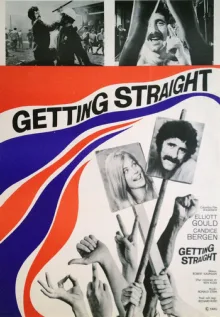
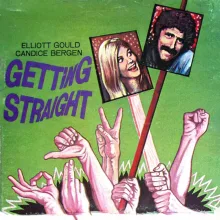
Getting Straight (2026)
- Guest Co-Hosts
- Andras Jones, Bill Ackerman. Interview: Richard Rush
Show notes
Why did the one campus-protest picture that drew a crowd end up forgotten? Mike White, Andras Jones and Bill Ackerman reopen Getting Straight (1970), Richard Rush's comedy about a Vietnam veteran, played by Elliott Gould, who is trying to finish his teaching degree while the faculty makes it hard and campus unrest makes it harder. Candice Bergen plays his girlfriend, Jan.
The panel digs into Gould's all-in performance, Rush's long-lens, rack-focus style on a glass-walled campus, Jeannie Berlin's scenes, and what the film keeps and drops from the novel. They test it against The Graduate (1967) and Five Easy Pieces (1970), and ask whether Hollywood would make political youth films now.
Then director Richard Rush joins Mike to talk about winning over Columbia, working with Gould, and shooting in widescreen.
Transcript
An automatic transcript from Spreaker. It has not been proofread, so names, titles and spellings may be wrong, and it does not say who is speaking.
Show the transcript (about 29,900 words)
Hey folks, just a little intro before we actually start the episode today. I just wanted to let folks know what's going on with me. This is your host, Mike White. If you are on my socials, you might have seen that I got fired back in August of 2026. Don't worry, I'm okay.
I'm doing all right. It's probably the best thing that has happened to me in a long time. The job was. not good. And I got fired for the dumbest of all reasons. I liked a post on LinkedIn that was critical of the company I was working for.
The company whose stock price had gone from nearly $ 7 all the way down to less than $ 2 and had stopped giving any sort of dividends and is in some sort of receivership type stuff. It's not good there. And I liked that post and the CTO saw it and said that I should get fired. And then I was fired. So once I found out that and how stupid it was, I was really okay with things.
This is also giving me a whole lot more time to work on other things, work more on the podcast, work more on some writing projects. Of course, having a nine to five, is good insofar as having a steady paycheck, but everything else is. Going pretty good. I don't want to come on the air and ask for people to reach deep in their pockets as if this was some sort of a fundraiser for NPR, but I will say that there has never been a better time to join the Projection Booth Patreon, which is at patreon.com slash projectionbooth. Of course, if you can't afford to give, totally understand.
I know how it goes. If you want to take a few minutes and maybe share out some episodes on your social networks, tell friends about it, hire a Skywriter or any of those kind of things, that would be fantastic. Every little bit helps when it comes to that. Go over to iTunes or Spotify, rate and review the show. That also helps out quite a bit, and that is totally free.
As always, thanks for listening, and let's get on with the show. Hold your ears, folks. It's showtime. People pay good money to see this movie. When they go out to a theater, they want cold sodas, hot popcorn, and no monsters in the projection booth.
Everyone pretend podcasting isn't boring. Turn it off. Turn it off! This university is just a small piece of the rest of the world. The only way it's going to survive is if it changes.
Harry, I am not giving them this school. They don't want your school. They just want to stay in determining their future. Sheila, it's really getting late. What were you calling a cab?
A cab? Yeah, really bad. But, Harry, this is my apartment. Oh. Look, darling, I need you.
Sexual repression breeds violence. Am I not right? I mean, look at Vietnam and Korea, Canada, Belgium. Come at 7.30. The door will be open.
I'll be ready. It's the least I can do to prevent World War III. Right. This is good combat training. I got my draft notice today.
Can you get out of it? There are a million ways for a cool head. Yoo-hoo, sir. I've come to take my physical. Sure, honey, sure.
Back there with the rest of the fags. I do care about the protest. And if you had been there and seen those kids and everything they went through and those cops and. It was sexy. Sexy?
I mean, all those boys and girls running and jumping and kicking. And squealing and tearing and pulling. Sexy. Jan, when you came running in here tonight, you were so turned on, you nearly slid out of bed twice before I could even kiss you. I am so middle class, get this, I am so middle class that I, I might even enjoy watching television with my husband.
Yeah, well, lots of luck. I hope both of you live happily ever after. Don't worry, Harry. I didn't mean you. It certainly did not take you long.
Did it? Five minutes in suburbia and you're ready to join up with the A & P Blue Chip Little League pill-taking once a. Week on Saturday night. I got a headache, Harry. Shopping and chopping society.
Terrific. Thank you, Ernest Hemingway, Philip Rock, Norman Mailer, F. Scott Fitzgerald. You know, that is what is really wrong with this rotten society. Instead of burning our draft cards, we should be out burning the library cards we give to dumb broads like that.
Harry? Welcome to the Projection Booth. I'm your host, Mike White. Joining me once again is Mr. Andrus Jones.
How's my Chaucerian English? Niddling. Also back in the booth is Mr. Bill Ackerman. What do high school teachers know about fancy shafting?
On this special episode of The Projection Booth, we are looking at Richard Rush's Getting Straight. The film stars Elliot Gould as Harry Bailey, a Vietnam veteran in college, working his way towards his master's degree in teaching, while the faculty makes things difficult and campus unrest makes things nearly impossible. The film also stars Candace Bergen as Harry's girlfriend Jan, who further complicates matters by possessing the mind of her own and having the courage to use it. Please note that we will be spoiling this film. As we discuss it.
If you want to watch it first, go ahead, track it down. I don't think there's any sort of extras on the Blu-ray, if there even is a Blu-ray. I think it's actually a little hard to. Find, but yeah. Then come on back, check it out.
We'll still be here. So Bill, when was the first time you saw Getting Straight, and what did you think? So the first time I saw Getting Straight was 20 years ago. I rented it from Vic's Video Americaine, a cinephile-friendly video store that had a large collection of VHS titles that had made it to DVD. And it was one I had been curious to see because I knew Richard Rush from The Stuntman and I think Psych Out.
And I knew younger Elliot Gould mostly from Robert Altman movies. I think I'm of the age when I first know who he is from The Devil and Max Devlin as a kid, but a lot of the classic Gould vehicles from the 70s I didn't really know. And so I rented it at out of a general curiosity about anything coming out of the new Hollywood era, and I really loved it. I think Elliot Gould is one of the most innately charismatic actors, and this was the film that really convinced me to explore his body of work beyond the Altman films I knew. This led me to Busting and The Silent Partner, Little Murders, and so forth.
I'm really drawn to films that feature characters that had been part of the 60s counterculture to some degree, then trying to navigate adulthood as they grow older, and Even though Getting Straight is made in the thick of the late 60s protest era, it has a little bit of that feeling because Harry is at an age when he's already trying to take those progressive values into a more comfortable, maybe more sustainable lifestyle. So I found that really compelling. And I think it's dated in the best way because it's trying to make a statement on that moment in time. So it's more of a time capsule than something like Five Easy Pieces, which Columbia put out a few months earlier, which is also about kind of a thinking man's rebel.
There's aspects about it that I'm not crazy about that we can talk about. I've always found the film maybe a little homophobic, a little chauvinistic, but I like that it exposes that character's flaws. The characters in this are realistically flawed for that era. I think it'll be interesting and fun to talk to you both about this, because it's the only big hit of that campus rebellion protest wave of films, and yet I think it's disappeared just as much as the strawberry statement or the revolutionary as far as some people talk about, and we could maybe talk about why that is. And Andres, how about yourself?
Well, I, the first time I saw it was on late night. It was called the movie loft on channel 38 when I was in high school in Massachusetts in the eighties and getting straight came on, you know, it was must've been like one in the morning, one till three. I might've, I might've fallen asleep a little bit. It's like when they showed the late movies, it was always a, Am I going to be able to stay up long, be able to keep myself up long enough to watch it? But it really, I grew up on the Evergreen campus.
My father was one of the founding faculty there. So I grew up in this environment in these years and something about Elliot Gould and the campus setting, because he looks like Elliot Gould looks like teachers. I knew people who were friends of my parents. And so just that whole vibe really just had this real nostalgic feeling. And also being young and sort of having my own revolutionary ideals forming this.
Place. Spoke to that. And basically it just became one of those movies that was kind of like a Holy grail. Like I'm never going to see it again. I never, never showed on TV again.
There wasn't on VHS. I could never track it down until like 20 or 30 years later. I finally found it on DVD and, What I find interesting is like, there's a lot of like what Bill was talking about. There's a lot of sort of triggering stuff in it for me now watching it. That's, oh boy, that's that guy's an asshole.
And I didn't, but I didn't really pick up on when I was young, but the things that I love just, there's a certain quality to the film. And I think campus films of that era are, that just really is so rich to me. It reminds me of the Berkeley stuff from The Graduate. I feel like the influence of The Graduate all over this, and that's something I really want to talk about. I think there's also some really interesting sort of just historical context around this that'll be fun to explore.
And of course, since you are deep in your Elliot Gould obsession, it'll be really fun to just hear what you have to say about Gould and this performance. I find it really, even though there's a point where he does kind of does a lot of yelling and I'm like, it's interesting choice, but the performance overall is just, is really just like, as, as you said, Bill, very charismatic. This might be the most yelly performance that I've ever seen Gould do in this movie. And I love that you're saying you grew up with people around people like this because He's just playing this professor to the hilt. He's not yet a professor, but he's already wearing the brown corduroy jacket with the patches on the elbows.
It's like there's a moment in this film where I think some glasses fall off of a table and he has scooted them off. And you see that big old patch on the elbow so much. I'm just like, wow, this guy's straight out of looks like central casting. If they were to say, just give me a professor, a young rebellious professor. And he's got that great mustache.
He's got the tinted glasses and everything. Gould's really looking great in this movie and really giving one hell of a performance that I really have seen him give other great performances, especially in the Altman films or even in the Silent Partner and stuff. But he just seems like he's firing on all cylinders in this role for me. Yeah. And it's neat.
Go ahead. I was going to say... I would read about him being affiliated with a counterculture kind of image when I would read about him. But I think this was probably the first thing I saw where it really felt like he was kind of part of that hippie world because things like MASH are period. Things like Bob, Carol, Ted, and Alice feel slightly before that.
And Marlo and Longabye, it wasn't like, I don't know if this was the first time you really see him leaning into that hero of the Woodstock generation image that maybe things like move and other things kind of tap into. But I don't know. Correct me if I'm wrong. Is this the first thing that really plays to the idea of him as the, the new movie star of the counterculture era? I know mash came out before this, but yeah, to your point, that is what's period, but it's not period.
I don't think that any of the doctors in the Korean conflict looked like Gould or Sutherland or any of these. And he's got the big, mustache with the growth of beard and everything, just looks like such a hippie in that movie. That one, I believe, came out first, and then this one. But it was like, yeah, he did four movies all in 1970, and this was the movie that put him on the map for Bergman, which would then lead to The Touch, which is still Gould's favorite film that he did of his own, I believe. The other thing about it is, like Hoffman and The Graduate, this is one of the first very Jewy Jew lead performances that you're going to like, where particularly where that quality is played up as sort of charismatic leading man, other than George Siegel, really.
And George Siegel sort of has, can pass a little bit, but with Dustin Hoffman and Elliot Gould, you have this very strong presence, which again, reminds me of a lot of the professors that I knew in those times, and also might be what spoke to me about this. I've mentioned The Graduate a couple times. I'm curious, do you see the influence, do either of you recognize the influence of The Graduate on this as much as I do? Yeah, and I was gonna say that even the marketing of Getting Straight, like the... One of the posters is the shot of him looking through the legs of Candice Bergen is very much like a graduate kind of poster image.
But even the use of the folk rock kind of music over the opening, it feels heavily informed by the graduate. I feel like that was why this was one of the reasons why this was a big hit, whereas something like the Strawberry Statement or RPM did not connect with young people. I feel like it was selling... a postgraduate sexy comedy from one of the stars of one of the biggest comedies of the era, MASH. So I feel like that was what they were selling, less so the politics of it. But yeah, Graduate was in theaters for two years.
Even if you captured a tiny percentage of that audience, you'd have a successful movie. Aside from the yelling, he has a similar sort of deadpan quality. to what Hoffman's doing in The Graduate. And I just finished the Mike Nichols biography. And one of the things that they talk about a lot is his use of windows and mirrors was very revolutionary at the time. Like how you get all these window shots without any reflections.
It was very technically challenging and very impressive. And I read your piece, Mike, and I love what you talked about his sort of the focus dance that he would do, that Richard Rush would do. His critical focus technique with that zoom. Lens, yeah. And I just thought, it's funny, so he takes all that window stuff of the graduate, but then he's not, this is a way less, I don't know, internal film.
The graduate feels like it's happening so much inside of Benjamin. And even though you feel this guy, you don't feel really deep inside of him. And maybe it's that moving camera that gives you a sense of... He's communicating community, and he's always trying to communicate this great context in it, which I love. But yeah, and I also noticed, going along the graduate thing, with Jeannie Berlin in the film, her first film, right?
Is this her first film? I believe so. Elaine May. I read the Elaine May and the Mike Nichols biographies back to back, and she's just the supreme... script doctor but with no you know her policy was i'll script doctor your film but you can't give me credit pay me but you can't give me credit i don't want credit on anything and it just it leaves all this room open for like where did she touch and there were some lines in this script that i felt like if they aren't in the book they had to have come from elaine may picking up genie berlin script and being like what if he said this And I'm sure if Richard Rush gets a note from Elaine May, he's like, yep, thank you. Can I ask you about one line?
I didn't get a chance to read the whole book. I read about half of it. I didn't get to it. But that line where the professor asks him, how's your Chaucerian English? And he says, middling.
I'm like, that's so inside smarter than movies really ever want to even be. And I was like, that just has the Elaine May stank all over it. Was that line in the book? I don't remember if it was or not, but yeah, that's a fantastic line. I love that one.
Yeah. I read the book. I don't remember that line. Yeah. Yeah.
So that's one of the pieces of, of context that I, that struck me this in this time of researching it as okay. Jeannie Berlin, Elaine may, and maybe some of these little clever things that's coming from her, which is nice. Yeah. Talking about the camera work. I just, I love that critical focus thing as well.
And Rush was just the master of the zoom lens. And it's such a seventies thing that I really miss when it comes to the use of the zoom and the rack focus. And I mentioned before we started recording the whole opening with the apple and the way that it takes us in. I love that it starts with the picture of the moon or the earth, sorry, from the moon. And then the earth becomes the apple and it's all these kids just throwing this apple around and it's introducing us to the campus.
And that was the difference too when it comes to The Graduate is The Graduate feels so much more open to me. There's, oh, he's going to the hotel. He's at home. He's over at Elaine's. He's over at Mrs.
Robinson's. Now he's on campus. All of these kind of things. Whereas this movie just feels like it is Like it might not have the interior of a Benjamin Braddock, but it's got the interior of this college campus. Everything seems to happen here.
I'm trying to remember, there's not a lot, if any, scenes that take place off campus. It all seems to happen just in this one place, and that play, too, of the architecture and taking us around with the Apple, and even after we meet Harry for the first time. We see him, and he's walking across campus, talking with different people, meets up with his, I don't know if you would call this guy a friend or not, the guy that. Robert Lyon's character? Robert Lyon plays, yeah, it's like, I don't know if I like you or not.
He's very funny for a while, and then things get pretty serious. But even when it comes to Candace Bergen, it's like Harry comes up to the window, and you see something in the foreground. You're talking about glass windows and stuff, and I love how we rack focus to the red liquid that's boiling for whatever reason. I don't know why she's boiling this liquid on a Bunsen burner when she's having troubles killing this frog and dissecting this frog, but it's such a nice way of introducing these characters. And yeah, the whole thing with the critical focus for folks listening at home, he would, Rush would really pay attention, and Kovacs, Lysol Kovacs, the DP, would have these setups where people would walk in and out of focus.
And it was like moving the focus point of the lens to different places and having this whole thing of people hitting these marks. And I know that Gould has talked about his background as being a dancer. He's like, oh, I can hit a mark. That's not a problem. But making sure everybody else is hitting those marks and making sure they're all in focus at the same time when they need to be and when they don't.
And I know that drove a lot of critics crazy. They couldn't freaking stand this whole critical focus thing. Yeah, I was going to say, I never even really noticed that technique the first few times I watched it. And I was looking at it specifically this time for it after reading about how it frustrated people, I guess because it became such a commonplace technique since Getting Straight that I didn't even really notice it the way that I noticed the camera work in the Strawberry Statement or the Altman films with the kind of the virtuoso shots in those films, I think that this feels more contemporary maybe than I think it would have appeared in 1970 to people that are getting used to that technique.
And maybe on the big screen it plays differently because I've only ever seen it on the small screen or at home, so maybe it's different. But yeah, I was surprised to read how hostile some of the critics were to that camera work. Well, this movie couldn't win for losing. When I'm reading the contemporary reviews of it, it's, this film, it was too early. Now is the time of campus revolt because, spoiler alert, Kent State happens, what, 10 days before this film opens?
Something like that? So the campuses are hot. Things are happening. This is a period of unrest across the country. So many protests against Vietnam and student rights and all of these kinds of things.
And you'll hear more about that as we talk about what the students here in this movie are looking for, but it's, oh, this movie. I'm out too early because campus unrest had to hit that peak yet, even though Kent state had just happened, or this movie is too late and really missed the boat. It should have come out six months ago. And it's like, which is it? And it was funny to go back and forth between the headlines and see getting straight is late or getting straight is early.
And it's, I don't know, if Penn State is happening 10 days before this, I think it might be happening at just the right time. Yeah, I think this was like when Get Out happened in the wake of like the Trayvon Martin situation, like where it was like they couldn't have planned it, but it was speaking to the moment in a way that you can't predict that kind of thing as a filmmaker. I think there's another killing, the Jackson State College killings happened on May 15th, 1970. So it's like, two days after Getting Straight opens. And, you know, it's right in the thick of like a really dramatic time for that.
I wonder how much the critical pushback against all these films was because they were afraid of them. I don't know that it's always a reflection on the quality of the films. Like we can pick apart something like RPM for like maybe being a little bit square. But I think that something with the Strawberry Statement or Getting Straight being attacked so viciously was because they were afraid that young people would emulate the films. And there was a lot of resistance to that kind of thing in the mainstream.
I think this is still a different generation reviewing these films than boomer critics reviewing them or Gen X or whatever. It's a different, more conservative sensibility and it's easy to forget that part of it when you're looking at the reviews and then also judging it based on the money they made. Because I think. That it's also bad reviews, bad box office, we can be done with this. And I think even medium cool, which is probably the more acclaimed and critically respected of all these campus films.
I think that one also, because it had the X rating, ran into different challenges. Same way Drive, he said, had the X rating, and I think sometimes that also got in the way of them having any kind of larger impact. I think getting straight benefits from the timing and being first, but also it's not being sold as a campus protest movie the same way that maybe the other ones are. Looking at the VHS box cover, I never would have known that this was a Campus Revolt-type movie. And really, they hold it off for a long time.
You get the inklings that things aren't good. As soon as you see Max Julian in the movie, just nine, ten minutes in, you're like, okay, this guy's not happy, but we're already seeing a little bit of unrest, and it's... I don't know if I would... day at 10 minutes into the movie, this movie's going to end in a riot. But they definitely, for me anyway, the marketing materials didn't seem to play that up. You know, going back to The Graduate, I remember when I was first reading about it as a teenager and hearing that there was pushback in some of the test screenings for The Graduate, that it wasn't dealing with Vietnam, that it was too removed from the politics.
And I think about that film as And I think about a film that is not as talked about that was a huge film at the time, Goodbye Columbus, and Richard Benjamin's character, who's a Vietnam vet like Harry in this, but he doesn't have to take a side on that issue the same way. It's their romantic stories primarily, and he's removed from that protest generation the same way he's removed from the greatest generation of people. He's able to glide between Whereas I think that films like The Revolutionary and The Strawberry Statement, they're in the shoes of people that could be drafted. And they're being more, they're playing more to that youth audience than maybe Getting Straight or Goodbye Columbus or The Graduate were, which were the huge hits of these kind of films because they could appeal to an older generation with a little bit more removal from the Vietnam issue.
Whereas I think the further down the cycle you go, the more Vietnam becomes an inescapable thing. But Mike, did you get it? I'm, I was just looking and I didn't find it on just a brief search, but I'm sure I was curious when you're talking about the reviews, if they, if the sort of counterculture magazine reviews with like Rolling Stone or even Playboy magazine, I won't, were you able to track down stuff outside of the New York times and definitely time? Yeah, definitely. The, The Playboy review, I was able to find that.
I don't think I found any of the other more campus newspapers. It's all basically what is archived and what's searchable kind of thing. So I was able to find huge stash. Gosh, I would have loved this when I was 12 years old. They have pretty much every Playboy magazine out on archive.org and Penthouse.
So I've been like a pig in slop lately. I'm regoing my teenage years, but Uh, strangely enough, I'm only looking for the articles. So what do you know about that? But no, I. Believe Playboy was okay with this.
And there were some, I mean, there, there were a lot of critics that were, oh, this is, even if they didn't like the story, they really liked Gould's performance. But yeah, I think we definitely have the benefit of hindsight being able to look back at this and say, oh, how did, how does this play? Versus when it was. In the moment and temperatures were pretty darn hot at that time. Speaking of which, there's another piece of historical context that informs the way I watch the film now a little bit, in that they went to start shooting in Oregon in July of 69, and while they were shooting, the Manson murders happened, and Candace Bergen was.
Was girlfriend was Terry Melcher's girlfriend and she lived at that house. So there, the, the trauma of that event was very, it was a, there's a cultural trauma. It was a cultural shock, but the story didn't come out. The most people didn't know as much about that story when it came out as Candace Bergen would have just because she was deep in it. And I don't know if I can There's something about her performance that seems a little bit unhinged.
And I guess I project I'm projecting some of that sort of in the same way it's so connected the same way I kind of when you watch Rosemary's Baby and you know that Mia Farrow is breaking up with Frank Sinatra in it you can't help but project her personal trauma and tragedy real world stuff onto that and I when I'm watching this There's something about... I always thought Candace Bergen seemed a little odd in this film, but now thinking that she's dealing with all of that around in the midst of it, it colors my view of it. What do you think of Bergen's performance in this? Will you want to start? I like her.
It's a hard character to know how to talk about because I feel like a lot of viewers. The film doesn't do her any favors. You're right. Well, I think that because that character... has reactionary leanings as far as wanting to be a suburban housewife as much as she wants to protest injustice on campus. That might seem inconsistent or that she's a dilettante or that it's somehow negative.
And I think that a character that age might have a complicated inner life and might be able to embrace multiple things that seem contradictory. I know that when you read reviews of it from the time, it was the first time a lot of critics really took her seriously as an actor. And this is before Carnal Knowledge and T.R. Baskin and all the things that maybe proved that she has real gifts in film acting. I think she was not taken so seriously prior to this.
I think I know that she's spoken about having more fun working with Gould on this than maybe she had prior in working in film. And so maybe some of that comes out in the sillier moments. I don't know how much of their off-camera joviality is informing how she plays the kind of more intimate scenes with Gould. But yeah, I think it's... Yeah, I don't know if people...
Looking at this film now would just be tough on her because of the politics of the character, if that makes sense. But I don't think it's a bad performance. It feels like Gould's film if it's... I don't know if it's critiquing the chauvinistic aspects of that character so much, even though she throws little darts at him, like evoking Norman Mailer and Philip Roth at the party scene. It's a little bit aware about Gould, but I don't know if it's totally... criticizing him either i don't know do you what do you think i.
Am really it feels like the film is on his side so much that it reveals to us watching the true toxicity of that i i'd like to think that the film was knowing in judging him but i don't think it is i. Think For me and my generation, looking at the 60s as an 80s kid, I was very much influenced by films like River's Edge that were taking shots at the baby boomers for the self-righteous 60s posturing. So when I come to films like this that reveal the flaws in the 60s countercultural male as being a little bit less progressive than later generations would believe is correct, I think that's something at my prejudice going into it that these guys... still had some very reactionary values at their core when they were burning their draft cards.
They were also still trying to be their fathers in a lot of ways. And I think that this film lays it out there, whether or not it's judging it or not, it's still very much painting a picture that kind of aligns with what my own perception of like having not lived through it. That's what I imagined. Yeah. As a Google scholar, Mike, I'm curious.
I've never been called that before, but okay. Is it possible that that's the scenes where he is the most sexist are the scenes where he's doing the most yelling? Do you feel like that's his... Is it possible that's his comment on the... Okay, if the film thinks that the character's right and we know he's wrong, is Gould like...
Because that's the phoniest part of the performance for me, is the yelling stuff. And that it's... Is yelling... in the midst of this confrontation with Candace Bergen that is just. I'm embarrassed for him when I watch it. But do you think the performance is a...
Where do you think that yelling thing comes from, even? As far as the yelling, I don't know how Gould perceives this character. And I can definitely ask him about that. For me, it. No, no, I would like to think that the film knows how clueless he is, but I don't know if it does.
I honestly can't put my finger on if the film dislikes Harry as much as I do often. I like a lot of things about this character. I like the position that he's in when it comes to the Jeff Corey relationship and Corey's whole thing about the gray dots, all of these people that fall. Below the mean. And then almost immediately.
After that, you've got Harry talking with Jim and find out that she's grading his papers for him, that he's like a TA and she's doing all the grading. And when she says, oh yeah, some A's, B's and C's, he's like, what about the gray dots? It's have to fail basically. And she's very protective. She's like, some of these kids will go to fucking Vietnam.
If I don't give them good grades, if they don't pass, they're going to go to Vietnam. I don't think he cares. I think he wants to appease the Jeff Corys of the world, at least at this part of the narrative, right in the first act of it. I think he wants to follow the rules. And I think for him, those rules also include this whole, you, I don't know if he's disappointed when she says that she would like to get her MRS and have babies and these kinds of things, or, If he's, if he would be happier that she did that.
I don't know if he really feels that she belongs at home, quote unquote, or what it is, but he just seems to Lord his knowledge over people. He seems like one of these guys, like a David Thouless and naked or something where he just, I am smarter than everybody else in this whole entire room. And I'm going to prove it to everybody, but especially by humiliating my girlfriend in front of everybody. And to your point, I feel worse for him than for her because she seems to be just taking it and he's just making an ass out of himself. Yeah.
And it's fun. You know what? The other thing, when you're watching this, do you have some feel like some, this is on the road to pretty maids all in a row. There's something about the, the way he ogles the girls and set things It's latent in this film. And it's, I just imagine Gene Roddenberry watching this and being like, I know the aspects of this that I'd like to explore and turning it into pretty maids all in a row.
I like a pretty, have you both seen that film? Okay. Yeah. Oh, you've never seen pretty maids all in a row. That's my next request.
We're doing, we're doing pretty babes. Oh God. That's a terrible, a wonderful, a horrible film. Yes, and featuring the actress who played the black student that he has, yes, Brenda Sykes, she's also in Pretty Maids All in a Row. So that also made me think of it.
But yeah, just something about the sort of, that latent sexism or really misogyny. That's what I, see, that's what I think. When he's doing that yelling, it crosses from latent sexism to just, I kind of hate wimpeth. and it's, it's troubling, but I can, it's that, I don't know if you, you haven't seen pretty maids, but there's a way that I see this being like, Oh, take into the nth degree. And we land with rock Hudson. It's character in pretty mates all in a row, but that's a digression.
Sorry about that. No, it's fine. All digressions are welcome. Well then. Yeah.
Yeah. It, The first time that he really has a conversation with her, because I won't say that the stuff around the frog is a conversation, when they're in that class, and by the way, he's interrupting class, and they're watching a sex film up on TV, watching the sperm trying to penetrate the egg, and he's there like, what do we have going on tonight? And she's like, oh, we're going to go to the movies. He's like, no, my needs are such that We need to have sex tonight. And he does that whole thing, which is just so distasteful for me, where it's just my needs come before your needs, anybody else's needs.
So we really need to have this sex tonight. As he's five minutes from hitting on the girl in his dumbbell English class, and it's, can you keep it in your pants? Harry gets laid quite a few times in this movie. You mentioned the African-American girl. that scene takes place later on. Of course, that was pretty scandalous.
There was big pictures in life of Gould on top of this black girl or her on top of him. And I'm just like, okay, misogyny is still a big thing in 1970. So that was quite a big deal that he was having sex with this black girl, but it's yeah, he gets laid all the time in this movie though. I like it when he also gets thwarted all the time. I think you mentioned The Graduate.
Isn't there a scene in there when Benjamin is trying to get his apartment back and can't get inside the apartment, and they're going to sell all this stuff? The exact same scene happens in this. Yeah, I thought.... He also sleeps with a student, which he doesn't in the novel, because she's too into LBJ. But, yeah, no, I think...
He gives her the gynecologist lover, which is an even more off-putting character than Harry at his worst. And so he ultimately wins the girl back even after being awful to her. Because this guy represents the true sellout, the true kind of capitalist nightmare character for the audience that would be coming to see this. But that's the only reason that Harry's like the more attractive alternative than that guy. But yeah, I think an audience coming to this in 2026 would really struggle with this character in a way that I don't think any of the reviews from the time really commented on that so much.
No, I think that I know from, again, growing up on campus in the 70s, professors and students and there was a lot of sex going on. on campuses in the 70s in a way that it would never fly now. And it was just, a professor would bring a graduate student to one of the potlucks at our place, and it would just be a natural thing that would never, like it would not fly now. But it was just, it was not even considered a thing that you would comment upon. That's actually something that one review was really offended by at the time, which was Harry's whole bit about the erotic charge of protests and riots and how this was really irresponsible in the wake of Kent State and other recent tragedies that this would be romanticized as sexy, which I don't know that he's wrong, but it's funny that it would be such a sensitive topic I don't know if that's really where people would have a reaction to it like it today so much, that line.
Yeah. I think that's along those lines of what you were talking about. It just sounds like there was a certain wing of the press that just wanted to see people, wanted to see really more like the movies that Richard Rush was making earlier on with Tab Hunter or people like, I don't know if it was Tab Hunter, someone like that. like real straight-laced kind of, I'm a race car, I'm a rebel race car driver with really nice hair and Annette Funicello. So I think, I wonder if some of that is just cultural nitpicking or scapegoating of the film, especially considering that the film was made before Kent State. So it's like to say it's irresponsible for them to have said this in light of something that they didn't know would happen, is odd.
Well, that's something that you see in the other campus films, too, that focus on young college students becoming radicalized is the lure of sexuality as part of that, is having a romantic interest that is radicalized or politicized, and it's their pathway to trying to get involved with this woman and then becoming immersed in it. in the larger culture. And that's something, the revolutionary, something in the strawberry statement. And I think getting straight doesn't have that element so much because it's closer to RPM in that the main character is a womanizer, but he's with the same primary romantic partner the whole way through. It's not really about him finding, trying to seduce somebody. Well, and he's already had that.
He's not having his political awakening. And I think that's one of the things that, I don't know why, but that was the most romantic part that I remembered for years after I'd seen it, was that there's that scene when they're in the activist group and they're all like, yeah, what about it, Selma? Like, you were there. And he's like, I was there. Selma.
He didn't say it like that. He doesn't say it like he's furrowing Hayden. I've been in the shit. I crawled across dead bodies. I had veins in my teeth.
Yeah. But just that idea of the... It's a very compelling idea when you're young that you're going to go and have these experiences and the idea of coming back to the people who are your age now and having had this experience of, yeah, I did the big protests. I'm not having my political awakening like you are. I've been disillusioned.
I've had my head busted in. I've seen how things work and how things don't work. And now I have that. honest, earned cynicism that, like, I don't know, maybe it is. Seeing someone, maybe it was the first time I'd seen someone who was portrayed as a veteran of the protest movement as opposed to a veteran of wars. Something about that archetype hovered over my life for many years.
I imagined that someday I would be that guy. Having become that guy, it's no great shakes. But that scene also is a scene where he's critiquing the far left as much as he'll critique the more right-leaning establishment people also. It's still giving people in the middle of the political aisle a chance to see a straight white guy tell a person of color. Or a woman or a young guy, like, no, you're wrong.
Your protests are not really serious. I was there first, and here's what you should do instead. And him being right in the view of the film. I think that's something that. I.
Don't know how that would play now, but it's... I think that would be part of the appeal then. Well, he's so disinterested in their gathering that he ends up opening up a book and starts to read while they're all gnashing it out and everything. And he's just like completely tuned out of everything. They have to call on him before he actually will move his head.
And he's basically just leave me alone. I just want to read my book. I don't need any of this kind of stuff. And this is as he's less interested, I forgot. About the whole thing of him going to Candace Bergen for him to have sex with her shrimp on her toes a little bit.
And then basically be like, Hey, do my laundry and I'm moving in. And it's like, what? She's like, I thought someday we would move in together and this is a big step, but he's basically I'm homeless. So now I need a place to stay. So let me crash here.
And it just becomes this whole thing where we get to see. And I guess that's when he actually leaves campus is because we get to see His shitbox car that shows up a few times is when he's trying to, oh, I love that car. Yeah, it just looks like Christine before Arnie Cunningham restored. Yeah, that's the biggest difference with the novel versus this, is that the novel takes place at least half the time off campus, like with the other ways he's trying to make money, whereas it's almost, other than the apartment, I don't think there's any scenes where we're away from the campus. That's where, so I did think that was interesting.
They really did take out the finance. You don't really feel the financial pressure that he's under in the way, in the movie, the way you do in the book. And I thought that, yeah, just that whole element, and then maybe it makes the movie stronger and tighter or whatever, because he probably would come off as more of a scammer if he was like, what was his thing? Selling easy off lingerie to whorehouses. If he was running around doing that, I think the movie would have...
Well, it would just be a totally different movie. But it is interesting that they... It's something that you see in movies a lot, where you're like, how does this person... This person is not worried about their... People don't have to worry about the financial stuff that the rest of us...
How is he paying his rent? How is this character doing that? And the book has that very much at the center of it. But yeah, they can write out. That first half hour is probably the only time that he's really constantly bringing up how broke he is.
But it's really more about him being pulled in different direction in terms of his values. It doesn't seem like he's really in trouble for very long. Whereas the book, it's not just him. Everybody is selling lewd photos or selling art or selling the lingerie or doing kind of weird publicity gimmicks to build interest in the department store that everybody is hustling all the time. And that's Part of that satire is the money part, whereas, yeah, they do downplay it in favor of something more internal, a struggle with the movie.
Don't want us questioning capitalism. Question the war, but don't question capitalism. Come on. When you look at Harry, it's like, okay, so you're not grading your own papers. You have this drugged out friend of yours who is taking all of your tests for you, which eventually comes.
Back to bite him in the ass. It's like, what are you doing? Other than the one scene of him teaching, and it was so great seeing Gregory Sierra in this English class. That was really nice. Other than that, it's like, what are you up to Harry?
Like, why are you having all of these struggles? And yeah, I totally agree that the, the money part isn't as prevalent in the movie. Cause that becomes, I think there's that one scene at the beginning where he owes 12, $ 11 for class or something. And he's, I'll pay you next week. And the woman's just not having any of that.
And it's, yeah, there, I want to say he talks about selling books or something as well, just to make some money. And it's, Yeah. He's making the ketchup soup too. It's not all a walk in the park for this guy, but at the same time, I'm just like, what the hell are you doing, man? Your life just seems like a complete mess.
And it just feels like he's spinning plates like crazy. To your point, he does. Feel like a scam artist and it feels like he's just able to get away with it a lot. And when the chickens come home to roost, I'm kind of like, okay, yeah, good. I'm glad for this.
There are moments that are a slap in the face for him. as he's the representative to the university. Of the student demands. And one guy comes back and he's just like, oh, you know, we did so much. We came to all of these conclusions and you're going to love all this. And every single thing that he says is basically an insult and a, oh, we can't do that.
Oh, we can't do that other thing either. Oh, you want a black studies department? Oh, no, no way. There's no way we could do that. The fact that he sends his friend to take the test for him in the book, it's because of a work conflict with this department store job, which is not really something that's...
I don't know if they even really established a good reason for him not to take the test himself in the film. It just seems like he's that scattered, that he's entrusting someone who clearly seems like not the best person to send to take the test for you, and that it's just underlining what a reckless character he is. That friend, I think of that character. And I think of the roommate in another campus protest film from the following year, Drive He Said. But I also think of maybe a few of these where there's a character that embodies the more lunatic side of the counterculture, like either drugs or they're so politicized that they seem slightly crazy.
And this is kind of a counterpoint to our more relatable protagonist. And I don't know if that's a cliche that kind of lines with all of them, but I think of that, especially with him, as He seems kind of more of a construct than Gould's character, who does feel like a real person. I always found that to be like, why are they such close friends? Because he doesn't seem like a real grounded person the same way that Gould does. Do you feel like you get a sense of them as closely as friends?
What do you think of him? I'm just going to. Take a shot. Obviously, again, my memory of this character was of really liking him. the Robert Lyons character, like feeling like he had that sort of Jack Nicholson-y quality. And there's something about like, something about it reminds me of the character in Hair, the one who ends up having to go to Vietnam.
And I'm wondering if this film is in any way, was that in the book? Was that character, did that character end up going to Vietnam in the book? I don't think. Yeah, I don't remember either. That's the whole, the big turn. in hair is like, Oh my God, now this guy's going to go off to Vietnam.
And I think I saw this before I saw hair. So when I saw hair, I was like, Oh, it's like getting, they're doing like the thing, like getting straight. Yeah. I always found this. I always liked that character.
I watching it now, there's obviously things that are annoying about him, but as spoiler, I don't know. I was, I called Paul Williams, the director of the revolutionary who I had done some work with to act before this, to be like, Hey, we're going to be talking about this. And, Anything else, anything that's useful. And one of the things that he said was, you know, getting straight was how Robert Lyons got cast in his film Dealing. And, you know, Robert's a great actor.
I love his work. So I actually, I tried to reach out to him to see if he would be available. Did you try and reach out to him? I haven't, but I need to. He'd be a really good guy to talk to.
He's very smart. Yeah. Really good actor. Great guy. But I don't know if he's on. if he's on Facebook these days.
Anyway, I do love that character. The one, the character that I don't love is Harrison Ford. That guy, his character is, is really annoying. Whatever happened to that guy? Anyway, he's got a little bit of a presence in this movie, the way he shows up and he's completely drunk.
And then the line later about his wife. And it's like, what? I thought you were trying to bang Candace Bergen in here. And now you're talking about your wife and this other scene. Yeah.
He seemed interesting. I, Real good face, but yeah, I don't know whatever happened to that guy. Yeah, I don't know. He's a little bit too much. He looks like a young Steve Martin without charisma.
Yeah. Oh, yeah. Yeah, I can see that. Yeah, at first I thought it might have been Steve Martin. No, but did you guys like his...
I found his character to be the one that bugged. Not as. Obviously, he's a great actor. I don't think he's a great actor. He's a good actor.
And the very... we love Harrison Ford, but that character, that's the one. And I remember when I watched it, I heard, I was excited to see it for Harrison Ford. So if you're a kid who loves Star Wars, who was going to see Getting Straight for Harrison Ford, you were very let down. And as an adult watching it, I still, I'm like, that guy, I don't like. He's very smarmy in this role.
He's very manipulative. So I don't think it's Harrison Ford necessarily, but yeah, that character is a piece of shit. Like, he grew up in that character grew up to be the character he plays in the conversation. It was also the weasel. Yeah.
I reading the book and trying to picture that character in the book, I didn't even really make the connection for the longest time. That was even supposed to be the same artist until he has the line about his wife and the painting and all that. I'm like, Oh, it's that guy. Cause I don't, I never pictured anyone that looked like Harrison Ford when I'm reading the book. And I thought it was a different character, uh, But yeah, no, he is a little smarmy in it.
I have a hard time forgetting it's Harrison Ford whenever he shows up because he's in it so infrequently and it's just like, oh, there's Han Solo. But he's not a hippie. Yeah, the Robert Lyon character is fascinating. And yeah, I'm glad you brought up hair because he does remind me of that whole sequence in hair where they're trying these different things to get out of being drafted or Alice's restaurant, some of these other restaurants. some of these other films from the time where it's just, what can I do to get out of being drafted? So he tries all of these different things, and that's really the running gag of this whole movie is, okay, I signed up to be a Buddhist monk, or I'm chasing this black woman and her kids down the street because I want to marry them because I can get a family deferment, or he pretends to be homosexual, and that's the one that kind of blows up in his face because he goes into the recruiting station and they're like, okay, Mary, head on over with all the other guys.
They don't use the word guys. And when we see him next, he comes in and he is completely transformed. What an amazing transformation of the actor as well as the character, because now he has bought everything straight down the line and Harry, we have to tell the truth. I feel awful about taking this test. What is going on around this campus?
The people are putting down our president. It's just complete 180 from this hippy-dippy character that he's playing to now the... If there's one person that's getting straight in this movie, it's he that gets straight, and then luckily he gets a little bent towards the end again. Yeah, it's like his programming kicked... For that character, it's like the programming kicked in.
He was. Like, that was under there all the time. There is a... We get into the sort of psychology of it. There is something there.
The zealotry of the countercultural revolutionary is just right on top of the same thing of the army hero. I'm going to go. from one great cause to another great cause. It's actually interesting. Maybe it's a nice balance with Candace Bergen, because she's also struggling with her programming kicking in. She wants to be a revolutionary, but the programming to be just a housewife is there.
For Robert Lyons, he wants to be this whatever sort of Timothy Leary type acolyte, but ultimately the programming kicks in and maybe that's there for Harry as well. Like you're talking about how he's, but I think he's, that's the thing we like about the character is that he does seem like he's the one guy who's not on the program. And maybe that's just good film writing. One-on-one is that your main character is the one who, even if they, nobody, they don't get credit for it. They kind of see through the bullshit.
They are who they are. They're not struggling with some other thing coming through. Yeah, the Robert Lyons character, I was just going to say that, I felt like because they established that he's using drugs, and I think it's heroin in the book, weed in the film but just that the drugs make him so malleable personality wise that in terms of political satire he's like a character like political theater where he can just be the mouthpiece for whatever views the scene needs him to be and that's why i like the character but i also do find it a little bit like i'm aware of him as a written character because he can be the Marine-type gung-ho right-winger in this scene. He can be very religious in this scene.
He can be the more laid-back, hippie best friend in this scene. And it's because of the powers of drugs that he can just be whatever the scene needs him to be. So he felt like. Not like a person so much as like a symbol, maybe? I don't know if I'm phrasing it right, but that's what I get from that character.
Whereas. The Candace Bergen and Elliot Gould characters feel like real people that are sometimes frustrating, but they seem grounded in a way. He seems like a more heightened idea, at least to me. No, I can see that. He often feels like comedy relief.
The whole thing of when he's trying to leave the country and go to Canada, and he's pretending to be Native American. And then the way that he puts the button on the scene with the Ugg. It's... To go back to your earlier point, Andres, I don't know as far as these two being friends, because it feels like they really probably shouldn't be friends. Because he's a student, which, that's fine.
Professors can be friends with students and everything. But yeah, Harry has been over there. Harry has experienced all of this stuff. But you don't really get that feeling until he actually says it, like in that scene with Max Julian, where he's just like, I've been to Vietnam. This is what happened.
I've done. the protest thing before I even went kind of stuff. And yeah, it feels like his friend, to your point from earlier, Bill, as far as him taking the test, it's like there is no good reason for him to be taking this test. There really is no good reason for Harry to be hanging out with this character. It's much more of a convenience of the film and a series of comic relief and then also a threat later on when he does end up telling the truth that he was the one that sat through the test and took the test, and then that has to put us into the Thornton Mellon ending of this with the big oral exam. It really helps propel the story into that third act, but yeah, I don't know if it necessarily is earned that way.
What you're saying about Gould being a Vietnam veteran, it is really, like, maybe at this point they hadn't established, like, it wasn't so culturally established that like the PTSD archetype for a Vietnam vet. So like someone who's so relaxed and seems like just fine, like he went through Vietnam and is fine. He seems more traumatized by the professors at his college than by that. That does seem odd and maybe just, maybe that hadn't entered the cultural conversation yet. But that is odd.
And then also you keep saying that you said that he was a professor. He's a student. Right. Sorry. Yeah.
He wants to be a professor because he's a TA basically. Right. He wants to be a professor. Yes. He's basically an older student, an adult student returning and hanging out with all these 19 and 20, 21 year olds.
And he's 27, 28, 29 is what we imagined. The good thing about these college girls, I get older and they stay the same age. I really thought about that character a lot watching this. Yeah. This movie reminds me of all the movies that I read about in comparison to this film.
And there's a lot of stuff that we'll talk about after the jump. But the film Captain Milkshake, which I know is not everybody has seen this one. I wish more people would be able to see it. I want to say it came out in the exact same year, and it's about a Vietnam veteran who returns, and it's really, he falls in with these protesters, and it really kind of captures them and their movement and things. The one thing that always stuck out for me with that movie was the conceit that the footage that takes place in the United States is all in black and white, and when he has flashbacks to Vietnam... it's all in color.
And the director was very purposeful with that to say Vietnam felt much more real than what was going on in the United States. And that was where he was the most alive, was being out there and just having this horrible thing going on. He comes back to the States and all the colors drained out. And I wish that film would make it into the conversation more because, yeah, we talk about RPM and strawberry statement and medium school and these things, but I really think that would a great addition to the discussion. Yeah, I'm not even aware of that film, so I just brought it up.
I'll definitely be checking it out. Yeah, I don't know if the filmmakers are still selling the DVD for that themselves directly through their own website, but I think that they had it for sale the last time I looked. But yeah, no, I hadn't thought of that film in relation to this, but yeah, it is definitely under-seen for sure. Yeah, for sure. Luckily, I was very fortunate to interview the director of that, and he was telling these great stories about how he was trying to get it picked up by Zoetrope, and he's in the Zoetrope offices, and Lucas keeps stopping by and talking about how he's having trouble cutting THX 1138, and Opal is just rattling off all of these instructions, and then he keeps hanging up the phone.
He's just like, these fucking guys want me to direct this mob movie because I'm Italian. Fuck these guys. I'm just like, These are great stories. These are awesome. But you guys okay if I kick us to a break?
No, please. The only thing I was going to just say real quick when you talk about the 28-year-old student sleeping with co-eds is I sometimes wonder how many of the films that are dealing with the sexual revolution with young people were. To varying degrees, selling the idea of the free-spirited hippie chick sleeping with anybody, which isn't really the same thing here because Gould is not as old as the character in RPM, for example. He's still in his 20s, but that's something that when I think about, the tagline for this was America's children laid on the line, being a sexual innuendo, and I think that so many of these late 60s to mid-70s films dealing with the counterculture, women, they seem to always have the free-spirited sexual angle as a selling point, maybe to people.
They're a little bit too old to. Have experienced it as young people, but they still have that prurient interest in that for a film. And I wonder sometimes with even something like Medium Cool with the X rating and the sexuality of that film, Getting Straight, like a few of these are selling the sexuality of it as much as anything else. And I don't know None of the reviews really comment on that, but I do think about Joe and other things from this period that are trading in that idea of a baby maker. Even something like Goodbye Columbus.
Just the idea of this sexual revolution and what's it all about? Let's go see it on the big screen. The freedoms of the new R rating and all of that is also still relatively new. It's still the MPAA and all that. It's not taboo to see nudity. in the mainstream films.
And so I think that's part of why this film was commercial, even if that's not the disgust element of why it's popular. Absolutely. Speaking of Playboys, I still have a memory of the Sex and Cinema issues of Playboy magazine. I remember I had this magazine from the 70s, from 1970, that had Sex and Cinema in 1970, and it had all these. It basically did that. played up all of this.
And it's one of those things that I wonder about a lot while I'm watching these is like, because the sexual revolution was happening and it was messy and like sort of what we're talking about, like people trying to be more revolutionary than their actual programming allowed them to be. And so it was just really messy. And I kind of, in a way, I'm sure that the films are getting it wrong because and are leaning into stuff to sell movies and it's full of the male gaze and it's all this other stuff. But I also think that there's something about that. There's something about it that is true within it.
Like that maybe like sex and films before new Hollywood and before the European films came in and changed, it was sterile and it became a more open, and maybe neither of them was honest or what it purported to be. But it's sort of like the, like the way that the characters sexism, I believe is the film sexism. And it reveals something true about that time. I feel like it's the same way in the free love aspects of a lot of these films that it is honestly reflecting what people thought they were going through. And then we can watch it and see, oh yeah, these people aren't like, they think they're very enlightened, but they're not.
And this is something I always try and encourage for all of us is to remember that we're those people who think we're enlightened, but aren't. Yeah. To the earlier point about the titillation, that poster with Candace Bergen's legs or that student's, it's Candace Bergen because we get that nice long between the legs shot of her and then using my favorite poster trope of having a character between the legs of somebody else's character, having a frame that way. Yeah, that is 100% pure titillation. I forgot about that lay it on the line thing too, which is right there.
Yeah, not really selling titillation. the protest part of it, but definitely selling the sex part of it, making it feel like it's more of a frothy sex comedy than it really is. And I think we're going to be getting into comparisons later, but when we do, that will get into where Paul Williams' critique of this film lands. I'm curious, one of you brought up the homophobia of the film, and I know for sure with our one character playing homosexual when he goes to the recruiting station. There's that. But would you say also that the whole thing of the big moment of.
The film when Harry's taking his oral exams and being quizzed about all these things, seems like he's doing very well with these oral exams, and then we get the one question about your favorite books, and he brings up The Great Gatsby, and that starts a whole conversation about the latent homosexuality in The Great Gatsby, and Harry loses his shit. There's a line early in the film, and I don't know the exact line off the top of my head. I should have written it down, but he has some kind of quip about, don't knock Arizona, whatever it has, the lowest instance of homosexuality and something else. He's making a quip, and maybe he doesn't take it that seriously, but then when he's confronted with this queer reading of The Great Gatsby, the It's treated like that's the bridge too far for him.
Not that this whole charade is at odds with his view of literature, but it's that this particular reading is. Absurd to him, but it's in the book too. Even the Brenda Sykes character in the novel, she has the Baldwin line, James Baldwin, but she says something knocking him for being gay in the book that is not carried over into the film. So there's little bits throughout the novel that carry over into the film, but the film, with that confrontation in the oral exam, he kisses the guy. He makes it about calling that guy out and mocking him.
And we're supposed to be cheering that and The book has him thinking, all these other professors don't know The Great Gatsby because it's too new a book. They're all caught up in other centuries of literature, and so they don't realize what an absurd he's putting forward as fact, making me look like I don't know the book and don't know the meaning of it. So it's built into his frustration that he's being made a fool, and so he turns the tables. But I don't know. I get the impression that the film likes putting down this villainous homosexual professor for this reading in a way that I've always found it a little bit uncomfortable.
I don't know if it's... I'm not. Other things about the film work perfectly fine, but it's something that I feel like just carries over from either the literary source or if it comes from Rush or Gould as well, I don't know. It's a different time, but yeah, that part is, as they say, not aged with No, but again, I... No, don't.
The professor himself is supposed to be homosexual? The one that's questioning Harry? He is, and actually the one that the professor that he's always at war with throughout the whole film, the one who basically says, I won't turn you in, but you have to stop teaching. I think you're dangerous. That character is gay in the book as well.
And he's taunted. He says. Are you in love with me? He's taunting that characters for being gay as well, which is not carried over into the film, but it's still, I don't know. There's a quality to it that definitely feels like it feels homophobic to me.
I don't know. There's that moment when Corey and Gould are in the same space in the same time. It's when Gould is in the men's room, when Harry's taking pee and the Corey character comes in and he does take a peek. of what's going on with Gould when he's at the urinal. So that's interesting. That was maybe a little bit of a carryover from the book.
I got to wonder if anyone who hasn't watched the film listens to this. We're making the film sound thoroughly repugnant. It's weird. And this could be revealing our own prejudices because I, yes, I'm totally, I find it off putting his sexism towards Candace Bergen. I definitely find the homophobia just sort of like, like a bad note, just like a really bad note in the whole thing.
And the racial pot, like some of his back and forth with the guy about the one cliche that you never will, you'll never deny. So there's like, there's all this stuff in it. And yet I, I feel like the film is on the thing that the reason the film works for me first gold is gold, very charismatic. The film is beautifully done, like shot. And it just, the, It has this nostalgic feeling, but I feel like it is...
I love this when a film is so committed to what it is that it reveals the prejudices of the time and the people making it. They're not... These are honestly wrought prejudices. It doesn't feel like the film has an anti-woman agenda. It has a pro-woman agenda.
It doesn't feel like it has an anti-Black agenda. It has a pro-Black agenda, and I don't think it has a pro- homosexual agenda, but I don't think it has an anti-homosexual agenda. It's just that 1970s had an anti-woman, anti-black, anti-homosexual agenda that they didn't even know they had. They just thought that was normal. And this film delivers that.
And I'd be curious if people who are in those constituencies are able to watch it and cut at the slack that I cut it, or you might cut it, and they'll be like, no, I'm turning it off. The second he yells at Candace Bergen... fuck that guy. Maybe not because Elliot Gould is so charismatic that they may just be like, oh, fuck that guy, but I love Elliot Gould and that goddamn mustache is so good. No, I'm with you on this. I'm bringing up the things that I find aren't my favorite about it, but I've always loved this movie and I think that part of it is because it is earnestly trying to make sense of those times and those values are embedded in those times and just reflect through it.
So it's It's not like a dangerous film or a, you know, a problematic film in any way. It just has some of those undercurrents because that is, it says something about the makers and of the era. But I think that there's so much that is compelling about it, whatever flaws it may have, that I always kind of wish it was more widely seen. I don't know. Yeah.
Like in 2026 or whenever people do catch up with it, if they're new to it, if they would have those same kind of questions about, things that reveal the feelings of 1969 when they made it. It's amazing to me that the protest, it's going through a lot of this. And you even see there's a point, I want to say about midway through, where Gould is giving a campus tour. And there are people with placards down below. I believe that the. liberal mob printed all those up for them because they're so professionally written.
That's usually the dead giveaway from what I understand. But, and he's a vet and, Hey, these are potential new students coming in here. I don't know if it's their parents are with them. It seems like it. So he's kind of putting a fun spin on it and he's okay with this and they seem to be okay with it.
But when he sees Candace Bergen holding one of those signs, it's like, Oh, excuse me, I'll be right back. And then he has to go down and yell at her. And it's like, all right, this is a bridge too far. But it's amazing to me that the second half of this movie is one hour and 15 minutes in when the riot really starts. The riot goes through phases.
It will have little climaxes and then things get broken up and then we'll see it happen again. And by the end of this, of course, you've got like Max Julian going down the hallway, breaking all of these glass panes of these doors and almost draining Harry. That scene is very interesting to me that he holds up the hammer. Like he's going to take Harry out and Harry holds his hand and it's just, are you so enthralled in the heat of the moment, this campus violence, maybe the same thing that he talks about when it comes to Candace Bergen and Jan's character, how she's so turned on by the revolt. Are you so, is your blood up so much that you can't even tell that this is Harry, that you've got this hammer and you're about to kill me with this thing?
It just, it's a really interesting moment for me. For some reason, I thought of Over the Edge a little bit. in how the feel good release of destroying the school is almost horror movie. Like in a way that it's almost going to the point where the filmmaker is a little bit afraid of it. And like someone we like could be hurt in the chaos of it, but it doesn't quite tip over into that. But I thought of that for some reason when I watched it again, but I think it's a, uh, it's kind of like a slightly chilling ending when the focus goes out, like when Candice Bergen is like holding the apple, like, and it just kind of like the image changes.
And then it's just like that light coming through the broken glass. Like it's, I know that some reviews of that were almost kind of like it was defeat. I don't think we're saying he was the defeatist, but it was painting a very kind of grim view of revolution maybe, or, or like a downbeat kind of feeling. I mean, what are your feelings about the very end of the film? We're back at the end of the graduates.
It's a flip on the end of The Graduate. Okay, now we're together, but we're in this mad... There's something in this that is not sustainable. Yeah, I think what's really not sustainable is that there's somebody up above them ripping paper and throwing it over and over. It looks like a Tony Scott movie for a little bit with all this paper flying through the air.
It reminded me of Natural Born Killers with the prison riots. something about it with the all the stuff flying through the air and yeah it's very it's funny because i talked about the apple at the beginning apples throughout so much of this there's a point when he when harry comes in and. He sees his buddy the drug druggie buddy. And there's a woman's Yeah, there's a woman's arm hanging out from behind a wall, and you just see him taking bites of this apple, and you never see the person that's holding it, this disembodied hand. And then, yeah, at the end of the movie, you've got Candace Bergen with the apple, holding it out to Harry, and then Harry takes it and throws it through that window, just like, okay, I'm with you now.
I'm now part of this revolution. But yeah, I'm. Very curious as far as does this movie say that revolution is a good thing. Or is this just, we're having fun. This is the way that this is our now.
This is where I would get, where we'd get into Paul. I had a good conversation with Paul Williams and his critique is, yeah, this is not, he doesn't consider this one in all the movies we're talking about. He considers this among the dumber ones along with art, like along with RPM and, and, The corroboration statement, as opposed to medium cool and Jabriskie Point, he brought up Punishment Park. I guess this is where it's just, this is a Hollywood movie that's about entertaining people and playing with some revolutionary ethics or ideas, but it's not trying to put forth an actual, it's a soap opera on campus, ultimately. I would say that something like Strawberry Statement is a teen exploitation film compared to something like Huntersman Park, which is a very serious art film dealing with things that are medium cool also.
They feel like almost different categories of film. No, I completely agree with that. Yeah, and it's funny that Rush's background is in exploitation. He was doing, you mentioned the Tab Hunter thing, but he was doing movies about bikers. Savage 7 or Psych Out, those kind of things.
Hell's Angels on Wheels. Exactly. And it's like, this was his first time really being able to do more of a quote-unquote straight film, and it really put him on a whole different path. His next film is Freebie and the Bean, another one that he did with Robert Kaufman. It's funny how Kaufman's name comes up in this research so many times because of this film, and then he also did One of the drafts of Harry and Walter Go to New York from 75, which was, or sorry, 76, another Gould film.
So it's like, okay, one of those writers who was just very popular, I think he also did I Love My Wife from the same year, 1970, also a Gould film, and then also did a pass on Willy Wonka and the Chocolate Factory, directed by Mel Stewart, who I think also did I Love My Wife. Yeah. When I think of people that come from an exploitation background trying to make a serious Hollywood film, I do think about this feeling like any of those people that come from Corman, their first step into something more legit still has traces of that exploitation background. This is only a few steps away from Wild in the Streets and things that are straight up youth rebellion exploitation, I think. But because it has a slightly older character, but it's, it's still not a hundred percent.
Some of the reviews like just call it exploitation as a way of like dismissing the entire thing. And I think that's a little unfair because it is, I always feel, I don't know if I'm crazy for thinking this, but I think about Frank Capra movies because it's Columbia. And I think about like the way that like the oral exam built to the same kind of like, taking on the establishment with words the same way you have the filibuster scene in Mr. Smith Goes to Washington. And I also think about, in that scene, I think about the films of the 60s from Europe that were dealing with the way young people deal with the absurdity of everyday life by embracing a performative madness, like Morgan, A Suitable Case for Treatment, or even King of Hearts, but things that deal with When he's on the table being ridiculous, I think about those kinds of expressions of just giving in to anarchy as.
A way of. That's the only solution. It's not even a reasonable... He's gone past arguing with words, and now he's just giving in to madness, and then we're into riots and throwing things, and that's how it ends. It's bringing the couple back together, but it's like, within like a completely chaotic open ending.
It's funny. I never thought of the graduate, but you're right. That is the graduate. I'm so curious. Cause you see Harry taking off his tie and throwing it.
And I'm just like, are they just going to strip down as he just want to have sex during this ride as well? It's just a, you, you are blocked from seeing them after he takes the tie off the cameras moving back and you just see all the chaos. And there's like literal, like a body coming in from the, top ring kind of thing or the top belt. Oh gosh. And just people beating the shit out of each other.
And there's some great lighting in that. There's some really bright lights in the background that are just making so much of this stuff look so beautiful and silhouetted. And you've got the smoke from the fires and everything. It's just, it's a really beautiful shot, but it's like, are they getting it on right now? Is that what we're doing?
I think we have to use film logic and assume. Yes. He, Okay. All right. It is Candice Bergen.
It's 1970s Candice Bergen. Hey, it's 1970s Elliot Gould. Yeah, that's for sure. Whether or not it's pro-revolution or not, I always got the impression that it was not exactly happy to be giving into the revolution, that it was like a downbeat. There's nothing else to do because trying to join the establishment is just not going to work because there's reactionary views that are just so embedded that even if you wanted to bring a progressive ideology to teaching students and like bringing like you know bringing change positively that way it's not going to work because they're going to they're going to keep you from actually having that kind of influence on young people so you just have to destroy everything and that's what I got out of the ending which and I saw at least one review that was like this is so irresponsible I'm trying to think who wrote that but like that Coming away with Richard Schickel said that was the message he got and that this was a really negative view.
I know that when I interviewed Danny Perry, who wrote about a lot of these kind of films, he was saying that a progressive film has to have an element of hope at the end. Otherwise, it's ultimately a reactionary film. And so I wonder if people that don't take this seriously as a left-leaning political film are coming to it from that direction, that it's ultimately a defeatist kind of thing, that post-Easy Rider pessimism informing even this kind of portrait of student radicalism. And all of them have that kind of downbeat ending. And now that I think about it, I'm trying to think if any of them have a happy ending.
Reality doesn't have a happy ending either. In terms of the protest movement, I think a movie about protests in this world or like protest movements at any time that has a happy ending is going to be phony, maybe hopeful, different than happy. Well, if you think about, you go to return, there's a caucus seven, 10 years later, and you have former radicals and one of them has gone into teaching. And it's like, They're all from that protest generation, but they've all found ways to incorporate that ideology into mainstream society in little ways that are not selling out the way that the big chill, because that was always the big comparison, was the big chill characters lament becoming yuppies, whereas the Secaucus Seven characters have these modest little progressive kind of ways of incorporating those values.
And so... That's one way, but I don't know that that would make a sexy youth rebellion movie. That's just another way of bringing that protest generation to a positive conclusion. It's how you say you were taught early. You were saying that you are, you love these kind of steam of like former radicals.
The big fix is also a, is also on your favorites list. The big fix. Have you seen it? Right. Yeah.
Which one? With Richard Dreyfuss? Yeah, I love it. Yeah. I would even put something like Chilly Sins of Winter, which Mike and I talked about many years ago.
It's not always characters that are turning to other political matters, but just characters that are just trying to figure out what to do next now that era has passed, and how do you navigate adulthood? But yeah, Secaucus Seven is probably a poster child example of explicitly dealing with that theme. And Big Show is a perfect example of selling out that theme. Yeah. All right, guys, let's go ahead and take a break.
And we'll be back with an interview from director Richard Rush right after these brief messages. Hello, everyone. This is Malcolm McDowell. I just want to say that this is a request to listeners of the Projection Booth podcast. to become patrons of the show via patreon.com. P-A-T-R-E-O-N dot com slash projection booth.
That's pretty simple. I think you can do that. It's a great show, and Mike, he provides hours of great entertainment. So now it's time to give back, my little droogies. Settle down and take a listen and have a sip of the old Molocco. and then you'll be ready for a little of the old in-out, in-out, real horror show.
Bye-bye. This was your first big studio film, correct? My first studio picture, yeah. So how did it come about? I mean, they must have known your previous work.
How did you manage to get in with Columbia? I told my agent I wanted to make a try at it, and He arranged a meeting with the head of Columbia. And I went in and explained that I was making pictures cheaper than anybody else. They were coming out of the well. We're making money.
And I was disciplined and fiscally responsible. And that he should really try me. He sort of agreed. And he offered me the book. And I read it and said I liked it.
I wanted to update it and play it against the current situation. It takes place in a college. And I said, this is a time of college rebellion against the Vietnam War. Let me play it against that theme, the students at the barricades. And he said, fine, that sounds good.
Commissioned me to write the screenplay. I think we hired somebody else to do it. And they did a terrible job. I didn't like it. I don't remember whether they liked it or not.
But I agreed to do a rewrite and did. And I liked that one. So we proceeded. They went along with it. I said I wanted to both direct and produce as I have been on the outside.
They agreed. And then when it got around to actually making the picture, there were interesting complications. It turned out we had been given not a go, but a tentative go there. You know, like it was officially in development. All the pieces came together.
And then I got a tip. I think, yeah, there was an interesting studio situation at the time. The second in command at Columbia was a young guy who was very ambitious. And the third in command was Peter Guber. Peter Guber, I think this was After my film, I talked the other guy into, there was going to be a retirement of the head of the studio from Mr.
Whitehair. The second in command was the obvious heir apparent. And he said to him, ask for the power to go in and line a picture of you. Otherwise, it's a worthless assignment. And he said, no, I wouldn't do that.
They're not going to give it to me. And he said, what are they going to do? Who else are they going to get to run the studio? They don't have anybody else with you. And he talked him into making that stand and asking for it.
As a result, they hired Peter Gugger. That's how he got to be head of Columbia. But I think it was he who came to me in the middle of this post-production period and said, they're going to turn down your picture because they have an annual deal with Weiss, you know, the director. And he has come up with a student rebellion script. And I think they're going to do it and turn you down.
That's the thanks for the warning. I stormed into the head of the studio with an angry, ferocious speech about this bullshit that mine is a better project. But we've made too many commitments on it. And he says, I'll tag it to somebody else immediately, etc. And he went for it.
And he green-lined the picture. There was one other crisis on the way. And then there was the last minute crisis. The last minute. Pointing at Century, who had a picture coming up with Elliot Gould.
It was Matt. And they wanted a stop date on my picture. Guaranteed stop date. Because they had to start on a certain date. They don't have to start on that date.
But they want the stop date anyway. And the studio is obligated to give it to them if they've already contracted Elliot Gould to do the film. And we hire him in between. And the only way we could do it was by going to Elliot and saying, are you willing to take a chance that I'll finish the picture in time to let you go for Matt? Otherwise, we can't make a deal because they need a stop date.
And the only way, I think my theory was I issue a stop date. But if you sign it saying that you'll be there and you waive everybody's responsibility, you assume it yourself. That was the legal department's solution. So he said, sure. He said, do you think you can hand me out in time?
I said, I think so. He signed it, and that solved that problem. Was it an unreasonable amount of time? Because I know you made pictures pretty fast back then. It wasn't an unreasonable amount of time.
It was within the schedule we had set. It's just that I had gone over by a week or two. We would have been late in delivery. Of course, they started months later anyway. That's the way it usually goes.
When you're talking about the script, was that the Robert Kaufman script that wasn't that good? No. Robert Kaufman had been my collaborator in the past, and I brought him on to write the script with me when I decided to do it. What I did was I came up with an outline I was satisfied with, which is like a, you know, two, three hundred page treatment that really does it all. And then he went to write the screenplay with me.
We used to work very well together because he's absolutely amoral but very funny. Can you tell me more about Robert Kaufman? Because he wrote so many movies that Mr. Gould was in. I can probably tell you more than you want to know about Robert Kaufman.
He was a strange man in that he had a lot of complexes. As I said, he was genuinely amoral. Not immoral, but really couldn't recognize good from evil. And he had an amazing facility for walking into a room full of strangers, picking somebody out to talk to, and immediately... knowing what that man's weakness was, what made him go around. And he would actually immediately go for that weakness and attack it.
And it was a devastating problem to watch. For a second here, if you were his partner in something, And you would do that to your employers. There was a situation later on where, let's see, who was it? It was the man who financed my movie, The Stockman. He was a shopping mall magnate who had recently gone into film, hired the wrong people to run his company.
But he and I had become relatively close. in terms of we could have conversations. That's how I got through the picture, because the guy who was the head of his company was trying to destroy the stuntman all the way through. But at the time that I got the money to do a stuntman from him, I was writing a picture with Bobby Kaufman at Universal, and I had it in my contract that if I got the money for the stuntman and had to go to that movie, I could leave my writing project. And it happened, and I did, not wanting to leave Bobby holding the bag. I said, if you've got a script in your trunk that you want to make, let me see it.
I can get my financiers to make it if I tell them to do it. And he said, yes, I do. I'm doing Love at First Bite with Hamilton. And I said, okay. He gave me the script.
I liked it. And I told my financier, don't even bother to read it. Just make it. It's money in the bank. And he did.
He did. And, of course, it made him a lot of money. But Bobby took that project we were writing, and he sold it to somebody else. He didn't tell me, but I found out later he had collected a lot of money on it without telling me, which is sort of the way he worked. As I said, he was amoral.
Oh, and then, and the reason I brought it up was then, The guy who financed this picture, we were in a restaurant in Beverly Hills, and he was in the next booth. And Bobby was mad at him for some reason. He took his plate of spaghetti and dropped it on his head as he was sitting in the booth. And of course, he was with me and reflected badly on me as well. But that was the kind of extreme that Bobby always, always existed with.
Bobby and I had come to a conclusion. the way the industry works is that. The studios get a screenplay and if they can find a director who likes it, who could attract some actors, then they greenlight the picture. And that's the way the process works. If a director gives them a picture or a screenplay or a project that he wants to do, it's an automatic no. They assume he's got an ulterior motive for making it. what he wants to make this picture.
Why? What's the secret reason? They distrust it completely. I've never met a director, no matter how famous, who doesn't have a project he really wants to do that he can't get made because he wants to do it, you know? So what we did was we decided we would write the screenplay together.
We would put his name on it. He'd turn it in. He would give it to me to read. I would hold it back about a week or two. Then I'd come in, as I did, and I'd tell them, I got bad news, guys.
Looks like you're going to have to get off your ass and make a movie. I like it. And that's exactly what we did with the screenplay to Getting Straight. Yeah, I've been reading the book, and you guys did a really great job adapting it. It's so neat to compare the novel to the screenplay just to see how you change the order of things and just kind of built that line a lot more clear than was in the book.
I agree. And I think the fact that it played against the student rebellion, which wasn't part of the book, made it a pertinent and very lively piece of subject matter for the time. Well, I couldn't believe the cast that you guys had, too. I mean, I'm a big fan of Max Julian, so it was great to see him, and then, you know, Jeff Corey and Leonard Stone. That was really nice.
Max Julian was one of my regulars from all my exploitation pictures. He was my stock company, and Corey was a good piece of husband. I didn't learn until afterwards that he was such a famous acting coach and had the reputation that he was wonderful for his actors, but he destroyed all of his women. If a woman had worked in Corey's class, her sex life was completely disheveled, and she was in some kind of mess or other. And it held true.
I heard the story, but it held true with so many of the women I met who had worked with him. Was he the one responsible for destroying them? Yes. He wasn't a prospective lover. He just psychologically went after them sexually and turned them into extremely promiscuous.
I've always been very curious about that scene, though, where you have him in blue, like behind that blue window. What was going on with that? I think the answer is it was there. There's profanity, except that he was dealing with the blue squares and the green squares, the children he was accusing his mentor of having no regard for. You shot it with such style.
The framing of everything was so great. And of course, the very famous framing of Gould between Candace Bergen's legs. Were those her real legs or were those stunt legs? No, those weren't. And those were her toes he was sucking on.
She wasn't normally a prudish girl, but rose to the occasion. I love, too, when you switch to first person when he comes to Harrison Ford's door towards the end. Well, the real major trick of the picture for me is I had been developing a style for the last several pictures, which I called critical focus. It was a style of blocking the picture with a long lens, a 10 to 1 zoom, where you work at the top end of the numbers on the lens. And you could, with a focus change, move the shot from one face to another face or an object to another object.
And that process, which became known as the rack focus, seemed more intimate than a dissolve or a cut. And I loved it as a transitional, adding it to the language of cinema. And what I was really doing That was the most visible part of the process. But what I was really doing is using the long lens to block the entire picture. Because when you move laterally or vertically, you're not aware of the move.
But you can zoom in and zoom out at the same time, and you're unaware of the camera movement. And so you can block very smoothly if you choreograph your actors and your camera at the same time. And you can use the rack focus as a transition. The whole style of blocking and shooting, which I became very tuned into and fond of. And after getting straight, it became, in a sense, a standard in the industry.
At least the rack focus became a standard in the industry. And that was the first time I actually shot a picture in that style of critical focus. where it set up a shot, and the next time you had a stop in the shot, like the next move, let's say, might be a camera zoom while the actors change positions, and they had to hit a certain mark while you hit a certain mark on your camera. That would be a stop. And I remember there were guts in getting straight. 36 stops.
It was that much blocking and precision to get through the shot. Of course, it was a long and tedious process, but you might have saved 50 shots, 50 setups in the process of getting it. You have one very fluid piece of film. You got to do it well, and it wasn't such an extravagance. It was really a matter of style.
Did the actors have any problems with that kind of stuff? I mean, it sounds like you're doing some fairly intensive shots with them. I didn't have any trouble with anybody. You do have to explain it and gain their indulgence. And usually... you know, the normal process is to call them for a rehearsal.
And then during that rehearsal, you block it out and then you give it to the cameraman and then he sets it up and the stand-ins are watching. And that's the normal process of doing a movie. I would, after a week or so, or after a few days, or if there were actors I worked with before, I wouldn't call them for a rehearsal. I'd walk in to the set, call the cameraman and the crew, block the entire picture, or the entire sequence with the stand-ins, have it marked off and set to go. By the time we called them in was a couple of hours later.
They'd sleep two hours later in the morning. That, in a sense, was the trade-off. They were coming in to learn an established piece of material, you know. And usually I would have a different kind of rehearsal the day or two before to find out how they felt about the material, if they were having any language problems, if they had any ideas they wanted to present. And I could always change it once we had it set up.
But that's been my working method ever since on subsequent pictures. Once in a while, you hit an actor who can't handle it or wants to rebel or has a genuine problem which you have to solve. But generally, it works pretty well. Well, if it's done really well, unless it's done so well and the shot is so spectacular, you say, how did that happen? Then you pay that money.
It was received very well and talked about a lot. The film did fairly well once it came out. Actually, it was Chloe's top-grossing picture that year. I don't remember the circumstances too well. I just remember distinctly that I was told that it was their top-grosser for the year, and then I did the same thing.
It was Freebie and the Breen, and that was Warner's top-grosser. Those are self-justifying achievements. In other words, all the shit and problems and criticisms kind of washed away because it commercially was their best picture of the year. Was it a pretty smooth shoot? I mean, you seemed to have a ton of extras in it, so I wondered if that gave you any issues.
It was actually a lovely shoot, and let me tell you why. One of the remarkable things is I had Laszlo Kovacs and our crew, which was not only the best non-union crew in the business, but the only non-union crew that could compete favorably with any union crew in town. It was guerrilla filmmaking. Instead of a 50-man crew, I had like an 11-man crew or at times a seven-man crew. And they were all specialists and they all knew my style.
And we worked like a machine. And I told the studio I would like my crew. They're non-union. I said, let's bring them into the union. And they said, no, we can't do that.
They happened to have a business affairs guy at the time who had been dying to take on the IA for years. And suddenly I was giving him an opportunity. And so we mounted the first meeting with them. I said, you guys are being ridiculous. You're trying to protect your members and your status.
You put this crew in the IA, and you have no future problems from the IA and Hollywood for the foreseeable future. There isn't another crew in town that anybody would hire for a major picture. There is only one good enough to be competition with you guys. Put them in the union. They're no longer competition.
They bought it, and they took the whole crew and put it in the union. The tragedy of it for me was that Russell Kovach who was the best handheld cameraman in the world. After he got into the union, because he has an assistant now, very successful. And so with that happy crew, now in the union for the first time, and getting better money and status, I picked a location up in Oregon, and it was a glass-walled campus, which lent itself very well to my long lens. critical focus style because I could reach from the inside of the room where I was doing the scene, just pop out through the wall with a long lens, catch what was happening outside, zoom back in, and make the outside part of the scene, which was very kind of spectacular and interesting.
It had been done before, but not with the style. It's the way we were doing it with a long lens. Did you do most of your sound work live on the scene, or did you do most of it in post? Most of it on the scene. I hate to dub, and I used to be a, before I got into the business, I was a sound mixer.
I was an engineer at a local studio. Your love of mirrors, at least with the Stuntman, I remember there being a ton of mirrors in that. That glass campus must have really worked well for that as well. It was a wonderland to work in. It was just great.
With my own crew away from the studio, so there was no idiot supervision, you know, or interference, I should say. A few days before the end of the picture, I got a telegram from the head of the studio saying, you've got two more days to finish the picture, and then it's good cut. And I sent the telegram back saying, for the extra two days, I don't really need them. How was it filming the riot scene? I liked it.
I liked it very much. I had my second unit director, as it was also my chief stuntman, my stunt coordinator, Chuck Bale. And I had worked with him on 10 low-budget pictures. We worked very well together from the very beginning. We were fans of each other.
I did my first pictures without a stunt coordinator, doing all the stunt planning myself. They all came out fine because I grew up in Los Angeles and was comic book and action-oriented, as well as Proust, my two favorite books, Batman and Proust, which are not mutually exclusive. But then when I met Chuck, I realized I didn't know what I was doing. There was stuff way beyond my range, which he quickly taught me as we went along. And By the time we got to getting straight and staging the riot, we were both looking forward to it and to all the things we could do with the fire hoses and students tumbling down the stairs and mixing extras with stunt people, which has always been our game, and having the major action come out of the crowd in what appears to be the normal extras in the crowd.
And there was wonderful opportunities. Also, I've It was very heartfelt. I was very opinionated and one-sided in terms of the student rebellion and wanted to get at the story of police brutality. And so it was great fun to do. I mean, it was great satisfaction.
So I have to ask, just because every time I watch this film, I don't know how many times I've seen it, but every time I watch it, it still surprises me whenever Harrison Ford shows up. Right, definitely. Me too, as a matter of fact. What was it like working with the young Harrison Ford? It was fine.
I was asked to use him by the studio. He was a relative of somebody's, or a friend. He seemed reasonable enough for me. You know, he looked a part, and he played it rather well, and I was happy with him. If I remember dimly, he wasn't quite as easygoing, or what's that say, Grateful for the role.
He felt quite entitled to it for some reason. And he did good enough for it. And I love the fact that he turned into a star afterwards. Well, I liked his role and then the other guy, Robert Lyons as Nick. Those kind of two side characters who play such a...
Well, and Max Julian as the side characters who play such major roles in Harry's life. Yeah, that was fun. That crazy Nick. And actually, Bobby and I invented the various ways to cut out of the draft in a conversation. And he was very anxious to use them.
But in his mind, they were the dream fantasy of Elliot Gould. And then one day, he said, are you going to use them? And I went to him, yes, we're going to use them, but not that way. And I had to explain to him. That's now the structure of the picture.
It's a scene with Elliot and then a counter scene back to Nick trying to get out of the draft. Then another scene... forwarding Elliot's story and then we go pick up on Nick trying to get out of the draft in another funny way, etc. And that became the structure of the picture. Yeah, added so much to Elliot's character that he had been through the war. I mean, that little. speech that he gives about what the weather is like in Vietnam I mean that's just such a powerful moment in the film I.
Like that too very much and then he explains somewhere along the way I've been there I've done that oh now you do it he came and he came back to convince the school to be lenient in some deal they were trying to make with the administration of the student store and he gave his big speech about don't don't hold that The hands of time will tear your arms out. Big speeches. Great. Yeah, great. Political speeches were very strictly taboo in a movie.
He'd do them, and he'd do them. Didn't last for more than a very short three-sentence paragraph. It would be no political rant. Several times in the picture. And it's hard to get away with unless you've got somebody as good as Elliot, who can sound so real every time out, you know.
Yeah, so tell me about working with Elliot. How did you first encounter him? I mean, were you responsible at all for the casting, or did they just kind of say, this is who we have in mind for this? They said, this is somebody who we would like, or we'd like you to meet him and see if you want him. So I met with Elliot and talked with him and read with him, and I liked him very much, and I told him, good news, yes.
And so they hired Elliot, and I found in working with him, And it's kind of a secret we both had that he could do no wrong, even if he tried. It's implausible for him to make a mistake. He was working in a certain way where it was all real. Some of the stuff, it would be better one way than another, but it would all be good and usable. And so him knowing that from me was a great safety net to work with, making him feel very good and very strong. and made him that much better and stronger.
And it gave me the advantage of really being able to rely on him in impossible situations, like getting a page and a half monologue rant and dancing on the table and reciting dirty lyrics. He was Anastelzo and just loving every minute. We had a very good working relationship. He was very happy and energetic during the picture. It was one of the joys of it that he He really was, in a sense, freed to go full blast and over the top as much as he wanted to.
He wanted to. I thought we were the first of them, because when they reviewed ours, he was treated as a complete newcomer, this hairy creature that won your heart. Was it a pretty conscious choice, the mustache and the hair and everything just kind of set him apart from all the rest of the teachers? Frankly, it's the way I met him. I didn't know there was another version.
We kept in touch for a long time on a regular basis. And now it's just when we run into each other, which we do occasionally at screenings or parties or something, you know, that has to do with the film business. And we're always rushing up to each other with joy. Yeah, it's funny for me to think that Candice Bergen was a prude just because of all of the roles that she's played, kind of, did you have to talk her into the whole toe-sucking scene? I think there was a little bit of that, yes.
You know, you sort of block from your mind the dastardly deeds you've done, like conning people into things. She was an amazingly good sport. She was a very good sport about crying, too, which is difficult for young actresses who are not used to it. And she did work off to a great crying scene. She used to tell me that she grew up with Charlie McCarthy as her brother.
She said it was a strange childhood if he really was my brother. And that the father treated him as another child. It's been a lot of fun talking about getting straight. Thank you so much. It has been for me too.
Thank you. And if you need anything else, don't hesitate to call. That's right. We are back and still talking about getting straight. And yeah, that interview, obviously, Mr.
Rush has been gone for a while. So that was recorded all the way back in, I think, 2011. So I was very thankful to get him on the record talking about this. Because like I said, I don't think there's a Blu-ray. I don't think there's an audio commentary for this.
There might be Blu-rays. And I know that there's DVDs that one of them has some really ugly cover art to it. Yep. That linguan terrible. I've been the martini movies line.
Uh yes that green thing that they're doing yeah wow but yeah i think this deserves a little bit better and i especially because we're going to talk here a little bit more about some of these other protest movies and Yeah, these are titles, especially things like The Revolutionary or Medium Cool. These are titles I'm very familiar with. I wasn't that familiar with The Strawberry Statement until my former podcast partner, Armando Justin, he did a huge podcast about The Strawberry Statement on his show that he did after The Projection Booth. Because that's the one with, what, Bruce Davison and Kim Darby. Am I getting that correctly?
Yeah, okay. So yeah, he interviewed all these people. Yeah, you got it. I think Jeannie Berlin's in that one too. Jeannie Berlin is in that.
Yeah. And what's his name? Bud Cort. Yeah. A few people that went on to have Bob Balaban.
A few big people in that. Yeah. It's so neat watching these movies and seeing these actors that would go on to have these long careers. Like Harrison Ford just popping in for a minute and you're like, okay, it's that time. Max Julian, I mostly just know from the Mac.
Of course, he's been a lot of other stuff, Thomasina Bushrod and things like that, but it's like seeing him show up in here and I just, he's the coolest. I wish he had more things to do. That would have been nice, but he was basically playing a stereotype for a lot of the film. Yeah. Yeah.
I think an actor who is in getting straight, who was trying to, Is Peter McNichol in Getting Straight? Is he playing one of the students, or am I mistaking that? You might be mistaking that. I'm looking at the cast list right now, and I don't see it. You know the curly-haired protester?
The guy who's going, hey, piggy, that guy? No, not that guy. He's only in one scene, but he totally should have gone. He should have had a career. Oh, yeah.
You mean the guy that once co-ed dorms in Maybe that's the guy. Yeah, that's not Peter McNichol. I don't know if I know that actor off the top of my head. Okay, never mind. Yeah, I think it might be John Rubenstein.
I'm not sure. Okay. But yes, let's keep talking about these other protest films. Yeah, I have to say I'm not that familiar with some of these other ones. Bill, you mentioned, if we can call it a protest film, Punishment Park.
Or Andras, I think you actually brought that one up. I fucking love Punishment Park. But these like what. Are considered to be these campus revolt films like medium, cool strawberry statement, RPM revolutionary. I'm not that familiar with them.
I have to say until doing my research for this. And you say, so you've seen the revolutionary. Yes. I had to watch that when, before I talked to Paul Williams, you. Want to go through these individually.
How do you want to approach these? I'm fine. Whichever way, this is a grab bag kind of thing. It's, When I was doing my research, I noted that Medium Cool really isn't a campus film. So I guess it kind of sits outside a little bit.
Plus, it was one of the first ones of these, right? This was 1969, August 1969, as opposed to everything else being around 1970. It's interesting that the strawberry statement, there was actually some controversy at Cannes around the strawberry statement that There were some judges that really wanted to give it the grand prize, but that ended up going to another L.A. Ghoul film of MASH. So it was a very small world.
Broker's statement, whenever I would hear about these films growing up, they were always, without question, heavily criticized as these pandering attempts by Hollywood to co-opt the revolution. One thing I think about when I think about youth films of this period, because you If you start with The Graduate being this Goliath that kind of starts the wave, and then things like Goodbye Columbus, if you put Getting Straight in there as well, then the campus films, the protest films are all unsuccessful, but Love Story is another Goliath at the end of the year, which is also a campus movie, but just already tapping into something like kind of prefiguring that nostalgia boom, and then that becomes the flavor of youth movies with Last Picture Show in summer of 42 and American.
Graffiti after that. Don't forget Paper Chase. Paper Chase was also, yeah. Campus. You're right.
I think, I don't know, it's interesting to me that Campus films and youth films were definitely box office, but the films that were heavily political and trying to tap into that anti-Vietnam War, anti-Kent State kind of energy, they met with such resistance that these other safer type movies did not. And I don't know if that's just marketing or there was a resistance in the press to them. There was not encouragement for these films from a variety of angles. I don't know. When you look at Pew Research kind of data, I don't know how accurate any of it is.
I wasn't alive during this period, so I don't know when they say it was really like a 50-50 split in the country, even among young people, as far as support for the Vietnam War. It's hard to know if that's revisionism or not. But if there was a resistance to these films on political grounds, or if it just wasn't other factors. Maybe the studio didn't believe in some of them by the time that they came out, but youth films and youth romantic films and campus films were certainly commercial in that era. So it's just, was it just, they were, was it just the politics or was it, did it feel pandering even at the time to people?
Cause I don't know. What do you think is the reason why these films didn't connect? Well, I imagine that it's just, it's, You can't simultaneously make a great revolutionary film that is also a hit, I think. In part because if it's a hit, the revolutionary audience is going to probably reject it because it's going to be pandering to the middle in some way. Of all of these ones, the two that I found the most compelling were probably The Brisky Point and Medium Cool.
I'm I've seen the revolutionary so many times that I'm kind of too close to it. I think it's, I think it's a lot smarter than a lot of these other than films like RPM or the strawberry statement or even are getting straight. But the impact of a film, do you guys both seen Zabriskie point? Yeah. Do you like it?
I do like it actually. Yeah. I found it. Like I just, I hadn't seen either that or medium cool until, preparing for this podcast and I loved both those films but I particularly loved Zabriskie Point and I thought it actually had of course it couldn't be a huge hit right but it had real depth and real ideas and I don't know it it left me haunted in the way that history leaves me haunted and but how can a film like that be a hit right? So I think it's just like a book, a truly revolutionary book isn't going to be a bestseller.
I just don't see how it can be. Tom Payne did pretty well with Common Sense, but since then it's been all downhill. Zabriskie Point actually comes before Kent State and before Getting Straight. It's February of that year, so it's actually ahead of the curve even more than Getting Straight is, but I think there was strong critical backlash to that one as well and maybe some of that was also just antonioni like making an art film post blow up and there being some kind of resistance to just even this italian filmmaker critiquing our culture and some very kind of knee-jerk reaction just on that level i think when i was growing up we had one of those medved brother books that looked the 50 worst films of all time which has a lot of great films in it and it's a So I was actually surprised how good it was when I finally caught it, because again, that was another one that had this toxic reputation, even among people that were fans of The Passenger and La Ventura and Blow Up.
It was not taken... It's the same as if Hollywood doesn't get the revolution and is exploiting it, like this Italian director trying to tell us about America. Maybe there was some knee-jerk kind of reaction to that, I think. It's an interesting film, and it's probably aged Medium, cool, and Zabriskie Point are probably aged better than things that are like really trying to speak to young people directly. But I think that makes whatever Floss Strawberry Statement has, I think it makes it endearing that it is so adolescent.
And I also, I think the music, yeah, the music in Zabriskie Point is the best. Just, yeah, the impact. I don't know about you, but like for me with these films, it's a lot about like the impact afterwards from the revolution. It's going to be a revolutionary film. I think it has to leave you with questions as opposed, and what you're talking about, like maybe what Danny Perry said about like, to be progressive, it has to leave, be optimistic.
I would say, but in order to be revolutionary, it has to leave you with questioning yourself and the system and like all of the things that, questioning your own thinking. And that's what I got in a major way out of Zabriskie Point. Yeah, I should say that he felt like there had to be an element of hope that it couldn't be entirely defeatist. Not necessarily that it was optimistic, but that there was still a path forward that was progressive. Maybe Zabriskie Point does give you that.
Have you seen it recently? I have not seen it in a couple of years. Okay, that's pretty recent. Can we spoil the end of Zabriskie Point? It's the farm report, right?
I want to see it in, in a big explosion. But I, what I love is that they, but she doesn't, they give you the catharsis of the explosion, but it's all in her, it's all in her mind. And then it walks, she leaves and it's just like, oh yeah, that, that was much, it was so much more effective at capturing my own sense of rage, impotent rage, than an act the actual catharsis of blowing up the death star that it plays at and i thought that i think that was probably my they landed it's he landed it so well that film if not the plane that it's just it really does maybe it is because he's italian he's able to give us an american revolutionary film in a way americans would have a hard time. Doing i was just flipping through my copy of Revolution in 35mm, and I was trying to remind myself of Ice, because that one from, I want to say, also the same year, 1970, that one was a real kick in the pants when I watched it.
It was just so unusual, and I can't remember all of the details about it. But yeah, it's funny, like reading these articles, Zabriskie Point, and here's Medium Cool, and then the one that came up that i forgot about is if and the ending of if which if memory serves that ending just kind of felt really out of place but it was a great ending but i want to say it felt like it was almost like a fantasy sequence it's been too long since i've seen it i need to go back and watch that again. Presented like a fantasy and i thought of that also because that's 16 8 in when it was made but I think it reached the U.S. in 69, and that was definitely the way they promoted it. It was like those, is this a responsible film or not?
I remember I didn't see it until after Columbine, and I remember when I finally caught up with it, it was like the school shooting aspect of it was in the news again because of, for obvious reasons, it was even on the cover with Malcolm down with the gun. That was all I knew about it going into it, and even... whatever kind of critique it has about the public school system it's it didn't quite it felt more exotic than speaking to vietnam but i guess it's the same kind of rage as in spoke to audiences at the time about tapping into that so you could probably put that alongside this as much as medium cool as far as that cycle sorry i. Think i love medium before yeah no you. I was just saying to Bill, I think I cut him off before, so I switched subjects, and I apologize for that.
No, you didn't. Okay. And Iris, you were talking about Medium Cool? Oh, I was just saying that if we want to talk a little bit about Medium Cool, I think the thing that I liked about and was sort of surprised about, and that it starts out, you think it's going to be a protest film or a revolutionary film aimed at the state aimed at the, you know, aimed at the oppressor. And it's really, what I found really amazing about it was that the, how the film ultimately is a satire of itself.
It's a satire of the impulse to document the revolution in a way. And I just, that was, I don't, in a sense, it didn't, I didn't, have, give me the same revolutionary feeling of things that Zabriskie Point did, but it gave me really profound artistic feelings of respect for the fit, like a film that chooses to aim its satire at itself is working at a very high level of artistry. And I'd never seen that Robert Forster performance, and that was really great to see, including also the Peter Bonner's performance in there. As a fan of the Bob Newhart show, it was really fun to see him show up there. Yeah, I...
Oh, sorry. No, it's funny. I didn't initially think of that film, Medium Cool, alongside these campus protest films, and so going back to it again for this, it is interesting how it does align in some interesting ways ways. One thing I thought of was in The Revolutionary, it's about a man trading free love with a liberated partner for a more innocent kind of maybe more Madonna figure kind of lover. In that film, he's going from someone that's more of an equal to someone that's more of an innocent.
And this is part of his trajectory. And in Medium Cool, it starts out with him with the Mariana Hill character, who's just as much of a hedonist as he is. And he trades her for the widowed mother and a more traditional kind of partner. I don't know that either film is trying to make an overt comment on that, but I did think about how the character doesn't ultimately stay with someone that's just as sexually free-spirited as he is. It has to go for something that's a little bit more traditional, at least in medium cool.
I think revolutionary might be more complicated than that because I'd have to really think about what it's trying to say. But yeah, I thought about things like Godard, they even name drop Godard, like in the film itself. By the end, I was thinking about weekend and the car accidents and things like that. And I think the first thing I think of when I think of medium cool is look out, Haxel, it's real or whatever, Haskell, it's real. Like the riot and the fact that it's a quote unquote, unstaged documentary kind of riot sequence and like how all of these youth exploitation kind of takes on the campus thing all build towards conflicts with the police that are like, that feel like very informed by Kent State and other protests before that.
Like they all build towards those conflicts with the police. And this one, it feels like the reality of a real scattershot moment of violence and the smoke and everything. It's not quite as shown on the scale as like a staged riot, like in Getting Straight or Strawberry Statement. but it has more punch because it's real. I think that this was not a hit on the level of getting straight, but it was a successful film and a successful X. I'm trying to think what...
I know that Haskell Wexler always would claim medium cool, and I know that Haskell Wexler would claim that the X was political more so than the nudity. Maybe he's right, I don't know, but do you think that this was kind of tapping into that political thriller energy of the audience that was showing up for films like Z? Or is it, again, the sexiness of it, because it's X-rated, it has nudity, it has... It's when that X rating is brand new. Yeah.
I don't think. I would agree with him that it probably was more of a political thing to keep people away. I tend to think that any X rating is a political rating. That's also a good point. Forget if it was re-rated R.
It might have been. I think it was re-rated R with that in big cuts. Same as Clockwork Orange or something like that. Thinking about that. Oh, go.
Sorry. I was just going to ask, did either of you guys get a chance to see RPM, Revolutions Per Minute, not Revolutions Per Monkey? I've seen it before and I saw it again. I want to like it so much. It's just.
Yeah, it kind of lays there flat. It doesn't. I'm impressed with how big Anthony Quinn's hand is compared to Angie Dickinson's bottom at the opening of the film. That's quite an impressive shot. Big hands, small butt.
There are a couple made in Hollywood heaven. But yeah, that film was tough. Even though I wanted to like it, I liked the themes. I liked what it was trying to do. Or maybe what...
It was trying to try to do, but yeah. I think it's a fascinating flip side to getting straight. And it's funny that so much of what is unique to the film of getting straight that isn't in the novel seems to be in RPM. They have so much kind of, and they're both Columbia. So I wonder sometimes if that's even coincidence or not, but yeah, it is funny because it is definitely getting straight.
For old people. Yeah. And it's afraid of the radicals and of. What's his name? Gary Lockwood's kind of radicals.
It's afraid of the uncompromising young leftists in a way that these other films are not afraid of the young, which I think is fascinating. I think it's a very flawed square film, but I find it interesting as an object. Of that time. Someone that was like a lefty director of a different generation trying to make sense of this angry young new left and not being able to capture what it's all about in any way. But it's earnest in a way that I find interesting, even if it's probably the worst film that we were talking about.
If you want to talk about worst films, we could talk a little about gas or it became necessary to destroy the world in order to save it, but I think it would be better if we just didn't even mention that film. That's always the funny thing to me. You mentioned Wild in the Streets, which it's along these lines of gas is let loose and anybody over 25 dies. And Wild in the Streets is all of the old people being put into education camps and lowering the voting age and stuff. God, it would be so terrible if people could vote that that were being put into the army at 18 and a lot of them couldn't vote at that time until they're 21.
Yeah. I can see why that's a problem, but, and maybe if voting just goes away, that might be. A problem too. I'm not sure. So we'll have to see what happens in November, but yeah, there was a, it was so funny because there's the flip side, like you're saying, like how RPM is kind of the flip side of getting straight where it's like, if you put the Jeff Corey character as, the cool professors.
Kind of thing. My God, I know he's not that old in this film, but Anthony Quinn looks so ancient. And I'm just like, you are the establishment, sir. And what are you doing with that young girl and Margaret who amazingly enough, you mentioned carnal knowledge, not performance. She gives in carnal knowledge is one of my most favorite things.
Hey, by the way, apologies. I said Angie Dickinson. I meant and Margaret before. Don't worry. Yes.
I didn't even pick up on it. So you're that good. Your listeners are smart and angry and they were like. Everybody always mixes those two up. No, they don't.
It's okay. Do you want to talk a little, the revolutionary? I want to throw that in here because I'm thinking this is, so obviously I've done the whole podcast series with Paul Williams and I've done some events with him. And so we're friends and yeah, So I'm a little bit biased towards the film. But as I'm thinking about it in comparison to these, it's like, so all of these films are about the protest or the riot, which has nothing to do with the actual politics of building a movement and changing the world.
And so when I think about the revolutionary, that's the thing that is so revolutionary about the revolutionary. It's about organizing. It's about organizing. trying to figure out how to speak. Like if you're a college radical, you're an intellectual, but you know that in order to create any movements, you have to speak to people who don't have the same privilege you have. So it has him trying to go to the factory and how does it work to try and talk about this revolutionary politics to guys who have to go to work and earn a living and trying to encourage them to, you know, to organize their workplace and maybe risk their jobs and their livelihoods.
And It's probably, in a lot of ways, maybe one of the more boring films of these in the sense of there isn't some passionate, exciting love story, and there isn't these explosions of violence. But it is. I think it does have to land in the more sophisticated revolutionary cinema with Zabriskie Point, Medium, Cool, while maybe Getting Straight sits maybe at the top of the more Hollywood... soap opera at the revolution kind of movies yeah i really love the revolutionary i think it's like the least sensational of these films like it's the one that is the most like intellectual like, self-consciously arty of the films that are, like, dealing with, like, young people. If anything, it reminds me of, like, a Czech New Wave film or something.
Like, I don't know if it feels, and not just because it's shot overseas, but it just feels more European in some way. It's hard for me to put a finger on, like, why it feels that way, but it does feel like, like, a character that is putting out ideas in a really like unabashedly philosophical way, like in a way that does puts him at odds with other campus dissidents. Like it's not really like he's out of step with the world of a strawberry statement kind of protest. Like he has to go out and engage with people like the Robert Duvall character. And like, he's not, but again, it's like strawberry statement that it's also about his radically like steady radicalization at the point where he's, in this kind of open-ended kind of like moment of violence by the conclusion of it.
But I think I already mentioned like the way it's dealing with gender and like the relationships he has where it feels like he's with someone that's an equal at first, but that's not good enough for him. Like he needs something a little bit closer to maybe an old fashioned ideal of like the, the innocent co-ed character. And like, he's trying to radicalize her instead. I don't know. I'd seen this once or twice before, but coming back to it, I watched it twice in preparation for this, and I really feel that when you read reviews at the time, it seems like this was the one that people were calling boring, or they were calling like, because John Voight was coming off of Midnight Cowboy, so it had a little bit of momentum, but it was just too brainy for like, it wasn't getting trashed the same way that RPM Strawberry Statement was like, Hollywood trying to play dress-up as kind of radical cinema, it was just too devoid of the fireworks of the more adolescent films.
But I think that it's maybe aged better because it is less people moving in slow motion across Bustos, Nash & Young, kind of things that really mark it as a product of its times. It's still, a lot of the ideas are still timeless, I think. I think you're right. I feel bad to say that it was that Because it's not that it was boring. It's just that it's a much more intellectual film.
And I think it is probably closer to being honest about the kind of conversations that were going on. The people in that film, the characters seem less like cliches to be made fun of. A lot of these characters, even though they're spouting things that we are supposed to believe, they seem like caricatures. I don't know. As much about Paul Williams as I should, I know a little bit.
I have his book. I get the impression when I watch it that it's made by a politically thoughtful young person and not by older Hollywood guys trying to make a political film. And so that comes across. It comes across like somebody that really, even though I know it's not him as the screenwriter, but it feels like that sensibility versus somebody that is using psychedelic or even progressively playing with the zoo. It's not like it's calling attention to camera pyrotechnics the way that getting straight a strawberry statement does.
It's not, even like the fact that it builds towards that kind of clash with the police, it's not building towards that as the climax the same way. It's, it really, it lets you take in the thought process behind somebody that is steadily becoming more radicalized, but is already politically smart, even if he's socially ungainly and tripping downstairs. He's a little bit of a nebbish-y character in some way too, but he's intelligent in ways that getting straight is also like that. Somebody that clearly knows more than a lot of other people in the room and can show off verbally, but as a much younger person and maybe even a little bit precocious because he also seems like full of shit sometimes. He's in jail for one day and he's like, I know.
He can be a little bit It makes fun of him sometimes, too. He's the butt of the joke sometimes, where it's not like making him into an implausible hero, but I think that's what makes it fun, because there is humor at his expense, even though he is a very earnest character, and it's ultimately a very earnest film. And it's true to Paul Williams, that's who he is. He was an Harvard economics student, too. When I got. into the art of making films, but then he gets out to Hollywood and finds himself being drawn away from Hollywood and into working on a documentary with the Black Panthers and trying to get, help get Huey Newton, break Huey Newton out of jail.
Very much like doing actual revolutionary actions as the character in this film does and not showing up in, it's not about showing up in a protest. It's about actually doing things to support, in this case, the revolutionary actions of the Black Panthers. And I think that that definitely informs that film. I wouldn't say it's, I don't know if he'd say that it was autobiographical, but I think it probably does. It is true to his experience in some way.
And I think he might laugh at the butt of the joke thing because I think he would see himself that way as well. If you haven't seen his other films, I really recommend seeing out of it and dealing. But the one that I love the most is November men came out in the early nineties. And it's, that's, that is as, as low budget a film as you could make probably a crew of five and a cast of eight, but it ends up being this epic paranoid assassination thriller. that is also very funny. Yeah.
Highly recommend it. And there's a pretty... It shows up in tracks as well, which is also commenting on Vietnam in a Vietnam returning vet idea. Cameo in that. Sorry, anything else we want to talk about?
Protesploitation, campus films getting straight. Yeah, I looked at Drive, He Said again. Do you. That's a great film. Yeah.
And it's funny, I guess it comes a year afterwards so it's come it comes too late to really be lumped in with that but it's like it's an interesting film like i mean i i get like why people were a little bit put off by it but it's an interesting kind of contrast like that student athlete who's you know with the radicalized increasingly crazy roommate it almost feels like two different films because their stories lines don't totally line up that well but it does feel thoughtful and earnest in a way that like exploitation-ish kind of things do not. It does feel like he's trying to put across some serious ideas in a campus protest film. But, yeah. Again, that also feels like the X rating. The X rating for that does feel more like the nudity than medium cool.
Not a full frontal male nudity in that film. If memory shows me right, that's the only film that Nicholson directed? He directed.... Directed the sequel to Chinatown. Two Jakes.
And also Going South, I think is him. Right. Okay. Yeah. He made that as part of the whole BBS thing.
And that was like when you could finally see that movie legit. It was so hard to see Drive, he said, for a lot of years. It was like that dark period of ordering Tulane Blacktop from Video Search of Miami and getting... version that was recorded off of Lifetime channel when it showed it at 2 o'clock in the morning, some random night and somebody recorded it. Brivey said it was very much like that, where the first time I saw it, it was I don't know how many generations removed from any sort of master tape. Yeah, I got to see him show it.
It was the first time I saw it. It was at CineVegas with Dennis Hopper's film festival, and Hopper brought out a bunch of his famous friends, including David Lynch and Dennis Hopper and Jack Nicholson and Sean Penn. And so he brought, he showed Drive, He Said, and it was like impossible to see it any other way at the time, other than the gray market stuff. So it was like the best way to ever see it because Jack Nicholson comes out with the sunglasses and the whole room explodes in joy. And he's loving it and being Jack, but then he tries to, talk about the film and he's he takes that film seriously he's wants to really talk about it but yeah it was not it was a while before i could see it again because i not until the criterion said that i get a chance here and i guess he turned down getting straight to bring it full circle because i think that richard rush and him had made films together and he was offered that harry and i'm trying to imagine the film with nicholson versus gould because it feels like such the gould Like the ultimate Gould movie in a way.
That like Gould could play the Robert Lyon character. Yeah, exactly. It was so funny because just the year previous to this movie coming out, it was Nicholson nominated for best supporting actor for, was he? No, for, there was a story about how at the, Oscars, I think Nicholson, for five easy pieces, right? That's Best Actor.
He's Best Actor, but he's saying to Gould, who's nominated for Best Supporting Actor for Bob and Ted and Carol and yada yada, that he's just like, you're not going to win this. And it's just like, wow, it sounded like such a dick move. And I don't know if they were ever buddies or not, but I was just like, wow, that's a really awful thing to tell to somebody that you're not going to win an Oscar. I don't know. People have been telling me that my whole life.
Yeah. To be fair, he wasn't so far. They're correct. Yeah. I want to ask you guys one other, one thing about this.
Now we've talked about these films from this era. What about, are there modern, either more modern than getting straight or modern, like speaking in the, like the last 10 years, protest films that, or films that have this revolution, this kind of revolutionary energy that you can think of. I know one battle up for another came out is, is I'll do. I didn't like that film from a revolutionary grounds and maybe just even aesthetic grounds. And I love PT Anderson.
So, We could talk about that, but are there other... I'm just curious what you can think of, because I'm kind of drawing a blank when I think about modern, revolutionary-type films. There was the one about the... Blow up a pipeline? Yeah, how to blow up a pipeline, maybe.
And what was the one with the guy who played Zuckerberg in. Justin Eisenberg? What was the one with him, the eco-terrorist film with him in it? Do you remember what that is? Night Moves.
Night Moves. The other Night Moves. Yeah, the other Night Moves. That's what I can think of, but can you think of any other ones? The ones I think of are documentaries.
I don't think those necessarily count. Of course, there were a bunch of documentaries made in the wake of Ferguson or L.A. riots, those kind. Of things, but. The Battle of Seattle, there was the Battle of Seattle that Woody Harrelson won. As someone who was at the Battle of Seattle, it didn't really do the trick for me, but...
Most of what I think of are documentaries. There was the No Other Land. There's always political documentaries every year, and I think since Michael Moore, they've been a very commercial kind of thing to do, Fog of War and all that. But as far as commercial narrative films... I feel like it's a thankless job because I think whenever you become a Stanley Kramer type character and get identified with making socially conscious mainstream films, you become like Oliver Stone, where it's like a lot of people treat you like a joke because they, you know, people only want to see political cinema that kind of aligns with their views, I think.
And so I think to speak to everybody, it's just, you're going to make everybody mad. More often than not. I think about something like Salvador. I do think about films that come along after this period that are more political than One Battle, as far as trying to... Or Costa Garvis films.
There's things that come after this, like Missing. And since I mentioned John Sayles, a lot of John Sayles' films are very political. Like Mate One. But all the way up to the present, almost everything he makes is political-tinged. explicitly or not, but yeah, not, I think you, you get, if you bring up things like civil war that attempt to be topical, they come with such vitriolic backlash to them because they just wind up pandering in one direction or another. And it's not really, I don't know.
There are things like, since I mentioned get out, there are films that smuggle in politics. I feel like a lot of horror right now is being very unsubtly political and in ways that can be interesting. But as far as drama, I don't even think of one battle after another. I guess it is a political film. It wants to be seen as a political film, and I don't think it is.
I think of it more of a father-daughter. I think of other things about it. It is dealing with the same theme of a radical trying to adapt to a more conventional life. It is tapping into that theme in a way, although he's trying to maintain those kind of radical beliefs while being a dad, like raising a young student and having views on phones, having views on when he has a PTA meeting, no pun intended, going into with the teacher, like saying, pointing out the presidents and things. He's still politically conscious, even if he's no longer part of the movement.
So yeah, I guess that would constitute something like that. But yeah, I don't know if that's the appeal of it. But yeah, no. I was thinking about that, watching this. Would Hollywood ever make a series of youth films that were foregrounding politics this way, that dealt with a hot-button issue like Gaza, the way they're dealing with Vietnam in this period?
I don't know that they would, because they're more risk-averse now. Much more. I'll throw one other thing. I think the three films... like the three-film run from Tim Robbins, which might be why he doesn't get to make movies anymore, those were three just in-your-face political movies. Bob Roberts, one of my favorite political satires, totally holds up.
Dead Man Walking, just a straight-ahead issue film about an unpopular issue dealt with uncompromisingly. And then Cradle Will Rock, a really... great, smart film about an era of art history that is very whitewash. And most people don't touch. Yeah. I super.
Yeah. I love that. And I not actually pull it. What is, I guess it's political Okja, the film, the Bondo film that you've seen that has, that's definitely a message film that has political activists at its center. And I think that's a pretty smart film.
And I like it, I think it's pretty strong all the way through. Yeah, then there's stuff like Mickey 17, where they're just wedging the politics in there, and it's like, this doesn't sit right at all. I am obviously not pro-Trump, but I'm just like, wow, can you get any more obvious with your Trump parody with Mark Ruffalo here? Yeah. Give me something a little bit more subtle, like Snowpiercer.
I think the larger thing is just that They want to reach the widest possible audience, and that makes something like this, like a more radical, or even quote-unquote radical film like Getting Straight, seem to be just not a wise investment. And the fact that all these films that we're talking about, with the exception of Getting Straight, met real resistance, and even Getting Straight met critical resistance. It beat out the... critics in terms of drawing an audience but i think if the tim robbins films you mentioned those dead men walking i think even that is not a film that people talk about as much as they did at the time because it's maybe because it's a heavy to revisit but those films didn't get the widest possible embrace even though tim robbins was already a movie star when he made those films as director.
Yeah but i think it's like similar to what the what haskell wexler like the like Tim Robbins and Susan Sarandon definitely spent a decade of being the, like the punching bags. For, but. Kind of both parties. Like, I think this is one of the things that's hard is that the, like we, we do not have, I think we're a lot more divided in just in terms of the language that we use to describe politics and, I get in a lot of trouble because I find myself to the left of the Democrats a lot of the time and making Democrats very angry at me for trying to make principled leftist arguments. And so even then, I'm always in this thing where someone will say, oh, the left.
And I'm like, what do you mean? Are you talking about Joe Biden or are you talking about Ralph Nader? Because to me, the left is. I think that might be also what makes it very hard to just, to make a popular populist movie that can be in any way universal. I would say like, there are definitely right-wing movies that are political and there are definitely like you're talking about, like movies that are portrayed as left, but are really like, look up.
What was it? Yeah. Yeah, that was like, like, that was like an example of it's made for the audience it's made for, but it's going to be, but because of that, it's just going to be. Pretty limp and stuff herbal. And what you need is like, I like a Paul, like someone who's a Paul Williams type who can make a really smart film. that speaks to truths rather than to optics or re or to parties.
But again, that's going to be an impossible sell too. So it's, it is, it would have to come out of independent cinema and probably it does. I bet there's some people are listening. You should tell your listeners, hey, write in and tell us. Oh, you three white guys, there's these filmmakers coming out of this country and out of this country and out of this group and out of this community that are making amazing political films.
And you guys don't know it because they're indie and they're marginalized. But there probably are some great political films being made right now that we're just not getting a chance to see yet. Yeah, maybe they're on YouTube where they use weird words like unalive, so you can't really even talk about killing people in protests or in documentaries anymore. You have to unalive them in some of these weirdo terms that they have to. Use to get around.
It's so bizarre. Yeah, I was going to say, I mean, we're talking about mainstream Hollywood films. I mean, I know that there are, I mean, I'd have to go through my list of things that have come out in the last 10 years, but I know that there's political... drama and comedy coming from independent film and from different national cinemas and like i said also smuggling it into genre film i think that's you can't dismiss that because that is how a lot of that stuff is reaching the mainstream now but you think about vietnam going back to the era of getting straight and how that was such a sensitive topic that even that directly dealt with the war famously don't really start popping up in the mainstream until it's safely in the rearview mirror, and then you can have Apocalypse Now and Deer Hunter and all that.
And with Iraq War, they tried to make all those films while it was happening, and no matter who you put in it or who made it, they were all rejected until you get to American Sniper, where it's a little bit more ambiguous as to where Clint Eastwood lands on that issue as a more conservative filmmaker. But at You put in Russell Crowe and DiCaprio and a Ridley Scott movie, doesn't matter. It's still going to be not a subject that people want to go see a movie about. And I think that that's when they're really trying to engage with that issue when it's like all over the place. And I think that was a really unpopular war, at least in my memory of it, but it was still entertainment to people.
So maybe there's a whiff of that with why the campus... protest films were not commercial in their days because the people that had those views didn't need to be told by Hollywood how to feel about them. And everyone else didn't want that. They wanted escapism for movies. Yeah. I think it's pretty clear.
If you want to do, there's a contradiction between doing revolutionary art and working in a system of capitalism where you're making million-dollar movies. They are multi-million dollar movies. That's a tough road to hoe no matter what era you're living in, I'm pretty sure. Well, on that note, I want to thank my co-hosts, Bill and Andres, for joining. Me on this wonderful discussion of getting straight and so many other things.
So, Bill, what have you been working on lately, sir? I've been working on my podcast often. I've got a couple of new episodes of supporting characters in the works. I've got one with David DelVal coming out next and Grady Hendrix after that. So I've got a couple that are coming up Worked on a few home video releases that haven't been announced yet.
I think of things that I've done in the not so distant past. I think Goodbye Columbus, since I mentioned that. I do a commentary on the Fun City Editions Blu-ray of that. And some other things like Close Range, Salem's Lot. Nothing very recently.
Those are really cool. Definitely. I don't have anything quite so exciting yet. I just remind the listeners that I do have a podcast called The World is Wrong. I'm not currently putting out episodes, but there's over 100 episodes up there, so lots of really interesting films to check out.
Some of the films we've talked about here, we did a nice episode on Bob Roberts and Okja, a couple of others we mentioned. And mostly these days, I'm back to making music. You can find all my stuff at my site, previouslyyours.com, and if you're on any of the many platforms where music is stolen on a regular basis, you can find me there. Just my name, Andras, A-N-D-R-A-S, Jones. Well, luckily, the world is still very wrong about a lot of things.
There is. I'll be back. Thanks again, guys, for being on the show. Thanks to everybody for listening. If you want to hear more of me shooting off my mouth, check out some of the other shows that I work on.
They are all available at weirdingwaymedia.com. Thanks especially to our Patreon community. If you want to join the community, visit patreon.com slash projection booth. Every donation we get helps the projection booth take over the world. Yay!
Oh, I gotta go to bed. Yeah, me too. Well, thanks for staying up late for us. Oh, nice. Like an apple.
In your hand. Hey, do you really. Feel that you can run away? Have you noticed that there's hardly room to. Stand?
Don't you feel that mom's girl apple pie Gets harder to swallow every day? Don't you feel that brand-new evil. Stands for do or die? But we lay an egg and fly away. Oh, say, by the dawn's early.
Light, can't you see? You're shafted from the cradle to the grave. This may no longer be the land of the free. Thank God it's. Still the home of the brave.
La, la. La, la, la, la. Thank you. Thank you. Don't you feel when they tell you war's a game You're dead before you start to play Don't you feel you're just a number, not a name And I hear your number's coming up today Don't you feel what Chicken Little said is coming.
True Can't you see the writing on the wall. Don't you feel the roaring ceiling. Closing in. On you? Oh, don't you feel at all?
La, la. La, la, la, la. La, la, la, la, la, la, la. La, la, la, la, la, la. La la la la la
Comments
No comments yet.