
Show notes
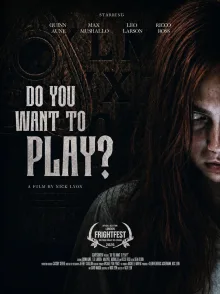
What if the Ouija board were an app, and the app were hungry? Do You Want to Play (2026), a new horror film fresh from its world premiere at Tubi FrightFest, turns the spirit board into an algorithm and lets a serial killer's demon climb inside a teenager through her phone.
Writer-director Nicholas Lyon joins Mike White with Ricco Ross, the Aliens (1986) veteran who plays Scary Gary, a priest turned YouTuber. Lyon traces the film to a Ouija script he wrote years ago, before the Ouija movies beat him to the board, and to the invented Demon Board at its center. Ross explains how he built Gary from the outside in: darker eyes, an island-tinged accent, and a reverence for the priest in The Exorcist (1973). The two recall an improvised exorcism, Latin lines and no stunt rigs, and why Ross trusts a director who lets him fail. Lyon also explains how casting Quinn Aune made him rewrite the script around her, why a small-budget horror film takes years to fund, and why he is weighing self-distribution against a big distributor.
A fresh scare for the algorithm age, or the same old board with a new battery? Press play.
Transcript
An automatic transcript from Spreaker. It has not been proofread, so names, titles and spellings may be wrong, and it does not say who is speaking.
Show the transcript (about 5,300 words)
Hold your ears, folks. It's showtime. People pay good money to see this movie. When they go out to a theater, they want cold sodas, hot popcorn, and no monsters in the projection booth. Everyone pretend podcasting isn't boring.
Turn it off. Turn it off! Turn it off! The devil doesn't need your belief to exist. Darkness doesn't kick the door down.
This is the original talking board. The demon board. Now, these aren't just symbols on a piece of wood. These are symbols that were able to tune into frequencies without any words. It starts with curiosity.
I need to download this. The digital evolution of the human being. But soon they will.... Open that door. You can't always close it.
Are you okay? It's just a gaming app. Oh, well, seriously freaking me out. Shut it down. When you look into the abyss, It never looks away.
What? Shut it down. No, no, no, no. Please. It's...
It's... Look, just. What do I want? What do I want? You're scaring me.
I'm scaring you. Exorcisms. Not a show. It's a war. What a soul.
What's wrong? Hey folks, welcome to a special episode of The Projection Booth. I'm your host Mike White. On this episode I'm talking with director Nick Lyon and star Rico Ross all about their new film Do You Want to Play? It is a kind of haunted Ouija board meets internet meets AI movie.
I had a lot of fun watching this. I had a lot of fun talking with Mr. Ross and Mr. Lyon. Thanks so much for listening, and I hope you enjoy the interview.
Nick was saying that you guys have worked together multiple times. When did you first start working together? Wow. Wow, it's been a long time. I think this is the fourth or fifth movie we've worked on.
Yeah, I think it was the one with Marlee Matlin, Foreclosed. I think that was the first. I was thinking it was Linda. And then we did Bermuda Tentacles. Yes, right.
Yeah, Linda Hamilton. That was kind of a trope, too. Right, right. Kind of a reunion of the James Cameron folks. Yeah, I can't talk with you without bringing up Aliens, because I've been a fan of that movie since I saw it back in, what, 86?
So, I'm Yes, when you were six years old. Yeah, a little bit older than that. But I was curious, Mr. Ross, how did you get into acting? You know, I got into acting.
It kind of found me. I found myself, you know, I was a young kid, 13 years old, and I was sneaking into school early. And a teacher caught me and wouldn't allow me in. And I gave her the best lie I could come up with that I had left my books in. And she wouldn't buy the lie.
And so I doubled down and I committed so much to the point where I had tears in my eyes. And she repeatedly said, I am not going to allow you to go in school early. But she eventually said, but I am going to put you in my play. And that was the beginning. Wow.
Why were you trying to get into school early? I had my parents had divorced and we moved to Florida. From Chicago. And I had to go to a school that was, we were kind of using that school while our school was being finished, built. And so they would go to school in the morning time and we would go in the afternoon.
And so we got there early one day. And so I just wanted to go there and see what this other student body was like. And I was trying to sneak in and the teacher wouldn't allow it. She was very on point. And people forget how important teachers actually are.
And she handled a kid that had too much energy, probably ate too much sugar. And she took all of that energy and she focused it into something that was productive. And I believe that teachers, they don't get, in a capitalist society, we reward people who do good jobs and who are important with money. And I feel that teachers, they still haven't been rewarded appropriately. I won't disagree with that at all.
Nick, it's got to be nice working with the same actors time and time again and just being able to start to form some sort of like a shorthand, I'm sure, that you two have after working on four or five movies together now. Yeah, there's a level of comfort, for sure, trust, and it's fun just to work with people that you'd like working with. I heard a great director say, he said, when you're putting a film together, get the best actors that you can afford. And then after that, go for people you know. Go for your friends.
Because you're going to get in bed with these people for a certain amount of time. And it's like getting into the trenches. You want to be with somebody that you know that's going to have your back, that you can work with, that's going to be there when things get hard. Because in every production, at some point, things go wrong and things get difficult and you want a team player. You want somebody that's going to be there.
So when I, so it, it's probably comforting for the director to work with actors they've worked with before, but it's also comforting for an actor to work with a director because I've been with directors that have lost it when things go bad. And they've, they've taken that out on the actors and on the crew because things have gone bad. And, And so you kind of want to know that, you know, when things go bad, we're. In it together. We're all going to try and fix it.
We're going to try and make it work because in the end. This business, as much as actors get a lot of the attention, it is such a tame effort. Well, and it's also the risk of, like, not just a director going bad, but an actor all of a sudden going bad. That can happen as well. That all of a sudden, they hate the director, you know?
That's no fun. Nick, where did the idea for Do You Want to Play come from? It was originally, I think in 2009 or 10, I did a bunch of like scripts because I had like a thing called writeritis, which meant I was already writing the next one. Rather than getting them made, I was just like, okay, I'll finish one script and then I write another one. And it was just like without even setting them up.
So I had all these backlog. And then Glenn Ackerman from Scary Content, he said, hey, I got somebody that's looking for an Ouija script. And this was before the Ouija movies, so I'd kind of given up because I'm like, you know, to it first, you know. And then I said, yeah, I do have something. And he kind of read it and he's like, yeah, this is really what we might be looking for a particular buyer in.
And. And then I was like, okay, that's pretty neat. So I started rewriting it and I did a little teaser for it before that too. Like, you know, an AI teaser just as a proof of concept for it. Just to, you know, when I played around with AI a couple of years ago, I still play around with AI as a proof of concept.
And then I was like, yeah, but you know what? I don't really want to do another just straight up Ouija, you know? So I kind of created the app idea of that it's based, and I created my own version of a Ouija board, a talking spirit board called the Demon Board. And so he's basically algorithmically, you know, kind of created this app that emulates the Demon Board, which was, you know, banned Ouija board from the late 1800s. So one of the originals, you know.
So it's totally fictitious, but, you know, And so that's where it kind of started. Yeah, and with the algorithm, it kind of is playing into AI. I think it's perfect timing for it. Yeah. Yeah.
No, it does. It's kind of weird. Yeah, it's like, you know, if we can get the traction that we need on this film, I think it'll do pretty well. It skews a little bit younger, which, you know, I think it could play in well. But at the same time, like horror audiences or streamers, they might not want to play younger.
So it's going to be interesting to see, you know. Well, they say don't work with kids or animals. And here you are working with a lot of kids. I know these are a little bit older of children, not, you know, your toddlers or anything. But how is that dynamic?
Well, you mean Rico? I'm just trying. He still has like a 16 year old physique. There you go. No so actually they're all very mature Maxwell Mishalo he's I think 17 Leo Larson is over 18 but he looks young and then Quinn on She's a little bit beyond her years as far as maturity.
She's really good, and there's a reason why she's been getting booked on stuff. She's just working on stuff. She got booked in Scarpetta, playing the young Atul Kidman for two seasons, and now in Lucky, she's playing the young Anya Taylor-Joy next to. What's his name? Brain Fart.
But yeah, she has a really great role in Apple TV's Lucky. And it's small, but you know what? I just saw her, I see her as like, I mean, she just had this presence the minute she read for it. I'm like, oh my gosh, I need to like rewrite the script a little bit to adjust for her being the lead because she had the innocence that I wanted there to be for somebody to get possessed, you know? And did you write Scary Gary with Rico in mind?
Originally? No. I wrote it with a guy that I... There was a guy, his name was Scary Gary when I was, like, you know, young 20s. And he was a real weirdo, you know?
Like, inside the guy that had, like, a coffin in his living room. And I was, at the time, like, restoring mannequins. I was, like, very young, right out of high school ages. And so I just kind of remembered the name and thought, okay, Scary Gary. So he was written for that.
And then I kind of shifted it because I got addicted to, not addicted, I would say, I just started listening to, you know, the Exorcist Files, which is a great podcast. It was like, and I was like, oh, you know, I kind of wanted to be more of a priest, but still kind of a YouTube priest. And then I thought, okay, well, Rico would be great for me. And so I sent it over to Rico and he's like, yeah, I'll do that. I think he was thrilled because he also played some devil and an angel in, you know, in the same month.
Rico, how do you find your characters? How do you build a backstory for these folks? What is it? What's your approach to them? Well, it depends on the character.
If there's a character that's closer to me, then I just I based it basically off of me and what I would do in those circumstances. With a character like this that's not so close to me, then I have to go to work and do some research. First of all, I wanted to find a look. How does this guy look? He's a priest.
I also take into consideration, it may not have been written for a Black person to play this part. I'm playing it now. So now how can I make it mine? And I came up with this idea. I know that people in the islands People in Louisiana, a lot of them get into tarot cards.
They get into the spiritual world. And so I decided to give him a slight kind of island accent, a slight British accent, because a lot of people from Ireland, they have a slight British accent, to just get the voice right. One of my favorite movies of all time, especially a horror movie, it is my favorite horror movie, was The Exorcist. With Linda Blair, who is a friend of mine now. But I remember when I watched that movie, the most frightening for me is that it had the Bible kind of like in it.
And that made it real for me. And that made it frightening for me. And so when I watched. That movie, I remember thinking how impactful the priest was in the movie. Later on, when I get this script from Nick and he tells me this, gives me the script and I read the script, I think, oh, wow, I remember admiring the performance of the actor that played this.
In The Exorcist. Now I have an opportunity to do 2.0 of this same kind of character. And so I went to work with that in mind. I thought that it was a great idea. It was a way of bringing the Exorcist type of movie to the present day.
I thought it was a great idea because a lot of people are afraid of AI at this particular time. And fear is warranted. And now we're going to take that and we're going to run with it. And I just thought it was a great idea. And I thought, you know, we've seen so many horror films that are just like the horror films that we saw a couple.
Years ago or the year before. And I just thought, if you're going to do something, you're going to remake it, you've got to reinvent it. And I thought that Nick did a great job of reinventing this kind of horror film. And I just thought, yeah, let's do this. Let's go in 100% and be completely committed to this character.
I was a little worried about it being him having the title Scary Gary. So we went with Gary Wickham and Morse. But the YouTube part was still acceptable for Scary Gary. So then I thought, OK, I have to lean into this name now. I'm going to figure out how to lean into this name.
So when I do the YouTube version of the character, you know, I purposely am being a little over-serious, over-dramatic to create this sense of intensity, this sense of, oh shit, what is happening that we don't know about and that he knows about. How important is costume for you as an actor? You know, often in America, we work from the inside out. We work on the emotions. My study in acting from UCLA really gave me a foundation of working from the inside out.
But then when I moved to England and studied Shakespeare and classical theater, often when you're doing period pieces, you work from the outside in. You may find the right pair of boots or the right costume that makes you feel back into that period and locks you into that character. So I like a lot of actor i heard this from i think i heard it from an english actor and he said that most really good actors they use a combination of things that work depending on the role and so what i did was i i worked with with nick and the wardrobe person we got the outfit on we work with the makeup artist to kind of like give him darker eyes to make him look a little out of the ordinary and and then i put all that together with the accent with the story and the emotions and the danger that we're opening up this door to where we don't have control over it anymore.
And I felt like I kind of got it. And once I got them, then I'm locked in. Nick, you talked a little bit about how even Scary Gary changed between the original writing and then what Rico was able to bring to the role. I'm curious, how else did the screenplay change before you finally locked it down? Uh, pretty much, uh, pretty rewrite.
I mean, but overall the story was kind of still always the, you know, the two, two friends with the girl, you know, the jealousy between the girl and then they have to unite to try to save her from the possession that was always there. I might've simplified it a little bit, like the mystery and stuff like that, because they, I had originally, you know, said in Oregon and stuff. I had a limited amount of time on this, but it didn't change all that much other than the characters. I wanted to have a more, you know, a former Jesuit priest kind of vibe from Gary. And I think the Ward Weaver also changed, just kind of coming up with the mask and everything like that. of having the demon have his story of where has he come from.
Because it was always that he was a serial killer. But it's basically the demon that then possesses the people to get them to kill. So it's an ancient demon that then would move into people's bodies. And that's what it did with Ward Weaver. And so Ward Weaver had killed a bunch of young people and She happens to live in the house of one of the kids that got abducted by him.
And so that's where the Jessica is coming from. She's kind of trying to warn her. You mentioned yesterday the timing and just how time affects the whole triangle that we were talking about, or pyramid, I suppose. It's good, it's fast, it's cheap kind of thing. A movie like this... how quickly does a movie like this get made?
Once you get that green light, once somebody says to you, okay, yeah, let's do this. Well, this one took a while because we were still trying to raise funds to, you know, even though we had like a pre-sale in place to was still very ambitious for a very small budget. And, you know, I had almost had it set up the year before. And then finally we. Came around and it was, was like from, we were going to shoot it the year before.
And then a year later, it finally got the money and said, okay, let's go. Wow. Started. So yeah, it takes, it takes quite a while sometimes, but I'd also done other movies in the meantime, just like working. higher to direct stuff. Yeah, there's the triangle of like the balance of you can have two of the three, fast or quality.
One of those three. Pick two of them, fast, cheap, or quality. And so the balance is how do you keep all three, you know? And that's always like my goal is try to get quality, but still do it fast and do it cheap. So that makes it very difficult, you know?
And it's good to have actors that can help improvise sometimes, because you're like, I mean, I just think back, like, okay, when we were filming your exorcism scene of her, where you're, I mean, it was funny because, like, it was kind of having to, like, act it, you know? I mean, it was having to act it. It's like, okay, it was like a spiritual battle between the two of them that went beyond the script. where he had his goal of trying to force her to like, you know, so it became very interesting. And Rico embraced it and that really went with it. Just like, okay, she's doing this and she's choking, you know?
And so he was like having to play that. And that was stuff that was, you know, we kind of invented it as something that would work, that's cool. Like take the moment that you have and try to make the most out. Because do I have like stunt rigs and everything to have somebody crawling on the seat and stuff to have the time for that? No, I don't.
So what can I do with the limited amount of time and resources that's still going to be effective? Well, I'm sure Rico, I mean, even going back to Aliens, like we were talking about, like you've been working with special effects for probably your whole career. And I'm curious how that has, how does that affect you as an actor and how has that changed over the years too? Well, I think, It has changed. Special effects, when special effects first came out, I remember people thinking that no one's going to watch regular movies anymore because everything's going to be special effects.
What we found out is there's an audience for. Special effects and there's an audience where people just want regular movies. I think the brilliance of certain directors, like James Cameron, is that they didn't use so much of the 80s special effects because that often dated the film. They used practicals where they... They did not date the film as much.
With this particular film, there wasn't a lot of special effects. There was some. Special effects has gotten a lot better. AI has also assisted filmmakers, especially filmmakers with smaller budgets. They can actually build their production a lot, make their production look a lot bigger because of that.
But you don't want to overdo it. It still comes down to, am I watching something that's believable? And do I care about these characters? Those are the most important things. If you don't care about a character, then no matter what happens to that character, it really doesn't matter.
But if you care about the character, anything that happens to that character, then it matters. For me as an actor and working on a script like this, is that I have to trust the script and I also have to trust the director and the cameraman. Because I am going to go in 100% and I'm going to do some things that that may not work. You know, if you're, I remember someone, I was doing an interview and someone made this quote and the quote was, when you're striving for greatness, you have to be willing to and learn to be comfortable with the uncomfortable. And so when we did the Exorcist scene, he wanted me, you know, the director wanted me to go for it.
Really go for it and be 100 committed to being, you know, possessed or being tagged by this monster. Now, you got to keep in mind, we don't have a lot of sexual effects. So I don't know what's going to happen. This is all in his head and my head. But I have to be committed.
And I have no experience with being tagged by a monster. So I have to create this in my mind. And I have to go for it 100%. And it may not work. But one thing I know, if I don't go for it 100%, I'm not giving.
It a chance to work. So I trust that Nick's going to, he's going to let me do my thing and what worked, what we're going to see on the film and what doesn't work is going to end up on the cutting room floor. So that gives me the freedom to be, to make mistakes, to make bold choices and see if they work to give the film a chance to get something special. And to bring the intensity needs to be there. for it to not feel wooden and stiff. And so that's the only way to do it is like, forget everything else and just go into the situation.
And, and that's what Rico did. And she did as well. And, and on top of that, they were learning, trying to remember some Latin phrases and stuff like that. Yes. Doing it with, I've been speaking Latin while you're doing it.
And, and, you know, it, it was, it was, it was different. It was very different. And, It was a little scary for me too. It was uncomfortable. It's uncomfortable because I'm doing something that I don't know if it's going to work.
And I'm so committed that I think this could look completely like bullshit. I don't know. But I'm going to give it the best shot and give it an opportunity to at least be something special. And we'll see what happens in the edit. Well, speaking of editing, Nick, when did you shoot this and When is the film coming out?
Shot it last October, November, around then. And then when is it coming out? We don't have an exact release date yet, but that's why we're doing the festival right now. Yeah, we're kind of still, you. Know, looking at some, I mean, we do have a couple fixed releases for territories that were, but we're still in the process of, of, you know.
Getting a distribution. Especially in today's market. Yeah. I mean, it can be tough, I guess, you know? I mean, I'm even looking at the possibility of self-distribution, of creating, because I've been talking to a guy, you know, like, he also has a film there, and, you know, funny enough, he's been doing something where he's been putting money into marketing and has been getting really great results.
And so, you know, there's that option, but there's also the option that some, some big distributor says, okay, we'll take it, you know? So the question is, is the balance worth it? Like you can self-distribute and I think it can, you know, it can work as well anymore with, you know, if it's a theatrical release, then of course it has to perform on the first week, you know, because you're doing a theatrical, but anymore with, with streaming, you can turn up the marketing at any point and it'll still, you know, gain traction potentially. So there's a lot of things to consider that I'm looking at right now. Like my film, Cruel Love, I'm self-describing that.
Wow. Yeah. I mean, because the problem is that with these films, like you have distributors that say, yeah, sure, we'll take it. But they're taking like, a hundred films or a thousand films, and they might make a little bit on all of them, but it's not enough for the filmmakers to sustain. And you're also just diluting your share of everything because by the time their marketing costs are taken out, by the time the distribution fees and the platform fees, you're getting 20%.
So the system is, I would say, broke. It's broken. It needs to be fixed. And I think that we're heading into those, in that direction, you know, that filmmakers are going to be forced to have to do self-distribution and reach out to their own audience. And, you know, I think Ted Hope is a big propagator of that as well.
But then there's the other people that, you know, get lucky, like the terrifiers, you know, like that all of a sudden it's like Cineverse picks them up and it takes off. But that's like one in how many? and still need to market it. Without marketing, it's really tough to get anything. Well, speaking of marketing, where's the best place for people to go and keep up with the film and see when it is distributed and where? Probably on Instagram, Facebook.
Do you want to play film on Instagram or at Nick Lyon Director on Instagram? And Rico, are you out on Instagram or any place? Yeah, I'm on all the social media platforms. And I also posted, I've got millions of followers on different. Social media platforms.
So I posted as well because I think it's something worthy of seeing. I actually had a private screening in my house. I had my, my nieces and nephews staying with me for a while and they were teenagers, a bunch of teenagers and they got into it. So I, I, I kind of know that generation is going to work for them and it's going to scare the. Hell out of them.
And it was, it was interesting them seeing that their uncle playing a, a kind of, uh, priest who is a good guy but he comes across as kind of like kind of evil as well or kind of scary uh i have another movie coming out uh in november where i actually it's a netflix project so it's it's going to be easily distributed of course i play the devil in that and so playing a film Back to back, one coming out where I'm playing a Catholic priest and next coming out where I'm playing the devil. It's a great opportunity. And I was looking forward to playing both these roles because they're so out there. And it's an actor's dream. I initially went to London because I felt like when I started in Hollywood, first big job was Hill Street Blues.
And I played a gang member. And I remember the next three or four jobs were just the same type of character with a different name. And I felt like I was getting typecast at an early stage. And I was walking around with a master's degree from UCLA. I went to England and I wanted to add something to my tool bag so that I could play more diverse roles.
And then this. Many years later to do two films back to back where one I'm playing a priest and the other I'm playing the devil is an actor's dream come true.
Comments
No comments yet.