Show notes
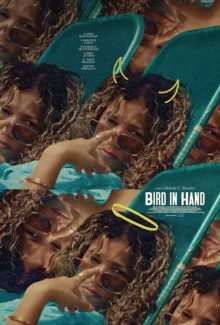
What happens when you hand your worst qualities to a character, turn the volume all the way up and let her take every wrong fork in the road? Writer-director Melody C. Roscher describes Bird Rowe in just those terms, and her feature debut Bird in Hand (2025) follows the fallout.
Newly engaged Bird (Alisha Wainwright) heads home to her hippie mother Carlotta (Christine Lahti) to scout wedding venues, but she is really hunting for something else: the father who was never there. Messy, impulsive and usually well-meaning, Bird keeps shooting herself in the foot in a comedy-drama that premiered at the 2025 Tribeca Festival.
Roscher tells Mike how years of producing other people's projects, The Jinx (2015) among them, left her jaded enough to shut that door and write a film of her own. She traces the script from a 2018 first draft through White Wedding (2021), the Sundance short built from its original ending, to a full rewrite, and explains how finding a missing cousin on her biological father's side turned an angry story into a kinder one. Along the way: the audition tape from Wainwright that left her sobbing, a Virginia summer shoot where her cinematographer caught poison sumac on day two, a three-hour first cut, and the joy of not producing her own movie.
Bird in Hand arrives on digital November 19.
Labels: Special Report
Transcript
An automatic transcript from Spreaker. It has not been proofread, so names, titles and spellings may be wrong, and it does not say who is speaking.
Show the transcript (about 3,700 words)
Hold your ears, folks. It's showtime. People pay good money to see this movie. When they go out to a theater, they want cold sodas, hot popcorn, and no monsters in the projection booth. Everyone pretend podcasting isn't boring.
Turn it off. Turn it off! It's really like mad at me now. I'm not mad. I wasn't trying to get sick.
You had seven IPAs. It was a party. I drank a few beers. It was a Halloween party for children. Hey, bird.
What's going on? I thought I'd spend the week with you guys. Hello. I'm riding them. Someone's going to see us. $ 20, 000 horse, bird.
I'm not asking. Like Joan of Arc up here. I live like two miles that way. We weren't trying to scare you. A toast to our one new neighbor and her enigmatic daughter.
I'm getting married. Wow. Way to go, kiddo. Yay, wow. You should have the wedding here.
It's a plantation. Yes. Historically. You sure you want to get married? You don't want to be stuck in the same place with the same person.
Trust me. I've got to go out on a limb There's something weighing you down. You're spreading lies about me? How evil I've been all these years. Well, those wouldn't exactly be lies.
Stop it. Stop being comfortable! The wedding's tonight. I need you to play. Hey, hey, brother, hey.
I don't think I understand what's going on. I don't either! This is insane. Well, you hang in there, buddy. If you ever want to feel happy, try visualizing what you.
Want in the bigger sense. Hey folks, welcome to a special episode of The Projection Booth. I'm your host, Mike White. Today I am talking with writer-director Melody Rosher about her comedy-drama Bird in Hand. It follows Bird, played by Alicia Wainwright, who returns home to plan her wedding with her estranged mother, played by Christine Latte, and gets pulled into her mother's new neighbor's plans to rebrand an old plantation. inspired by Ms.
Rosher's own biracial experience. The film premiered at the 2025 Tribeca Film Festival. I had a great time talking with Ms. Rosher, and I hope you have a great time listening. Enjoy.
I am curious, because you've done a lot over the years, how did you decide to get into show business? Well, I actually decided when I was quite young. I ended up going to college for filmmaking because I had wanted to do a totally different career path, had second thoughts, and then decided that I should just run towards what I loved, which from a very early age was movies and television, mostly movies. And so, yeah, so I just, I didn't think it was a real career making movies when I was 16 years old. I was like, that's not a real job, but apparently it was.
You've done a lot of producing over the years. How did you get involved in that? I got into producing because when I left college, I really wanted to stay in New York City and I needed a way to make money. And so I started as a production assistant. And as I rose up the ranks in production coordinating, production managing, and line producing, I was able to like, first of all, make money, stay in the city, but also meet more people, work on set, cultivate, you know, a real solid experience level of being, you know, a storyteller.
And so I found I really loved it. And then around 2009, I really got to start producing movies and being involved in longer form content. Before that, it was more commercials, music videos, stuff like that. I mean, and these are like really big name shows. I mean, you've worked on The Jinx.
Yeah, The Jinx was a crazy multi-year commitment. It was off and on because originally when we started making it, we thought it would be a movie. And so we were and it was it's a real documentary film. we were kind of at the whim of the talent and when there was something to actually do based on what the, you know, Jarecki and Smirly had discovered. So anyways, the jinx was one of the wildest things I've ever done. It really was like, it was scary sometimes because Bob Durst was apparently watching us a lot while we were shooting, but it was cool.
It was great. And tell me, how did Bird in Hand come about? Bird in Hand came about because I was hitting a point where I was feeling a little bit jaded. I was just tired from years and years of sacrificing pretty much everything in my life to projects that would come and go. And I really never felt like I was the creative author of.
And it was what I got in the business to do was to be a writer and director. And I had nobody to blame except myself for not pushing myself and believing in myself creatively. So I started writing something that felt very true and meaningful to me and something I knew I would keep going at and not put down when I lost inspiration. And that was the early versions of the script. And so as I kept writing it and also sharing it with readers who gave me feedback, I realized it was something I truly wanted to make.
I wanted to commit my time to it and I wanted it to be my first film. And so at a certain point, I actually stopped producing full stop and said, like, that I'm no longer, that door is shut. I'm not available. I'm only making this movie until it happens. And that took some time.
Yeah, I bet. When did you first start writing this? I first started writing it. And I think the first draft was 2018. And I made, I ended up making a short that was the original ending, kind of re-engineered to be a short film.
I shot that in 2020. It went to Sundance in 2021. And then I rewrote the entire script between 2021 and 2022. So the early versions of what actually ended up on screen were written kind of in the early years of COVID. 2021, 2022.
That's how it It's so funny. I immediately delineate things by where we were in COVID because it was such a product of that time. Oh, yeah. No, I was going to ask you how it was shooting during the pandemic. I mean, that's not an easy task.
Well, we actually, we didn't shoot during the pandemic. I wrote and then around the time that the regulations were loosening up was also around the time of the strikes. So we had to go dark with the project while we were in financing stages because the team surrounding me that was helping to finance, they were all signatories. And so even though we were a waivable project, it made the most sense for us all to just go pencils down and everything down and be in solidarity during the strike. So we did just take a hiatus for a while.
And then on the other side, the restrictions were limited. You didn't have to have COVID precautions anymore, which is a huge cost savings, obviously, to us. But then we actually had some COVID stuff on the set anyway. So we had to deal with it no matter what turns out. How do you find a character like Bird?
And is Bird similar to you in any way? Bird is... I would describe her as my worst qualities with the volume turned way up. I... I don't suffer from her lack of control and discipline, but I am impulsive.
I did come from a background that is very similar and I found myself, I'd say hindered in growing up and accountability and just being like a reliable person in some of my relationships because of what I thought about my upbringing. so yeah but she really Bird was really like it was a chance for me to also explore some things I didn't like about myself to the nth degree and be like let me put this in another character and see what happens to this person when when when you take that fork in the road and you just let your bad self kind of like keep going but I you know she's not She's not like a bad person. She's just a very messy, complicated person with often good intentions. How is that, creating this avatar and sending it out in the world and seeing what happens to her?
I mean, by the time that I shot the movie, I felt so different than that character, especially because I was able to hand Bird to Alicia Wainwright, the actress who played her, and say, she's your brother now. And Alicia was just so, she's also nothing like Bird, but she had found a way to really just understand this character and this person. And so really by the time we shot, I didn't even feel similar to her Like, I felt like a director, you know, working on a performance with an actor. And the kernels that made me write that character had kind of drifted into the past. I mean, I'll always feel a connection with her because just, honestly, just from... growing up without a dad and how that the missing person in your life, especially when it's a parent, can just be this pervasive shadow and it can come and go when you least expect it.
That will always keep me very connected to this character, even as I grow up and take more accountability and Bird is done with her journey. So, yeah. You talked about how it changed over the years, and I'm curious how this kind of morphed through all the different stages. Yeah. Some of the stages of this script were craft-based.
It was, hey, I could do a better job telling the story in a scene. I could do a better job crafting character and having development character arcs. And some of it was, I had a very changing perspective on the relationship with my with my bio dad while making this. Part of it came from just processing it as I was writing, coming to peace with parts of it, being less angry. My original script was quite angry.
And also it came from some conversations I ended up having with my bio dad's real family. I ended up finding a missing cousin and she told me some things about his life and It made the story of my life kind of click into place in a way that I felt gave me more grace to tell the story and to be kind to the characters ultimately. So a lot changed because of that specifically that, you know, the story with Bird and her father became less of one of an angry abandoned child and more of one who was just dealing with the wake and confused and hurt. You talked about Alicia and her performance is brilliant. And I was curious how you worked with her and how you found her.
What was that casting process like? The casting process to find Alicia was, we went, we had actors audition on tape. It felt really critical. And I thought that it would be limiting, but we actually got submissions by some performers that I still really want to work with one day. But Alicia's came in close to last and I just saw something in her that I hadn't seen in anyone else's performance.
She just felt fearless and committed and not as interested in like what result she was giving me. I could feel there wasn't a self-consciousness there. She was like, this is me with the scene. Like, we'll do something else with it. I could feel that conversation already in her performance.
And it had me sobbing, honestly, because she just, she had hit it exactly what I was looking for. I think not necessarily in the performance, but in a collaborator. And then we met and we bonded really fast. And yeah, so beyond that, it was really the work. It was talking, it was going through scenes, it was talking about intentions.
It was giving her freedom to define certain things that they made sense to her instead of, I really didn't try to impose like my logic and my performance reasoning into her world. I was like, if you have a way that that intention works for you because of your life experience, go with that. Like, don't go with mine. So yeah, it was just picking it apart and making sure that we were understanding one another and our choices. And then on set, you know, there were a couple of moments where we were like, you know, Alicia would be like, are you sure that's why that's there?
I'd be like, yeah. And she'd be like, well, I see it a different way. I'd be like, Yeah, I see your way. Do your thing. Or sometimes vice versa, you know.
So it was a very effortless, I'd say, relationship. But we also challenged each other, I think, to do our best work. Christine Leidy is amazing in this as well. And it was so nice to see her again. I was a fan of her early work, and I haven't seen her in years.
So it was great to have this wonderful performance. So grounded in this film. Yeah, Christine is... legend. And I was lucky to have her step onto my set. I learned a lot from her, just working with her.
But she was also such a giving and fearless person on set. She knew what she needed as far as support from a director. And she's very clear about it. But she's also just giving. She gives to other performers.
She's a great scene partner. for other for other actors and yeah she was just like as soon as you said yes she was locked in and it was you know she's all work what. Were some of the biggest challenges you had making this. Some of the biggest challenges i mean the biggest challenge this film was really just getting it off the ground getting to shoot it in the first place I think that we started financing this right around the time that the independent film world really started changing in the scope and budgets that financiers were willing to support. Getting the financing together was quite challenging. Once we were actually shooting it, honestly, we were braced for a lot of hardship.
We were braced for hurricane season to shut us down all the time. We were braced for you know, the very oppressive July and August heat in Virginia and the bugs and everything. But I think thinking back, one of the hardest things with my DP got poison sumac, like day two of the shoot. And for weeks he was covered. Then he had like a histamine response and he was like covered in these crazy rashes.
And he He was like, I'm fine. I just, you know, I just have to go to the doctor on the weekend. So I was like, okay. But I was just very concerned about him all the time. But no, we honestly, we had a pretty breezy shoot with just the normal kind of production stuff once we were able to get it.
Off the ground. How was it for you to not produce your own work? Amazing. I loved not producing my own work. I mean, I had, you know, there's things that I did because I already lived where we were shooting.
So I was location scouting a lot, like a year before we shot on my own. Things like that, you know, but to not have to think about the money and the logistics. Oh, it was such a gossip. I really love directing is also the other, the thing I discovered. I, you know, I have a connection to producing that is very strong and I will always be a producer, be producing in some capacity, but I truly love directing and that discovering that by not producing was awesome.
I bet that must've been liberating, right? Very, very liberating. Producing is so hard. It is so thankless. It is, I mean, it is, You commit yourself so entirely to project and oftentimes they just kind of walk away from you.
I really feel for every independent producer for how hard they have to work and how hard it is to be recognized by your peers in the public for the work you do. Did the movie change for you again when you're in the editing process or did everything stay pretty well like you had it in mind? Yeah, the movie changed quite a bit during the edit. First of all, because the first cut was like three hours long. Even though it was a solid 86-page script, it really had grown.
And what I wanted to include had grown. So we had to shave it down, reshape things. There are entire shooting days that are not in there. And there's a couple of things that I discovered along the way that I didn't necessarily have on the page. So there was a lot of creativity and inspiration during the edit.
And I probably also could have just kept editing for like another year. They had to pull me off of it. When did they pull you away? When did you actually get to see this with an audience? The festivals that we wanted to get into.
And then I ended up premiering at Tribeca. And that was the first time that I got to sit in with an audience that wasn't there to be a work in progress, like feedback audience, like really just there to enjoy the film. And that was a feeling I will never forget. I was so nervous and so excited. And there were so many people that helped make the movie and also my family and I mean, I don't, I will remember it as an experience for the rest of my life.
Both because I was just like, the energy was so, it was just so, there was so much energy in the room. I really was curious to see. if anyone would connect with it you know and to know if if people liked it if they thought I was you know crazy or what so yeah that's fantastic. And your family what did they think of it because you are a little bird or birds a little you so how did they feel. My family has been so supportive. My mom has seen the movie at like four or five different screenings, as have many other people in my family.
They've just been nothing but understanding, supportive fans, which is cool. They're all artists as well in their own right, so I don't think... You know, I was nervous for everyone to see it, but I remembered after they saw it that they're all very open-minded people who... haven't had the most, like, you know, they haven't had these idyllic, perfect lives either. They're all complicated. They all want to talk about it through their own art.
So I feel very understood by them. Great. I'm so glad to hear that. Me too. I was nervous.
What is the life of the film now? So now we are just wrapping up our theatrical run, which we did... screenings across the country and the film is about to release digitally on November 19th that it'll be available and right now it's available for pre-order on Apple and on Fandango so as of today you can go and you can buy the film and you. Can watch it at home and what are you working on next. Next I I'm writing two different scripts. One is a elevated genre, and the other one is a film that I'd started writing even before Bird.
That is a film about a family band, and that will hopefully be the next one that I shoot. Both of them sound fantastic. Thank you. Is there a good place to keep up with you online? Yes, the best place to find me online is on Instagram.
My handle is fromrocherwithlove. And yeah, I try to stay active. I try. Yeah, I know it's not easy. You have a lot of things going on.
It's a lot going on. I'm not the most digital person, but I'm challenging myself to stay a bit more connected, especially now that I feel, you know, for the first time I have an audience that's listening to me, my specific voice and point of view. So I want to stay connected to those folks. I totally understand. Well, Melody, thank you so much.
This was so nice talking with you. It's nice to talk to you too. Thanks for having me. Milte yamke diilwa diwana kisi pa milte yamke diilwa. Diwana This is my story.
The story of someone else. Ask them how they got lost. Ask them. There has been someone in the moon. Who cares who it belongs to.
The story has become mine. Who cares who it belongs to.
Comments
No comments yet.