
Show notes
Mike talks with Hogan about a found-footage video-diary idea that sat for years until a pandemic-era chat about true crime gave it a shape, a script used as a roadmap for actors who improvised in character, an open casting call with roughly 6,000 applicants, a young lead who invented material over email, and the childhood monster books that made him a horror lifer.
Transcript
An automatic transcript from Spreaker. It has not been proofread, so names, titles and spellings may be wrong, and it does not say who is speaking.
Show the transcript (about 3,000 words)
Hold your ears folks it's showtime people pay good money to see this movie when they go out to a theater they want cold sodas hot popcorn and no monsters in the projection. Booth everyone pretend podcasting isn't boring. Turn it off turn it off. Please. Okay, can you tell me what's happened today?
It's my daughter. She's gone missing. We've searched the house. We can't find her anywhere. She is out there and she is lost and she's in this darkness where I knew she would be.
I need somebody to see me. There was no evidence of anyone in or out. Nobody. Nothing. I will always come back.
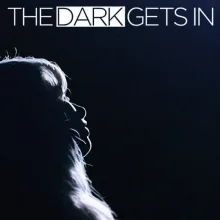
Hey folks, welcome to a special episode of The Projection Booth. I'm your host, Mike White. On this episode, I am talking with Sean Hogan. He is the writer-director of the new film, The Dark Gets In. It is a horror film that's shot like a true crime documentary.
Very effective and some great performances. Definitely keep an eye out for this one. I don't know when it will be hitting the States, but I will definitely be updating people through my socials as I hear things. Thanks so much for listening and I hope you enjoy this interview. Can you tell me a little bit about you and how you decided to get into filmmaking?
God, I've been doing it professionally for 20 years now. I almost stumbled into it accidentally. I was at that stage where I'd left school and went to college and I thought I wanted to get into art and went to the year of art school and realized that I didn't like it and really wasn't talented enough and ended up taking a a combination theater film course instead and by just because i liked movies and i liked drama and that was in the sort of late 80s early 90s and there really was no film industry in the uk but by the end of it i the end of my time on that course i sort of decided i wanted to make movies regardless of how difficult it was going to be And that was that, really. It was just a case after that of figuring out a way to make them in a country that's not very hospitable to independent filmmaking.
You made a short a few years ago called, many years ago now, actually, called The Thing, 27,000 Hours. Can you tell me a little bit about that? The way that started was myself and the producer I was working with at the time pitched an idea to Fright Fest which is the sort of main pre-genre festival in the UK they often did a thing where they would commission a bunch of shorts every year and they had a couple of filmmakers who'd been doing it for a few years and they weren't going to do it anymore and they were casting around for a new idea and that particular year they were originally meant to have John Carpenter as a guest of honour at the festival and so we pitched them on the idea of a bunch of UK filmmakers making these little Carpenter tribute shorts In the end, it turned out the carpenter didn't come to the festival.
And so they had all these, everyone made these shorts, but they were sort of a bit, they had no context. People really didn't really understand why these carpenter themed shorts were being made and being shown at the festival. But we had a really good time making it. It was really fun to do. And luckily it actually ended up on the Arrow release of the thing.
So it did find a home eventually, which was nice. The Thing's one of my favorite movies, so it was a great opportunity to get to do that. What is it about horror that attracts you to it? On the one hand, I don't really know. I was just one of those kids that automatically gravitated towards it.
It was very much, I don't know about the US, but in the UK, in the sort of late 70s and 80s, it seemed to be very much in the air. There was a lot of kind of weirdness and horror just permeating the culture, certainly in this country at that point. I remember there was a big thing of, we used to have these sort of coffee table books about horror movies when I was a kid that you could just buy in the local newsagents, the bookstores, and they were full of like glossy, full color photographs, all these movies, some of which I've seen a lot, which I hadn't seen the sort of newer movies that were difficult to see when you were a kid. And they just got my mind buzzing. And so I just immediately gravitated towards it.
I remember watching King Kong when I was a kid and just loved it. That immediately became a sort of favorite movie of mine at a very early age. So on the one hand, it was very instinctive. As I got older and I continued to be into horror, even as my tastes widened and I got into other kinds of films. The thing I always liked about horror is that it doesn't have any boundaries.
You can do whatever you want to do with it. The genre is a nice umbrella, but you can deal with so much under that umbrella. You can deal with whatever themes, whatever subject matter you want to do, and you can do it metaphorically or you can do it straightforwardly. It's like a paint box with so many different colors in it. And so I've never felt...
I bound by it. I've never felt restricted by working in horror because whatever I want to do, whatever subjects I want to tackle, whatever kind of emotions or themes I want to deal with, I can do that within a genre framework. And then also the way that you're telling stories is very interesting. I'm very curious as far as The Dark Gets In. Was that always thought of as being like this kind of faux true crime documentary?
Yes and no. The original seed of the idea was something I'd had for a few years. I kind of always thought if I ever wanted to do a kind of found footage type movie, I had the seed of the idea of the teenage girl keeping a video diary and that sort of plot strand. But I hadn't really done anything with it. And then essentially what happened was is that myself and the producers of the film had been planning another project that had fallen apart because of COVID.
And we sort of hadn't seen each other for a while because of lockdown. And when we finally got back together, you know, they were sort of very apologetic saying, we don't think we can pull that film back together at the moment anyway. It's too big. We're not in a position to do that right now. But they started talking about true crime documentaries.
That is something they were very interested in more so than me. They were more familiar with it than I was. And we got talking about the idea of doing something like that. And obviously we agreed that we couldn't, do a conventional documentary because we didn't have a story but if we did something fictional in that format then we had sort of freedom to sort of do whatever we wanted to do and i said well what if we we made something that started off as a conventional true crime story and then went to unexpected places and then after that i suddenly thought back to this other idea i had and put the two together and that was when it became it sort of took its ultimate shape really. With you not being that familiar with true crime documentaries, did you bone up on that, or how did you figure out, like, these are the trappings, these are the ones I want to pull from?
I relied on their knowledge, and they... We spoke about it, they obviously recommended some that they'd seen, and so I did do a bit of boning up on it just to sort of get a sense of how they work, what the kind of tropes were. I knew that stylistically... they had a firm handle on that in terms of what they wanted to do stylistically they really wanted to sort of ape the kind of classic netflix format with all the sort of b-roll footage and all that kind of thing so i sort of left that kind of side of things up to them really and really it was just a case of like all right how are these things normally structured how are we going to tell this story within this framework but that all came quite naturally I watched a couple of things and I just immediately sort of saw, okay, I guess I see how this works.
Now I can just figure out how to tell this story within that format. It must be an interesting shift for you, especially when it comes to like, okay, I'm just going to work with this actor in this one location and just have them talk rather than, I'm sure you still have to do blocking and all those things, but it must be a whole different mindset for you. Yeah, it was really interesting, actually, because I enjoy writing dialogue. It's one of the things I enjoy most. But with this, one of the things we were mostly mainly focused on was the idea that if you put this on and you didn't know what it was, you just kind of stumbled across it on streaming or whatever and happened to put it on, that you would think it was an actual documentary.
So we wanted it to feel as real as possible. So what we actually did was that I wrote a script which in terms of like the story and the structure and everything is very close to what the film is. But we use that script as a roadmap and essentially found actors that could improvise in character. So I sort of give them the script, give them notes on their character and everything and say, but I'm now going to ask you questions based on what's in the script, but I want you to answer this in your own words. I want you to come up with stuff.
Anything you come up with, we'll explore it, we'll go with it. Maybe it'll make it in the film, maybe it won't. But I'm interested to see what you come up with in character. So there is a lot of improvisation in the film. So that was really a new process for me, which was really exciting to do.
We spent a long time looking for actors who could improvise because we put out an open casting call. I think we had something like 6,000 applicants for the dozen parts or whatever it is in the film. And so initially you're just sort of looking for, okay, who are the best actors? You're looking at people's show reels. Who do we like?
Who's right for this role? But once you've winnowed that down, you then have to re-audition them and get them to improvising characters to find out who can actually do that. And it took a long time to do because some actors who are fantastic working off a script just don't have that ability to improvise convincingly. And then as you say, yeah, because some of it is so emotional. It's sort of finding the people who can just hit that level that you need.
I'm really happy with the people we found. We got some really good people. Sometimes it took a little bit longer. Sometimes Kezia, who plays Aisling, the girl who disappears, the moment I saw her, I was like, that's the girl. We have to get her.
She is everything that part needs. It was a long process, but rewarding. Yeah, I can't imagine how the depths that she had to go through with some of this performance. Yeah, and the thing is with her as well is that a lot of the stuff that she did initially, a lot of the standard video diaries, not the Alice material, because we recorded that at a later date, but just the kind of Ash video diaries, the vlogging, she was recording that off her own back. I was literally just emailing back and forth with her, sending her prompts, sort of saying, just come up with some stuff along this line or based on this bit in the script or whatever.
But a lot of that was just her throwing out stuff. Full credit to her because there are things in there that were never written that worked perfectly in the context of the film, but were entirely her invention. With this being a different way of approaching filmmaking, what was the most challenging part for you? It really was like making a documentary because of the improvisation. So it was really just cutting it down to a manageable length. obviously we knew what the story was because the story was already mapped out, but actually sort of finding the right performances and the right takes and the right moments and the right material to tell that story was the thing that probably took the longest just because it varied obviously in terms of how big the parts were, how much material we had.
But like, for instance, the interviews with the parents, because they were so central to, we've probably recorded a couple of days each with them just on the initial interviews. So we had hours and hours worth of footage. And obviously there are, there are repetitions in there and there are different levels of performance. And it's all about just mapping out the best way to sort of put the character across, put those emotions across. So it was, yeah, it took a while, but it was, it was never frustrating.
It was always rewarding work. Now you know how it feels to edit a documentary. Yes, we had. Luckily, we had made a documentary before. We made one about 10 years ago, a conventional documentary.
So it was a bit sort of like going back to that. At least we had that experience. What's the story with the film now? Where is it playing and how can people see it? So it just premiered at Beyond Fest in L.A.
I was out there a week or so ago for that. It is about to show premiere in the UK at Fright Fest at the end of the month. It's also screening in Dublin at Dublin Horror Fest, I think, in a couple of weeks. But beyond that, we're just sort of waiting to see what happens. We have the sales agent on board, so we're sort of looking for distribution.
So really just trying to get it out there in the world, letting people getting people to see it, hopefully getting feedback. People seem positive so far. The reaction in LA was very good. So it's really just the kind of classic thing of independent film of just getting it out there and hope someone likes it enough to pick it up. Mr.
Hogan, thank you so much for your time. This was really nice. Absolutely a pleasure. Thanks for having me. He had a job and a cute little wife And two lovely little girls.
Some say he had a fortunate life Some say he was on top of the world. So tell me why on his way home he bought a gallon of gas in a can Torched his family and he watched them burn Cause he thought it made him feel like a man He surrendered to the dark. Man You can't see it but you know it's there The dark man. You got to learn to love the thing that you fear She kept her mouth shut most of the time Cause he usually hit her when she spoke The way he treated her, it had to be a crime It was far too mean to be a joke One night. She took a knife as he.
Slept tight And she sliced him open in two hands She made a casserole of what was inside And she served it to all of his friends She surrendered to. The dark man. You can't see it but you know it's there The dark half You got to learn to love the thing that you fear. The savage heart beats deep inside The most civilized of men. And any moment it could strike Again and again.
And again and again. Oh So don't ignore that voice inside when it starts to wail and moan. And think carefully. Before you decide that life you save might. Even be your own.
It knows all your plans and schemes. It knows just what you're made of. It knows all your hopes and dreams. It knows what you're afraid of. The dark has You can't see it, but you know it's there.
The dark half. You got to learn to love the thing that you fear. You can run, but you can't hide. You can't get away from what's inside. You can run, but you can't hide.
You can't get away from what's inside.
Comments
No comments yet.