
Show notes
The conversation also goes back to Berklee, drumming, and a childhood Star Wars (1977) moment, then to DVD-era restorations of Highlander II: The Quickening (1991) and The Good, the Bad and the Ugly (1966), where Clint Eastwood returned to re-record lines, and to Jackass Number Two (2006) versus House of 1000 Corpses (2003).
Transcript
An automatic transcript from Spreaker. It has not been proofread, so names, titles and spellings may be wrong, and it does not say who is speaking.
Show the transcript (about 5,000 words)
Hold your ears, folks. It's showtime. People pay good money to see this movie. When they go out to a theater, they want cold sodas, hot popcorn, and no monsters in the projection booth. Everyone pretend podcasting isn't boring.
Turn it off. We've danced around this forever. I'm a soldier. And a soldier's job is to fight. Holy shit.
Every enemy we have has been waging a covert war against us, attacking us with the tiniest of cuts. We know what you do. Our national security has been compromised. Ryan S. Targets could be released publicly.
You must assume they have your phone, assume they have everything. I'm scared for you. Time's not on our side. You better get ready. I'm going to find whoever was behind this, and I'm going to kill them all.
We'll let the chips fall where they may. We got hammers on us. Hey folks, welcome to a very special episode of The Projection Booth. I'm your host, Mike White. Today I'm talking with sound supervisor George Haddad, whose credits run from restoring the mixes on Highlander 2, yes, and The Good, the Bad, and the Ugly, to supervising sound on today's biggest series, including 1923, Linus, and The Studio.
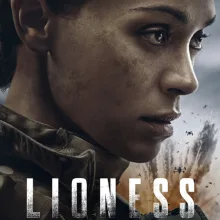
George walks me through what makes a gunshot or a location sound authentic rather than stock. Definitely check out Lioness. It is now streaming over on Paramount +. I had a great time talking with George, and I hope you have a great time listening. Enjoy.
George, I want to know more about you and how you got into sound work. I was a musician growing up, teenager. Got into the drums and was an amateur musician throughout those years. And then I decided to take it one step further, went to school for it, studied classical music. And then someone told me about Berklee School of Music in Boston.
So I checked that out. This was late 80s, early 90s. And back then, obviously, pre-internet and all that stuff, we either read about it or spoke to someone that knew about it. Or in my case, I actually drove there from Montreal, Canada. I checked out the school, fell in love with it, and wanted to go there and managed to make that happen.
And while I was there, I saw the best musicians around, fantastic musicians, and said, I don't know if I can make a living at this. But at the same time, they had this program where they were teaching computer software for music editing, music sound design. So I took that right away instead of continuing. I still continue to play the drums and piano, but it became secondary once I discovered this whole new medium of programming music, designing sounds and stuff like that. I didn't really focus on the music part of it.
I just, part of me wanted to do dialogue and sound effects because it always fascinated me when I, you know, would hear the great work in the movies over the years. Obviously, someone my age, my generation, Star Wars in 1977, that's what I think triggered the whole thing. Maybe it was subliminal or not. But yeah, so I went to Berkeley and walked out of there. pursuing sound effects and dialogue editing and stopped by New York for a quick minute and then ended up in Los Angeles with some people I knew from Berkeley, some alumni, a great network out here. And then one thing led to another and I started getting small jobs here and there and started editing and then eventually supervised and even had to dip my toes into effects mixing for a while just to experience the editorial side, the mixing side, and that's how my career became what it is today, going that far back.
When I was a kid, I watched a documentary about the making of Star Wars and seeing Ben Burtt and all the things he was doing to make those sounds. Incredible. Oh, yeah. Yeah. I think he was 19.
Yeah, Lucas plucked him out of USC and said, here's a year of time, go make me these sounds and just... talk about the most creative and unique sounds back then, too. But you go back then, again, this is like the late 70s. I walked into that movie like, oh, yeah, it's a sci-fi movie. I didn't know anything about what they did before or after. You only read a few articles.
And we're all walking out like, we're all doing the sounds, doing Darth Vader's breathing. And quite frankly, I thought it was all John Williams. I didn't know there was a sound designer. I was a kid back then. I didn't know what that was.
And Years later, you discover who really is behind that. And like you mentioned, the documentary still is just eye-popping to see that kind of stuff and just inspiration and motivation. Just love it. Yeah, to see him with, I think it was a wrench, and he's hitting on a tension wire, and I think that was the laser blast. I'm just like, this is amazing.
Yeah, I don't think I would have the courage to hit a live water these days. get electrocuted or something. But yeah, those are just great techniques and still the most unique sound design, I think. You were brought in on, I think it was a 2004 edition of Highlander 2. Correct, yeah. Can you tell me about that gig and what that was like?
I think the DVD boom was still large and in demand and stuff like that. So a lot of these companies started restoring their movies onto DVD and We would get the original mix tracks, the music separated from dialogue, separated with the sound effects. And they wanted us to mix them for the DVD medium, which is surround sound. And they added commentary. Anybody that's a DVD collector or a fan knows what I'm talking about.
That was a handful of movies that came into the studio. I was working at the time, and Highlander 2 was one of them. And they asked us to embellish a few things here and there, just because the movie was... I forget how many years old by then, but we had fun doing that. And to get the original mix and to hear it and to be in a room with it was quite exciting, actually.
And to add some sounds here and there, to have original producers come by, sit with us, listen to it, ask us to make some changes, maybe a little louder in the music here, maybe more surround sound for this scene. It almost gave them a second opportunity now to revisit the film and mix it in this new medium. our popular medium, which was the DVD platform. And of course they did their commentaries and stuff like that. So another one we did was The Good, The Bad, and The Ugly. And that was quite exciting because we got the original sound that was imported from Italy.
So when it came in, we were just all excited, but we were also careful. Let's not make a mistake here and screw this whole thing up because it was the original sound mix, tape and everything. Yeah, it was exciting to work on those movies and to, I was a fan of them. growing up and to all of a sudden be part of this restoration, if you will, was a great opportunity. I loved it. I loved the way that the Italians mixed those.
Just the reverb on so many things, the voices so front when it came to so much of that, and then that amazing score, Morricone. Yeah, the score is, you know, by itself, just completely amazing, but the good, the bad, the ugly, they added a few new scenes and we had to get the actors to come in and record some dialogue for it. And Clint Eastwood came in and he told us I was on the set. I didn't see a single microphone throughout all of the shoots. So he had to dub all of his lines as did everybody else for the whole movie, which is what you just described that voice is upfront and crystal clear because they dubbed it after they filmed.
When they were on the set, they were just so focused on the imagery that they didn't really, they weren't too concerned about sound. which was a lot of work for the actors afterwards to come back in and dub every line. But what a story that was to meet Clint Eastwood, first of all. But then to tell us stories about the Spaghetti Westerns that he was part of. So yeah, that was so exciting. I loved it.
You got Eastwood back, you got Eli Wallach, but then it was, I think, by that time, Lee Van Cleef was long past. Yeah, so with permission, they got someone to impersonate his voice. But they also knew that. So any new footage they put in, they tried to put it on Clint and Eli more than anything else that they would think could be problematic trying to accomplish. They did a good move there.
And then we played it out here in Los Angeles at New Art Cinema and it played great. People loved the new surround mix to it. There was a Q & A afterwards, and people were just excited, and it was great to see that everybody's still into that. With something like that, where you have older voices that are supposed to be younger, I noticed that especially with the last Indiana Jones film, where everything looks good with the de-aging, which is remarkable, but then the voice is still the old man voice. Yeah, with Clint and Eli, it all starts with performance.
We ask them to do whatever they can without obviously going, over the top and hurting their vocal cords or anything we asked them to can you just go a little higher with your voice a little higher and then from there uh we would use any kind of sound software techniques maybe even pitch shifted if we had to uh but it got to a point where even the producers said you know even on highlander 2 no that's fine it's you know people know what we're doing we're not trying to fool people they know what's happening Highlander 2, I think we recorded some voiceover, so luckily it wasn't on camera. It didn't look funny when it came to syncing the words with the lips. But we got to meet all the heroes in the film, and that was exciting too.
We find a way around it, and like I said, we don't go overboard to really make it stick out. Right now, it seems like you're doing a lot of supervising sound editing. Does that still include the sound effects, or have you moved past that? I do have a crew. a dialogue editor, a sound effects editor, sometimes two sound effects editors, depending how busy the show is. Once they're done with their work, while I'm coming up with ideas and even doing some sound design on the side to give them a break, we're recording additional lines with the actors.
I'm taking care of all that. We're recording background voices. I supervise that, direct the voice actors. Once everybody's done, all the sound sessions come through me and I play it through one last time. Just to save time for my crew to continue working on the next episode or the next project, I'll go ahead and embellish or add more sounds, whether it's sound effects, whether it's dialogue.
So I don't edit as much as I used to, but I still purposely make sure I do have some editorial input when we're going through the episodes, preparing it for the final mix once we get to that stage and the composer's done and then we all meet together and put everything together. ready for the mix. Yeah, I supervise definitely more than I edit, but I'll never give up editing. It's in my DNA at this point. My impression would be that if you're doing sound effects and editing on, say, I know you worked on Jackass 2 or House of a Thousand Corpses, is that more fun than a drama? They all have challenges that are interesting, and that's what I love about it.
Jackass 2 was We get the notes from the director and the producers, and they didn't want to embellish it over the top or anything like that. So to find the right sound, to make it sound like it's real, to help with the impact, whether it's someone on a skateboard going into a wall or something, we can't make it sound cartoony or over the top. So to find the real sounds, make it sound organic, and help what they recorded on set is quite a challenge. But House of a Thousand Corpses, that's completely... What do you want this to sound like?
It's fictitious. So we have so much headroom here to create something. And I don't mind trying one thing, going back, trying another thing. That's part of the process. So they're all interesting and challenging in their own ways.
There's never, oh, this is easy or this is straightforward or anything like that. I never approach a show like that because everything is going to create an opportunity. and a challenge to come up with the right sound and make it fit. You've been working on a lot of really big shows recently. 1923, The Studio, Lioness, Lucky. These are pretty major series that you're working on now.
Yeah, it was thanks to Jackie Jones and Jennifer Bowman at Formosa Group Sound. I knew Jackie Jones a while ago at some other facilities that we worked with together, and then I called her up and said, hey, I'm looking for a challenging series. Do you have anything here? I just finished something else. I think it was Gotham, maybe, at another studio.
And she had this like, hey, you hear this guy, Taylor Sheridan, Yellowstone. He's starting to do spinoffs. Here's a show. It's an old Western type of thing, a prequel to Yellowstone. And that's how we got on board with 1923.
And that was supposed to be just one season. It was part of an anthology. And they liked it so much, they created a second season. But, you know, that You meet the people there. If everything goes well and everybody gets along, their next show, they think about you, they call you, see if you could join them.
I ended up doing 1883 with the same people. Lioness is part of the same Taylor universe, so to speak. And you get opportunities. And in between shows, again, for most of the group, Jackie and Jennifer, they'll see an opportunity with the schedule and say, hey, we have this new client or new show. want to give it a shot. You got some time before 1923 season two starts, stuff like that.
You sort of network and you connect. And like I said, when a show goes really well and you get along with the producers and the director and everybody, it just blends in. It's like you all want to work together again next time. So the studio and Lucky, a lot of the same people were on those two shows. So that's how one connected to the other.
And again, the Taylor Sheridan universe, You know, a lot of the same people supervise all their shows that they create. So hopefully that keeps going and, you know, they make more seasons and more spinoffs. Tell me a little bit about Lioness. What are some of the big challenges when it comes to doing a series like that? So something like that, the weapons are definitely the biggest challenge because they don't like to make this Hollywood sound, so to speak, where the gunshots are 10 times larger than it would sound.
There's so much research that goes into every single weapon they have and what does it sound like? And I heard what this gun sounds like on this video, but he was outside there in a field in a forest. What would it sound? So it's really most of the work is just figuring out what it's going to sound like and then putting it together is just not a routine, but it's a process that we've done before on many other shows with weapons or action and stuff like that. But to me that's the biggest thing it's not just the weapons it's the vehicles um the are they in a different city what does that city sound like they're in a different country uh you know if they're in New York I could fly to New York and record any location they're in or go to a library that exists with sounds that were recorded in New York but when they're in a foreign country whether it's in Africa or the Middle East or any part of Europe that again becomes a challenge so we're we're calling and researching and trying to find the right sounds because they want to be organic and they want to be authentic they don't like to go over the top they don't like to really trick or lie to the audience sometimes the music could be kind of big and loud so we'll embellish a few sounds just so we could match the intensity and stuff like that but overall we have to say stay true to what we're seeing on camera when it comes to the sounds Do you.
Think you're on some sort of FBI list with all the research you've done on armaments? I'm sure it was well before that on other shows that if the government doesn't want to follow me, they must have found me by now. I did a show for Stephen Bochco many years ago called Over There after the Desert Storm war, and that was massive weapons too. And we were all over the place looking to record our purchase already recorded sounds and stuff like that. Hopefully they understand what we do at this point and they don't think we're a threat or anything.
Going back to the Sergio Leone of it all, that was something I really appreciated about him was that he was like, I don't want my guns to sound like other people's guns. As a film fan, which I know you are as well, you hear those same sound effects over and over again. So it's really nice that you're looking for fresh sounds and not the typical, okay, I've heard this a hundred times. Correct. Yeah, and there's a great video on YouTube somewhere.
It shows one of Sergio's sound guys recording the foley for one of the Spaghetti Westerns. And he's sitting at a table with coconuts and everything, doing the horse feet and the saddles and stuff like that. Of course, back then, a glass of wine, a cigarette, and just totally raw, totally unique. It was so fascinating to watch him do the work and them speaking to each other. No, I think you're going too loud.
I think you're dragging... The coconut for the horse foot and the horse hose. And, you know, so it was just, you know, you love to see stuff like that. But it's always fun to record new sounds. I love it.
I love it. When we have an opportunity, just on Lucky, actually, the series Lucky, they had a Rivian and I did not have that sound in my library. So I found a friend that owned a Rivian and spent an afternoon just recording the inside of the car, the outside of the car, around his neighborhood. It's honestly, I'm like a kid in a candy store when I have an opportunity to record new sounds. for a new show. Do you find sounds though where you're like, that doesn't sound the way I think it should sound or other people might think it should sound and you have to change it?
Yeah, there's, I don't know if paranoia is the right word because you're sitting there for a while editing the sound, designing the sound and It gets to a point sometimes where I'm like, you know what? I'm going to stop. I'm going to wait till I get to the mix stage, hear what the music's playing, ask the opinion of my coworkers, see what they think, see if they have any ideas. It actually helps to have other people listen to your work too before you present it for the final mix or the final stage. So that does creep up in my brain quite a bit, actually, even though I have a massive collection of sounds and whether they're Some of my experience pertains to a particular project that I've done before.
You're still questioning and then wondering. It's a concern. It's a good concern to have. You're talking about sounds of other cities. I know for the stereotype in movies is if you're going south of the border, you just throw a yellow filter on it.
Is there a yellow filter for sound? Do you just cue a mariachi band? I wouldn't say there's a formula. Again, it goes to research. Where are they?
And obviously, we ask the directors and producers right away, what would you like to hear? Because sometimes they'll say, look, we were there filming. It's just desolate wind or there's no wind at all. It's crickets or it's wind through bushes or anything like that. So it goes to that research.
And how do we get the right sound, the real sound first? And then from there, depending what's happening, what they want, we'll either start embellishing or adding to it. I don't have a template saying, okay, this is a South American country. Here's the sounds to start with. We start fresh all the time and try to find something unique or true to what we're seeing visually.
Having been in this business for so long, I'm sure you've seen a lot of changes, especially when it comes to the software that you're using. What do you use these days? We still use the standard editing software, which is called Pro Tools, made by Avid. That seems to be still the most common software, especially for people like me. You could work at Formosa one day, Warner Brothers the next day, Universal.
That seems to be the common denominator. They all have that software. What's really popular now is third-party software. They make plugins. If you have a gunshot or an explosion, everybody's advertising.
My software can now embellish this, make this sound like with a stronger impact or this could pitch shift your sound much better without any artifacts so there's always money being spent on this new software coming out what's been very popular in the last several years is noise reduction software so when they're filming on set it could be raining on them or it could be traffic in the background could be a wind machine stuff like that 20-30 years ago something like that happens you bring the actors back in to record the lines because there's so much noise These days, almost with certainty, you could diminish any background noise. So I'm keeping up with all of that because everybody has their own version of it.
It's really helpful. I'm so happy that they came up with it because it does save a lot of time. But with sound design, it just never ends. Everybody, especially these days now, you can't hide it. AI is helping people develop software quicker, better.
And just the last year alone, I'd say easily a half a dozen applications came out where People designed it right away, quicker than they normally would, and it's not that expensive, and it helps so much with sound editing, whether it's cleaning up dialogue, enhancing sound design, and it's a good time, actually. It's really exciting. You talked about the gunshots, the vehicles, the cities. I feel a little bad even asking you, were there other challenges on Lioness that you had to solve? So Taylor and his team, once they film it, they love the performances.
They take so much time. choosing the right performances when they're putting the film together, the film editing or the video editing together. So by the time we get it, they do not want us to try to request to loop a line because there's background noise or there's something compromised, the quality of it. So the biggest challenge for those shows is to make sure we clean up the dialogue as much as we can for clarity and try not to bring in the actors for any kind of looping. It's a lot of work to do, but Personally, when I watch a show, I don't use subtitles. I want to watch a show.
I don't want to read a show. So it's part of the mission now. I don't want people like me, even my wife and kids, don't put on subtitles. So even when I'm working on dialogue, I really make sure it's crystal clear so nobody has to use it. They understand it, and there's dialogue intelligibility when our shows air.
That's definitely a big challenge with those shows. Every show has its own challenges, but with the Taylor Sheridan shows, it's making sure dialogue is up front and center and crystal clear. You mean you don't like to have the music super loud and the dialogue super low, so then you turn it up to hear the dialogue and then your speakers blow out when a sound effect happens? We mix over here on our mix stages, and by the time everybody's at home watching the show, I don't want them holding the remote, lowering it, raising it, lowering it, so we make sure all the levels are balanced and they can enjoy it when they're at home. What's next for you?
What's your next project? I'm doing the studio season two right now. And that will probably go right before Thanksgiving. We'll finish it. I think it'll air next spring.
Then I'm hoping for Landman Season 3 will be ready by the time I'm done with the studio. And that's a great show. I love the writing. I love the music. And we have a great time mixing that show.
And then by the time if Landman starts on time and finishes on time, there could be another Lioness or another studio. But always looking, keeping in touch with old clients and producer friends and stuff like that. They're all out there trying to get their own new show. So I keep in touch with them just so I could jump on something new as well. So it's a good time, definitely.
A lot of work out there for me and my crew. What's been your favorite thing to work on over all these years? At this point in my career and my life too and my age and everything, I got to say the Taylor Sheridan shows, the writing to me is phenomenal. So when I'm doing something I love, which is sound editing, and then sitting on the mix stage and getting together with the composer and the music editor, It's like such a tight group. We have so much fun.
But when you're doing something you love for a show that you think is great, like you would watch this at home, even if I didn't work on it, that's like the best part. His writing is fantastic. The acting is through the roof in my part. Billy Bob Thornton's always all done. Come on.
And then I did a show actually recently with Sam Worthington, and then I jumped to Lioness. So I said, great, I have the Avatar cast now, one after another. When writing is fantastic and the picture editing is done great, sound is just so much more fun, even though I love doing it no matter what. I just love it when it's a show that I would watch no matter what. Jared, thank you so much for your time.
This was so great talking with you. Thank you, Mike. I'm glad we got to do this, and I love your DVD collection. Thank you. Thank you.
Watch
Comments
No comments yet.