Special Report
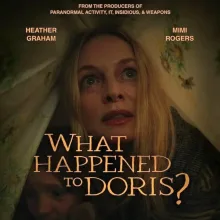
What Happened to Doris?
Show notes
Simon talks about pursuing Heather Graham for the lead with a personal letter laying out his vision, working with Mimi Rogers and the cast, and building scares practically on an indie budget with creature designers Mario Torres Jr. and Roxanne McDaniel. Mike and Simon get into what drew him to Doris's story specifically, and why he wanted her perspective, not the entity's, to drive the film.
What Happened to Doris? premiered at Fantastic Fest 2026.
Transcript
An automatic transcript from Spreaker. It has not been proofread, so names, titles and spellings may be wrong, and it does not say who is speaking.
Show the transcript (about 3,100 words)
Hold your ears, folks. It's showtime. People pay good money to see this movie. When they go out to a theater, they want cold sodas, hot popcorn and no monsters in the projection booth. Everyone pretend podcasting isn't boring.
Turn it off. Welcome to The Projection Booth. I'm your host, Mike White. My guest this episode is director Nick Simon, who was mentored by Wes Craven and now brings us What Happened to Doris, a 1974 set haunting based on the real case that helped inspire the entity told with the cooperation of the victim's own son. What Happened to Doris plays Fantastic Fest ahead of a planned theatrical release early next year.
I had a great time talking with Nick. And I hope you have a great time listening. Enjoy. Obviously, I want to talk about the new movie, but I would love to know a little bit more about you. Can you tell me about your time at the AFI and working with Wes Craven?
Oh, yeah. I was accepted into the American Film Institute as a director in 2006, the conservatory, and graduated in 08, 09, something like that. And then... I made my first film. Like I was, uh, I wrote with Oz Perkins, Osgood Perkins, and we put him in the movie and we were friends from like when I was at AFI.
And, uh, then we wrote another script. We used to write, we've written a couple of things together. And then, uh, one of those things got into the, got me into the writer's guild. And then, uh, at that time, the writer's guild were starting this new thing where they were like, we're going to pair you with mentors. And then somehow there was five of us.
Um, we ended up getting paired with, Wes Craven which is incredible so then you're like well then Wes invites you over to his house for dinner and I'm like oh my god I was like terrified you know and then I was the first one there because I'm like chronically early and then he just like answers the door and you're just like you know like you know but it's always so funny because Wes is like was the greatest human and the nicest guy in the world and I miss him tremendously and then we were as mentored by him through the guild for a year and we had these dinners at his house, like every, every like six to eight weeks. And we'd talk about everything. And then towards the end of that, he was like, you know, what are you guys, you know, what are you, we were just talking and he was like, what are you working on?
What are you, what are you doing now? And I'm like, Oh, I had the script, uh, for the girl in the photographs at the time that Oz and I just finished. And we were like, uh, I don't know if it's good. I think it's weird. I don't know if anyone would like it, you know?
And he's like, well, let me read it. I'm like, uh, and they, they tell you very specifically, don't, don't send them, scripts you know that's don't send Wes Craven a script and he's like no send it to me I want to read it and like okay so I sent it to him and then he read it and loved it and said how can I help you get it made and I really owe my career to him for that you know so yeah an incredible man and he sadly passed away about two weeks before we prepared the movie and he was one of the best and you always again you couldn't have you couldn't have wanted more from meeting somebody as legendary as that you know like you have those dreams of like I want to meet this guy and then they'll help, you know, like he was my first one, you know, meet these people and then to have them be that incredible and then have them then actually want to help you make a thing is just shit that doesn't happen, you know?
So that was pretty great. What are some of those lessons that he taught you that you're still able to use today? He told me I was too nice. That was interesting. So he said, don't be, don't be some nice to people.
He's like, when you know that somebody is wrong about something, don't, you don't have to, he's like, you apologize a lot and don't apologize for things. Like you haven't done anything wrong. Like if, if you know, that was a big, big one. He's like, you're too nice to people though. And then now you have to be a dick.
He's like, but you just have to like take emotion out of things and, and, uh, you know, uh, just be, be really matter of fact with things. Um, especially if you know, if you believe that you're right about something, just don't, don't budge on it. And a lot of little things, you know, like I, I, it was very early in my career. It's like my second movie that he ended up producing. And, you know, he would go through the dailies with me and he's like, you know, I get that you're trying to do this like motif of this working and it's not really working.
He would use like, you know, in a variation of like the kill your darling thing, he would be like, yeah. And he's like, you know, sometimes you might want to see, I know it feels like it's the right pace, but maybe do a little faster to, you know, like just things like that, you know, but he was, I mean, also so influential on story and, and, and just structure and things like that, you know, like, and not, not necessarily so much on directing specific, but like story things. There was a lot of things we talk about, you know. How did, uh, what happened to Doris come together for you? So that was a producer, Herman Michael Torres.
Uh, I worked with before he had gotten the script from a guy named Tom Fendon who had had it and been working at it for about four years. And this is about three years ago. They brought it to me. And I said, yeah, this is great and really scary. I don't know how to make this movie, but that's scary.
How do we do this? And then Tom built this relationship with Brian Harris, who's her real son. And it became pretty clear that this wasn't going to be like a remake of Sidney Fury's film. It was going to be its own thing. And to tell the story the way it really happened.
And once you start talking, then I started talking to Brian and And getting to know the stories behind everything that happened. And then you really want to approach the material as carefully as you can and try to be as sensitive to it as you can. And to know that it is still, I think, a very important story today to tell. And I think that theme of people not believing this woman is still very obviously relative. You do some really wonderful things in this movie.
I watched it with headphones on. So the sound was right there. Oh, thank you. So good. Because you know, you have to work with atmosphere so much in this movie.
Yeah, we should. I mean, like the sound is incredible. Uh, Brett and TJ and everybody, anarchy posts were fantastic. I mean, honestly, we had, the movie looks much bigger than what the resources we had to work with. And I feel like that's a huge success on all of the filmmakers part.
Everybody worked, everybody fired on all cylinders for this movie from art department to cinematography, to post sound, to music score, everybody just kind of came together on it. And I feel like that's so we couldn't have done it without it. You know, we were doing a 1974 period piece that we, shot in the movie in 16 days you know it took him seven years to get the movie made we shot it in 16 days you know so to be able to pull it off and have it feel as lived in in real and the sound design elements are so important and funny enough i think this you you saw a screening link of it and i think i've tweaked the sound since then so it's even a little bit more there's some parts in there i think that we've there was one thing that was bugging me and i'll i'll tell you but after we're done recording but it was kind of funny but yeah thank you for listening Oh yeah.
The first thing that grabbed me was that swing at the beginning and just that empty playground. And you hear that, that creak of the swing and that really was effective. Yeah. Cause it's ultimately about this family. The story affected everybody in the family, especially when you talk to Brian about it.
It's like he, it was an effect, it affected the entire family. And, and, and, uh, I can't imagine growing up with that, you know, and her, her biggest fear was always to lose the kids. She didn't want to lose her children. Yeah. So that was always something we were trying to, to, to make that very clear and it being a family story.
Cause that's the other thing about the movie was the ending of it is it does have a kind of a bleak ending to it, you know, where they, uh, she ends up just kind of not to spoil this, but she leaves and that's, you know, it did the ghost follows her wherever she went that point on, you know, and, and he, Brian told me straight up to my face. That's like a quote, like, yeah, eventually it killed her. He killed her in Colorado. Oh, okay. But it was always important for her to keep the family together and to try to have that as a staple.
It's going to be a painful thing for him to keep hashing out and everything and having this filmmaker barging into his life and doing this. Yeah, yeah. Tom built a relationship with him over years. So that credit all goes to Tom. Um, I only, I talked to him a few times just toward, you know, the, my, the last year or so of going into it, but he doesn't, you know, he doesn't really talk about it too often.
So it's, it's, it's, uh, it's an interesting, which is why you kind of believe this family more than anybody else. And who's like, I've lived with the ghost and, you know, cause these people don't want to talk about it, you know? And I think that's, that's, uh, kind of, kind of telling, but yeah, he trusted us to do it. Like his only note is really funny. Cause he read the script.
He gave us something like, well, what do you think? You know, everybody's really nervous to see what he thought of it. He's like, yeah. He's like, you know, the only thing is, you know, Mr. Who's it was the stuffed rabbit and Franklin was the ghost that attacked my mom.
So we knew that. We knew that going in, but we changed it around because we felt that Mr. Who's it was a better, like more, you know, like it was, it just seemed like a scarier name than Franklin's. And we flopped them around, but that was his only no. So it was great.
Yeah, no, Franklin the Bunny sounds a lot better than Franklin the Ghost. Yeah, Mr. Who's It sounds like a scarier ghost than, you know, so. You also do this really nice thing. I was noticing towards the beginning when she's getting haunted, it almost looks like you're using a flashlight or something when it's her POV. and you see stuff moving in the room.
I love that there's that little extra light that you're not exactly sure where it's coming from. Yes. So there was a scene we ended up cutting out of the movie where she goes and takes the kids to bed. And then she just leaves. And then we, just for timing purposes, we wanted to get, get to a little faster where we, then she goes back in the room and she grabs one of the kids' flashlights.
And then she puts it next to her because she knows that something's happening to her. So we knew that once they're there. And then she also being from California, she felt like it was just an earthquake, which is something that happens all the time where you're just like, Oh, we wake up and things are moving. So then she has the flashlight next to her bed and starts looking around and using that. That was, it was a, thank you for noticing that.
That was great. Oh, it's nice. It almost seems like a special effect that isn't that special, I guess. Yeah. And that's how we did most of those effects.
I mean, we didn't have the, you know, we don't have the unlimited resources to do a ton of visual effects. So we had to do things very practically and went back to very old school ways of, of, of pulling these scares off and things like, you know, there's a, there's a lot of combination shots. There's the, the scene in the kitchen where the door flies open and the frying pan hits the thing. which is a perfect combination. It's like 90% practical and 10% digital birds, you know, on a, on a literally on a fishing wire and you whip the door open and you whip pan the camera into a frying pan. It's already in the thing.
And then you, the digital element is, you know, the flying, which is something you barely see anyway, because it's in the whip pan. So then, but altogether it looks incredible. You know, I was going to ask if you've had a chance to see this with an audience yet. Cause I imagine they go nuts. I haven't.
I, well, I have, I've saw it with an audience, but it was mostly cast and crew and like some friends, just some people that we wanted to invite to the screening to see what they thought of it. So it wasn't like a general, it wasn't, it wasn't like a, it wasn't a real audience. It wasn't definitely, it was definitely the hardest audience probably because it was all people who worked on it. So you're like, Oh, I hope you like it, you know? Um, but everybody seemed to really like it and they all, they all do jump at the right time.
They all definitely had audible moans during one scene, which you probably know what I'm talking about. Um, that was kind of interesting. Uh, fantastic. This will be the first audience I see it with, with an actual like horror fans and like fans of the genre and like real, real people. So that's both exciting and terrifying, you know, at the same time.
Do you know where's the best place for people to go and keep up with the film? That's a good question. Cause you know, we're trying to, we're, we're, we're, uh, I know they're planning on coming out theatrically in like January or February or something like that. And then, uh, I know that we don't even have, like, I don't think they're even have the socials up yet or any of that stuff. So hopefully we'll, we'll, there'll be some announcements coming soon that we can get all that squared away and, and, uh, it'll be very obvious.
So hopefully, But thank you again. Hopefully the word of mouth is good and people find it. That's how it was when I grew up loving horror movies. You'd always find the ones that people are talking about. So hopefully.
Well, Mr. Simon, thank you so much. This was so nice. No, thank you. It's been great talking to you.
Thank you. Life was in danger, the abuse was out of hand. She told the man she once loved, get out of my land. The only memory I. Have of you is the back of your hand.
And as. He spat threat, she pronounced him gone. Once was once too often, this life couldn't go on. Your instant gratification days are long gone. It's just a ghost, I'm a lover.
It's just a ghost, I'm a lover. I only feel sorry for the unfortunate soul. Where that's his demon, penetrate a hole. Strong words that will stand true. He's a ghost of a lover of a man she once knew.
But this man taught her what she puts himself through. It showed on his face as his days go into his years. But his body's strong but his mind is weak. He breaks her heart for the fourth time this week. Well, I just can't live with you no more.
You're just a ghost of a lover Bye. We'll be right back. You're just a ghost. Of a lover. You're just a ghost of a lover.
Oh, yeah. You're just a ghost of a lover. You're just a ghost. Of a lover. You're just a ghost of a lover that I once knew.
Comments
No comments yet.