Special Report
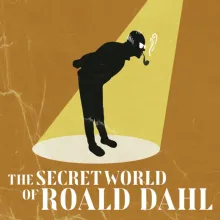
The Secret World of Roald Dahl
Show notes
Find out more about the podcast at https://www.listentoparallax.com/ (opens in a new tab)
Transcript
An automatic transcript from Spreaker. It has not been proofread, so names, titles and spellings may be wrong, and it does not say who is speaking.
Show the transcript (about 6,000 words)
Oh he is both it show die. People say good money to see this movie. When they go out to a theater. They want cold sodas, hot popcorn, and no monsters in the Protection Booth. Everyone pretend podcasting isn't boring, cut it off.
We would never expect Stephen King to secretly conduct espionage or Jason Borden to retire from his spy work to pen forty nine beloved books. But then how do you explain Roll Dall. Forget the image you have of him during the war, and Roald Dahl was a spy for British intelligence, the Roll Doll. I'm about to introduce you to operated in the shadows of World War Two as a dashing British spy. Hey, folks, will to do a special episode of the Projection Booth.
I'm your host, Mike White. I don't usually interview other podcasters, but this time I have. I'm talking with Aaron Tracy all about his new podcast, The Secret World of Role Dall. It is a new series that is out. It's available on iHeartRadio as well as a whole other platforms.
You know where you usually get your podcasts. All about Roald Dahl, the author of such beloved Children's Fair as Charlie in the Chalk Factory, Matilda James and the Giant Peach. This is all about his life. It's crazy life, kind of a controversial figure if you know anything about him. If you don't, definitely listen to the podcast, but first listen to this interview.
Thanks so much. Enjoy the show, Aaron Tracy, How did you get into the fine world of podcast I took a bit of a circuitous route. Most of the podcasts that I've done before this have been scripted fiction, which is kind of a weird little corner of the podcast world. I do most of those shows for Audible, and iHeart and I absolutely love it. I'm a screenwriter and a TV writer, and it's very similar to that, but there are fewer gatekeepers.
It goes a lot faster. You can actually set up and sell original ideas, which is so hard in TV and film these days. So I've made a lot of those. I think I've made thirteen series for those two networks. And you get to work with big movie stars.
I've had Glenn Powell and Greta Lee and Aaron Paul and just it's great. I just can't recommend it highly enough. I've recently transitioned over to doing in addition a non fiction podcast, a documentary that we're sort of more used to in the podcast world, this one about Role Doll, which has been great, and so I love going back and forth between the two. So why Roll Doll? How did that come up as the selection for your subject?
A bunch of reasons, one of which is that I have little kids, and so I've been thinking about what I read as a kid, and I definitely read a lot of Role Doll. Did you read a bunch of Role Doll as a kid, I definitely did. I loved Charlie and the Chocolate Factory, the Great Glass Elevator, James and the Giant Peach. I remember specifically, when I read Danny the Champion of the World, it felt like it was a lot more adult, wasn't it as kid centric? And I just felt like such a big grown up when I was reading that when I was probably like, I don't know, eleven years old or something, but it was so much fun.
Yeah, Doll was great at that at treating kids like adults. All the gruesomeness and the cruelty in his books I think really makes kids feel they're not being talked down to, which is so important for kids. I was also just really intrigued as I sort of started to research Doll. What a completely banana's life you had. I mean, we're both writers, me and dall to compare the quality of our work, but we both spend our days just like trying to rept some words into interesting orders.
But I do it sitting right over there in my chair, in my bathrobe until like two pm, overlooking the world outside the window, whereas Doll was out in the world. He was going to Africa, and he was a fighter pilot, and he was a spy, and he was living all of these really extraordinary chapters as a writer. And so I was just completely taken with that and wanted to know more. And research is my favorite part of any kind of writing that I do. I like that he's not a figure from the distant asked he was alive while we were alive.
But how much stuff has been written about him? And how deep did you have to dig? So the good news is there's a ton of books about him. I have a stack over here of about eleven books that are either about him by other writers or ones that he wrote. About his own life, which were of course incredibly helpful.
You can also go online and find a bunch of interviews that he gave, which is great, a bunch of videos on YouTube and elsewhere. I talked to a few people who knew him, which was great to get more of a sense. His wife of thirty years, Patricia Neil, who you're probably a fan of I'm a fan of, wrote a great memoir where she talked about him. So yeah, So there were a bunch of different ways to get to know Doll, which was terrific. And yeah, the more I got to know him, the more respect I had for him in many ways, especially a bunch of the just really romantic heroaque things he did, like when he was an amateur neuroscientist and he ended up inventing a tube that saved his son's life, the lives of thousands of children around the world, which I had no idea about, of course, But then also was completely turned off by him, by his bigotry, by his anti Semitism, by his cruelty.
He's a really complicated figure, which of course is good for the podcast. I wouldn't want to write about someone who was simple. What was his relationship. Like when it came to Hollywood, I know he was being adapted from what the early fifties. I want to say he had a fascinating journey in Hollywood, which yeah, I'm a huge movie buff too, and was deeply interested in all of that.
We talked about a lot of it in the podcast. He went out to Hollywood in a kind of a weird way. He wrote a short story called The Gremlins, which was pastor around DC and did really, really well. It has nothing to do with the Steven Spielberg produced classic, by the way, but it did really well, and Walt Disney got his hands on it, not the studio, the man himself, and flew doll out, put him up at the Beverly Hills Hotel, got him a driver, threw a party at his fludgling studio in his honor, where all these celebrities like Charlie Chaplin were invited to dress up like little green creatures like the Gremlins. So Dahl was twenty six years old, can you imagine.
I'm just completely by that kind of introduction to Hollywood. And they were going to adapt The Gremlins into a movie, but it didn't work out. Dall was just not at a point in his life where he was able to collaborate. And so even though Disney was spending a lot of money on the project and literally took out advertisements for the movie before the script was even finished, they just couldn't make it work. And when you look back, it does kind of make sense.
Like Dall and Disney don't really make sense together. You know, they have such different outlooks, such different points of view on the world, different aesthetics, different tones. But Dahl didn't give up. He wanted to stay in Hollywood. He wanted to continue wating movies.
He had the bug, and so he kept at it. And you know, I talk about this in the podcast, but there are so many cautionary tales of great writers who moved out to Hollywood and just fell flat, people like William Faulkner, f Scot Fitzgerald, famously Aldis Huxley, so many others, And Dahl was in danger coming one of them. He wrote a screenplay for Robert Altman called Oh Death, Where is Thy Stingle Lingling? And that looked a ridiculous title, but that looked like it was gonna be his first produced credit, and they actually cast Gregory Peck in the lead role. And the reason it may not sound familiar to you is because they shot for a couple of weeks and then they had the studio looked at the dailies and said no, thank you, this is bad and pulled the plug.
So dog got so close he could taste it and had the rug pulled out, but he continued to persist, and that screenplay for O Death Where is Thy Single Ingling got into the hands of the producers of James Bond, and Doll had a tremendous amount of success after that. Well, yeah, and Dall also had that Ian Fleming connection as well, right. Part of the reason that Broccoli turned to Doll for James Bond, and this was the fifth James Bond film to write the screenplay is has one. He loved the screenplay for the Robert Dotlin film. But also, as you say, yeah, Doll was a spy with Ian Fleming in a group called the Irregulars during World War Two, working for sex.
So Dahl was able to bring his own experiences as a you know, literally as a spy working in a foreign land committing sabotage to the screenplay for You Only Live twice he talked about his feature work, but I'm curious about his work on television because he wrote one of the most famous episodes of Alfred Hitchcock Presents that has ever been made. Yeah, Chicock was right in the middle of his run, which I mean you could argue, I'd be curious for your opinion, maybe the best run by any director of all time, American, British, you know anything. And that was the period that led up to Psycho. And so he was so busy making all of those great films in that decade that when he was offered a TV show, he just didn't have as much time to focus on the writing, and so he needed a large stable of writers to come in and help, and so he turned to all sorts of interesting writers.
I mean, his movies, of course were written by people like John Steinbeck and Ernest Lehman, but for the TV show he was willing to give writers without credits a shot. And so he read in a magazine a short story that Dahl wrote called Lamb to the Slaughter, and he was just tickled by it. And you can see as much as sort of Disney and Doll made no sense together, Hitchcock and doll are a perfect fit, right. They both have that very dark ry British aesthetic. They both love twist endings, they both love the macabre and the just the gruesome elements of storytelling.
And yeah, so that particular story is about a woman who murders her husband with a frozen leg of lamb and then serves it to the detectives who come over to investigate the crime. So it's just this like delicious short story that they made into one of the most perfect TV shows of all time. I think, well, that's funny because I wasn't even talking about that one. I was talking about Man from the South, also a great one. Yes, also very HITCHCOCKI and very Dollian.
So that one has been remade a bunch including I think a lot of people. I'm sure you know, but I think a lot of people forget that. Even Quentin Tarantino adapted that with Bruce Willis for his segment of Four Rooms. But yeah, that's the story of a guy who goes around making bets and the stakes of the bet are your pinky finger, so if you lose, you will literally chop off your pinky finger. And he is this gruesome collection of them, and Hitchcock again was tickle by it, loved it, and it became an iconic episode of his show.
What was Doll's involvement when it came to Tales of the Unexpected. I'm a huge fan of horror anthology type shows, and this one I'm not really that familiar with yet. So that was a show that ran in Dall's old age. It was from nineteen seventy nine to nineteen eighty eight, so it ended a couple of years before Dahl died. But yet it was a British anthology series.
It was very much the sort of the Forbear of Black Mirror and the trilight Zone revival. I mean, it obviously was influenced a lot by the original tilight Zone, but it was a series of just like the Alfred Hitchcock Show. It was a series of individual short stories based on Dall's work entirely for the first couple of seasons when it was great, and then it really fell off when Dahl ran out of short stories to adapt and they had to bring on others. But it really made Doll famous. I made him a television star.
We know him in America from the children's books and the film adaptations. But in the UK they know him as this sort of grandfatherly figure who would sit in his big comfy chair with a writing desk on his lap and introduce this TV show every Sunday night. I know he wrote at least one movie that Patrician Neil was in, with The Night Digger. I'm not familiar with that movie. Have you had a chance to see it?
No, it's hard to get your hands on. Yeah, he and Patricia Neil chose not to work together too much. I mean part of that was just practicality. They had five kids and so someone had to be taken care of the kids. It's hard to work together.
But he was very instrumental in her career. He would often read the scripts that she was sent and give his two cents about whether or not it was worth her time to star in it. But yeah, they had a really interesting, really rocky, up and down romance for thirty years that were together, during which she made most of her great movies. Well, yeah, I'm a huge face in the crowd fan. I love hud That's my favorite of hers.
Obviously, walking into this project, you probably had some base of knowledge for this, but what was the most revealing thing for you, and he just went, oh wow, I had no idea. Probably the neuroscience thing that I alluded to. It's just it's wild, it's I mean, it starts with a tragedy. Doll Sun Theo was three months old when they were He was in his stroller with his nanny on the Upper East Side here in New York and got hit by a taxi and I mean three months old, and so right away was of course sent to the hospital, where he stayed for a month, and over the next few years was in and out of the hospital and developed hydrocephalus, which is water on the brain. And there was no tube, no valve that was able to get water off of the brain without causing infection.
So Doll, I mean, it's just sort of remarkable to me because it's something I don't think I could ever do. Dahl said, you know what, it doesn't exist yet, why don't I invent it? So he called a neuroscientist he knew, and he called a toymaker that he knew, and the three of them got together in a room I think of it like a writer's room that he had sort of learned from Disney, and they just threw ideas of the board until they came up with a valve that would actually successfully get water off of the brain without causing infection. And it was so successful. It's called the Wade Doll Till Valve, and it was so successful that they decided not to make any money from it and so that it could be distributed widely, and it was distributed around the world and it's been used in over three thousand children.
It's just remarkable to me that it's the same guy who's a children's author and an adult writer, but a writer who just decided, you know what, I'm going to figure this out. And he did, like you said, a very complicated man as well. These days, unfortunately, I think you mentioned role Doll, and people are just like, oh, the virilent racist, and it's like, no, is there's so much more. But it's got to be a challenge for you to be able to balance all of those pieces of his personality. I do not excuse him for the anti semitism and the bigotry certainly very personal issues for me.
But while I'm not excusing him, I do think it's interesting to get a picture of the man in full. He experienced a lot of tragedies in his life. I mean a lot. I have a lot of sympathy for the guy, which again does not excuse his bigotry or anti Semitism, but it does make it for an interesting profile of the guy. And like I said, he also did a lot of really great things, like coming up with that with that valve to save his sun.
Going back to the movies, did you have to watch a lot of his stuff just to get more of a flavor? Obviously growing up you probably watched a lot of it. And then there's certain adaptations because it feels like his adaptations go in waves where it's like when I was a kid, we watch Willie Wonka and the Chocolate Factory. Now kids are probably watching, maybe hopefully not Charlie in the Chocolate Factory. And then know that the what Netflix you mentioned in mondre grerapisisodes that Netflix has paid for all these brights, So there's going to be yet another Charlie and the Chocolate Factory adaptation.
Those Charlie and the Chocolate Factory adaptations are interesting. It's the nineteen seventy one film The Classic with Geene Wilder is warm and theatrical and slightly sinister, but it's ultimately pretty safe. It feels like family entertainment from the seventies. The two thousand and five Tim Burton version is gothic and psychologically strange and interested in trauma, and then the twenty twenty three version with Chalame is like a TikTok era ip play, just like optimistic and musical and designed for global market. So it just feels to me like Wonka is basically a rorshack test for whatever Era is adapting him.
I was a big fan of the Gene Wilder movie for sure. That's the one I grew up with. It's got a fascinating story behind it. It was produced, it was fully funded by the Quacker Roads Company, which I've never heard of another movie being funded by a serial company. And if you go back and you watch that opening title sequence, you will see, you know, in small print on the bottom right corner, like a Quaker Oats company production.
I mean, it's so bananas. Basically, they saw it as a commercial. They wanted to create a Wonka bar, and David Wolper, the producer, brought it to them and with that brilliant idea to have them pay for it to be product placement for a Wonka bar, which is obviously when I call him brilliant, it's it's very sad, it's very crass, it's very commercial, but it's also a way to get your movie made. And Dahl hated it. Dall saw it as crass commercialism.
And his book, of course, was called Charlie and the Chocolate Factory. Because they were making a Wonka Bar, they changed it to Willie Wonka and the Chocolate Factory. That's what the nineteen seventy one movies called. And so when you do that, I mean it sounds like maybe a small thing, but it shifted the focus from Charlie to Wonka, and Dahl hated that. He also hated the casting of Gene Wilder, that's not all who he saw as Wonka.
And so even though he wrote the screenplay, yeah, he despised it, he just owned it and he never allowed another adaptation during his life. I didn't realize that there were other adaptations, even of like James and the Giant Peach. What from like seventy one, I want to say, and just looking at some of the images, just seeing people playing the insects, and then you have that, to me, beautiful Henry Selleck film that came out that just really captured again that gothic stuff, like his relationship with Burton is a very interesting one. And then even thinking of things like Matilda, that's a beloved film by certain people. Because I aged out by that time.
But then I know, now even there's Matilda the stage play. People were talking about going to the musical of Matilda, which didn't even know was a thing. It's huge. Yeah, I was on Broadway forever I saw it. There it goes around the world.
Yeah, it's He is so just right for adaptation, I think, because he writes in the same way like Greek mythology taps into our greatest fears, he does the same. It's all of his stories are about cruelty of adults against children and just how unfair and scary the world is, and so that speaks to all of us, whether we're kids or not. The structure of his books feel a little bit like movies. I mean, they're so they're so perfectly designed. You have a clear protagonist with clear intentions, clear obstacles, a looming threat.
You almost always have a really interesting twist, either halfway through or at the end. I mean they're just they're tailor made for film adaptations, And then how is it for you when it comes to structure and saying like, okay, how many episodes is this? I'm going to divide them this way. I'm going to concentrate on this over here and this over here, because again you're talking about a man's life, but he has a lot of real structure to like, now he's a spy, now he's an author. But it's not as clear cut as that.
I'm sure. Yeah, well what I knew. I didn't want to do a Cradle toime. I'm just I get so bored by those, you know that kind of behind the music VH one, you know, music biopics, Like, I didn't want to do that. So Doll's life, I realized pretty early in my research, really does lend itself to breaking up into chapters.
He lived this life that the way I always think about it is he lost his father when he was three years old, and so he was constantly searching for his identity and what it meant to be a man, and so he went into all of these different worlds that feel like a child's imagining of what it means to be a man. So like, for instance, first he started as a businessman working for shell oil. That didn't quite take. So then he became a fighter pilot. And after being a fighter pilot, he became a spy and a playboy.
And after that he became a writer of adult muscular fiction for places like The New Yorker, and then it became a screenwriter, and then he became a children's author. So all of these different worlds, and so I didn't quite it's not quite as cut and dry as each one of those is an episode, but it's a little bit like that. And I wanted to start the first episode the Irregulars is about his work as a spy, both because I find it so fascinating and so interesting. I wanted to sort of, you know, jumpstart the series with it, but also because I think it really does color how we see the rest of his life. I've never done a scripted podcast, and I'm curious, how long does it TAKEE to record an episode?
Well, I guess there's the writing, and then the recording and then the production. I love the use of music in your episodes. Oh cool, thank you. We have an extraordinary sound engineer and designer and editor. His name's Mark Henry Phillips.
His claim to fame for me anyway, is that he wrote the music for season one of Cereal, which, of course, you know, the biggest podcast of all time and you can probably even hear that music in your head. That's Mark. He also worked on a bunch of other really great podcasts and we were really lucky to have. So, yeah, he's behind the music and the show. Yeah, I mean there's a big difference between.
So this show, The Secret World of roll Doll, is narrative, nonfiction, really research based, and yes, it's it's written. In other words, I wrote out my narration and I interrupt it with clips and stuff like that. But very different than the audio dramas that I write for for iHeart and for Audible, which are full scripts, you know, thirty to thirty five page scripts, just like TV scripts or movie scripts. Those take a really long time to write and to produce. One reason being that we try to get big stars and you have to work around their schedules, which takes forever.
And then when you record, you either have to you know, put them together or record them individually with a reader reading opposite and so they're just they're more involved. I mean, they take nowhere near as long or as many people as a TV show or a movie, but the productions are pretty involved with this. With the Secret World of World Doll. You know, I was able to record in my bedroom with my microphone, which was great. I had Mark and our great producer Matt Schrader both on Zoom with me while I was doing it, and sometimes producers from Imagine, the production company behind the show, and so it was much quicker.
And of course it was just my voice and you know, do a few takes, but it's just it's it's so much less of a heavy lift than when I have scripts for actors. That's just so much more involved. How long ago did you put the last episode to bet the Secret World of World Doll premiered, I want to say January nineteenth, and so probably three or four months before that we had it in the can. You know, it's always hard to figure out. I'd be curious, you know, how you decide how you do it.
But we didn't want to air over the holidays because we figured we'd just get lost in the shuffle, and so we wanted to wait till January. But yeah, it's always hard when you you finish something and then have to just put it on a shelf for a while. And what about you? So you've been doing the show for you said, what fifteen years? It's amazing.
It's such a good show. You have so many just like in depth episodes about like some of my favorite movies. How do you decide how many shows to do or you know when to release them. It's just a weekly thing for me. So started way back in twenty eleven, and yeah, every week it's just a new show, and I plan them out about a year in advance, and then I still have a list of stuff I'm already starting to work on, say for twenty twenty seven.
Got a lot of ideas over the last few years. It's changed a little bit because I'm taking Patreon requests, So I usually ask for those, believe it or that I'm in June of the previous year and start to work those into that schedule, and I try to have everything nailed down by September. So for this year, it would have been September twenty twenty five. I had my whole list of stuff, started getting my co hosts in line, started thinking about who I could possibly interview, and then yeah, I just start collecting information and start my research. So how long after you finish researching do you record, and then how long after you finish the episode do you air?
Research goes right up to the recording date. So I just have to be very careful as far as when I start my research on stuff so I'm not trying to confuse things in my mind. So I usually have a few week period of time where like over the last two weeks, I collected a whole lot of information already about the movie I'm recording about on Sunday, and have now for the last few weeks I've been reading about that, and then as soon as I'm done recording that episode, I have to pick up the next stuff to start prepping for the next one. And then I'm only running maybe a few weeks ahead when it comes to the recordings. So I always had to be very careful about scheduling and then but I can always make it adjustments.
I don't have anybody breathing down my neck, which is I don't, oh imagine entertainment's antything. And then it's like I usually start to edit like three days before and I'm always at last minute for the episode being done, which I wish there was more time between those. How many times typically do you watch a movie that you're going to be talking about? At least two or three As soon as I start to think about covering the movie, I usually will watch it just to make sure I'm on the right page. And then as I if I interview somebody, I will watch it and that could be a few times.
And then before we record, I will watch it usually at least twice back to back. Love that well, yeah, incredibly fun. Yeah. So do you have your next project in mind already? I guess the good and the bad is that I'm pretty busy at the moment.
So I'm writing two new audio dramas for audible thrillers. I'm gonna start directing one of them, hopefully in a few weeks if I can put the final touches on the polish of it, and then I need to really get into writing the other one. And then I've got a novel coming out probably top of next year. It's an audio novel, so it'll never be printed, but you know, I wrote it like a novel. And then we've got an amazing cast that will record it.
And then I feel very very lucky that the cigaret world of Roll Doll is doing really, really well. So my producing partners have asked me to start figuring out what a potential season two could be. And so, of course, you know, I should be working on those other projects that I'm actually getting paid for, but instead I just work on the fun stuff, like coming up with what a season two could be if we're lucky enough that they asked for one. I think I'm what five episodes in. I don't remember if the six to one has been released yet, but I absolutely love it, and I'm just riveted by this story of this man who I thought I knew some things about, but you're just telling me so much more that I never really would have even thought about.
Fantastic. That's very much the idea. I want you to walk away from this feeling like, yes, you thought you knew the guy, but you do not know him at all, and there's just so much in him and for your fans and for you. Because I'm such a movie buff, we really go deep into his Hollywood journey and then also go through all the adaptations. I bring on David ban Cooley, the Fresh Air TV critic, to talk about the Hitchcock TV Show to talk about tales of the unexpected and to talk about all these really interesting adaptations, Like you know, Wes Anderson has now made a bunch of doll adaptations for Netflix, and that's I don't know if that's TV or movies.
I'm not sure there's a difference anymore when it comes to streaming. But so we really go deep on all of those too. Where's the best place for people to keep up with you in your work? People can just go to my website. My company is called Parallax, and so the website is listen to parallax dot com.
Yeah, all my shows are on there. And then yeah, if people want to to the secret world of world All, they can do that wherever, Apple, Spotify, pocket casts whatever they like. Aaron, thank you so much for your time today. This was fantastic. Thank you such a treat to be on here.
Seriously, I've listened to so many episodes of your podcast. It's so good. I'm so jealous that you just get to do this. It's great. Hold your breath, make a wish, count to three.
Come with me and you'll be in a world of pure imagination. Ay, come and you'll see into your imagination. Will begin. With a spin. Traveling in the world of my creation.
What we'll see. Will define. Explanation. If you want of you paradise, simply look around and you will anything you want to do it. You want to change the world, There's nothing to be.
There is no life I know to compare with pure imagination. Living there, you'll be free if you truly wish to be. If you want of your paradise, simply look around and view it. Anything you want to do it. You want to change the world, There's nothing, there is no life I know.
To compare with your imagination. Shop loving, then you'll be free. If you'll tr wait to me
Comments
No comments yet.