
Special Report
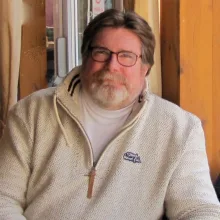
Chuck Pfarrer Interview
Show notes
Darkman, Barb Wire, Navy Seals, Hard Target... all of these (and more!) were written by Chuck Pfarrer, military-man turned screenwriter who made his bones throughout the 1990s. On this special episode, Mike spoke with Mr. Pfarrer about his fascinating career.
Transcript
An automatic transcript, tidied into paragraphs. It has not been proofread, so names, titles and spellings may be wrong, and it does not say who is speaking.
Show the transcript (about 6,600 words)
Speaker 1: Hold your ears, folks. It's showtime.
Speaker 2: People pay good money to see this movie. When they go out to a theater, they want cold sodas, hot popcorn and no monsters in the projection booth.
Speaker 1: Everyone pretend podcasting isn't boring. Turn it off.
Mike White: Hey, folks, welcome to a special episode of the projection booth. On this episode, I am talking with Chuck Farr all about his career all the way from Navy. Seals up to his latest work. Had a fantastic time talking with Mr Farr and I hope that you enjoy it as much as I do enjoy this interview.
MIKE WHITE: How did you get your start in writing? CHUCK PFARRER: I always liked it. But as a kid, my uncle was a novelist who got terrific reviews and lived in a wood stove, heated cabin in Vermont before. That was cool.
He wasn't making any money doing it, but he had great reviews and I'd always loved it, but I wasn't an English major because I didn't think I could eat it. I was actually a clinical psychology major and I enjoyed writing. I wrote, well, I did well in psychology and I dropped out of graduate school and I joined the Seals. And while I was during my internship in graduate school, I met a guy who come to L A to be a screenwriter and we wrote his brief, nothing happened with it.
I joined the Seals and I come back from Honduras one time and he goes, he calls me up. He goes, remember that crappy screenplay we wrote? I said, yeah, he said I just got into NYU because of it. It got nominated for a focus award and we both have a William Morris agent and I, that's what I said.
Wow. So we wrote another one while I was in and it sold and I was the only naval officer in the world with a William Morris agent. It didn't get made, but it got optioned three or four times and then I got out of the Navy. I was gonna be a psychiatrist.
Strangely, I thought I'll write another screenplay to help pay for medical school and damn, if I didn't and damn, it didn't sell. But then I spent the next 20 years in Hollywood.
Speaker 6: What were those early screenplays? CHUCK PFARRER: Like the first one was about a guy who breaks out of prison and winds up as a counselor at a summer camp or intellectually challenged adults. One flew over the Cuckoo's Nest in reverse. And then the second one we wrote was based on a true story at the beginning of World War One, Ernest Hemingway was married to this beautiful woman Martha Gellhorn.
He was drinking a lot, fishing a lot and he World War Duke started and she basically fled. The real World is in Europe. I'm going to cover the war and he stayed in Havana. But somehow incredibly, he prevailed upon the US government to give him death charges and torpedoes.
He put them on his yacht and he said, I'm gonna hunt U boats in the Caribbean. And we wrote a story about that crazy summer when he did it and it's got option two or three times, but it never went there. How long were you in the Navy? CHUCK PFARRER: Eight years.
And then I did 12 years on the reserve. Yeah, it was fun. That was, that was odd. I look back on it now.
I think that actually in hindsight that actually got me meetings open in Los Angeles because I didn't go to film school. I was just this guy, you're not gonna believe this guy who was a seal and back then nobody knew sealed or it was just completely different. MIKE WHITE: No, I think your movie is what really helped change that. CHUCK PFARRER: Yeah, it did.
Yeah. Well, that, that was my first movie and I watched the script get driven right over the clip. There wasn't anything I could do about it either. I didn't like the movie.
I didn't like the way it came out. But what can I get? MIKE WHITE: You know, is it true that you wrote one of the early drafts of sudden impact. CHUCK PFARRER: No, that's in the Wikipedia thing.
I've never bothered to. I Don't know how, I Don't know how or why people think that. But I knew Charlie back then. Maybe Charlie thinks I did.
I Don't know. I actually like Charlie. I like it. MIKE WHITE: I feel like his introduction in Navy Seals where he's waking up on the beach and I'm just like, I wonder how many times this has happened to him in real life.
CHUCK PFARRER: Yeah, exactly. With somebody's shoes stuck in his shirt. Yeah. Yeah.
Oh God. MIKE WHITE: Tell me, how did you build that career once you decided to do that full time? CHUCK PFARRER: It's crazy. I look back on it now and it's what, what were you thinking?
So, I went out to L A and Navy Seals getting a green light is a really crazy thing and I never knew that this thing might just collapse at any time but lions were gonna do it. So it led my life thinking they were going to do it and did a couple of rewrites. And then I wound up meeting Sam and Rob. Sam Rayy and Rob Tapley.
And they had just come out the Michigan boys, of course, they just came out to Hollywood riding the coattails of evil dead. And we all got together. I really liked them. We were all, we just got to Hollywood.
We didn't know what to make of it and we didn't really like anybody. But we all worked pretty well together and banged out dark man and I was on it and then I'll go away and I come back and the Cohen Brothers worked on it and Ivan Ramy worked on it and we just saw when the writing credits came in. I like Sam and Rob so much. I didn't fight the credits on it.
Like I Don't cares but work with sale. He's just a wonderful guy. Made a hell of a movie and I worked less on that one than I normally do because the Navy Seals got going, I went over to Spain to make that. I'm lucky because I got to go on most of my movies.
I got to go to the set. So for one reason or another. So I was lucky that way some of them come out good. Some of them, you like some of them, you hate that chip later.
MIKE WHITE: I'm a big fan of dark man and I especially love looking at that and then seeing what Sam did with Spiderman and just seeing so many of the seeds being planted in dark man. CHUCK PFARRER: Yeah, he's, that was really fun. We, and it was really great to work with him. We did the work incrementally.
Normally I go away and write the whole thing and come back, but it was always good to kick it around with Sam and go to his place to build the lake. I think I drive over there and yeah, he's just great. Just go down to earth. There's 10 good people in Hollywood and he's three of them.
MIKE WHITE: How did that, one kind of shape up? You talked about how it changed over the time? What were your early drafts like? Versus what came out to the theaters?
CHUCK PFARRER: They're pretty much the same. It was like we built the house, put the carpet and the drapes in there and we moved the furniture around a little bit. So it pretty much came up when Sam first pitched it to me, he said, I want to do this thing where this actor gets wrong and then takes it out. And I'm not the greatest guy in the world.
I'm lucky to Sam listen to me, but I thought people Don't like actors and you go to the movies and see guys and actors and think, why Don't you get a job? And so I said, what, let's make him a scientist and he has all these masks, let's say he was working on liquid skin and then let's, and so that then that snowballed and I took that away for a couple of weeks, worked on it and I wasn't afraid, but I normally Don't show pages. What I did was Sam. It was great.
We go through it and we'd talk about something that, that working with him working with John Wu as well. I can strap into a hierarchical structure. I get it. Dublin's in charge.
I'm not, I get it. But if you've got guys that are really confident as directors, they're not, I want a couple of clowns that, like God, whose side are you on, buddy? Because you're not even on your own software that goes with it. Yeah, totally.
Yeah. MIKE WHITE: So, is it pretty much a natural that you would go on to work on Hard Target since that was one of Sam's next projects as well? CHUCK PFARRER: Yeah, I did a couple of things for Rob and Sam. We just got on so well.
And I had a deal over at Universal for a while which is, here's Hollywood one. I got a three picture deal at Hollywood and at Universal, I'm over there three years. I write three number one movies for them and they Don't pick me up for the next year. So I'm moving out of the bungalow going, what should I watch people's cars?
What more could I have done for you? So you, so take it personally, I never took it personal. You can't understand it. MIKE WHITE: So, what was that process like working on Hard Target and updating the most dangerous game?
CHUCK PFARRER: I came up with the idea and I wrote it on spec and I really wanted Armanda Sane to begin it and I sent it in and Jim Jacks was our producer and I'd written another previously for Jim. I'd written a Ninja movie called Shinobi and everybody loved it, but there was another project and which didn't get going, but Jack's called it a, what did you call it? And in the park triple that we're not gonna make this. But after I turned on a Hard Target and so, you know, and Jim was a very complex guy.
So he would say something to you, but it wouldn't necessarily mean it, he might say you're your friend, but the way he behaved with friends and enemies was about the thing. But I wound up with a three picture deal. And so Rob and Sam were producing that and there was this really odd thing going on with John Wu. They didn't seem to trust him.
They sent me a couple of his movies that I watched them. I said, God, yeah, let's have this guy blue. Are you out of your mind? Of course.
So that was the first. Yes. And then they said we want Sean Claude to do it. And I actually know Robin Sam and I go back with John Clad back when he was driving the limo.
We all knew him. So that J CV deep stuff never went to me because I was like, dude, I knew you in the day anyway, but John Claude had mushroomed Bible. It was Jean Claude Von to movie and it was a good one. So everyone's happy like it, although I saw the Rough Cut and where it's so violent.
I was just like oh, you watch a cut and the music's not in it yet. And you're just like, but I love John. Woo God. Just an amazing guy.
And working on the set was, it was absolutely unique because John didn't like to talk to the actors. So John would call me over after a take and dog Chuck tell him to do this or that or like I said, imagine some other director telling the writer to talk to the actor. No, nobody would do that. But John did, I wasn't cutting his groove and get the next take.
If it wasn't the way he liked it, then I'd make sure he was happy and that's all he could do. You know, marvelous man. Marble, gentle kind. Here's a story all through the movie, John is saying to me he always John, I'm gonna put you in a movie like OK, John, you know, and at one point he said, OK, you're gonna play the dead guy at the beginning.
And I thought, OK, John and I thought I'd just be a chalk Mark like on the streets of New Orleans because you never right. So John has me rewrite the beginning of the movie with The Hunting of The original Victim, which goes on for our, well, it was 10 days of healing and it was me getting the shit kicked out of me. I did all of my own stunts anyway, about four days into that. We're shooting it at night and we're coming back into New Orleans sitting in the backseat, Johns in the front, in the passenger seat and I've been getting run over by motorcycles and blown up, throwing out everything.
And John smoking is the driving John. Yeah, John, you ruined my whole movie. Oh, man. What a guy.
It's, I'm sitting there, we're, we're staying at some grand hotel in New Orleans and I'd come in the morning dressed like a bum and the doorman would stop me. I'm like, hey, Bud, I'm with the movie. I have swings in my hair. Oh God.
MIKE WHITE: Oh, it's that weird hybrid of his Hong Kong stuff with his American stuff. So is he like, yeah, I need mirrors. I need this. Make sure there's Ds in here.
CHUCK PFARRER: Yeah, he's very particular about everything that you see, everything that you see and I didn't get to make another movie with him. So I Don't know if he had that, but there was still somewhat be trusted to work with the actors and the big thing from the actors too because they weren't used to getting direction from someone else. But once, once they saw and heard John say to me, go tell him this Lance Hendrickson and Arnold Avos were the bad guys. I love Arnold.
I love Lance too. They're just, yeah, they're just great guys, you know, and they really ate that up. Yeah, great. MIKE WHITE: I know you also wrote some video games in there as well.
How was that experience for you? CHUCK PFARRER: Yeah, boy. And this was really crazy during the period where there was Sony was spending like $50 million on this multi CAPP video game called John and Demonic. And it was gonna be the whole new dawn of cinema or something.
And I had written a bunch of graphic novels for Dark Horse. And I met this, I met, I was at a meeting in Milwaukee with Mike Richardson and I met this guy Tsunami media and got to know him pretty well. And they had this evil genius named Dave Oy who had perfected the engine that could multipack the video, which is something that Sony never collected. So they'd have to wastefully see all these shots and everything over again and it was hinky and it wouldn't connect most once I was satisfied they had that the engine working.
Yeah, I still Don't know how I did it, but I do out these scripts that were like five or 600 pages and the engine could, which I helped Dame Bazan. We used to, the joke was he was Werner Von Braun and he made the rockets and I made the fuel. So the script would go in there and we did a couple of these one was one was called Flash Traffic. It was I had a nuclear thriller in the bag and I just said, ok, we made it.
So you make all these decisions on work. See your own action movie. Then we did another one called Silent Steel, which was you want to make a movie with one set, you put it on a submarine, right? So we went to Charleston where the US S clamor is a museum shit submarine.
So it looks like a submarine because it was, and interestingly we named the submarine in the movie was US Idaho, which didn't exist but the US Idaho just got a nation like this week. So now there is the US S IDA. But anyway, it was, those were fun to do and I had cooled off in my special operations career. But while we were working at tsunami, we got a call from the FBI and we thought it was a joke, a guy called from the FBI office of the W MD countermeasures and they, and they wanted a training video, they wanted to do a training thing of upcoming how an anti counterterrorism operation works on the legal side from the tactical side, from the investigative side.
And I said, yeah, ok. What's your phone number? I'm gonna call you back. I called them back.
It's FBI. Ok. So we wound up making one of those for them and we now wound up making, I Don't know, we made one of those for every government agency that ends in a vow and that kind of pulled me away from Hollywood a little bit because we tried to take that company public that didn't work but did a lot of work then and kept writing was crazy. MIKE WHITE: Tell me how barbed wire comes to be.
CHUCK PFARRER: Oh my God. So here's the way to describe Barb Wire. I want you to imagine something that you would not do. Ok, draw the line.
I'm gonna pile up money until you tell me you might think of that. Ok. So I got it. I got a call.
And they said, hey, Mike Richardson, we invented the character in the graphic novel and it got turned into the moon or so it's, they've got a script and Mike calls me up and says, look, this thing needs a page one. What can you do? And I said, look, I'm just not interested. No, I Don't wanna do it.
No, thanks. I said, no, I said, no, I said no. Then I said, what, how much are you kidding me? So I try to rewrite it and I come up with some new stuff and I get it back and they say, no, we need the Kumquat back, but we've already built the set.
No, we need this. No. So the whole thing just started to wobble and fall apart and everybody knows the train left. E everybody.
And so it goes in and I am thinking, ok, I'm gonna take my name off and I call the Writers Guild and Eileen Chaikin was the previous writer and two people can't take their names off of Taja. Nice thing in the guild. So I got stuck holding the bar. Yeah, I think I saw about 20 minutes of the movie and I was just like, I didn't write that.
I didn't say that. Blind. What do you think this is anyway? So there's a lesson, man.
There everyone has their price and be careful if you ever take the price. MIKE WHITE: I've got another one that you're associated with, which is the Jackal. Did you do a draft of that? CHUCK PFARRER: And no, I did the whole thing.
That was absolutely not. Yeah, there's another one that sort of Jim Jacks called me up and says, hey, look, we're gonna remake the Jackal. I want you to do it. And I said, no, I Don't, I said no, I Don't, I Don't think so.
I said, why touch that right? You're gonna get black for redoing that and he threatened to sue me if I didn't do it. Yeah, it was at the end of my three picture deal and that was actually the fourth script in the deal. Anyway, it had this blinking green light from the very beginning.
So I thought, OK, look, I, you can write, you can write 100 scripts and they'll never get, they'll never go. So if you got one that really looks like it's gonna go. All right, I did it and they loved it. And I said, let's call it something else.
Let's just call it anything except The Jackal. Yeah. Absolutely. But they stuck with it.
That was the studio's decision and it wasn't the worst thing I've ever written. So, it did. Ok. But it didn't deserve to compare itself to foresight.
It isn't in that league. It really isn't. And if you watch David The Jackal and you just make the scene cards, you could see. It's pretty much exactly the same.
It's almost exactly the same. But that structure was so strong and I wondered about that, but they had the rights and here's a little bit of Karma. The Universal had the rights. So they ripped off Forsyth and remade it.
Right. And then a couple of years ago Universal ripped me off for Hard Target and remade it without my permission. Yeah. Life sucked.
Then did die. MIKE WHITE: Which, which one was that? I Don't even remember a reason. CHUCK PFARRER: It was just, they made it for a million dollars in Thailand.
It was that I was gonna, and so I ripped out the old contract and I'm looking and there's the weasel language in the sequel because it was a spec script. But yeah, they'll let it will totally rip you off. A absolutely. They have no qualms about it.
I used to go to screenwriting conferences and occasionally teach, but it was like, why would you talk nice young, bright based people into horrifying bigness, right? Where your dreams will be crushed and you're gonna have to sit and watch them and sometimes you're gonna have to help crush it warmly because. MIKE WHITE: You wrote the original virus graphic novel. CHUCK PFARRER: Right?
MIKE WHITE: So how was it adapting yourself for the screen? CHUCK PFARRER: It really wasn't hard, but the problem is it, I'm not saying I, every time I do a script I have to come with it for the final draft I put in it just missed the mock, you know, it just John Bruno is nice guy, but it just, there were lines in there. They're up on the bridge in the monster somewhere in the ship and somebody says to somebody else, if you go down there watch your back. Do you think?
I sat here at this keyboard going, what should I say? I watch your back. It's like one of those actor lines you get on the day and they go, I feel like they watch your back. Why Don't we, why Don't we do?
It's in the script. Damn it. That's the whole, that's the whole trip, right? You're a screenwriter.
You just stay in your lane. You just write it as the best you can and turn it in and go to the next project. And while they were making that I was somewhere else making something else and they had a lot of trouble with the mechanical monsters. They wouldn't work and it was on the cusp of the really good digital age.
So these things were all practical. So, he had a real, if they had made it five years later. Wow. Might a real war.
MIKE WHITE: I made the mistake of watching that. And Red Planet back to back where you have the mechanical monsters in both of those. And, yeah, the practical versus the computer generated effect. It's stark.
CHUCK PFARRER: Here's the interesting thing about Red Planet. I wrote a screenplay called Alone and stop me. If you've seen this movie, the Orbiter gets hit. One guy crashes on the surface one, does this sound like the Martian, one guy, if you.
MIKE WHITE: Don't know how many times I was making comparisons the other day. Yes. CHUCK PFARRER: One guy, actually, someone is with him and he dies. But in five minutes, that guy's dead and Cary Ann Moss is in the Orbiter and she can only talk to him when she goes right overhead.
So he looks up at night and sees the star going overhead and they're both wait for it alone alone. Ok. They paid a million dollars for the screen play. They absolutely loved it.
I was gonna direct it for about 90 seconds. Then they call me up and they say, hey, we got a new director where we really want a man. Just make the movie. I Don't care.
But the guy, they got to direct it had one credit. He directed with Budweiser Frog in the speedboat video. One credit. Ok.
And they love the screenplay called Alone so much. They added six more people and his brother-in-law rewrote it. I Don't know who, I Don't, I share credit. I Don't even know who.
No, I did. But they had lines like Boomer, the space janitor. All this other shit they had. Of course the autonomous Mars mapping and exp exploration unit, Amy had to be programmed by the green beret.
That's why it went nuts. Ok. I just had it, that it landed on its freaking head. Woke up and just wasn't quite there anymore.
Not programmed by green Berets. Also, I didn't really want to start with 2050 on the earth is destroyed by a global war. Just cut me a break. Just honest to God, what's always amazing to me is if I handed that in at the beginning, it never would have been there.
Never would have been there. Another interesting thing. So that thing went out on the weekend, read it went to Warner Brothers Universal, four other 44 other places. First thing Monday morning we get a hard, no, from Disney.
Ok. We got a hard, yes, 40 minutes later from one of it right next day variety. Robert De Palma to make Mars Epic. I'm like, wow, you read my screenplay, you hit the rolodex and you're called to Palma.
But again, what do you do? Did I complain? No. So then they were in a race which I actually thought was good because if there's a race they'll go head to head.
But that original screenplay was the Martian and it would have been as good. How could it not be? Because it had all the same beats, it hit all the same beats. Not that I'm a great writer.
It's, that's just a better story than seven guys had thought that he judge. MIKE WHITE: You know, I kept thinking, why is Val Kilmer? He keeps throwing things like he's a baseball player and I'm like, was there a line? I missed that.
He was a baseball player. Just weird things like that. CHUCK PFARRER: They got to Australia and apparently I've been on a couple of movies where the cast turns on each other. Yes, I was an executive producer but that for that thing.
But again, you get a director who was his first feature gig, by the way, it was his last, they didn't want me anywhere near it. They paid me to go to Australia, help make that movie. They just sent me the money. I'm like, ok, I can walk to the mailbox every month and, but it just, I think that was really the most disappointing because there were moments in that movie that were really good and I hate to say it all ma when he's sitting there and Amy just drops down in front of them and those other blasting off in the Russian spacecraft and all the other sort of, you never know what people are gonna rewrite.
And it's so strange because sometimes it gets better but most of the time it doesn't, stuff comes and goes and screenwriting, man. Don't do it. MIKE WHITE: What was your version of the Green Hornet? CHUCK PFARRER: You know what?
I Don't even think anyone read my version. It was more like Frank Miller. If Frank Miller did the Green Hornet, it was really film noir in this really dystopian city. It was basically New York but had been taken over by the federal government because it was so crazy and it stayed pretty true to the story, Cato and ignore it.
But I just got page one on it that, that it's the ones you make and the ones you Don't make. And probably the best, one of the best ones I ever wrote was that thing about Hemingway and it kept getting option, but nobody ever pulled it off. Jimmy Buffett was gonna do it once and he'd been down there with Bob Nixon was the guy who was producing a great guy and they had been to the thinker to the Hemingway farm in Florida and they said, how did you guys get there? And we didn't, we just looked at all the pictures and read tons of anyway biographies, but they've both been there and they just dug it and got to have lunch with Jimmy Buffett.
So that was cool. Do you have cheeseburgers? CHUCK PFARRER: God, I can't remember what that was cool thing about Jimmy Buffet. We're sitting in his outdoor cafe in Santa Monica waiting for him and he just walked down the street and nobody recognizes him.
And I'm like, and that's the way you wanna be. You wanna be Jimmy Buffett. But nobody even turn around you. I was like a struck, oh, man, Jimmy B I got you.
He was a nice though. MIKE WHITE: How was that transition for you? Moving from screenplays to novels? CHUCK PFARRER: Ah, you write a novel and you go to the publisher and everybody calls you Mr Barr and can I get you some coffee or some tea?
I can go out to, you're a screenwriter. They're like, they make you wait 45 minutes in the outer office when you can see the son of the bitches right there with the feet on the desk. My first novel was Killing Che and I'd written it as a screenplay first and then of course, the Soderbergh Shay movie was going on and I'd actually finished the screenplay about a year before but that he had to study in there. And even though mine was about the death of GVA goes to Bolivia and it's about the, whatever it was 300 days that was in Bolivia.
But he had it. It's funny you wind up, I talked about my uncle Don who would write these novels and they'd get terrifically moving in New York with new book, but they didn't sell and Kill. And Chey was his name. I HRI reviews just, but e just started writing books, you just get treated better writing books.
They Don't make nearly as much money. Not at all. Labors of love really. But it's very satisfying.
It's a lot harder for me to write a novel than a screenplay. Because a screenplay you're just looking at, you have to see everything in a good novel. You've got to think everything like somebody's got to, unless you're dashing Hammett and they, the audience is locked on your character. You have to think in the audience and of course, screenplay is 100 and 10 pages.
The novel is 500 page. So I think I've got another novel in me. I Don't know what it's gonna be to help to take that one. MIKE WHITE: What else are you working on these days?
CHUCK PFARRER: This is really strange. I got called up to do a Twitter Space. Let's see, as just on a side during the Civil Syrian Civil War, I started to put up maps of the way things were going and I got a following doing that and then I couldn't stop because I get people from Kurdistan writing to me saying is this Millard safe or not? So I just kept doing it and I got so I just, I Don't know, it was a couple of 100 no, a couple of 1000 followers on Twitter very niche.
But then I started mapping what's going on in Ukraine and it's part of what you do is a seal. You go places and make maps. This outfit called the Maria Report the first day of the Russian invasion. They started, this sounds insane, but they pulled it off.
They've been broadcasting 24 hours a day, seven days a week with news and information on the war and reprint. And we've got co-host in Estonia, Britain, Australia, the United States. It's almost like CNN. It just goes 24 hours a day.
And people listen from Ukraine with the guests from the front line and they called me up and asked me to do an interview and I did and my association grew and now I do a show a couple times a week for them on the Twitter Space at Maria Report. I do a show called Bullet points and we go through what happened that day in the war and take questions from the audience, which is great, but they've had just really amazing guests. Come on General Hodges, who was the commander of the song in Europe, ambassadors, members of parliament in the Eu we get Ukrainian soldiers right from the front line.
And to think this is all like a bunch of old hippies cold was together with a bunch of volunteers and we've raised millions of dollars for Ukraine. We get a military outfit will tell us they need thermal drones, they need a truck, 11 unit out for 32 pairs of ants. And we collect the money. We're a 501 C three and man, we deliver every time I think I want to throttle back.
Everyone in that outfit does more than I do so I can't quit. They're great people. MIKE WHITE: Yeah, they do a show about Barney Miller. And one of the things about Barney Miller is police officers will say this is as close to real police work as we've seen like the waiting around the what the atmosphere is like in the bullpen for you being part of the military for so long?
What are some of the better portrayals of the military that you've ever seen? CHUCK PFARRER: Wow, I like platoon. I have Brendan The Seals and he warned me because hey, I just saw saving private Ryan. We're all pp you guys and he goes, Don't watch the beginning.
So I was like, ok, great. But I watched the end and I tell you, look, I spent a year on the streets of Beirut. So when they were doing that city fighting, the only thing that was missing was the smell and it was just, I just got mud stuck because I thought, ok, I won't watch the beginning. And there's that one scene in there where they're fighting the half.
Do you remember the one, a wheat field and then shoot it out and it seems like everything's over and we're all standing there and then three more Germans stand up and that's exactly what it's like you think it's over, it would have been over with Ruth Willis, but it's not over. And Blackwoods is one moment that absolutely jagged me. It was like, wow. And then that, that combat in the city was the broken pipes dripping.
The saving private Ryan was one of those first movies where they just started to get the sound that, that's like, and I think another one was Black Hawk Down. I was watched that with a helicopter pilot, friend of mine. And in the middle of the movie I looked over and we were both like, down there are seats because that sound where they go, where the Bullet goes over your head and it goes, it makes this kind of noise and that's the Bullet breaking the sound barrier and you could only hear it for about this. So you hear that and the bullets come within about 18 inches of your head.
So, but there have been some of the ones and that's nearly, I really get it. It's great. But I'm actually you scratch any seal and we're all p neck. We really are.
If you're gonna have a war, send us in and we'll get it over with for you. We're like the plumber. You Don't want this to go on forever, right? You want it over, send us and then we'll be over.
MIKE WHITE: Where's the best place for people to keep up with you and your work? CHUCK PFARRER: It's at Chuck Bar on Twitter. And this is mostly I'm just covering the war in U pray, I'll probably start working on another novel. I think I kicked around a couple of series.
I've got a couple of serious ideas, but we'll see, you know, it's been great talking to you, man. MIKE WHITE: Yeah, it's been great talking with you. Thank you so much for your time. This has been terrific.
CHUCK PFARRER: Oh my pleasure. It took us a while to get it. But man, thank you any, any time.
Comments
No comments yet.