
Special Report
Alonso Duralde on Hollywood Pride
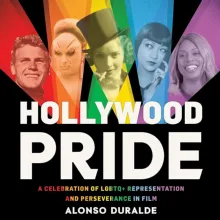
Show notes
Buy it now at https://amzn.to/3UWpCPR (opens in a new tab)
Transcript
An automatic transcript, tidied into paragraphs. It has not been proofread, so names, titles and spellings may be wrong, and it does not say who is speaking.
Show the transcript (about 4,100 words)
Speaker 1: Hold your ears, folks. It's showtime.
Speaker 2: People pay good money to see this movie. When they go out to a theater, they want cold sodas, hot popcorn and no monsters in the projection booth.
Speaker 3: Everyone pretend podcasting isn't boring.
Speaker 2: Turn it off. MIKE WHITE: Hey, folks, welcome to a special episode of the projection booth. I'm your host, Mike White. On this episode, I'm talking with Alonso Duralde.
He is a critic who's been working in the industry for quite a while. He worked on the film Verdict, The Rap, The Advocate MS NBC. He was a jeopardy contestant and he's a published author of at least four books including Hollywood Pride, a Celebration of LGBTQ Q plus representation and perseverance in film. It is a brand new book coming out from Turner Classic Movies and Running Press.
It is now available. Perfect time for pride month. Pick that up over at Amazon or at your local bookstore if one still exists. Thank you so much for listening and I hope you enjoy this interview.
Alonso. Tell me a little bit about you and how you got into film writing. I'm so curious about your origin story. ALONSO DURALDE: Wow.
Well, I mean, you know, kind of a lifelong obsession, which is probably not uncommon among people who do this. The story in my family goes that at about the age of three, I was teaching myself to read partially from Sesame Street, but partially from the film listing in the Atlanta Journal Constitution. And I could tell you what was showing it in the theater within about a five or 10 mile radius of our house. Even though I wasn't really going to the movies yet.
I was just obsessed with the idea of it. I liken it to that kid in searching for Bobby Fischer who sees one chess match and then creates his own board in his room. My mom liked movies a lot. We would watch them on TV.
It was a big family trip where we would hop in the car and go across town to the one rep theater that Atlanta had and watch Notorious Or Wuthering Heights or something. And then when I was about nine, my oldest brother graduated from college, he'd gone to Harvard in the early seventies. There was a real old Hollywood revival movement going on. Like I think the big Casablanca rebirth started there.
And the Marx Brothers and a lot of that kind of stuff. So we came home with all these books about MGM and Greta Garbo and Hitchcock and whatever. And I was just devouring them as a child and marking up the TV guide looking for when these things were gonna come on because this is for Evhs and pre cable. I was about seven or eight years old.
I think when Siskel and Ebert started and immediately was like, oh, wait, that's a job. So, yeah, it's just been this kind of ongoing thing. I wrote reviews for my high school paper and wrote reviews from my college paper and I doomed myself to having no other marketable skills with this one. MIKE WHITE: Did you have any particular favorite films when you were growing up?
Stuff that you would go back to again and again. ALONSO DURALDE: I was definitely interested in, like I said, one of the books I, that my brother had brought home was the first of the Donaldo Hitchcock book. I was seeking those movies out and I was very much excited. It was right.
I have to say, and as much as my parents were very academically demanding, they were also the kind of people who would be like, ah, you can do your homework later, not to God. So, movies like that, I would be looking for the first movie I remember seeing in a theater was Willy Wonka and The Chocolate Factory. And I think that really deeply imprinted upon me. Like to this day, it is still probably the movie I've seen more times than in the other one.
My cell phone menu is a Wonka bar. I was just really devouring everything and learning about things and thankfully I lived in a house where my parents were both Spanish immigrants. So I was never afraid of subtitles that never put me off. So if I would stumble upon the 400 blows on PBS or something, like I would watch it.
So, yeah, I think as a kid, I was and I obviously I was going to see all of the Disney stuff and the things one sees as a kid, but I was, I was open to a lot of stuff. MIKE WHITE: We talk a lot on this podcast about representation and how much representation matters. When was the first time you actually got to see a character? And you said, oh, this person's much more like me than other people.
ALONSO DURALDE: I was deeply in the closet for most of my, you know, young life. I didn't really come out to people until the very end of my college years. I would occasionally see some character who was like a very kind of exaggerated stereotype that was being played off as a joke or whatever and just not really address that. I do distinctly remember in high school on cable watching that really terrible slasher movie.
The fan with Lauren Bacall, where Michael Bean plays this stalker who is ostensibly obsessed with Broadway singing legend Lauren mccall. If that doesn't read gay to you, I don't know what it does. But then to really just put the icing on the cake, there's a part where he's trying to fake his own death to throw the police off his trail. So he goes to a gay bar.
He picks up a guy who's his general like shape dimensions, takes him to a rooftop. The guy starts filing him. Michael Bean, takes out a straight razor in a pink plastic sheath and slits. The guy's throat sets the body on fire leaves a suicide note and that's how he's gonna fake his death.
It was the first time I ever saw a gay sex. And I've always said since then that put me in the closet for an extra two years, at least. MIKE WHITE: So many bad representations. When did you finally see a good representation?
ALONSO DURALDE: Weirdly at around the same time I saw Victor Victoria in its original theatrical run. And while I didn't necessarily think of myself as directly relating to either the Robert Preston or Alex Kris characters, they definitely were early examples of gay guys who were in charge of their own shit and not buffoons and the movie wasn't mocking them or thinking any less of them because they were queer. And so I that was a movie I did wind up going back and watching over and over again when it was on the movie channel.
And I'm sure my thought was like, oh, it's, I just love Julie Andrews and musical numbers. But that's certainly I'm sure played to it. MIKE WHITE: So this is not your first book, Hollywood Pride. What brought this one about what was the inspiration for you?
ALONSO DURALDE: This actually was brought to me by Running Press. My editor Randall Lovich pitched it to me and it's, I think it's unofficially of a piece with some earlier books that they've done that are also like coffee table books and Histories. Donald Bogle a few years back did Hollywood Black, which is now being turned into a series which I'm very excited to see from Justin Simeon and Forest Whitaker, which is of course a history about black films and black filmmakers over the years of the studio system and beyond.
And then a couple of years after that, Luis Reyes did Viva Hollywood, which was the sort of Hispanic Latin, a version of that same kind of story. And so then I think to go with those, they were like, let's do the LGBT Q plus one. And I'm just delighted they asked me to do it. MIKE WHITE: How did you approach putting this together?
ALONSO DURALDE: I had the previous two books is a bit of a template to get an idea of it. And when I did the thing III I had a literal like piece of poster board where I was putting post its on and trying to figure out chronological just seemed like the way to go. And I think that what part of what made that work was that in doing this book, I was gonna have to explain to readers what was going on outside of Hollywood, what was going on in sort of the history of queer civil rights and queer visibility and politics and science and the medical attitudes, all of that stuff.
Because it's people think, I think that, that Hollywood's leads attitudes in this department, but usually Hollywood is frantically catching up. Usually Hollywood is the like testing the waters, see what is the audience ready for and it's gonna be other places where advancements are made and then finally the movies catch up on. So the chronological format allowed me to get to each decade or period of time and be like, this is what the American Psychiatric Association was saying. And here's how the army was treating people and here's protests were beginning.
And so there's another history happening against which these movies are taking place and I didn't want to take it for granted that the readers would know what that was going in date order allowed me to give that background before digging into what was happening in the movies. MIKE WHITE: I'm sure there are going to be inevitable comparisons between your book and say something like the cellular closet. But sure the cellular closet was so many years ago. You have so much more to look at and probably even more access to some of the films and materials that weren't available at the time.
ALONSO DURALDE: You'd be surprised on an archival level. Sure, I think there's maybe more out there, but I, in terms of Vino Russo lived to the early nineties. So he at least got to experience the golden age of VHS. And I think now trying to find things whether they're legitimately streaming or even just on a digital release is a lot trickier.
I as somebody who went through that period myself and you used to put together clip reels for film festivals, it's harder to older things isn't necessarily a plus. But yes, absolutely in decades have passed. We lost veto in the early nineties tragically. And so I definitely looked at that as one of the sort of foundational texts for this book.
Also, William Man's behind the Screen in which he really did a ton of interviews and talked to a lot of survivors of the through 1969 period of Hollywood and got direct testimony about writers and directors and actors and costumers and cinematographers and people throughout the business who were gay or lesbian or bisexual or trans, but had to obviously keep it locked down in the thirties and forties when one didn't speak of such things in a public way and maybe you got married or whatever. But so those two books really, I think were the starting point.
And though I'm I'm very much standing on their shoulders, obviously, Ruby Rich's work in terms of coining the term the nuclear cinema and all of her scholarship about the nineties and the cinema that period and earlier, obviously she's, I think one of the first great champions of Chantal Ackerman and her importance as a lesbian filmmaker. So yeah, I'm absolutely working from substance there before. And I hope as this story continues to unfold that this book will be of use to the next set historians or scholars or whoever it is that's trying to track all of this history.
MIKE WHITE: Did you face any challenges trying to find all these clips and these movies and things? Which is so sad to me because we're supposed to be living in this brave new world where you can download anything big live streaming. ALONSO DURALDE: Was it? Oh, it was all gonna be at our fingertip?
No, no, it's, I'm thankful on a daily basis that I have hung on to my Blu Ray collection because, and I wish frankly that I had more VHS stuff. That's why I love that Missing movies.org is out there finding that stuff. MIKE WHITE: What movies did you struggle with? ALONSO DURALDE: Finding to this day?
I still haven't found the warrior's husband. If anybody a lead on that one, let me know. I really want to see it. That was came out right before the code got implemented and was about these sort of warrior Amazons who encountered their first male soldier from Rome for the first time and are taken aback by that.
Then the Amazon husbands all sit around curling their beards and plotting things and yeah, it's supposed to be pretty wild. The Broadway show is actually the what made Katharine Heerd a star in the first place. But that movie is nowhere to be found. MIKE WHITE: I love what you do with the contextualization and really showing where things were on the outside from the point of view of the movie, giving us all of that.
But I also really like how you spotlight certain people throughout there, almost like heroes or notable people and how did you even decide these are the people I'm going to be highlighting? Were they part of the poster board as well? ALONSO DURALDE: Kind of? Yeah, what I've always been saying about this is I had about a, I had 95,000 words to cover 100 and 30 years of cinema.
And I'm the first to tell if somebody's like, oh, hey, you left out this person or that movie. I'm like, I did, I apologize. I really tried to get in all of these folks and I don't know that there was necessarily like a point system. It was just, it, the, it's key that we sit on this person for a moment and I definitely tried to put in as much like end of chapter agenda as possible.
Also these people also these move. But even there, I'm sure thing slip between my fingers. MIKE WHITE: Other than the word count. What were some of your biggest challenges writing this book?
ALONSO DURALDE: It was on a bit of a timetable that was maybe faster than I would have gone. Although I am legendarily a procrastinator, maybe no timetable would have really been up to my liking. But thankfully I went in armed with reasonable knowledge of this stuff. Although around every corner I was constantly learning about people.
I didn't know about facets of different moments in history. For example, I knew about the production code. Obviously, that was gonna, that comes in the thirties and really whitewashed, which is what you can talk about in film, especially in dealing with what they would use the umbrella term as sex perversion. Anything that was remotely LGBT Q positive or just presentational or inclusive.
What I did realize was that the studios were taking that as kind of their blueprint for offscreen behavior as well. And they were expecting that celebrities would be as wholesome in their public presentation as they were on camera. So it was very much a thing of if, if there was this notion of Hollywood as being sodom by the sea with the wild parties and whatnot by the mid thirties, it was like, no, it's cozy and everybody's married and domestic and raising their children and saluting the flag and it's all, it's nothing to see here, folks.
We're just, we're good clean Americans. And so, yeah, I didn't quite realize how much the codes tentacles spread to the private lives of actors, which was why I think really cementing the closet for so many artists of that era. MIKE WHITE: Yeah, didn't they have to sign, like, morality clauses? ALONSO DURALDE: Oh, yeah.
Yeah. Yeah. It was a whole thing was that the most surprising thing that you learned as far as the history of it. Yes, that was something that was new to me.
But certainly a lot of individuals along the way. I didn't know about whether it's people like Angela Morley who was the first openly trans person to get an Oscar nomination. Two of them, in fact, and her sort of rich history and music for film and television. I didn't know about James Craib, who was the cinematographer of Rocky, who had come up through the gay girls writing club, which was this very loose affiliation of gay men in the industry and drag queens and they were making campy short films that they were screening in bars.
And so the fact that you could be that relatively visible within the industry and still shoot Stallone movies. I think that represented a moment in Hollywood that would have been unthinkable, you know, 1020 30 years earlier. Yeah, I it as you as I'm following this path, they are just little moments along the way of what was considered acceptable and who was out there doing what work that I found really fascinating as, again, my parents were immigrants, they were both from Spain. I didn't know about Thomas Gomez who was the first Spanish American actor to be nominated for an Oscar and who was gay.
MIKE WHITE: Obviously you've written about movies for so many years, you've talked about movies and in different formats. Were there any films that surprised you that you hadn't come across before while you're doing your research? ALONSO DURALDE: I knew about a lot of them, but there were some that I'd never really sat down and finally looked at, like I knew about Salome for ages. It was this kind of notorious thing, but I never really watched it before and it's been in the best way.
And II, I understand that it is considered the first American avant garde film. And I would say that's a fair assessment. But yeah, just, you know, you have to wonder like Alan Nazimova, this huge star, so successful, so wealthy and just decides that she's gonna pour her time and money into this movie. And I cannot imagine what people at the time thought about it.
And even in doing the research, there was reading otherwise fawning articles about her life and work that were written by gay men of the sixties who just they got the salam me. They're like, what the hell is this? I don't even know. But you also see it as like somewhere young Kenneth anger is frantically taking notes so like, it definitely leads to other things that follow it.
But yeah, in its moment was just, people were horrified by it. Yeah, it was, it was definitely a moment to take in these films. Along the way and understand what they meant and what their impact would be. Even if it wasn't immediate, a lot of the films in here at the moment were banned outright or they didn't find an audience or they were just these small experimental things.
But Sylvia Scarlett, for example, that's the movie that gets Katharine Hepburn branded Box Office Poison. And they had one test screening. That was so terrible that apparently she and George Kuker begged Rko that. Look, we'll make you another one for free, just don't release it.
But now I think people have come to embrace its eccentricities and really love how forward thinking it was in what it has to say about gender and gender performance and presentation. It's heartening to know that you might make a movie that gets terrible reviews or loses its money at the box office, but it doesn't mean it won't matter later. MIKE WHITE: I don't think I have you to credit for this. But if I do, you're gonna surprise the hell out of me.
The look and the layout of the book is fantastic. ALONSO DURALDE: I agree. And I had almost nothing to do. I had two different sort of art things that I asked for that.
I was able to get my friend Matt Severson who runs the academy library said, oh, I have a photo from the famous Cary Grant. Randolph Scott bachelor pad photo shoot that has the corner snipped. So it was the one photo of that, a layout that the studios like, yeah, not this one. So we were able to get that one in the book and I had asked for the confidential magazine cover for when they went after Elizabeth Scott and claimed that she was tied into some lesbian prostitution ring.
But yeah, beyond that, that this was all Running Press and TCM. And they did a bang up job and found such great images and did a really beautiful job with the color story. This book tells like a all of that. The visuals are great.
MIKE WHITE: So it's already out, right? ALONSO DURALDE: Yes, it came out last week. MIKE WHITE: Ok. So perfect for pride 2024 and all prides past that and maybe even months that aren't June.
ALONSO DURALDE: I would like to think so. Yes, definitely. The idea of releasing it in May was just really hitting the ground running for pride. But yeah, I don't think this, believe me, I've written two books about Christmas.
I know from seasonal. This one is not that. MIKE WHITE: So while you're working on this book, you're doing all of your other projects as well. Correct.
ALONSO DURALDE: Wow. MIKE WHITE: And you work on so many things, tell the folks at home what some of the stuff that you're working on now. ALONSO DURALDE: Something that didn't happen until after I was done with the book. Thankfully was I write reviews for the film verdict.com, which is side, I really, I'm thrilled to be affiliated with, but I do a lot of podcasting.
My husband Dave and I have been doing Linoleum Knife since 2010. I do a show for the Maximum Fun Network called Maximum Film Christy Lemire and I co-host Breakfast All Day, which is a YouTube show, but it also is out in the world as a podcast. And then I also pop in regularly on the deck. The Hallmark podcast usually to talk about off Hallmark Christmas movies.
MIKE WHITE: And that's a lot of projects you're working on. That's what, 45 shows all at once. ALONSO DURALDE: Yeah. And Linoleum Knife has a Patreon.
So we have about like three or four extra shows for that one as well. I'm sick of the sound of my own voice. I hope other people aren't. Especially now that I've recorded an audio book for this.
It's eight hours of me. You can tolerate that, which I'd never done before, but I'm very happy with how it came out. MIKE WHITE: Was there a good place for people to keep up with you online? ALONSO DURALDE: Yeah, I'm pretty much the only Alonso Doral on Earth.
So I'm real easy to Google, but I'm a Dodi on Facebook and on Blue Sky and Alonso Dot Dodi on Instagram, Alonso. MIKE WHITE: Thank you so much for your time. This was great talking with you. ALONSO DURALDE: My pleasure.
Thank you for your interest and your enthusiasm and I hope people have a chance to pick up the book and enjoy it. I'm, I'm really thrilled with how it came out.
Comments
No comments yet.