
Special Report
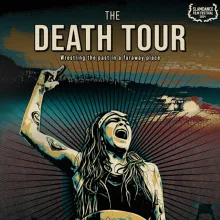
The Death Tour (2024)
Show notes
Transcript
An automatic transcript, tidied into paragraphs. It has not been proofread, so names, titles and spellings may be wrong, and it does not say who is speaking.
Show the transcript (about 4,600 words)
Speaker 1: Hold your ears, folks. It's showtime people pay good money to see this movie. When they go out to a theater, they want cold sodas, hot popcorn and no monsters in the projection booth. Everyone pretend podcasting isn't boring.
Speaker 2: Turn it off. The death tour is the hardest tour there is in sports.
Speaker 3: If you want to be a wrestler, the death tour is a definite way to prove to yourself and to others that you have what it takes. The problem is to get there. It's not easy. But Doctor Demme blocking the road had been there two o'clock this morning when wrestling does arrive to these very remote, isolated indigenous communities just getting there.
Speaker 2: Now, it's like wrestle mania, you know, in the reservation, you got to perform every night after three weeks of it that a couple of them, all of them will crack y'all ready.
Speaker 3: And we are off. No alcohol, no drugs do not break those rules.
Speaker 4: You're probably not gonna have cell service up there to keep in touch, smoke signals way up north where it's really remote. People feel hopeless. Sometimes you can kind of feel that dark energy in the.
Speaker 5: Communities Tony Candelo who's been running these tours. He says this is the most deaths he's had on any tour.
Speaker 2: So all we can do is give them the best.
Speaker 5: Sure, we possibly can. Wrestling has always been a source of healing and like light in my life.
Speaker 2: But every time we get in the ring, we get that crowd to react. That's what I live for.
Speaker 3: If anybody that comes to this trip here, they care to anywhere in the world. MIKE WHITE: Hey folks, welcome to a special episode of the projection booth. I'm your host, Mike White. On this episode, I'm talking with directors Stephan Peterson and Sonya Ballantyne.
All about their 2024 documentary, the death tour. The film recently played at the Slamdance Film Festival. It is a documentary all about a group of wrestlers that go through some pretty remote areas of Canada may sound like an odd subject, but it is a really compelling documentary. Definitely check that out.
And I hope you enjoy this interview. Tell me how you got interested in filmmaking and how you know each other. STEPHAN PETERSON: I got into filmmaking when I was 12. My grandpa, my mom's side was like an avid video editor and was always editing home video.
So he gave me the bug and every summer I'd make a little short films with him and then ended up going to school for media studies and then working my way up as A, as A P A and 15 years later. Here I am now. Still not saying no to P A jobs depending on if it's the right for the right person. But been working in the non fiction space for about 15 years and directing for maybe the last 10.
So I've directed a lot of TV, again, always unscripted stuff. But this is a project that I've been chipping away at slowly for eight years. Now, stumbled upon the tour myself. I was not a wrestling fan growing up but stumbled upon it.
And I just saw how, saw how I discovered the wonderful world of wrestling and saw this particular tour while I was in one of these communities on another project. And that's when I just saw how the crowds in these communities responded to these wrestlers. And this tour, I learned about the tour's lore and but really became fascinated by kind of this world of indie wrestling and watching all these really inspiring people of all walks of life, really just using wrestling as just how wrestling, help them, help them out of a hole, help them overcome various challenges in their life.
And it was really inspiring. So that's what got me really interested in wrestling and then out on this tour. And then I actually went on the tour for a couple days and I really saw that this film was about far more than just wrestling. It was about is about the relationship that this tour in particular.
And Tony Condello, and he's been going to these towns for 50 years now and when I saw the relationship between the tour and the wrestlers and these communities, I realized that there was a far bigger story here. And that's when we were looking for a filmmaker from the area and then turns out and then we met Sonia and she was, she was the best candidate and it was also like, not only super cool, but a massive wrestling historian. So there you go. SONYA BALLANTYNE: Yeah, I was a writer, first and foremost, I've been writing since I was a little girl.
I knew one of my first jobs was writing stories for friends where they got to marry Justin Timberlake if they wanted to. So stuff like that is how I got my foot in the door paid writing, but a wrestling fan since I was a baby and was like, initially not, not gonna come on a project because they wanted to focus on writing specifically because I had just gotten into TV, writing mostly children's work right now. But I was really impressed by Steph's into the story because I like when he approached me, initially, I was worried it was just gonna be the standard wrestling documentary about his retrospective historical look at this tour.
And I was like, but then he was like, saying that he wanted to focus on the backgrounds of the wrestlers and the communities that we visited. So I was really taken in and I think that was about three years ago. And so it's been a fun trip so far. It could be.
MIKE WHITE: It's funny when I was watching the documentary the other night, my wife, it's like, is This Ice Road Road Truckers? And I had no idea. Stuff that you had worked on. Ice Road Truckers?
That's amazing. STEPHAN PETERSON: I did. Yes, it taught me a lot doing Ice Road Truckers is one of the toughest shows I did for one. It's the same environment, it's same place.
But I was familiar with what traveling along the ice roads was gonna be like, but I really came up doing a lot of those dangerous job shows for the Discovery Channel where you're very, these very small crews who are trying to find story and your very small crews running sound and cameras looking to, looking for the stories for doing a film like this, that was very character driven and driven or you're not going in with any kind of plan other than just roll with the punches. A lot of that kind of really, really helped me do this.
MIKE WHITE: So when you get this idea of, hey, I wanna do this documentary about these wrestlers and about this tour, what do they think when you approach them with that idea? STEPHAN PETERSON: They were pretty open to it started just speaking to alumni that I could find online and they all said the same thing. The tour was difficult but amazing. It really helped me.
Tony is a legend. And then the third thing, well, so 23 things actually, and the third was that they tell me their story and how rest really change their lives. So all of them were very open to being filmed. These wrestlers, these men and women are all natural storytellers.
They were all very open to being a part of this project. So that was very easy. And then the co creator of this with me and Joe Kitson and I flew early on a good friend of mine from school, we decided let's do this project. And so we flew out on points to visit Tony and met him at a cafe and just pitched the story to him and he was open to it.
He was like, am I gonna make a lot of money off this or like a Canadian documentary? Probably not, they're not known for but who knows? And so we, it took us a long time to his credit. He allowed us to string him along for years for the years it took to get it done.
And I think he's happy now. Yeah. MIKE WHITE: Seeing him happy must be a rare occasion. SONYA BALLANTYNE: Yes.
MIKE WHITE: Yes. I love every single character that's in this film and I know that they're not characters, they're real people, but it just, every single person brings so much to the discussion. It must have been such a gift for you to be able to have these people open up to you and share their stories. SONYA BALLANTYNE: I was nervous initially because wrestling was always about like all wrestlers have like a public persona that they put on nice, like their mask, like their armor.
And I remember initially being worried with staff especially I tell him like, how are we gonna get them to open up so that they do often have like show faces. They know exactly what, how they want to be portrayed and such like that. And so I think it was because we approached them with such a reverence for what they did that they were way more open to opening up to us in a way they might not have opened up for others. And I think it was also telling that we went on the tour with them as well, even though there were some times where we got the goal and we got to stay in bed while the wrestlers didn't.
But I'm like, we're gonna be lugging these cameras if I wanna bed at least once on this trip. And, but it was really cool, especially because Steph was the person who bought in Sarah and I was the person who bought in Des and Sage. And just once we got the core group together, it felt right. Ultimately, there was, I don't know, my favorite band U two calls it like when God comes into the room.
That's what it felt like where it felt right. And even when we hit challenges on the road or anything, everything just felt like it was supposed to be natural. I don't know, I feel unfair because we got so lucky, even though we got so lucky with the characters and how willing they were to talk to us. And so I think we all became really good friends as well, which I know you're not supposed to with your documentary.
But it was hard not to become friends with such great people. MIKE WHITE: These are not like criminals or murderers or somebody awful that you don't wanna become friends with because yeah, they all seem so genuine at the end of the day, they just seem like they all wear their heart on their sleeves. STEPHAN PETERSON: Yes, they do. And it is wild.
We were following 10 of them and each one was worthy of their own film. Honestly, we just committed to the ones that we'd really had a relationship before the trip, before the trip had set out. A lot of like Tony's group was being put together the month leading up to the trip and some of which he had booked well in advance, others were booked last minute. And our process going into it to not go totally blind us to precast them, almost talk to them, meet them, go visit them at a time at home.
Like all that stuff. At home that we shot with them was shot before the trip. And by the time we get there, a lot of other great guys were there too. But we, you already sort of the ball and started rolling.
We committed to a few of the cast. All that to say that everyone on the cast was pretty amazing and they all wore their heart on their sleeve. It's gotta be a wrestling thing. I don't know what Sonia will be able to tell you that she's the expert.
But what I can say too is that when you're there for 15 days straight and you're like sleeping in the same rooms as them and you're eating with them having breakfast with them at a certain point, like the walls come down because the trip is hard enough as is. And once when you're embedded with your cast, get the opportunity to really forge a great relationship with them. They knew we were there. We weren't pulling any low blows or anything.
We're trying to make anything like. MIKE WHITE: How many people were in your crew, how many people were, were on this tour with you? STEPHAN PETERSON: We were six. Me, Sonia, our director of photography, Van Royko, our sound engineer, Emery Murchison, our unit, like supervising producer Joe Kitson and our driver, Curtis Williamson.
And so we were six, a driver, we had two vehicles, a chase vehicle, an SUV that could splinter off and go anywhere they went and then we had a bigger truck truck almost in the back with all of our, we had a fair equipment and all our food and sleeping gear and emergency stuff too. MIKE WHITE: Do you mind if I ask, how did you get this funded? Because that sounds like a lot of equipment and a lot of expense. Yeah.
STEPHAN PETERSON: Our producer Stacy Tanenbaum and Sergio Kirby will better be able to understand that. And that's part of what took, took many years. We have a lot of Canadian broadcasters on board which helped us apply for a number of grants and funds that helped put us together. But it was through the support of our, of our many broadcasters.
We have a PTN CBC, various CBC branches as well as a fight network. Took a while, take a while to put everything together. But yeah, that's why because yeah, it was, we went up with a lot of people out of gear. MIKE WHITE: When the wrestlers stop at a particular place.
It took me a little while to realize that it feels like they would give speeches to the kids that were there to see them. Did that happen every single stop? And how did they determine who was going to talk? SONYA BALLANTYNE: We didn't get to get into this part of the documentary.
But Tony, when he originally got the territory of northern Manitoba was asked to go up there by this indigenous politician named Phil Fontaine and Phil Fontaine said that, ok, you could go up there but leave the women alone, don't bother the kids. And I want you to do school talks that talk about stay away from drugs, you stay in school, that sort of thing. And so that's where initially it came from, the paying it forward for the territory that Hill awarded Tony. And so the talks are mostly just about to show the kids, especially in the case of sage, a little more personal bits about them because we also had a talk a lot on those trips too just because of his past with drug abuse.
And I don't know and think that the little kids really loved it too just to see them again. And it also added us a little bit of promo for the wrestling event if it happened there, if it happened before of the wrestling events. And so it was really cool just to see them open up like that just because a lot of the issues that sage or ma we're talking about were things that the kids themselves were experiencing. And so it like often gave them a bit of, oh, this person is a lot like me.
And so I think it was specifically powerful with somebody like sage who was indigenous just because it was just really compelling to see how the kids reacted to her. And so yeah, the talks were really for lack of a better word. I enjoyed them. I wouldn't say they were fun to talk about the bad side of their experiences.
But it was just really cool to see how the kids reacted to them. MIKE WHITE: It almost felt like a therapy and almost felt every single time they were having a group share. SONYA BALLANTYNE: Yeah, we call them like sh in the culture and cree culture, we call them sharing circles. And so it was very therapeutic because especially with the children being able to see somebody who looks like their aunt or their mother just talking about her own experiences.
And then she also does this cool job as a wrestler. And so or at least with me as an indigenous kid who grew up on the rez I wanted to see people like sage and lay in jobs that I wanted and to see her as a wrestler, these kids are probably really overwhelmed with, hey, if she can do that. So, you know, I think because I had that type of hero when I was young that I needed. And so I think it's pretty cool that Tony always comes across as gruff, but he also, I think he is, we call them shoes in our culture.
It means grandfather and he's rough on the outside, but he's marshmallow on the inside because he doesn't really have to do these anymore. But he does them just because, I don't know, I guess it feels good for him also. And yeah, Tony is a man. Of mystery to me.
MIKE WHITE: Those moments of more pathos like learning of all of the suicides that were happening on the reservations that they're going through. Was that something that just happened while you were doing this or was that something that you wanted to specifically bring up as you were setting out on this journey? SONYA BALLANTYNE: Tony had told us before. That's when they do happen on the resort.
Even if they're not suicides, the community will shut down to LA. But during this trip, there would be a death in the community we were in. Then there would be another in the community that we were heading to and then there would be another in the community. We could have gone back to have another show.
And so we were stuck in stuck. We had a great time there, but we were basically, we had to stay put in one place for a very long time. People wanted to get moving. That was the thing that was and so forcing us to stay put for so long, ended up leading to a lot of really good moments.
Not that we planned it or anything, but the scene with sage dancing when she was power dancing in the hall and when the wrestlers were feeding the dogs talking to the kids. I don't know, it was just like luck in terms of being able to just get to know our characters a little bit more because I think if we hadn't had that moment where all of us were just like thing put in one place. I don't think we would have gotten as close as we did to the other wrestlers, but I think Steph can talk. STEPHAN PETERSON: A little bit about that as well.
I was definitely aware that this is an epidemic that is like the suicide epidemic across all of many of these communities across Canada and northern Canada. I certainly did not expect it impact the tour the way it did. But when we started hearing of it, impacting our schedule with the team with Sonia, we spoke and it was, it was pretty clear off the top that this is not an angle or a story. We were hoping to exploit, not, you don't want to go to the community and bother anybody.
We were just, and we're just closing in on ourselves, staying put, respecting the community, time of mourning and we didn't want to nose around or anything. So that's why the film they just turns in look upon ourselves and we have a lot of the cast in the film are from similar communities who have experienced that. So they were able to tell us like this is what's going on. This is how it feels where we've been impacted by, by deaths in our own communities as well.
But no, we did not anticipate that or expect that to happen at all. It was eye opening for some of us and but, and devastating for everybody. MIKE WHITE: Yeah. And just so, you know, it didn't feel exploitative at all.
It feels like a very respectful documentary. Even if it just focused solely on the wrestling, there was so much respect there and then when it branches off and becomes a little bit different, still very respectful. STEPHAN PETERSON: Yeah, thanks. I appreciate that.
And also that was a question in the writing that Sonia and I had to deal with was like, how much do we not mention it? We pretend it didn't happen. How do we broach it without exploiting it without glossing over it either because that'd be even worse in our opinion. SONYA BALLANTYNE: It was something that I was really good at stuff and I decided on just because the way we portrayed it was the way the wrestlers perceived it and as it was happening and because a lot of them hadn't ever been to reserve before, like the ones who had been on the tour before knew the situation.
But even then they were saying that they hadn't been this impacted before. I'm indigenous. And I've always hated how the media has portrayed. Like the only time our homes are on the TV is when like, somebody's murdered or somebody dies.
And so when this was happening, I was like, Steph, why don't we just focus on like how it's impacting the wrestler rather than go out there and try and bother people during their grief and so it was really cool to do that and just be able to, yeah, I was initially very worried about, ok, we're not gonna go out there and try and like sensationalize anything. And I was really glad that was, that's opinion as well. MIKE WHITE: Was Flame Dance? Was that your premiere?
It, how was that for you? SONYA BALLANTYNE: Very overwhelming in a good way. I was very happy just because we had shown the film a few times to the wrestlers to get their opinion such like that and Steph and I have seen different cuts of it, but to finally see it completed and in front of an audience and having people react to it because I was initially very worried about how wrestling fans were going to react to it because there's a very specific type of wrestling documentary that's accepted in the community and having people be so overwhelmed by the joy we portray in it as well as the Pesos was so over was so great for me and plus Tony sang, it was the best film he had ever seen.
And I was like, just so amused by that because I was like, how many films have you seen Tony at the? But it was so cool to hear him say that. And T Jericho really enjoyed the film as well and it was just very cool and I'm happy to see how it's being perceived. So, yeah, it was pretty cool for me.
STEPHAN PETERSON: It was equally overwhelming for myself. The day of the premiere was an absolute whirlwind. That was a mix of nerves and elation and then it was over as fast as it came and then we're still coming down for it. We got back from Park City, I got back from Park City about 24 hours ago and get back into the to the routine at home and it was wild and just to add to or continue what Sonia is saying about, yeah, it was well received by the wrestling community which is super important to me going into this because would have it's important to do a balancing act whereas it would be accepted and respectful of the wrestling community that had always been like so behind this and so supportive of it going into it while also being accessible to outsiders like myself who knew nothing about wrestling came to.
But after scratching the surface of it and getting to know the characters and the behind the scenes would come as s as in all of the craft as I have become. Yeah, it was very validating to know that it appealed to both the wrestling fans who showed up at this reining as well as others. And we got a couple good laughs too. So that was always nice.
But it can be, it's a bit of a heavy film, but we got a few pops as the wrestlers like to say. MIKE WHITE: So what's next for the movie. And for you too. STEPHAN PETERSON: For the movie, we are hoping to continue a bit of a festival circuit this spring and summer.
We're gonna be, there's gonna be a small theatrical window in Canada in the summer. And then our website will have more and then it'll be, our website will have all the information really looking into is bringing this film back to the communities. We're trying to find the best way to do it because these communities, as may remember from the film are only accessible by road in the winters. And so we're trying to figure out a way on like how to join Tony's tour maybe again and bring the film back or try to find.
So that's the next big puzzle question is, it's important we bring this back back up there. So trying to figure out the best way to do it. And when our Instagram handles our death tour doc or death tour doc.com, I believe. MIKE WHITE: Thank you so much.
It was so great talking with both of you. I really appreciate this. STEPHAN PETERSON: Thank you, Mike. Thanks a lot for taking the time.
Thanks for watching the film. SONYA BALLANTYNE: I know.
Speaker 2: Yeah, I know. So, what, what's that like?
Comments
No comments yet.