Episode 671 · Film year 1957
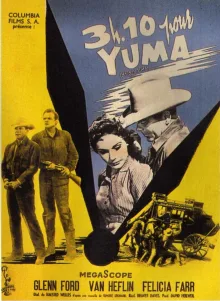
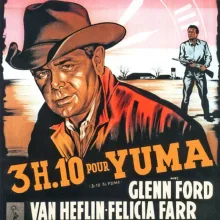
3:10 to Yuma (1957)
- Special Guests
- C. Courtney Joyner, Gregg Sutter
- Guest Co-Hosts
- Rob St. Mary, Jedidiah Ayres
Show notes
Jedidiah Ayres and Rob St. Mary join Mike to discuss the 1957 film and 2007 remake which are both based on a short story by Elmore "Dutch" Leonard. Mike spoke with filmmaker and author C. Courtney Joyner (opens in a new tab) and Leonard's long-time researcher Gregg Sutter about the dozens of other films based on Leonard's work.
Labels: Ben Foster C. Courtney Joyner Christian Bale Delmer Daves Elmore Leonard Glenn Ford Gregg Sutter Jedidiah Ayres Peter Fonda Rob St. Mary Russell Crowe Van Heflin Westerm
Transcript
An automatic transcript, tidied into paragraphs. It has not been proofread, so names, titles and spellings may be wrong, and it does not say who is speaking.
Show the transcript (about 24,400 words)
Speaker 1: Hold your ears, folks. It's Showtime people pay good money to see this movie. When they go out to a theater, they want cold sodas, hot popcorn and no monsters in the Projection Booth. Everyone pretend podcasting isn't boring.
Speaker 2: Turn it off.
Speaker 3: There is a long they train call at 310 to you. The pounding on the wheels is more like a mournful sigh. There's a light. There's a, when you change the 310 to you can see the ghosts of outlaws go riding by in the sky.
Speaker 2: Think you'll ever get back to Bisbee. I Don't look like it. I ain't complaining. I got something to remember.
It's the Marshall way. You've got a shotgun on you soon. It would be 310. The glasses were empty.
The guns were loaded soon. A man scared but brave would run an outlawed gauntlet to put a prisoner on the gallows bound train to Yuma. You're the sheriff, tell him to get as many deputies as he can. Sheriff's out of town.
What, what do you mean? He's out of town. He took a prison in Tucson, you know, and I was having supper at your house last night I got to thinking maybe someday I'd like to have a wife. Must be real nice having a couple of boys like that to ride out with every morning.
Now, being a woman like that every night I told you before they shut up and you say just one more word and I'll cut you down now. Don't go through with it, do you? No, I've got to.
Speaker 4: Oh, Dan, I Don't want a hero. I want you.
Speaker 2: You know, I never have been able to give you very much and sometimes not even enough food for you and the boys. Well, maybe this will be something worth remembering. What are you saying to the line, Mr and. MIKE WHITE: Welcome to the Projection Booth.
I'm your host, Mike White. Join me. Once again is Mr Rob say, Mary. ROB ST.
MARY: What you get myself shot too. MIKE WHITE: Also back in the Booth is Mr Jedediah. Ay, you look kind of skinny Western Month continues with a look at Delmer Daves 310 to Yuma released in 1957. The film tells the tale of two men outlaw Ben Wade played by Glenn Ford and innocent bystander.
Dan Evans played by Van Helen. Their fates are intertwined after Dan witnesses Ben and his outfit robbing a stage coach. We will be spoiling this film, the 2007 remake and more as we go along. So if you Don't want anything ruined, turn off the podcast and come back after you've seen all the movies, those 2310 movies, but all the movies, just, all the movies because you never know where we're going to go with this.
So we will still be here when you come back after 100 years of cinema, Rob. When was the first time you saw 310 to Yuma? And what did you think, sir? ROB ST.
MARY: I Don't believe I saw the fifties version. I know that I saw the 2007 version in the theater and I liked it. But on re-watching it, there's a lot in there that I either blanked on or wasn't looking at it the way I was looking at it and my re-watch. So it's, it was interesting to revisit it after these years.
As for the title, it's one of those great titles of westerns and then also growing up in Detroit and I'm sure we'll get into it a Little bit later about Elmore Leonard and also working at public radio, we used to come in from time to time. So it was always this thing where even though it was a Western because of Leonard, there's always a tie back to the hometown and that. MIKE WHITE: You can just smell the Detroit in the story. ROB ST.
MARY: Just reeks of diesel exhaust. Yes. MIKE WHITE: And Janet Day, how about yourself? I didn't see.
JEDIDIAH AYRES: The original Delmer Daves film till right at the beginning of the pandemic when we were shut indoors and I just started consuming movies even more so than usual. And it was one that I'd never seen before, even though I was a big Elmore Leonard fan and I did catch the remake in theaters. But yeah, I hadn't seen it yet and was pretty taken by it. I liked it a lot and I watched it a handful of times in the last few years, so I'm glad to come in and talk about it.
MIKE WHITE: Same as you guys. I watched the 2007 version first. I think I saw that at the Toronto International Film Festival when it was, there must have been 2007 and then I went back and watched the original and man, both of these movies have a lot going on. Like this is not going to be one of those for me.
Anyway, remake bashings where it's just like, oh, all remakes suck yada yada. And it's not going to be one of those, you know. Oh, the remake was fantastic. The first one was just so naive and innocent because both of these movies have a lot of great things going on.
The remake, which of course we'll talk about later on doesn't have that amazing Frankie Lane song at the beginning. And of course, whenever I hear Frankie Lane singing, I immediately go to Blazing Saddles where he just gives that powerhouse performance of, you know, he wrote a Blazing Saddle. But this one very serious song talking about the 310 to Yuma. And, I thought it was great.
I really enjoy this one. And, Charles Lawton Junior as the DP, really bringing a lot to the table here. This movie looks fantastic all these years later. It still looks great.
And what a great cast for this, especially our two leads. And I'm going to try my absolute best to make sure I Don't mess up who is Dan and who is Ben? Because with these 23 letter names in here, I'm really struggling through the whole thing thing, but at least when they talk about Ben, they usually say Ben Wade so obviously very, very different people, both Glenn Ford and be Heel and Glenn Ford looking amazing in this movie. He is so handsome in this one and just really cuts a great portrait of a very dashing villain.
I think he does. JEDIDIAH AYRES: That's quite a haircut for the times. I'm not sure how historically accurate that is, but not, he looks great. I keep wanting to get myself one of those jean jackets and turn the collar up on it.
But I Don't think Elmore Leonard approved of his hat or most of the hats in it, but I think he had to hand it to Glenn Ford though. He looked great in it. MIKE WHITE: I listened to the short story and I know Rob you read it and I'm sure Jetted Da You're familiar with it. It's a very, very short story.
It is, I think it's like a half an hour long if that. And it's pretty much the scene of them in the hotel room and we'll definitely get to that part of the movie. But it was amazing how they took that one Little thing because I want to say it's like maybe three locations, four locations at the most, but it just moves along really fast. But it was really wild to see how, the screenwriter was able to take that Elmore Leonard short story, Halstead Wells, the screenwriter was able to take that and add so much to.
It really did a great job with that. ROB ST. MARY: The big change for me in reading the short story is how well the names are different, the character names are completely different. That doesn't really mean much because I Don't get the idea that Leonard or the screenwriter were writing the names with some sort of deeper context of what the names mean.
But the thing I found interesting is the guy who plays the bounty hunter is he has daughters in the short story and that has changed to boys. And then it becomes this question of how you perform masculinity for your boys as a man that seems to ride through both the original and the remake. So I thought that was a very interesting change. And then using that as a depth to have this conversation about masculinity and ideas of the Western and masculinity and then masculinity in two different eras, 50 years apart and how that maybe has changed a bit and family dynamic of what the expectation in the fifties was versus the expectation.
And they're really odd. JEDIDIAH AYRES: Yeah, I love how bloodthirsty Van Helen's kids are constantly talking about, given justice just any chance my dad is gonna kill you. He is absolutely gonna kill you and he could kill you at any time and he could kill anything he wants that, that line gets thrown around awfully casually. Yeah, it's a Little jarring.
One of the best changes that Halstead Wells, the screenwriter brought to it was to make the Dan Evans character. Who is, that's all I'm gonna call him is Dan Evans cause I Don't remember what he's called in the short story, but in the short story, he's a lawman, he's a professional doing his job. And in the film, of course, he's a farmer. This is not his job and he is not just a farmer but a failing farmer who's desperate.
The 2007 version also unpacks that even further and makes him a Civil War vet and gives him an injury. And that there's some interesting ways that very densely packed kernel of an idea of a short story that Leonard wrote really has I think such a great Little kernel that really could probably be unpacked a handful of other equally satisfying ways. Big fan of what Alastair Wells. MIKE WHITE: Did, is he a farmer or is he a rancher or is he both?
Cause he's talking about all of his cattle at the beginning? ROB ST. MARY: But yeah, I'm gonna claim ignorance and say, I'm not sure I can tell you as someone who moved from the Midwest recently and now lives near this area. I will say that I think those two terms get interchanged out here between farmer and rancher.
The only difference being is do you have more cattle than you have plants? So I think that might be the thing. MIKE WHITE: They talk up the skinny cattle more in the remake. But he definitely is talking about like, hey, because yeah, especially when it comes to the rain, like the rains aren't coming.
And towards the end of the movie, there's a sound of a thunder clap. And according to Stevie Nicks, thunder only happens when it's raining. So I Don't know, like I need to check with like the meteorological situation here and find out if that's true, but he hears this thunder clap. His wife doesn't hear the thunder clap because he's just like blue skies ahead or dark skies ahead.
Really is what he's looking for. He wants rain, he wants, you know, his land to come back and he thinks like everything is going to work out, ok, once he hears that thunder clap. But yeah, at the beginning of this movie, it's very, very, very dusty. You know, even to the point where he uses the phrase, let's wait for the dust to settle as he's seeing the robbery of the stage coach by Glenn Ford, by Ben Wade and all of his men.
And I agree with you guys. I Don't know if the name changes really have anything to do with it. I think the most significant name possibly in the 57 version is Charlie Prince just because Richard Jacy is so much the heir to the Ben Wade Empire such as it is, I mean, he really doesn't have that much. It's just this band of outlaws, but he commands so much respect from his men that he can kill one of his own men.
And then they like raise a glass to him because it's like, well, you know, Ben was protecting the whole outfit by killing off this guy who got himself captured. So here's the Ben kind of thing. It's like. ROB ST.
MARY: The thing that's interesting about that name use to me is as the son of a Scottish immigrant, Bonnie Prince Charlie Looms in Scottish Lore. So I just hear Charlie Prince and think Bonnie Prince Charlie and the idea of the Jacobins when the uprising against the English in the 17 hundreds. So that as you do as a scout that and of course, Sean Connery on TV, 24 hours a day, just what happens. JEDIDIAH AYRES: Charlie Prince is the only name I think from the short story from the Omar Leonard that makes it to the screen.
So it's the flashiest name. Maybe. I Don't know why. He didn't try harder with the other names.
ROB ST. MARY: And I also feel in both versions, but especially the remake that that character becomes flashy. We'll get more into that later. But just to bring up Leonard a Little bit when I worked in public radio in Detroit, he would come in usually about once a year to the station for interviews and things like that.
It was always very nice man, had great things to share. And I remember asking him like how he got into in being a professional writer. And this would have been in that era in the early fifties when he was still having a day job. And he said that he worked for one of the ad agencies.
I think it was either Campbell Lee Wall or J Walter Thompson, one of which that and he was writing ad copy for Chevy. But he had this thing where he had a drawer in his desk and he would write on a yellow legal pad. And when the boss would come by, he just shut the door on the, on his desk and get back to the work he was supposed to be doing. And then he would take those pages home and type them up.
And he started out with short stories, mostly westerns. And I think he said that he stopped the day job when he sold Hombre as a novel, I think, which then became a film as well. So he said, yeah, he was like just writing every day and typing up the short stories and selling them to the, at the time you had the pulp magazines. MIKE WHITE: Kind of, I can't imagine working at a day job and working on a side hustle at the same time.
That just seems so evil and just not right. I mean, that undermines the American capitalistic system. ROB ST. MARY: Who heard of such things before?
MIKE WHITE: Well, kind of along those lines. I mean, capitalism for me is so much at the heart of this movement. This whole thing of Dan trying to get along, trying to get ahead with his family. You know, like we said, he's not making it when it comes to the farming or the ranching, his cows are starving, his crops are not there.
He's desperate for rain and we really get this in the remake. But in this one, he's pretty desperate for money to the point where I need $200 if I'm going to join this posse and the marshal is just like, I can't pay you to join a posse. What? You know, this is your civic duty and his sons are very much like Dan, aren't you going to stop these guys?
And he's like, no, he doesn't do the old Rick Blaine. Like I stick my neck out for nobody kind of thing. But he's just like, no, no, I'm, I'm, I'm good, you know. But once he, once Mr Butterfield, the owner of the stage coach and it sounds like the whole stage coach line.
Once he offers up $200 and it's just like, ok. Yeah. Yeah, I'll do it, I'll do it. He just suddenly changes from innocent bystander Dan to, I'm now part of this posse with him and, I love Henry Jones and he's so awesome in this, especially as the town drunk who $200 will go a long way, paying for his drink.
So, yeah, he'll join up as well. Even though they tell him straight out, they're like, we Don't want you. And, but he's the only other sucker that stands up for 200 bucks. ROB ST.
MARY: You were talking about the capitalism piece. And I was also seeing this and I Don't think we can ignore it given the era through the lens of like the Red Scare and communism in that the Ben Wade gang is a gang. They're an outfit, they work together, they're willing to sacrifice one of their own and yay to the dear leader who saved us and all this. And then you have the rugged individual who will do it for money, but also for an ideal, he's very idealistic.
It's no someone has to stand up. But yeah, the money is good too. But II, I have this feeling of tension in here that feels like I Don't know if it was a deliberate writing in that way or if it was just a zeitgeist, it was just like, that's just the way people are supposed to be these days, this post World War Two nuclear family breadwinner aspect, but he's also a good American at the same time. That kind of thing.
JEDIDIAH AYRES: I love the scene in the bar where Dan is confronting the Ben character. He's a distraction basically so that the posse can come up behind him and capture him. But yeah, it's in economics angle that he takes, hey, you cost me money today, you owe me $2 and you know, what else could I pay you for the kids time and wearing out my horses? And how about $2?
Cause you make me nervous. That's a great line and great that sort of tension in Van Helen's expression where he doesn't want to ask for money if he can zero in on, but this is owed to me or he'll do it and he, his eyes light up when he actually gets the money and then he keeps thinking of more things he can ask for it. And I like that insight into him quite a bit. MIKE WHITE: I love comparing that to, you know, he's asking so timidly for $2 over and over again.
And then by the end of the movie, you've got Ben Wade offering? Well, how about $7000 if you let me go. You know what, let's just round it up. I count in tense, let's do $10,000 if you let me go, quite a bit of difference between those two numbers and just that their situations have forced them into these new roles as they're doing this.
I mean, like I said, Dan is not, he is not the hero. He just wants to be left alone, he just wants his economic dream to come true. But he is thrust into this once they capture Ben after I love how Ben Wade and his people just send all these guys on this wild goose chase. They come in to town and after robbing the stage coach, they come in, they get their drinks.
They're like, hey, where's the marsh? Oh Marshall sleep. But ok, well, maybe you want to get him up because there was a robbery. Marshall gets all these guys together.
They all ride out of town and then there's Ben and his whole outfit. Just you. Yeah, we basically run this town. Now.
The only person that's still left here is the town drunk. So good luck with that. And it's, you know, they come, the posse comes riding up to Butterfield and Dan on his horse and they're just like, oh yeah, we're, we're about to, we heard that the stage coach was robbed and Butterfield's like, yeah, it's my stage coach. ROB ST.
MARY: I, the whole thing about them making sure that they get to the sheriff first so that they can sell him their story for the reality of what happened and what they did takes place. I really like that aspect of the story that to me it's like, starts to hinge on this question of who's reality, who's selling it the best. And so when the sheriffs finally had these, do, they told me they did what? I think that's a good way to set things up from a plot standpoint.
Like, how do you get these guys into town and how do you get things moving as opposed to just being like, oh, they're always on the run. It's, it allows for that aspect if they come into town and then there's the whole thing with the barmaid. MIKE WHITE: Yeah, who I kept thinking was going to come back because they have such a connection at that one part. I mean, Felicia Far, I believe is the actress's name and you get that amazing close up of her face with Glenn Ford there also in frame, but it's really her and her telling her like dreams and things and it's like, ok, yeah, they must have something that's going to happen in this movie.
Not really. And I like how Glenn Ford though is like, oh, did you happen to know this woman? How about this woman named Velvet? And he's talking about how he likes these bigger women and stuff and laying it on thick, especially when later on they get to Dan's house and he is flirting pretty good with Van Helen with Dan Evans' wife.
Who does come back in the movie? Leora Dana comes back as Miss Alice Evans. But yeah, we, I Don't think we get too much more Felicia Far in this even though I think she's like third build on this. JEDIDIAH AYRES: She was great.
I really love the, I love the scene. I love. That's again, something that Halstead Wells brought to it. Not part of the short story but Glenn Ford getting to repeat the lines to Van Hen's wife that he said to Felicia Farr gives a lot of insight into who he is.
But it, that whole connection that he had with Felicia Farr. It didn't seem as much as he's a player and it has these lines. His go to pick up charming lines. It's really struck me as a pretty, they seem to have a real connection that wasn't just a siesta long romance.
It really strikes me as almost a sort of the same kind of romance that happens all the time in Michael Mann movies where two people just see each other have an instant connection and they drop all the pretense of the games you play and they just, what's so great going on in your life. Let's go have our own. Let's get this big romance on. Right.
Whatever James Caan's line. Is. ROB ST. MARY: But I was just thinking about how he is as much as we think that's where he would go.
I think that it's not possible for him to go there because there needs to be this division between the domestic life and the outlaw life and that the Dan character with his, with his kids and his wife and his ranch and all of that represents the ideal, I guess of the era. And this guy over here has to play against that as much as I feel that they did really well to set it up that we think. Oh, this may pay off in the end. MIKE WHITE: So yeah, that's the one thing that Dan has over.
Ben is the family and I Don't know, I mean, does Ben see that and say this is something that I want or is he content just having his gang and his kind of one off life where he's just making money a Little bit here, a Little bit there or a lot of it here. A lot of it there's. ROB ST. MARY: Part of me I think it's in here, but it's definitely in the remake where I get the feeling that it's almost like he likes being this kind of interloper.
He likes going in there and stirring it up. He likes getting them to question why did you sign up with this gang? Because I've got my own. It's almost like they have two rival gangs in a certain way.
But one is, one is more accepted than the other. JEDIDIAH AYRES: Also in the remake, I Don't think it's so much in the 57 version. But the Russell Crowe character, the Ben Wade gets to complain, not complain. But he has a line about how you gotta be a bad man to keep this gang in check.
I am a bad guy and there's a certain weariness to the way he says it that makes you think maybe he's not that satisfied with his life. And when you also in 1957 was Bud Beker's adaptation of the Tall t another Elmore Leonard short story adaptation. This one with Randolph Scott and in that one, the leader of the outlaw gang, not Richard Boone complains about these guys that he's got to spend all his time with. He's gotta constantly keep them in line.
They're just, they're kind of troublemakers and they're low characters and they're so there's feel like maybe I'm conflating the two too much, but I have a sort of understanding of the Glenn Ford character. Maybe just based on those two that, that maybe he's, he is tired of these kind of this rough company that he has to keep all the time. I Don't think he really expresses much desire in it, but maybe I'm just bringing the other Elmore Leonard stuff to it. MIKE WHITE: Yeah, I'm not sure if I see that desire for the family or not.
I definitely see him messing with people. He seems to just really get off on being, I mean, when we get to the scene in the hotel room, which is in contention where they're about to get onto the train. I mean, it's amazing how much time we spend in that part of the movie. But I think it really works but when he is offering that money to Dan, there's a moment where he looks like he's Satan trying to make a bargain with somebody for their soul.
He just plays it so cool. And when he's there laying down that bed and he's just offering that money and then he pulls his hat down over his head, over his eyes. I'm just like, oh, that's really nice. I mean, he looks like he is, has satanic powers at that moment.
ROB ST. MARY: I just get the feeling and based on how he said that if I ever get disappear, that my guys go to these places to look for me that this isn't his first rodeo. I've been through this before. Someone else has done this to me in the past.
He doesn't really talk about a past experience, but you get the feeling that there's this sort of, this just goes with the job. If I'm gonna do this is what's gonna happen. And some people will deal with my charms in a certain way and help me out the way I want them to, they'll bend to my will and others won't. And this just happens to be a case where this one doesn't seem to be going the way I want it to.
JEDIDIAH AYRES: He does mention at the end that he's been to Yuma before and he's broken out. MIKE WHITE: It's like he's just fucking with people where he's just like, yeah, he could be like, ok, yeah, sure take me to Yuma knowing that he will break out. But instead he's, he acts like he's desperate to not get onto that train. He never panics.
He's never like, oh no, Don't send me down there. But he's just so like, yeah, I'm gonna do everything I can to avoid this mess of having to break out again. But yeah, right at the end he's just like, nah, I've broken out before whatever and it's like you son of a bitch, you've been throwing this whole tantrum about. We're not wanting to go and yet, no, you can go and you can get out whenever you want.
It's almost like a revolving door for you. ROB ST. MARY: It's bad for business. It slows down his ability to.
That's true. MIKE WHITE: That's true. But do you. JEDIDIAH AYRES: Have any sense about what year this is supposed to be?
Because I saw Yuma prison didn't open up until 1876 and for him to have been there once before and broken out. I Don't know how it wasn't open that long. This definitely seems before 1900 to me. And not sure what point that's supposed to be.
MIKE WHITE: I think it's supposed to be the 18 eighties I. ROB ST. MARY: Would say probably around then. The other thing I find interesting about the film version.
This version though is Butterfield stage coach was an actual thing. It only lasted a few years and I think it was, even before this was it, before the Civil War, I think it was in the 18 fifties or something. But it was the precursor of the Pony Express and getting stuff to San Francisco and California at the time, I knew a girl in San Francisco once she had the greenest eyes, the stage line there connecting Bisbee And Contention. JEDIDIAH AYRES: I do have a note that this is, this makes for a trilogy of Elmore Leonard Bisbee to Contention.
Stage Line. Stories being 310 to Yuma. Valdez is coming and Hombre and I put them in that order just because the stage line seems to be running all the time in 310 to Yuma. And it's the one that Burt Lancaster's Valdez works on in as shotgun in Valdez is coming.
And then in Hombre it's just shutting down and it's no longer running and they do a special run of it for a whole lot of money. Don't know if it was used in other Elmore Leonard Western stories. I haven't read many, but it is interesting to me that he's got a Little trilogy there. MIKE WHITE: It's the Elcu the Elmer Leonard cinematic Universe.
ROB ST. MARY: The Butterfield Overland mail 1858 to 1861 from Memphis, Tennessee, Saint Louis to San Francisco, Fort Smith, Arkansas, New Mexico, Arizona. Parts of Mexico, California. Yeah.
So it was the precursor of the postal service is Western service. So I know a Little bit about that. I have a friend whose last name is Butterfield and he told me it's like old family. MIKE WHITE: So, yeah, in Butterfield at the end of this when, because I mean, we'll definitely talk about this more with the remake, this whole idea of hiring more people to try to bolster the gang numbers.
But in this one, it's Butterfield coming in with, you know, oh, hey, yeah, I've got these guys to help out and then when the guys realize that they're outnumbered, they're just like, yeah. No, we're, we're done and he's like, I'll give you all $50 apiece and they're just like, no, I value my life way more than that off. They go and once Henry Jones's character, Alex Potter I believe is his character's name once he gets shot in the back and hanged in a horrible manner and you just keep seeing this dead body hanging there once that happens.
He Butterfield's like, hey, listen, Dan, you're off the hook. You Don't have to do this anymore. He's just like, no, by that point. And I think this does definitely play into the masculinity thing by that point.
That's when his wife is there. And that's when I think that even if he did want to say, ok, I'm done. And let's cut this guy loose. I Don't think that his pride would have let him because his wife is there.
I think that makes such a big difference when she shows up in the story and she's able to, I mean, she gasps when she sees Henry Jones's body hanging there. But she makes it up those stairs and you get those amazing shots of the body hanging as she's coming up that stairwell. And when he opens up that hotel room door, you get that framing again of the body there as she's walking in. It's really powerful stuff.
I think this is very, very well directed. JEDIDIAH AYRES: That scene with his wife there at the end. It's almost like the Elmore Leonard version of the climax of The Crucible, the Arthur Miller play or he's going off to almost certain death. But she's got, this could almost put the line in there.
He's got his goodness back or he's got his masculinity back. Maybe in this one. He's back to the man I married. He's not this broken down defeated guy any longer.
Yeah, it rang. It's, it felt like that one to me. MIKE WHITE: And again, that's when that thunder clap happens that he hears and that she says she doesn't hear is when we have her riding into town and that's when that happens and you're like, ok, but again, it almost feels biblical. You know, I'm talking about how Glenn Ford seems like the devil having that thunderclap as the wife comes into town just feels like, ok.
Is this nature letting us know that things are going to work out? All right, is this the heavens letting us know? But I would not put it past the filmmakers when it comes to that. ROB ST.
MARY: The thing that's interesting in that's in the short that is translated into the film. And it's in both actually is the whole revenge plot with the brother showing up to get his revenge on the guy who was killed at the robbery and through physical as well as conversational. Look. No, we Don't do it this way.
We're doing it this way. We're putting him on a train, we're getting him into prison. We're not going to do this kind of frontier justice thing here. And I thought that the way that whole thing is staged and handled well because plays into this again, layering in this.
Why are we doing this? Yeah, the money. But we're doing it because we believe in these ideals. And it's this concept of you were saying Jedidi about when is the date and this kind of this, whether historically accurate or in the minds of people who live back east going, when did the Old West go from wild to lawful or try to go legit?
And I think that this is part of that kind of thematic of, we're not gonna WW we have to do this so that we can have domesticity so that we can have property rights and children grow up in society because we can't have these frontier revenge. MIKE WHITE: You get that whole thing too of Ben Wade saying after he shoots, is it Bill Moon? I think it is. Or Bob Moon, one of the Moon brothers after he shoots this guy who's protecting the stage coach.
He's just like, where's this guy from? Get him back to his home turf? He deserves to be buried where he was born. He shouldn't be buried out here in the wilderness and he almost makes his own bed by doing that because we have the whole funeral taking place in contention and the brother of the slain man is, he's mad about his brother dying, of course, but he's also very, very mad that Butterfield didn't show up to the funeral because he's taking care of this Ben Wade thing.
He's just like, hey, this was your employee. You should really have been at this funeral. Very few people showed up at this funeral. Even the preacher didn't show up at this funeral because all this fuckery is happening here in contention.
This guy said a prayer. It was pretty good. It was all right, but this wasn't right. This is not right the way that this funeral went down and that seems to be really more of his anger even more than his brother dying.
It's just the way that it was handled. JEDIDIAH AYRES: This seems like a pretty classic Western to me. But the Howard Hawks reaction to this one and to high noon as these sort of subversive westerns that, you know, I'm gonna, I'm gonna get back to the real old timey stuff. Yeah.
So, it's hard to imagine how it felt in the moment, Rob, you were talking about the whole Red Scare framing possibility. And yeah, I would be curious how it felt in 1957 to see this, this the hero who's questioning his own worth and is tempted by the devil, Mike. He's not invulnerable. He's not, he does what he thinks is the right thing in the end for reasons that seem thematically accurate.
But me watching it's got that great ballad 310 to Yuma in the opening. It's, this is a classic Western. It doesn't seem that certainly predates New Hollywood, but it doesn't seem revisionist to me the way apparently struck. MIKE WHITE: So I'm curious as far as when did people start messing with the Western format?
You know, the high noon? Definitely, you know, it stands out, especially the use of real time. But then yes, again, with the Red Scare and the blacklist and all these things like you can read a lot into this movie. When do people start playing with the form?
I mean, the Western had been around since the earliest days of cinema. You know, like what the great, the great train robbery was one of the early examples of a feature film. And then you've got all these years after, when did people start messing around with that form? Because, yeah, I can, I can see, I Don't have the same reaction of Howard Hawks, but I can see that they're playing with the form in this one.
I Don't necessarily consider this, like, typical black hat, white hat Indians are going to get you type of thing. This is very, very much more for me anyway, charged with like an economic overtone to it. ROB ST. MARY: Yeah, I Don't really get that black hat, white hat.
And I think that might be part of the reason why it works in a modern context is because the hero isn't so heroic that there is this kind of, why am I doing it? Why am I risking? What is it that I'm trying to accomplish as opposed to being so taken with an ideal? But then the ideals start to come in, you get the feeling that it was like he went down one path and then is either justifying his path through ideals or ideals start to take over a bit more and bend him more than the money does.
And so I find that really interesting because I think if it was just he was just idealistic or he was just in it for the money. Those are two different stories. But I think when you can find a way to quilt them together or braid them together in an interesting way it makes because I it's not that black hat, white hat thing. MIKE WHITE: All right, folks, let's go ahead and take a break and we're gonna play a pair of interviews.
First up, you're gonna hear from C Courtney Joner. He is a filmmaker and author, has many thoughts about westerns has written about those as well. Quite a filmmaker unto himself. And then we'll hear from Greg Sutter who was Elward Leonard's long time researcher and we'll be back with both of those right after these brief messages.
Speaker 8: On her first assignment aboard Air Force One, a rookie secret service agent faces the ultimate test when terrorists hijack the plane and target the president leading her into a relentless battle that could change the course of history. Air Force One down is the latest heart pounding action thriller to buy on voodoo now rated R from Republic pictures. MIKE WHITE: Welcome to the interview portion of the show. First up, we're gonna hear from C Courtney Joyner all about his thoughts on 310 Ti Ya.
Tell me your relationship with westerns. C. COURTNEY JOYNER: I was always a movie kid and I was one of those obnoxious I could give you the credits of the ghost of Frankenstein. When I was seven, I running around with my copies of famous monsters of Filmland and all that stuff.
Actually, I think the first Western I really remember seeing on TV was high noon and I saw it because Lon Chaney was in it. So I had no idea what I was gonna see. But also too in the, so we're talking about the mid to late sixties, there were still a lot of studio Western being made and John Wayne and all that type of stuff was still going on. And so I just, I guess crept up on me because it was either horror or westerns.
And I kept finding so many cross, especially with actors like John Carradine and people like that. Oh my gosh, here he is in This John Ford movie and then House of Frankenstein or Billy the Kid versus Dracula or whatever it's gonna be. So that was it. And I just fell in love with the, with the genre but of a specific kind.
I know some guys are like completely devoted to the Republic B Westerns and the musical westerns and Roy Rogers and Gina Autrey and that stuff. I never really, I remember the Roy Rogers TV show because of the Jeep. But I never followed that path. I was always what I ended up watching were things like Glenn Ford in this or Gary Cooper in that and that was that, I Don't know why that, that captured me so much.
And certainly Randy Scott. MIKE WHITE: Tell me about 310 to Yuma. When was the first time you saw that one. And what did you think?
C. COURTNEY JOYNER: Of course it was on television and it seemed to me it was like a Saturday afternoon, rainy back when we lived in Philadelphia. So I was probably about 11 or 12 and I hadn't really started reading quote unquote adult novels or anything yet. Although I was buying up Conan paperbacks because of Frank f rosetta covers and things like that with 310 to ya just struck me as being it had this dark streak to it.
And I was like, wow, it's weird. This is not a squeaky clean hero. And the villain is certainly way more interesting than just somebody walking into town wearing a black outfit. And I Don't know that one really stuck with me.
And then when I saw that it was based on a story by Elmore Leonard. I think the first thing of Duchess I ever read was actually one of my favorite novels was Valdez's coming. I think I read that when I was about 12 years old and I was just like, well, because when I went back and I was reading Zane Gray, I got interested in writing westerns also. And I was reading the great Classic Guys, Bret Hart and all those people.
Then I would turn around and go back to Elmore Leonard again. I just, I like brevity of his speech and the way he would set things up visually and everything just seemed so clean and crisp and also very modern. And you always had that idea. And then when I got into the crime stories and everything, I was hold another thing.
But one of the things that always struck me when I would approach one of his short stories, whether it was 310 or the captives, which became the movie, the tall t the violence, it was usually just described very simply, but nobody was waiting to go out in the middle of the street and face off and I love that stuff. But no, it's, this guy is coming through the door. I'm blowing his head off because he's a threat. Let's get rid of him.
And that was entirely different than if you will. The kind of westerns that you would find on the paperback racks. MIKE WHITE: The whole tension of that short story of just those two men for so much of it is just keeps you on the edge of your seat. C.
COURTNEY JOYNER: You see, isn't that part of the magic of what he did is here is his short story, this Western and it takes place in a room in an old hotel and it's a conversation and when Halstead Wells had to expand it for the movies for the Delmer Daves film was he was faced with the same challenge that Burt Kennedy was faced with when he turned the captive into the tall t for Bud Beneker. And some people have always said, these preambles feel tacked on. I never really thought so. But preamble to tall t which I think is wonderful because where it goes directly to the Elmore Leonard thing is after Randy Scott loses his horse and all that stuff and they stop at the weigh station and the owner's been killed and his kids been killed and dumped into the, well, and that's where the Elmore Leonard story starts.
So we're just getting a Little bit more. It's a lighter tone and everything with Randolph Scott losing his horse and betting and all, all of that stuff. But it was just, I think it's just so perfect because the West was a struggle. It wasn't gunfights every day and all this kind of stuff that sometimes we think of because of the movies and here was something was completely natural and it happened, it was funny and then boom, not only are we faced with violence, we're faced with real heavy duty violence because it had killed a 10 year old boy.
And that was where Elmore Leonard's story started. And I just thought that was a perfect lead in to the Elmore Leonard section. And with 310 Halstead Wells who wrote the script, he was a big TV writer. And what they did is of course, so much of the conversation in the motel room, is there a hotel I should say is there?
But then they just took the information for those characters they just dramatize it. We saw the farmer at home, we saw his wife, we saw Glenn Ford with this whole thing with Felicia Farr is whoa, baby. That's pretty adult stuff because all he does, he shows up and he screws her in the back room. MIKE WHITE: I thought it was very smart too that they changed the law man to the farmer character and just gave him more hesitation to even get involved in this and made it much more of a monetary thing for him.
C. COURTNEY JOYNER: Oh, absolutely. Now, suddenly there was this motivation for him to do this and not just yes, I'm doing my duty and I'm wearing a badge and I'm supposed to go ahead and be this town savior. He didn't wanna be in that room, but it was a way to save his ranch.
And that was. MIKE WHITE: It the only other person that really helps out is Henry Jones, the town drunk. That's right. C.
COURTNEY JOYNER: And he gets killed for his trouble. And which is also two. That's an awfully vicious scene where they hang his corpse from the chandelier in the lobby and young Richard Jacal being like this psychopath, but it's all also Charlie Lawton who of course was a great DP at Columbia. Good bloody Lord.
There are a couple of black and white westerns I think are extraordinarily well photographed 310 and also the Henry Hathaway movie Rawhide with Tyrone Power and Susan Hayward and Jack Elam shooting at the baby. I can understand why high noon got so much approbation and of course Floyd Crosby shot it and won the Oscar for it. But when you see that these black and white exterior films, there's just something about them that really, when they're really well done just hits you right between the eyes. And I think certainly the photography in 310 that was shot death.
What was shot up in Lone Pine and all that stuff ranks with my darling Clementine and what Ford was doing? It's just incredible. Plus Delmer Daves, that guy was so underrated and he was great. MIKE WHITE: I totally agree.
Yeah. Yeah, I have yet to see a bad Delmer Daves film. I love Dark Passage so much. C.
COURTNEY JOYNER: Oh, Dark Passage is great. And plus two Green writing career going all the way back to the thirties with the Busby Berkeley musicals and all that stuff. And, yeah, they just wonderful. And I love Dark Passage.
Pride of the Marines which Warner Brothers promoted so badly. That poster and it looks like a musical and everybody's waving and smiling in their own locked arms and, you know, all that stuff. I saw that movie. I was a Little kid and that movie scared me because of that unbelievable scene where they're listening to the crabs on the beach and they think they're snipers and they're just with those giant crabs and they're moving along in the sand.
Yeah. Oh, man. That really that scared me. MIKE WHITE: So you said you talked with Mort Leonard.
How did that come about? C. COURTNEY JOYNER: I had written a book because I got to know a lot of these guys when I was in college and stuff and I was very lucky to get to know Sam Peck and Pa and Warren Oates was just such a great person and he was wonderful and I had assembled some interviews, so I decided to give it a shot to see if I could get them published. A few had been in magazines and things, but some had not mcfarland decided to give me the deal.
And so I started to gather people and I got Julie Adams and then Virginia Mayo who was terrific. She was a sy old dame, but she was great, just loved her. But they, Ted Post was part of my original group of people. And I wanted somebody who really primarily came from television into feature that had Andy mclaughlin because I knew him.
But once he sprung out of TV, and the association with John Wayne and all that stuff, he really never looked back. Oh, he ended up, you know, career is plummeted there for a brief period. But I do the thing with Ted Post, which was great. He couldn't have been nicer.
And did you know, he directed one of the Roadshow versions of Dracula? MIKE WHITE: No, I didn't know that. C. COURTNEY JOYNER: He did with Ray Walston as Renfield.
Anyway, we have this fantastic, these fantastic sessions. And then at the last minute, he says, oh, I Don't want it in the book and they were getting ready to go to press and everything else. But my editor is a very nice lady. Said, look, can we get one real big person to do this?
So I just wrote Elmore Leonard a letter introducing myself. He looked into what I was doing and I changed phone carrier so I lost that message. I had it for years called me up and said, I love westerns. I absolutely on board to help you any way that I can.
And then we did the interview and he was so accommodated. And then later on when I sent him the book and everything else, they promoted it with Greg Sutter, they promoted it on the website and everything. He just could not have been more generous to me. He was terrific and I called him the day before the interview because we hadn't set a time.
And I guess I interrupted his writing day anyway. He was a Little, he was annoyed with me. And so the following day though, he called me and he said, I'm shoveling the walk and then I'm going downstairs to the office. Hold on for a few minutes.
I was like, ok, and he was very cheerful lo he then read me an entire chapter from Djibouti. Whoa. And I kept thinking this is being recorded it. Sorry.
Do you really want. No. What do you think? What do you think it was?
Yeah. And then we did the, we did the interview. It was wonderful. MIKE WHITE: So what did he have to say about 310?
C. COURTNEY JOYNER: I actually have a Little thing right here. I had mentioned literally what we just talked about fleshing it out. And the whole thing was this interplay between these two characters in the hotel room and this is what he said, he said, oh yes, definitely.
That was the whole point of the short story. These two guys, one trying to bribe the other and the other guy won't take it because he's a man of his word against the outlaw and the outlaw can't really understand it. And he is all about anything that will get him out of this predicament. He's very slick, but he's a con man and this poor simple fellow understands that, but he almost falls for every one of his tricks, which is true.
And he said, but he's confident because he knows that his guys are coming. He doesn't think this guy meaning the farmer is jinxed. So that in the end of the first one, he ends up being the bad guy. And that is that great moment.
Remember? And it's from the short story when he jumps him and tries to grab the shotgun and says I had to try you. And the way it's done in the movie is perfect and it's just the way it is in short story where it's like this panic, Van Lin is. He's not Clint Eastwood, he's not all cool, calm and collected.
This is terrible. He's trying his best and also the element that I think they added more and it wasn't the short story that added so much in the movie is because of Van Helen panic. I think that translate over to Glenn Ford's reactions to him because he very easily could accidentally pull both triggers just because he freaks out. And that ain't being the bravest guy in town or any of that stuff because Elmore Leonard, he didn't believe in that.
And there was that great moment in the tall T and I just think it's just wonderful where it hits Margaret Sullivan. Yeah, is the leading lady and she used to drink a Little bit and she had a weird marriage to John Farrow. And the difference when you see her in those early MGM movies like devil doll and that stuff and the way she looks in the tall t it's pretty startling. You can tell that home life had been pretty rough on her.
But there is that incredible scene where Randy Scott keeps saying that she's beautiful and that she can seduce somebody and that's the whole thing to get Skip Kyer into the cave. And then I think it's still shocking. Randolph Scott shoves that shotgun under his jaw and blows his head off if whoa, wait a minute. It is.
It's incredible. And, but the human element that to me is always gonna be Elmore Leonard. That human element is so prevalent again, violence isn't orchestrated. It happens in a split second and allowance.
It's unintentional and things just get out of control. And that's what he was always putting up and remember. And like 310 was published in 1953. So it was way out of bounds of what normal Western certainly pulp magazines, which is where all this stuff was being published.
Of course, that was more Western tales. Round up Tales, Argas Sea, of course, and where I think the target, it seemed to me for short fiction for so many of these writers really was a Saturday evening post because once you got there, of course, that's the Cavalry trilogy and James Warner Bella and all that stuff. And that's where those guys came from. That was the big money and the big exposure in this interview, Dutch said he was paid $90 for pretend.
Y and of course, Columbia. Now, when they bought the short story, I think he was just where they didn't ask him to work on the script, but he had an odd opinion about screenwriting. But the thing was he at least had that history there because of course tall, he was also Columbia Pictures and he didn't tell the story though that I was just re-watching Ombre, which I think is just tremendous and he sold the movie writes for $3000 which was not bad money in those days. And you could buy a house for $10,000.
But they go and they see the film and he likes it very much because it is a very good movie. And then he finds out his wife finds out how much Harriet Frank and Irving ravage got for adapting that book and of course, the dialogue is straight off the page. Now they had an Academy Award but they got over $300,000 for that work. This did not go very well.
The Leonard household, she was really pissed off. You have got to because of course he was knocking on the door at Hollywood and it was happening. But in these kind of dribs and Drabs and he had already started with the, by the time of Hombre was already starting with the crime novels. But that was it.
He was very funny because he said, I said, ok, now it's into my contract. If you buy something for me, I have to write the script. And the next thing he sold in the screenplay he wrote was for The Big Bounce with Lee Taylor Young. Yes.
And its quote was I remember this, I have to look at the book. I followed up the man by writing the worst movie I've ever seen in my life until I saw the remake. But then they did a wonderful job on Valdez's coming. I know now it's particularly correct to honor that movie because of Burt Lancaster's casting.
But I think it's terrific and it's also, this is the ultimate thing with him. And it's certainly true in the tall t and very true. In 310 human, the endings are ambiguous, aren't they? When Glenn Ford and Van Heel end up in the box car and all that stuff And it is the ending from the story and he and then Evelyn's go, why did you do this?
Why aren't you afraid of prison and all that stuff? He goes and I've broken out of you a couple of times the end and it just, oh, I got you. And then wonderful Valdez, of course, that fantastic freeze frame Charlie S he's screaming and yelling, kill him. And Hector Lozano and all these guys are go, he's your woman, you kill him and it's just that wide shot.
And if we Don't know who kills who, hopefully not Susan Clark. But I just love that. I always thought that was so cool to, especially for quote unquote what you would consider action literature or pulp literature. And then he pulls a tonal, I would say it's not a tone shift, but it is a defying expectations, approach to the endings.
In fact, of course, he did that throughout the writing. But I always thought that was wonderful. And also too, for everybody who's listening and I'm y acting like a crazy man. Elmore Leonard never sat a horse in his life.
He never, that was Greg Sutter. It was such a great guy. But that's the thing. He was his researcher.
He just took from research. But that's the genius is he created all this authentic material. And yeah, he wasn't, he was some of these guys are ranches and all this at Louis Lamour. And those guys really adapted a Western lifestyle that and he's living outside of Detroit.
I go back to Valdez's coming and Hombre. And so often I just think they're just gorgeously written books. And when we talk about the a the screen adaptations, remember with Hombre, the story is told from the point of view of the stagecoach driver, the Martin Balson character in the movie. So when they wrote, they, even though all the lines were identical to what he put down on in the novel, that's a big, that's a big shift and of course, because they wanted a big movie star and they got one Paul Newman, but that was, there was some work there.
So I Don't think really until honestly until even though he changed the race of the character, Quentin went after rum punch and there are a few, I, have you ever seen a Life Of Crime? It's real, it's quite good. It was done for very limited money. But Jennifer Aniston and Tim Robbins and John Hawks and it's a screen, a adaptation of the switch.
And remember that was the work that the guys got sued over for Ruthless Peat because it was absolutely that plot and the switch happened first. But it's really good. And it's funny that you wouldn't think that somebody was so cinematic and had such a specific voice at times, it would be so difficult to adapt what he was doing. But there's some fantastic Elmore Leonard adaptations and then absolutely dreadful ones.
His personal attitude about the movies is he was a huge movie fan, but his Hollywood experiences weren't always that positive and he can be critical of it. And I think there was that maybe there's a hangover from that and when they were doing justified Graham Yo's Day as they gave everybody a bracelet with OK. Was that wed, what would Elmore do? And they all, and the writers all wore that thing.
And so they were, I think very protective of trying to keep that tone going everything else because y as if anybody read any of the car, like Gold Coast, I think Believer Givens is in that. But he's like Sam Elliott, he's this old marshal with a big mustache and all this stuff and he's a ain't Jim Oon, but they still, they captured everything there. But I think there was an awful lot of work that had to be done, but it had to be judicious and delicate because so much of it is, it's dialogue and so much of it is also attitude of the characters to each other and everything else.
That's what always made it work. And I remember I was talking to Burt Kennedy. It was about the tall t and I said, man, these days, you think he would get away with a character named *** and Henry SB, he said, absolutely not. And that's the other thing.
It's not just the racial stuff but the, I think the attitudes were so properly reflective of the times and the settings that he created. But yeah, that's unfortunately bad people exist and they say bad things and whatever and people get upset about it. But it's look, this doesn't reflect the author, it reflects this character he's created. I think sometimes that gets a Little muddy.
MIKE WHITE: Now, what are you working on these days? C. COURTNEY JOYNER: Actually, Tuesday? And this is, I'm so excited to be doing this because I knew the director very well.
I'm doing the commentary on the four K of Rolling Thunder. Oh, fantastic. And I'm doing it with Haywood Gold, the screenwriter. So I, and we're gonna get through the whole Paul Schrader and all of that stuff.
So I'm very happy about that. And then Mike, we and I are doing a couple Bruce Lee movies. Is that how you pronounce it? Bruce Lee.
Bruce Lee? So I'm also very pleased about that and I'm still doing the going on camera. And all of that. But for the actual screenwriting and everything, I'm getting ready to dive in to work on rather massive documentary.
Now that I started writing those about the Flying Tigers Charlie Band, wrote me back in for a Little something that was a lot of fun to do and that was like going home again. But you know how it is because of doing the commentaries and the Docs and everything on these Blu Ray releases. I had a dramatic feature film made in almost seven years, other stuffs going on and I published books and whatever, but you can get out of the rhythm of a professional area. And fortunately, yeah, I'm getting back to it.
So I'm very happy about that. MIKE WHITE: So, are you out on the socials or anything? Is there a good place for people to keep up with you? C.
COURTNEY JOYNER: Oh, yeah, I'm on Facebook and all that stuff. And so please, yeah, I Don't have my own website anymore. I was too lazy to keep updating it. So I just, somebody tags me on Facebook or something then we happy to fill him in.
But yeah, this is fun. Oh, I'll tell you one release this year for Keto Lorber. I was so pleased with is Henry Park and I did the commentary on Will Penny. I had my old friend Mike Priest who was the script supervisor on Will Penny come in and do it In fact, I'll tell you a quick Mike Priest story before became such a successful episodic TV director, including direct the pilot to Dallas.
So there you go. But he was a big time script supervisor and he is very first thing. He was 18 years old. He worked for Anthony Mann as a kind of jumping in on men in war with Robert Ryan and Aldo Rey.
So he gets recommended to go over on to how the West was. Won. And his mom had been a script Super and she had worked quite a bit with George Marshall. So they were old family friends.
So he thought, oh, I'll go work for George Marshall. No, it was John Ford. So he walks on This John Ford and he's there with a handkerchief hanging out of his mouth and he looked at him and he said, Jesus Christ, I've got socks older than you, but he loved them. And Ford then recommended Mike to Henry Hathaway.
And that led to Tom Ry said Tom wanted Mike to work on Break Cart Pass, which actually was his last movie is Grip Super. And Mike had been doing, he did true grit and all this. Anyway, there are up there in Colorado where they are and Charles Bronson goes and he sees Mike and he, what the hell are you doing on the air? I thought you were gonna be mister TV.
Big shot. He said, Mike goes, no, Charlie I just couldn't resist doing one more movie with you bullshit and go, they make the movie and everything and Mike goes back to ho actually goes to San Francisco because he had been working on the streets of San Francisco as a script supervisor. And now he was gonna start directing episodes of the show and he ended up doing like 25 or something. And when Martin is there wishing everybody good luck on the new season of everything.
And he goes over to Mike and he goes, wow, you've got some interesting friends. And Mike says, what do you mean? He says, Charles Bronson called me and told me what a good director you would be for this show. And I said, Mike, you didn't think Charlie did.
He said absolutely not. That would have been the worst thing in the world I could have done because he would have felt embarrassed. Yep. There you go, Mr Joyner.
MIKE WHITE: Thank you so much. This has been so great talking with you. C. COURTNEY JOYNER: I feel like all I've done is Lather on eat too many cans of jolt cola.
MIKE WHITE: All right up next. We're gonna hear from Greg Sutter. Elmore Leonard's researcher and friend. And he's gonna take us through quite a few of the adaptations of Elmore Leonard's work.
Apologies for the sound quality, did this on a phone rather than through Zoom a Little bit of drop out here and there. But I think it's gonna be OK. GREGG SUTTER: I'm currently writing a, I Don't call it a memoir. I call it a travel log.
The title I'm playing with now the second best job in the world and Elmore letter research Travel Log. Because if you define travel log is a series of adventures and places and people and things, but you just stream them together for 32.5 years. And, but I started on without going into the whole every last detail of the origin story. But I was interested in hard boiled American fiction and film noir.
And I had a mentor, his name is Russell Ryan. Russell S Ryan. He said the Silan, he's got a lot of stories, Russ and I were like collectors collecting the hard boiled writers for me. But starting of course, everybody starts with Chandler and then you move to Hammett and then you start hitting like branching off Ross mcdonald and John D Mcdonald, although he's lesser so and that's a really scary guys like Ronald Whitfield and Carol John Bailey who was preceded Will Hammett in many ways and all those guys.
And Cornell Woolridge is like the main interest of my Cornell or also known as William Irish, who is the father of noir. And in best known work is Rear Window which Pech Cock adapted. The bride wore black Phantom lady Deadline at dawn. I wouldn't be in your shoes like really, you know, no shit.
So Ross and I were gonna do A Z. We talked about doing a Zine and Russ even mocked it up and we're gonna call it noir because then, I mean, in the late seventies noir was not overused as it became overused with the whole idea of neo noir and all that. But this was when noir just meant the either literate in hard boil fiction or in film noir, obviously had conventions of German expressionist, Lee and French existential philosophy and American hard boiled fiction. You throw all that together, you get a guy like Jules Dustin doing brute force.
All Great Norris from the late forties. We're gonna do this thing and we go, what the hell are we gonna write about? We gotta flow some ground, some fresh ground. So we decided Themore Leonard is a local guy and I had read 52 pickup.
But then I had, by this time I had read Unknown Man number 89 which was basically in my view, there's like a sort of, there's actually five books that are set in Detroit in the seventies, but there are only three that are worth serious consideration. Five are 52 P go swag, also known as Ryan's roles. No Man, The Switch And Co which was not published until 86. It was about the guy with the Stigmata played by Skeet Ulrich in the movie Paul Schrader, a Michigan guy directed that Ruff goes, hey, it calls attention to be such and such And so the bad guy is chasing Raymond Guidry.
The bad guy is chasing Jack Ryan down main street in Rochester and where I live above the ice cream store and they blew out the windows in Mitzel Feld's department store and then cast below my apartment. So I, so it's weird but I took it to the side. I thought this is totally cool. Then the girl lived at the Lysander apartments where we used to go to smoke dope with the professor.
So it the connection, but that would be let's do it. And so I looked him up, he was in the book and we went over there and I told him I was in the library a lot and that was that. And now I do not Buffy Detroit feature on him in 1980 which is really one of the first features of that sort about him because he, prior to 1980 he local people knew him because he had been in advertising at Campbell E Wall and David Davies Automotive Magazine and current for that, he was his was his pal, you know, like a guys, they knew him and he was known and of course he got some publicity periodically when things clicked, like in 57 when you and tall p came out Randolph Scott and Felicia Farr both came to Detroit on the junket.
So then after the monthly Detroit thing came out, six months later I happened to be at the office in the dine building and what he called and said, hey, you wanna do some research for me on stress and stress is not the condition stress is an acronym for in Detroit. At that time, early seventies for stop the robberies of Joy State Streets. What it was essentially was like a granny squad. He was a decoy squad and you were responsible for multiple gap in on their watch because they would, they would do deep coy work and so on.
And dusk was used back background in split images, which was the book after City Crime. So, and that's how it all came about. Just sort of serendipity just right place right. Time stuck in his hat.
That, that was an eager you. I like doing research with Peggy and I liked digging. It's my, it's fun. MIKE WHITE: So is that your primary responsibility for the time that you two were friends?
GREGG SUTTER: There was no formality to it. It's just like we've got a new one and I need to know how to break into a car. So go downtown and talk to the cop. So I had to plead sergeant, teach me how to break into a car and then how to start it with the tools and all that.
So it's just the just Little maybe I would always, there was always something get go to Cape Gardo Missouri. I mean, I went, I drove down to Nashville to go to this, go with George Jones and Merle Haggard. This is like an 87 summer, 87. And Dutch goes, hey, when you're down there, just why Don't you just drive over to Cape Gardo, Missouri and check it out in the 200 miles away?
Of course, I drove right over there after the coucher and had flood wall and feel he didn't let a cape in the United States. He had heard that. And so that's, that was the only trigger to do this thing, which became the secondary location in Killshot where Wayne Carmen go when they're in the witness protection program. And then a couple of weeks later, yeah, he goes there, let's go to Cape Gerardo.
So we jump in, he had to stop at the time we jump in there and drove 6, 700 miles to keep Gerardo. So there was never anything, it was just whatever he needed at the moment or if you wanted to be there first hand always helped. There's nothing like doing your own research, but he doesn't wait around there, sit in the chair and right not be interrupted by all the in the old days before computers like to your databases or super cheap and available and Google and all that. They had to go from library to find stuff.
Then you better have a lot of dimes for the micro film machine and they better not be on a toner and you better be able to find a library to put in you. It's just a pain in the ass and sit there with your iphone and copy the entire book or anything. You didn't have those tool. He had the, I remember going up the lamp scene to find an article.
So I was doing this or photography research for La Brava State of the state of Michigan Library has it that knows like that you go from place to place. MIKE WHITE: Can you tell me how was his relationship to the movies? Because he had so many of his stories and books made into films. What was that relationship like with Hollywood?
GREGG SUTTER: Basically, he was like a kid when they made the first two westerns in the fifties. The ta T for and she said he, what obviously they just bought the story and, but they, I think that for Kennedy the, I Don't know, in a relationship that's on the tall t I Don't know which Courtney knows a lot about, but his relationship then not no real relationship with Hombre. And then after that, he wrote Valdez and it sold, but Blanchester wasn't ready to do it until he did it. 70 this was like 67.
And so then they make, he wanted to write, he wanted to maybe break the speed writing or at least make some money because there wasn't tons of money coming in. So he just, so you got the he got, he tried to get the job to do big bounce. But they said no, but then he did get the job to write the moonshine one. So he wrote that screenplay and then he started writing them and they made Valdez, which we pretty good.
Really? It has. It kept his ending, which was like not the expected ending of all true spoiler alert. I mean, it was not a, it was not like a big a blue landing.
It like a soft la landing. You're just gonna get busted Mr, not a bloodbath ending, but which they might have tried to do with Lancaster. But then, so then he does Joe Kidd and this is like for John Sturgis and on Eastwood. So this is so he's out there all the time.
He, that's what he really gets his idea about, about Hollywood, what he learned about Hollywood in all of the contours and structures. His agent was, Swanson. He was a legendary agent who, you know, he was the guy that, that, that told Fitzgerald his client to name the Great Gas Week. He's guy that, that had Cameron Woolridge, all these write million writers.
He came from the, from the East Key. He was the editor at College Schuler magazine and came out here to represent like literary writers there, you know, trying to make some money, right? You the and you had basically a lot of them were out here that Swati represented. And he was seeing from the AM perspective of the producers with Ds Eastwood, what Eastwood wanted, then all that stuff and that was fun.
Not really. And then he told me screwed up his story and then they had that stupid trade ending and I think he realized at that point that you can't win. Then he was buddies with the great late Walter Mirri, who I got to know a Little bit but Walter did, he did Mr Majestic and that was pretty good movie. He didn't really shepherd that much and then he novelized it.
See think Majestic is not really a novelist, a novelization. What you do after the movie, you after the film, you write it up, that's considered a novelization, but they call it a novel obviously. And so that was ok. So then after that, there was a drought, there was nothing he had switched at this point to crime novel and he was writing them set in Detroit and, but he was still working on getting, he was even trying to keep one of his own things produced with a partner named Tom Rank and that for the Hunt and that never really came to fruition.
But then the next thing to happen then, so this is bring you up to 74 and then by 80 he and there were various attempts, there was action. He did a big treatment for something called the Hartville Gang which was for Michael Caine and Sean Connery and all kinds of things were written but nothing, I mean that he was attempting to in 40 lax is left one his own was National General had that and some, I Don't know exactly what happened when That National General ended up out of the picture. But nothing really happening. And then in 1981 and Peck and Paw is gonna be shitty primeval as hang Tough look, he played by a long letter and that was very exciting.
I was involved in Loke and scouting with Peck and Paw and then a regular strike. And then the thing went up to turn around and pecking Paw was not very reliable and he just felt muddy and weirdness. And so that never happened. And then the next thing on the hit parade was there and stick had great promise another Elmo Leonard screenplay, but Burt Reynolds was starring in it and he was really the character.
He could play a Florida boy. Very kingdom. The kind of the guy the stick was. And, but he was also directing and you go, ok.
All right. This, we'll just have to wait and see deduction. You can't interfere really. You're the writer because you're pretty low on the totem pole if you're the writer.
So it was an unmitigated disaster because Reynold George Fel was in the two and Candice Bergen, but Fel and Burrell's and they would do these exchanges and they would cut to reaction shots in. It was just really horrible. And then at the end, they brought in the Southern writer, I think his name was Joseph Stenson. And he put in what Dutch described the machine guns and Scorpion.
I because they, who was a star be pet team and Dutch told Reynolds wrote him a letter. Very Frank letter told him what he thought and Reynolds played it on the studio that so it was it. But hey, Dutch sort of boxed off as poison. The term was used at the time for a while.
Then there were things like that he did with Walter, he did Desperado. He wrote that from his story, Joel mccall. He wrote that, he wrote Desperado and, but that's really nothing to really. And I, he wrote, I knew part two with Lee Majors and Cornell Roberts.
Just some horrible thing for the money. But he is by commercially minded guy. He took the word you tell you ask him to do the work, he'll do it. So they have to do what, you know what we have to.
Ok. So I just run and then, and then, and in 89 Abel Franner did, can't chase her. But they took that away. They screwed that movie up.
There's some big article on, you can find somewhere on the, on the internet about that whole debacle and that was Peter Weller in that. And the big guy that was in was, oh yeah, they, and this to it with was started off with Sydney from me, you gonna make it and then it ended up being TV movie and that, that was the Marky Post and Heidt and that was just bad. It was just not, you know, it's such a great book clips and you know, just so the Babel for Us thing that then MNT just didn't really resonate and like you say, then something like very evil happened, the outcome.
Then there was like some split, some bikers, I think they were made a split images movie which with Gregory Erison playing Robbie Daniels and that was, that was really bad. And then Glenn Ford, oh you know, it's just later. Yeah. No, we're in the nineties.
Ok? To Glenn Ford was in let you escape from five shadows in which they called Border Shootout. And he had to be possibly fossilized at that point. I Don't think I've ever seen that one just clips after years of, but he getting it together, Danny Devito And Dairy and everything else and Tristar and then MGM and all that Nick finally settled down and they made and pulp fiction comes out for Jersey Ghos.
Hey, and he put these together and here he does if Shorty and they bring in Scott Frank who at this point didn't really have a track record, but he's super fan and so DeVito is Jersey that's his company along with Stacy Sheer and Michael Shamberg. And they, and then Tarantino is the one that said to Travolta, you gotta do this. And then, then she felt Travolta, he showed rushes from pulp Fiction and then the people, everybody goes. Yeah, he's back.
He's not doing those talking baby movies anymore. That's what Dutch said. Good John from Old John. So it took a while but then he had several different venison and for a minute in a hot minute, Danny DeVito is being considered for the Chili Palmer part, which you know, sounds absurd but true.
But then of course, he thought better of that too. But then, then you got the Tarantino doing Jackie Brown and basically Dutchess Baber in a sense because it just really brought the book forward and at the same time, gave Tarantino room to do his great writing and style that that that really made that such a different movie in his canon. But really, you know, Elmore Leonard though and then that came out Christmas 97 and but that 97 year you had left them at Saban River with Tom Selleck and that was good. That was considered one of the TNT S top Westerns.
Selleck was really golden in the Western base. At that time. Then you had huts came out traders cut with Bridget Fonda and Christopher Walken was in that and Jermaine G and Tom La is really good in that he just place this, there used to be this right wing religious group in political group in Detroit called Breakthrough. And the head a breakthrough with this guy named Donald Lapsing, he would fit in perfectly in today's political environment.
And so Dutch was parodying him in Todd. Finally Weller got a chance to direct. So he directed Elmore Leonard's Gold Coast. That was the title and in which his name from C SI Yeah, Caruso and but the gal from the Vegas C si March.
So you got Saber Tud Go Gold Coast. Oh yeah. Proto came out that year too. Yeah, that's right because they, the Showtime you have these two movies and Pronto comes out with Peter Falk and James the Gross Playing Ray and Given and one of the wrong half that was five movies coming out in 97 the end of 98 he had out of sight which they brought out in the summer.
They killed the box office by not bringing out in the fall but another movie and I think it was Fight 12 or one of some movie like that was not ready or they had to, they had to bump out of sight into this black. But it's like, but theyre recognized the mistake and they brought it back in the fall for a critical run but the damage is already done in terms of box office. But that Scott Frank, again, this writing in this time with greater confidence. Not that he didn't have confidence and Get Shorty.
But his first real, you get Little and Kate and you get a few other movies and now it's, now it's got, it's like super big. He's doing this, ma ma, this the Hammett thing. Spade. Ma H and my friend, she's terrible.
Spade. Like Don forget which channel it's on. But you know, so that was that. And then Barry Soto comes back and now he's gonna do this with his name, the writer, the whole line writer Alice Gana.
So with Alice Ganza writing Maximum Bob for ABC summer replacement in 98. And now it's just, I'm already an over the top story about a hard sentencing judge at Murray, a mermaid who channels a dead late girl to a bunch of swamp creatures thrown in but real heart of the A Florida canon of Elmore, Leonard swamp people. And it just that they try to go over the top and it's just some people like to B Bridges was then it's just too bizarre to really get God in any way. But the summer played snow.
They still had such a thing. ABC. So that was that. And then with the upper neck and God also the remake of re the remake of Be Cool.
Be Cool. No, the remake of The Big Bounce first, which, which was just Duff's always said that the first one was the second worst movie ever made. And then on this one, he said now I found the worst, but it really isn't even the worst movie because at least you can look at, I hope it doesn't sound too sexy. But at least you can look at Sarah Foster in a bikini.
At least, at least you can watch Surfer. But it, but it was totally irrelevant because this is that if you know anything about Michigan vacationing the Port Austin in the thumb is where people go. And that's where this one was at. Now.
The original, they saw they shot in dock and for that part of the course. But to take this story to Hawaii to a lot because they got a tax break. It was so bad that Steve Bing apologized to Dutch at the premiere. The Horrors continue with the remake of not the Rebate but the th you get Charlie be cool which F Gary Gray directed and it just everything that Dutch told Barry son Itel.
Actually, there was only one thing Dutch told Barry was if somebody does something funny, Don't cut away to throw a reactions, chat. They let the audience figure it out the character that's saying this thing is not a stand up comedian, not looking for a laugh that they're just naturally funny. Gary didn't believe that or it's whatever he brought in. Cwick, the entertainer who Dutch always said would never be in one of never be in one of his pictures, Andre Fried B and he brought in if he got just what happened to that's time and just thinking this movie and Vince Vaughn played this part that Dutch wrote specifically for Samuel Jackson because he wrote everything for like, basically Sam Jackson or Harry Dean Staton, depending on the character.
He had his coaching guy and Vince Vonn just, it's just a Little, just totally fly character. Yeah, just when you watch P A movie you just know this is a go where it be cool. Could have just been like, right in the same vein as Get Shorty. The Dutch had a, country rock band, not really country rock.
They call themselves a CDC meets Patsy Klein Stone Coyote is a real band and he could have had somebody they got, and the star in be cool, they got this woman named, believe her name is Christine Million and she was really a good singer. I was at one of the, on the set for one of one of the scenes. She wasn't Taylor Swift. Let's put it that way.
She wasn't somebody that the whole world gonna take notice of. That's how Dutch wrote it and made it. And then Harold Smith was in it and I Don't even want to go any further. It was, it's horrible.
All right. So then the next one in line was the tragedy and that was kill shot. And Harvey Weinstein ta took that with him when he started his own company, when he started the Weinstein company. After leaving Miram back, that was a property that he took with him nor and kind of murky.
But at one point, it was suggested that De Niro was gonna play the Blackbird. And Tarantino himself would play Richie Nick and Tony Scott with direct. That was one of the those pipe dreams that you know that you read about none of it ever happens hard. He has it now and supposedly it's gonna be Quentin Tarantino present.
He's not gonna do anything but it's gonna put he and monitor on it. So they bring in like a really, really good director, John Madden, like the football guy. Yeah. So they bring in John Madden and this guy that he was supposedly a good guy, Lucy Morani was the screenwriter but, and the idea was to show this couple in like Detroit or thereabouts in.
So they end up like, and they shoot all the studio stuff in Toronto and they, and they end up shooting it in Ontario. They go to Cape Gardo to shoot that segment there in the Marshal. There, the sexist US Marshal was played by Betty Knoxville. And that's where the problems really started with this movie because once they went, once they start all that and all the people in keep Gerardo, it's like the towns people and bye bye birdie or somebody, they're all excited, they're gonna shoot there and they did and get the footage back and they test it.
Nobody likes Johnny Knoxville. So the chill eventually Hardy interferes in this movie to a great degree. He even added his own cut at one point over overwriting the director. And in the end, they brought in Anthony and Goff and Sydney Pollack, the book died within a year, a big sheet on this bill.
They brought them in for a rewrite. And there's, and then they got, they shot a bunch of stuff in Ontario again, some street shots that look like Ontario because if you've ever been over there, it's the house should look more British than American in some respect. And the end result and he was like, Mickey Rourke and Joe Gordon Levitt and Diane Lane and Tom J were the principal and the ending that they did see the ending depends and that's why Bruce Willis was being a real a hole about the whole thing. You shouldn't talk ill of him.
But she, because he wanted it, but he wanted to be the, he wanted to be the good guy in the ending. In the end, the guy that like save the day or the woman. So the whole idea of a kill shot is that the woman is smarter than the man and he, and the man is cool with that, but not when you were Bruce Willis and his pinnacle box office success. So they, so now we've got Tom Jane who was hardly a I Bruce Willis, although he did it for it, that was like of a certain type that maybe qualify him.
But Jane and Lane at the end and they share the kill shot and it's, oh man, just give it to the woman but they can, they couldn't. But that's, and that's why Dutch would always say the book is on the shell. No, but you wanna know what I wrote, read the book, Don't necessarily see the movie. But then the next debacle, it really paid for and that's freaky geeky.
That freaky geeky really is the best story and I started operation Brooks was gonna do it at one point and that never happened that Charlie Man, Walter Man's son wanted to do it and for years and years and I am not gonna knock Charlie, I'm just gonna say that it just didn't come off. I'll just give you the last one and then say what I was gonna say is, but the last one is like like a crime happens with Jennifer Aniston and that's his name again. That was from the modern family. And anyway, that was, that was, that was set in the late seventies, it was in and so I forget if they updated the time frame, but they got it in kinetic and it just, but if you rule the basic essence of an Elmore Leonard novel.
The locations that the time period you can't update thing necessarily. There's certain things that you could update perhaps. But not that doesn't it's not like I'm knocking what Dan did. There was just, it just didn't, it didn't, it didn't do what justified did.
Now justify is there's book answer Get Shorty and justified because justified completely. Graham Yin and his writers, they, and all the producers and all the actors, everybody totally got what, what Elmore Leonard was all about and they put it on, they put it on the tube and they did it for six years and it was pretty, there was one say in my book, there was one night we were sitting there watching it and he turns to me, he goes, did I write that? Because it was that good? Because they were that, that, that good at Munich.
The takeaway is the books on the show. Help them out and kill if they want to invite you to the said because you have a chick out of that but Don't expect too much. And then if you get rewarded, like notice that you just basically go back to all the movie from VT 310, all movies were big Hollywood type movie, Hollywood in not necessarily this late studio period, but they were all good movies you would see them and you'd go, yeah, it's a good movie. You flawed.
Like joke Kidd a Little bit and, yeah. Yeah. And the big ball was horr horrible. But Lee Taylor Young, who's also, she's from West Bluefield, Lee Taylor Young with the late Ryan o'neal.
That should have been the first tip off. I remember when this movie came out, we got the Michigan Catholic in the house and this was ac, this was a condemned movie and I've never been able to track that down again, the record to see that again. But then you get into movies, what, in the sort of the writer, producer era and they can be really great. Get short of Jackie Gyne and on site or they can just fail to ignite, which is a nice way of saying they stuck, imagine anybody really topping it short and justified to really create that Elmore Leonard universe because if you Don't do it correctly, it just falls flat and then you go, why should I read this guy?
He movie, th the books are great. It's let me spread light need of a bottle to really be able to reproduce what that, that intangible thing that than Elmore Leonard does. And a lot of times people will think it's plot but it's not plot, it's character and dialogue and that makes it difficult for people because they're all plot oriented. I Don't blame them.
I Don't know, you gotta have a plot but he left the characters no things and there's a lot of internal dialogue. So it's hard to breath. I think I have constant voiceovers or something. Who knows?
It's probably cheaper just to let me Rob the damn thing.
Speaker 2: See which way? Road Evan like me head to boo me hands up 20 two robberies over $400,000 in losses. You'll notice he didn't mention the lives I've taken. We will have Ben Wade convicted and hanged and we will pay to make it happen.
I'll come So boys where we had it taken to the 310 to you the day after tomorrow shouldn't have told him that. Relax friend. Now, if we get separated, I know we have made up. He's a killer, Daniel.
And so, well, I have the decency to bring him to justice. If you want to come with people, you can. What are you doing out here, Dan? You got a family to protect.
Don't talk to me like you know me way. When friends I told you to stay home, I left home. You turn around right now. Your boy ain't protecting you.
He's following me. You see one more word, I'll cut you down right here. I like this side of you. Well, you're so sure that your crew's coming to get you.
You're lost without him. Like a pack of dogs without a master. Where'd they take him? I Don't know.
Sure as God's vengeance, they're coming. Come this way. I've seen him. 3040 more guns out there now.
Thank you loss. Are you in there? Sorry, Mr, but I'm not gonna die here today. It's just your left now.
It just you and your boy this town call them off. Why should I? Because you're not all bad. Yes, I am.
You just remember it's your old man walk be way to that station when nobody else. MIKE WHITE: Would, we are back and we are talking about 310 to Yuma and now I didn't realize that this was remade twice. I tried my best, Rob. Thank you so much for letting me know about the film Arctic Blue from 1993 directed by Peter Masterson, starring Rich Howard and a lot of other people, Dylan Walsh, who I didn't even recognize him in this.
But I tried watching this movie and it was, it was rough, man. It was real rough. ROB ST. MARY: Yeah, let's talk about this one before we get into the remake.
So I didn't know about this either until I was looking at the Wikipedia entry for 310 to you, man. It said, oh, it was loosely adapted. Is that this feels like a cable movie or it feels like something back in the golden age of just put it on video. That's what it feels like.
The setting Arctic Blue. It's Alaska. I think there's certain things that are interesting about this adaptation, but there's certain things that are really lacking the Dan Evans character. He works for oil company and he surveys their land and make sure everything, nobody's stealing or hunting the wildlife and things like that.
And Ricker Howard and his gang come in and they're poachers and he stops them and then they go on to meet these other hunters and end up killing those hunters and disabling their truck. Instead of taking their horses, they shoot their truck and then they go into town and tell the sheriff, oh, there's some bad stuff happening. Oh, ok, cool. So then it happens that they, instead of a train have to get the Ricker Hower character to Fairbanks from this Little small village in Alaska.
And it just happens that the Dan Evans character who's not called Dan Evans, I can't remember his name happens to be a pilot because you need to be able to fly an airplane up there. So he's gonna take him in this Little plane and then Rooker Hauer crashes the plane and then. MIKE WHITE: He just turns off the engine and I'm like, can't you restart the engine? Like wh why are we crashing now?
ROB ST. MARY: Yeah. And now they're out in the middle of the fucking nowhere. They're horribly underdressed for the weather.
They have no provisions but somehow manage to walk back to society after fighting with each other in the middle of the wilderness and not dying of exposure. And then the gang is of course trying to get Ricker Howard back. So it's a mess. JEDIDIAH AYRES: You guys watch much classier movies than me.
I didn't find this one hard to swallow at all. This was, yeah, it's a Little cheap and rough looking. But, yeah, I thought it was all right. I did think that Elmore Leonard himself used the 310 to Yuma formula over and over in a lot of his, a lot of his, like, made for TV, movies, like the sequel to High Noon part two, the return of Will Cain and also for his Desperado TV movie series, but did not become a TV show the way he wanted, but did get a series of movies out of those.
They did that a lot. That's 310 to Yuma formula. So it's been remade, you could say many times. But of course, once explicitly.
MIKE WHITE: I Don't think plagiarizing yourself is too bad. I mean, especially once you find those themes you want to run with it. But I was amazed at just again to go back to how short the short story is compared to what they built on either side of it and what a, what a good job they did that. And then when it came to the 2007 remake, which was adapted this time by Michael Brandt and Derek Ha.
And really what they adapted was a Little bit of Elmore Leonard, but a lot of Halstead Wells because like we said, there's not a lot of the Leonard in this, I think he colors a lot he gives us a very major scene and sets up some characters. But Wilson Brandt did a really good job. I think expanding out some of the themes. And then, like you were saying, Rob, 50 years later, how can we handle this same story?
I Don't think that it was Russell Crowe in this. He is in prime Russell Crowe mode. He looks and is acting fantastic. Christian Bale, I love Christian Bale.
He's a fantastic actor. He's no looker though. And I think he kind of fits well with the Van Heffel character as far as Van Helen is kind of an odd looking character and Bale is not doing anything to help his looks. He looks so scraggly and skinny and just his hair looks greasy this whole time.
And meanwhile, we set up Ben Wade Russell Crowe character to be much more dashing and he's got that cool Little bowler hat and he's, I like how they make him this artist character, how he's drawing the first time you see him, he's drawing this hawk in a tree and we get all these drawings that he's doing through this. He's very, very contemplative. So I can see him being, you know, I was talking about how like is Glenn for tired of the life? Would he want the family?
Those kind of things I can see Russell Crowe's Ben Wade really wanting that life now, I think he's just like, yeah, yeah, I'm OK with the change because he seems too artistic to just be a bank robber. If that makes sense. ROB ST. MARY: He's the intellectual evil.
He's someone who enjoys the finer things. He's not in the dirt like his gang members. So that leads this real stratification of he's the leader, but he does not dress as well as Charlie Prince in here. He is a dandy if there ever was a dandy and especially in this period, people would have been like, what is the circus in town?
What's going on? Because he is definitely dandy it up. Which to me, like I said, eventually, when we get into the story, a Little leads to a Little bit of this homo erotic content where I start to feel like Charlie Prince is pissed off that Dan Evans is trying to move in on his man. MIKE WHITE: That is exactly what I was thinking too.
And when we get to some of the gun play, it feels much more like fallas interpretations rather than just guns here. But yeah, Ben Foster, Ben Foster is a fucking hero, man. I mean, that guy, he is an amazing actor. Every time I have seen him when he is fully on and able to do what he needs to do with the role, he just takes it over and does such a great job.
I'm, it's like, I mean, hell or high water. I think I remember seeing him back in like 6 ft under, he was fantastic in and then just everything since then whenever I see him show up, I'm like, oh this guy, all right, we're, we're in for a treat now. Even shitty movies like Pandora or I wouldn't say it's, but that remake of the mechanic, I thought he did a great, great job in that. So I was really, really happy to see him show up in this and I think he, the movie is in danger of being stolen by him just because he puts on such an out there performance that I find him fascinating every single time he's on screen.
JEDIDIAH AYRES: Yeah. No, I think he totally steals that movie and it is a pretty packed cast and I'm not, not bagging on anybody else but the performance you remember from the film? For sure. MIKE WHITE: No, you're right.
This whole cast is amazing. Kevin Durant in here. I love when he shows up Peter Fonda as the, I guess super bloodthirsty Pinkerton guy who's kind of a new addition to this. He's kind of the Butterfield character, but also not at the same time.
And then you get people like Alan Tick in here, even like Luke Wilson shows up later on in the movie. You're just like, wow, where did this come from? But again, amazing performances. But Kevin Durant for me has always just been such a great actor and I love his end.
I think that the scene of his death is probably one of the best things. And I think that's what made me fall in love with this movie when I saw it in 2007, just him tormenting Ben Wade. And then we kind of like go around the campfire, everybody's asleep. But you hear this noise and then you find out that it's Russell Crowe killing Kevin Durant's character with his Little fork just over and over and over, Just stabbing this guy.
It's so good. ROB ST. MARY: Yeah, I also think that shift from Butterfield to Pinkerton is a big one and is one that those who understand the history of who the Pinkertons were both as a detective agency but definitely as hired muscle later would be in the, up into the twenties and the strikes. MIKE WHITE: And all that.
Yeah. ROB ST. MARY: Really? Well, to play into that.
The other thing that's interesting with this and you can tell this is what 50 years on it race does a Little bit for you too is that there are other races of people in the west, there's natives, there's Chinese railroad workers, there's all of those things. So it expands the universe a Little bit in that way. I also think with it being 50 years on it doesn't really, the original doesn't really deal too much with World War Two per se or war. We were in the war is code, this being 07 by then we have a lot of guys coming back who are going over and over again to Iraq and Afghanistan, they're coming back wounded, they context it a Civil War.
But there's part of me that goes ok. That plus a year later you've got like the economic crash that happens with the housing and all of the other stuff that happens in + 089 10. That lens. This, when I look at it now through this lens of just recent history, like talking like last 15 years, you see a lot of these elements of how the war on terrorism, the idealism, money running the show and who are we really fighting for?
What is the cause I'm really up against. And that the Bale character in here is much more about. Everybody sees me as a fucking loser. My wife sees me lose my kids, see me as a loser.
I fucking probably see myself as a loser. Everybody's looking at me like I suck and I need to find a way to die with dignity or to redeem myself. And this is how I redeem it's not even about the fucking money at this point. It's about, I just need to be redeemed.
And to me that's like the strongest piece in the Bale character which at times almost for me almost tips over into absurdity. It almost feels too much that they're pushing that key down on the keyboard and the, but I think it works for him to give him something to fight with. JEDIDIAH AYRES: Yeah, I think the remake, one other thing it does is put, put Dan and Ben on more of equal terms. Both people who are having their livelihoods threatened by the new world.
Ben is a struggling farmer or rancher but he's, he's a small businessman and there's, he's small business in the land of big business. And Ben is, he's, he's out there, his freedom is being encroached upon by industrialization and the shrinking of the west very much by technology and by, yeah, the railroad and telegraphs and things like that. And so I do like that. The remake gives them more in common that way.
They're both people who are, they're seeing them, they Don't see a place for themselves in the future. And I agree that the remake is definitely worthwhile and probably better than a lot of people thought it was going to be when you talk about remaking a classic. I think it's pretty good though. The ending, I gotta say the ending.
I Don't understand it. It yanks me out of the movie every time I think they were reaching for something a Little poetic that didn't quite translate enough for me. I Don't know. How do you guys feel about the ending of the remake?
MIKE WHITE: Well, the ending, the ending works for me. But I but before we even talk about the ending, I want to say that there's another villain in this movie, which is the wealthy landowner where he's like, hey, you know, it's not that Dan is waiting for rain this time. His land is dry and his cattle are dying and his crops are dying because he can't get the water that is on the wealth, wealthy landowners land. So when he finally says, ok, I'll do it.
And again, it's Butterfield is like, hey, yeah, no obligation. He's like, no, no, no, I'm obligated. But this is what I want in return. And he lists this whole thing of demands, including something that I Don't think the Butterfield guy could actually provide, which is water rights for my land and all of this stuff for my son.
Like the son is an active participant in this one. Like how I talked about how, you know, the wife comes back in the first one and this one that is the son who is constantly there. And yet to your point, Rob, he thinks that his dad is a total fuck up. And really if anything, he, some of the looks that he gives to Ben Wade, it's just like, oh man, I wish this guy was my dad.
He seems to know what's going on. This other guy, this, this Civil War flunky who, you know, got his leg shut off. You know, like what, what a, what a jerk this guy is. But my, you know, I wish my dad was like, Ben Wade basically is what he's saying.
And then, yeah, like towards the end of the movie, this whole thing of, but I love, you know, because there's, there's some of this in the original where it's the two of them going to the train and it's like, you know, hey, look out over here and there's a Little bit of like life saving from one to the other type of thing, but not nearly to the point of what we have in 2007 with when they're running across the roofs together, Ben and Dan, and they're basically like Sundance and Butch running around. And it's so brought me back to one of my favorite movies of all time.
L A Confidential when you've got you know him, Russell Crowe and Guy Pearce at the end of that movie. And they're just like, OK, that's it. We got to kick some ass. This movie is very similar where we've got now Christian Bale and Russell Crowe.
Ok, we got to go kick some ass and they're running around and doing all this stuff and then it just becomes this whole thing of like gets him on the train on his own and then Christian Bale ends up getting shot because of what you're saying, Rob this whole idea of the jealousy of the Ben Foster character, Charlie Prince is just like, no, no, no. You can't have him. I'm going to take you out Christian Bale and shoot him four times in the chest. Talk about overkill.
Shoot him four times and yet he's still alive a Little bit somehow. I Don't know exactly how, but this whole thing of like, all right, I'm, I'm going to take you out and then it becomes Russell Crowe taking out not only Charlie Prince but his entire gang. It's like he just wipes the earth of these guys and he gets on the train. Yeah.
Yeah. Willingly, willingly. Yeah. And he's got to protect the sun because the sun comes over.
It's just like, hey, you know, dad, da da, da, da, da. And he's like basically he's protecting the sun by killing all the rest of the gang as well and kind of setting things right on his own. Like the authorities Don't set things, right? The criminal himself is the one that sets things right.
ROB ST. MARY: There's a lot to unpack in that whole thing. And I Don't think I got enough time to sit here and theorize as to what the hell that ending means in the context of 2007. But like I said, there's part of me that feels it has some aspect to do with you fought a war that was unwinnable, but you will get our respect because you went out in a blaze of glory, blaze of glory.
You went and did your service. Good man. You have been redeemed even though the cause was fucked. That's basically what I get on the end.
It's like because it was pointless. So there was no real value. But look at all the bloodshed that was caused in it in terms of them becoming like Butch and Sundance. That's me.
I, and I'd have to go back and re watch it again. But I remember the re-watch going. How did this turn? Like, how did they become partners in a way?
There was a part of me that didn't, I Don't know if it gelled well enough for me in that way to, for that to take that turn. So that, that's the thing about that ending as for the kid wrote in my notes. Here I go. If this was done 20 years earlier in the late eighties, that kid would have been Christian Slater, that's what I wrote because he has this kind of look in this manner to him that it's like Christian Slater all the late eighties.
MIKE WHITE: Totally. Yeah, he's that Will Scarlett from the Robin Hood remake. You know that he has as much right? Being there as that Will Scarlett character did.
JEDIDIAH AYRES: I wanted to point out that I think Scott Frank when he adapted out of sight and put in that coda with Samuel L. Jackson riding in the car was on the way to prison. I gotta think that was a nod to the original 310 to Yuma and his saying that he'd broken out before which of course was not in the Elmore Leonard short story was the Halstead Wells thing, but I had that in my notes. I wanted to say it before.
MIKE WHITE: I forgot when he brings up that he broke out of that prison much earlier in this one than he does. I mean, yeah, the ends of these movies are very interesting to play them side by side and just to see the pacing of them. How long does that hotel bedroom scene last? What do they do while they're in there?
How does that information get doled out to us? What's happening outside of that room? And then yeah, what happens at the very end as they're on that long? You know, I think it's half a mile.
They have to walk from the hotel to the train, but that becomes this, you know, incredible length for them to go from one place to the other as they have all these people here. And I think this one definitely plays a lot more with the idea of Charlie Prince comes in and it's just like, hey, all you townspeople, you want a quick $200 you need to kill this guy in order for us to give you that. But he basically turns all of the town against. You're talking about like the high noon type of thing.
It's like not only are people not helping, but they are actively working against you now because the bad guy is offering all this money to turn the tables on poor Dan Evans as he's trying to get this guy across to the point where Charlie Prince is like, no, no, Don't shoot at the guy in the black hat, shoot at the other guy. And he's like, he ends up having to kill people in town who are trying to murder the wrong person and it just becomes this incredible bloodbath at the end. And I really appreciate that. I, yeah, I know that there are some troublesome things in here.
But yeah, II I find this remake really, really compelling. ROB ST. MARY: The aspect you were talking about with the train and the technology and all of that stuff that feels like once upon a time in the west was you did on the show before and that whole thing about the train is going to come through town and we got, that's the thing that I have always appreciated about the westerns or the Japanese equivalent samurai film or something like that, that although it's set in this period concept, it's really talking about themes of modernity.
It's really talking about what we're dealing with. Now. It's the whole idea of to borrow a line from a friend of mine who's a rapper obscuring to reveal that by obscuring it. We can actually have a conversation about these things in a way that if we tried to have it head on, it would just be too polemic and people would just tune out.
We try to do it in a modern context. MIKE WHITE: Yeah, this whole thing of the Bob Moon character, the brother of the slain person. They kind of break that into two things. They break that into the mysterious native Americans that are murdering them at night.
You get all these pot shots coming off. So they're against an outside force that is not Ben's gang. They're this whole other force. You know, we talked about how there's a new villain in town, which is the wealthy landowner.
Now, you also have, as you're saying, Rob the idea of the natives. So they're taking all these shots and that helps Ben get away. Eventually he gets away and then he gets caught by, you're talking about the railroad, he gets caught by the guy who is running the railroad through this territory who Ben happened to kill his brother before. So now we have this whole torture scene which is kind of wild the way that they're torturing him.
It looks like with electricity. Am I getting this right? It sounds, it looks like they have a Little Zapper boxer doing a Little Martin rigs on this guy. And it's like, ok, is that right?
Like, have we gone too far because he killed your brother? Is it ok to torture this man? And then they have to basically rescue Ben from his tormentors and have to end up. They Don't, they Don't kill these railroad men, but they definitely fuck them up as far as like blasting this new hole and in causing this whole cave in and all this stuff.
And then when you get the Charlie coming through again, I think he murders everybody because he sees Ben's guns on Luke Wilson's holster. So it's just like, oh yeah, no, you mess with my friend. I'm going to take everybody out here and just murder everyone. ROB ST.
MARY: I've always reminded of there's this piece of Harland's seven words you can't say in which he was talking about changing out the cliches in westerns from kill to fuck and the kind of fun you can have with that fucking and killing. You got fucking and killing. I say, let's change the words around. If language is our servant, let's put this one bitch to work.
Let's go fucking killing and killing fucking for about a month and a half. Just long enough to confuse us a Little about which one we really fear and want to, right? Fucking and killing just anywhere you see them movies, the movies would be great. Better get down off the horse here.
We're fixing to fuck you. Now, what's this mass fucker still on the loose man? Fuck three self. No, I think we got him now.
He made his first big mistake. He fucked the cop. Yeah, he's a cop fucker. Now every cop in the state will be looking for him.
ROB ST. MARY: Ok, thank you. Then the thing that's funny is that sometimes in westerns when I watch them now, it almost seems if these guys could just fuck as opposed to maybe they could straighten themselves out and figure out what their real problem is. Had that the last time I rewatched The Wild Bunch, I just realized that it's just two guys.
You should probably just end up in bed together just then everybody would be ok. MIKE WHITE: That's where most of the short story takes place is in a hotel room. So maybe you're right. ROB ST.
MARY: There's just a lot of unspoken anger at each other and resentment and I have no idea. It just seems there's something else going on there guys. Like I say, it's interesting to me the aspects of how masculinity and you know, what the value of what I'm doing is because I get the feeling that in the first one, like I said, yeah, there's money, but there's also this, we have to do the right thing. This man has to go to jail for what he did.
We get that in the remake. But really what the key motivator is, the individual aspect in that Bale's character really wants this redemption, like feels he needs it, he deserves it in some way. He needs this respect that has been taken away from him that is just alive in the son character. The son just constantly telling him what a loser he is throughout the entire film as opposed to the first version, 50 years earlier where it's my dad will kill you.
You know, the first chance he gets, he's gonna kill you because he can do that. Which reminds me of I was gonna say this earlier like on the schoolyard when you're a Little kid and it's oh yeah, my dad can beat up your dad kind of thing. So it's interesting to see that shift where it moves from this place of the how masculinity shifts. But also I would say the interaction between the wife and the husband where you definitely get this sort of husband over, over everyone in the 57.
And then it, I won't say it shifts 180. There's more of a kind of a understanding between the two of them and it's a very kind of modern context I think for their relationship that they have that Bale's character has with his wife in which it seems like they consult with each other and it's, you should do this or I thought we talked about this or we have to handle this aspect together as opposed to going. No, I'm in charge and then he's trying to, he's trying almost to reinstitute this old model, but he knows that he's, he can't do it.
It's just not possible because he can't provide and he's crippled and he's basically just completely disrespected by everyone down the line. MIKE WHITE: Yeah, I see this movie as being such a threat to Dan's masculinity. I mean, from the, I mean, we always talk about like, you know, if you're missing an arm, you're missing a leg. It's kind of like a stand in for castration.
Anxiety. Definitely with the leg in this one even gets shot in the foot at one point. They're like, oh good thing he shot you in that foot instead of the other one because got no feeling in that one or you might not even have it there, that whole thing. And then when, when Ben emasculates Dan, because this happens in the original version, this whole thing of like Ben is there in manacles and he can't really eat dinner too well, but they Don't show it nearly as rough as they do.
In the 2000 version. In the 57 they hand the plate over and he's cutting the meat and Glenn Ford says something like, oh yeah, stay away from that Gristle or that fat or whatever. And it's just like, all right, you know, that's a Little demeaning. But in this one where Bale gets up and comes over and is cutting the meat in front of him and he starts to hassle him.
It just feels much more emasculating. See this man cutting meat for the other man just very much in that domesticated role. And it feels like this whole time, Ben is just this threat to dance masculinity. And at the end, when they team up.
It really feels like they are there to save dance masculinity that it is like, ok, if you want to walk away from this as or limp away as a man, I will team up with you. That's what it feels like when we're talking about the motivation of the two characters to team up at the end. It for me, it feels like we are going to make sure that Dan is seen as a man before he gets killed at the very end. Like they want him to have everything back again.
That was my interpretation of it. ROB ST. MARY: Yeah, I definitely think that's the case. The question is, do you think that the Russell Crowe character has grown enough to appreciate this character to go?
You know what I'm willing to put myself at risk to do that for you. I feel that and there's part of me that's, I Don't understand why we do it and I understand why it's there, but it's, I wanna make it as hard as I can to get you to get me to that train. Why am I gonna run with you over rooftops? Why I'm gonna shoot my own guys?
JEDIDIAH AYRES: Yeah. That's the part that I couldn't, I couldn't, couldn't swallow. And I've watched it a few times. I think I've seen it three or four times and like the movie I do, but every time I get there, I kind of, it's really not until he gets on the train that I go.
I Don't know, I just Don't know. I'm taken out of the movie again. But I do think the remake is pretty good. Really peak Russell Crowe and Pete Christian Bale.
And I think it'll survive, survive while Ben Foster. Of course, I think will probably have a career to be thought back upon. And I think this one will stand out as one of his, one of his defining roles. So it's funny you talk, I like that you brought up the, you brought up Hell or High Water earlier than Foster because there's something that the remake of 310 to Yuma does better, I think than Hell or High Water, which is another movie that I like quite a bit.
But there's one scene in hell or high water that just makes me really angry and it's the scene where their brothers are robbing the bank and the townspeople should turn out to try to stop them. And I think in my mind it was probably supposed to be a throwback sort of reference to end of the James gang and the Northfield Minnesota raid where the town, you know, shot him up and stood up for themselves and things like that. But in this in hell or high water where the whole theme is that these banks are ruining these communities and the town people would show up and just for the hell of it.
Defend the bank and try to shoot the Heroes. Where in the remake of 310 to Yuma, he's got the townspeople turning against the heroes for a Little bit of money. And I thought that's it. That's much more, that's much better.
Much, I buy that a lot more. And I think it's keeps with the themes a lot better than the other. ROB ST. MARY: I was gonna say Mike, it is true with the amount of movies that we've talked about beyond 310 to Yuma.
I'm sorry for all the spoilers. If you haven't watched the last 100 years of cinema, we have talked. GREGG SUTTER: About all the movies in this episode. MIKE WHITE: Yes.
Yes, I knew we were going to get into a lot more than just the 2310 to Yuma and Arctic Blue on this one warning. All right, gentlemen, we're going to take another break and play a preview for next week's show. Johnny Guitar says he has the, I'll see him later.
Speaker 4: Be plenty going on here soon. Tell me, why did you pick this spot today? How could you possibly know that the railroad was coming this way some time ago? I ran into your surveyor and we exchanged confidence.
Take a good look. We want the dancing kidneys. You're one of them, someone holds up the stagecoach, your brother is killed and all you can think about is hanging the dancing kid. You know, he didn't, we're taking you and your men into custody.
Eddie, you can stop spinning a wheel. We Don't want you here. GREGG SUTTER: I saw the stage being held in.
Speaker 2: What? Well, why didn't you ride down and help him with what this?
Speaker 4: Listen good cause I'm only gonna say this once in 24 hours, I'm passing a law against gambling and drinking any place outside the town limits. We've got no call asking us to leave. I'm not asking. I'm telling you if you're smart, you'll ride out of here and you won't come back.
Speaker 2: That's what I should do, Mr Guitar.
Speaker 4: Yes, ma'am. Still want the job fooling with a strange woman can bring a man a lot of grief. You're a strange woman only to strangers. What's going on with you two is you'd better stick to your dancing kid.
You'll live longer. Johnny down there. I sell whiskey and carts. All you can buy up these stairs is a bullet name.
MIKE WHITE: Good time. That's right. Speaking of, homo erotic overtones, we're going to be back next week looking at Nicholas Ray's Johnny Guitar until then I want to thank this week's co-host Rob and Jed Dia. So Jed Dia, what's been going on with you since last?
We spoke, watching. JEDIDIAH AYRES: More movies and in fact, I'll give you a link. You can have to another podcast I did a few months ago about Elmore Leonard Western. So I'll send that along and Rob.
MIKE WHITE: How about you? What's the latest with you sir. ROB ST. MARY: I left the Midwest for the climates of the southwest.
I'm enjoying the land of enchantment and no, I'm not cooking the blue meth just yet. So that gives you an idea of where I'm at. Beyond that, I'm doing well, enjoying my gig out here for what I do and glad to be back on the show and looking forward to having a Little more time to watch movies now that I'm done with my three solid straight years of education and I did learn to read as you heard on this episode. So I did read that short story, which is amazing.
It's always fun to come on and talk with you and good to see Jedi again and looking forward to the next time, sir. MIKE WHITE: You think you're pretty smart now, Don't you? College boy? ROB ST.
MARY: Yeah. As a matter of fact, the people who have my loans think that I am too and hope that I make enough money. Otherwise I may have to run some guy to Yuma on a train in order to pay off the loans. So we'll see.
MIKE WHITE: Well, thank you so much guys for being on the show. Thanks to everybody for listening. If you want to hear more of me shooting off my mouth, check out some of the other shows that I worked on. They were all available at Weirding Way Media.com.
Thanks especially to our Patreon community. If you want to join the community, visit patreon.com/projection. Booth. Every donation we get helps the Projection Booth take over the world.
Speaker 3: One right on the three tend to you. And I saw the girl with the golden hair or between us was spoken. No, the silence never was broken. But before he left, I, you think of the chance that I could to think perhaps she arrive on the 310 to you and I can meet my love and tell her how much I, so I have no reason to go there and there's not a soul that I know there when the three tend to.
If I have the either I'll be, oh, I'll be there.
Watch
Music credits
- "Chinese Democracy" - Marco Beltrami
- "The 3:10 to Yuma" - Frankie Lane
Links & resources
Related episodes
Episodes that share keywords with this one.

Fat City (1972)
Shared: Columbia Pictures, Jedidiah Ayres
Stacy Keach, Heather Drain, Jedidiah Ayres
In a Lonely Place (1950)
Shared: Columbia Pictures
Patrick McGilligan, Steven Rybin, Will Scheibel, Steve Anderson and others
Close Encounters of the Third Kind (1977)
Shared: Columbia Pictures
Joe Alves, Matthew Robbins, Jim Bloom, Douglas Trumbull and others
Comments
No comments yet.