Special Report
Act Naturally: The Beatles On Film
Show notes
Buy the book at https://amzn.to/3SaylOE (opens in a new tab)
Transcript
An automatic transcript, tidied into paragraphs. It has not been proofread, so names, titles and spellings may be wrong, and it does not say who is speaking.
Show the transcript (about 6,400 words)
Hold your ears, folks. It's showtime. People pay good money to see this movie. When they go out to a theater, they want cold sodas, hot popcorn and no monsters in the projection booth.
Everyone pretend podcasting isn't boring. Turn it off. Hey, folks, welcome to a special episode of the projection booth. I'm your host, Mike White.
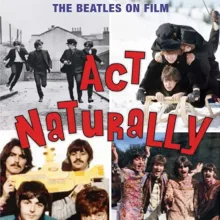
On this episode, I am talking with Steve Matteo. He is the author of Act Naturally, The Beatles on film. It is a great look at the handful of movies that The Beatles were in more than just looking at those movies. He really looks at the history behind them.
The influences really terrific book, highly recommended and perfect for the holiday. Thanks so much for listening and I hope you enjoyed the interview. Steven. Tell me, how did you even become a music journalist?
I've always really been into music since, you know, I was a little kid. I grew up with the radio that was like your world in suburbia. I was always into music and then I really thought radio was what I wanted to do. I grew up during this sort of heyday of FM radio, but that really started to change a lot and the radio started to become very tightly programmed and I just felt that writing about music was a, gave me more freedom to write about whatever I wanted to write about.
And so that's really how I got into it. And I was already writing articles about music. Even before I decided that I don't want to do radio. I wanna do writing like I was writing articles like, in middle school, it was just, don't ask me how that happened, but that's how I got into it.
I started like a lot of people, the school newspaper, the college newspaper, I worked at the college radio station. I was a media major living in New York. You're connected, you're in Detroit, you know what, it's like major city and you're connected to radio and record stores and venues and being in New York especially, you would get the British artists when they first come to America. New York is the, just geographically, it's right there.
It's easy for them to make that their first musical stop. So you'd get to see so many people just because you just, you're in the right place at the right time. And it was a while before I ever wrote a book, I was writing about music for probably, I don't know, 20 years before I ever published my first book. It was a long route to get to that, to get to writing books about music.
And what was your. First music book? So, I have three books. The first book was on Bob Dylan and it was a, like a sort of coffee table book.
It was hard cover. Coffee table, had a lot of photography in it. A lot of photographs. And then the second book was my first book on The Beatles, which is let it be, which is part of the 33 and a third series of books on individual albums, which celebrates its 20th anniversary this year, that series and that book is more about the album.
This new book act naturally, the Beatles on film. Obviously, it's more about the films. That's the focus. It 's a, this is more of a film book than a music book.
Really. It's funny. Because right now as we're sitting here, I think Taylor Swift's documentary or slash concert film is number one at the box office. And when I think back to seventies, sixties, even before that, it was so natural for pop stars to become movie stars doesn't seem to be quite that way right now.
But how natural to play on your book title? Was it for The Beatles to be put into their first film. Throughout the history of pop music since say, let's say the rock era since the fifties or even before that with Frank Sinatra and Bing Crosby, what happens is that there's two things there's different eras again to play off what you said of music where you have things that just very pop, it's very about celebrity and then you have moments where it's more artistic. And so what happens is the people who, who make movies or try to make the transition into acting or visual arts really depends on the other thing, which is their level of talent for that.
And then where are we in the era right now? We're in this very sort of pop celebrity youth kind of moment. The Beatles were the first to make it more than just appearing in a film as a pop artist or a musician. To be fair Elvis D.
Elvis movies were just vehicles for him. But to be fair, Sinatra made the transition from pop music singer to somebody who was a pop music singer, making movies to serious actor, including winning an Academy Award. He really took the leap and became a serious actor. So while the Beatles never became really serious actors, Ringo certainly had a very fruitful film career as an actor.
What they did is they made it where you were rising above just being the pop group in the movie where it was a different kind of movie and it really was their personalities and it was very much a day in the life of the Beatles at that time during Beatle Manie. But it is a, it's a fiction film, it's not a documentary, but it has this kind of documentary look to it. The cinema verite look to it. And that's all Richard Lester, that 's not really The Beatles, that 's Richard Lester creating that look.
And of course, as was someone who was a film, you're a film historian. It's very much influenced also by European films, particularly the French New Wave. It has very much that look to it. It has that sort of that youthful kind of exuberance, this new generation, these baby boomers.
I don't think that I think in Europe, it wasn't so much where the baby boomer tag was very specifically put on the generation of French youth or Italian youth like it was in America. But there is a parallel there. It is the same thing where suddenly you have teenagers or very young people who are now really this new force in the world. There's no question about it just in terms of their numbers and just in terms of the sort of affluence in Europe and England that affluence takes time to happen in America, it happens very rapidly after World War Two.
So the Beatles are heralding this thing, but it's not like they're serious actors or something like that or they're making this grand artistic statement. A hard day's night is regarded as a great movie. It's a very important film. It's not the Red shoes, you know what I'm saying?
It's not this important film in terms of li high cinematic achievement across the board it is a youth, it's still a youth film and that's still what it is. It will be influential on other films and not just pop music films. Obviously that the center of the film is The Beatles and their personalities, but it's really Richard Lester and his approach, his directorial approach and his vision that really makes it what it is. There are movies with Dave Clark Five or Sonny Cher, these kind of vehicles for these performers.
Then we have a hard day's night, but not too many of these bands or acts have a second act. They don't have a help, they don't have a yellow submarine. How does help even come about? Is it just because Hard Day's Night is such a smash?
That's a part of it. But it's also just a sense of with the Beatles, it's like they make an album and then they go on tour and then they make an album and then they, that there was, they were very hard working and Brian, their manager constantly kept them busy. So once they did one movie, it was like, ok, we're gonna, obviously, we're gonna make another movie. Brian saw the, saw them as they're not just a pop group, he saw them doing so many different things and he just, he wanted to expose them to the world.
This is what it becomes too. Of course, a hard day's night becomes a vehicle to expose the Beatles to the world. Particularly to the United States back then. Obviously, there's no internet, there's no Twitter, there's no Facebook, TikTok, 24 hour, 24 7 cable news, none of this exists.
So the kids and I'll use that phrase. Their exposure to The Beatles is really confined to the, seeing them pictures of them on the cover of their albums, on the singles in England, the Eps. And of course, if they make a television appearance, which is at this point, really mostly confined prior to the film coming out, mostly confined to England and the continent and being on radio. But that's not visual hard day's night, lets the anybody in the world get to see them.
Now, of course, by the time, a hard day's night is released in America, we've already seen The Beatles several times on Ed Sullivan Show and other television programs. But to see them up on the big screen and then I'm sure many of these kids, I'm sure they went back and watched the film over and over again. And then they had the soundtrack album and this whole pop phenomenon. So a hard day's night sort of becomes it's part of the phenomenon.
It's part of the sort of not extremely conscious marketing effort, but it's part of it. Brian, obviously, the Beatles dictated their own art along with collaborating musically in the studio with George Martin. But in terms of getting them out to the world, it's Brian it's Brian booking the tours, the television shows, the radio appearances, the photo shoots, it's Brian is handling this with obviously whoever is working for him at Nems in the press office. It's the same way today.
Everything is all part of what's the phrase that Joni Mitchell used the storm maker machinery behind the popular song. That's what it is. Now. The machinery is really taken over from the art where it's, it's all about the sizzle and not the steak very much these days.
So how about you? What was the first Beatles movie that you remember seeing? I did, I don't remember seeing like a hard day's night or help in the movie theaters. I don't remember seeing them when they first came out.
I was probably 1112 in there where I probably saw like a, you know, yellow submarine on television. They would show it like during the holidays. And you also, you have to remember too that I, because I was because of the Asian, I was, I saw the Beatles cartoons in America which were not shown in the UK at the time, which as I point this out in my book. So that is the kind of another sort of visual, moving, visual way that I saw them.
And then later, you're a little older, you're a teenager. It's the seventies again, this whole world of this sort of midnight movie, the cult movies they would show in movie theaters for the sort of the suburban counterculture I'll call it. But in urban areas either. But that had been going on for a while.
You would see magical Mystery tour. That would be like one of these cult films. It had about the same equal weight of a film, like other counterculture inspired or music culture inspired or underground culture inspired, like films like El Topo Zachariah, the easy Rider. There was all these films that became sort of part of that they showed the same kind of movies over and over again.
And as the seventies went on, there would be more and more of these kind of films actually being made, not just showing the older films. So I can distinctly remember seeing Magical Mystery tour and being like, I don't know what I really made of it at the time. It was weird and disjointed and you're not necessarily sophisticated enough to really either understand or comprehend or absorb the subtleties of it or some of the Wink Wink messages that are being sent out that kind of thing. But then as you get more into it, you do get to pick up a little more on the sort of more subversive elements for lack of a better word that are happening in a in magical mystery tour.
As you're talking about this. And you mentioned El Topo, I'm like, oh yeah, that was put out by a subsidiary of Apple. And then you've George Harrison doing all the work with handmade films and producing all of these great movies like Life Of Brian and other Monty Python films and other films as well. It's just amazing the impact that this one band and the members of it had on so many aspects of culture overall, not even just their own music and these movies that they're making.
But as that into what we're still dealing with today. George does the concept for Bangladesh, which is one of the first really big concerts to raise money, to raise awareness. We had Monterey Pop, which was like, don't look back the Dylan film more underground or the sort of the sixties hippie culture in the major urban areas or in places like New York, San Francisco L A London and then Woodstock, of course, you know, blows it all wide open because it's suddenly this thing, this hippie thing is it's going on everywhere now because you've got 400,000 kids in a cow pasture in upstate New York.
It isn't just people in the hip clubs in New York and London or San Francisco. So it becomes bigger than just the underground or the counterculture. The film that really becomes the turning point again as was really easy Rider because film in the sixties with the major studios were really struggling and they were still making big budget films, musicals and big budget epics and trying to appeal to the same audience that had been appealing to, since the studio era began. And suddenly, now they realize, oh Easy Rider.
And it isn't just about the sort of cultural artistic si significance is they realize that kids in droves are going to see this movie and it's critically acclaimed and it's money, let's face it. It's, you can do the most artistic creative thing and have it resonate culturally. But if it isn't turning, it isn't turning into dollars, then the corporations are not interested. And so suddenly they realize, ok, yeah, baby boomers, they're the largest segment of the population.
Now, they are educated, they have money, they're going into the workforce. Ok? We better start making movies for these kids or we're gonna, we're gonna be out of business and this is one of the reasons why I don't wanna get too off the subject here. But I know this is the kind of thing that you're interested in.
This is why later on Paramount becomes so big. You get Robert Evans this rebel who really didn't have any experience before he took over running Paramount, who really was this rebellious guy who really was, had his finger on the pulse. He just, I, we could talk about Robert Evans for the rest of the day. Ok.
And Paramount goes on and makes many of these movies that just changed film in the seventies is Evans producing a lot of them and of course, it isn't just par so easy. Rider becomes the sort of a hard day's night demarcation point. But then I really think that easy Rider becomes the next one and sets the stage for that, this, the cinematic American revolution in a film in America in the seventies. And I know I've repeated myself there all but the Beatles are significant to it.
There's no question about it. As you said, you were asking me about what films I saw, I did see, let it be when it first came out in the movie theater. That was the first time I ever saw, saw Beatle film as it's being released. And part of the reason why the whole sort of timeline of let it be happens is because at the end of January of 1969 Ringo is gonna start filming the Magic Christian with Peter Sellers right there at Twickenham Studios where the beginning of let it be his film and the one of the producers of Let it be Dennis o'dell is the same person who's one of the producers of the Magic Christian.
There's so much that all feeds together. There's all these relationships that are all interconnected and it's real. It 's fascinating. And I try to get into a lot of this in depth in the book where the book is not just The Beatles made a hard day's night and then they made hell and then they made, I really tried to talk a lot about what else was going on cinematically musically in popular culture, there's the beginning of the book has a long sort of preamble about what was going on in British Cinema prior to a hard day's night.
So I really wanted to write this as a as interconnecting history, not just the timeline of the Beatles did this and the Beatles did that because most importantly, their films and films are very collaborative and the Beatles, in many cases, in these films are really just actors. Obviously, their music is significant to it. But the people that are really making the film obviously, other than magical mystery tour are other people and not the Beatles. So I wanted to give those people their due.
I wanted to talk a lot about the directors and the writers and the other actors and the cinematographers and all the people below the line as they say in the film business. You know, I really wanted to stress how significant these folks were and how many of them already had great film careers. Many of them would continue on some of them till today. Still working in the film industry, viewed Anthony Richmond that the cinematographer who worked on.
Let it be still working making movies today. He's worked with every imaginable important film director of the last 50 years. Many of these people worked on the Harry Potter films, they worked on the Lord of the Rings films. It's extraordinary.
So I really wanted to give British Cinema its due. That was part of what I wanted to do with the book. I love British Cinema, particularly the sixties. I'm a big fan of spy films.
Spy spoof films. It was a lot of fun. Yeah, I was. Surprised when I picked up your book and was just seeing all of that background and all of the color around these movies because it could have been, it could have been a pamphlet but it's a full fledged obvious book and it's just terrific.
I was so interested because for all those years and I is it still today? Because I'm trying to remember what you said in the book, but is let it be that's still not available. Correct? Yes.
Thank you for the compliments too. I appreciate that. Thank you. Yes, let it be has only been released on VHS.
It has never been released on DVD Blu Ray streaming. You cannot go to a movie theater and see it. The Beatles have purposely kept it out of circulation. What was supposed to happen was, you know, the plan was as soon as the Peter Jackson get back series was announced, the plan was and yes, we're gonna reissue.
Let it be here. We are. How many years later? And we still don't have it.
Now. Several months ago, there was an interview with the director of Let it be Michael Lindsay Hogg, who I interviewed for this book and for my, let it be book and he said that once again, he was interviewed for extras to be included in a DVD and or Blu Ray package. About let it be when I interviewed Michael and several other people for the let it be book, which is 19 years ago. At that time, he indicated to me he had been interviewed and that there was gonna be a DVD or a Blu Ray release of the film.
I don't even know if Blu Rays were even a thing 19 years ago. It's amazing because let it be many ways. It's one of the most polarizing periods of the Beatles career, not just in terms of how it's perceived, but how the Beatles felt about it, but they co they keep going back and reliving it. We've had to let it Be Naked Project, which was obviously audio only.
We've had to get back series. They put out a stand alone film of the rooftop concert that was only shown in movie theaters for a few weeks. The this and the soundtrack for it, which is just the 45 minute. The music was issued only on streaming audio.
I don't even know if it's still available. The life of Let it be just continues. And that's why when I did the 33 and a third book of all the Beatle Albums I chose. Let it be because I knew it was a great story and that's why I chose it.
I could write another entire book on it. It was obviously writing this book. I had to get back series to work, which I didn't have. 19 years ago.
I had the box set that they put out for, let it be when they issued to get back series or was it the year later? I don't even forget there's so much I don't even remember and other reissues and of course, there's always new, there's always new information coming out about get back and let it be the whole period. So it was, I made sure that I didn't duplicate myself. Obviously, again, let it be book.
It's, that is really about the album. Like in this book, I really don't get into depth about the bootlegs because the bootlegs of the get back let it be series or let it be period. It's voluminous and there are people who have made a cottage industry out of it. It's just not a bootleg expert.
But when you write about this period, you do have to at least mention it. So the let it be book is very much about the audio and has a lot about the bootlegs and all of that. And this, what I wrote in this book about the period is really more about the film, more about the get back series and more about what have we learned in the intermediate. And frankly, I'm shocked that nobody had written this book before.
So kudos to you for sitting down and writing this. Thank you. To be honest and fair. There have been other books on all the films.
It's just that there really hasn't been anything in a really long time and I don't think there's really anything that's been in print for a long time. So I guess what you're saying is if you went to a bookstore, you went to Barnes And Noble and you wanna buy a book on the Beatles films, it's, there's nothing here, nothing exists. I'm looking in the music section. I'm looking in the film section.
It's just, it's been a long time and obviously, I had the ability to use the get back series to use all the DVD and Blu Ray reissues of the films and the extras, the CD and vinyl album reissues. I had all of that, all of the new information that's come out in the last 20 years. All of the great books that have been written, not specifically about the films. Yeah, it sounds like you did a ton of research though.
Just digging through all these archives and getting these interviews. It must have just been a heck of a lot of work. When did you actually start on the project? I could boil it down from first discussing the idea to publication is four years.
The actual writing of the book. Is it more than three years? I don't think it was quite 3.5, but it was more than three years and I had about 100 and 85 books on The Beatles before I ever started the project. And I probably now have close to 250 books.
But I also did interviews. I didn't do as many interviews for this book as I did for the let it be book simply because we're farther down in history now. So, some of these folks unfortunately are either not with us or they just really don't do interviews anymore because they're either talked out or they don't really remember. Well, and they don't wanna say things that they know may or may not be true.
Now, this is definitely more of a book that's research journalistic kind of project. And that was really what my approach was. I really wanted to do a lot of research and the film research alone too. I have a certain understanding and knowledge of the cinema of the sixties British Cinema.
But there was so much that I learned and the timing was interesting because I started talking about this book with an editor in the spring of 2019. And then of course, late spring, like late May and of course, by March of 20 we're in lockdown and I was already writing the book at that point. I hadn't gotten that far, but I was already into it. So I think in some respects COVID was a blessing because it was ok.
I'm stuck home. I have all these books and records and DVD S and Blu Rays and C DS and the internet. And I have this book to write and I have an internet connection and a telephone. So here we go.
And so I just hunker down. That's what you do when you're writing a book, it's work. There's no glamour here as you can tell the timing in some respects, really worked as far as getting interviews in some respects. It worked to my favor because theres people who are suddenly now they have nothing to do.
Some projects are stalled or they're stopped. And so they have a little more time. But then there were some people who for whatever reason, they don't want to have an issue to do with anything. I'm like hiding in my bedroom during code or some people got ill from it, obviously.
So it was good timing in that regards, I'm very focused when I write, I'm a very focused writer and I've never written a book this long. My other two books are nowhere near in length. You know what this book is, what close to 350 pages. The manuscript that I submitted was closer to 500 pages.
There was a lot of connective tissue that was teared away a little bit, but it was the editor changed during the process of this, the person, the commissioning editor left the day to day of it and another person took it on that posed some challenges because we had cooked up one way of doing it and the new editor wasn't quite sure, but we had all worked out and he was wonderful to work with. You try to make sure your sources are correct, but you try to get certain things from, verify it through many sources. And then I really tried hard in the beginning of the book to make it clear what the main books that I used for my research, particularly ones that I would be using, not on a daily basis but an hourly basis.
And I have a very extensive bibliography at the end of the book. But you wanna make it clear that other people, their scholarship contributes greatly to what you've done. There's a phrase standing on the shoulders of Giants, people like Mark Lewis said, and Bruce Speer and Ken Womack, these folks have an extraordinary books on the Beatles and I'm only mentioning three people. Ok.
There are many more. I know these folks well and they're always so helpful as busy as they are. They're so helpful and the community, the people who write about the Beatles and it's done with love and affection, but it 's done with respect and it's done with diligence too. Getting it right.
It's, it's so hard sometimes because some of these beetle books through the years they repeat false information and it's not because people did a bad job or they were lazy. It 's just pre internet. You know, some of this information was hard to find, it was hard to get it right sometimes. And it is a work in progress.
There's still pieces of information that are debunked simply because a very savvy journalist or two or three uncover something that wasn't there before. So, it's fascinating. What was it like. For you when you found out that Peter Jackson was doing this Beatles project?
I always forget the exact timeline of it. But from what I remember, I was not very far into the book when I found out that he was gonna do this, it was literally months that I was into it. I shook hands on the deal and that I didn't have an official signed contract until I was already months into it. Somewhere between the handshake and the contract arriving where we found out about it.
And of course, it's, you know, more can you ask for? But it was just the timing of it was just, was extraordinary. Now, to be honest, at first, I was not so happy because I wasn't sure if I was gonna have a chance to actually see this thing before I had to submit my manuscript. But then because of COVID and it just goes back and forth and delays in the release of the get back series that all worked out fine.
And I was able to see it and I was able to see the DVD Blu Ray release of it and literally writing this thing. But with the DVD and Blu Ray release just happening as a manuscript is due. So it all just worked out. I was very lucky time wise, sometimes these things, there's, there's serendipity involved.
There's a certain amount of kismet involved. And you're just because if I wrote this book and I, and it was at the printers and get back was out or announced, then this book would have had a major hole in it. And every interviewer would have said, how come there 's nothing in here on, get back. So consider myself lucky.
And some of this stuff is just luck. So I know you're a music journalist and an author, obviously. So I imagine you're sitting on a golden throne and you have your wallpapers actually dollar bills or $100 bills. I should say, never have to work again in your life if you didn't want to.
But if you did, what would be your next project? Yes, us writers in America, especially in the year 2023 the writers strike. We make elephant dollars. When I get royalties, they don't send me a check.
They show up with trucks and guys with boxes and hand trucks and we don't have any more room for the cash in the garage. Ok. I kid around and I say that my next film will be on the home movies of the rebels. Which means, I don't know when I'm at this point, when I'm, when the book is, it's only came out in May in America and July in the UK.
I'm just promoting the book and doing publicity and trying to stay out of trouble and whatever the next idea is. I have no idea. I have no idea if there will be idea. And that's how it's been all my projects I had, I have to let it be.
I did be serious for a moment. I did have some ideas and I did have some false starts. I was thinking of writing a book on Pink Floyd was thinking of, I was actually thinking of writing another book on Dylan but doing Dylan and the band, the Little History that they had. But then there was another book that came out that I felt touched on it enough and had enough of the right sourcing that I don't know.
I thought about doing a book on Eric Clapton in terms of specifically what kind of Pink Floyd or what kind of Eric Clapton book, I'd rather not say, but it was a while between books, but you're doing other things. You're working on other non author projects through the years and just living your life, just living whatever your day to day existence is. We all have our personal life. We have our business life.
I knew after I wrote the let it be book that someday I would do another book on The Beatles. I didn't know what it was going to be. But I knew someday and so the someday just, it just happened. And as soon as I didn't pitch this idea on, I mentioned it to one editor and he's, let's just do it.
That was it, there was no discussion. It wasn't like I had this idea and wrote up a proposal and sent it around. It was like I talked to this one editor, I've known him for years and he's just great. He couldn't say yes, fast enough.
So it was just timing again because there really hasn't been a book on the film. There's a book by Roy Carr, I think it's called The Beatles at the Movies. I forget exactly something. I forget the exact name of it.
That's a great book. It's a oversized soft cover. It's got great photography. It's got a lot of memorabilia pictures and album sleeves and it's, that's a wonderful book and back to that book quite a bit and researching it.
And I mentioned it in my introduction and it's included in the bibliography of my book. Is there a good place for. People to keep up with you in your work online? I don't have a website and I know that sounds crazy that I don't have a website.
It's, it sounds like a deli that doesn't have, you know, milk and bread, but I am on, I'm on Facebook. I'm on Twitter. What else are the kids into these days? I'm on Instagram.
I'm out there. I'm very easy to find that you can. Anybody wants to reach me through my publisher or publishers. This book is published by BB which is part of Roman And Littlefield.
I let it be. Book is published by Bloomsbury. My Bob Dylan book is, it's out of print. It came out a long time ago.
That imprint no longer exists. I believe that Barnes And Noble. It was Sterling. I forget what the name of the imprint is now called.
They own the rights to that book. Maybe someday it'll be reprinted on linkedin. If people want to buy the book, it's available on Amazon Barnes and Noble. It's in bookstores, different book.
Call up your local bookstore and demand. They order 100 copies immediately and stock it. It's actually been well stocked in the Barnes And Noble stores. I know that for a fact and it's out there, it's very available.
I hope that people buy it. It'll be makes for a nice Christmas gift as John Lennon once said about one of his books. It's the usual rubbish, but it doesn't cost much. Drop me a line stating point of view.
As The Beatles once said, Steve Matteo. Thank you so much for your time and thank you so much for writing this book. I really appreciate it. Thank you.
This has really been great. Cheers. Well, I bet. Yeah.
Well, I.
Comments
No comments yet.