
Special Report
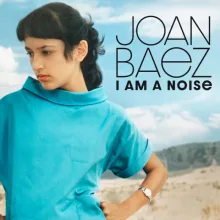
Joan Baez - I Am A Noise
Show notes
Transcript
An automatic transcript, tidied into paragraphs. It has not been proofread, so names, titles and spellings may be wrong, and it does not say who is speaking.
Show the transcript (about 4,800 words)
Speaker 1: Your ears. It's show time.
Speaker 2: People pay good money to see this movie. When they go out to a theater, they want cold sodas, hot popcorn and no monsters in the projection booth.
Speaker 3: Everyone pretend podcasting isn't boring.
Speaker 4: Turn it off very there the way very well.
Speaker 5: I don't think anybody at a young age who gets famous has the slightest idea that will ever end. I've always said I wouldn't want to do a farewell tour because people who say that always come back, maybe it would be nice to celebrate 55 years of it. I was the right voice at the right time. You just shot me in another whole stratosphere.
What does fame mean to you? What fame actually is? I don't really know because I don't consider myself famous. I think there's a difference in being well known and being famous.
If I could write my entire history, whether it has anything to do with facts, nobody will ever know because we remember what we want to remember. The panic attack stuff started early and then the anxiety just heightened and heightened. I walk out on the stage and he said, oh, she looks so peaceful. Exactly the opposite of what was going on inside.
But I was aware that there were sorrows way greater than mine. Nonviolent action was what I was born for. I knew that I belonged there and then Dylan showing up.
Speaker 4: Oh, yeah.
Speaker 5: I was just there riding the wave with him. I think Dylan broke my heart because it was so shattering that I admit. And I was really addicted to the activism. There's no way I could have been intimate and I didn't know that yet.
I'm not very good at one on one. Relationships. I'm great with one on 2000.
Speaker 4: Ain't gonna let go.
Speaker 5: There will always be some regret. No matter when I quit, demons still come and go a little tiny bit. Not the way they used to. Somebody asked me which decade did I?
Like I said, this one, turn me. MIKE WHITE: Hey, folks, welcome to a special episode of the projection booth. I'm your host, Mike White. On this episode, I am talking with the three directors behind the new documentary Joan Baez.
I am a Noise you will hear from Karen O'Connor, Mary Navasky and Maeve O'Boyle. All about this new film. All about Joan Baez, the singer songwriter, activist and all around interesting personality. The film will be having its initial release, October 6th, 2023 then it will roll out and be available on demand later, November.
All the dates are in the interview and I hope you enjoy hearing it. I'd love to ask initially how y'all know each other and what your backgrounds are. KAREN O'CONNOR: Mary and I have worked together for over 20 years making documentary films and then Maeve has worked with us on two other films made before this.
Speaker 8: Yeah, one other film and then came on for John. MIKE WHITE: How did you even get involved making documentaries? Karen? KAREN O'CONNOR: I started working with Oprah Bake, I guess in 1990 who's one of Frontline's premier documentary filmmakers.
And I started as an intern and then her associate producer and then through Oprah ended up at front line at GB H in Boston. And then Mary and I began to work together there and then went independently and I have worked closely with Mary for 25 years, Mary, is that what it is? And then Maeve, we were lucky to hire Mae for a film we did for Frontline called Growing Up Trans. And it was a great collaboration.
And so when we began to talk about doing this Joan film, many years ago, Maeve came on board to work with us on that show, Mary. MIKE WHITE: How long have you been an independent documentarian?
Speaker 9: I worked at front line for many years, not independently. I came almost right out of college. I did some research before and was a secretary there and kind of secretary P A if it worked my way up inside front line and then left and started production company with Karen that was also around 1990 then edited our Latin her. She's also a filmmaker, but she edited our last film on transgender kids and didn't want to stop working Karen.
And I mostly did social issue films. And this is the first biography I had. That's not true. I worked on a film about Lee Avi.
But other than that, this was the first biography I had done that was truly wipe me out.
Speaker 8: And also just for me as well, I'd also mainly worked on social issue docs and had it never done a music dock before. So it was new territory on my end as well. KAREN O'CONNOR: I've known Joan for over 30 years because of that personal history. There seemed a way to potentially do one of these documentaries of a famous person without it being carefully controlled or curated doc.
And so Joan at this particular point in her life as well, was ready to do what she calls a kind of wanted to make something with an honest legacy. And so there was an opening mic to do some kind of different biopic or whatever they're called. We wanted to do something that was both contemporary and not historical, but a nod to both the past and her present. And so she started to talk about a last tour many years ago and we all saw the opening there to do something around.
The last tour woman coming to the end of a 60 plus career, we thought had potential to be something interesting. And then through that process, and Miriam Maeve can talk you through that. We found this incredible archive and through that it shifted the kind of structure and overall trajectory of the film. MIKE WHITE: Yeah, that archive is amazing.
The footage, the drawings, the journals. Wow, that is such a treasure trove.
Speaker 9: We had already started filming and I think we thought we were gonna do more of a ver film about her last tour. And while we were out in California, she gave us her keys to her storage unit where she had never been before. And we walked in there and it was just like a mind blowing amount of stuff primarily because her family is a, her father recorded everything. Her mother carefully kept everything.
There were boxes and boxes of letters, family letters, there were piles of journals, there were drawers of artwork, there was her therapy tapes which went on forever and it, the film turned on its head. At that point, we were like, this is a treasure trove. And so we decided to look at both the past and present, bring her just primary materials pulled you in.
Speaker 8: Mary went through that stuff fastidiously. It went on for it. It was a huge challenge obviously to get through that material. And obviously, we also Karen and I also chimed in but ultimately was a real kind of unearthing and trying to find what what story we had with that material.
And certainly the family story rose to the surface as being an absolutely integral part of John's life in Joe's story. We definitely found that to be something that would be a guide in a way to tell one layer of this immer immersive kind of historical part of John's life. We definitely, we didn't want to use talking heads in the film, we wanted to. So we utilize the audio tapes and all this kind of thing.
So you would hear the family commenting and so on so forth. And so we could wrestle with really important thematic ideas like the impact of fame on a family in this kind of context and the brilliance of her family indeed, like they were all so incredibly musical and all of the different layers, Mimi's life and what happened to her. So it was just one of those things that we really dug into and use as a way to kind of immerse yourself and tell this incredible story. MIKE WHITE: I can't even imagine cataloging all of the information that you guys dug up and just trying to parse that out into.
Oh, we can use this and we can use that process must have just been so arduous.
Speaker 9: Yeah, it was funny when you said, what were some of the challenges I was like, what were some of the challenges have? Because there were so many different things, there was the journals there was the letters, there was the audio tapes and then there was the music which is like massive. And then the archive that exists out there of her who is our life has been documented publicly since she was 17, 18.
Speaker 8: So it was just so much material to pick through and figure out what we wanted to tell and to organize and to clear it was enormously overwhelming from because we had to screen so much and really get it, get a take, you know, take on what ST for example, Vietnam Male was absolutely massive. It was just this huge piece of archive, like tons of archive that we had to look at that. That would only just be one small part. It was a huge undertaking.
KAREN O'CONNOR: We all worked collaboratively. Obviously, it was just the three of us. So for most of it and then our obviously our other creative teams came in and enhanced it all. But I did the most of the interviewing, Mary and I directed and produced May directed and edited.
So we each had different heavy lifts, Mary, certainly all the archive and clearances took that on me editing it beautifully. There was obviously a merging of those roles all along the way. But yes, my history and that kind of trust that I had with Joan allowed me to do the in, I did all the interviews. So there's a kind of feel of Joan talking to a friend as in the interview.
So there's a kind of naturalness, I think in that as well. So we all, we all contributed. But I think yes, we each had different strengths that we brought to it and probably we, is this, what else? And then each had favorite things that we'd have to bash through together.
What do we want, how, what matters? We, each, we found a way to each kind of bring clear eyed, I think, clear eyes to things as well. So, yeah, it all, but it's a, it was, yeah, it was New Mary and I have directed before together. We've done all our films together.
Maeve has made her own, but this was the first time that the three of us have ever worked with three directors. And so it was for us a new experience as well. But one that certainly enhanced the film, I would say. MIKE WHITE: What was Jones' reaction when you kept pitched the idea, I want to make this biopic about you.
KAREN O'CONNOR: It's funny, it wasn't really a pitch in that way. Like because of the history, I toyed with the idea of because I'd known Joan, I guess Mary has said I didn't really remember it, but I think she's right that talking about maybe doing something with Joan. But what that was never really clear. We did a little filming and was, we weren't sure what was there.
And then she began to talk about the idea of a last tour. And so when she, he was, and whether she would or wouldn't, we never knew. But we thought and talked to Maeve about it. There was a potential narrative anchor to the idea of following this woman who'd been famous for 60 plus years coming to the end.
So that's began a conversation with Joan. She, I think wanted to do something at that point. So it wasn't a pitch per se. It was the beginning of a conversation and even then tentatively, you know, shooting a little, see what was there.
We had to stop and start over a very long period of time. We had to fundraise all those things. So it was very much a long time in the making. But the real, I think real impetus was the idea of a last tour, whether she did or not actually quit.
There seemed something potentially interesting there and then that shifted as Ma and Mary said with the archive and the whole balance of past and present. MIKE WHITE: Was there anything that was off limits for her? KAREN O'CONNOR: No, there wasn't anything off limits per se we discovered along the way is she would get, she would push back on things that we'd never expected. Like she didn't want us as Miriam Maeve have talked about before filming her vocal lessons or she didn't wanna get into the pool or it's a lot to have a film crew the way we were filming, which is fly in the wall following her.
It's a lot to have somebody with you all the time. And so she would get annoyed sometimes or not want it. But overall would you say? I don't think anything was off limit.
Speaker 9: I don't think anything ended up being off limits, but I think it took a while. So I think at the beginning her voice lesson, for example, was a huge deal to get over. I think she felt vulnerable. She didn't like the way she sounded, she didn't like the way she looked.
I think that was a huge step. I think there were times when she was exhausted at the end of concerts. So to sit down and have us in her space, took a while for her to let us in even though her journals and trusting us with that, I think was a step for her. I think occasionally in interviews, it took three times to go back into material where she was just, it's a little too much and it was a both Karen and the trust of that.
And I think the amount of time that it took us, I think we were there and we were there and we were there, we were there. KAREN O'CONNOR: But we and then there were scenes like the filming with her mom close to death. Those scenes only happened. Those things also took time.
It came out of lots of things to see why some a scene like that. Would be important and things like that. But Miri and May, right. It did definitely did evolve over time even though the willingness to you can say come in open up and then what the reality is can be exhausting and annoying and whatever.
But she did in the end, nothing was off limits. But as Mary said, it just didn't happen instantly. MIKE WHITE: How long did it take to shoot this? Not in pieces?
So it, we had COVID in the middle. We started as Karen said, like she played around with, is there something to do here? So there were earlier pieces that we had filmed that ended up in the film, but I'd say 2017, was that our picture? Yeah, right.
Speaker 8: Two 1017 on and then on and off throughout that period because we filmed some of the tour and only we selected areas in Europe and then all across the US and stuff. So it went on over a very long period of time. Actually, the fact that it was staggered as Mary was saying as well in terms of access and gaining Jones trust as well. It was, I think it was a really positive thing that happened actually because cumulatively did have build the trust and were able to get more access and be with her in a more immersive way throughout.
MIKE WHITE: Can you tell me a little bit about the animations that you use in the film because I thought they were brilliant. We had unraveled the kind of the storage unit and her artwork was unbelievable in the storage unit and it just told its own story. And we immediately certainly Mary and I initially loved it. Wanted to, wanted to, we just felt that it definitely should be animated.
Karen was a little bit on the fence initially, but I came around eventually, but essentially, I worked with the animation producer here in Ireland and I asked her and she brought on Eat the danger and they're just a wonderful group of 33 guys who basically worked with us intensively for many months. And I think one of the key things was that we tried to keep John's work as absolutely authentic as it was. So the guys really did listen to that kind of piece of direction and brought it to life whilst keeping all the lyrical beauty of her actual art work.
And that was a really essential kind of key part to us. You can add on Miri and Karen as well. There's work to say there.
Speaker 9: Yeah, I think we looked at a lot of animation before we decided what kind we wanted to do. We didn't want it to be to Disney. We didn't want it. We want, we wanted, as May have said to hold on to her essence, her artistic essence, which they did stunningly like if he looked at her artwork, it's and we knew that Joan was going to see it.
So it had to be true to her artwork too. I also think we wanted the ability to have a narrative, the same kind of narrative arc to her through the artwork that we did in the film where you're going deeper and deeper. And the only way to do that was to be able to show of the blossoming of her creative inner world that was occurring, which I think it was occurring throughout her life. And then we also wanted her playfulness along which is apparent in all of her artwork.
I think that you'll see, she just put out a book of drawings that she did that are funny and cartoony and yet deep at the same time and meaningful. And so I think it was a hugely important part of the film. At the end. KAREN O'CONNOR: I ended up loving the animation.
I was concerned as Mary said, we didn't, it was finding the right style and sometimes in animation and documentaries or any film, I find them disruptive and they take you out of the film in some way. And, but exactly the opposite happened in this would eat the danger and the team, everybody collaborating together. I think it in Frances, as Mary said, Jones inner world in such a way and captures her incredible creativity and this light and dark, this kind of both things simultaneously that you feel is a complete thread.
All the way through the film. It really adds so much to the film. I also think her art is such a huge part of who she is. Visual art as well as music.
And so when we first went into her storage and she had artwork from when she was five years old, it was just you have boxes and boxes and her mother kept everything. So she has boxes and boxes of artwork that really tell her life story. You got rid of everything else. You could narratively probably tell her life story through the art in the same way that you could do it through her journals in the same way that you could do it through letters in the same way that you could do it through the audio tapes.
MIKE WHITE: So we tried to capture pieces of all of that and Michel Marie pieces of, can you tell me what it was like when Joan finally got to see the first editor of the film, I was nervous as hell. KAREN O'CONNOR: It was a, you know, a huge thing. She's turned her life over to us. She didn't have final cut.
We did. So I had to show her, I think I was in wherever DC or wherever it was on a laptop, nervously sitting next to her. Yeah, it was anxious making, but she was thrilled and moved and it was also a strange thing to be watching it with her, this her life story laid out and light and dark and difficult moments. It was moving in every sort of way and a huge relief that she was very happy and pleased with.
Even when she watches it now, it's intense. She's listened and heard her father's voice like that and a lot, it's not like she is listening to all these old audio tapes or seeing these old home movies every day or her, especially the therapy stuff. It is just an intense and her mother and.
Speaker 8: Revisiting her whole family or no longer with her. There's no one, none of these people are with her anymore. KAREN O'CONNOR: And then now.
Speaker 9: She is as a mother, she's watching herself as a mother. He's looking back at these pieces of her life like it's powerful. KAREN O'CONNOR: And many things she hadn't known or heard. So it was also sitting as Mary said, she was experiencing things that for the first time and we'd been in an edit room over and over again and yet with that kind of remove as filmmakers and there she was, this is her experiencing and hearing her sister, Mimi, hearing Pauline, hearing them say things that she didn't necessarily know, seeing her early psychiatric report, hearing her mom, seeing her son talk about his absent mother, all of these things and then the painful family story.
So it was, it was definitely emotional and says, Mary said is she sees it in screenings and it's not the remove it is, it's her life and so she feels things, it's different each time is the sense I get from her like she different experience for her each time and sometimes a positive experience and shifts and changes as she continues to watch it. Yeah, but we were tremendously relieved that she had not only she was not only, you know, moved by it but thought it was, you know, she's, she's very proud of it. And so obviously as filmmakers, that's a big shoof you though, we have final cut.
You want, we of course, wanted her to feel that we'd done justice to her life and to have, you know, made it worthwhile, particularly given the trust that had to be there for us, that she turned so much over. I think we wanted it to feel like we'd earned it and she clearly thought we had, that was a tremendous woof. MIKE WHITE: When was the first time you got to see this with an audience? KAREN O'CONNOR: Berlin?
We premiered in Berlin for our festival and that was huge, this gorgeous theater in Berlin May and I were there with Joan. Unfortunately, Mary couldn't be, that was tremendous. It was thrilling and standing ovation for Joan. We were warned that the German audiences would be very stayed and would probably politely applaud.
And instead Joan had a standing ovation and it was really thrilling. It was also interesting to see generationally younger audience as well. People who hadn't twenties, 30 year old as well. It was a room filled with every generation and the same we did Copenhagen and all, all of Europe and then the US as well.
It's been a really remarkable thing for Joan certainly and for us, but Berlin was the first big one and it was amazing actually, in a gorgeous theater in Berlin.
Speaker 8: It's interesting you say about the young and old because I think CPH Docks also in Copenhagen, that was remarkably young. The audience actually, and a lot of the young women were asking questions and it seemed to resonate on such a profound level for a lot of people. Certainly that all the different strands but perhaps were so the psychiatric strand, but also just the whole thing, they just, it was a really lovely moment and that, that definitely, I suppose in Berlin too, it felt like that too. So, yeah, and I thought it's just very noticeable actually, in terms of the reaction, it was amazing.
KAREN O'CONNOR: And Joan has got this incredible work ethic. She's attended so many of the premieres, the festivals. And so it's been remarkable to see the response. And yeah, it's been, it's, and she's done some zoom attendance when she couldn't be in person.
And that, as she says, what's not to love celebrated and admired, but she's also just a hard worker which has made these things for us watching it, for her. It's been pretty wonderful to see that response for her and about her. MIKE WHITE: I feel a little guilty doing this, but especially you've worked on this for six years.
Speaker 9: Well, what's next, what's coming after Joan Baez Maeve is currently working on something so she can talk, I'll talk.
Speaker 8: I'm actually back editing and I'm working on film about Oliver Sacks. It's called the Animated Mind of Oliver Sacks. And it's directed by Dempsey Rice and produced by Laurie Cheadle. So it's a New York based project and I'm working away on that at the.
KAREN O'CONNOR: Moment, Mary and I, the film is Magnolia Pictures. As our distributor, it will have its theatrical release and premiere in New York on October 6th and then goes nationwide. October 13th. So we've been Mary and I are still doing heavy lifting on prep for the theatrical release and working on that and all that's involved in that Joan will be coming in for the New York premieres Los Angeles Nashville and then, and then it goes to Vod November 21st.
So I think Mary and I are otherwise engaged in that through November at least. And then I don't know, I don't, we don't know. It's so much work.
Speaker 9: I hadn't done an independent job before, mostly for front line. I mean, my own independent company, but which is much more contained. It goes out into the world and that's it. This has been just a, just an incredible amount of work.
MIKE WHITE: So it May be an incredible amount of work, but it's a wonderful work that you did. The film is terrific and I think all three of you should be very proud of it. So thank you. KAREN O'CONNOR: Thank you.
MIKE WHITE: Thank you and thank you for your time. This is great talking with you. Thank you so much. Thank you.
Speaker 4: I will be and thank you again. It's just his book and you happen to call know. Yeah. The Yeah, love heading straight for a pause as I Yeah, I, yeah, poetry was lousy.
Yeah. Are you calling? Oh, way. You brought me some.
Know what memory. Yeah. May bring diamonds and who you on the sea? The unwashed and very mustard was.
Yeah. If you on know in your head. England. Yeah.
Me another and keeping things. Yes. I if, and if you're offering me already.
Comments
No comments yet.