
Episode 640 · Film year 1937
Black Legion (1937)
- Special Guest
- Tom Stanton
- Guest Co-Hosts
- Otto Bruno, Rahne Alexander
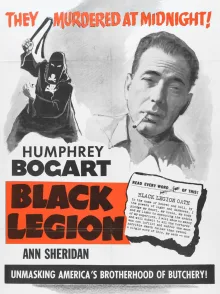
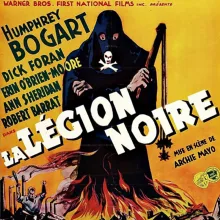
Show notes
Special guest Tom Stanton talks about his book, Terror in the City of Champions: Murder, Baseball, and the Secret Society that Shocked Depression-era Detroit (opens in a new tab), which looks at the highs and lows of 1930s Detroit.
This episode was requested by one of our Patreon donors. If you'd like to request a movie, join our Patreon (opens in a new tab).
Labels: Archie Mayo Detroit Humphrey Bogart Otto Bruno Rahne Alexander
Transcript
An automatic transcript, tidied into paragraphs. It has not been proofread, so names, titles and spellings may be wrong, and it does not say who is speaking.
Show the transcript (about 19,000 words)
Speaker 1: Hold your ears, folks. It's show time. People pay good money to see this movie. When they go out to a theater, they want cold sodas full of hot popcorn and no monsters in the projection booth.
Everyone pretend podcasting isn't boring.
Speaker 2: Turn it off. Why not take no li from nobody. That's that stuff. Hit them hard and quick.
We ain't afraid of nothing to nobody. Come on. What's the matter with that joke? Soldier Of The Black Legion?
You see before you an instrument of death, we give you this half as a symbol of our trust. The other half you will receive the day you betray that trust. You've been lying to me, don't you? Call me a liar.
You Frank. You did have something to do with all those terrible things. You and those new friends of yours. You shut up about my friends.
I won't. Oh Yeah. A bunch of dirty, contemptible cowards would do a thing like that. Are, you don't kill me for telling you them Black Legion guys don't fool.
I'm not fooling either. You're gonna quit that game. I Can'T get out. Nobody ever lived to get out of the Legion.
Stop him. MIKE WHITE: You like, welcome to the projection booth. I'm your host, Mike White. Joining me once again is MS Reagan Alexander.
RAHNE ALEXANDER: Hello. It's good to be here. MIKE WHITE: Also back in the booth is Mr Otto Bruno. OTTO BRUNO: Always thrilled to be in the projection booth.
Mike. MIKE WHITE: We are discussing the 1937 Archie male film Black Legion Loose base on the actual racist terrorist organization from my hometown of Detroit. Woohoo. Way to represent the film stars Humphrey Bogart as Frank Taylor, a man who gets passed over for a promotion by one of those damned immigrants.
He does the only thing that makes sense by joining a hate group and try to bolster his manhood with violence. We will be spoiling this film as we go along. So if you don't want anything ruined, please track down the film and come on back after you've seen it. So Otto, when was the first time you saw Black Legion?
And what did you think? OTTO BRUNO: This is one of those rare cases that I can kind of pinpoint when it was I was a kid when I first saw this film because my whole wall affair with classic films came from the fact that our local PBS station back in the seventies used to show classic movies at 10 o'clock on Friday night and then rerun them on Sunday afternoons. Luckily for me, they started with the Warner Brothers Library. So the very first one I ever saw was angels with 30 faces.
But I do really remember watching Black Legion. And the reason I remember watching it is because I was so upset by, by the time I saw this, I was probably about 11 or so. And by the time I had seen this, I was used to seeing Bogart as a gangster that for whatever reason I could accept. But I was not happy seeing him in this particular role because I knew I already knew at 11 years of age that this was far worse.
It was just so disgusting and distasteful and depressing really. I mean, as a kid, it was, it was really depressing to me, you know, particularly because of course the brain office, you know, nobody can get away with murder. So, you know, you knew that it was not going to be a happy ending either. So, yeah, it's, I saw this first time, a long, long time.
MIKE WHITE: Ago and how about you? Ring? RAHNE ALEXANDER: I'm pretty sure that the first time I watched this was when we were trying to decide when I was given the task to decide whether this was a film noir or not because it was filled, it was shelled with the film Noirs in the video store where I was. And you know, I was like, well, let me take a look at this and see what I think and ultimately the verdict was no, this does not really fit as a noir at all.
It doesn't have all of those tropes. It came to me a couple of years ago, as I was starting to develop a project based around the movie, film, the film writing that James Baldwin did and he didn't write about this one specifically, but he was writing around a lot about their films were treading in the same territory, right? That are investigating the sources of the rise of fascism and white supremacy. And so I went back to take a look at it through that, you know, through the lens of what James Baldwin had been writing about, you know, the his impressions of the histories of film and that, that gave me a really interesting perspective on that second viewing.
MIKE WHITE: So I don't remember if I've seen this one before or not. I want to say there were definitely arts where I was like, it feels like I've seen this, but I don't know if that was, I'd seen clips or if I saw the whole thing. And it's kind of funny, this is a request from Brian Tesori, one of our Patreon donors. But I don't think it was Brian.
I think it was somebody else had suggested this probably about 34 years ago, maybe 56. It feels like, feels like almost like there's parallels between some of the stuff that's happening in this movie and some of the stuff that maybe has been going on in the US over the last like 2016, 2017. Yes, something about that. Yeah, so thanks Ryan for requesting this one because it was something that I wanted to look at and yeah, it was kind of along the lines of Can'T happen here, right?
The what was that Sinclair Lewis or was it Upton Sinclair, Upton Sinclair Lewis, I think might be the author of that one. But yeah, I was really glad to see this and yes, it is upsetting to see Bogart playing such a horrible, spineless, gutless piece of shit that he is in this movie and just the politics of the Black Legion. But what's really funny is like I said this was a mic, you know, done a lot of reading now on the Black Legion, Black Legion was around in Ohio, Michigan, Indiana and Illinois primarily based out of Lima Ohio, but really had a hot bed here around Detroit.
And when I tell people about This Black Legion, they're like, you mean the KKK? And I'm like, kind of but they're like an offshoot of the KKK like KKK was too mainstream for them. They really wanted to have this secret society and there's actually theories as far as why we don't know about the Black Legion that much they won is that they got busted back in like 36 37. But the other one is that they kept no records because they were so secretive that they didn't keep a paper trail of stuff.
So I don't know if I believe that. I don't know how much that holds water, but that's one of the theories around why we don't talk about the Black Legion. But I think moreover, it's just because it's so unpleasant and such a Black eye pun intended to our whole city that nobody really wants to bring it up. Like, oh remember the Black Legion?
I mean, we talk about the Purple Gang, but we don't talk about the Black Legion. We also don't talk about Bruno, except for Otto Bruno. OTTO BRUNO: I believe a lot of Detroit officials and members of the police were believed to be part of this organization as well. And that, that's why it was so well, such a good secret.
A well kept secret basically. MIKE WHITE: Oh yeah. Yeah. A lot of public officials, I mean, that, that old line would say those who work forces are the same that burn crosses.
I mean, that's what we're talking about here. A lot of people and people were afraid to report it when they did find out about it because there were so many mucky mucks that you didn't know if you're talking to somebody who was part of the Legion or not. RAHNE ALEXANDER: There's elements in this film where they're, you know, they exhibit kind of that internal paranoia. Like don't go to the cops and they don't explicitly say like, don't go to the cops to report this.
But of course, that seems to be like an underpinning of, well, if you go to the cops, you're just gonna run into one of these Black Collegian people. There's that really amazing scene in this, in which they working through the financial transactions of it. They're, they're going to the politicians that are actually making money off of the people in the Black Legion and it would seem like those people might want to keep some records somehow. But I'm sure they've got the people that are cooking the books to smooth that out and make it look, you know, all on the up and up.
OTTO BRUNO: Because I looked at that as something of a cop out. I thought personally that they were making it look like, oh, these are guys are just scammers, they're just in it for the money and in some ways for me that made it kind of less like in other words, hate wasn't their inspiration. Making money was their inspiration. And I don't think it was, I think it was hate and they, but they, I think maybe the filmmakers didn't want to say that.
So they try, I thought they kind of used that to gloss over it a little bit. RAHNE ALEXANDER: Sure I can see that. But I also think that, I mean, I think we see this now is that there are certain parties and they're not really invested in hating or anything. They're just invested it in profit.
Right. And so if something is generating clicks now, if they're able to, like, find some income stream through these channels, of course, they're going to put their resources into it so they can extract as much as they can until it's no longer profitable. OTTO BRUNO: Right. Oh, that's sad but true as well.
Yeah. MIKE WHITE: Yeah. That scene, the one particular scene where they kind of, we're following the Bogart narrative and then we, he eventually gets inducted into the Black Legion and they have this whole ceremony and the ceremony was just so sensationalistic. Like it was great that I was able to find a press book for Black Legion and they had the oath in there so many times that it was like, yeah, this is the actual oath of the Black Legion, but he takes the oath and then they're like, ok, what, 6 95 for the Black robes and you have to buy a gun.
But don't worry, we can give it to you on discount. And they, I wanna say they are buying these guns from the police and it's what, 14 95 for the gun? And Frank is barely scraping together a living like his whole thing is, oh, I'm gonna get this promotion. But fucking Joe Dombrowski, this Polish guy takes it from me, man.
He's so angry about that. That's his victim. He goes after the Dubrowski and their farm and all this. But there's that cut after they tell him about the 14 95 to those money men.
And that scene apparently was shot by Michael Curtiz of Casablanca Fame, which doesn't really make sense to me because I then had to go back and look and it's actually in the script, it is in there. So it wasn't like they just added that scene afterwards because I felt that that scene stood out for the wrong reason because at the end of the film to just to jump all the way to the end, at the end of the film, all of these guys get sent away to prison, but the money men, they don't ever trace it back up to them. I mean, it's very much like what we're dealing with today where it's the lower level soldiers get sent to prison, but the people that are in charge, they get always scot free.
RAHNE ALEXANDER: Everybody's expendable ultimately. I mean, it's so cynical, especially Bogart. Yeah. Absolutely.
I mean, he's, he's a Mark all the way through. Everybody sees him as a Mark. OTTO BRUNO: The other thing I found interesting watching it this time, which I never really thought of before and I don't know why I didn't. And that is, you know, there's that wonderful scene early early on of domestic bliss with him and his wife and his son.
And I'm watching it this time thinking, well, oh, boy, they're really showing how happy and wonderful they all are because that only is gonna tear your heart out even more as you get further on into the picture and you see how he kind of devolves. But I also thought this time he was such a great husband and father and that one setback turned him so quickly. So was he, you know it, that II I don't know if I should say that that didn't hold true for me or if it was just extra frightening because of how easily he was manipulated by those people, as you say, he was a, an easy Mark.
But you don't see the signs of that in those first couple of scenes. MIKE WHITE: And those early scenes are fantastic for me in a few ways. One is the whole thing of his son getting into a fight. Frank is very happy that his son got into a fight and then he touches his son's face and he's like, he's like what he's like, oh, that's where the kid punched me back.
And I was like, OK, that's nice that, you know, he's getting his come up and it's like you Can'T just go out and fight without any sort of consequences. And Frank doesn't seem to pick up on that. The other part that I like is when his son and he are listening to the radio because you have that whole like, you know, the, it was basically like a lone ranger kind of, you know, a jungle adventure Tarzan type of show that they're listening to. And then later on Frank listens to the radio and it's a demagogue on there just spouting all this hatred.
Maybe it was Father Conkling from Detroit.
Speaker 6: Coughlin was a raging anti Semite, a man who emulated Hitler and wrote fan mail to Mussolini. How did he become politically powerful? And what can his story, an epic of fame and treason and money and prejudice? Tell us about the way America used to be and the way it very much still is.
MIKE WHITE: He just buys right into it and he's just like, oh the game like on the edge of his seat listening to this broadcast, which is also funny to me because one of the ways that the KKK was exposed way back when was through Superman and the Superman radio show, they basically went after the Klan and were doing all these things to expose them and ridicule them and talk about their rituals and they would have they had people that were part of the Klan, like undercover people and they would feed stuff to the writers of the Superman show.
And then on Superman, it would be like, oh you're going to take this oath, gonna kill you and blah, blah, blah and they would like set it up and then the Klan would be like, what the fuck? How are our rituals and stuff getting out here so quickly? And they, you know, it was really neat that Superman helped take down the Klan a little bit. OTTO BRUNO: Also in this, the Klan sued us of this film because of the role, the Dei Robe or something because they had actually copyrighted the design of the role.
And they tried, they actually took, they took Warner Brothers to court, but the judge ultimately threw the case out, but they had copyrighted that design. MIKE WHITE: There's a white and these are Black and they've got the skulls on them.
Speaker 7: They got the golden arches. Mine is the Golden Arx. RAHNE ALEXANDER: Those corny little Pacman ghost skulls. I could not, I mean, I just could not get, I Can'T get over the corniness of most of all that pageantry, whether it's in movies or in real life.
Like it's just I in my notes that I was as I was scrolling, I'm like, these are like the aesthetics of angry children, right? It's no style to any of this and yet they've got to defend it with a court case. OTTO BRUNO: One of my favorite lines this, that I noticed this time that I don't remember noticing before. But again, this is very, very early on the mother next door.
She says one point says something like men being the simple minded creatures that they are. And I thought that was kind of foreshadowing what we were about to see. RAHNE ALEXANDER: One of the things that really struck me watching through this a couple of times now is that I feel like Archie Mayo really revealed himself to be kind of an ideal director for this because this starts off as you were saying earlier, you know, in this like very like blissful domestic, like there's almost this rom-com pa sing to it, right? And then you know that that seduction moment comes where, you know, Bogart's being brought into this.
So it has like that aesthetic and then it moves into something that, you know, is whatever, it's like facing the crowd like that propaganda, like they're investigating this propaganda. And then it moves into this courtroom drama. And ultimately, I realized, I mean, I didn't realize until reading, watching this a couple of times and then reading some of the background material that this was really rooted in a real life case. And I'm like, oh my God, this is actually a true crime film.
This is about the same kind of true crime. Like this is almost to me no different than, you know, whatever true crime documentaries are on Netflix. Now it's treading in that same territory. But in 1930.
OTTO BRUNO: Seven and the disclaimer that they have on the front is even more emphatic than most of the disclaimers because they said not only is it not based on any true story, but it's not based on any true character is either it kind of doubles down on it when in fact, as you say, absolutely was based on a true case. I mean, on one hand, Waters was obviously afraid of being sued and, or being something worse than sued. And at the same time, you know, even though it's, it's certainly mild by our standards today, it obviously took some guts to make it, to make the film.
RAHNE ALEXANDER: Absolutely. I mean, I feel like, I think it feels very fresh and modern in its, in its way. You know, I don't feel that it doesn't feel dated to me, apart from like the aesthetics of it. Obviously, we have television instead of radio, et cetera, et cetera.
We have scarier guns now, all this kind of thing. But in terms of the way that the propaganda functions, it's note by note, it's really feels very frustrating to me that we live in a time when we've got so much media saturation and still so little media literacy that, you know, folks Can'T really prevent themselves from spiraling down these propaganda holes in the same way that Bogart's character is doing here. MIKE WHITE: And going back to the idea of the domestic bliss too. I thought it was very clever the way that they use Frank and his relationship with his wife and son versus Ed and the girl that he wants to marry.
And then there's also that fluy that's in town. What is her name? Pearl, I think it is. And so you've got all of those players also in here as well as Frank's coworkers.
You've got Cliff. I think it is and all of the different agents that are happening here. I mean, of course, Cliff is kind of talking them into doing bad stuff, Frank at one point is trying to talk one of his other coworkers into joining because again, talking about the financials at one point, it becomes like a pyramid scheme because they're like, every member must recruit two new members. And that was the thing.
I've been reading this book, I've been reading several books and listening to some books and stuff and we'll hear from one of the authors later. But this whole idea of people being taken to Black Legion meetings and not knowing that they're going to a Black Legion meeting and it's suddenly they show up and they get a noose around the neck and they're like, you gotta take this fucking oath and we've got a gun against your head and here's this bullet. If you reveal us, you know, you're getting the other part of this bullet.
That's real life. I mean, that's how they were operating. And I'm just like, how do you do that? How do you recruit somebody into a ho hate organization that had no intention of becoming part of a hate organization?
OTTO BRUNO: Yeah, they were literally shanghaied into it. MIKE WHITE: It seems like you get no loyalty from that. But yet I guess they were just ruling with fear and seeing because they were attacking people of color. They were attacking Jewish people they were attacking Catholics, they were attacking immigrants, but they were also attacking each other in order to keep themselves alive.
There were floggings of the members and each member would take a turn with the flogger in order to kind of share that burden. So it was like one punisher. It was, they all would punish the person who had stepped out of line and you knew you were next if you stepped out of line. RAHNE ALEXANDER: I mean, yeah, these are, these are classic methods of social control.
OTTO BRUNO: Yeah, controlling by fear basically. And it is depressing as Ray says, I mean, that's the other thing that makes this, this movie so depressing and so scary and so compelling still is that it is sadly, so relevant still. And also, you know, the other because I'm a huge huge Bogart fan. This is 1937 I think.
And he had just gone back to Warner's in 36 for Petrified forest and then after Petrified forest and he got all these great reviews. He's in like three or four more programmers in 36 that, you know, are no, nothing to really pay any attention to. And then he does Black Legion. And I mean, he got an opportunity to really act a little bit in this film and got great reviews, by the way, he got some really good notices for his performance in this but still his career not to go anywhere.
And one of the reasons of course, is because at the time, there were too many other stars at Warner Brothers who were ahead of him. Not the least of which, as I'm sure you both probably already read was Edward G Robinson who originally they were gonna put in this particular role, but then they decided he was too ethnic and they needed someone who looked, you know, totally American, which I found kind of because I always thought Bogart had a little ethnic look to him. But he was, you know, he clearly was not, I mean, he didn't have any real immigrant background per se.
So they thought it would be safer to go with him. But I mean, he really doesn't, I mean, he does a few more great turns and things like dead end and stuff like that and, but it's really like another four or five years before I Sierra starts to turn the tide for him. Which is amazing when I watch something like this because he's really good in this. RAHNE ALEXANDER: Yeah, I was fascinated by that because he just, he comes off as such a Mark, such a, just like innocent dopey goof, which is just not the character that he moved into later in life, right at all.
And I was so fascinated to go back and like, really look at this in, you know, in historical context and realize, like he had made dozens of films by this point, but still was not really the star that we know now. And like, even Ann Sheridan wasn't like, no, these people, even though he had been working for so long, weren't really stars in the way that we know them now, which I think is just so fascinating. I was like, I would love to be able to get into like, where in like Ryan Gosling's career would this have fit, right?
Or, you know, just to pick somebody out of, out of the blue, like somebody's somebody who has done kind of that like wide eyed you guys kind of role, but then moves into something grittier wild to see Bogart in this kind of place in this film. OTTO BRUNO: And of course, a guy like Bogart and go well, Bogart and any modern star, you know, film star, it's just not comparable because Bogart in the thirties in that second half of the 19 thirties is literally making like 5 to 7 films a year. You know, I mean, it's just unheard of today.
Absolutely unheard of. MIKE WHITE: I kept forgetting that Anne Sheridan was even in the movie. I mean, she's such a name for me now, but really, it's Aaron O'Brien Moore who kind of steals the show as Ruth Frank's wife. She does such a great job and I love when she just finally ups and leaves him because he's completely unhinged.
He goes, he starts to spiral out of control all because of his association with the Legion. You know, the way that he is kind of, what's the word I'm looking for the way that he shirks his work in order to, like, stick it to Debrowski before Dombrowski gets his, but then later on when he's part of the Legion and he's, you know, such a big shop now at the shop and he talks to that guy from Texas and he's just like, oh yeah, you should be part of this group, blah, blah, blah. And meanwhile, there's some idiot running the piece of machinery that this Texan was supposed to be running and he ends up getting fired and he just continues to spare.
And I love the line too that she gives about after he buys that gun, she says there's nothing left in the house to steal because you've spent all of our money. You have your values completely skewed. OTTO BRUNO: And by the way was I the only one who thought of taxi driver, he's playing with his new gun. RAHNE ALEXANDER: Yeah.
Yeah, that's true. One of the things that struck me, you know, Mike, how I love to aggregate little movie tropes for my little film collages. This was actually a really good, let's get out of here. There were several, let's get out of here and this, which were excellent.
I love, I love instances of let's get out of here in films. But the one thing that really struck me that I want to do some more digging into is that trope of brushing past everybody, the jury box or in the courtroom, you know, but she's like, following him and he's getting pulled away at the very end, you know, getting pulled off to jail. I'm like that seat. Like, when was the very first scene where we get to see somebody like plowing through people in a courtroom?
Like, don't go it. Like as if this is really gonna happen. Has this ever happened in real life where somebody is plowing through a row of seats in a courtroom begging like, don't, you know, don't pull him away to jail but may have a whole new to delve into in the coming months. OTTO BRUNO: It's funny you say that because I was thinking, why are you rushing?
You'll have the rest of his life to go visit in. MIKE WHITE: I was really happy when at one point Cliff pulls up and he's just like, hey, what are you trying to do? High hat? Me and I'm like, oh, nice.
So I remember when Miller's Crossing came out and people were talking about Yeah. And they're just like, what is this phrase? The high hat? What is this?
I'm like, have you never watched old movies before? Guys? Like that's a pretty common phrase here. So I was very glad to hear him in this one, by the way.
OTTO BRUNO: I love that. That what's the guy's name? Charles, is it Charles Halton or the guy who owns the, pharmacy where they have it all I can ever think of when I see him. Of course, is, it's a wonderful life.
He's, he's the examiner of the book, the bank exam and that's all I can think of whenever I see him. RAHNE ALEXANDER: That was an interesting piece of it that I, not sure yet what I think about but the burning down of the competed competing drugstore, right? Where the note that I scrolled down was, you know, we're told under capitalism that, you know, competition is great, right? It helps move the markets, et cetera, et cetera.
But like if you literally burn down your competition, you don't have any more competition. So it really seems to be that, that myth right there. Like this is coming up in this film in a really interesting way. Like they just, it's as if they don't believe their own, their own mythology, right?
When it comes to like promoting this, this idea of competition within a capitalist structure. Yeah, I don't know if I have anything more to say on that, but it really, it just really, really struck me that like this is, this doesn't seem like the right way to go about doing it. If you're, if you're, if you're trying to do business, ethically, right? Ethics, we're back to Miller's cross thing ethics.
OTTO BRUNO: After they had they had smashed the pharmacy, the competing pharmacy's window. Then they showed you the paper the next day and I always try to read as much as I can. But what's in the bit? And the guy supposedly who owned it sounded like a French name.
And of course, later on when they log the next door neighbor and they, one of the guys says that'll teach those Irish. Now, I mean, by 1937 the Irish were pretty stay, I mean, they were pretty stabilized. They were in a pretty good position compared to some of the newer immigrants who were coming in at that point in time. I mean, the Irish had already been here for 80 years or so by that.
So I thought that was really funny because in reality, what happens here is they really just become an organization used for vengeance. Like whenever somebody has a, you know, has a complaint about some, somebody they did this to me or they did that because remember he even uses that, put the excuse like, oh, the boys aren't gonna like him beating up a woman. Really? Really?
That crosses the line for you. You know, it really seemed like they were just searching for any reason at that point. You know, it was just, if somebody did me wrong, that's it. Absolutely.
RAHNE ALEXANDER: I mean, it's the violence, that's the most, you know, that, that's the only thing that matters. In this, in this milieu is that violence needs to happen? What excuse can we have to deploy that? MIKE WHITE: Dombrowski got the promotion.
I'm gonna burn down his house through him and his dad on a southbound train and just ruin this guy. This other guy, he takes over my job after I get demoted for being a total a hole. I'm going to have him be or this neighbor of mine is too wise to what I've done because I was so drunk. I was spouting off about the Black Legion and whoops, I accidentally shot him in the back a few times.
I mean, yeah, it's all personal vengeance. I'm gonna, you know, the guy who, oh, I don't want the competition in town. Let's burn down the other shop. You know, it's all of these like heavy squabbles get turned into horrible acts of violence.
OTTO BRUNO: It's also looking for a scapegoat instead of taking responsibility for your own mistakes. MIKE WHITE: I really thought that the film was going to end when the judge is giving it, giving it to the criminals. The whole idea of like, you know, your idea of patriotism and Americanism is hideous to all decent citi citizens. I thought that whole thing.
I was expecting the judge to look right at the camera and deliver the last lines of that speech and then, you know, fade to Black out. But no, we get more. He never looks at the camera and we get a little bit more of that as we realize, oh, there are consequences to all of these things and the rest of these, like I said, low level people in the Legion including Frank are all going to go to jail. I mean, it's a really depressing ending because Frank has no redemption.
I mean, he kind of has redemption in that. He turns on all of these other guys and really spills at the end. But it's really because of his wife and it's like I said, she's a major player. He Can'T go through, he could go through with all the violence, he could go through all the race, the hatred and all this and, but yet he couldn't lie about the Fluy Pearl and that he wanted to leave his wife for her.
That was a bridge too far. OTTO BRUNO: That's another thing that I'm sure you're gonna get into when, what's the gentleman's name? Your tie, you Stanton Stanton Tom. Because of course, it's not really talked about in this movie, but bring up that point that a lot of this obviously was also based on race, but in the film, they have to pretty much just use it like a term of foreigner and they use the name like Dombrowski or the Irish guy or this and that.
But a, you know, obviously a huge portion of this was racial as well and they Can'T do that. In 1937 I guess I have to tell you, like, I'm gonna, I'm gonna get that Stanton's book now because I'm grew up a big baseball fan and he talks a lot about that, I guess in the book I heard, I heard him, I listened to him on a baseball podcast. This and I was, I was shocked and appalled to hear that, Mickey Cochran is, it, is implicated in all of the, you know, although there's been some horrible baseball players of the past who were involved with the KKK.
MIKE WHITE: Yeah. Or just a holes like Ty Cobb. Yeah. OTTO BRUNO: Yeah.
I mean, there's a whole, there's a whole list of guys that were believed to be members of the KK A who are in the hall of fame, of course. MIKE WHITE: As of, because I'm just about done with Tom's book and as of where I'm at Cochran has nothing to do with it. It's really interesting though, the way that he goes back and forth because he does go between Tigers, lions, even Joe Lewis and then the Black Legion, sometimes they're separated into chapters where he'll just deal with one thing and then go to another. But for me, it's super fascinating hearing about all of these places and all of these names that are so familiar to me now in 2023 where he's talking about, you know, oh, we wanted to change the name of six mile to this, you know, to this person's name.
We want to honor this person, cousins. And it's like, oh, ok. Well, that's the street, you know, just like all of these things that have changed since then. But also the things that are still exactly the same.
He's talking all about the Masonic Temple and all this. And the other thing, you know, you talked about racism. But the other thing that really went into the Black Legion too was quote unquote anti-Communist. So, really, they were used a lot to break up any sort of Union stuff because that was viewed as pure communism and they didn't want that in America.
So Can'T have any of that stuff. So, the whole thing with Frank Shop, I'm surprised that Dombrowski wasn't trying to get a Union together because that would have been, I think even more true to life. OTTO BRUNO: I think another very dark character shall we say in this saga is Henry Ford. No.
MIKE WHITE: Yeah, I mean, he was, you know, so anti-semitic and I mean, Detroit was a great place for the Black Legion between Henry Ford and Father Conklin. We had two major voices of anti Semitism, racism, anti unionism, all of this between these two guys. And, yeah, it's kind of amazing. OTTO BRUNO: I don't know if it was part of that investigation that this film was based on, but there was a pond on one of Ford's properties that they wanted to drag, you know, drain the pond to try to see if there and he wouldn't give permission and it was believed that there were like five or six bodies in actuality that were in that pond and that, and he must have known something because I guess his right hand man was one of the guys.
That's what, later on, I guess, maybe you haven't gotten to it yet. But it sounds like the fact that his, the guy who was so close to Ford was also close to Cochran apparently. MIKE WHITE: Yes, that is very true. And, yeah, I mean, Ford also don't forget the last thing he wanted in any of his shops was a labor Union.
He did not want the labor to have the power. He wants the power, you know, all of these guys. And again, I'm hearing about, you know, the Dodge brothers and, you know, the Chrysler family and all of these and it's like, oh, yeah. Yeah, they were all around at the same time.
This is amazing. And then also hearing about Diego Rivera making that mural at the Dia and how people wanted to paint over it because it was this pro labor mural and it was sponsored by Edsel Ford Henry's son. So it's like, ok, that's kind of interesting. I wonder how much he was aware of what Rivera was going to do.
But it's kind of cool. Yeah. When I heard all that stuff about Ford, I said, boy, I'm glad now that I never bought a Ford in my life and they're doing so many things to try to counter that still, like, when they showed Shindler's List On TV, quite a few years ago they showed it commercial, free sponsored by Ford. I was like, oh, ok.
Really? Still trying to mend that image. OTTO BRUNO: That is a long heavy legacy. If you're still trying to get out from under it all these years later.
Holy cow. MIKE WHITE: I mean, I don't know how they obviously were very conscious of that, but I don't know how many people watching it were just like, oh, wow, this is ironic that Ford is sponsoring this when they were so anti-semitic and, you know, Ford was just a big fan of Hitler, like, ok, great, like Rain said in this country, we're not really media literate enough to catch those things too often. RAHNE ALEXANDER: So some of these things are just relegated to the past is that they're, you know, is that they're fine or, you know, like, I mean, I'm as guilty as anybody of engaging in that same kind of amnesia, you know.
Yes, I'm aware that Henry Ford was a horrible person. I've never bought a Ford, but I'm still living in a society which is not dealing with the legacies of all of these things. You know, we hear so many stories about the companies that were colluding or responding to ways that fascism was rising both here and in Europe during, you know, during the middle of the century. And you know, IB M's complicit Mercedes Benz is complicit.
Coco Chanel is complicit, you know, all these brands that we still have and then we engage and they're, you know, can they ever be sanitized? Can they ever be cleaned of that legacy? Probably not. MIKE WHITE: There's a really great book called American Midnight, The Great War of Violent Peace and democra Democracy's Forgotten Crisis by Adam Ach Child, I believe it's pronounced and he goes a lot broader than just the Black Legion he's really talking about from pretty much the start of America's involvement in World War One.
And just to hear him talk about like, oh, well, there was this guy who was in charge, he was the Postmaster General and he was the one that really targeted. No Communist newspapers, magazines, any of that stuff are allowed to go through the mail and then I'm finding out, oh, yeah, he was like, his father was in the civil war and I'm like, wait, wait, that doesn't make sense. And I'm like, wait, yeah. No, that does make sense that these guys at the turn of the century 19th and the 20th were the sons of civil war people and they just kind of perpetuated, you know, because a lot of that mindset obviously is still there.
What are we talking about today on the radio? We're talking about? Oh, the slaves learned valuable skills while they were slaves. So this is the stuff that is still here in 2023.
And there's such a direct line from 18 sixties all the way to 2023. And it's like this guy had, had this was his son and perpetuated this and then, you know, there was this group and da, da, da, da, da. It's just amazing how this legacy has gone through, like you're saying, right? All of these brands, they're just like, you know, and now it's like the whole thing of like corporate back padding, back padding where they're like, oh, look, we donated $5 towards an, a charity and we put a rainbow flag on our site for a month.
Yeah. Are we? Great? RAHNE ALEXANDER: Yeah, we sponsored a screening of Schindler's List, aren't we?
Awesome and great. How many minds did we change with that particular screening? MIKE WHITE: And meanwhile, you've got Proud Boys Oath Keepers, promise keepers, you know, all of these groups. I mean, here we are in Michigan, right here.
I am in Michigan and I'm just like, fucking Michigan militia. They were the ones that trained the guys that bombed Oklahoma City. How many other things are they doing? Oh, we'll kidnap the fucking governor.
Ok. Great. And this is pre January 6th. All of these assholes that are out there for January 6th again, they'll probably eat up being in the Black Legion because they got cool robes, you know, and they probably now would carry our fifteens because that's what we love.
You know, I want to get my gun off now because you know that, that gun that Frank is holding in this movie, total phallic symbol. Such a, now this is a manhood type of thing because Debrowski stole his manhood kept him from getting this brand new car. Well, now I got my gun, Debrowski. RAHNE ALEXANDER: Oh, yeah, it cer certainly serves as that signifier.
And you see how thrilled the son is to be. Like, I wanna, I wanna get a piece of that too. Right. When, when do I get to shoot a gun?
Like that trope has already been embedded in the culture in that way. Such the kid is like, oh, this is a marker of something that's really cool and is gonna give me a certain kind of power. But like to what end. MIKE WHITE: Well, his son wants to play whatever the adventure is that's on the radio.
Like that's his escape. His dad's escape is playing dress up with all of these guys in Black robes. It's just, it's larp. OTTO BRUNO: And also at the beginning of the other thing that bothered me was the fact that they kind of in on the fact that Dombrowski is going to school and he's spending his lunch hours reading and studying and all that stuff.
Of course, education is always the enemy of bigots, you know, they Can'T stand anybody. Oh, you're too, first you start reading. The next thing you're gonna do is you're gonna start hating you know. RAHNE ALEXANDER: Yeah, it's, I tell you the old bit, Bill Hicks line.
What are you reading for? MIKE WHITE: And the hell of it is too that so many reports were being fed into J Edgar Hoover's office and Hoover was just like, no, I'm not going to investigate this stuff and it's like, what was your motivation to not investigate? I mean, how high were the ranks of these guys? I'm not saying that J Edgar Hoover was a member of the Black Legion, but he sure did turn a blind eye to it.
RAHNE ALEXANDER: Yeah. Well, he was busy playing dress up himself. OTTO BRUNO: So I was not shocked to read that Hoover turned a blind eye to this. So it took.
MIKE WHITE: So many complaints for them and even the first reports he was getting were naming the founder in Limo Ohio and saying like this is the guy, you know, we need to investigate this guy and it's just like, yeah. No, no, we're good. OTTO BRUNO: Thanks. Yeah, because they said in reality, very few of them ever got caught or prosecuted or anything.
And like you say, which I didn't know because I'm not a Michigan native, but like you said, no one even talks about it at all there anymore. MIKE WHITE: No, it was very odd to bring it up to people and they're just like, what, what are you talking about? Oh, the Klan. No, no, this is our homegrown version of the Klan is something.
OTTO BRUNO: Else that I read too, said that they were broken up into like cells or something that, so that in each cell they only knew about the people in their cell and they didn't know anything at all about anyone else in any other area because that helped protect them. They couldn't squeal on somebody else in another area nearby again. MIKE WHITE: Terrorist organization, you know, that's why you have terrorist cells so that they Can'T all tumble, you know, one cell goes down. You've got, you know, 100 1000 more to take their place.
Alright, let's go cry in the corner. Meanwhile, we're going to take a break and play an interview with Tom Stanton, the author of Terror in the City Of Champions Murder Baseball and the secret society that shocked Depression era Detroit. And we'll be back with that right after these brief messages. Can you tell me a little bit about you and how you got involved in writing, especially writing about sports.
TOM STANTON: I became interested in journalism at high school when I realized I wasn't good enough to play professional baseball. But the next best thing would be to cover sports for a living. And lo and behold, as I got into journalism, I got interested in other aspects and started my newspaper care as a small weekly, ended up starting a competitor, newspaper, The Voice Outside Of Detroit. And I did that for 16, 17 years and then wrote books for a decade that allowed me to when I sold the newspapers to transition to book writing and did that for about a decade before I accepted a teaching position at the University Of Detroit Mercy some years ago, and I just retired from that recently and hoped to get back into book writing on a full-time basis in the near future.
The City Of Champions is my most recent book and they did did surprisingly well. It actually hit The New York Times sports best sellers list. Even though it's very crime oriented. There is a aspect to it, Detroit being the City Of Champions in the 19 thirties.
The Black Legion story coincides with that overlaps and is intertwined with it. MIKE WHITE: It's fascinating that you put these two stories together, the shame of Detroit as well as the pride of Detroit. What brought that together in your mind. TOM STANTON: I love the idea of playing the positive story off the negative one.
And honestly, when you write a book, you are immersing yourself in this subject for a few years between the research and the writing and living with something just so negative wasn't something I wanted to do. And so I tried to balance it. And also, as you'll see if you read the book, I suspect there was a thread that united the two. And as we get into talking about the Black Legion, I'll explore that a little bit.
But the other part of it is that both of these stories were stories I heard when I was a boy growing up in the suburbs of Detroit and my family would have holiday gatherings and my old uncles would reminisce about this magnificent time in the mid thirties when Detroit was the City Of Champions. And I was a young kid in the early seventies and my Detroit teams were doing nothing but we're celebrating it. So I was rather envious of this time when the Tigers lions, the Red Wings were champions and Joe Lewis was on the rise.
And also though one of the stories, one of my uncles told was much more horrific about the time he thought he was being abducted by the Black Legion. And so I'd always had an interest in the Black Legion and in the course of doing research for my other books, looking through old newspapers, you'd always, if you were hit in the mid thirties, you'd always come upon these stories of the Black Legion. And it's a story that I think has just been lost to history. If you're into organized crime stories, you probably have heard of the Purple Gang, which was the Jewish prohibition era gang that ran Detroit basically.
And people know about that. There are, there's more and legend associated with it in this area. The Black Legion was different. It was a hate organization, secret society and people don't the fact that their relatives were involved in the Black Legion.
They don't romanticize the Black Legion because it's, and it's hard, it was an evil organization. MIKE WHITE: And it wasn't just coming out of nowhere either. I didn't realize just how far the roots of the Klan went in Detroit. I mean, Mayor Charles Bowles was an open supporter of the KKK.
TOM STANTON: He was, ended up being elected five years later, I believe it was in the later twenties, probably also with Klan backing. But there had been a crackdown on the Klan by that point. And so it didn't really dissolve, but it, you know, the sentiment was still there, but the Klan was not prominent in the same way. So yeah, that, that element was always here need to take it within the context of Detroit and some of these other industrial cities which in the twenties had tons of jobs available.
And so we're an attractive immigration site not only for people living in mostly in Europe, but also from other states. A lot of blacks coming up from the South, people coming from other states to automobile jobs in our case in Michigan. And so you had this cauldron of populations, this mix and you had a lot of animosity when times were good. That wasn't so much an issue because people had jobs.
But when the market crashed in 29 and then the following years, the those industries sunk into dire times, there was competition for jobs and that allowed the Black Legion to fester. It has its origins actually in the, this guy who was a Klan member in Ohio, he didn't think the Klan was exciting enough and he tried his own offshoot. This guy was Doctor Billy Shepherd and it worked for a couple of years, but he was just a local character. Dit Effinger who was from Lima Ohio, ended up meeting with Shepherd and taking over the organization, putting him into a position and began developing through his old K clan connections.
The Black Legion, primarily in Michigan, Indiana, Ohio and Illinois and a little bit along the border states. And he grew that organization quickly. Now I address in the book and I there's a lot of suspicions that this guy who was just an electrician, not a very bright guy running it out of his basement was most likely a puppet for some higher, more devious even characters. And, but nonetheless, the Black Legion grew, the way it grew was the people were tricked into joining it often.
They would be a friend of yours, might invite you to a card game or a meeting of good Americans. Something vague, ambiguous. And you'd end up maybe at an outdoor gathering with the hundreds of other guys, white protestant guys and, or maybe you'd be in a church basement or odd fellows hall or wherever. And at some point, you would be asked a series of questions and things would turn dark literally often, if it weren't indoors, the lights would go off, would lights might pop on.
You'd be told that you've been inducted into a secret society that punished by death. Those who violated that vow of secrecy and that you would take what was called the Black Oath agreed, agreeing that your, your guts would be spilled, your head open, that you would pay the price of death if you betrayed the Legion or did not follow through on orders. And that at this point, you would take that oath with a gun. Often pointed at you at your heart agreeing that you would do as your bosses wished.
A lot of guys were, were just Petrified that they had been tricked into this. So some embraced it. The Black Legion officials like Bert Effinger would describe themselves as true Americans that they were against all ISMs except Americanism. They were against Catholicism and Judaism and Negro is and socialism and communism and anarchism and so on.
And how they translated that into action, viewed from regiment to regiment. The Legion was organized in a military format with regiments, so probably almost a dozen in the wider Detroit area, but also in other states and other areas as well. And each local commander had a lot to say so in terms of what the interest was and it varied from petty. Oh, you're a Black Legion member, you're the maid you've hired is Catholic or your mother-in-law is Catholic.
You, she Can'T live with you or you gotta fire the maid, something like that. Or it could be targeting members who aren't coming to meetings or it could be targeting political enemies like leftist attorney Marie Sugar, who was the focus of a assassination attempt. Now, the, it's difficult to pinpoint how many people the Black Legion actually killed because frankly, they got away with a lot. But the Michigan State police captain who was in charge of that investigation felt there were at least 50 in the Southeast Michigan area.
50 deaths. Sometimes they were faked to suicide. Some were river drownings. Often the Legion was involved in a against those who were trying to unionize.
And so when one of those bodies would turn up, the police who in Detroit anyway, were very much conservative and right wing didn't investigate those killings. They just attributed it to labor violence and contend that it was just a battle within the left wing. And so many of these deaths were just never investigated. Most of the guys who were in this were blue collar guys who were struggling guys who viewed themselves as natural Americans compared to the poles and the Italians and the blacks coming from other areas and in a place like Detroit because of the auto boom in the twenties, population was just growing wildly and I forget what the percentage was, but it was like nearly half 50 to 60% of the people in the Detroit area in the thirties were not born there.
And so you had this great turnover of population and a lot of different looking and sounding people with their, bringing their languages and their food preferences and their religions from other parts of the, of the world in America, in Detroit and competing for jobs when they became scarce during the Depression. And at the same time, you have organizations attempting to unionize the automobile plants and these two things fit together. Well, the leaders of these auto companies use the Black Legion in some of these plants as a way to try to squelch the Union movement.
And it was understood that if you remember the Black Legion, you're not somebody who's trying to start a Union. And so there were jobs that were tied into this which I think the movie that you're looking at Black Legion deals with to some degree. But in addition to the thousands of blue collar guys and factor guys who belong, there was, there were business regimens and these guys didn't have to take the oath, the Black Oath as they called it in such dire situations. They weren't out in fields at midnight.
Somebody come to your office and make you a member and you'd maybe sign a card. And so this is one of the reasons why when the Black Legion finally becomes public that they're in the, because many politicians this and were appearing at the weekend musters where there'd be a couple of 1000 Black Legion. And they, and the reason they're called Black Legion is that they wore these Black outfits. The clan had its white outfits.
The Black Legion had Black outfits, Black hoods. And so the politicians who were involved, they included among those who had signed membership cards but got buried in the investigation with the prosecutor in Detroit Duncan Mccree, the police commissioner Heinrich Picker, the clerk for one of the top judges, there were associations within the governor's office as well, but it's not likely. I mean, I don't, I have no proof that these people participated in any of the murders even maybe didn't even know that they were occurring in their name.
But the investigation was squashed. A very limited number of people went to jail and most of that came about as a result of a guy named Dayton Dean Dayton. Dean ends up being tricked into telling police about his involvement in Black Legion and the Black Legion involvement in a murder in May 1936. There was a young WP, a worker who was tricked into going to what he thinks is a meeting for a baseball team.
And in this era, you had a lot of factory leagues where a job could be tied into a baseball team. The fact he leagues had competitive teams, some of the jobs went to ringers who could play ball play on the team. We give you this job and he was a young father. He needed a job.
He was just working out WP a money living off that. And so the Black Legion tricked him into going to this. Now. The way the Black Legion Legion riled its membership against this man was to tell the folks at one of their local gatherings that this Catholic guy pool was, his name had beaten his baptist wife and she's in the hospital right now.
And the organizers riled the membership up him. What are we gonna do about this? Let's take him for a one ride one way ride. And so they went looking for him at bars.
He was trying to meet up with these guys anyways because he thought he's going to finally have his life turned around a little bit good news. He's going to get a job at a factory and play baseball for them. And so he's waiting to go to this meeting as well. They do take him to pick him up and under moonlight, they end up assassinating him.
Now, the thing was this is an indication of just how petty the organization could be. That story about his beating his wife who was pregnant was false. She was in the hospital of delivering their child. What really turned out as I investigated, this was that one of the Black Legion members who didn't share this with the others had a thing for his wife and wanted to get the Catholic out of the way.
He's, this guy started a Roma notion. Pool sacrificed his life and when the body was found, you know, there were no Union cards. Sometimes the victims, there'd be a Union membership card tucked under and the police would just not be very interested in that or it would be fake to look like a suicide. There wouldn't be much of an investigation there, but this was an obvious assassination.
His body was found on a road in between in the Dearborn and Detroit area near the not far from the Rouge plant. And initially police thought he looked like a purple member that they were aware of turned out that wasn't the case, but there had recently been a bank robbery. So they thought maybe it was that and they sent his finger f and match and jumped a train in Kansas back in the twenties. And so they knew who he was and they started investigating and somebody reported having seen him at one of the bars with some of these other guys.
And this eventually led to Dayton Dean, a guy who had a kind of a hard scrabble life and eighth grade, less than an eighth grade education. And I was a member of a Black Legion death squad and central to a lot of the killings and crimes that took place. He turned witness and he was the only one really who revealed much. And as a result of what he revealed that people ended up going to prison, but a lot of other people didn't.
And the FBI was very reluctant to investigate, claiming it wasn't its jurisdiction even though there were, you know, indications that the crimes across state lines. But J Edgar Hoover a couple things happening legitimately, maybe he didn't want to be drawn into it, but if he were drawn into it, but in terms of his, the politicians who were semi tied to the Black Legion in the Detroit and Michigan area where Republicans, if you're gonna investigate this hate group, which has similar, similar biases as the Klan, then you might have to invest investigate Klann ties, which in the South tended to be democratic.
Hoover might be feeling pressure politically from both sides or they have foreseen that also Hoover, the crimes aside, probably agreed with where they stood politically. He would, he wasn't a fan of a lot of these groups either. And maybe just didn't want to kick that nest and cause trouble for himself. But there were FBI agents who pushed it and kept filing stories and finally or filing reports.
And in the end, the, you know, Hoover and the after people had gone to jail, there was still a urge to investigate further, but he scoped that investigation. One of the agents came back with the seeking explanation, expounding on an interview he had with Dayton Dean in prison and wanting to investigate further. And he just, the, there's a note on one of the reports, I went through thousands of pages of FBI documents related to this and he just ended it. He said we are not doing this.
She didn't have the authority to go up stretching et cetera, et cetera. Even though the state police captain attempted to resurrect the investigation, he just eventually had to give up. There was an interest in him. Of course, by this 0.38 what Hitler is doing in Europe is starting to dominate.
People are less interested in pursuing this. There were about a probably a dozen men who went to jail in Michigan. I mentioned the pool murder. Another was a joint killing of an African American man, Silas Coleman who it was really just a group of a dozen guys in one of the Black Legion local groups, the leader wanted to know what it would feel like to kill a Black person.
He was incredibly racist. There are several incidents involving and then the variety of them, the killings were members who stopped going to meetings or were trying to get out of the Legion. And if you stop going to a meeting, the Legion news would one day appear on your porch and if you still didn't show up, you'd find yourself tied to a tree or stripped from the waist above and beaten with a whip. And as a warning, there were grandiose plans with the Black Legion.
Effinger Bet Effinger, the Commander of Records talked ominously about September 16th, 1936 a day when they would take over the government and he would, he inflated the numbers of Black Legion Years. It's difficult to know because people had their involvement and very few membership lists were found, but he would claim membership of 2 million or 5 million or 6 million. And but in all likelihood, it was probably at most about 100,000, maybe closer to 60 or 80,000. And how fervently different people were involved varied wildly.
I if you're tricked into going and then beaten, if you don't come to meetings, it's difficult to figure it out who you know, is really into it and who is just going because they're terrified. But he talked of taking over the government and what he would say is, and it proved to be the case. We have friends in high places early in the investigate before there was investigated early in the life of the Black Legion. Police said come upon these guys in different situations and always the cases would disappear, they would dissolve.
And so membership would believe when they went to these meetings and we're told we got friends in high places. A lot of police officers were members and he tricked into to joining. But people didn't know who to turn to even if they were inclined to tell, even if they were inclined to try to get out and reveal what was happening, they were at a loss how to do it because they believed some of these high ups were, were members and they would see him at. I, so they very cautious about putting their lives in jeopardy.
MIKE WHITE: I was looking at another article and they were talking about just the lack of documentation of things. So I'm really impressed by the level of detail that you put into the book. The amount of research that you did must have taken forever. TOM STANTON: My research spans years on and off, not continuously, but certainly there was a 68 month stretch where I was doing nothing but this every day researching.
But fortunately, the FBI files were not destroyed and there are Michigan State police files and there are some court documents. There's a lot of media coverage as well, but you have to be careful with that because some of it was a bit a bit exaggerated and see what I make certain what you're dealing with in that case. But it's interesting now that people don't know much about this because back in the time, there was a hysteria once this is coming out and it's being revealed who's a member and you're finding out your neighbor, you're finding out your husband was a member and you didn't know because because of the code of secrecy and also because a lot of husbands were protecting their family.
If you don't tell anybody, they Can'T divulge things, you protect him in that way by not telling them. But a lot of women, given the involvement of some of these men meetings, often five times a week if you're really into it, a lot of these women thought their husbands were having affairs that they were involved with others because they wouldn't tell them where they're going or what they're doing. And these were late night meetings out in darken fields. And so the, you're right, there aren't tons of records.
The Detroit police records disappeared many years ago in a fight here, I believe. So you don't have those to go by in the grand jury that were convened. Their records have never been released except in one of the counties, Oakland County where a lot of people were identified through the grand jury. But the grand jury in Detroit, in Wayne County was a one person grand jury and it was a judge who was very active in Republican politics.
It's my belief that one of the guys who encouraged the Black Legion was the service department leader at Ford. Harry Bennett is a rather infamous figure and he had ties to lots of these higher up figures who were involved. The public figures like Harry were, were not the public face at the gatherings, but he certainly approved of what they were doing. In terms of their anti unionism, antisocial communism, left wing politics.
No place for that in his belief system. One of the most frustrating aspects of looking into this was there was a history professor who in the seventies did quite a bit of research. Peter Raman and I was looking through his files through his archives and he in the late seventies interviewed one of the last living investigators of the Black Leg and one of the police guys who confirmed that many higher ups were involved and that there was a cover up and further silence because it didn't come out initially that the police commissioner had signed a membership card, but for their silence, they were given promotions and better jobs and things of that nature.
But the frustrating part was he made mention in his interview with the history professor that, oh, up until recent years, I had kept a list of all the high up figures who were members of the Black Legion. I just destroyed it a couple of years ago. But I like to think that somewhere out there is somebody's attic, grandpa's records of his police years that there's this list still. And undoubtedly in some of these addict, probably somebody has come upon some Black gowns and hoods and they had no idea what they have there.
But it's, it's a bit of history, dark history. But the hysteria when it happened, I mean, people are finding out that all these people were involved in the secret society and the secret society was doing stuff when the news started to break, they flooded FDR with Flooder, they flooded J Edgar Hoover with demands for investigations. It became a big news internationally. When the, when the trial happened, there were reporters here from London and Paris covering this and a couple of movies that were spawn from it.
The better known one is the Humphrey Bogart one, but there was also one called I believe it was Legion of Doom, which I never seen. But the Black Legion one, I thought Bogart was the bigger name, but they're, those are ripped from the headline movies like we don't, obviously didn't have TV then. So they weren't doing that, but there would have been radio serials that were based on the Black Legion. There was a play, there were works of art.
It was a big deal at the time. National politicians were commenting about this and for just to have evaporated is so interesting to me. But it again, it's not the kind of thing people want to celebrate if they're even aware of an ancestor's involvement and they probably weren't, it was a secret society and when it breaks so out into the public view and there's these threats of unveiling everybody who's been involved in the Black Legion, pe police were finding and people were coming upon the gowns that tossed away in swamps in wooded areas, people were trying to ditch the evidence of their involvement.
So it's not something where there's a romanticized tale. Oh, yeah. Great grandpa was a bigot. Isn't that cool?
No. And so it's just a lot of people wanted it to go away and essentially it did. And it's great that from the perspective, the one thing that actually keeps it in out there a little bit other than, you know, hopefully my book, you know, but the movie is still around after all these years, the one with Humphrey Bogart and it's probably because it was Humphrey Bogart, but it's still around. MIKE WHITE: One thing that's interesting that comes up in the movie is the idea of money, money drives everything.
And there's a whole scene of, ok, we need you to pay 6 95 for the robes, 14 95 for the gun. And then we eventually cut to the many men who are there counting up all the funds that they've accrued. Was there a money making aspect to the Black Legion? TOM STANTON: No, actually there wasn't.
And one of their selling points was that unlike the Klan, nobody was making money off this. They viewed themselves as a rather than an offshoot of the Klan as a competitor. And when the Black Legion was first unveiled, it, actually, you had the head of the Klan urging police to go full force into the investigation. But now the bet Effinger, the guy from Lima Ohio, the leader of the Black Legion.
Yeah, he had a very hard Scrabble existence. He wasn't making money. The membership dues as it was much less than the clan dos. The, yeah, they had to pay for their outfits.
But I think they would even let you make them if you wanted, you know, if you, if you knew a sea. And so that was one of their selling points that they weren't making money off of it. And if you, when you saw how the people who were the local leaders lived, most of them still had to have jobs. And it, and it wasn't a high kind of raking in the Bucks situation.
It came from their darkened hearts, the leaders, you know, it, so that wasn't the case with the Black Legion. Nobody was making money unless you extend it to automobile companies, not making money off Black Legion membership, but off of trying to keep the unions out of their factories. The Black Legion wasn't an official enforcement agency of the, of these factories but a wink and nod thing. Nothing happened in that Rouge plant of this size.
It's estimated that more than half the people who worked in the Rouge plant were Black plan agent members. Nothing would happen in the Rouge plant in mom and that many people without Harry Bennett being very aware of it, he had spies throughout the system and so they were certainly aware of it. And happy to let them fight out on one level. And again, it was a scattershot battle.
It just depended on what the sentiment was of the local groups that made up that regimen of. There was a case where a newspaper publisher was targeted in Highland Park, Michigan because he was continuously opposed to the mayor who was a Black Legion member. And so they attempted to assassinate him. It didn't work in that case, but Maurice Sugar, the leftist attorney who would become the UAW attorney, eventually, they attempted to bump him off as well when he was seeing blacks in court cases against the police department and saying unkind things about the police commissioner that motivated that it just varied so much.
And then there were the big plans that fortunately never came to be including one to poison with Typhoid germs, the milk and cheese deliveries to Jewish neighborhoods. Can'T imagine that somebody would go or I Can'T imagine most of this the evil that that takes. But in that case, what you would have ignited with a Typhoid and you wouldn't have been able to contain that if it was in addition to being a horrific idea, it was a stupid idea. Of course, too, just in terms of their own safety, they wouldn't be able to inoculate themselves from it.
You weren't dealing often here with the brightest folks, but you mentioned the moneymaking aspect of it, which really isn't true to the story. And then of course, the, I mean, you're a film, his story and so nobody deny. But this would have been a code era movie. MIKE WHITE: And yeah, this would have been just three years after they started enforcing it.
TOM STANTON: The bad guys get caught in the end that didn't happen in the case of the Black Legion. A few of the bad guys got, but most people got away with it and I don't recall them dealing with the movie. Correct me for long. It's been a, it's been a while since I watched it.
I don't recall them dealing with the racial and religious. It seemed like they dealt more with the foreign aspect of it. MIKE WHITE: It's all about the immigrants and that's their main target and then also petty arguments and then the whole thing about lying about somebody beating their wife that was one of the motivating incidents. TOM STANTON: Was obviously inspired by the Black Legion in what's become a tradition over the decades.
You don't have to hold too closely to the truth. MIKE WHITE: I don't want to give away anything about your book, but I do have to say that you've got those two parallel storylines that are going and I kept waiting for a convergence. I kept waiting for a major bombshell like and Mickey Cochran was the head of the Black Legion or something crazy like that. And I'm so glad that it didn't go there.
TOM STANTON: I didn't have the evidence. Ii I don't at most, I think may have, you know, signed a membership card for an Americanism organization. I wouldn't doubt that the Harry Bennett hung around with athletes. That was his thing, political figures and athletes.
And he talked to a lot of these athletes and eventually into running for public office. The coach ship UFD got elected to the city council in Detroit. And you know, one of the coaches at the football coach at U Of M got elected to an office and he tried to talk Mickey Cochran into running for Sheriff of Wayne County and he surrounded himself with athletes and former athletes and his service department was honeycombed with former Wolverines and other athletes. And so if Harry Dennett was a member, I'm sure that Mickey Cochran was as well.
If these are, ifs that's a long way from saying that Nicky or Harry participated in anything, any of the crimes other than agreeing with the conservative part of it, the Americanism part of it. But given Mickey Cochran's very high strung emotional personality, his dark moods. Yeah, I think honestly if Mickey Cochran had been managing today, but it, I don't mean this in a flippant way, I think he probably would have been medicated. I think he dealt with manic.
I hesitate to put too much on them. But in the descriptions and I've done the in depth research on this and he may have been bipolar. He really had intense mood swings and deep dark moods. And one of his nicknames was Black Mike.
And people assume that's because he was Irish Protestant, not Irish Catholic. They assume that it's the Irish roots, but actually people call them Black light because of his dark moods. He ends up having a nervous breakdown, right when the Black Legion gets outed and there are threats to reveal everybody who's been involved. Now he's had lots of trouble with the team, managing the team and being vice president at that point, a lot of stress, but he has a nervous breakdown and he's out of commission for more than a month.
He's replaced temporarily as the Tigers manager. When I started this project, I was hoping that if in fact, he were involved, but there was some evidence of it other than circumstantial stuff, skimpy circumstantial, I should say, but I didn't find it. MIKE WHITE: So, how about you? What are you working on these days?
TOM STANTON: I'm not far along on anything for some personal reasons, family reasons. I've put aside the books for a while, but I am very much interested in the story of this is a late sixties, early seventies story involving a medal of honor winner Dwight Johnson who performed great feats of heroism in Vietnam came home, gets the medal of honor and is an example of what today we call traumatic stress disorder ends up dying in a grocery store robbery. A few years later in 1971 and it's li was probably his family believes a suicide effort on his part shot by the store owner.
And it's just such an interesting story. I'm also looking to doing something in the 1945 for the Detroit Tigers. But we'll see. I'm not sure my mind is all over the place, but this book did so well.
I think the Purple Gang has probably been covered thoroughly, but I really need to look and see whether that's the case because I've always been intrigued by the Purple Gang as well, which of course was a criminal money making enterprise. Quite a contrast from the Black Legion, which was motivated by mostly by hate. MIKE WHITE: And hey, the Black Legion didn't get a name check in an Elvis song either. TOM STANTON: No, II, I couldn't find a name check for the Black Leg anywhere but as close as we going to get as the Humphrey Bogart movie at this point, I think.
MIKE WHITE: Is the best place for people to keep up with you and you work on your website Tom Stanton dot com. TOM STANTON: That's fine when things happen, I will post it there. I'm also on Facebook and Instagram. So whenever anything happens, I send it out that way, Mr Stanton.
MIKE WHITE: Thank you so much for your time. This was great talking with you. TOM STANTON: I look forward to hearing what you guys have to say about the movie and I've enjoyed it as well. Thank you.
MIKE WHITE: All right. We are back and we're talking about Black Legion and I feel a little bad because I didn't do all of my homework for this one because I wanted to see one called Legion Of Terror from 1936. So it predates this movie by a year. The description of that is postal inspector Frank Marshall and Slim Hewitt infiltrate a Ku Klux Klan like vigilante group which has mailed a bomb to a senator when the Legion kills Nancy Foster's brother, she helps Frank and Slim in their investment investigation.
And when you look at the pictures from this movie, it is all these guys in Black robes with the skulls. So this is another Black Legion movie with the one and only Ward Bond in it. I mean, you Can'T go wrong with Ward Bond, right? OTTO BRUNO: I don't know he was a Black Legion member but Ward was certainly a what shall we say?
How shall I put it? He leaned very, very right, Mr Bob. Oh, yeah, so much so that John Ford used to give him a hard time. I think they would one from 36.
I think that's a real B movie, isn't it? Because if I correctly, it's only like 63 minutes long or something like that. I'm trying to remember if I've ever seen that or not. I know of it.
So maybe I did see it a long time ago, but it's, it was definitely a B movie. I remember that. MIKE WHITE: Well, speaking of right wing, the other one that I was looking at was Storm Warning from 1950 with the Stewart Hesler film, with a certain Ronald Reagan as one of the male leads. And there also Ginger Rogers and Doris Day, I mean, very amazing film.
RAHNE ALEXANDER: That's one of the film for a while I've never seen. It's it's one of the films that James Baldwin talks about at length in his book, The Devil. Devil finds work. And he also talks about a few other films, Fury, you know, he doesn't really talk about Black Legion because it, you know, as we've talked about it, like Black Legion avoids entirely dealing with race.
And whereas, you know, Storm Warning certainly is delving directly into that. And, you know, it is set in the South so it's much more pertinent to it. James Baldwin is talking about. It's a, it's a phenomenal phenomenal film.
MIKE WHITE: That I, yeah, I see. 50 or 51 just depends on really where you look. RAHNE ALEXANDER: In my notes for the Baldwin thing. It's 51 but here on IM DB, it's 50.
OTTO BRUNO: Well, Mike, you answered my question as to why I had never seen it long ago. I made a vow never to watch any Ronald Reagan movie. MIKE WHITE: He's great in The Killers. Really like his role in that one.
The one with Lee Marvin. OTTO BRUNO: Oh, he's in this This is. MIKE WHITE: Don Eagle one. OTTO BRUNO: Yeah.
Ok. Yeah. Ok. MIKE WHITE: And, yeah, I read a lot about Fury while I was reading my research about this one.
I Can'T remember the name of the book, but there was a lot in there. And then ironically they just showed that yesterday on TCM as we're recording this. So that was kind of a lucky happen stance. And then unfortunately, I didn't realize that the DVD of this has audio commentary.
So I went out and ordered that as soon as I found out and the DVD arrived about two hours before we recorded this and I didn't have a chance. I was eating dinner rather than watching the movie one more time with the commentary track out. So shame on me. OTTO BRUNO: Well, as an Italian, I approve you choosing dinner over commentary track.
MIKE WHITE: The other movie I was reminded a lot while I was watching, this was Black Klansmen, which is one of the more modern, obviously versions of this whole idea of infiltrating a hate group. And they make out David Duke to be a cartoon character rather than an actual threat, which I think is pretty bad to do because it really undermines the whole idea of how violent and awful the Klan is when you see them turn into buffoons. But I guess that's just kind of the thing that Spike Lee wanted to do with the film, which has been done before.
I mean, the Klan in oh, brother were out there are some buffoons in that. But really, I mean, John Goodman's character is, I think a real threat rather than just being a, the butt of a joke. RAHNE ALEXANDER: Yeah. I mean, I feel like David Duke himself did lean a little bit of that buffoon persona.
That's what made him relatable, you know, in that same way that Ronald Reagan kind of did that, you know, we're like, I'm just gonna, you know, hit that every man note by being a little like goofy and vulnerable. But I'm also, you know, a complete fascist. MIKE WHITE: Gonna ignore the Yates crisis. I'm gonna install this trickle down economics.
Yeah. Yeah. All these things that we're still feeling today. I'm still waiting for the trickle.
OTTO BRUNO: Does anybody else remember the SNL sketch where Phil Hartman played Reagan? And he plays him, like, out in front of the cameras. He plays them as this. Oh, well, you know, this, like this guy and then behind those doors, he's like, oh, right.
You know, he's, he's barking out all the orders. He's totally in control. And then when he goes back out in front of the cameras, he's just, 00, sucks. You know, grandpa benign, grandpa.
And finally, Mr President about the Iran Nicaraguan connection, some may wonder which was worse. You're knowing or you're not knowing.
Speaker 9: Well, all I can say is I didn't know and, well, we're trying to find out what happened because none of us know. Well, I hope I've answered your questions as best I could. Given the very little that I know. Goodbye and God bless you.
Thank you, Mr President. Thank you very much. Ok. Get back in here.
All right, let's get down to business. I'm only gonna go through this one. So it's essential that you pay attention. What?
Casey? Yes, sir. You'll spearhead our new operation to fund the Contras. The C Five A s with the tow missiles and grenade launchers will leave for South Africa at 0 800 hours.
I want you to supervise the loading. MIKE WHITE: I was too senile to know anything was going on with the Iran contra scandal. Oh my, I didn't know anything about the Noriega and what was happening there? RAHNE ALEXANDER: Oh, stars close.
And then he suddenly is Dick Cheney. MIKE WHITE: Very convenient how he lost his mind. Sure. I mean, but they did have, I remember a story on 60 minutes and it was fairly early into Reagan's tenure where they were showing him giving speeches and then they would go and they would replay speeches from some of his movies and he was basically doing speeches for movies as the president.
Yeah, word for word. OTTO BRUNO: I remember that story on 60 minutes. MIKE WHITE: I mean, it was all theater, right? I mean, politics is theater, you know, like the whole the girl coming into Congress and talking about, you know, the Iraqis taking the babies off of incubators and stuff and she's like, daughter of a, one of the ambassadors and she hasn't even been to Kuwait in, like, 30 you know, 20 years or something.
And I was like, oh, yeah, it was terrible. They were taking the babies off the incubators and I was like, God damn, we got to go over there and give those people democracy. I know that wasn't Reagan. I know that was, that was Bush the first.
But still, I mean, it was the same playbook. It was, it was 12 years of Reagan, basically. Even though it was only officially eight. RAHNE ALEXANDER: Couple of movies that occurred to me that I just could not bring myself to watch this last week in the light of this or American History Acts in Green room because both of them are just so harrowing and just like, I don't think that I could emotionally handle it this particular week, you know, maybe next week I can take a look at that, but I really do want to look at those in terms of how this film functions.
I mean, I feel like the violence in Black Legion is tepid, it's there, but it's toned down. Maybe it's because it's in Black and white, you know, maybe that's a little bit of it and they're not going for like the full gore and like, thinking of these inventing inventive ways of really making, making you cringe as a viewer right? The way that American History Acts and both both American History Acts and Green Green Room do. It's definitely a little dispiriting still though that, you know, we've got, you know, we can list so many films that are investigating this exact problem that keep coming again and again and again, in a medium that, you know, for all intents and purposes was really launched because of people like DW Griffith, you know, I mean, like we're really looking at the legacy of cinema here.
This is one of the things that cinema has done and it really helps perpetuate this mechanism again and again and again, as much as I love film, right? Like this is something that we still have not fixed societally or really frankly artistically. OTTO BRUNO: That's a great point. And yet it, what's also interesting is that so many immigrants ended up making such a huge contribution to American film as well.
Absolutely. So that it is, that's a really good, you know, when you talk about Griffith, that's an excellent point. And then of course, you know, when you read about again, Warner Brothers, as we know, as we all know, was the studio that I know became famous for taking their stories from the front pages of the newspaper and did more of the you know, social conscious type of films. At the same time, you have a guy like Jack Warner that many people believe did everything he could to kind of play down his own Jewish background.
Maybe not so much as Brother Harry, but Jack certainly did that process and we know that a lot of the moguls, you know, they didn't want to be seen as Jewish filmmakers, they wanted to be seen as American filmmakers. So it's a, that's a really great point you bring up because all of that stuff is mixed in, with, all with all of it, with the whole history of it. I don't know how you reconcile it in the end, but it's certainly a part of the tapestry to be. Sure.
Well, it's. MIKE WHITE: Interesting because so many films that deal with hate groups tend to follow that Black Klansman type of way and thinking more of the Adam Driver character where he's infiltrating. I mean, of course, our main character is kind of infiltrating but using Adam Driver is basically his goal to go into these groups because he Can'T. But there are so many of these movies where there's this hate group and we're going to infiltrate it.
You know, we've got Daniel Radcliffe and imperium and I Can'T remember if Ryan Gosling is kind of into it or like reporting out as the believer, but it just feels like that's the trope like you go into this hate group in order to defeat the hate group. Whereas, whereas Poor Humphrey Bogart is just a dupe and just gets pulled into this and pays the price for it. But, you know, so many of these others is just like, oh, no, no, it's this one nice guy and we're seeing the world through his eyes and he, we're remaining safe because he's our protagonist.
Whereas Humphrey Bogart kind of is our protagonist. But yet we're just watching this guy fall apart. He's really a tough person to get behind, you Can'T get behind him, you know, and that he's just there to show us how bad and how wrong things are. I guess his wife is really the protagonist of the film.
OTTO BRUNO: Say the other person that I guess represents us is his friend played by and we see how it turns out for poor. I had so too. And I agree with you, by the way, I'm glad you said that earlier. I agree.
His wife, she was really good in this really good. MIKE WHITE: Yeah, Aaron O'Brien Moore, Aaron O'Brien Moore. OTTO BRUNO: I don't, that's not really a recognizable name. MIKE WHITE: No.
Nor was she really a recognizable face? Like when I look at her filmography, I'm like, I know some of these titles, but I don't recognize a lot of the movies that she was in. RAHNE ALEXANDER: I was reading her IM DB bio leading into this and she had a serious accident in 1939 where she was burned in a restaurant fire and it took years of rehabilitation and surgeries before she was able to start acting again. So you know, and that, so that's just shortly after this, she was able to return acting.
So, yay. But, you know. MIKE WHITE: Her real boom years were 34 to 37 and like you were saying, as far as Bogart, she was making multiple movies a year. But yeah, to your point, Rain 37.
Nothing again until 48. So, yeah, that's that good. Yeah, it's hard. RAHNE ALEXANDER: It's hard.
Especially when you're in your most bankable years as a star. Right. MIKE WHITE: Exactly. And, yeah, we don't want to put old women on film.
What the hell we don't like old people. Especially old women. RAHNE ALEXANDER: Can'T have that in cinema. OTTO BRUNO: Well, well, we could, if they can play old aunts or grandmother at that time now.
Now, no, but at least in the forties you could still have old women play character parts. MIKE WHITE: Yeah. Like the mother. I really like that mother across the way.
Was that Ed's mother or Sheridan's mother? Yeah. Yeah. Yeah, she was terrific.
Yeah. That's right. Anne Sheridan, whose brother in the movie is Cliff. All right.
But, yeah, there's like this whole, I should have tried to map out the relationships in this film because there's a lot of, oh, this person knows this person who's dating this person who used to date this person and they don't like that. OTTO BRUNO: And Shannon's brother is Cliff. MIKE WHITE: Yeah. Her name is Betty Grogan and he's Mike Grogan.
Oh, I'm sorry. He's Mike, but he's played by Clifford. So that I'm so dumb. I was looking at the actor rather than the character.
OTTO BRUNO: I was gonna say because Sharon is the daughter of that, that couple, the Irish couple Rogan. Ed is their border. MIKE WHITE: That's right. OTTO BRUNO: Yeah.
Yeah. Ed's the border. MIKE WHITE: And I love when Ed comes over and kicks Pearl out and that's what really starts Frank. His tirade is drunken tirade.
Don't you mess with me? I know people and they're gonna get you. And it's like, ok, just keep digging your own grave, Frank. OTTO BRUNO: Yeah.
And remember it was Ed's stupid comment in the pharmacy where he says to her, he said he makes some comment about, oh yeah, I beat her all the time about his fiance because he's just trying to get away from this woman. And then she brings that up later on to Cliff and he, that's like, oh, that gives us our excuse to beat the hell out of this guy. MIKE WHITE: It's a really interesting film. I mean, and I think it's very well put together.
Did they read that? The screenplay was nominated for an Academy Award but lost out to a star is born. OTTO BRUNO: Yeah, exactly. Yeah.
MIKE WHITE: And it seemed to have made a splash. But now this, you know, in 2023 obviously, like we're saying, like, this is not one of those movies where you're just like, oh Humphrey Bogart, remember how great he was in Black Legion. But he's amazing in this movie. OTTO BRUNO: As always, he must have made 30 pictures at least before he does like High Sierra and maybe even more than that actually.
Now that I think about it, by the time he does High Sierra and Maltese Falcon, he only worked till 56. So, I mean, he really only had a 21 year career from 36 to 56. I mean, he made those sophisticated, a few comedies, early thirties where he came in with the tennis racket saying tennis, anyone that kind of stuff, juvenile leads. But in terms of his real film career was 36 to 56.
That's it. And in that 21 year period, he made like 78 films or something. MIKE WHITE: It's amazing to think that like same year dark victory is coming out, the return of Doctor X is also coming out, you know, and that's like a year before they drive by night, which is a very powerful film. High Sierra 41 Maltese Falcon 41.
And yeah, that after that, right up to the top, you know, across the Pacific Casablanca, across the North Atlantic, Sahara passes Versailles to have and have not, it just goes up and up and up and up from there. OTTO BRUNO: He kept building after that, like each film, you know, he did High Sierra and they're like, oh, this is a breakout film and then the next year he does or me, not even like six months later, Maltese Falcon comes out and then he still did a couple of, I think he did the Wagons role at midnight or something.
And he did a couple lousy films before he gets into Casablanca, which of course, that changed everything for him. And then he still does, you know, he did like action in North Atlantic is a fun, you know, an exciting film, but it's not a great film, but then he does to have and the have not with mccall. And then you've got all the Boar and Bacall film and then you've got African Queen. Oh, no.
First you have Treasure Sierra Madre. Then you have African Queen. Yeah, I mean, the guy, it's that old, that old story where he was an overnight success on his 40th film. You know, I mean.
MIKE WHITE: God, just to think of so many great me mean, we've talked about it in a lonely place on this show. You know, I'd love to talk about the key mutiny. One of the, these days his performances, Commander. Oh my God, he's got those, those balls.
OTTO BRUNO: It was the strawberries. I had them on the strawberries. MIKE WHITE: That's the strawberries with fucking Lee Marvin. Just like this guy is crazy.
OTTO BRUNO: He was the, I think, and I mean, for me personally, certainly of that period, I think the two best actors of that period were Bogar and Tracy. MIKE WHITE: I've never clicked with Tracy for whatever reason. OTTO BRUNO: I, yeah, it said, well, you know, it's all subjective. I could sit and watch Tracy eat breakfast.
That's how compelling he is to me and Tracy is one of those guys. The same can be said of Bogar actually who got more and more interesting to me as he got older. That's how I feel about Bolgar too. Something about it.
I don't know what it was but the older they got like, Mike, do you? Not even like, Bad Day at Black Rock? MIKE WHITE: I want to like that film. But I mean, I like everybody else in that movie because that cast is amazing.
But Spencer Tracy just doesn't do it for me and I don't know if it's just the association with Hepburn or what it was because I've tried to watch some of those Tracy and Hepburn movies and they just, they missed the Mark for me every single time. OTTO BRUNO: I love Bad Day at Black Rock and I love one of my all time favorite, probably one of my top 10 favorite films of all time is Inherit the Wit Him and Frederick Marriage. RAHNE ALEXANDER: Like a set too. OTTO BRUNO: Yeah, that, that set is a good one.
That, that, that set is one of those crazy he movies. That kind of, it doesn't get it put up front. But it is a lot of fun too. And I like that because he's getting older at that one as well.
And I think he makes it, you know, that much more. There's something added to it, something added to it for me. He's even great in a, in a depressing film, like Judgment and Nuremberg, you know, so, and interestingly enough, Bogart and Tracy were really close friends and they only made one movie together and that was Up the River, which was like 1931. That was Bogart's first trip to Hollywood.
And then, yeah, and then he went back to New York before he came back to Hollywood. But they only made the one film and they were supposed to be special. Tracy was supposed to be the husband and the father in it was one of bogus last films where he holds a family hostage, desperate, desperate hours, desperate hours. Tracy was supposed to play the father that they hold hostage and I Can'T remember why he dropped out of it now.
But they wanted to do that because they wanted to work together again. One more time. MIKE WHITE: That was a great one as well. I really like that one even more than the Mickey Rourke version, believe it or not.
All right, folks, let's go ahead and take another break and play a preview for next week's show. That's right. We'll be back next week with the Korean film, Spring, summer, fall and spring until then I want to thank my co-host. Otto and Rain.
So, Otto What is the latest with you, sir? The latest with me? OTTO BRUNO: Well, we're still promoting the Barney Miller book, Barney Miller and the finals of the Gold one too. I have a finished manuscript for a baseball book and I working on another book, a film book that you know of, but I'm still not far enough.
I'm still not progressed enough with it yet that I wanna say who it's about. But it's, it's based on a star of the fifties and sixties. MIKE WHITE: And I Can'T wait. I've always wondered so much about Victor Bono.
I Can'T wait to read your book. OTTO BRUNO: Oh My God. Curse is on Tim Madigan forever bringing that up to you and Rain. MIKE WHITE: I know you have a lot of stuff going on right now.
What's the latest? RAHNE ALEXANDER: Yeah, I got a few irons in the fire. I just put out a album of guitar and voice songs and I'm working on an EP with my band that just broke up, but we're gonna put out our final ep sometime soon. I've got a lot of writing that's gonna be coming out as well.
I've got a piece coming out in the next issue of the Hopkins review. So that is gonna be exciting and a piece and an anthology that is either going to come out at the end of this year or the beginning of next. So I would just say, look, look for me on the socials or at my website Rain dot com, rahne dot com and, see where my announcements are coming from. MIKE WHITE: Well, thank you so much folks for being on the show.
Thanks to everybody for listening. If you want to hear more of me shooting off my mouth, check out some of the other shows that I work on. They're all available via Weirding Way Media dot com. Thanks especially to our Patreon community.
If you want to join the community, visit Patreon dot com slash projection booth. Every donation we get helps the projection booth take over the world. Oh, boy, that sounds bad after talking about the Black Legion.
Watch
Music credits
- "Main Title" - Bernhard Kaun
Links & resources
- Buy Black Legion on DVD (opens in a new tab)
- Listen to Radioactive: The Father Coughlin Story (opens in a new tab)
- Buy Terror in the City of Champions: Murder, Baseball, and the Secret Society that Shocked Depression-era Detroit by Tom Stanton (opens in a new tab)
- Buy American Midnight: The Great War, a Violent Peace, and Democracy's Forgotten Crisis by Adam Hochschild (opens in a new tab)
Related episodes
Episodes that share keywords with this one.
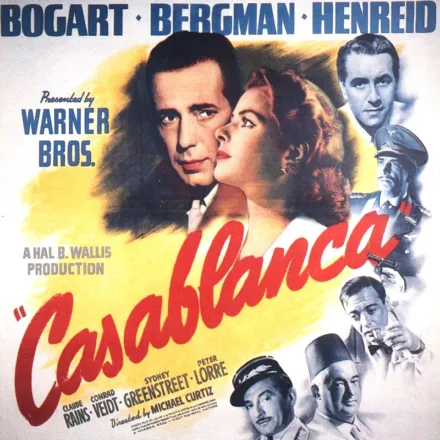
Casablanca (1942)
Shared: Director Michael Curtiz, Humphrey Bogart
Noah Isenberg, Alan K. Rode, Bill Ackerman, Federico Bertolini


In a Lonely Place (1950)
Shared: Humphrey Bogart
Patrick McGilligan, Steven Rybin, Will Scheibel, Steve Anderson and others
Chameleon Street (1990)
Shared: Detroit
Daniel Noga, Wendell B. Harris Jr., Jay Jackson, Jonathan Melville
Comments
No comments yet.