Special Report
Reading of the Lost Ark Pt. 7
Show notes
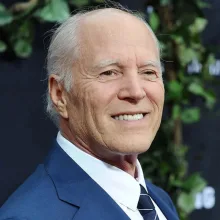
Mike speaks with Frank Marshall who was a producer on all of the Indiana Jones movies from Raiders of the Lost Ark to the Dial of Destiny. They discuss the making of Raiders as well as some of Mr. Marshall's directorial efforts and his work on The Other side of the Wind.
Transcript
An automatic transcript, tidied into paragraphs. It has not been proofread, so names, titles and spellings may be wrong, and it does not say who is speaking.
Show the transcript (about 3,600 words)
This is the story of Raiders of the Lost Ark. You can read along with me in your book, you will know it is time to turn the page when you hear the bull whip crack like this. Let's begin now. Welcome to a very special part of our reading of The Lost Ark series.
On this episode, I am talking with producer Frank Marshall who was involved with all of the Indiana Jones films all the way from Raiders up to Dial Of Destiny. Definitely stay tuned to this podcast for a discussion of Dial Of Destiny as well. But until then, hope you enjoyed this interview. It was wonderful.
Finally being able to talk with Mr Marshall about Raiders as well as a few other things, including his time working on the other side of the Wind. Hope you enjoyed this interview. When did you first encounter Mr Spielberg? And Mr Lucas?
I first met George on what's up Doc as you know what's up Doc was shot in San Francisco and George was obviously a young filmmaker there and he came by to set to meet Peter and I had to be there as well and of course, wanted to meet George. And so our very first meeting was on the set of what's up Doc and I met Stephen also on a Bogdanovic movie Daisy Miller in Rome. About a year later, Stephen was doing a publicity tour for Duel, which was being released as a feature in Europe. And he came by to visit the set and that's where I first met Stephen.
And the way I remember it, I came and they were all at lunch and I came to lunch and I always had a bowl of pasta at the end of the table. And Stephen was sitting there with the publicity guy and Sybil Shepherd and Peter and a wonderful woman named Burner Fields who was our editor and eventually edited Jaws later. But anyway, they were sitting there and I came up and I shook Stephen San and said, nice to meet you. I went over took two bites of my pasta and never sat down and asked Peter a question about the next shot.
And then I said, nice to meet you all. And I went back and Steven evidently turned to Werner Fields because she told me the story and said, that's the kind of guy I need a guy who's more interested in the next shot than lunch. And five years later when George and Stephen were sitting on that beach over in Hawaii and George said, who do you want to produce Raiders? He said, let's see.
If we can find that guy Frank Marshall, that's how it all started. Where was the project at when they first approached you? Oh, it was at that dream stage. When I first met with George, I came in George called Found me and I went and met with him and there was no script or anything.
They were just talking about it as an idea. And George's plan was for Lucasfilm to have three movies in one stage of production or another. So one in preproduction, one shooting and one in post. And we were gonna be the one that what was being developed in preproduction.
But they didn't have a writer yet. And that same day I met Larry Casden because he came in with Steven and both of us thought we were auditioning for the job and Gary Kurtz came in because he was producing one of the Star Wars probably. And George introduced him around to us and he said, this is Larry Casson, he's writing Raiders and this is Frank Marshall. He's producing Raiders and Larry.
And I later had a beer and said, did you know you? And I said, no, I had no idea. I thought we were, there was a whole bunch of us auditioning for both jobs, but that's how George is. They're very decisive and I guess he wanted to meet us just to make sure we didn't have two heads or something.
What was your experience of how that all came together. It was very exciting in those days because George had this vision for the movie to be a takeoff on the serials from the thirties and the forties and adventure. And, but also George has this real love of history and education and archaeology and he really feels that it's great to also inform people as well as just have this wonderful action adventure movie. And so there was a lot working with Larry.
They had this big long script meeting and everybody was throwing out their favorite scenes from movies and scenes from serials. And it was just a wonderful collaboration between the three of them I would say and how they came up with this story. Now, I had heard that Philip Coughlin was thrown around to be director of this at one point. Is that true?
No, Phil really gave George the idea for the macguffin, but he was never going to direct it. Now, this was always Steven in George's mind. Once that big story conference took place and they start writing down these ideas. How soon after that does Larry Caston have an initial draft?
Do you remember? I have to say I don't, but it was a while, Mike because, and by the way, we had to keep it hush shot. Now, I didn't even tell my mom because I was afraid that she would tell one of her friends or something there. I'm working with Steven Spielberg and George Lucas on project where the two of them are gonna be together and I can't tell anybody.
So it was a big secret for at least a year after that while Larry was writing the script. And then we finally got the script and that's when I started working on the project is to take the script and then figure out how and where to shoot it and how to plan it out and how to budget it. And then once we had a budget, then George went out and sold it to be. Just figuring out the logistics of where to shoot had to have been such a task.
Yes, I had the advantage of working with Robert Watts who had worked with George on the first two, I think it was the first two Star Wars by then. And he was based in London, English obviously and he was wonderful and the two of us just worked together to plan out me working with Steven and then giving Robert here's what we're looking for. How could we do this? Because we knew we were gonna make it in England based at Elstree studios where they had showed Star Wars.
It was nostalgic, but it was also the best place to launch the movie from because it's a worldwide production and George had a crew there. He already loved and they were fantastic technicians and craftsmen that really made that movie very special. The look of the movie is just incredible just to think of one scene, just to think of Marion's Bar. How amazing does that look?
Just it's so well put together. We just had Dougie S logo, Norman Reynolds, we had these fantastic artists on the movie and even though it was a pulp, what however you wanna call it movie, they were very serious about making it the best they could make it look and be period and feel great. And I think that's what adds to the authenticity of the movie. You feel like you're obviously in all these places, it feels very real.
And that Bar, as you say, that Bar was pretty amazing. Were you involved at all or were you routing when the casting took place? We cast out of Lucasfilm had a building over Lancasham called the Egg Company, which is was right across street from Universal Studios, beautiful old building that I guess was an Egg Company at one time and it had a big kitchen in it and Stephen loved to cast in the kitchen and either had people join us for making lunch or have, bring their special recipe. But we did all the casting there in that building.
By this point in both of their careers, they're superstars coming together and working on this project together. How was that relationship with them? And then especially with you as the guy in charge, the producer. I've always worked as I'm not the guy in charge.
I've always worked to help the director. My job I see is helping the director get their vision up on the screen. And my job is to figure that out. How do we do that and how do we schedule it and how do we budget it and how we stay to the budget?
And George operated as the perfect executive producer whenever I needed him to talk to the studio or may he was there or he was great sort of umbrella over all of us, taking care of all of us. And certainly he knew Harrison and he knew Steven really well and he was there the whole first week there and he kept coming back. We really had fun making this movie. It was real adventure, but we had a great time and I think that shows in the movie.
With all of these moving parts and all this, what were for you, the biggest challenges that you had making the film. We had an initial challenge that was interesting because we cast Americans obviously to play these parts, a lot of English. But in those days, actors equity in Britain would only allow you to bring two people in. We already had that so we couldn't get clearance for Karen Allen to come into England.
So that first week we had to do some extra shooting over in France while we cleared Karen to get into the country. Because obviously no one was famous then and so we couldn't pull any strings or we couldn't use that to show that there's only one person that can do this part. That was one of the little challenges that all producers have to deal with along the way. But I'd say really the moving the company from France back to England to then Tunisia where George had shot Star Wars.
So he knew the canyon and he knew down in NAFTA where we should be. So there were some familiar things but going to another country when we first went with our second unit, all of the equipment was stuck in Tunis and I actually had to fly there personally to get it out to talk to everybody. And I can say this. Now, there's a little bit of payoffs here and there to get our equipment out and down to.
So the second unit could start shooting. But then from Tunisia, we moved all the way to Hawaii and that was major because then we had to have an American crew working alongside of the key department heads from the English crew. And the day we went to travel, there was an air traffic controller strike, which it's just another hurdle that's thrown in your way that you didn't expect that you have to then navigate and how do you get all these people on international flights that have to come into the United States? So we spent a couple of extra days working that out and we just started a little later.
It really didn't affect us too much. This is a really silly question, but I know Harrison Ford obviously is American and Karen Allen. Who else in the cast was your second person? I'm mentally going through and I'm like, ok, Paul Freeman, I think he's English, John Ree Davies.
Of course, I'm just trying to hit all the primaries. It might have been the number of Americans. And so you had me, you had Michael Kahn, the editor, you had Kay, you had George, we all had to get work permits to be there. And I think on top of that having Harrison, there must be somebody else who you're gonna, let's say it was the number of Americans I understand protecting British jobs.
But in this case, there wasn't another Michael K for example, that had worked with Stevens. I always appreciate speaking of the whole equity stuff, the use clever casting of your John Reese Davies as Sala or Alfred Molina as Sapio. It's not used to seeing these people play different ethnicities, but they played them so well. Yeah.
And I have to credit our casting director with that as well. We don't make these choices, we make them from the people that are brought to us. And Stephen has always had an uncanny eye for casting. Look at the number of kids he's cast over our whole career that have been fantastic and it's the same for adults?
Was it pretty much a no brainer that there was going to be a sequel to Raiders after it came out? Yes, it was actually something that Stephen and George agreed upon on that beach in Hawaii that there would be three movies we all signed up for three movies. Was there any sort of overarching kind of thing? Because I always find it interesting that the second movie was a prequel and I think it might have been one of the first prequels to be called that.
Yeah. And no, there was, we didn't know where we're going next, but we knew that we would always start as we do in the new movie with what seems to be the end of the last movie. So it's very much based on the construction of a serial where they would leave a cliffhanger. And then you would, when you went to the next episode, you'd have that little cliffhanger from the last episode and it took you into the new one and that was, in fact, the Temple of Doom prologue was actually in the Raider script and was just a sequence that was, you know, we felt was too much and we had to cut something.
So we just saved it for the next movie. I was meant to be a little of James Bond that way. Yeah. Yeah, exactly.
So, with Dial Of Destiny, you've got a lot of things that were stacked against you and one of those is just that people get older. Yeah. And I think that the wonderful thing about this movie is we embraced getting older. Harrison embraces getting older as the character.
It's part of the storyline that he's retired. He feels not useful anymore. And the movie gives him a chance to become a hero again. Had you worked with James Bengel before?
This one? I had not big admirer of his movies but had not worked with him before. So, is there any sort of Indiana Jones Bible where you're like, OK, you can do this, you can't do that or was it just, I'm here to support you and you do what you need to do? No, I mean, he would always ask Kathy my opinion on things, which was great, but he's such a film student and he obviously had studied all the movies.
He's just, he also has this great relationship with Harrison that he already had. And Harrison is very particular about the character. And even once when I was there said Andy would not do that. And it's always good to have that kind of input and he was great with it, but he is a consummate filmmaker and it was just a blast to work with him on this.
Now. I know you've directed a lot on your own. Did that change your perception of how to be a producer? Yeah, I had much more sympathy for the director.
It's a hard job. I always like to say that the producer asked 1000 questions a day and the director has to answer 1000 questions a day. And that's the big difference. So I am very sympathetic, but also I'm here to say that crane you want for next week.
If you give me 100 extras in the parade scene, I can get you that crane and it's that kind of give and take that. I understand. Now, from a directorial point of view as well. A lot of wheeling and dealing it sounds like absolutely.
That's part of the fun and the job. And it's not like you made it easy on yourself with things like arachnophobia and Congo. These are really especially Congo super intense when it comes to the special effects. Yeah, I'd say though that my biggest challenge was alive because we were shooting on a glacier at almost 12,000 ft and we had to helicopter the crew and the equipment in every single day.
That was a real challenge for the shooting period. But yeah, Congo had a lot of visual effects, but I was pretty used to visual effects by then proud to say in erect AOA, there 's only one CG shot. Everything else is real. So I tend to like to, you know, use visual effects as a helper as a tool, but I don't like to rely on them.
I know this has nothing to do with Raiders of the lost ark. But I didn't want to ask you, how did it feel after all of these years finally being able to see other side of the Wind come to fruition? That was, that was pretty incredible. I have to say Mike, it was very emotional because I do feel like we did the best that we could do without Orson.
He was really there with us all the time and going back to almost, it's almost 50 years and trying to get this film finished. When somebody asked me that at the Telly Right Film Festival, I hadn't thought about it and I broke down because I'd been trying to get it done for so long. And here it was finally on the screen in a way that I think Orson would have approved of and had he been here, this is a lot of the choices that he had made or would have made. We got Michelle Lagrande, which was his wish to be the composer.
I had a wonderful editor who really knew Orson and it worked with Gary Graver, knew Gary Graver, all of the right people came together at the right time to get this one done. And quite frankly, I at the end thought, now, what am I gonna do? I've worried about trying to get this made for 40 years. Now, what?
You don't have any other projects that have been kicking around for 40 years. I have one that's been kicking around for a while, not 40 years, maybe 20. So we'll see. So you must be over the moon.
Having another Indiana Jones movie come out after all this time. What is that feeling like for you now that you get to see this? Have you seen it with an audience yet? Yes, we saw it at Cannes with a wonderful audience and a tribute to Harrison.
And it was really emotional, very emotional night because you forget when you see when they had a retrospective or a little clips of his movies. And obviously Raiders was the start for us. We've been 40 years, we've been a family and to be able to share this in the Grand in a Tuxedo and the final chapter of Indiana Jones was pretty special. So what's next for you?
We have the premiere tomorrow night and then Thursday, I leave for Oklahoma to keep shooting Twisters. Oh, yeah, that's right. I forgot you're behind that too. That's fantastic.
Speaking of another movie that's been taking a while, the legacy of that one. Getting the right story takes time. And that's what this is all about. We have to tell a story that we think people are gonna be interested in and I'm not in favor of Sequels that just are the same movie over again.
You know, we respect the audience and we want to tell a new interesting story. So it's taken that long and Twis us. But I think we got a really cool one and I'm anxious to get down there with Isaac and see what they're doing. Fantastic, Mr Marshall.
Thank you again. This has been great talking with you. My pleasure, Mike. And if I think of another American, I'll let you know we can just drop it.
It sounds good. Thank you so much. It was just such a pleasure. You take care.
Comments
No comments yet.