Episode 633 · Film year 1986
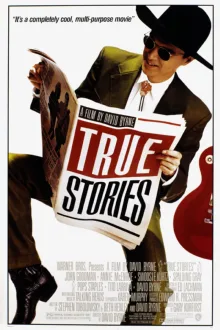
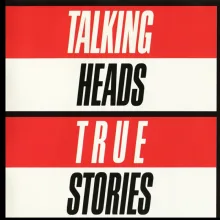
True Stories (1986)
- Special Guests
- Stephen Tobolowsky, Alix Elias
- Guest Co-Hosts
- Chris Stachiw, Axel Kohagen
Show notes
Axel Kohagen returns to the Projection Booth along with Chris Stachiw (opens in a new tab). Meanwhile, Mike talks with screenwriter Stephen Tobolowsky (opens in a new tab) and actress Alix Elias about their role in crafting the film.
Labels: 1986 Alix Elias Axel Kohagen Chris Stachiw David Byrne Ed Lachman Jonathan Demme Musical Stephen Tobolowsky
Transcript
An automatic transcript, tidied into paragraphs. It has not been proofread, so names, titles and spellings may be wrong, and it does not say who is speaking.
Show the transcript (about 30,900 words)
Speaker 1: Hold your ears, folks. CHRIS STACHIW: It's show time. People pay good money to see this movie. When they go out to a theater, they want cold sodas, hot popcorn and no monsters in the projection booth.
Everyone pretend podcasting isn't boring.
Speaker 3: I turn it off. DAVID BYRNE: Hi. My name's David Byrne. And I made a movie about a bunch of people in Virgil, Texas.
Look up into the camera. They're getting ready for the 150th anniversary of their State. They're calling it a celebration of specialness. Something's happening here.
All right, the world is changing. It's created confusion and chaos. Do you run out of Kleenex paper towels and toilet paper at the same time? What time is it time to look back?
I want someone to share. My life is a natural thing. A natural man. I love the women.
There's more to life from this job. Hello. I'm Lewis. Fine.
And I'm looking for matrimony with a capital L. It's Fancy driving. All right. Only driving.
Speaker 5: But parking bunch of maniacs out there. You know how hot dogs come? 10 to a pack and buns in packs of eight or 12. You gotta buy nine packs to make them all match up.
That's what I'm talking about. DAVID BYRNE: But this place is completely normal anyway. Well, if this is being nuts and I don't ever want to be saying. MIKE WHITE: Welcome to the projection booth.
I'm your host, Mike White. Join me once again after years of absence is the one and only Mr Axel Cogan. Check out Mr Businessman, also back in the booth is Mr Chris Dau Axel. CHRIS STACHIW: Can you do me a favor and tell Mike how thankful I am to be on his show about true stories.
This evening, Chris is. Axel Kohagen: Very thankful to be on true stories. This evening. MIKE WHITE: On this episode, we are looking at true stories directed by and starring David Byrne.
The film tells the story of Virgil, Texas, which is having its sesquicentennial anniversary and having a big talent show. We are introduced to the unusual residents of the town in little vignettes that stir a lot of familiar faces if it is possible to spoil true stories, we are going to do it otherwise listen at your own risk. So Chris, when was the first time you saw true stories? And what did you think or should I ask Axel to ask you anyway, I'm asking you.
CHRIS STACHIW: I was kicking it around between two options there at the beginning. It was that one which took a little bit of setup, dear listener or the Mike Wallace wants my body, but that's a little bit more of an inside baseball joke for all of us here at the, for all of us here at Weirding Way meeting. Yeah, I saw true stories all the way back in 2015 saying it now it doesn't seem like a long time ago, but that was eight years ago. I saw it within the first year of doing the Kulturecast because just doing movies about musicals and this came up and I was an am a huge talking heads fan.
I've mentioned it to Mike. I have the album for this movie up on the wall and I've had it there since I saw the movie and I covered it on my show and I kind of fell in love with it there. And we've been talking about this episode. You and I for a long time because at the time when I tried to do this or when I did this episode, you and I were kind of like, oh, you might do it as well.
And we were trying to get David Byrne and I tried to get David Byrne and then they kind of let it, let it like fly that there was gonna be a Criterion version of this movie. And that took a long time to come out from 2015. It was like 2018 or 2019. It's almost.
MIKE WHITE: Like after hours how long it took for after hours to come out. Exactly. CHRIS STACHIW: Exactly. Another movie that I'm a huge fan of.
So I saw it in 2015 and I loved it. I don't think I really appreciated it as much in 2015 as I do now. I think a lot of the things in the movie that David Byrne is talking about have aged. Well, as one might say, though poorly is the word I would use because the things that they're talking about are more apparent now than maybe they even were in 2015.
I think David Byrne is an interesting guy. He, this is gonna sound really heady, but he strikes me as less of a musician and more of someone with something interesting to say, who just seems to be able to convey it through music easier than most people can even convey it through any other means of talking about things. His bicycle diaries book that he wrote a couple of years ago, I think would be in my opinion, a very interesting notch in the column of David Byrne has something interesting to say and he seems to know how to do it.
I think this movie is very much an extension of the music, but it also is separate from talking heads. And I'm sure we'll get into that a lot on this episode because they're there, but they're not there. This is David Byrne doing the David Byrne thing. And for me, I resonate with David Byrne, but I will put a caveat here if you don't, you're going to hate this.
And it's not, it's going to be a jagged little pill to swallow because David Byrne is who he is and his DNA is throughout this movie, even though it's written by two other people, his name is on there as well and you can feel it in every scene because he'll just look at the camera and say weird stuff and there and there's nothing else else. They just weird stuff with nothing else around it sometimes and you have to just expect and understand that that's David Byrne. So I resonate with this movie a lot. But I'm, I'm curious where y'all come at this movie from Axel.
MIKE WHITE: How about yourself? Axel Kohagen: I saw this movie for the first time as part of a 20 movie marathon. Holy cow. Yeah, we did it in 2.5 days and it was in the middle of Day two and the VHS copy we were watching because this would have been 1994 and 1995.
It turned off and went back to regular TV. And because true stories is such a disjointed random movie. We thought we were still watching true stories when we were watching. I think it was trapped in paradise with Nicholas Cage and it took us five minutes before we realized, no, this is not the David Byrne movie when I watched True Stories for the first time I fell in love with it.
I'll be honest with you and say that this is a movie I can try to talk about objectively and I will do my best, but it's also a very subjective watch for me. I grew up in a town of about 1700 people. We were a half hour away from the nearest movie theater or anything like that. And I really identified with the people of Virgil, Texas.
And then I went to school and lived for many years in Minneapolis. But in the late 2010 we moved back to the rural area and it's been interesting watching true stories again and thinking about how much of that is time was like, Chris was saying and also I couldn't help but notice that some of suburban and rural America he's talking about has really changed and it will never be the same again. MIKE WHITE: So I guess I'm in the minority on this one. I saw this back in 88 or so.
Rented it on VHS. Really didn't like it that much. I was expecting something different here. I was a teenager and I had seen all the clips on MTV and especially the wildlife video and I was expecting them something else.
I don't know what I was expecting, but definitely not what I got. As I thought back to the movie years later, I was like, yeah. Ok. That was kind of interesting.
And I had forgotten just how many people, that we know today were involved in it. Especially, I'm talking about John Goodman, but there are a lot of other familiar faces in here as well. And yeah, I, when I went back to this, I have to say I appreciate it a lot more. You know, Chris, you're talking about the weird shit.
I lived for that. So I was very into, you know, hey, the radio reception is great out here, those kind of things. And yeah, this movie just kind of washes over me now like a, it's almost like a warm blanket kind of a thing where I'm just like, oh yeah, OK. This is nice and I love the way that he puts everything here together that we are kind of in a linear way going through a few days in Virgil, Texas, but really getting all of these different people that are there some very interesting characters to the point where a lot of these characters don't even have names.
I think Lewis is kind of a anomaly because we also have what the cute woman we've got the lying woman. Yeah, it's very interesting to see this now and to your point, Chris, it's really amazing to look at something from 1986 that is really talking about current time then and just see how much and how little we have changed all at the same time. CHRIS STACHIW: You know, actually you mentioned growing up in a small town. So the thing I didn't mention in kind of the connection to me watching this movie.
I grew up where this movie was filmed. So this is filmed in North Texas and there are plenty of highways and byways that have not been built yet that are in this movie. And then, you know, during the fashion show that's actually taking place at North Park Mall, which is a mall that I go to. Every time I go home, it looks a little different.
It looks a little different now. But the scene where John Goodman and David Byrne walking and he's got that yellow shirt on that part of the mall is essentially unchanged. Still to this Day. If you were to set up a camera, you could walk and have that exact same shot and it looks the same, obviously, the are very different.
But to your point, Mike about the world now, but it's talking about the world then that any time I see those moments that I can point to and be like I know this place, it reinforces that for me even more so because again, it's just like, oh my God, like it hasn't changed, but it has. Axel Kohagen: And rest in peace Walden books. When I saw the people in a Walden books looking at the magazines, it brought me right back to how exciting it was to go to Walden books and see what they had now between Amazon and Barnes And Noble.
You can find pretty much anything you want. But back in the time, that little corner of the mall was your only hope to find a book r. MIKE WHITE: Ip to malls. You know, I still go to a mall occasionally.
I've got granddaughters that it will take to get their pictures taken with the Easter bunny or Santa Claus, whatever the season. And it's just, just a ghost town in there. There's still some business being done. But, I mean, our city that I live in was named after the mall, the mall was built before the city.
That's how important malls were at a point. And it's wild to see them talking about like the new mall culture and stuff and this is right around the time, maybe a few years north of things like fast times to Richmond High, which really kind of talks about malls as well. But man just seems like the most stuff is not the entire movie, but it feels like such an important part of this movie. CHRIS STACHIW: The juxtaposition of the new and the old, right?
Because that's, I mean, in a lot of ways that's what the movie is really driving at is, you know, they're, they're celebrating special ness and the 150 years that it has been since the Texas independence. But obviously, again, now watching the movie, you know, 30 plus years on, it's like, oh, we can see the differences now between then and now just looking at the movie. But it is always juxtaposing like, you know, you have pop staples doing a very old religious kind of invocation, juxtapose against this angular stage that they've got in the middle of the Prairie, which in and of itself is a juxtaposition.
I mean, that's what this movie is about is juxtaposing reality and the what seemingly unreality. And the thing for me that I love about David Byrne is of all the people to be able to kind of shine a light on the idiosyncratic small town Life Of America. David Byrne seems to be uniquely predisposed to make it happen. I can't think of another movie that captures small town life in such a interesting maybe not realistic way but a way that feels more interesting than say a movie that's trying to present it realistically.
This is just like, yeah, these are people that, you know, maybe they're a little amplified but yeah, I mean, these, you know, the lying woman is the greatest character in this movie for so many reasons. But we all know someone like that. That's why she's such a good character is we all know someone who blows everything up into hyperbolic and is, you know, completely full of it. And David Byrne just, I don't know, he just gets it for some reason.
He gets it. MIKE WHITE: What is interesting too that so much of this movie? I mean, when we open it after we go through that opening where they're talking about the history of Texas and of Virgil. And then we get introduced to Vera Corp, the computer manufacturing place and everybody that we meet a lot of people, let's say that we meet are working at that place and just that it's 1986.
And we're talking about, you know, of course, Texas instruments was definitely a thing and they even mention it, the mention of Steve Steve Jobs who at that point was not president of Apple anymore. And he would come screaming back later on just that we're talking about computers so much in 1986. Whereas now they are ubiquitous. We are, they're everywhere and we're just dealing with it and back then it was like, oh, yeah, computers are going to revolutionize stuff and it's like, yeah, get out of town.
No way. Who are these weirdos that work at this computer place? Of course, they're probably not gonna be there in five years or the computer place. But look at where we're at now guys.
CHRIS STACHIW: David Byrne is so present in the movie. And I think I feel like that could have been a problem and for some people, I'm sure it is that his presence is ever present as a, I think it's no, I mean, it's, it's a little on the nose. It's the meta textual. He's a talking head in his own movie thing.
He is a, yeah. Right. Like talk, OK, whatever. David Byrne is much more clever than the rest of us clearly.
But that thing where he's in the building in Varico and just talking with those people. It's such a, I know it's such an interesting way of not having exposition but just allowing characters to have conversations without anything really happening. Because again, in a lot of ways, like you mentioned, Mike, like nothing happens in this movie, I feel like you could get to the end of this movie and go, what did I just watch? Not based on what did I see, but what happened?
MIKE WHITE: Because not a lot of stuff happens in this movie. It reminded me a lot of slacker. It could be because of the Texas setting. But really, I think it was more the, we're going to spend some time with this character and it's almost that handoff of the narrative to now there's this character, but at least we do have David Burden in this movie kind of taking us by the hand, talking to us about things looking directly at camera and discussing things that helps a lot.
I think it really helps, he helps take us into this world. And without him, I think it would have been not nearly as rich because he adds a spin to it. And he is, he's so excited sometimes to be in these places even though it's very cool and calm when he's talking about things. But every once in a while you see that glimmer of like, oh, wow, this is great.
Like I said, the radio station, why you can get the signal out here. But then there are other times where he's just walking us through, you know. Oh, here's this person, here's this person and nothing is strange to him whatsoever. Which I think is very important too.
Like Miss Rawlings, the Laziest woman, Suzie Kurtz who never leaves her bedroom and has all these gizmos doing this stuff doesn't seem to have a problem with that at all. He just introduces her and off we go, there's a. Axel Kohagen: Point toward the end of the middle third of the movie where I feel like David Byrne is less present in it as the narrator and I feel like that section of the movie drags and isn't as engaging as the rest of it. I feel like when he takes a step back, the movie suffers and it really does revolve around him for.
CHRIS STACHIW: A guy who I consider to be very idiosyncratic himself. He ends up grounding the movie more than you would think like because everything else around him is just so drawn straight from the headlines. Obviously, I mean, actually you mentioned the Walden books part of the movie, but then they cut to those two kids talking in Walden books and they're joking about Weekly World News which rest in peace Weekly World News, which that shit was the, that was the shit back in the Day. But I can't help but wonder if that's the scene where David Byrne is like, this is the normal reaction to these kinds of stories is people laughing at them.
And, but like if you, if you listen to what that kid says, he goes, you know, starving peasants give up their blood for, to sell the vampires. And it's like that story is pretty fucked up. Like at the core of it's really fucked up. And those two kids are laughing.
I'm like, I can't help but wonder if David Byrne is again, kind of like winking at the camera of like this is the way I'm interpreting these stories that we're reading. It's not, I'm not gonna laugh at him. I'm gonna show it very, just like, matter of factly, one might even say romanticizing it a little bit. I appreciate that because again, like he just, he grounds the movie in a way that I wouldn't expect David Burden to do somebody else would do that.
MIKE WHITE: Yeah. The whole thing of Spalding Gray never talking to his wife. I mean that all of these stories could be headlines from Weekly World News. You know, civic leader spends 20 years not speaking to his wife, ok?
You know, but then you realize that they live together, they have two children, they just speak through the children or other people to one another. It's pretty fucked up. CHRIS STACHIW: Well, it's not like Spalding Gray ever says anything of value anyways. He's always just speaking, like civic leader, platitudes.
Like their children are named Linda and Larry the most unch child names of children ever. And he talked to Larry here has a future at Vera. He has some forget what he says. So he, like, he has great personal skills and it's like who talks to their kids.
Oh, the person who can't even talk to his own wife got it. He's Spalding Gray is great. But I don't, I don't get the hand thing. MIKE WHITE: Yeah, I haven't seen, and I apologize for this.
I haven't watched any of Spalding Gray's monologue movies. So I don't know if that's like a typical thing or not. Axel Kohagen: I've watched Monster In a Box. I believe it was.
But from what I remember it's the same affected demonstrative hands, but at a really slow pace, I don't know. I can't explain why, but I like them. It sort of seemed to me like a politician as directed by David Byrne, which is exactly what it is on. CHRIS STACHIW: The story that he tells is so fantastic too.
I mean, the, you know, I made the ground and the ground turned to concrete so I'll just make people who like it that way. Like that's the, you know, you know, go to hell, I'll go to Texas story. Just little sanitize for the audience. But I, again, like, you're right, you're totally right ax.
It's that just, this is what you expect him to say but not the words coming out of his mouth. They're David Byrne 100%. MIKE WHITE: I love all the tides of this movie to Jonathan Demme and just that we have a lot of, you know, kind of Demis in here that he had worked with. Spalding Gray on swimming to Cambodia.
I guess it was kind of like a rite of passage for a little while to do a Spalding Gray monologue movie because I think Soderbergh did one and then Nick Broomfield did one as well. I think that was vice versa as far as their timeline. But those movies, they were always something that I wanted to rent and never did also because they had, I mean, especially swimming to Cambodia had a Great VHS box cover and then yeah, that Demi had done Stop Making Sense. And I think he was just about to direct this as well and they decided that burden would be better.
CHRIS STACHIW: There are moments in this film that feel like another movie and I don't think Demi is the word I would use and it's, this might seem like it's not, it's not gonna seem like a tangent if you've seen this movie or a left field inference. But there are parts of this movie that feel Coan Scot adjacent in the way that it's presenting visuals with just music over it. I think specifically of the scene of the guy in the Verri Corp building dancing the kind of office guy in his business Suit lit this blue lit room and he's dancing like I think of Kiana Scot and what it does in evoking imagery and music together with no dialogue.
And this movie in a lot of ways, it's, it's a movie, but it's also kind of an art piece as well. It does, it's trying to do a lot. And I think, you know, David Byrne says it in the Criterion documentary. He's like, you know, nobody questions if there's that little girl at the beginning and the end of the movie because everything else in between is just so weird that nobody questions those things that would stick out in other movies.
And it's like, yeah, you're, you're totally right by having every else be so drastically idiosyncratic. The weird things that stick out for normal movies don't really stick out in this movie, but I appreciate them. It's just, they're just, they are kind of strange, weird little asides that the movie takes with characters that only ever show up in those scenes. MIKE WHITE: Well, like John Ingle is the preacher.
Axel Kohagen: The scene with the businessman dancing in his office. I never remember it. You know, this is I've seen the movie three times and I always forget that it happens, but every time it does happen, it, I find it very affecting. There's something like sad and human and just a little hint of joy in that dance and it's such a perfect little scene completely isolated from the rest of the movie.
I don't know why I always forget it because whenever I see it and I'm reminded of it, I find it very powerful. MIKE WHITE: It does take you by surprise. CHRIS STACHIW: Well, it's just like the scene where the stage manager goes and sings opera on the unfinished stage. I mean, it's these like, weird, just like humanistic asides that the movie does really well.
And when I think of David Byrne, I mean, like he has a weird attachment to humanism as far as I'm concerned. Like he just, he understands the human. I don't know, emotional core, but I just, it's weird to me, David Burton seems like he understands things better than other people do. And I just, I don't understand how he does it, but when you see something like this, he makes these kinds of things work better than someone.
Like I see why Jonathan Demme was interested because it totally would work. But I don't think I just don't think it would play as well. MIKE WHITE: I find it interesting when they introduce Lewis fine that he is the one that introduces himself that it's not necessarily David Byrne taking us by the hand and being like, oh, here's Lewis over here, like he knows Lewis and definitely seems to have a history with Lewis the way that he talks with him. But really, it's Lewis in that clean room we see him, then we cut inside of the clean room and he talks directly to us, which is fantastic.
And this was not John Goodman's first role, but one of his first major roles and he is so good in this. And this is one of those where you just look at this guy back in 1986 and you're like, he was just on, wait, wait, don't tell me over the weekend. And they're talking about all the roles that he's been in and they were talking about a lot of like Monsters Inc and the big Lebowski, but he's so much more. He is so much more.
And you see that potential right here near the beginning of his career. This is, I think pre roseanne and pre a lot of stuff for him. And he, I mean, without John Goodman, I don't know if this movie works because he has such a big heart and you really feel for this guy throughout the entire thing and you want Lewis to be fine. You want him to find true love as he's going through this process because he seems to be so desperate for it.
CHRIS STACHIW: A man so desperate for love. He puts a billboard in front of his house. I mean, again, that's out of the headlines, right? Like there you go.
And the funny thing is David Byrne does such a good job of focusing on the audience anytime you see Lewis like presenting himself to people and the women always react so positively. And then you see in like the next scene where it's David Byrne and him at the mall and they're walking and he's like, oh, you know, it is what it is. I, you know, I couldn't find anybody. It's like, what is, what is going on here with you, John Goodman?
Because are you trying really hard? It's never made clear. But it's interesting that of all the characters, he is the only one given like his own autonomy within the story. Everybody else just kind of pops in for a moment and you know, we only know them and as much as they're inserting themselves into everything else that's going.
MIKE WHITE: On and he's our way for us to know other characters too, the way that he interacts with the cute woman and just that we get to see them, not necessarily on a date, but hanging out at her house and we get to know her a little bit more through him. We get to know, well, Suzie Kurt Kurtz a little bit more through him as well. So I like that. Yeah.
To your point, we can, we can leave David Byrne and just go off with Lewis for a while and we know we're in good hands. But I think. CHRIS STACHIW: To your point, actually, I don't think the movie works as well when David Byrne isn't kind of piking his head in as it were from stage, right? And kind of letting us know.
Yes, I'm still here. Yes, I'm still here present during the movie. MIKE WHITE: I said that he seems to know everybody, everybody seems to know him as well. Or at least they seem to be ok with this weirdo walking around and being part of the dinner with the family or just showing up and, you know, talking to people or about people.
I really like that about this as well, especially when we go through and we get introduced to so many of these characters. I love the Ramone character. I just watched Desperado again the other Day and I was like, oh, here's this guy again and I forget that Tito Lava just has such a big, we're outside of Los Lobos. CHRIS STACHIW: Yeah.
Do Tito and the tarantula? Like the I know we have our opinions on Quentin Tarantino, the three of us but from dust till dawn, that's his best performance. But that also has Tito and the tarantula giving us the best, one of the best bar scenes in movie history with the reveal of what's actually going on at the bar and Tito Lava is on stage with his band playing an upright human bass made out of like human body parts and then they all explode. It's awesome.
And that song is also great. Say what you will about the rest of the movie. But that like bar scene is really great, but he and like the music is just a button on it. Like Tito Ava is so good.
And hey, Radiohead, I mean, that's the weird thing about this movie. Another weird thing about this movie. Axel Kohagen: The balancing moment of this entire movie, the part where everything crystallized for me this time around was when the cute lady or the cute woman was listening to Lewis's song in 19. DAVID BYRNE: 50 when I was born.
I haven't read this verse quite yet. 6 ft tall in size 12 shoes. And people like us. We don't want freedom.
We meow meow. We just want or somewhere. Oh What, what do you think? You know when you sing them, your eye sockets go back in your head and it makes your eyes get beat.
But what about my music? It's awful sad. I couldn't have that kind of sadness in my life. Do you really feel that way?
I never thought about it. Maybe I am kind of sad. I like sad songs. They make me want to lie on the floor.
Lewis the bear on the floor. Axel Kohagen: And there's this moment between them where you realize that for Lewis to be able to fall in love with someone and to sustain that love, they're both going to have to be able to hold on to and maintain a lot of sadness that may never get spoken of, but it's gonna be there the whole time and in the end with him ending up with the woman in bed. It appears to me that sadness is still there. It's just being held at bay by money and leisure.
But I feel like David Byrne is saying that in these towns there's joy and there's happiness. But somehow behind the scenes, everyone's doing something to be able to manage the sadness that is endemic to all of it though. MIKE WHITE: Yeah. That is an amazing part because I didn't think that his song was sad until she said that.
And then I had to listen to it again. I was like, oh, yeah, I guess I can see that because he does present it. It's like the lyrics are sad, but the way he presents it isn't as sad. Does that make sense?
CHRIS STACHIW: And I applaud David Byrne for having John Goodman sing the song, actually, John Goodman singing it because again, I mean, you have David Byrne who in his own right? Fantastic musician puts John Goodman in the middle of the stage essentially like in the like in Stop Making Sense. David Byrne is riffing on Stop Making Sense in that scene doing with those camera movements and John Goodman just nails it, completely nails it. But you're, I mean, you're right.
Like, it's even then when you hear the completed song, I mean, there is a lot of sadness coming from him in that song. I mean, and being presented in a uplifting, you know, at least uplifting way. Axel Kohagen: When David Byrne sings people like us. I feel like I'm in an art gallery looking at a piece of art about loneliness.
When John Goodman sings the same song. I feel like I'm hearing a very lonely man singing. I think Goodman embodies it in a way that David Byrne may be a little too arched to do. And I actually like John Goodman singing the song better.
CHRIS STACHIW: I actually like most of the versions of the music from the movie better. The way that the artists, non talking heads members are singing it like Radiohead, like people like us like I think the versions from the movie are better than the album version. Like you said, actually, I think they carry more emotional weight. MIKE WHITE: I think Kay Culver, the Annie Mcenroe character.
Her song is really well done. CHRIS STACHIW: The set design and the production design in that scene is absolutely phenomenal. It's insane. MIKE WHITE: Well, that was one really smart thing that they did with this is that as a first time filmmaker David Byrne was surrounded by incredibly talented people.
I mean, Ed Lachman's photography is nothing to ever laugh at and he just does such a great job with this. It looks amazing. CHRIS STACHIW: I mean, again, there are shots in this movie that you could just take it as a still and put it up on the wall and that there aren't very few movies that are like that where it's like every single portion of this movie feels like the person shooting through the lens, just understood composition. MIKE WHITE: The way that that stage looks, the way that it kind of has a glow to it when it's sitting out in the middle of that Prairie.
That's just wonderful, very, very striking, very striking images. And just, yeah, that it was all put together that it was, I think the production designer was like, oh, hey, here's this great prefab stuff that we can use. I mean, again, just the casting of this, the production design of this, the way it was shot, everything really comes together with this movie. Axel Kohagen: And at the same time, it's, it's shot very artistically.
It's great to look at, but it's never ostentatious. It's masquerading as low brow art while at the same time pulling out profundity. MIKE WHITE: The other character who seems to know a lot of people is the pop staples character Mr Tucker. And it took me a little while to realize that he was the same person who is there with the lazy woman that he's helping out Lewis with like a voodoo thing to help him find true love.
He's just kind of there a lot of times and pop staples again, not really an actor but does such a good job in this. And you just, you want to hang out with the guy who's just like, oh, he's so sweet. I want to like, be in this guy's presence. CHRIS STACHIW: And I love that.
It really also shows because again, I think David Byrne is very much in tune with world music and international music and the international influences on music. And I mean, that, that song that pop staples performs that version of the song when he sings pop Alle, the David Byrne version is a or faim of the pop staples version, which again, like it's funny because the amount of emotion that he gets out of that scene where it's inter cutting between him and the performances is just you. The quality of filmmaking here is not a first time director, let's just put it that way.
Like he's just, he's making decisions here that are so conscious of the, again, the juxtaposition of what he's doing with the music and also keeping your eye on something entertaining while music is just playing because again, otherwise it's just pop staples kind of shuffling around the room and doing an invocation, but he gives you something else to look at, which is so smart. MIKE WHITE: The one character that doesn't for me sometimes is the conspiracy theorist preacher. But then at the same time, I'm like, well, this is Texas.
So I guess he would be there, Alex Jones and I know that some of that is based on church's sub genius, but I never took Church of the subgenus to be as conspiracy focused. They seemed more, you know, it was a parody religion, you know, with what with Bob Dobbs and all those things and just that big smiling face with the pipe in the mouth and all that. But I just, what, what this guy is preaching just seems again, we're talking about how relevant it is. It feels like it's right out of 2023 and not 1986.
I mean, this stuff has been going on for a long time. CHRIS STACHIW: But it's a very softer conspiracy theory message than we would be getting today. I mean, it's the best conspiracy theory song because like, it's just like, I'm just telling you, there's weird things out there. That's all I'm saying.
Like, let me tell you who it actually is. Like, there's none of that. I mean, he kind of, there's a little bit of it, but it's, it's a very like eighties conspiracy theory song. You know, there's, there's not a lot of finger pointing here, let's just put it that way.
It's just that things are weird and weird things happen. Yes, you're correct. MIKE WHITE: I just kept trying to think of where I knew the actor from John Ingle. And then finally, there was one line that he said where I was like, oh, he's the guy from Amazon women on the Moon who's trying to sell all the art from the Art Museum.
And it finally dawned on me because we always say every Van Gogh must go just because the Detroit Art Museum, one of the best in the world is constantly being threatened by liquidation. So I use that phrase quite often when they're talking about supporting of the arts here in Detroit. Axel Kohagen: So o one evidence hit me with a thud this time around. Maybe it's because after listening to the two of you, the conspiracy talk has become so exaggerated and so omnipresent, but it felt like he was trying to make a point as opposed to trying to create an atmosphere and a character with that.
I felt like it was a little too, too much like a Saturday Night Live sketch and it kind of stood out from the rest of the movie. MIKE WHITE: I mean, I like the Montage. I like the Conspiracy Montage type stuff. And that was another thing about this movie.
I like a lot is the editing. CHRIS STACHIW: You could take that scene out of the movie entirely, right? It's literally just David Byrne flipping through the radio and III, I feel like it is the one thing that always just kind of maybe sticks out like a little bit of a point for the movie, like you said Axel. It's, it's the one thing that maybe isn't, he doesn't, I don't feel like he's making whatever point he's trying to make.
I think you, it falls, it does fall flat. I like the song. The song is good, but I don't think the message behind the song is nearly as pointed as maybe some of the other songs are. And some of the other songs are feel a lot less pointed than puzzled evidence.
Puzzle evidence feels more pointed than a normal talking head song. But it feels like it doesn't succeed the way a talking head song normally does. MIKE WHITE: Yeah. Conspiracy theories used to be a lot more fun.
And now it's like, oh, ok. I don't want anything to do with that. I'm still not ready to say that Oswald acted alone but my God, the people that say that he didn't just like, maybe I want to stay away from you because who knows what else you believe? It's kind of funny that this was all about the 150th anniversary of this town and of Texas's independence.
I think it was, we were at a point in our, our growth as a nation that there were a lot of places that were celebrating the 150 years at this point. I remember there was a town in Iowa called Coopersville, Iowa. That of all people, Johnny Carson went to their Suss centennial celebration. Kind of more of a joke just like because Cooper Coopersville was maybe four blocks.
I actually went there when I went to Iowa years and years ago and just saw how tiny the town was, but they were doing it up and that was kind of their thing was look at this tiny little town, but we're having this big deal 150th anniversary to the point where, and I doubt I can lay my hands on this, but I used to have a cassette tape of the song that they put together about their big celebration of 100 and 50 years. Whenever I see this movie, I think of Coopersville and just how silly it was that it was just this tiny town, but having this big celebration.
And I kind of wonder if that's the same thing here because once you get to the celebration part, the parade with all the people in the parade and the talent show and I think they did themselves a little bit of a disservice to cut down on the talent show because some of the things that they cut out and we'll definitely talk about the making of this movie even more. But some of those things they took out were really freaking weird, especially the whole thing of the boy scouts and the how to avoid being kidnapped section.
CHRIS STACHIW: I mean, what they left in is still pretty great. I mean, the giant head eating the corn is a, is a real stand out. I think the thing that comes after Spalding Gray story of the two guys doing the auctioneering back and forth with the guy with. MIKE WHITE: The Yodel and the Yodler who uses the rope.
Yeah. CHRIS STACHIW: And it was like, you know, I mean, again, like any time anyone's speaking to the audience, it's obviously David Byrne and it's like, he's just so, you know, they'll say more about this State in five seconds than I could. And it's like you're pretty right. Yeah, this is what counts for entertainment in Texas?
MIKE WHITE: When he got that whole thing of the corn eating off of a Jack Japanese TV show, I think it's little pieces. It feels like David Burton is kind of a minor bird or something. Is a minor bird. It's magpie, you dummy that goes out and takes the little pieces of things that he likes and puts them all together in his nest.
And this is like David Byrne's nest of all these weird musically eclectic people eclectic, just all thrown together. But yet somehow he makes it work. And I think that kind of speaks to his whole career. CHRIS STACHIW: I would say that the thing that he's known for the Giant Suit bit from Stop Making Sense that's inspired by no theater.
I mean, that's, that's Japanese theater tradition being embraced by David Byrne. I mean, I know y'all saw the Stop Making Sense is coming back to theaters. But I mean, again, the fact that he's going in that little teaser to get the Suit and pick it back up like that again, like you said, like he is a humanist in so many ways. Like he just internalizes so much stuff that he learns and just synthesizes it into something that he makes into his own.
And I've never there are few people like that in the world that are able to do it in a way that I think is still manages to be entertaining to most people too. Axel Kohagen: He reminds me of another David and that would be David Lynch in that they both have a unique view on humanity that they've cultivated. They've curated, they've spent a long time sort of crafting that vision and David Lynch's stuff feels very dark and his stuff goes very humanist. I think it'd be fascinating if the two of them ever collaborated on something or maybe it would go horribly, horribly wrong.
CHRIS STACHIW: The nexus point of the black hole of our universe is the two of them creating something. It would be so diametrically opposed in what it's talking about. But I think somehow it might work. Ii, I don't, I don't know, Dave David Byrne.
I don't think he makes a lot of friends, unfortunately, at least with his former band members there again. Like, I don't know that that's the problem with genius sometimes is it's very thorny. I mean, you don't get a sense of that in any of the making of, but that's because I think the people that liked David Byrne liked working with him on this movie, but it's very much like there's that turn of the screw where it's, he controlled everything and we really vibe with his vision or he controlled everything and we didn't vibe with his vision and we hate the guy and like that's, it's like, very easy to have it fall either way.
And David Byrne seems to have with some people falling in one direction, at least with the people he made this movie with, which yielded good results. But his band members, I mean, there's not gonna be a talking heads reunion tour anytime soon for plenty of documented reasons. MIKE WHITE: Unfortunately, I am not that familiar with the talking heads. So, as I was watching this, you know, like I said, I was familiar with the Wild Wildlife video.
So you've got that little bit of David Byrne showing up in the video with that cheesy mustache and the wig and then you've got the other members of the band showing up at different points like the one guy with the cowboy head and he knows that I'm not saying their names because I don't know their names. I think it's like Tina and I don't know the rest of them. And it's kind of a weird thing that this is a quote unquote talking heads movie, but it's really a David Byrne movie. And I, like you said, I think that's typical of them, but I just don't know the history.
So you talk about talking heads, you talk about David Byrne and you tend to forget at least as an outsider, not a huge fan. Like I've got maybe three or four of their albums, but, and I mean, literal albums rather than C DS. And, yeah, I'm not that familiar with the history of the band itself. CHRIS STACHIW: David Byrne likes to be the guy in charge and some people don't vibe with that and that's ok.
But they made good music while it lasted. And that's the music industry, folks. I mean, it's a tale as old as time, right. Like, it's, it's not a unique story unfortunately.
But, I mean, that's the, that's the short of it is they got along for a while and then they stopped getting along and they can't mend it and it happened. I mean, it happens, right? It's like that's what happens to most bands. It's just, most bands don't have as much success as the talking heads did.
Axel Kohagen: One side note that I'll make is watching this movie, got me more into real listening to the talking heads and David Byrne stuff and I'm not an expert at any of that, but there's, there's definitely stuff I like. And if I can make a quick plug for one of his albums, I think the album David Byrne by David Byrne is criminally underrated. I kept looking it up and seeing people referring to it as well, either not referring to it as all or, you know, referring to it as a lesser work. And I think it's just an absolutely phenomenal album.
So I now have a public platform in which I can say listen to that CD. It's great. CHRIS STACHIW: I would advise anybody to listen to the talking heads. I mean, again, their stuff's really well known, but there's plenty of things you haven't heard that that are really interesting because they have a lot of world music influences and that's not, there are a lot of bands that sound very the same from the eighties.
That's not something you would ever level against the talking heads. MIKE WHITE: I have to apologize because I just went down a little rabbit hole over on this end because we're talking about the big Suit and I'm just like, who was it that parodied the big Suit? And I know that of course, it's been parodied a lot, but I finally remembered that it was Rich Hall from an episode of Saturday Night Live where he has the big Suit on. And I think he sings a song called Big Suit is Better.
DAVID BYRNE: Come out with a Saturday Night Live fashion report. Here is lead singer of the talking heads.
Speaker 1: David Byrne. Ask yourself why such a big Suit yourself? And the so you take it in a little, I ask yourself store have any mirror? Ask yourself, did I get a bad deal design of fashion should run by walking around with this two mile stretch of it for these.
This ain't no car. This ain't no Calvin, this ain't no, ain't no wrong. Won't be able you get table but no restaurant. MIKE WHITE: And that's whenever I see the big Suit, I always think of Rich Hall doing his whole thing on a obscure episode of Saturday Night Live from 85 86.
I mean, we're talking, this is the, this is also the introduction of the folks, man, basically the band that would become the band from a Mighty Wind. So that's, that's how long ago this was. CHRIS STACHIW: I remember when I saw Weird Al Yankovic in 2002 for the first time, he came out in a giant Suit and sang Dog Eat Dog, which is their kind of like talking, it's not like a parody of a specific talking head song. It's one of those weird out doing a song in the, in the style of which I always think was weird s better weirdos, great singer.
But his real stuff is when he can make up music in someone else's genre and I didn't get it then. But I like, it's weird because 2002 is pretty far removed from. It's not making sense. But even then it's like, that's such a known thing.
It's become part of pop culture that you can walk out in a big Suit and people are gonna be like, ok, David Byrne, maybe not talking heads, which feels a little unfair. But David Byrne at least, and people at least know what that is. MIKE WHITE: Dare to be stupid I think is probably one of my favorite weird songs just because he channels devo so perfectly and that music video is amazing. CHRIS STACHIW: Yeah, doggy dog has that same, like, it's talking heads but he's not doing them specifically.
And it's, yeah, just like, dare to be stupid. It's like, man, I wish she'd done more of that. MIKE WHITE: I really like the sequence in the movie where it becomes because wild, wild life basically, it feels like they took that, took it out, you know, did a couple of things to it and then made it a video, but it feels like there's a video living inside of this one. And I don't remember the name of the song, but it's what Sussie Kurtz is watching on TV.
And it was one of those kind of like you were talking about Axel. Like at first I was like, is this part of the video or is this part of the TV stuff that she just happens to be watching? And I really like how it becomes a montage of channel flipping becomes a music video? Love for sale.
Thank you. It's a great song. CHRIS STACHIW: It's one of two, I guess what two talking head songs that are actually in the movie because there's that and Wild Wild Life and then everything else is dia as much as it can be or performed by other people. So still technically talking head songs.
But those are the only two talking head songs where they show up because the band shows up in the those commercials where they're making themselves look like the advertising things, which is so, yeah, just so interesting, right? Axel Kohagen: Like I have to respectfully disagree with you. I thought love for sale was another clunk in the pacing of this story. It felt too much like a different director directed it and it stands out as a music video within the movie and to me, it just stands out now.
Wild, wild life also stands out. But I'm willing to forgive that because I think that four minutes or so of wild, wild life in this movie are four of the most joyful happy minutes you're ever gonna find. And I think that if you aren't enjoying yourself when you're watching them saying fundamentally there is something about you that you need to deal with because it's just, just makes me happy to no, I. CHRIS STACHIW: Actually, I mean, I in terms of like Love for sale, it does, it's similarly to puzzling evidence.
It does stick out like 100% like it kind of just you could just cut it out of the movie and it holds no bearing on anything. So I totally get it. I think I resonated with the song more this time watching it than I did the first time. But I get it like there are some parts of this movie that feel like you just gonna just take that out, move that to the side, we'll do that, we'll do something else with that.
MIKE WHITE: Like all Sure. Well, let me just say that I wish that I had seen that in heavy rotation on MTV as much as the Wild Wildlife video or maybe tune down, burning down the house. Like maybe don't show that as much and show something else by the talking heads because they had more videos than that. But MTV, they just loved playing the shit out of wild wild life and burning down the house.
But for me, once the nothing but flowers video came out, that's the shit right there. That video, the simple concept, the whole idea of the lyrics being on screen when he opens up his ha his hand and it says, hey, I'm there. That whole video is just fantastic to me. But yeah, I really like that love for sale video and I wish that I had seen that outside of just the movie.
CHRIS STACHIW: Does it serves a purpose but it works better on its own as more of like a fun little thing that David Byrne and friends came up with. Like, it kind of doesn't, I mean, I don't know, the band showing up on wild wild life almost felt like too much because again, like there's, they don't have a presence in the movie otherwise like if you know who they are cool, but like, otherwise you're like, who the hell are these people that are just like, because again, like they juxtapose the band members who look funny against like just normal people, which we've been talking about that a lot with Milo Schwan movies, Mike where it's like real people on the camera on them.
And David Byrne does that here with just like real people and to, you know, varying degrees of success. I think the Wild Wild Life scene is obviously one of the best examples of like real people in the movie because some of those people that are singing the song are not actors. Correct? MIKE WHITE: Yeah, I don't think so.
I think some of them were locals. Same thing with the fashion show. I think some of those people were locals as well though the guy with the grass Suit was the actual artist who made the Suit grass Suit. CHRIS STACHIW: I think the grass Suit is great.
But the things that those women are wearing on their heads at the end is just what? Wow. MIKE WHITE: And you're about to hear Alix Elias talk about her role as the cute woman and she says that she was supposed to have died during the fashion show. I think she actually dies during the parade, right?
And we'll talk more about the deleted stuff, but she definitely takes a tumble or, but I kind of, I wish that they had hired a stunt woman to show that because it's a little bit of a cheat when they cut back and she's just on the ground. I was like, I really would have liked to have seen that that song. Axel Kohagen: Dream operator really hit me this time. I think it's because I have a, I have a little girl and just from the opening sad lines of when you were little, you wished you were big.
Really hit me as a testament to growing older. And if you're not careful, you actually will grow up. And there's something kind of sad about that. CHRIS STACHIW: But we juxtapose it against little kids wearing suits looking funny, which you know, David Burt, right?
Like just that. And then the guy, my favorite is the guy who comes out with the earmuffs on and then he has like a full body Suit of leaves and it's just they picked the right actor for that because he has a great shape to him with these like ear muffs with the leaves. MIKE WHITE: On going back to you. And I don't think this is burn seeing everybody though.
I think he did see a lot of people and was able to say I want this person, this person, this person, but people that brought him those, the casting directors, the casting people, they did a great job, man. Some of the faces of these people we were talking going back to the Wild Wildlife video. The guy who seems to be so into it. He's kind of tall and lanky with slick back hair.
I love when he comes on screen. He just seems like such a ball of joy. And he's another one where I just, like, I want to know this guy's story. What was he doing at the club?
And that whole thing of like the people at the club. And I love the shocked woman in the audience who's talking about raffle tickets before the music starts up her reactions and some of the other reactions are just terrific. And we haven't even talked about the twins that they populated so much of this movie with twins too, which it really didn't hit me at first and I just kept seeing people and I thought, oh, they're dressed alike and then I realized, oh, no, he's got just a ton of twins running all through this movie just.
CHRIS STACHIW: Because he wanted to, I guess. Yeah. MIKE WHITE: Well, and it adds that reality as far as like, who am I talking to? Who is this person?
You know, it's, you know, going back to David Lynch. It's like double ed right. There are so many doubles in his movies. And this was a weird double on David.
David Byrne part. Axel Kohagen: The tall guy who dances manically in the Wild Wildlife video. I am convinced he is the American version of Richard E Grant that like they came from the same cutting, but they grew up on different countries. CHRIS STACHIW: I like the guy that looks like slim Sam Kinnison.
That's the only way I can. MIKE WHITE: Oh God, yes. And I always thought that he was somebody like I was like, is this some sort of like Texas celebrity or something like, is he, you know, young Alex Jones with his hair growing out or something? What is going on here?
Because, yeah, he looks like he's somebody, I. CHRIS STACHIW: Think he's just a dude though, like, because they mentioned in the Criterion thing, they're like some, some and then they had, and they had him on the screen when they were saying that so I can infer that he's just some guy but putting in a performance just all right. Sure. MIKE WHITE: Like, yeah, I kind of wonder if he went around doing a Sam Kinnison impersonation.
He looked like him. All right guys, let's go ahead and take a break and we're gonna play a pair of interviews. First up, we're going to hear from one of the credited screenwriters of true stories, Mr Stephen Tobolowsky and I also talked with the cute woman, Alix Elias had a lot of fun talking with both of them and we'll be back with both of those right after these brief messages. Hey, do you like movies?
Speaker 3: Of course, you do. You're listening to Mike White's phenomenal Podcast, the projection booth, I'm here. However, to tell you about another movie Loving Podcast, the Shame List picture show. My name is Michael Byers.
And the show was created by myself and my good buddy and filmmaking, Nick Richards in 2016 is a way for him and I to stay connected and to keep movies in our lives. Premise is simple. Each of us composed a list of shame filled with movies we've often missed, had no interest in or just the other one should have seen. We've covered a wide range of films from Heathers, The Godfather, the Exorcist.
You're the Hunter from the future Phantom Tobu, a sale of Amazing Vinegar Syndrome titles and some that are not so good. Plus our massive rocky episode that features a new interview with Lloyd Kaufman himself talking about his friendship with John G Abelson. And I personally can't wait for you to hear us and join the fight to keep film culture alive. MIKE WHITE: You can find our show on itunes, Google play Stitcher Radio and of course, Soundcloud, can you tell me how did you get interested in acting and writing and all the things that you do?
STEPHEN TOBOLOWSKY: I think when I was a child, I wanted to be an actor. And the reason I wanted to be an actor was I thought monsters were real. I used to watch Frankenstein, the Wolfman, the mummy movies all the time. When I was a little kid, I thought it meant that I could hang out with Frankenstein and the Wolfman and Godzilla was big and Godzilla was one of the first movies I ever saw as a human being.
I think my parents took me downtown Dallas when I was like 2.5 or three. They like just a tiny child. We never went to the movies in our life, I think as a family, we went to the movies maybe three times and this first time was to see Godzilla and I had no idea what a movie was. So I thought this was a documentary.
I thought this is real. I thought this monster was real. And these people in Japan were getting fried by the Godzilla. I thought Raymond Burr was really in Japan when he was filming that movie.
It was only later I found out it was through movie magic that he was added to that film. But I always wanted to be an actor. And I think even though I didn't know what it was. And I think in terms of being a writer, I think also I wanted to be a writer so I could write books on dinosaurs.
And because of Godzilla had such a positive impact on me and we got library cards. This was a big event when I was a child. My mom took my brother and I to the library and we got our own library cards. And so I got this book called All About Dinosaurs.
And I brought it home and mom and I used to have a routine of watching Hercules movies on Sunday, you know, those Italian Hercules movies. But this one Sunday and I got to say I was a youngster. I was, I don't know if I was in double digits yet. I think I was like eight or nine something like that.
I told mom that I couldn't watch Hercules movies that Day because I was going to write a book and she said, you're going to write a book. I said yes. And she said, what's your book about? I said the book is about dinosaurs.
So she said, all right, sweetheart. So I had pencil and paper in my room. The number two lead pencil, we didn't know how to use pins yet. And I opened the first page of all about dinosaurs and I started writing what I was reading.
The story of dinosaurs goes back hundreds of millions of years. I thought that sounds like a pretty good sentence. I'm just gonna use that one and I pretty much copied word for word. Maybe the first three pages, 34 pages of all about dinosaurs.
And a couple of hours later, mom came in and said sty doors. It's what she called me. Sty doors. You're so quiet back here.
How, how is your writing coming? I said, writing is harder than I thought mom and says, can I read? Can I read what? Yes, man.
So I gave her my pages and she began reading that and she, the story of dinosaurs goes back hundreds of millions when she's reading this. And she goes sty dos is this different from the book you checked out at the library? I go not yet because I just think they did such a good job. The book they had at the library that I think I'm just going to keep that.
And she says this isn't really your book if you do this now, this is a very scary dinosaur. Do you know what that is? And I go, it's an ich thesaurus. It's a birdlike dinosaur that catches fish.
And she said, go ahead, sweetheart. I think you're doing a good job and she left me in my room and I continued to copy the first chapter of all about dinosaurs, uninterrupted by critics. And that's her encouragement is probably what made me want to become a writer. And then I began being a writer for money in college.
When people didn't want to do their term papers or master's thesis or dissertations, I would charge people money and I say, give me a sample of your writing. And what I'm gonna do is I'm gonna write this as if you wrote it except I'm gonna do it better than you. So I would mind meld to this person, whoever it was. And I would charge at the time I charged $400 for a master's thesis and 800 to $1200 for a doctor's dissertation.
And this was back in the 9 19 boy, I went to college 69 70. So we're talking 71. This is dollars in 1971 which actually was not like the monopoly money we have. Now we go to the grocery store five cent candy bar was still a big old candy bar and it wasn't a dollar and 50 Cent candy bar.
That's teeny. No, it was a real, so I really made money as a writer in college and I also got practice of pretending to be other people. And, so my acting career started in Dallas when my acting teacher blackballed me from getting cast in college plays. She hated me for whatever reason.
And so I was not cast my junior year and they were gonna freeze me out and be the end of little step door's acting career. And so I went to the a the Equity professional theater in Dallas Theater three and got my damn Equity card. And I started working there doing Alon and importance of being artists playing Jesus in God's Spell Charlie Kopi and Pearly making money that really made my teachers angry that I did this. And I ended up graduating from SMU which was a miracle and an intrinsic part of this story is along the way, I fell in love.
I fell hard and fast in love that you would say it was my first love. But I think Alice Neel Allen when I was five years old was probably my first love. I proposed to Alice when I was five and she accepted, will still remind her of that. She accepted and the Claire Richards when I was eight because she could play the piano beautifully.
And I'm still in love with Claire Richards. And I'm still in touch with Claire Richards through all these years. In fact, over the years I wrote stories about Claire Richards for my podcast and also for my books, The Dangerous Animals Club, and my adventures with God. I wrote stories about Claire in there and I was in Boston doing some of my stories.
I did some at Harvard and then I did it at the Brad Theater for three nights, did some of my stories. And this woman came up to me and said, I'm Claire's daughter. And I want to thank you for your stories because it's the most I know about my mother when she was a child was through your stories. And so I go big victory there.
You don't need you don't need the big paycheck to have big victories in life. And speaking of not getting big paychecks, we could go into true stories. I fell in love when I was a sophomore with this freshman girl named Beth Henley and loved her dearly and truly. And we had many adventures together.
And when I graduated, I was one of the more notable actors in Dallas working at the Equity theater. And I got a movie job. And so I was really one of the few people that left the SMU program, a professional actor working in town. Well, Beth put was not getting anything as an actress.
And so our only choice was to, for her was to go to graduate school. And the graduate school that would take us both was the University Of Illinois At Champagne or Banham. So Beth went, we went to the University Of Illinois. We met so many great people including Bob Falls who became the head of the Goodman Theater in Chicago.
Alan Ruck, who is like a huge star on succession now. But Alan, we've known Alan since he was a sophomore at the University Of Illinois. And Beth cast all him in plays that she wrote. Anyway, we're there.
And Claudia Riley, Claudia Riley was the only person in the University Of Illinois in their writing program. So you have a university of 35,000 students, maybe 40,000 students and one person is in their writing program. Claudia Reilly and Claudia asks Beth and I, if we would act in her new play, a reading of her new play, which we did. And when we finished that reading, we were walking across campus, Beth is saying, we're walking in the moonlight and she's all stirred up about something.
And she said that is so brave of Claudia. And I go, what, what's brave, sorry, miss, what was brave about Claudia? She wrote a play and I go, it's the playwriting program. She has to write the play to.
And Beth said, but she's a woman and she's the only one. And I said, baby, it's a whole new world, men are strippers, women are rodeo writers. It's a whole new world. A woman could write a play.
And she said, Beth said, I think instead of being an actress, I think I would like to be a playwright, I would like to write and I go, baby, if this relationship's gonna work, one of us is gonna have to have a job that makes money. Have you thought about being a dental hygienist? One of us is going to have to make money because as an actor, I don't know about me. So anyway, Beth starts working on some play and she ends up writing a screenplay I think was the first thing.
Maybe she wrote a couple of one acts first called, am I Blue and Sisters of the Winner Madrigal. She wrote 21 acts first. Then she wrote a screenplay when we were at the University Of Illinois called the Moon Watcher. And then we were moving out to Los Angeles and a tragedy befell Beth's family in that her grandfather went out in the woods and got lost and it was one of these things.
Day, one Day two, the police, the dogs, everybody's out looking for one of those dramatic things and phone calls back to Jackson, Mississippi, back and forth tragedy about the whole thing. And it turned out third Day they found him and he was ok and he came back and he was safe and Beth started writing. She started writing like crazy in this little place we had in L A back in the and this is gonna connect to true stories. It really is.
She's writing like crazy. And she's this play that she's writing, the stack of pages is getting higher and higher. And I said, what's the name of your play baby? And she said right now, I think old granddaddy's dying.
I'm going OK. Not a lot of curb appeal to that title. Don't say anything. Just see how it is.
So she has this huge stack of typed pages and I said, should I can I read? And she said, sure. So I sat out on the front porch, I grabbed a stack of these pages and I start reading, what can I say? This play was not good.
This play was stratospheric. It was one of the absolute best things I had ever read in my life. And I had read a lot of plays. I had read Shakespeare and Shaw and Chekhov and this damn thing was incredible.
And as she's typing, laughing and him in tears, and I'm kinda like my God, who is this person in here who's writing this play? This is insane. And she, it was like the best sex imaginable in that. I'm getting to the end of the play and she's typing and she hands me the last sheet of paper just as I am reading the end of the play.
And I look like I'm reading it and I just start screaming and just started hugging her, just jumping around the room with her. And I'm going like, baby, this play is famous, already famous. This play will be on Broadway. This play is, it is so good.
It makes it. I said you cannot have a title like, oh, granddaddy's dying, you can't really is not good enough for this play. And she says, how about three Mississippi sisters? Because I love Chekhov and I love the three sisters so much.
I said, three Mississippi sisters. I don't think it's got that posa and she said, what is a good name? Because I was always good names. And I said, how about the youngest of the three sisters shoots her husband because she didn't like the way he looks.
And the whole play is about his trial and the three sister together in law, they would call that a crime of passion. So why don't you call the play? Crimes Of Passion? So that's what she called it.
And this play, we got our friends together. We had a big reading of it. Everybody was screaming. We're going to do a production in Los Angeles.
And Sharon Ulrich was our friend who was an actress. She was gonna play Meg. I was gonna play Barnett Lloyd. We had a friend that was gonna play Doc and all this that was coming together.
Danny Goldman was going to direct. We were gonna do it a little theater. And then what happened was Sharon Ulrich, who was the only one of us that had an agent gave a copy of the play to her agent who did not read it. But he had a boyfriend in New York who came to New York who loved to read plays on his way on the plane, going back, her agent gave him a stack of plays to read on the trip from Los Angeles to New York.
And we get a phone call from Kennedy Airport. A man said, hello, this is Gilbert Parker, is Beth Henley there. And I said, absolute, absolutely, sir. And I look at Beth, I said, this man wants to talk to you.
It turns out he was, if I could say they don't have any ratings of this in New York. He's like the number one literary agent in New York. He handled Lillian Hellman, Mark Medoff. He had worked before with Tennessee Williams.
We're talking like the number one theatrical literary agent in New York at the time. And he said, can I work with you on this play? So our little production in Los Angeles vanished. And Beth's play Gilbert sent to Louisville and Lenny was played in the Louisville production by Kathy Bates who was an SMU graduate, Susan Kingsley, who has won all sorts of awards for getting out.
She was gonna play Meg. It had a very good cast and Beth won what they called the great American play contest. And from that, people wanted to do a New York production and it ended up, I believe it was in 1981 is the year we're talking about. It won the Pulitzer Prize.
So this girl who had no, she writes the play of a lifetime. And it was called Crimes Of Passion. And Gilbert Parker said to Beth, you can't really have the name Crimes Of Passion because Ken Russell is directing a film called Crimes Of Passion. You can't copyright a title, but maybe this place should have an original title.
And so Beth said, OK, Sweetie, which is what you call me. Ok, sweetie, we need a new title. I said, if you can't call Crimes Of Passion, call it Crimes Of the Heart because it's the same thing as Crimes Of Passion says the same thing. So Crimes Of The Heart ends up winning the Pulitzer Prize.
And now here we are living in Los Angeles and everybody, all these film people now are suddenly interested in Beth Hilley and they all want to direct Crimes Of The Heart as a film. It has an off Broadway run. It was at Manhattan Theater Club first and then it moved to Broadway later. I think I have that right.
And so everybody wanted the film rights to do Crimes Of The Heart, the way it works in Los Angeles is this SMLA Yes, Schmooze to try to get things done and So the first people that started schmoozing us was Evelyn Purcell, who was Jonathan Demme's former wife and maybe current producer and Evelyn produced for Jonathan when he was doing Caged Heat or all those women prison movies that Jonathan did before he became like a classy film director with Melvin and Howard and things like that. Jonathan really just rose and from the B movies, the women's prison movies he just wrote, but he had that kind of pulp fiction thing in his blood.
And so Evelyn asked if she could meet with Beth and she did and was saying like she wanted, they were all interested in crimes of art, but they'd also be interested in that Moon Watcher script, that screenplay, Beth, that's part of the Schmooze thing is that we're also interested in your other works too. And it turned out Evelyn Purcell ended up directing not the Moon Watcher because the producers say titles with Moon don't sell tickets. This was before Sharon. Yeah, Moon Struck.
This is right. The geniuses that are, are like producers. So she changed it to nobody's fool, which was not the nobody's fool. Paul Newman was, it was the another nobody's fool.
You can't copyright a title, which is a problem. So anyway, it was the one with Roseanne Arquette and so Evelyn directed that. But through that, we started schmoozing with Jonathan Demme, which meant Mexican Food every so often at Antonio's and Jonathan would bring different people he was working with Matthew Modine, he was married to the mob different people. We had dinner with Jonathan and we were schmoozing anyway, at this particular time in history.
Now, here's where the gears start to shift. Beth and I were into Pilates before Pilates was cool. Pilates back then was only done by a couple practitioners of Pilates and wait, not this street corner thing. Now where everybody teaching Pilates, we were walking from Pilates and a car pulls up, window rolls down.
It's Jonathan Demme in L A saying, hey, you guys doing anything this afternoon airing first cut of this movie, I've been working on Stop Making Sense with the talking heads. One. Are you free? And of course, Beth and I were perpetually free because neither of us had a real job.
I was doing children's theater in the morning occasionally, but you had nothing to do for the rest of our lives. So we said sure. So we went to the Academy that afternoon and now the Academy Theater, that's something else too for your listeners who don't know the Academy Theater. The Academy Theater is about 19.
I want to say 1900 seats, huge movie theater. Perfect. Sound amazing. Screen, everything technically perfect.
And we sat in there with Jonathan Demme, Evelyn Purcell and the talking heads and me and Beth in 1900 seats now, Chris and Tina and they're all in the front row watching the movie of the talking heads. Beth and I are sitting together. David Byrne is sitting like over my left shoulder on the row behind me and I knew him from videos on TV. He's the weird guy who does, who does burn and dump.
I knew him from that, but I didn't know the talking heads music that much. Not at all. Especially Stop Making Sense. I never heard of any of these songs.
So Jonathan is behind me, Evelyn's there, Beth sitting next to me and then David's like over my shoulder. So we're watching this movie and it was the most spectacular viewing experience I ever had of a singular film. I'd had no idea who these people were. The film itself is such a great concert film.
Jonathan put together a perfect concert film because it begins with David alone with just a Boom box playing, playing alone with the Boom Box and then you add a couple people, more people and then you have the sound music and then by the end, you're take me to the river and also in that theater, the vision and on the screen increases in size that Jonathan increases the size of the film and the sound becomes the stereophonic monstrosity all over, all around you. So it absolutely blew my mind. The movie blew my mind and I still look back at it.
If you have not seen it, you got to see Stop Making Sense. It's one of the greatest rock and roll concert films ever? Fantastic. Jonathan did such a great job.
So anyway, after the screening, we went out to eat Chinese food, Jonathan and Evelyn and Beth and I, and David and I think Tina and Chris, I think they all came too, but right where we were right around the table was just David was sitting across from me at the table and Jonathan Nevele and so Jonathan Evelyn were talking to Beth and that left David me one on one. And he was saying like, what did you think of the movie? And don't compliment me, don't compliment me. I want no compliments.
I'm like David. It was great. It was like greatest rock and roll film. I, no, I don't want compliments.
I want to know what were there any places where your attention lagged? Is it too long? Was it too? Tell me be brutal.
Tell me, I said, what can I say? It was a fantastic experience. I said, if you want harsh criticism on this film, I cannot do it because I was, I am somebody who was coming to your work, David. I really didn't know the talking heads that much except what I saw on TV.
And now I want to listen to all the stuff you guys have ever done because it was just fantastic. And then out of nowhere, David says, do you have a swimming pool? And I go, what swimming pool do you have a swimming pool and you're back at ever since Beth won the Pulitzer Prize. We moved from the little house down on the mountain to one of the houses up on top of the mountain with a swimming pool.
So I said, yes, David, we live in a house with a swimming pool and he said we're shooting now a video for our new song Road to Nowhere for that rock for the rock and roll video station MTV, MTV. And we need to shoot some water scenes. Can we shoot in your backyard? And I go, of course, without any knowledge of the world about insurance and accidents and people in your backyard that aren't there.
And what if they trip and fall or break an arm or something? And what are we insured for? So I said, sure, I volunteered Beth's house for David to come and shoot this video. And now if you go onto the internet, which never lies and if you go to Road to nowhere, the video, the water scenes in road to nowhere were shot in our backyard.
They were shot in our pool. And you will say that's where Stephen used to swim in the morning and that's where David sat around the outside of the pool and filming all this in the water. So anyway, were filming later in the Day and I decided I would be a good host in Schmooze back then being unemployed. Most of the time I had plenty of time to go fishing and damn, I love fishing and I would fish from the boat.
I'd fish from the pier. I'd fish from the bank from the beach. Big old 16 ft surf caster. And I had caught this big old tuna, this big old yellow tail or whatever.
I said, why don't I barbecue this for you guys? Dave goes really? You make food for us? I go, yeah, of course.
So I'm barbecuing on my Weber grill this fish for David and Beth and I to eat and for the remainders of whatever crew members wanted to have something and opened up some wine or something like that. And Beth asks the obvious question like David, what are you working on next? What's your next project? That's a big thing they say in now, that's a question that people usually hate, they hate it for two reasons.
You say you always have to say it now, this is just a sidebar. Yeah, I'm just, this is instructing the world at large about life in L A. People always say you got anything cooking next, anything happening next. And the one thing they want to hear is no, nothing.
That's what they want to hear. So if you always try to, yeah, I got a little thing coming down, you try to couch it. So they're not green with envy or something. So David said, actually, I'm, we're working on this project called True Stories.
When the band goes out touring, we always stop at the seven elevens and get coffee and things while we're driving from Spot to Spot. And they always have these Weekly World News with absolutely true stories about alien had sex with the weed Whacker or all these incredible stories which they claim are true but are not true. And so I wanted to make a movie that pieces together all these absolutely remarkable stories that cannot possibly be true, that are true stories and really impossible stories. And Beth said, opened up her lovely little mouth and said, well, then you should talk to my sweetie, which is me because he can see tones.
He can, he can hear tones, he could see tones. And David looked at me, you can hear tones, you could see see to tones what and began to tell David the story of this thing that happened to me when I was a sophomore in college and I was in movement class and our teacher took us out to, he didn't take us out. He made us drive our own cars. We went out to a lake outside of Dallas like a two hour drive to this lake where we were going to do movement exercises around the lake and get chiggers.
And then we're gonna sit around a campfire at night and do bonding spiritual exercises around the fire. And some of the members of the class would sneak off in the woods and smoke grass. That's the age it was. We're talking like, what, 1971 something like that.
Yeah, I think that's around 71. I was a sophomore, yeah. 71. 70 maybe 1970.
So, anyway, we're at the spiritual exercise part of the evening and our teacher says, now, just go around the circle and say the first thing that comes to your mind, just the first thing that comes in your mind. And so our whole class is in a circle and we're all holding hands and we're home. And at this point in time, the books, Lord of the Rings, not the movies or anything, but the books were very popular. And so they had caught the imagination of the young college student, especially the ones smoking dope.
And so they're going around the circle and they're going like Frodo. Very good. Next one, Frodo, next student Gandalf and they're going around a circle and someone goes beer next says weed, next one goes far out. This is what my competition was.
And so I'm holding and it gets to me and suddenly I hear this sound in my head. This sound in my head. And I opened up my mouth and I said across the fire to our teacher, I get that you're not who you say you are. I get that you have an assumed name and your real initials are JK or JL.
And the teacher goes, all right, let's keep going then the next person goes orcs and the next person goes Frodo weed, rock and roll back to the circle. So that was it. And our exercises were over. A lot of the people were going to stay and spend the night there to be food yet more for the mosquitoes.
And I decided I'd take the drive home to Dallas. So I'm walking in the dark toward my car and out of the shadows comes my teacher and he grabs my arm and he said, why did you say what you said? And I don't know, I just heard the sound in my head and I just said what it was he says because it's true. I have an assumed name and my initials are JK just like you said.
Now I'm asking you again, why did you say that? And I said, I don't know, I don't know. I went back and the next Day I found an opportunity because Beth was a year younger than me. So she wasn't in that class to tell her this story in the car.
And it also gave me a chance to hold her hand, which was very hot at the time, not her hand, but the idea of holding this girl's hand. So I held her hand and I told her the story and she says, do you know what I am thinking? Now? Do I make a sound?
And I held Beth's hands? And I go, yes, I get the men have tones in an upper range. Women have tones actually in a lower range that you would think would be where men's tones are. Most people have one tongue, but you have three.
But your tones are in harmony and they make a perfect major triad. Now, I'm not exactly sure what that means, but I think the one in the three being in conjunction means you have a spiritual connection with yourself. You have spiritual wholeness with yourself. And I'm not exactly sure what one in five is.
I'm feeling it's like a physical connection. And Beth's eyes lit up and said, we are gonna make a fortune. This is fantastic. I don't care what that means.
Listen, we'll become partners. We'll go to the, we'll go to the theater department and you do this thing, you sit down, you hold their hands and you hear their toes, whatever. And you just say things like that like your tones are in alignment or not. It doesn't matter.
We could charge 25 cents a, we could charge a dollar and we could save it. And so I thought there's a chance where we could be partners. And so Beth and I became partners before we became a love interest together. And we made money with me telling people's fortunes and telling them who they were.
And it wasn't a happy affair because I would tell people things that were horrible things. It was just things I heard in my head. So anyway, I told this story around the barbecue pit to David Byrne. And the next Day, I wanna say it was the next Day, may not have been the next Day.
But shortly after that, David asked Beth if she would be the screenwriter of true stories because Beth had this play, Crimes Of the Heart. Everybody wanted Beth to work on their thing because she was the hot new writer and she was a woman and a young woman and this is what we want. So Beth went over to meet with David Byrne who was, who lived just really not far from us, like a quarter of a mile from us up in the hills. And we spent time going over to David's house just hanging out with him.
And Beth came back after the meeting of two hours and she says, I have no idea what he's talking about. I have no idea what he's saying. So I told him he should talk to you because you're better with structure and you may understand him. I don't know what he's saying.
So phone ring a ding ding, it's David. And he says, Stephen Eth was saying, maybe you should come over here and look at what we're doing. I said, OK, so I went over and David is an amazing artist. If people don't know these were pencil drawings of different frames that he saw existing in the movie.
And there were 100 of them more, these sizable drawings of scenes he witnessed to have in this movie. And he said, do you think I have a movie in these pictures? So I got up and it was the longest two hours of my life. I didn't know what to do, but I went from picture to picture and took notes, took a couple hours and I said, David, I'm gonna go home and I'm gonna see if I come up with anything.
So I went home that night, I came up with a structure for a movie called True Stories. I wrote 35 pages of the script and list of the characters and I gave it to David the next Day who was thrilled that something happened fast because people promise things and never deliver here. He was thrilled at EPA Past and so he hired me as a screenwriter on true stories. And then he said, do you mind if I hire Beth too?
I said absolutely not. So Beth and I became the screenwriters of true stories and we wrote a first draft of the screenplay in 19 days. That's when they wanted it. We handed it back to David and didn't hear a thing from him, didn't hear a word from him.
I was, I wanna say it was for like a year. Didn't hear a thing. Not good, bad, nothing, just nothing from him at all. And then I'm driving in the Hollywood Hills and then I hear this knock, knock window of my car and it's David Byrne on a bicycle.
He's like next to me, he said, roll down the window, roll down the window. Yeah, David automatic window window goes down. He says, sorry, I haven't been, sorry, I haven't been in touch. We were recording and we were on the road and all sorts of things.
So anyway, I just wanted you to know, I've completely rewritten the script you gave us, but I think there's maybe some parts you wrote still in there. But can I come over to your house this afternoon? There's something I want you to hear. And I go sure.
So David came over to my house about four o'clock that afternoon with his guitar, sat down in the living room and said, I wrote this song and I want this song to be in the movie. And that's when he sat down and played Radiohead. He said it's based on your story of hearing the sounds in your head. And what do you think of this radio head?
I'm picking up something good radio and I hear it and I got to tell you as you can imagine, I almost broke down into tears. Not only was it like a great rock and roll song? It's so perfectly captured that event that happened to me a period of life, but it gave it a good spin because when it was happening to me there was a good spin, but there was also a very dark spin that was happening to my head and this was so buoyant and beautiful and lovely to me. I felt like that was an enormous success in my life just meeting David having that experience of writing that and hanging with.
And then I was going to play the computer guy in true stories. David offered me that part. But I ended up starting my own career. I started actually having an acting career and was busy.
I was doing some other movie at the time and it was a storybook event. What can I say? Just the way it unfolded was absolutely insane, but highly memorable. MIKE WHITE: So what was your and Beth's script?
STEPHEN TOBOLOWSKY: Like a structure was the same. I'd say the structure was pretty much the same. I think what David did was he had some very talented actors in the show and he geared a lot of the dialogue and things to the people he had there and how to make it work. And also what I said before when I was the scriptwriter that 19 days, I was the scriptwriter on it.
I said whatever we do, the music is the star because people are gonna be coming to this, to hear you and to hear the talking heads and to hear whatever songs you do. So I think the songs David put in the show also affected what the scenes were before and after got the fashion show there is, oh God, the music is so great. It all was so terrific. That was the big thing David changed the actual dialogue of the scenes based on the characters he had and the songs that ended up in the show and the lead in lead outs of the songs.
And also we had John was the lead and he's so good. I'm sure he improvised a lot too. He's such a great actor, but was it told still in that kind of vignette style leading up to the big Suss celebration based it on Texas was going through SUSS centennial at the time. And so I had listed the things that Texas was gonna do.
Like they're gonna have the Shriners on their bikes, their mini bikes, they're gonna do a time capsule. There's gonna be a music event concert, these kind of things. And then David added, there's gonna be a fashion contest. So that whole fashion thing, that wild fashion show he did.
He added all these crazy events that were gonna be part of the sus centennial besides just the meager time capsule. You know, he wanted the movie to be a time capsule too. MIKE WHITE: I know you were busy with your own career. But when did you get to see the movie for the first time?
STEPHEN TOBOLOWSKY: We certainly saw it when it first came out. But I'm trying to remember if Beth and I were in New York or if we were in L A when it first came out, I can't quite remember that, but I remember we saw it in both places. We saw it in New York and L A because we were both going back and forth at the same time about around that period of time, Beth with other plays and me with other projects, films and V stuff. And I'm trying to remember if we saw it alone with David without an audience just like a private screening.
Somehow. I don't remember that event if we did do that. I don't remember it. I remember us seeing it when it came out and I remember a phone call, David called and he was saying he wanted to change the billing on the movie because he didn't want to make it look like he was advised that it looks too much like it was his project.
And so he said, Beth, do you want to take credit as lead screenwriter on this? And at this time, Beth was already doing Crimes of the Heart and all this stuff and she didn't want to take the heat if it was gonna, if they were gonna trash it because we didn't have that much to do. We had structurally and we were there for the birthing of it, but so much of the dialogue and stuff was David. I think I still have seven or eight lines in the movie.
And I go like that was my line and Beth has about seven or 82. But Beth said, Stephen, why don't you just take it? And David said, yes, Stephen would just make you the head writer of it, make you and Beth head writer and then me just trailing behind. I was that and I go door.
So I ended up becoming the head screenwriter on I MD V for true stories. I was there at the formative stage of it and I was responsible emotionally for one of the great songs in the movie, Radiohead momentum is everything in Hollywood. And when David had Beth and I writing a screenplay, the project was going as opposed to the project waiting for a screenwriter. So it was going, you could always say it's in, if you look at IM DB, you'll have actors credits and saying in production, which is so much different than vaporware, which happens so much in this business.
So it was important for David to keep the ball moving and have something happening and he's a guy that's about doing and not about planning. He's a guy that wants it to happen and he'll make it happen. He will. MIKE WHITE: The David Byrne that we see in interviews is that the real David Byrne?
STEPHEN TOBOLOWSKY: Yes, quite probably. It's, I always suspected David couldn't really be this way in public, the kind of wide eyed and he's very much like he is on the commercials now on T he's doing some com yes, I remember I was going to direct a play in New York. I was going to direct one of Beth's plays. I think it was the lucky spot.
And David had a loft on Houston and Green Street in New York in the Village. And so David said, if you want, you could just stay at my place if you want to. And I thought that was great because the Manhattan Theater Club which had hired, they weren't giving me much money to direct the play and they weren't really gonna pay for however long I was gonna have to stay in New York with best play. So I said, well, sure, David, I'll stay at your place.
So I always made the joke when I visited his house in Los Angeles. So I went back and I was saying to Beth, there is no furniture in the house. He had no. So we had this house that he and Adele, his sweetheart at the time had rented this house.
I guess it was like a two bedroom house, living room, kitchen, every a house and there was no furniture in it. He had folding chairs, like, like you would see at an a meeting like about 10 folding chairs and folding tables that you would have in the lobby, you know, of cold drinks at an Equity waiver theater. And that's it. There were no chairs, no, nothing in this.
And I said, I guess David has all of his furniture in New York and that's probably where I will see David's real wardrobe because David just wore the Suit everywhere he went, he wore that kind of off white linen Suit with the shirt and sometimes with the black tie and the kind of cool but yet nerdy outfit, David wears. And so I go thank you, David. I'll see you in New York. So I took over David's place housed in the green and there was no furniture, no furniture in the place.
There was a bed that was on the floor. There was like a mattress that was on the floor. I said, ok, I'll be able to sleep. And he had a kitchen table and he had these metal kitchen chairs that had holes in the middle like this.
So if he got out of the shower and sat naked on these chairs, like it would put like red circles on your butt and on your back, it looked like he had the pox or something and there was no furniture anywhere in that place. And I thought I'm gonna check the damn closets. I opened the closet door, there's three or four of those white suits and that's it. He had no clothes.
So David traveled at least as far as I knew at that time without furniture and without clothes. So he was definitely, he practiced what he preached about not having material possessions all around him. He had none, but it was a real adventure. And occasionally David would come through New York and then we would go listen to music together, we listen to Brazil, Brazilian music, which ended up being on his next album when he did the kind of Brazilian kind of touch with his stuff.
But he is from my perception for those few years that I saw David regularly and all the time regularly and all the time, it's kind of repetition, isn't it? But they do mean two kind of different things. When we were working on the screenplay together, it was all the time and when it was in New York, it was regularly, but not all the time. I would see David often and he was always about creativity.
It was not one of these guys. Now, let's go party. He was a guy like we have to work on the next project. I'm working on this project.
I'm working on this project. It was all about the work which I think looking back on it on life, you know, where I'm at now at the lovely age of 72. I look back and I go so much that you cherish or the times you have the discipline to work and you don't necessarily remember the times that you're just laying in bed watching the game, even though it was pleasurable at the time. What you really remember are the projects you did and the things you worked on.
So, I was always be grateful to David for the project and how much the project meant to us and how wondrous it is now, it's just a wonderful movie and wacky and weird and wonderful. MIKE WHITE: What did you feel when you saw it for the first time? STEPHEN TOBOLOWSKY: There's my line. Wait, did we write that path?
No, I don't think we wrote that. Oh, God. 00, that's a great song. Oh Man.
Oh That's terri God. The audience is clapping along with the music. This is fantastic. Wait a minute.
Did I write that or did you write that? No, I don't know if that sounds like something you would have written. Yeah, I don't know. So that was the first time we saw it was like, and we were warned Gary Getman who produces for Jonathan, produced for Jonathan and produced for David who is quite the talent in and of himself.
Gary gets was warning us. Now guys go be different, go be different than you. And filming this was at the beginning of our careers, but filming is metamorphic art. No matter where you are, no matter what you do, life will intrude on the filming.
And I remember when I did Mississippi burning, this isn't too much of a digression. I was doing Mississippi burning around the same time around in here. I was meeting a great mentor in my life, Alan Parker, great man and I was head of the Ku Klux Klan and Alan Parker. I had a big Klan speech to do and we didn't know a bit out of the 2000 extras, something like over 1000 were members of the Klan who signed up to be there.
So my speech was in several parts. The first part of it was very innocuous. I love Mississippi. They say they love Mississippi but they don't very, and then as it went on, it got more and more racist as the speech went on.
So Alvin was just saying before we started shooting this at like midnight one night because whenever you see a scene shot at night means that they were up all night. So Allen says, what we're gonna do is we're gonna just shoot the first part of your speech. Al and then we'll do that till we get that right. And then we'll send everybody home and we'll shoot the rest of the speech and close up because I don't want to offend anyone with the racist stuff.
I don't want there to be any trouble on the set if we offend anyone. So we're starting at midnight and here comes this, we get to about two in the morning and for some reason, Alan doesn't say cut, we've done 30 takes of this. He doesn't say cut. So I, as an actor, I think I have to keep going.
So I start going into the racist part of the speech at the back and the audience came alive and they started screaming and yelling and getting up on their feet and cheering and going. We want you to be our president. They're just going crazy. And Alan was like, ah and he came up on stage, he says, we didn't expect that, did we new plan?
We include the audience in this and metamorphic, the great directors and you have to be able to adapt to whatever is happening in the moment and just go with it like in Groundhog Day when Bill Murray hugs me on the street. Hey Ned, how you doing been so long? You doing anything, this stuff? That was none of that was in the script, none of that was in the script.
I was completely unprepared for that. Harold Ramis was laughing his head off and he just says, cut print, we're moving on and I go what you got the oh yeah, we got it. We're not gonna touch it, we got it and he just went with what Bill did like just out of the blue, this happened, you know, so it's metamorphic. You have to take the things as they come and it's especially true with music.
MIKE WHITE: As you have worked in some just amazing projects over the years and with some amazingly talented people both behind the camera and in front of the camera. And then as well as all of the plays that you've done. Gosh, what have been some of your favorite things to do over the years. STEPHEN TOBOLOWSKY: Well, certainly you mentioned the play.
It was certainly a great thing to direct. Let's play Miss Firecracker Contest in New York with Holly Hunter. Ulu Grossbard was a big supporter of Beth's big believer in Beth. And he loved Crimes Of The Heart.
He wanted to everyone wanted to direct Crimes Of The Heart. Then he read Miss Firecracker and he said this would make a great movie too, but I'll tell you who's got to play this part. I met this actress Holly Hunter and she would be perfect for this. And so through Ulu, Beth and I met Holly and we saw her and we went, this is Carnell, this is who Beth wrote on the thing.
And so the whole game was, how do we knew at that moment in time that Holly Hunter was gonna be a huge star, just me. She was roommates with Francis Dorman in the Bronx. The two of them were living in this little flat in the Bronx, whatever and going out, picking up quarters off the street. So I was able to see Frannie again when, when I did Mississippi burning when it came time for Miss Firecracker.
Beth had to find some way to keep Holly occupied, keep her busy, so she wouldn't go off and do a movie or something. So, Crimes Of The Heart was running in New York. So she immediately hired Holly unemployed actress at the time to be understudy for Mary Beth Hart as Meg. I think that was the right one part of Meg.
And so Holly had a regular job, she had a job and then she took over the part on Broadway later in the run. So Holly was busy there. Then the next play that got done in New York was Beth's third play The Wake. So Beth cast Holly in the Wake as my girlfriend.
And so we opened on Broadway and we got murdered by Frank Rich. Totally. So that play was a, so now we're frantic and suddenly out comes Manhattan Theater Club saying we have a spot that we would like to do Miss Firecracker Contest. So Holly, can you do this part, please?
Pretty please. And so she did it was a hit, it moved to a bigger theater. It got a film deal. It was a major hit.
So that was highly memorable to me in being part of the birthing process of Miss Firecracker and working with Holly at that time in my career. That was really great as we were best buds there for a while. And then also on Broadway doing mornings at seven on Broadway. That was great because my whole life, one of my favorite actors in the world was Julie Haggerty and I kept trying to do things to be in movies or TV shows with Julie Haggerty and it just wasn't happening.
I got cast in Freddy got fingered with Julie, but I didn't work on the same Day. She did. So she was in Canada shooting. I, and they cut me out of the movie.
I ended up not being with Julie and that, and then she got cast as my girlfriend in mornings at seven in New York, we were a hit. We ran for a year at the LYCEUM theater. Then we went to the Monson in L A for three months. And Julie was my girlfriend in that show and I not only got to be with Julie, I got to be with her on stage and it was, she's one of the great actresses of our era.
She's just spectacular. 11 of the craziest memories of that was Julie coming to the theater during previews, tripped and sprained or broke a bone in her ankle. And so the girl who was Julie's understudy like is ok. Ok.
And it was like opening week, critics are coming. Julie said I'm going on and she put on a, her foot was all banded. She put on a furry slipper and a soft shoe on the other foot. And the look of despair in her understudy's eyes of going, the woman has a broken foot.
She's going on stage. I am never going to play this part and she never did. That was a great memory. Working with Alan Parker in Miss Mississippi burning was a spectacular event and he taught me so much.
He was a great mentor. That was a great thing. And doing Groundhog Day was a wonderful project to do not. Because now it's the great comedy that it is.
But at the time, it was just like a absolutely guerrillas production. We had Bill and I started shooting that first week out on the street. But Harold Ramis had decided what the Day of the movie would be because the Day has to be the same meteorologically. It can't be a rainy Day one Day and a snowy Day, another the Day.
Bill, it always has to repeat. So, Bill and I had to do all of those street scenes and there were nine of them originally in every weather condition. So we were shooting this stuff constantly. And so this first week we're shooting, we're doing a lot of me and Bill on the street, 1st, 1st week and at the end of the week, the last two days is this enormous scene where where Bill realizes he has no consequences.
And one thing, Harold, one thing, Alan Parker of Mississippi burning taught me. He said, you always the first week have to really show the money people what you're making or they will come down, they will give you problems, they'll take your money away, they'll cancel your project. So you gotta really have. He says, so like the first week of Mississippi burning, he said, earning churches, I'm having the women raped I'm doing like the lynchings, the murders, all this stuff the first week and this is the footage the people back in L A are gonna get and they go like, oh right.
We got an action movie here and then he does all the character scenes with Gene Hackman and Francis Mcdormand. And no, he does all of the character scenes at the end of the movie, the last weeks of the movie. So Harold Ramis had me and Bill. So they were gonna see and scenes with Andy and stuff in the truck beginning at the Andy stuff.
And then the last 2.5 days was going to be this crazy scene where Bill does what Bill did best at that era, which is Bill being wild and crazy like Bill shaving his head into a Mohawk. Bill spray painting his room at the end then taking a chainsaw and sawing the furniture in half just being a lunatic. And if you know anything about movies, anything you paint, you have to un paint and anything you have to saw in half, you have to have doubles, you have to have triples, you have to redo everything again for the beginning of each shot.
So the scene cost a fortune. It cost a fortune and it took 2.5 days to shoot. And Harold Ramis saw the footage and threw it away and he went to Danny Rubin, the screenwriter. He says we have to really decide what this movie is about.
Is it gonna be about just wild crazy comedy, Bill not having consequences or is it a movie about how we spend the time of our life? And so Harold Ramis and Danny Rubin started writing new scenes, new stuff. And we in Groundhog Day we're getting these pages hot off the press of, oh my God, what, what are we shooting now? All these new scenes, all this stuff happening.
So when we were shooting it was Gorilla Theater. No, but Bill and I, we didn't have call times. We and back then we had the telephones like this like in the army where you have to crank it up and there were no iphones back then. So you had to be around some sort of phone where they could call you and say Stephen, you and Bill come down, we're doing a new street scene, come on down to the street and it was just got it out of the cannon and those things, either disasters or they turn out to be good.
Groundhog Day turned out to be great. MIKE WHITE: Yes, it did. What are you working on now? STEPHEN TOBOLOWSKY: I just finished three projects and I'm glad because I think the writer strike is starting.
I just did a project in Portland which I am not at liberty to speak about, but it was very successful I felt. And I did a Netflix show in Toronto. Called The Madness, which is a very scary show. And I gotta tell you truthfully, I don't know if a good guy or bad guy in that thing.
I did the scenes and I felt like I was a good guy, but I thought I could be a murderer. I don't know. I didn't know. But it was a wonderful director.
Yeah. Wonderful director. Wonderful cast. So, that was very good and drum roll.
I did a Hallmark Christmas movie last year. Haul out the Holly, I happen to be a huge fan of the Hallmark movie and especially the Hallmark Christmas movies. My wife is a fan of forensic files who sleeps better at night. I do.
Thank you very much back to Annie's upstairs now watching some forensic files on Netflix. But I love the Christmas movie. This last year we did haul out the Holly. It turned out to be one of Hallmark's most successful Christmas movies because it's an actual comedy, not a movie with one or two corny Yuks in it, but actually a lovely sweet movie with Kameda Car with comedy in it.
And it turned out to be one of the most popular movies. So we went out and we shot, haul out the Holly part two in Utah this year. Same cast, same street where we shot before, but we didn't have to. Last time we shot 100 110 degree temperatures out there on the high desert, wearing winter clothes.
This time, it was a little more seasonal. We had a little cold weather, we had a little snow there actually, but was wonderful. Being with that cast again, being with mclean Nelson, our director again who was from Groundlings. So everybody had a good time.
They're a lot of fun and I think we just locked picture today. So it's going to be coming out this Christmas. We will be a lot of fun for those who are fans of the Hallmark Christmas movie. We have more for you.
MIKE WHITE: Fantastic, Mr Tobolowsky. I cannot thank you enough for this time. This has been such a pleasure talking with you. Oh, my pleasure.
STEPHEN TOBOLOWSKY: And these were all great memories and it's always good to talk about them. MIKE WHITE: Can you tell me how you even decided to get into acting? ALIX ELIAS: I guess I was 13 and I was in a school play and then a couple of years later, we were back in DC where I grew up and there was a theater opening starting, just starting up. That was not that far away Washington Theater Club, I think was called, I got involved with that and through that, they eventually had their first professional season of summer stock and I ended up being in every play, you know, because I was better than the other ones.
And through that, I ended up going to New York when that closed down and getting accepted by mistake into the neighborhood playhouse. MIKE WHITE: Why by mistake. ALIX ELIAS: You know, I'm an unusual type and I went to interview with the scholar and they told me that they already had filled it up. This was like, it was after the summer stock season was.
So that was probably like in August and their year was starting in September. They already had too many people. They had too many women and, you know, I just wasn't the right type, but as I was waiting there, this administrator said, you know, just sit here for a second and I'll get you know, some brochures or whatever it was. And I was sitting there and Mrs Morganthal walked in who was an extremely rich lady who funded the school among other things, the elderly lady and, she started talking to me and I was chatting with her and when the administrator came back, Mrs Morgan said to me, well, dear, we'll see you in a couple of weeks and the administrator didn't want to contradict her to her face.
So when the old lady tottered off, Miss Carnes, I think it was said to me, well, I guess we'll see you in a week. So then I had to go home and convince my parents to pay for it, which they sort of read my parents' marriage was breaking up. So somehow I just, the whole thing was just never should have happened, you know, but I did know from that first summer of stock at the Washington Theater Club. I met a girl who was actually the daughter of the people that were running the place.
She was a dancer and she had gotten a tour and was going off in the fall to tour the United States with some dance company. And she asked me to take her apartment which was on the lower East side at that time, an extremely bad neighborhood, but it was like $40 a month, you know, hard to believe in Manhattan. So I had actually a place to stay and I was able to get, I don't know, my father to give me $50 a month. I mean, it couldn't have been that little, but it was not much and somehow or another, we figured it out and they, I know that he wasn't paying, he was supposed to pay, you know, every six months or something like that and, but they didn't kick me out.
I mean, I guess they felt sorry for me or something. And interestingly enough, I'm practically the only person from that entire year that ever worked a Day in their lives. Acting. I mean, we did have one movie star Joanna Pettit and a couple of people worked sporadically.
There was one guy that worked in commercials kind of on and off. But, you know, and they were very discouraging all of the acting teachers I've ever had that first acting teacher at the Washington Theater Club. She tried to convince me to go into stage managing because she said, you know, it never worked. Of course, she never worked.
Then I did go to American University for a year and they had a very active theater apartment, but I couldn't even get arrested. I took an acting class and the teacher never called on me the entire year until the final was the first time she'd ever seen me act. I don't know. And then in the playhouse was going through a transition period.
Meisner was their big cheese and he had gone to Hollywood for a couple of years to try to make a name for himself. So we had kind of like teaching acting. We had a couple of director. I mean, there was nobody there who was really much of an acting teacher.
And the head of the school, the teaching department, David Pressman said to my face, he said, I don't know what to do with you. Ok. So anyway, I started working right away and somehow I'm still working so we're just chugging along. So I came to New York, I was 18 to go to acting school and I just kind of never went back.
I mean, I did spend quite a bit of time in L A for a big chunk of time, like 20 years. I was almost commuting. I'd go out there for pilot season and then, and there was always sitcom material. You know, it was always worth my while.
And then ultimately, what happened is my talent agents went out of business. A lot of the talent agents were dying from AIDS. I think one of them got AIDS. I think that was the problem.
Another one just got sick of being an agent. I think. So. Without an agent, it's not impossible, but I would have had to literally move there and give up my New York apartment, which is rent controlled.
I'm so glad I didn't do that. And quite a while I went back and forth. I originally didn't like Los Angeles, but I ultimately, I began to appreciate it and it was kind of nice to have both options, although, because I was out of New York so much I had done, I started out doing theater. I did mainly theater and I did five Broadway shows.
I mean, I did a lot of theater but without being here enough, I kind of lost the momentum with that and ended up doing television. I've always done well with television. I don't know why. I mean, I got right away, got involved in commercials, casting directors saw me in plays, started hiring me to do commercials.
And then when I got to L A, that was a period of time when they were doing a lot of sitcoms. And so every time I was out there, I did a couple of sitcoms, you know, and that was enough to pay for whatever. And that's where I got true stories. I auditioned for.
How did I get that? I have no idea. I mean, the agents probably got it for me because I didn't know those people. I didn't know David.
I didn't know who David Byrne was. I didn't know that casting director. She never hired me again. I don't know any of those people.
You know, I see little stories about David Byrne occasionally. He was at the Met Gallow in his bicycle and that was a very odd project, true stories because it was a lot of first time people, David had never, I think directed a movie and he had started out, he had Jonathan Demme and I done a movie for Jonathan Demme. Maybe that was the connection. Jonathan was gonna direct it and it was written by, oh, that terrific writer who had a Pulitzer Prize.
Very good writer. So he had a really good script and really good director, but he basically wanted to write it himself. It was his idea that you could do a movie about all these tabloid headlines. All these crazy people.
Each little story was based on one of these headlines and then she wrote the script and then he didn't use it. Well, I think he used the parts of it. What happened was when we were filming is they ran out of money so we couldn't finish the script as written I was supposed to die. The end of the film, I was the funeral, my funeral.
And they never shot that because they didn't have any money. You know, David had never directed a film before. So that's a big deal. It's an interesting piece of work.
No question. A lot of interesting. A lot of the people that acted in it, some of them literally were not actors like pop staples or it was a terrific guy. And, you know, he came up to me and said, you know, can you give me some advice?
And I said, don't worry about it, you know, just don't worry about it. You're fine. And then what's her name was? I don't know what to call her.
She certainly was an actor. She was kind of a singer, her husband was a singer. I can't think of her name. Now, there were a lot of people that either weren't actors or were a couple of artists in it who had never acted before.
John Goodman, of course, went on, you know, was a terrific actor and went on and had a fabulous career. But a lot of them were not. So it was kind of an, I can't see an uneasy set, but it was kind of like nobody knew what to expect because you weren't dealing with very experienced people in that particular field. You know, it was like we were shooting in Dallas.
It seemed to me and everybody, all the Dallas artists came, you know, for nothing, you know, and we're extras or creating set pieces or whatever. It was very interesting project. I did a mono, I don't think it made it into the film. I can't remember.
It's been so long since I've seen the film, but there was a monologue that I had where I was sleep dreaming, I was asleep dreaming. We did shoot that. But I'm trying to think, I don't think we shot that in on the west coast. I think we shot that back here on the East East coast in a studio in Florida or something.
Sorry to be so dim about a lot of this stuff. But it's been a while. MIKE WHITE: I was curious about that amazing headdress that you got to wear during the fashion show. ALIX ELIAS: Oh, well, the fashion show.
Yeah. Well, you know, there were a lot of artists involved and they would make, you know, these costumes, the costume designer, a young woman. I can't remember if she made that or not. But see, that was where I was supposed to die.
I wore that big headdress and big dress at this fashion show and I was supposed to die. But David didn't want me to fall because he was afraid it would upset the audience. So what happened was you saw me and then the next thing you sort of saw me, it was unclear what had happened. That's where I was supposed to have died.
But I think with that big headdress without, you know, it probably was fairly dangerous. I mean, they had, they had a costume made out of grass, you know, sad, wasn't it? Yeah, there was another artist. I can't remember specifically who made that headdress.
I think it was one of many artists who were involved with the project. They had a really feel good sense to the project because he was very welcoming to artists. He likes to involve other artists in his work. He seems that seems to be a given with him usually musically.
But in this case, visually as well, and it was like really, really hot. I remember that, you know, it was all together. It was an unusual experience for me as an act ever made because I think what's happening was that he was kind of making it up as he went along. Of course, structurally, that's a problem.
So when they ran out of money at one point after they ran out of money, they asked me and several of the other actors to write little scenes that we might use to kind of wind up the plot lines since they didn't use the plotline. They had and I did it, they never used it and I don't think they ever used any of the other footage either. I think they probably just hired a good editor and, you know, stuck it together. With what they had because, you know, pops is very worried about that final scene because he is suddenly he had all this dialogue.
And so I remember he was very concerned about it but they never shot it. They never actually shot that. He didn't have to worry. Now Spain was a, was an actor although he ended up doing these monologues and he was interesting to work with, but he was, you know, a sort of a, in his own world.
He did his own thing. He was a monologist or whatever you call it. He wasn't great to work with in a sense, in that sense, but certainly a talent. God, I was really sorry to hear that.
He jumped off the Staten Island ferry, I think is what avenue? Oh God. There was certainly an interesting group of people. MIKE WHITE: The woman that played Spalding Gray's wife, Annie Mcenroe.
ALIX ELIAS: Oh, Annie Mcenroe. She was the wife of the producer. I think that's how it was her connection to the film. She was terrific.
I really lied to her. I unfortunately did not stay in touch with her. So I'm not quite sure what happened. I don't know if she's still acting or not, but I thought she was terrific.
There was a lot of really good people to me it sort of ended up being like a really long music video kind of thing, you know, he made music videos and in fact, I think there were chunks that were used separately as music video for various of his songs. You know, it needed a plot, it needed structure, you know, they probably should have stuck with that first script. MIKE WHITE: That was, Beth Henley, by the way, look that up, Beth Henley. ALIX ELIAS: Yeah.
Yeah. Now she wasn't around, her participation was over with by that time and Demy wasn't around either, you know, I think they both wished him well, but I presume they got paid, you know, they had nothing to do with the actual shooting of the film that I know of at any rate. MIKE WHITE: I know this is kind of switching the subject a little bit. But you worked so many times with Paul Bartel.
Can you tell me about when you met him because you were all the way back to what the naughty. ALIX ELIAS: Nurse I met Paul through a friend of mine, Ellie Silverman who was a publicist in New York City and Paul had gone to film school and I think he might have gone to film school in Europe. I'm not sure he came from a wealthy family and was mad about film. And so he was trying to get films made and he and Ellie were friends and that's how I was introduced to him.
He had a film that he wanted me to do, but he couldn't get the funding for it. So by the time several years went by, he eventually didn't make that film, but it was like 20 years later. And so we got a young girl to play it. Not a nurse just cropped up out of nowhere.
I guess he could. But I did, he was shooting, I think for his father or his stepfather or something. I ran an advertising agency and I think I shot an industrial, as I recall for Paul, he worked briefly for this ad agency and there was a retrospective of some other friends of his, a couple of years ago. And I did see one, not the one I was in, but I saw one.
So I guess he was there for long enough to make, you know, half a dozen of these. And then he was able to get enough money to shoot naughty nurse. I, you know, had a, just a really small part in that and I can't remember, I think he just said, you know what I do. And I mean, I always say yes, you know, I said sure.
And the, I knew the artist Bob Schulenberg who was also in it and Bob was also, I think the art director on that and maybe he did costumes or something like that really nice guy. He's like in his nineties, he's still alive, living in California. I'm still in touch with him. And so, you know, Paul, I mean, it was more of a social connection than anything.
I mean, I stayed in his apartment in California a couple of times before he made Eating Raul and made all that money and bought a house. But he had an apartment in West Hollywood very near where he had ended up buying that house. The family gave him the money to make that film. That's how he made that film eating roll.
And then it was a huge hit. And so from then on, he was able to raise money and then he acted also and I was in, you know, that's another connection. Rock and roll high school. They were shooting rock n roll high school.
He was playing the art teacher or something and they lost somebody. I mean, somebody got like a real that my agent didn't want me to do it, you know, because Roger Corman was considered like scum. I thought he was interesting. But anyway, so I got a call because they lost whoever was playing the gym teacher.
And I said, ok, and showed up so we shot that and that was another one of those films that was kind of all over the place because people kept quitting or that I showed up one Day and there was a, an ambulance and they were taking the director to the hospital because he was afraid he'd had a heart attack. He didn't have a heart attack. He was just anxious, no wonder, you know. And so Joe Dante took over shooting and he said to me, I said to him, Joe, you know, this scene is at the same Day that I shot yesterday.
I mean, I wanted to figure out if I was wearing the same clothes, he'd been shooting second unit. He said, I don't know, I've only read the script once and I said, I've only read the script once. So, hey, it was that kind of thing. And then I, it as a cult film, I've ended up doing all these cult films because of a cute idea, sort of its time.
I mean, I think it's like, particularly good but it has its moments and Mary Warno played the principal. So, I mean, here's the problem, like we would have a scene that would be a school meeting and all we had was Mary Paul and me, the art teacher, the principal and the gym teacher, where were all the other teenagers? They'd all quit or they couldn't afford to hire them. And then Roger Corman, another thing he would do, save money is that he would get people to play parts that were just like, you know, the office boy or the lady who cleaned up or something like that because they weren't in the union.
He didn't have to worry about, you know, and the directors all wanted to act in his films because they could extremely generous. But Paul turned, that's how Paul ended up acting in those films. But Paul ended up having a real bent for it, you know, a sense of humor and charm. And so he really brought something to it.
So that's how I ended up in that film. And, I guess true stories is a cult film, right? I mean, I don't know what to call true stories. A long music video.
MIKE WHITE: You were also in another favorite of mine. ALIX ELIAS: Pandemia pandemia is that where I'm selling hot dogs in a truck that looks like a hot dog? I was in that film for like 10 minutes. My favorite part of it is I drew a tattoo on my arm.
That is all I remember about that job. It took like 20 minutes to shoot it. And I got into another horror movie. I don't know the name of it.
And I was playing a waitress and I was killed by the serial killer and they see my head in the dishwasher or the washing machine going round and round. I got the job and I was already ready to show up and then I got fired and I said to my ages what happened? And they, well, the director said that the audience would be so upset by seeing you killed with your head going washing machine that it would ruin the scene. So we wanted somebody less sympathetic and I went, oh my God, I needed the money so I didn't make, so I never made a horror film unless you count.
Naughty Nurse is sort of a horror, horror film. MIKE WHITE: I don't know if you would consider munchies a horror film. ALIX ELIAS: Yeah. Munchies is sort of a horror film that was so low rent.
You know, they had, they didn't have enough money for animation or something. So the way they animated the Critters, which were a rip off of one of those successful things is they would have a, let me say I could do it. They would have somebody standing behind it with this dog going like this. That was their idea of like the menacing critter.
The director of that was a young woman who I had met with Paul and, you know, one of his dinner parties, she was a close friend of his, whose name I can't remember anymore. Roger Corman was really wonderful. I mean, I really, that was another movie, didn't seem to quite gel, you know, but again, I think it had a lot of interesting, a lot of interesting things going for it. This is what I heard.
I heard it went right to video video rent and I was told that it was popular among parents because it was so nonthreatening and non horrifying that they could rent it for their children and not worry about them having nightmares. MIKE WHITE: The first time I ever saw you was in Citizens Band. And I, that's probably one of my favorite Jonathan Demme movies. ALIX ELIAS: Oh, yeah.
Well, that was, it had some wonderful actors in it. Marsha God and went to where they were just terrific to work with and shocked Napier, my God. Now he had been doing all those horror films with the ladies, with the huge bosoms, the best mere films. Jonathan had seen him in those or knew him from those films and really liked him and I think he was right.
I mean, I think, I think Chuck had a lot of talent and it kind of came through in these weird films, Russ Meyer films. But then he did a couple of films for Jonathan. Jonathan worked with him again on The Silence Of The Lambs. He played, he was the guy that got chopped up by the serial killer.
He was a guard, I think, or something like that. And then unfortunately died soon after that. Too bad. MIKE WHITE: The one thing I really liked about Jonathan Demme was how he would use the same actors so often.
And just after a while he had his stock company of actors. ALIX ELIAS: Not me, unfortunately, but I liked him. I thought he was a, you know, a very good director and very talented and I was friendly with his wife at the time. They split up soon after this movie, they had worked together making sort of exploitation type films, you know, kind of in their early years.
Then she went on and she never had the success directing that he did. But she did do direct a couple films after that. So, and then I was kind of in, and that, that was that period of time where I was in L A, I'd be in L A for three months. I'd be in New York for three months.
I mean, like, you know, you really had to make an effort to stay in touch with people. MIKE WHITE: I'm curious, what are you working on these days? ALIX ELIAS: I've been making up a web series. It was, it grew out of a project where my husband sings and we had a trio with a musician friend called The Food of Love.
And I put together a little show, called Bad For You, which is about all those songs that about stuff that we know darn well is bad for us. We can't resist like, you know, illicit sex and drugs and smoking and alcohol. They sent great songs, high cholesterol food with one. And so we put together this evening and then cabaret and then my techie, friend of mine started shooting it and we decided we'd do a little web series series.
And so it ended up being a six segment web series called Bad For You, the web series. And it's about getting the show together and getting it on and we have like terrible experiences. The first show we do two people show up and then we end up getting a really good gig in this Fancy club on New year's eve and the club closes the next Day after 41 years. So that's the end of that story.
And then we started doing a season two and then the pandemic hit during the time the pandemic hit, we continued to do filming. And it was suggested to me that I try to submit it to the Emmys because the Emmys have got a new category for new media, I guess you'd call it. And that includes, web series and, you know, TikTok and all the rest of that stuff. None of which I really know how to do.
But I have a tacky friend. Thank God. So we've been reediting and shooting new footage and so on and we just, we just submitted it to the Emmys and it was rejected, but nothing daunted. We've still got it on YouTube.
You can watch it if you want to. It's called Bad For You. And also my husband and I got involved. It was a class, I thought it was a class about writing comedy and I write as well and I thought, well, this will be handy and it was during the pandemic.
So I signed us up for this class. Well, it turned out to be a class and it was at the local senior center and it turned out to be class in stand up comedy and I had done stand up comedy years ago for like the trouble with me in stand up is I get going on it and then I get an acting job and I'm really an actor. And so then I quit doing that and like, anything, you know, with stand up, you gotta keep doing it really, you have to keep after it. So then I stopped doing it.
I would get another acting job. So on. Anyway, we ended up shooting because this lady who was running the class to Firestone was a comedian. She had a lot of connections and she shot it in a theater and we did stand up comedy and we got coverage in the New York Post.
It's called, it was then on the Peacock Channel. It's called Good Timing. You can go on the Peacock Channel and see us. And we then did a couple of short films with her with the same group.
We just finished one called Singles Retreat, which is about a bunch of seniors who go on a singles weekend in the po so funny. And that is going to film festivals. It was just accepted into the Nantucket Film Festival and the Palm Springs Film Festival. My husband and I are featured in it.
My husband's name is Richard Marshall and we just shot another short film for her and are doing another live performance in June, Miss Elias. MIKE WHITE: Thank you so much for your time. This was great. ALIX ELIAS: Nice to meet you, sir.
Bye bye. MIKE WHITE: Right. We are back and we were talking about true stories. And Chris, I think you mentioned the Criterion Disc earlier.
What a great disc. And I don't know if all of these extras existed before because Criterion does like to port stuff over. But it feels like there were some new things shot for this and really shed some good light on there though. As I'm watching these extras, I just kept asking myself, what is this VHS footage that they're taking so much of this stuff from?
Is this just the work print or what the hell am I looking at? And I wish they had taken the time to explain that because there's tons of footage here that obviously was shot while the movie is being made. And I guess some of it was from a documentary maybe being made about the movie. But when there's another documentary using that footage, which is the way that I watched it in that order.
I was just like, what the hell am I watching here? Please take the time to tell me this. CHRIS STACHIW: I will say though, I don't think any of those deleted, I mean, some of those deleted scenes were fine. Ii I, they were just more, they were more flourish on an otherwise I think pretty good movie.
I mean, some of some of the lying woman stuff is pretty good, but I'm, I'm glad they included it. I mean, this is the only place they're ever gonna find it at this point. Unless you find the laser disc, which is hard to do. I mean, trying to find it on DVD is at long, long out of.
So, but the Criterion Collection version is really good. It's interesting what they lead with on the Criterion Collection. Did they said John Goodman's head, right. MIKE WHITE: Yeah, but that was by an artist again.
So it was one of it was his decision to do that. So I'm like, OK, cool. That's fine. CHRIS STACHIW: It's interesting.
I think it just reinforces how big of a part John Goodman ends up being of the movie as well. MIKE WHITE: It wasn't that iconic image of David Byrne reading the newspaper because we can't put out a normal looking box cover because we're Criterion. So fuck you. CHRIS STACHIW: It's our prerogative as they would say.
Axel Kohagen: I actually have the DVD of it. I've had that for years. I wonder if it was actually worth something for a while. CHRIS STACHIW: Might still be right now.
Even I will say about the music. I'm glad that a full version of the soundtrack is finally able to be enjoyed because the version that I have for everyone playing along at home is pretty awful because it's like half of everything in the music in the movie and the music in the movie is so good that you want to be able to listen to any of it outside of the context of the movie. Even one of the best moments that we haven't talked about it yet. The Children In The 4H Club playing their music after Spalding Gray goes, what are fields good for anyways other than for homes.
And then you've got the 4h club walking through with their sticks and dancing and it's like, that's what it's good for, man. Not for building cookie cutter homes. It's for kids walking around in their shirts playing on the trash. I love.
But that wasn't available that little, you know, minute and a half bit is not even available anywhere until 2018. And they have the entire soundtrack with all of the music cues. MIKE WHITE: It seems amazing that it was 2018 that the Criterion came out. That doesn't seem possible because yeah, in all those back and forth with David Byrne people, it felt like that this was so many years off and I guess it was, but god damn Chris, we're old now.
CHRIS STACHIW: I know we were trying to get this episode done when I was in my twenties. It is 2015. I saw this movie when I was 25. I'm 33 now.
Like I probably still have the email I sent to David Byrne as people in 2015 on my computer where they said it's coming out. Yeah, about three years later. Like it is coming out then eventually. But it isn't good.
It is good though, at least to your point. MIKE WHITE: And whenever I email now and I ask again for an interview, I get a, oh, he's busy in rehearsals. His career is doing OK. CHRIS STACHIW: American Utopia came out, which, which was pretty good as well.
So if, if anyone hasn't seen that, I think that's an interesting kind of inti of the discussion David Byrne has in this movie, I think American Utopia kind of continues this discussion in an interesting, maybe even more kind of loftier goals, type of way. Axel Kohagen: Back to the four age kids. Subjectively speaking, I identify with that a lot because that's a group of people, varying ages, you know, guys and gals, they're together because they happen to be geographically close to each other and they are doing all that they can be doing, which is wandering around hitting things with sticks and sort of singing and that's, that's what you do if you live in a rural area is you make your own fun.
And I just liked that scene because it resonated with the way I grew up. MIKE WHITE: Yeah. Even being in the suburbs, you make your own fun a lot of times and you find abandoned lots and things like that. So them playing this, you know, makeshift music definitely resonated with me as well.
And they always seemed like, you know, they were maybe five years away from doing it over the edge and just burning down the mall or something. Axel Kohagen: Can we talk about the couple that is saying sweet enough to each other and wandering through the field and it ends with one of them saying, did you fart? I feel like that needs to get mentioned. CHRIS STACHIW: I ask a follow up question.
What is David Burden trying to say if anything at all? That's what I wonder. Half the time I watch this movie, it's like, what is David Byrne trying to say here? Because again, if you, if you've listened this far and haven't realized like David Byrne has a message here.
I just wonder because every scene, it seems like he's building towards something. And then did you fart? MIKE WHITE: Yeah, he kind of undercuts his own message. A lot of times I feel it's like he needs to put a button on.
CHRIS STACHIW: Yeah. But you know, hey, this is the eighties excess, right? Just throw everything at wall and see what sticks, which I mean, there's, there's some of that here, right? It's like just overwhelming amount of stuff constantly happening.
This is not a idle movie. The movie doesn't sit idly by very long, like, and I appreciate that, but I think it is kind of, we've mentioned it is a little jarring because you've got a music and then something else and then a fashion show and then it's like Jesus Christ, it's, you're ping ponging around all over the place with this movie. Again, if you can keep up with it rewards you. But it is a little jarring because again, you got David Byrne and Spalding Gray and then children playing on picket fences with trash can lids.
It's like, holy shit. This is the same. Axel Kohagen: Movie I think you get some of those. Did you fart kind of moments?
It's self deprecating. It's his way of, if I'm gonna get too close to being highbrow here, I'm gonna find some way of taking it down to pay and sort of letting off some steam that way. And I don't know if it connected for me or not. I could have done without the fart scene.
CHRIS STACHIW: I mean, it's in a lot of ways it's the lying woman too. She's kind of that release valve throughout the movie where she shows up and just says something ridiculous like, oh, Burt Reynolds was gonna quit movies for me. But I told him about it and made the money. It's like whatever lady.
But it's like, it's that moment of like weirdness juxtaposed against everything else that it's that weird moment of like, ok, funny things can still happen in this otherwise strange idiosyncratic world. Axel Kohagen: It might have been Stephen Tobolowsky. It might have been him saying it. But he said you could go somewhere with David Byrne and he would look at the salt shaker and say, look at this salt shaker, look at, you know how unique and interesting this is.
And I thought about what a skill and a gift that is. And I think that when we run across artists that have that kind of vision, I think it's too easy to think of them as just being blessed by the gods from the get go. You know, I think it takes a lot of effort and honing to get to the point where, you know, which salt shakers to notice. CHRIS STACHIW: Well, and that's his entire message at the end of the movie, right?
Is he, you know, he forgets so that he can notice again. And I love that vo at the end where he's talking about, you know, forgetting and then coming back and seeing a place for what it really is like that again. Like that's such a humanist thing. Sandwiched in this weird story with John Goodman and a cowboy have like, it's, I don't know, like you said Axel, it's, he's, he's still holding that message even now with American Utopia and things like the bicycle diaries just further creating, like you said, Mike a an idea of what humanity is and how he can convey that to us, the audience through music or book or screen or even stage.
MIKE WHITE: I'm definitely glad that I came back to this movie and I really feel that I appreciate it a lot more now. And I'm curious if I watch this again in another 2030 years, what I'm going to think of it then? Because this time around it really resonated. Axel Kohagen: This is one of those movies that the existence of the internet just changes everything because someone like Lewis would have access, he'd be swiping left and right and he'd be, he'd be on, you know, social media.
So, in a way he'd have more chances to connect. But at the same time as we all know, he'd feel more isolated because all these electronic things get between us and human interactions. So I wonder how that character would change. CHRIS STACHIW: And I always say this, like, I don't know where the people are with the money right now, but maybe just ask David Byrne if he could check back in with Virgil, Texas in 2023 because I'd be interested in seeing what that would look like.
Like you just mentioned a like I'm not an advocate for Sequels, but I am an advocate for checking back in on the stories that were being told and seeing how that story and where those characters are now. And given that the first true stories is all about the changing times and how the times are changing. As a wise man once said, it would be interesting to see now with all everything else that we have, like you mentioned at our hands, what that would be for those characters now. And I think that would be an interesting question to ask and maybe even an interesting answer to receipt.
Axel Kohagen: I watched in the theater, a version of the wedding singer, the musical and it was so bad at intermission. My wife said, look, I know this sucks, but I wanna stay to see if it gets worse if that thing exists. Why don't we have true stories? The State show.
It's perfect. It would translate very well. The music's great. It would give David Byrne a chance to come back to the material and maybe tweak it a little bit.
I'd, I'd much rather see that than another Ified hit, making the stage. MIKE WHITE: You're totally right. It does feel like it would be perfect for it. And yeah, you could reintroduce, you know, the fashion show.
I mean, this whole thing is just filled with vignettes. And I think that's one of the reasons why it didn't resonate with me. That very first time when I tried to watch it all those years ago was I'm expecting, you know, my little teenage brain, I'm still expecting first act, second act, third act. There might be acts in this movie, but it doesn't really feel like it feels much more like a series of vignettes than it does.
Ok. Now there's this obstacle, I mean, and even when it comes to your protagonist, I guess Lewis is our protagonist, but maybe not, you could talk me out of that with without any issue. CHRIS STACHIW: On speaking of juxtaposition, juxtapose. Is this a movie made by a musician against another movie made by a musician, Human Highway Neil Young, right?
That movie has a hero and a plot and I would say this movie is much more successful than that one at being successful and subversive in a way that's entertaining because that movie has all the trappings of a normal movie. And I think in a lot of ways that fails that movie and it succeeds here, this movie succeeds by not stealing like it has to cow to that, that movie, cow tas to it. And it's kind of a weird mish mash that if you're on board with it, you're on board with it. But the like again, it feels like maybe part of being it a musician and being a filmmaker is just going, I'm just gonna do whatever the hell I want and see what happens.
And David Byrne fully embraced that here. But like Human Highway is like a good example of doing this similar idea of weird characters presented for all the idiosyncrasies, warts and all. But that's like, but there's gotta be a story with it and I just, it doesn't resonate as much because I think it tries to be a normal movie. Axel Kohagen: Quote unquote I have to mention because I think it's important in the mall.
Lewis fine shows off his new pair of sneakers and they are quite possibly the ugliest pair of sneakers I have seen in my entire life that struck me the first time I watched this and it struck me every time since it reminds me of some of the awful sneakers that existed in the eighties. It seemed like anything that in the eighties anything that was a low top sneaker was kind of awful. And if he had a high top, maybe there was a chance it was. CHRIS STACHIW: We haven't mentioned John Goodman's outfits in the movie, but holy cow, his outfits are a blast from the thing when he's in the mall with that blue jacket.
And just he look, he always looks so well put together like he's trying really hard in a town where people are maybe just, you know, just maybe not trying as hard and he's trying to catch everybody's eye with his garish outfits on all of the colors constantly. Axel Kohagen: He maintains his consistent panda bear shape and that roar. He does holy cow. If I knew that you could brag about keeping your consistent panda bear shape, I would have been doing that for many years now.
I didn't, I didn't realize that was the selling point. CHRIS STACHIW: Pan to bear shape has just become dad bod because panda bear is, you know, I guess out of healing, I have a bear pleasant bear shape and John Goodman is so different looking now. You can't see him in the same guy. He doesn't have the panda bear holidays anymore.
MIKE WHITE: No, he's kind of like Al Roker where you look at him and you're just like, I'm, I can only see you fat. I have a real hard time with skinny John Goodman. CHRIS STACHIW: Skinny pente for me. MIKE WHITE: Is that oh, skinny Penil?
Axel Kohagen: Yeah, like a cursed image. CHRIS STACHIW: I, every time I see him it's like that's the guy who paints his fingernail red. Same guy from bullshit. MIKE WHITE: Really?
I was so glad that Chris and I, and maybe you did too actually because I haven't been talking to you about this that we both picked up on the lady from the dinner party in Beetle juice being, what was it? One of the casting people? Yeah. Axel Kohagen: Yeah.
That was totally like, I missed that. MIKE WHITE: You get like a two second glimpse of her in photos but she's so striking that you're just like, oh, it's that lady from the, from the, from the party. Yeah. Ok.
And I guess we should actually be nice and give her a name, Adele Lutz, she played Barrel and then again with the connection to Jonathan Demme, she also was in something wild in the Song of the Lamps. CHRIS STACHIW: And she's the one who came up with the urban camouflage in the, in the, in the fashion show, which is always the funniest one where they're coming out and they're like rick dresses in the, in the column, the Doric column or on a column with the lady's face sticking out of it reminds me of Lisa from the Simpsons where she's supposed to be but you know, not done as poorly, not done as poorly.
MIKE WHITE: All right guys, let's go ahead and take another break and play a preview for next week's show. The Assassination of the president of the United States? Is it real or just a movie? What are you doing?
Just the fucking secret service is gonna throw you and the film in jail as soon as they find out about this. But somewhere the plot started twisting, that's when I knew he wasn't talking about making a movie. There are an awful lot of angry people out there. One little push that could happen.
He just wants me to help him shoot the president. I like it. But does it have to be the president? All you need is a gun with a willingness to exchange your life for his?
He keeps interviewing every kind of radical he can find, he found some real dangerous people. How come I feel like this ain't no movie no more man. But somebody forgot to tell me all I have to know. Now when do I get to see the rest of the script?
The rest of the script is up here. How do you like to make the film of a lifetime? There's so much power in that spot. If you suspect that I knew I would stop him from killing me.
We agreed to make this real and not to make it at all. I'm starting to get scared. Flax just to move. Sometimes a line between fantasy and reality is only an illusion.
I made Dugo a killer. He's my creation, Arthur. What would it take for you to get this whole thing? Up.
I said, let's go move it.
Speaker 1: I don't think so.
Speaker 3: The November man, you still don't trust me, do you? MIKE WHITE: That's right. We'll be back next week when they look at the November man that is not the November man with Pierce Bras that so just so, you know, until then I want to thank this week's co-host Chris and Axel. So Axel, it's been a while.
What have you been doing? Axel Kohagen: Not as much artistically as I would like to have. I, although I have to be honest and say I'm pretty happy spending time with my little girl, but as she's getting older, I'm looking to be more involved in some projects. I've got some fiction.
I'm working on hoping to do some more reviews and podcasts and I actually have, have had an idea for a podcast of my own that I might, if left alone and unsupervised for long enough, it might exist. MIKE WHITE: And Chris, I think we just talked yesterday, but I'm still gonna ask you, what are you up to, sir? CHRIS STACHIW: What I do? I do podcasts and where do I do them Weirding wayed dot com along with you, Mike, where you're finding this lovely show, the projection booth and so many other great shows.
All those great content creators are making great shows at Weirding Way Media myself included. So you can find my show, Mike's show, Susan Lambert Adams Show Jess Byard Show all at Weirding Way Media dot com. MIKE WHITE: Well, thanks again guys for being on the show. Thanks to everybody for listening.
If you want to hear more of me shooting off my mouth, as Chris said, check out some of the other shows that I work on all available at Weirding Way Media dot com. Thanks especially to our Patreon community. If you want to join the community visit patreon dot com slash projection booth. Every donation we get helps the projection booth take over the world.
DAVID BYRNE: Bye and special.
Speaker 1: And how we do Manchester.
Watch
Music credits
- "Radio Head" - Talking Heads, featuring Tito Larriva, Esteban Jordan With Los Vampiros
- "Dream Operator" - Talking Heads, featuring Annie McEnroe
- "People Like Us" - Talking Heads, featuring John Goodman
Links & resources
Related episodes
Episodes that share keywords with this one.
Memoirs of an Invisible Man (1992)
Shared: Stephen Tobolowsky, Chris Stachiw
Chris Stachiw, Mark Begley

Making Mr. Right (1987)
Shared: Cinematographer Edward Lachman
Susan Seidelman, Ann Magnuson, Glenne Headly, Laurie Frank and others
Who Framed Roger Rabbit (1988)
Shared: Axel Kohagen, Chris Stachiw
Gary K. Wolf, Chris Stachiw, Axel Kohagen

Comments (4)
Anonymous Mr. White & Mr. St. Mary,couldn't let the summer fly and not get on the PB:)David Byrne On The Evolution &Breakup of The Talking HeadsI Conan O' Brian Needs A Friend is interesting YT interview that popped up on Team Coco,about a week ago?You cats should check it because Conan totally misses that Mr. Byrne was a R.IS.D.,Rhode Island School Of Design graduate,& that his fellow students like Gus Van Sant-right there at second American New Wave,&Seth MaFralane(love him or hate him)he dominated American TV!I love The Road To Nowhere song-it's Gospel &Whimsical,I think of True Stories alongside Raising Arizona because of the great John Goodman's inclusion in both films.That doesn't unlock some secret key to the Lebowski universe,does it?Looking forward to your proper review of Oppenheimer-I havn't screened that yet.Thank You for content.It is appreciated & Always Be Well...Mike White Rob wasn't on this one. And don't hold your breath for an Oppenheimer review. Appreciate you listening!Anonymous I sent you that piece:)It would still be way cool to get Eric Cohen,from the Cinefiles back on :)That fan's request,also Alicia Malone-I found some old e-mails n' stuff but nothing new-She would be great have on again,along with Eddie Muller-good TCm there, with looks at Harper &Marlowe&I mean Marlowe the version with James Garner fighting Bruce Lee on the ledge:)Movies are the best:)Mike White I don't see a problem getting Mr. Cohen back on but, like you, I have no way of contacting Ms. Malone.