
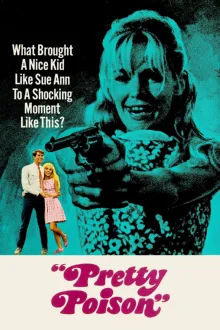
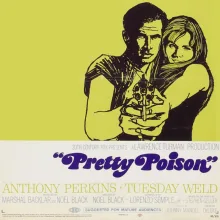
Show notes
Labels: Anthony Perkins Bill Ackerman Darren Williams John Randolph Tuesday Weld
Transcript
An automatic transcript, tidied into paragraphs. It has not been proofread, so names, titles and spellings may be wrong, and it does not say who is speaking.
Show the transcript (about 17,800 words)
Speaker 1: Hold your ears, folks. It's show time.
Speaker 2: People pay good money to see this movie. When they go out to a theater, they want cold sodas full of hot popcorn and no monsters in the projection booth. Everyone for 10. Podcasting isn't boring.
Speaker 3: I turn it off. Did you ever meet two kids? Like Dennis and Sue Anne? We think that they're quite a pair in pretty poison.
Dear, Dennis. He's clean cut the outdoor type, hard working. But there are a few things about Dennis. Most people Don't know.
You mean all the things in the letter were true? What, what, what, what's set fire? Did your aunt tell them burning her up alive? And then there's Sweet Sue Anne.
What an all American doll, high school sweetheart, honor student. But how long is it going to take that long? You'll know the movie is acting very funny. You go to your room make me, Don't say a word that's perfectly natural.
We're under surveillance. Anthony Perkins is Dennis. All right. Come down.
You're afraid I'll run away. I'll blow up cities, I'll rape and burn and destroy property and these are laws, laws must be abide it. Give me two weeks, two weeks to keep my nose clean to Dennis. Look, we're talking about my life, Mr Es.
Now we're talking about my one and only life do well as sue am. Let's continue? Pretty poison. I hit him twice.
You see, he started to go down and then I popped him on the side of the hip. What a week I met you on Monday. Fell in love with you on Tuesday, Wednesday. I was unfaithful Thursday.
We killed a guy together. I'm on that for a crazy week. So we and yes, make love to me. Make love to me.
So when do we do something exciting? MIKE WHITE: Welcome to the projection booth. I'm your host, Mike White. Joining me once again is Mr Bill Ackerman.
Hey, great to be back. Also back in the booth is Mr Darren Williams. DARREN WILLIAMS: Look so innocent. What a damn deceptive world.
MIKE WHITE: On this episode, we are looking at Noel Black's pretty Poison released in 1968. The film stars Anthony Perkins as Dennis Pitt, a troubled young man with an overly active imagination. He works at a chemical company that's spilling waste into a nearby river and meets a local teenager, Stewart Sueann Stene played by Tuesday Weld and recruits her into his imaginary network of spies. Only to find out that she's far more dangerous than he could ever pretend to be.
We will be spoiling this film as we go along. So if you Don't want anything ruined. Please turn off the podcast and come back after you've seen it. So, Bill, when was the first time you saw Pretty Poison?
And what did you think? BILL ACKERMAN: The first time I saw Pretty Poison would have been in the very early nineties. I would have been in high school. I taped it off of either prism or Cinemax and had been looking for it because I was a big fan of Danny Perry's book called Movies, which has a chapter on it.
So I wanna say this was actually the first film I saw because of that book that I didn't already come to that book already having seen. And so it was actually probably the first unquote rare film I ever had because it wasn't out on videotape, like just straight TV, screens were the only way you could see it other than like repertory. And I loved it. I mean, it was a great discovery the time I was young that, that, that I hadn't really seen a lot of things that people compare it to.
Like I hadn't seen Blue Vel, but I hadn't seen bad lands or gone Crazy Creatures hadn't been made yet. So, you know, I didn't really have a lot of things to compare to other than psycho which I had seen. And I thought it was such an interesting companion to psycho because I assume most people that so poison went in with that expectation about what ad Perkins is up to and kind of plays with those expectations and Tuesday. Well, I think I only knew from reruns of Doby Gillis.
So, like, I only really had a, like a TV, kind of sitcom impression of her and it really kind of, made me excited to check out what she was about as an actress and like, reading about things like Lord Love a duck and played as at las. It was a great and a rabbit hole to go down after seeing her in this. I think it was just, it felt like sixties television turned dark because it like, I think I associate her with like a certain kind of innocent television and even just the way that the town and the dialogue, everything felt kind of more like what I associated with television more than film, but like sixties TV, grown sinister which I think I, you know, even as a young teenager, I really, I really appreciated that aspect of it.
MIKE WHITE: And how about yourself? DARREN WILLIAMS: Late nineties to early two thousands, I was on the tape trading scene and you know, remember what it was like, you used to get lists of films with no context, no explanation at all and you'd end up just researching them to see what was worth trying pretty poison. Just let out to me. And yeah, I absolutely adored it from the off.
I was, I found it quite shocking. I was surprised at how funny it was the first time I saw it and how didn't realize Lorenzo Semple was the writer. So that kind of, yeah. But yeah, I absolutely adored it ever since.
And it's one I return to quite often. MIKE WHITE: I'm trying to remember when I first saw this. I definitely saw it on VHS though. I think it was sent to me by a friend of mine.
This, if, if my friend Rich didn't turn me on to this movie, it definitely feels like something that he should have, especially absolutely gorgeous blonde leading lady. That's so much his style to send me movies like that. And yeah, just this twisted sense to it and watching this the first time, I mean, I never, I never buy that. Tony Perkins is a CIA agent because we have that opening and closing.
But we've got that opening book and with him and his basically parole officer and had we not had that. I Don't know if I would have bought him as a CIA agent. I mean, he is squirrely enough and puts forth this kind of manic energy and I should just say that all of the performances in this movie are just top notch, but Perkins and Weld are just phenomenal and the way that they play off of each other throughout this whole thing, the way that they have this power exchange and especially how things flip as the movie goes along.
Wow. And that's what got me, that's what really got me when I watched this, the first time was, see that relationship shift and to realize, oh, wow, this all American apple pie, you know, leading the Majorettes, or a majorette in the marching band. You know, we've got this great March going on at the beginning for our opening credits and I'm just like, wow, she's way more twisted than he could ever hope to be. That just really puts me on a happy path every.
DARREN WILLIAMS: Time I see this film again. Birkins speeches whenever he's in, whenever he's doing the CIA speeches. Tuesday. Well, perhaps it's knowing who the writer was, but it just puts me in mind of Adam West and Batman, the tone of the speech and the way he plays that overly serious deadpan straight style when he's talking to cliches that come out.
It just reminds me so much of that. And do we think though that even Tuesday Weld leaves the CIA at the beginning? Because I Don't. BILL ACKERMAN: I never think that, I think that she's always playing, playing a game with him from the beginning.
MIKE WHITE: I have a hard time as far as when does she know? Does she know right from the get go or is it pretty soon thereafter? And I'm not sure. And I, and I'm ok with that, I'm ok if she knows right away and I'm ok if she figures out not that much later, you know, maybe when they're in the car together at the make out point, you know, like, but it's pretty darn soon if it's not immediate because she definitely knows as the story is unfolding and just starts to play with him that way.
And especially, yeah, and we're, we're gonna talk about a murder that happens, especially when, after that. And she just starts doing this. Does the CIA cover that Dennis? BILL ACKERMAN: I was thinking about that title because, Pretty Poison was, of course the retitled of, she let him continue with the novel and was the original shooting title.
And I think that Pretty Poison, I mean, it could apply to the chemicals that are colorfully, you know, polluting the water. But I mean, it clearly sets up that who's the pretty poison in the story? She's gotta be it. I mean, it, so, like, I was wondering how many people thought she was an innocent going into the film versus like a film noir, you know, they tell kind of bad seed, you know, kind of character because I think I always knew then I Don't even know that I read the synopsis in the book out movies before I watched it cold.
But I think I always assumed she was, she was bad news because of the title. DARREN WILLIAMS: That's why I chose that quote for the opening because I think that's just sums up the movie, it encapsulated perfectly what a dam to set for w for World when he's looking at the vial and he's talking about her as well. He doesn't realize how much he's missing and how much is, you know, is just right in front of him because this film is full of shadow. It's in everything, it's in the newspaper report, it's in every single part of the film, it's setting it up and he's just missing it right up until the point when, Sam is at the night watchman.
But right up until the point he dies, then he gets it. Then he starts to realize when I first watched it, I think I, we started watching with a slight nervousness of, or was he manipulating her? Well, how is this gonna go? But then very quickly caught on that.
Oh, yeah, she's a psychopath. He's worse than him in every way. BILL ACKERMAN: When they're talking about the true crime story in the newspaper. I mean, he's explaining, oh, it sounds like entrapment.
She's too innocent. Like he already is intelligent enough to recognize that kind of scenario from the outside. The fact that he, at what point he realizes he's in that scenario and he's just kind of follow through with it anyway, I think is so interesting and it, that it kind of throws you in the novel and in the film that, like he doesn't make a go of it. Like after the murder is committed.
He just turns them in like it's so anti climactic in a way. But I think that that's not really the kind of film they're telling to have then go on the run like a Bonnie and Clyde or something like, like it is about him giving up and not really being psycho Killer that everyone assumes he is. MIKE WHITE: Like you're saying all the foreshadowing, I mean, I love, I love the cutting in this movie. I love the editing, especially when he's at his factory job.
He runs away from his parole officer, Mr Eisenhower played by the amazing John Randolph. In this. Initially, we see him in his bitty little trailer and he's got these Russian short wave announcements coming through and so if we started with that, it might be, oh, is he a Russian agent here? But we already got to know that he's got a troubled history and we've got him doing that handing over this little spy camera to his land.
Lady Mrs Bronson. I guess you might own the land I Don't or the trailer or both or whatever who she's married to the man that runs the garage in which the trailer is parked in front of and this whole like, oh, leave this in your own name. Like Don't use my name for when you get this film processed. And when he goes to work the way that he sits at this line and he's got this amazing magnifying glass in front of his face that just totally distorts his face as well as anything that he's looking at.
And I love all of those vials of poison coming down the line or vials of chemicals and that he starts to hear the music of the marching band from the credit sequence and really sees each one of those little vials as one of those marchers coming down the line and then eventually something gets gummed up in the works and they start being destroyed. I mean, yeah, talk about foreshadowing, talk about symbolism. This movie has it in spades and there's so many great shots of things being distorted. There's later on, there's this, I mean, it runs through the whole thing but this restaurant or a little hot dog stand that they are next to or that is constantly in the movie and there's some great shots of her being distorted through these glasses that are up front and I think he even gets distorted by those glasses as well.
So really nice way to show us that there's more to these characters than just the surface. DARREN WILLIAMS: It's also the first time that we've shown that sex in pretty poison equals danger in some way because it's such a sexual metaphor, seeing the pounding of the gears and machinery and even when everything goes wrong is this huge burst of steam goes up. It's just a running theme through it that I think everyone is slightly sexually damaged in this film in one way or another. BILL ACKERMAN: I Don't remember him having the affair with Mrs Bronson in the novel, but I know that the script had it and they shot a scene that they didn't think worked and then that scene is eliminated from the film and they Don't even allude to it at all in the remake.
But there was supposed to be sexual tension with the land lady and I think supposed to be sexual tension with Mrs Stepan that feel is downplayed in the film. I know that Beverly Garland did an interview where she said she was kind of playing it like she was interested in him. I didn't, I've never seen it that way and I never really saw sexual chemistry with Dennis and the land lady in the film either. Like it just felt like even when it's embarking in a sexual relationship with Sue Anne, it's like initially when she's talking about like, oh, I think, you know, they're about to do it.
You know, I was talking about the boyfriend of the, of the, of the mother, he changes the subject back to the spy stuff. Like he's not willing to even really engage it as a conversation. Like it's very tentative because he's, you know, sheltered 15 year old that's just out in society for the first time again. And like sexuality is what put him away in the first place with the playing doctor.
So it's like he's, he's got this kind of connection that you're saying between, you know, sex and you know, harmful consequences. I was thinking about that because, you know, this film, the novelization with the novel, you know, the repackaging of the novel as the smash film of the now generation, like they're pushing it for sixties counterculture generation. And I think that, that, that film is being so not conservative, but I think that it's, it's really tried to play to everybody and not really catering to the youth audience the way that producer was it Lawrence Turman.
He did the graduate right before that. And there's no pop music, there's no pretty poison theme song or whatever. Like it's not like other films that Noel Black did later like Cover Me Babe. Like there's, I mean, all the marching band stuff.
It feels like very traditional. Like it's a very Americana kind of feel which I think keeps it from dating in a way that a lot of other late sixties films aimed at young people would date. Like it doesn't have any delicious to Vietnam or drugs other than like the pills that he saw up. So like, it's really feels more like sixties television in that way.
Like it's not trying to challenge the status quo in any way, but it's still trying to appeal to young people but showing them is dangerous in some cases. DARREN WILLIAMS: Oh, I think it's definitely doing a challenge to the status quo in the film. And just because of what it's saying about America and what it's saying about American symbology, especially the flag we've got this whole time we see at the start, Dennis is ever vigilant. He's ever taken photos and he's always in the blue shirt through the film and blue in the American flag is meant to represent vigilance.
But like all the what the colors are supposed to represent, they get distorted through this film. And I think what the film is asking is what's America doing to his children and what's America doing to its environment? I think it is quite subversive in its own way. MIKE WHITE: Yeah.
There are so many nice moments of just casual littering at the end, the guy who runs the hotdog stand, he throws his garbage into the river, but then he turns around and he's like polishing his motorcycle. It's just like, what are you doing? You know, you're destroying the environment, but the motorcycle is the important thing to you. So I love that there is this theme of kind of environmentalism that that's going through here.
And of course, this is way pre epa this is what America was doing. You know, it was crazy that just the amount of garbage that was being pumped into our fresh water at this time, almost as much as today I'm sure. BILL ACKERMAN: Yeah, but it feels like a fake out though because it's like it is exposing that but it's not like you see the effects of that pollution, like no one's getting sick from it. Like it doesn't, like, it feels like it's setting you up for like a Silkwood kind of thing or Aaron Povich.
But it's, it's just a decoy so that you're not paying into the obvious threat. DARREN WILLIAMS: I mean, just to go back to something else. Bill was saying, I think the Mrs Bronson stuff is in the book, isn't it? I think he does sleep with her in the book because it's the same thing as in the screenplay that didn't get filmed, he promises him a job and then Mr Bronson has to come and say to him, oh, there are no jobs yet.
There's nothing for you. But I think he sleeps with her before that because there are a couple of times where she comes to his well trailer. Basically, I can't remember what he's actually living in the book if it is still the trailer or not, but she comes in a couple of times and she's trying to seduce him. And I think that one time when she promises the job he does actually go through with her.
BILL ACKERMAN: Couldn't remember. Yeah, I remember there's like scenes with like the tension him kind of recoiling from it. I couldn't remember it. I really read them that time.
MIKE WHITE: But, well, it's really weird that they have and we'll talk about the remake later on, but in the remake, they really play up that sexuality of the land lady. Like she's just, you know, steering holes into him at one point, but then they never come through with it. And so the line that kind of betrays that there's this missing scene of this seduction I. Met you on Monday.
Fell in love with you on Tuesday. Wednesday. I was unfaithful Thursday. We killed a guy together.
I bought that for a crazy week. So unfaithful Wednesday, I was just joking to an, it was. MIKE WHITE: Another country, forget it. But then they change it in the remake to be like, you know, we did something else on Wednesday where there was no mention of being unfaithful.
And I'm just like, oh, ok. Well, you really had a better chance in this one, Dennis because Mrs Bronson and this one is really into. You fell in love with you on Wednesday is what he says. DARREN WILLIAMS: And I think she is a little though when she walks into the to the trailer and one scene where Perkins is sitting in basically just his underwear.
You can see her looking him over in that scene. So it's obviously they were thinking of it, but they just didn't bother to film it. I'm not sure how well it would have worked if they had filmed it either. Could I ask how old do you think Dennis is meant to be?
He's meant to be 22 in the book. MIKE WHITE: Yeah, it feels like he's maybe early twenties in the movie, definitely older than Sueann. But I wouldn't say by much, I mean, she's only 17 and I would say he's maybe 24 25 at most in the movie. DARREN WILLIAMS: I think it's just that weird thing of coming into it with a knowledge of Perkins already and knowing that this was eight years after psycho and look at him and definitely, especially for the sixties, he looks like, I think he was 37 when he filmed this and he looks like a young 37.
Definitely. But he never really looks young enough to be date in Tuesday Weld, I think. And when mother is so upset about the idea of going out, I was just, why aren't you upset about her going out with this clearly adult man? Why isn't that the problem here?
MIKE WHITE: It was a different time, Darren. It was, you were talking about the music that was used in the graduate and that this is kind of timeless. And I agree with that though. It's funny that term, the reason why he hired Johnny Mandel to do the score.
He was just like, oh yeah, Johnny Mandel, he's doing all these hit songs and stuff. What was the Shadow of Your Smile was one that was a few years still before he wrote Suicide is Painless. At least the music to it. I think it was Altman's son that wrote the lyrics.
Turman really wanted a romantic score, but he ended up with kind of a, you know, I would say that this score is very appropriate to it. Yeah, it's, it's a great, great score. Unfortunately, it's never as far as I know, ever been released. But yeah, I think it works really well and I think had they had a contemporary song, this film would feel very dated.
Yes, of course, the outfits and those kind of things we can tell when this is being taken place, but it just has this kind of timeless quality to it. And that I think had they even the end, you know, using the marching band music again at the end is a really smart choice as opposed to theme from pretty poison comes up on the soundtrack and we hear somebody crooning a song about, you know, it may look beautiful but Don't touch it kind of thing. Like we Don't need that, you know. DARREN WILLIAMS: I may be misremembering this but when the opening credits happen, Don't, doesn't pretty poison appear right beneath the Majorettes.
That's the name for them. Isn't, doesn't it appear right beneath him? Like the how much more foreshadowing? Can you get them in that moment?
Speaking of foreshadow, and I think one of the most important scenes in the film, once you read the screenplay is actually that cinema visit when he arranges to meet the because originally that was supposed to be a James Bond film in the script. These, I think they need Goldfinger, Don't they? That is what they wanted. It's the place of fantasies.
Cinema, the theater, it's where you go to dream. It's where you go to fantasize. And you've got this man who's lost in his own fantasies coming there. And if it been Bond playing, it would have played in too much.
I think the CIA fantasies it would have firmly even on Rewatch, it would still put you. We're in Dennis's world at the moment. But I think that's letting you know because it's a day massa intentional or not that choice. It's letting you know.
Actually, this isn't going to be Dennis's fantasy. This is going to be Sueann fantasy and it's a lot more violent than Dennis was ever expecting. I think that's such an important scene in the film just and just little touches. And I think it's such an incredibly subtle way in that film.
It's spelling everything out. But you Don't notice just how much it's spelling out until you reach the end and go back and watch it again. MIKE WHITE: I always thought it would have been more appropriate. Had it been Dillinger because of the whole betrayal by the woman in red type of thing.
But Saint Valentine's Day Massacre is also pretty appropriate. BILL ACKERMAN: Yeah, I noticed on the mar the marquee outside it doesn't have Saint Valentine's Day Massacre or James, but has in like Flint, the another, another, another spy movie, but a Fox owned one so would have, I Don't know why they didn't use that other than I know there's the same, one of the art directors Jack Martin Smith is also the art director on Saint Valentine's Day Massacre. So maybe he spoke up for that. I Don't know.
But yeah, no, it's a great choice that it's funny. I'm the commentary for the Blu Ray. They mentioned how they reedited all those Corman's shots so that it plays faster than the actual Corman film so that it would work for the rhythm of pretty poison, which is fine. MIKE WHITE: I'm curious how much because there's two commentaries on the Blu Ray and I have to recommend anybody within the sound of my voice.
It's a great Blu Ray. But to hear Lawrence Turman talk about things and just like, oh yeah, I re cut this picture. I didn't like the editor, you know, Ziegler wasn't that good and I was the one that went in and I put these flash cuts in and I did this and I did this and he stopped bragging. He's a very humble man, but at times he's humble, bragging at times, but he's especially like just really like Lem Dobbs is on the commentary with him and he's just like, he's fawning over Lem Dobbs and some of these, you know, things that Dobbs is coming up with and Dobbs is coming up with great things, but he's just like, oh, you're so smart.
Oh my goodness. And you're just going on and on and then no Black gets on his commentary track and he's just like, I was surrounded by some really great people and you know, he is talking about, you know, Zigler was a great editor and he was a great cinematographer and he was a great writer just going through all this stuff and just for humble sounding guy. And I'm just like, well, did Truman really actually do this editing stuff or not? I'm very curious, but regardless I the end product is great and especially those little flashes of stuff, the flashes of the, of the band, the flashes of the beach, the flashes of the fire and even the flashback to her after she murders Sam the night watchman.
And I think we get a little bit more in that flashback than we actually get in the movie proper, the timeline proper. And I have to say that moment when she conks Sam on the head because eventually Dennis pulls her into his orbit and is planning, well, he ends up getting fired from the plant and so he plans a sabotage and I think he might have even been planning it before, but he brings her with him and the night watchman catches them, she conks him on the head with this massive wrench and when she conks him the second time, I was just like, oh, ok.
This is really something she really means this. But what really drives it home? Poor Sam isn't dead and she pushes them into the water and rides this guy's head like it is just the most sexual thing. And to see Tuesday Weld with her skirt piped all the way up and seeing those lovely thighs that she's got and just riding this guy to death.
I was like, oh my God. And that was the moment for me where this film was, we were writing it about an eight and then suddenly jumped up to a 10 and became like one of my favorite films. DARREN WILLIAMS: It's such a memorable scene too. It's a look on her face as she's doing it this sheer delight.
BILL ACKERMAN: Yeah, I always think of that scene as being longer than it actually is because, it lingers in the memory so much that it's only a few quick cuts of that, of that. Her writing the, you know, Sam's drowning body sexually. But it's such a jarring image that you just never forget it. It when rewatching it yesterday for this.
I thought they cut something, it feels like so short versus my memory of it, but like every version not like that, that that's how long it was cut. MIKE WHITE: It makes one hell of an impression. And yeah, it just really cements the sex and death. The, what is it?
A and Thanos of this film. And especially because each time they do something naughty, she gets real jazzed up and even after she shoots her own mother, she's just like, hey, let's do it, you know, she wants him right that there. And then, and then to your point from earlier, he's not into it. He's just like he, the thought of violence, the thought of killing Mrs step panic.
He ends up, you know, running into the bathroom and throwing up. Meanwhile, she's there pouring bullets into her own mother with this wonderful look on her face, her tongue kind of hanging out and she's just so into it. And then when she's done, ok, great. Let's do it.
Let's have some sex. I'm like, wow. DARREN WILLIAMS: After they first have sex after the makeup 0.1 of her first lines to him is Dennis. When are we going to do something exciting?
They've just had sex and then she says, I feel empty and that's it. The only time she can get aroused is after murder after anything violent. Like that is the only time where she seems genuinely happy even. I mean, it's foreshadowing again.
But the scene where they picked up by the cops and Dennis is taken back in the back of a police car behind bars and she's free and happy and turn on the radio and laughing. It's like the only time she's really alive. Is if she's got someone in trouble, if she's doing something wrong, when she kills someone, she really comes to life, everything else is an act. BILL ACKERMAN: That's my favorite line in the film is when he's talking about how, Don't you feel like everything's closing in and she's like, I feel empty.
Like I always think of that as the line, like the signature line of the film for me, like my memory of it like that and when, when Perkins has got the line, like it's my one and only life or whatever, like defending his right to freedom and the way he delivers it is so much more powerful than in any of the other versions of the written page. It's just, I Don't know because the way the entire thing puts, it feels like what if, what if Norman Bates got a second chance? What if they rehabilitated them? What if they forgave him?
That's what it always feels like. It feels like that desperation in his voice. And I didn't even know that it always made sense to me why he was fleeing Arbogast, you know, well, not Argas, you know, that's a fighting slip. But as an a like why, why does he skip town?
Because it's a little bit more clear in the remake that he doesn't want to have the baggage and the history of like his past carrying over to the new job. But in the Noel Black telling of it. He's just, he just skips town for some high energy biscuits to like, start a new, you know, without any kind of, you know, care to the fact that he's breaking parole and he's making it harder for himself. Ways that they never really explain.
MIKE WHITE: They Don't really explain that this job wasn't set up by a or sorry, by Eisenhower and, or sorry Eisenhower. I always say Eisenhower because I had a teacher named that in school. But yeah, he got set up with this job. He goes there and then when Eisenhower is just like hunting him down like, oh he did, they got fined Denis.
And I'm just like, I thought you set him up with this job, man. So I hear what you're saying. DARREN WILLIAMS: And we think Dennis is completely fantasizing when he first approaches Tuesday Weld because I think he's deep in the fantasy by then. And I think that's why he's run.
It's because the Real World is too small for him. And I think that's why there's that line in the intro and he's like, oh, a log in place isn't the best use of my talents. He finds the Real World small and confining and fantasies are bringing him alive. There's always been a thing about whether or not he's just manipulating her or whether he's gone himself.
I think he's actually flipped by the beginning of the film because when we first meet him. Well, not when we first meet him but when we first meet him in the new town, he's already taken the surveillance photos. He's listening to Russian broadcasts when he's at the pets. It is pizza, isn't it?
The hotdog stand when he's there? And he walks away and he sees that guy stop and look up at him for a second. It's just a split second. But the look on his face, I Don't think that's, oh, I can use this look.
I think he's genuinely believing at that moment. He's under surveillance. But I think it's just the fantasies that led him to run. It's the fantasies that led him want him to explore life.
And it's that thing about being kind of aware but also trapped in the psychosis of, I can't really escape the past year. I need some place else where I can really just fall into my fantasies where without anyone watching over me. BILL ACKERMAN: Yeah. I think the thing pretty poison is, it always feels like it's playing it both ways because I think what you're saying is correct.
And I think that when he sees the man with the hood up with the car, I think he is afraid that it's legitimately, like he's in a fantasy. Like, I Don't think he's playing a game. I think he's also consciously using the whole mission to seduce Tuesday. Well's character in the way that, like, I think of something like Jeffrey and Sandy and Blue V that it's like he's using this as a kind of covert courtship, like, and I think he knows it.
Like, it's not like, but there's, there's a, there's a smile to it, like, there's, there's times where he's breaking character, like when he's talking about the true crime stories with the hot dog man, like, he's not totally in a paranoid delusional world all the time. But the fact that I think that, yeah, I think you're right that the, some of the paranoia is real. I think that, yeah, the film goes back and forth and it's always ambiguous at to what point he's knowingly playing a game because it feels like he is playing a game more than he is compared to the, how it reads on the page or in the novel.
He doesn't seem that dangerous or that or that delusion. He, it feels like a guy who's too smart for a small town and he's bored and he's made, you know, a walter mitty style kind of like dark take on it watching it again this week. I was also reminded because it's the same DP David Quade who shot the swimmer, another New English, you know, literary kind of source material, like about a guy to fantasies and also kind of, you know, probably commentary on America and American nails and such. But yeah, but like, yeah, that same kind of, you know, when is it fantasy or not, I think, I think is part of why it never gets old for me, like, rewatching it because there is that ambiguity.
MIKE WHITE: When it comes to those drugs that he gives, Sue Ann, are those drugs? Are they just, yeah, sores or something inside of that tin? DARREN WILLIAMS: I mean, in the book they're meant to be, like, aren't they in the book? MIKE WHITE: Yeah, I read a little bit of the book and I was just like, wow, they're really into taking pills.
So I wasn't sure if in the movie, if we're meant to believe that those are drugs or not, it feels like they should be but there's really no effect. It's not like, you know, they get high and hang out or something. BILL ACKERMAN: I always saw them as a placebo effect. Like, he could be giving her breath mint or something.
But, like, and we see her POV of the moon distorting but I always think that it's just, you know, she's just going along with it in the book. It's like he's, he's giving those, he's given those pills to kind of stabilize his mood or his fantasies. But you never really established this and you know, that they're not government issued, you know, by the CIA. So, what are they?
And I just always assume that, you know, they're Tylenol or something and he's just, it's just part of his rap, you know, in the car. But they could be, I mean, they could be, real drugs. It's, they never really spell it out. DARREN WILLIAMS: Yeah.
I think in the book they are meant to be real drugs and they were meant to be, I think it says they were prescription and he stole a load of prescription pads so we could get more. I think that's what happened in the book, how he's got them. But one of the things that I really like about the film compared to the book is, I think the book spells out a lot more. It's a really good book and I really like the terseness of the pros in it, but it's spells things out a lot more and it definitely makes Dennis into a more unsympathetic character than in the film.
I think he. MIKE WHITE: So reminded me of Holden Caulfield when I was reading that book. And I, and I think Holden Caufield is one of the biggest assholes in the world. BILL ACKERMAN: So we talked about mentioned the scene where he goes and throws up after the murder of the mother.
I mean, they make love after the murder in the book. I mean, it's definitely like a more challenging character to and if you read reviews of the book, I mean, it just talks about them. It's like just young psychopaths, like there's not any kind of nuance to like how people were receiving those characters and some of the reviews you read. DARREN WILLIAMS: Well, in the book, he intentionally goes there to murder her mother.
He's not going there to run away with it. He's made a plan to go there and kill her and then he can't, and he backs out of it. So he's, yeah, he is definitely a harder edged character than they made him for the film. And I think the film works better.
I think it works better that he's kind of the patsy. Well, he's definitely the patsy even though we Don't know it. The book reminded me more of some of the, like the juvenile delinquent books that were being published around the same time. Just the hardness of the pros and all the kids are wild thing going on with it.
And the film is charming is a difficult word to use. But I think Dennis is charming at times in the film which he never is in the book. MIKE WHITE: I really feel for this. Dennis, I feel for what he's doing, especially after you realize lies.
Oh, he's the one that's being manipulated. He's not the manipulator. Then you really start to feel for him and then you start to really see those lies too where it's like, oh my mother, she came back, she snuck back just like your aunt snuck back and before you know, burned her alive kind of thing. All right, you knew she was coming, you knew that this was going on.
And then especially when they revealed that picture of her other boyfriend, which just opens up a whole other thing as far as are they still dating? Who is this guy? What's going on? And they do an interesting thing in the remake with that?
But when it comes to this movie, you're just like, what, what is going on here? Like, how many guys is she stringing along? DARREN WILLIAMS: You know, I always thought he was a previous victim. That's why she's kept as a memento is what I always thought.
MIKE WHITE: I mean, the ending would definitely make me feel like that like this has been a long string and she, yeah, I love that line when she's talking with, oh, I can't remember the actor's name. Cliff Barnes from Dallas is what I always think of him, Ken rival, but she's talking to her next victim and she's like, oh yeah, he got caught. It's like a pets, always get caught. And I was just like, all right, is that foreshadowing for you or is that just you saying that you're never going to get caught?
And of course they add Don Randolph at the end of it. But that was interesting reading the script and seeing that they had because the book ends basically with him with Dennis having the dead body in his trunk and calling the police and admitting everything and we hear the siren or we Don't hear the sirens, he doesn't hear the sirens. He just sees the policeman coming into the diner where he's at because it's not a hot dog stand in the book. What they did, what Semple did was he added a scene of Sue Anne courting her next victim, courting this Carrie Jackson character and flirting with him.
And then what was great was you read that? That's in the script. But then there's the extra bit and he also added the whole thing of Dennis and Morton Eisenhower also talking as well and he really like lays it on thick, even says like the term pretty poison and just kind of gives Eisenhower this whole like, hey, you better check her out next time you're in Winslow, check in on for me, would you? And then they like kind of like pulled things in to be like, oh no, this needs to come here, this needs to come here and then we need to have Eisenhower actually looking at her at the very end.
And so they had the order of this, the scenes was different in the script, but you could tell it said like this goes before her picking up this guy. BILL ACKERMAN: Yeah, I was reminded this time watching it. I Don't know if the Palma ever saw this, but the ending reminds me so much of sisters with somebody watching, watching the murderers waiting, waiting to bring justice to the situation. But maybe, maybe they won't succeed.
Like the murderers is still out there in those stories. MIKE WHITE: This whole movie reminded me a lot of Badlands, which is ironic because I think next week we're talking about true romance spoilers for Badlands folks. But hopefully you've seen that movie by now. But the way that Warren Oats is shot by Martin Sheen, I'm just like, this really looks similar to what's going on and this whole thing of like, I'm going to liberate you from your awful parent type of thing.
But I also got a real rope feel to this as well. And I'm not exactly sure why, I mean, they're not thrill killers. They're not both thrill killers, but I guess it's that hesitation that the Farley Granger character has and maybe it's just because I was also thinking about gun crazy. I think you mentioned that one before too Bell as far as this like, you know, murderous couple on the run and then also John Dahl and that one, you know, it's kind of the opposite of rope like in gun crazy.
He realizes, oh, Peggy Cumming is way out there. You know, this, that whole revelation of Sue Ann being the wild card. It's like, oh, you know, it feels like how big doll's pretty nuts as well. But Peggy Cumming really just takes the cake and.
DARREN WILLIAMS: It's also a fascinating double Bill with a film Bill mentioned earlier. Lord, love a duck. If you just sit and think about it, what's going on in Lord Love a duck is Tuesday. World is a high school teenager who meets this gawky older man who goes to great lengths.
I won't spoil what happens in Lord Love a duck. But it's, it's remarkably similar just in terms of basic plot beats and it's a nice double Tuesday Weld, double Bill, those two. And of course, this is going to be influenced by Bonny and Clyde. It comes a year later.
But I think what this is doing is, I mean, I think Noel Black said that he always had the film to the film noir stuff and he said films like double indemnity and stuff like that. But it's really taken the romanticism of Bonnie and Clyde and just said, nope, this is what it would really be like, it's not the two lovers dying in a hail of bullet, sorry if I spelled Bonnie Clyde. But again, everyone should know that you see this is what it would be like. This is the truth of those situations.
MIKE WHITE: There was a lot of hesitation on Anthony Perkins to do anything that resembled psycho. There's even that moment where his eyes are moving back and forth and he was like, I really Don't want to do that. It reminds me of way too much of Norman at the end of psycho. But also at the end of psycho is the whole scene with Simon Oakland where he's laying out the crime.
We Don't necessarily get that gear, but we get something similar when she's being interviewed and I love, I mean, her performance is top notch of this whole thing. But when she starts to express all these false emotions in front of all the cops and in front of Eisenhower, it's just like, man, oh man, you are really doing a great job and just like they, the cops basically take it over and they're like, oh, well, you know, she was obviously forced into this and just really start to back her up and make up their own stories to fit her narrative even more and to just bolster her innocence.
DARREN WILLIAMS: Yeah. And it goes back to the thing, it's that thing of her so often being seen in whites and reds and just totally subvert them. And, you know, Perkins being seen in the blue and even, and I thought this is, if this is intentional, it's a lovely touch her driving that blue car around it. As then Perkins always in the blue shirt as if the film is just saying, look, she's always controlling him.
There's the link, she's always the one in charge. She's always in the driver seat. What a lot of this film I think is doing is saying this person is one of the untouchable people because she's beautiful and she's all American and she's decked under the symbols of America. And I think it's almost like to bring her down would be to bring something of America down.
It's, it's almost like Bath Beal in the film. It's, I genuinely think there's a thing that in the script, in the film that they've seen America, what are we doing? We have children parading with rifles or a high school drill, which I didn't realize you guys that I've lived in America and I didn't realize that majors had rifles until I actually saw this film. BILL ACKERMAN: They might not do it after Columbine, they're.
MIKE WHITE: Usually white wooden rifles. They're nothing real at all. So I was not surprised when I saw those rifles. I was like, oh yeah, that's what Majorettes do.
DARREN WILLIAMS: It's, it's such an insane thing when you think about it, even a symbolical gun. It's, it's a weird thing to give high school girls and say, yeah, just learn to parade with those. Yeah, it pretty poison is asking what's wrong in America. Where's the poison coming from in America?
And again, a weird link it flows into, I think, killing of America, the Lenin Trader documentary about guns in America. This is crime in America. This is what we do. And I think all these things kind of flow from each other and pretty poison is like one of, there were several films made in around 68 and I would have counted the swimmer definitely as one of them.
But things like they are in the sixties, but they looking forward to the seventies and they kind of trapped in this Netherlands. And I'm thinking of films like, not a film, I think as good as this, but a Charlie from the same year and Rachel Rachel, the Paul Newman film, they all desperately wanted to be the seventies now, but they're not quite there yet. And I always associate pretty poison with that group in the films. There's a certain look to them, there's a certain feel to them.
That's not of the sixties from a couple of years earlier but not quite 19 seventies American cinema yet. BILL ACKERMAN: I thought you were gonna say Targets. DARREN WILLIAMS: Targets. Thank you.
MIKE WHITE: Yeah, I was like, when was Targets? Because that is so like rips off the facade of what's going on and just the casual murder and patricide and mattress side and that. BILL ACKERMAN: Oh, yeah, I Don't have them side by side. But you mentioned when you talk about Badlands, I'm wondering how similar the dress that Sissy Spacek wears after the murder of the Father is to the dress that Tuesday we is wearing in the murder of the Mother.
But I, same kind of like that little girl. Kind of like it's the most girlish they look in the, in those respective films, just like at the time of the murder. MIKE WHITE: I'll tell you I was so happy to see Don fellow show up as one of these two offbeat detectives and I think he's the one that wears the, ear piece. Yeah.
Which so reminds me of Gordon Cole from Twin Peaks. But, Don Fellows is for, well, I Don't even know if people would know him from this. I mean, mostly I know him as, a general in Superman two. But of course, for me, his biggest role, he's only on screen for maybe 10 minutes is Colonel Musgrove in Raiders of the Lost Ark.
He's one of the two guys, him and, William Hopkins are the two guys that come to visit Indiana Jones and he explains what the staff of raw is and it gives him the whole history lesson. He's so great. And just to even to see this like 12 years beforehand, I was like, oh, I know that guy, what a great face he's. BILL ACKERMAN: Got, I Don't know, can really put it together like what it means other than just, it's a great visual motif is, when he first leaves the trailer to go start his new job, he's running through dark woods in an otherwise sunny environment.
Like he's, he's choosing the shadowy path. And I noticed that they repeat that when Tuesday, well, drops him off at the end to like spend his last night on his own in the woods before they killed the mother. And it's like that same kind of like wandering through dark woods, like surrounded by sunlight that also reminded me of the swimmer, like, even though it's like this kind of sunny small town in America. There's this kind of sinister kind of gothic image he's like within the town that, that's where he's, that's where he's drawn to.
And it's a transitional moment in his life. MIKE WHITE: He's got that moment when he's waiting when he can't go back to his place anymore. And, he's supposed to come over to Sue Ann's the next day and the day that he ends up killing or was supposed to kill her mother for her where he's going through the forest again, another forest scene and he eventually comes on the car and the lovers are in the car and the guy gets out and beats him up a little bit. That is always interesting to me and they change that a little bit and the TV movie, the remake in a very interesting way that he actually goes and he visits Sam's house and gets to see his widow and his widow's family and Sam's family and I Don't know how that plays out in the book or not.
I Don't remember him seeing Sam's family in that, but I do remember him kind of running through the woods and just being like a longer period of time. It feels like he's really, you know, thinking about a lot of things before that next day. BILL ACKERMAN: Yeah, I think, I think we're probably all going to agree that the TV movie is not the superior telling of this story, but one thing that I think it does, that is kind of ambitious is it does try to flesh out the Sam character and, you know, do something more interesting with the lover of the mother.
It's trying to do some small things to develop characters that are not really that well drawn in the original Cell. Whether that that's necessary is debatable, but it does try to do a few things that, that was an interesting touch. Forget in the novel, there's a point when he falls asleep in the woods and wakes up to find her attacking him. Do you know which film the night that, it kills Sam?
Do you know what I'm talking about? Like he falls asleep and he wakes up and like, she's trying to kill it in the woods. DARREN WILLIAMS: Yeah. It's when the police, take them back, they Don't pick them up in the car, they get out and they go back to her mother's house and he said something to her like your daughter has tried to kill me tonight and she says, well, I just saved your life by not pressing charges.
So, yeah, that's, that's that night. Yeah, that would be the same night because. BILL ACKERMAN: Yeah, because in the film it's, they get busted for potentially necking at like the make out point in the town carriage. MIKE WHITE: I love how he reads about that in the newspaper about, you know, this other case.
He and they're like, oh, well, Yeah, that's the make out spot the people around the hot dog stand and then it's later on when he's driving with her and he's just like, oh, yeah, stop here. And it just so happens to be the make out spot in her whole thing. He's so not smooth, when he's trying to make out with her and she's just like, you know, he does the whole thing of like, oh, hurry up and kiss me. You know, people like to look at couples when they're kissing kind of thing.
And she's just like that. That's the gear shift. DARREN WILLIAMS: I think from, that's the moment I think you can definitely say he knows because when he gets, oh, this is an old CIA trick and she's like, yeah, sure it is. Even if she doesn't know before, then she knows that.
But can I ask this film is telling you all the time not to believe anything anyone's saying constantly? So did Sue An's mother actually call as an hour or did Sueann do it herself and pretend be her mother? MIKE WHITE: I think she called him herself. DARREN WILLIAMS: I know in the remake they try to make that a bit more obvious really.
So when, when they do it, the film had me doubt in things so much that I even have wondered on occasion if Anthony Perkins' story to her about what happened with his aunt is completely true. One of the things that throw me about that scene when watching it back or watching it back is he uses that phrase again in that scene. She probably thought we would do lay carriage. And it's just like, wait, is he actually telling her the full truth?
Was he making up another story? And he's maybe a bit more guilty of his aunt's murder than an accident. And he's just reaching for things to make that story up on the point. So you get a feeling he's never heard that phrase before.
MIKE WHITE: He sees it in the newspaper and he uses that at least what, three times in the movie he uses it with as an hour also. BILL ACKERMAN: Yeah. Now he uses it. Yeah, like it's a pet phrase that he's obsessed with.
Yeah, I Don't, I mean, I always wondered even if, when, when Suan says that her father died in Korea, that's a lie because in the, in the remake he just left the family. Like, so it's less dramatic. But I always wonder, yeah, everybody's like telling lies, you know, like you say, Yeah, and when he talks about playing doctor, I mean, what is that code for? Because we know he's all about fantasies that like, you know, are partly seduction but partly also like very dramatic, you know, like, like there's, there's real consequences if certain things Don't happen.
I Don't know. But like I said, like that ambiguity I think is part of what keeps it kind of rewatchable and then open to, you know, multiple interpretations like that. DARREN WILLIAMS: Well, in the book, isn't it? That it's not his aunt who died, who was her daughter, his cousin and she was the girl that he was playing house with.
Isn't that? BILL ACKERMAN: You're right. MIKE WHITE: I mean, towards the end he's kind of recounting that again. It almost sounded like he burned down the whole church that she and all the congregation was sent.
Yeah. Did you guys pick that up at all or? Am I just completely nuts? No, I think.
BILL ACKERMAN: That, I think that that's true. Yeah, I mean, the novel, I mean, he's focused on fire throughout it which I Don't think they emphasize at all really in the, in the, I mean, like other than that quick cut off to the burning building, but you Don't really associate him with being drawn to things that resemble flames. I mean, I Don't know if the red vials are like, he's drawn to that because it reminds him of fire and he loves fire. Like, I Don't think he's a pyromaniac the way that like the book kind of presents him as fire, fire, fire, fire.
DARREN WILLIAMS: I can't believe we've got this far to record and no one's mentioned one of the greatest lines from the film. You do have a great capacity for loving. Oh, that's such a good line. Yeah.
BILL ACKERMAN: It's in the script twice because it's only in the film with the, with Sue Anne, but he says it to the boss in the, in a cut scene in the scripts also. MIKE WHITE: Oh, yeah, I mean, the boss played by what? Dick O'Neill? Holy shit.
He is so good. He's one of those character actors where as soon as he showed up, I was like, OK, I know exactly how he's going to be in this because he's the same in every single time, man. He is great. I mean, I think I mostly know him for taking of P 123, but he's been a lot of movies and a lot of things that we've talked about on this show over the years.
DARREN WILLIAMS: Great face as well. Just what are those faces? You Don't see much anymore? I thought that the other film that from the late sixties that I meant to mention as well in relation to this last summer, I think it was in the air and they were looking forward to the, to the new thing, but there was something definitely in the air of the kids aren't right.
You get that feeling so strongly from a lot of films at that time. BILL ACKERMAN: Yeah, with all trope of that kind of liberal social worker kind of like benevolent character does feel like a juvenile delinquent movie. I mean, because all the other authority figures are corrupt. I mean, it's, you know, Iy cops jerky boss, you know, you know, but, you know, but, Eisenhower is like, almost like, like a Capra character in terms of, like, his benevolent kind of like, just give him one more chance.
Oh, you're, you're in love. Good. Well, we just, you know, just, just keep your nose clean kid. Like, it's just, you know, it's, it's not a realistic kind of character and it's, that, it works for both stories.
I think that's one thing I thought was, it was interesting to make that character a little bit more cynical in the, in the remake. I mean, that's, I guess they kind of had to because it's a different kind of way of telling that story and more like, well, we'll get to that, I guess. But, yeah, I know, I think it's, yeah, last summer it was interesting. MIKE WHITE: Once Dennis starts to talk about, oh, I met a girl and what does he say?
Like she's clean and good. Yes. Ok. I think that's when he says, well, now you're pulling my chain or something.
DARREN WILLIAMS: Like he, you guild in the Lily in the Lily. BILL ACKERMAN: Well, it's when he talks about her as, like leading the Majorettes or whatever that, like you're getting carried away now. But, oh, man. MIKE WHITE: Yeah, I think if this movie has one bad moment for me, it's what Turman tried to do with an optical at the very end.
He does a fake close up of her head like he took the film and pushed in on to Sue Anne's head right after she's picking up this new and foot loose guy that she met at the hot dog stand. I think that's a horrible moment. Because I was just like, wait, what's going on? Why is the film getting bigger and Granier and just, you know what's happening?
And then it took until I read the or listened to the commentary for him to say, oh yeah, I wanted this to, I wanted the audience to realize that this is all taking place in her head. And I'm like, well, first off, I Don't think that it is. And second off, I think that's a really bad way of doing it because this just isn't successful at all. If anything, I was just like, well, what happened during the transfer?
Did the, did the negative slip or something? BILL ACKERMAN: It just thinking about this film and what it comes in like American film in the late sixties. I was thinking about how it's a studio film for Fox. Like it is, we talk about these, these character actors, like it's the art directions like people that work on things like planet of the Apes.
And Hello, Dolly, like it's got like, I mean, you might have a first time director who's getting hired up of a, of a short film, like it like a little bit of a whiff of what you think of with the new Hollywood cliche, like, you know, first time directors of reinventing the form, this feels like, like it's still, it's still a director trying to make a Hollywood film. Like it doesn't feel like it's breaking formal rules in a way. I mean, some of that quick cutting, I mean, like you're saying, it might not have even come from Noel Black.
It might be like coming from a producer who had like a date with the graduate, try to spice it up a little bit. But it is feeling like, but I think about this alongside arts, I think of another classicist, I think of somebody that is trying to make a, you know, a tight modern thriller and I Don't think that says something as arty as Badlands and not that I Don't say that in disparaging, I love bad lands, but it gets not trying to be radical formally, but maybe, maybe, maybe the ideas, I guess when I think about like that, that kind of like characters, verbally challenging status quo, like this is not that kind of film, but maybe some of the ideas being raised are are more subversive than something like psycho.
DARREN WILLIAMS: It's got that kind of looks like a sixties film but not quite, it's this weird little hint to land that every decade has in that period transition where films aren't quite the films from the decade before, but quite aren't, yeah, structurally in terms of the filmmaking techniques. It's very much a, it's conservative from that point of view and there's no big speeches, other than you'd say Anthony Hopkins, one of the Hopkins Perkins were at the end of the pretty poison. But yeah, but just that there's that deep subversion running through the themes of it that aren't there in the way it's shot.
MIKE WHITE: All right guys, let's go ahead and take a break and we'll be back right after these messages.
Speaker 7: Hello, everyone. This is Malcolm Mcdowell. I just want to say that this is a request to listeners of the projection booth podcast to become patrons of the show via Patreon dot com. Patreon dot com slash projection booth.
That's pretty simple. I think you can do that. It's a great show and Mike, he provides hours of great entertainment. So now it's time to give back my little dr settle down and take a listen and have a sip of the old and then you'll be ready for a little of the old in out in out real horror show.
Bye bye. MIKE WHITE: All right, we are back and we're talking about pretty poison and just like I always say, like any good film, pretty poison deserved to remake or maybe not. I Don't know. I almost said it reap it, but really they're not doing a re aapt application of this novel.
They are going right back to the simple screenplay and going from there that I Don't know if there was much more from the book that they tried to re add. So this was 1996 made for TV. And it sticks to the 68 version so much that I just kept wondering, why are you even bothering? I won't say that this was like a completely awful thing.
I found some good things about it, you know, referred to it a few times already. I love Lynn Thin. Her doing Eisenhower, I thought was pretty cool to have her as this parole officer. You have to say that I didn't really care for the main actors as much, especially the Dennis character.
I didn't think that he was as compelling as Anthony Perkins, but he did a decent job. What did you guys think of this? BILL ACKERMAN: It's funny because I went into it with low expectations until I saw that it was directed by David Burton Morris, the director of Loose Ends And Patty Rocks and like a proper auteur like of indie film in some way. And I saw, I was like, ok, this guy actually has as many films I like as Noah Black on his resume, maybe he can do something with it.
And then it is kind of just trapped by like the made for television, erotic thrillers of the nineties kind of aesthetic that I think it just, if you already have the Perkins Weld version in your head, it's very hard for those actors that come from Melrose Place in Beverly Hills and, oh, you know, to really kind of, you know, make you forget about super, your le like less pretty boy television kind of take on the material. But it's, I Don't think it's unwatchable. Like, I think, I it's, it's so, it's funny we mention like, Blue Velvet or Twin Peaks and like I did think about it a little bit in the way that, like, it goes from fast cutting to slow motion, like slow motion of the, of the fire from the cigarette lighter, slow motion in the way that the body falls down the stairs and the murder like it feels like, I Don't know, I mean, II, I try not to be one of those guys that finds Lynch in anything that is like quirky or offbeat.
But I do wonder if there's a, if Lynch was influenced by pretty poison and if that comes back around to the way that they handled the darkness and Spur be a theme this time around. And I thought it was interesting to have Pray For Rain do the soundtrack, who I associate with a lot of Alex Cox movies. So it's like not people I associate with straight to T V kind of productions like it's like people that have some kind of hip credits on their rhythm. It's not just all journeymen, you know.
But yeah, it is kind of kind of kind of forgettable I think. I mean, it's, it's, I Don't think it's, you know, I think that there's some interesting things that they do fleshing out sand character and like, and how that death is responded to or the way the mother's lover, which we can get to. Like, there's, there's interesting wrinkles to it but it's, I mean, it falls pretty far short. I think of up the, up the theatrical version.
DARREN WILLIAMS: The first time I saw this, the remake was in the last few days for this. And I tend to, well, I'm doing the podcast. We have film, talk about, I tend to Rewatch it a few times in the week beforehand. So I had the 68 1 playing in my head and the instant this remake started, it was once a pretty river.
I just went, OK, I think I'm going to tune out to this but I watched it and yeah, they're trying to do one or two interesting things but what lose it for me. I can't remember the actor's name but the actor who's playing Dennis, I just found to be a complete void and you need to have something there. Again, I'm blanking on the actor's name, but the show is his name. Sue Anne in this one was obviously psychotic from the beginning clearly.
So I think it doesn't trust this audience. I think it over explains everything and I kind of felt my intelligence was being insulted by the end when she's on the phone to us an hour and there's, there's all these cuts to, is he there right now? Can you not talk to me? Are you trying to tell me something?
All this stuff? Just really, really clun over explaining it and it killed any good will. I might have had all the interesting things. It does because I always think that's kind of, you can kind of understand it a lot more back into the sixties when they added the book to the film or the, you know, the end of psycho explaining everything you can kind of understand it's still a relatively young medium by that point.
But by the nineties when you were over explaining things that much, it just shows a lack of respect and trust for the audience. I always find that with those things and they didn't need to do it. I'm not sure why, but I will agree. Linn think went, yes.
Every time, yes. Why did they make Sue Anne's mother? Was that much more sympathetic? It's like a completely different character from the 68 film.
MIKE WHITE: Yeah, she is very sympathetic and she, I mean, Beverly Garland is no slouch and plus she runs a great hotel folks. Let me tell you that. But Michelle Phillips is freaking gorgeous. And I'm just like, OK, I know he says in the, in the 68 version, oh, your mother is very attractive and this one really mean it's like, oh, wow.
Yeah, she's, she's stunning and, yeah, I would want to hang out with her. It's like, oh, she's the cool mom kind of thing rather than being really bitchy is what I mean. Beverly Garland was supposed to be bitchy. And she brought that very well.
DARREN WILLIAMS: Oh, excellently. She's superb in the. MIKE WHITE: Film, but Michelle Phillips. Yeah, I was like, she's got this wild child daughter and I feel so bad for her, whereas I feel very sympathetic, at least 90% of the film towards Sueann in 68.
I'm just like, oh yeah, her mom's a real tyrant. And then this one you're like, oh no, this poor lady, she's got this awful daughter. I really, yeah, I sympathize with her completely. BILL ACKERMAN: Yeah.
Sue Ann's calling the shots from the beginning and this one that like you're saying she's, she's coded as crazy from the get go. It's like you Don't even, there's not really a twist to it, but she's even sitting at the counter waiting for him in this version. Like it's not like he bumps into her when she wants change for a quarter. She's waiting for the prey in this one and she's instigating all the sexual activity in it.
And yeah, like you said, like the mother is more sympathetic. So it's like she's clearly the only villain in this way of telling the story. Whereas, yeah, there's, there's more, there's more shades of gray and the original telling of it. DARREN WILLIAMS: I wonder if the way they play Dennis in this one is kind of out of its depth and obviously out of his depth from the beginning and being trapped in the situation.
I'm wondering if the Twin Peak storyline with James starts getting set up for a murder was an influence on it. MIKE WHITE: It could be, it could be. I always saw that as being very personal nose twice like Lynch was, oh, let's put this little film noir inside of the second season. DARREN WILLIAMS: Definitely.
BILL ACKERMAN: This reminds me more of that kind of nineties jail bait noir, kind of poison Ivy. The crush kind of feeling, you know, like that kind of feels like more what it's going for. And I think, I mean, it's, it's very faithful to the No Black telling of that. I mean, right.
That, yeah, all the changes that they make to the novel, like, like are retained, they Don't have high protein biscuits, they have high protein health bars. I mean, there's a couple of like, weird, like dialogue changes but it's even, they feel like so similar. DARREN WILLIAMS: Well, isn't Lorenzo Simple even credited on. Yeah.
Yeah. MIKE WHITE: Yeah. It's Lorenzo Simple. Junior still gets credit and then it's Brian L.
Ross also gets credit, but it's not a whole lot more that Ross brought to the party with this other than I thought it was kind of an interesting twist talking about poison Ivy or Amy Fisher or any of these kind of things where you find out that it's, that she Sueann seems to be having an affair with her mother's lover, Benjamin. And the way that they handled that I was just like, whoa, what's happening here? Because we see in the 68 version, she's like, oh, there's my mother and her lover. That's pretty much it.
We Don't get a whole lot more with them. And this one, you get somewhat of a similar scene. But then Dennis goes up with a rock and smashes the front window of the lover's car and you very clearly see in the front his personalized license plate of Benjamin and then later on in the film, rather than it being a picture of an ex quote unquote ex-boyfriend in Sue Ann's room. She's like, oh, that's my brother.
And she says it's my brother. And then he said, oh, he looks like Benjamin. She's like, oh, yeah. Isn't that weird?
Isn't that sick? Like her mother is having sex with somebody that looks like her brother? Ok. This is really strange.
And then at the very end it's like, oh, yeah, she's getting into this car rather than it being, you know, Cliff Barnes that she's seducing at the end she's getting into Benjamin's car and off they go and I was like, oh, that's a twist that didn't see coming and a twist that I think was a little unearned. BILL ACKERMAN: They're acknowledging the changing times and maybe that age gap that could talk about it in the original film. Like they're making it like this is, this is her mo like she seduce older guys and even the fact that they make the guy that she seduce at the end talk about.
Well, my mom doesn't want me going out, my dad doesn't want me going out with older guys. Like they change the dialogue. So like that's, that's her reason. Like it's, it's clear that like, it's not like in the ending of the original film where it's like it feels like, oh she's dating someone her own age because he feels like a younger guy.
You know, they're like, they're commenting about the dialogue. They're like, this is an older man that we've got to get around it. Like, and this is, this is just what she does. So maybe that's did they think maybe they're thinking like they deflect some kind of criticism potentially with that kind of age gap.
I Don't know. I mean, it's the nineties, it's not like now, but it's still something that would have been more talked about than in 60 68. DARREN WILLIAMS: What this is really missing though for me compared to the original is that be of sexual dysfunction running through the entire town because it is pretty much the entire town Dennis is sexually messed up. Suanne is sexually messed up.
She looks at the adults who are having perfectly normal affairs and she says it's always dirty when adults do it and things like that. And even in this town, even the police are more interested in stopping at Lovers Lanes just to catch young couples together. You know, and that feeling of deep repression in a town that it's always been there for me when I watch Pretty Poison is just kind of missing from this remake. BILL ACKERMAN: Yeah.
Although, I mean, it's more leering than the original film. I mean, even right down to having like this kind of quasi de pama, like, like he's in the hallway and it's like she's like seeing her, like, with her shirt off, like just through an open door. It's just like this, this feels like so heightened to be unreal. But it's like, I mean, that's, you know, even changing it from like the Drumma jets to cheerleaders, like everything is becoming more erotic thriller territory than before.
DARREN WILLIAMS: Just to go back to something that we were talking about earlier. Do you have any, either of you have any theories about what actually was the truth where it comes down between the two commentary tracks. The one with Noel Black and the one's Lawrence Toman and like you mentioned earlier, Mike, they are so different. Any ideas of what the actual truth is on this film, on the shooting of it, on the actual making, like who was responsible for what?
Because Noah Black definitely comes across as bad and he really endeared himself to me in the commentary track when he tells that story about Anthony Perkins. MIKE WHITE: Yeah, that's a great story. I just really want to recap that story real quick. It was such a good story that I just want to share it.
And again by the Blu Ray, listen to this yourself. But just this very quick thing where he Black went to Perkins and was offering him this role had gotten the script to him and his agent and Perkins was like, listen, I'm in this play for another month. Yeah. And I could give them my two week notice.
But if I do that, they're going to shut down after that, they're not going to put in an understudy for the last two weeks of the show. They're just going to scrap it so rather than me screw over all my fellow actors. Why Don't you just let me finish this play? Give me two more weeks on top of that and then I'll come do your movie.
I was like, oh, that's so nice that he was looking out for his fellow actors so much. DARREN WILLIAMS: Yeah. And Noel Black really endeared himself to me in that commentary with so many nice things to say and so much praise and Lawrence Tim, it kind of put me off a little bit because it's exactly like you said, it felt like a 90 minute humble brag he really did. And I was, and I'm just wondering if that's skewing my perspective.
A bit of when I'm like, oh, you were responsible for everything on this film, were you everything? So, I Don't know. Do you guys have any idea what the truth was? Because I haven't been able to figure it out.
BILL ACKERMAN: I mean, I Don't know much more than what the commentaries lay out. I know that, that Noel Black died in 2014 and that second commentary that you're talking about was done after he was not really around to challenge or defend himself from the comments made of. I actually think it's kind of cruel that do is even trashing the other movies that he made like Cover Me babe, which I think are not an interesting movie. They might not be pretty poison level, but they're not like some of the worst movies ever made, which is kind of how they're portrayed in the in the commentary.
So it's a little bit fair and no Black. I mean, didn't have the career, maybe pretty poisoned seems to suggest he would have been set up for and maybe he did benefit from having a very solid team around him, of people that are like industry vets working for Fox, like kind of supporting this, you know, this first time feature film director. I mean, it doesn't feel like someone uncertain about what they're doing. But I Don't know if from that situation, if he ran into trouble, I mean, I Don't know I Don't have a sense of him as an auteur quite so clearly.
I haven't seen Jennifer on my mind in a long time and I know that he kind of does a few things after that and, I mean, both, both him and David Morris, the remake, I mean, they have their battles in Hollywood and like, you know, driven to TV, movies and television to stay working as filmmakers. I mean, they both ran into fair amount of challenges in that business. But yeah, I Don't, I Don't know, I mean, I Don't know how much Anthony Perkins really talks about the making of it. Tuesday, we never seemed to want to talk about it.
And so, I mean, I know Tuesday Weld and Noel Black didn't get along on that film and that's something that might color her own impression of the final product because I think it always kind of irked her that, that's like one of her big cult movies because I Don't think she, I think it turned out how she was hoping it would. It's interesting because even though that's the case, I mean, that really sets her up from graduating. I mean, that and Lord love a duck kind of like, set her apart from like doing, you know, teeny bopper kind of parts into doing things like a safe place and played as it lays and th and all these kind of more mature, interesting character parts that she does, at least for a good 20 years.
I know that first time, one of the first times I was on petition, but we talked about played as it lays, people haven't seen it but love pretty poison. That's the great, the great reteaming of, Anthony Perkins and Tuesday. Well, you know, as actors but such different parts, still such great chemistry. I think that they are.
Why maybe that the, pretty poison. The theatrical version is like, so, you know, so much more compelling than the one of the maybe says his work about the nineties take on it. MIKE WHITE: Well, it was interesting too, the way that Black was talking about how he was calling her character. She starts off as Juliet and ends up as Lady Macbeth and I was like, ok, yeah, I can really see that but the way that it sounds like she wanted to play, it was to be more Lady Macbeth through the entire thing, which I think is what we get in the 96 version.
We get to see like you were saying as she's unhinged right from the beginning. So it was really smart if that was the case for him to really stand firm and be like, no, no, she needs to be innocent. We need to believe that she's not crazy throughout this entire, you know, through the first half of this. Like it needs to be a gradual thing until you realize, oh, there's something much more dangerous about her than about him.
DARREN WILLIAMS: Yeah. The impression I always got of it was that Noel Black was, you know, was his first speech, he knew what he wanted from setting up, he knew from a technical angle. He just didn't know how to work with actors and that's what was frustrating Tuesday. Well, but, you know, if people had, it seems like he didn't have much support on the film, real support is just reading between the lines a little bit and with real support and learning how to work with actors, he could have gone on to that brilliant career because pretty pros and proves he can certainly make a masterpiece.
BILL ACKERMAN: Yeah. II, I wonder if, if he had come up through independent productions and earned his place on that set. I think, you know, when you're talking about people that have been like, you know, you have people that were working on, you know, even in Saint Louis and things they like, even though, you know, you have people that are like old Hollywood vets, like here's this kid who has like one short film that won some prizes and now he's telling us all what to do. Like there probably was that kind of lack of respect that I think you mean you hear stories about like Brian De Paula trying to make, get to know your rabbit, you know, like, you know, people from the outside, they were not greeted by that system.
I mean, they had to work their way up through TV, like Spielberg or like, you know, like those, those guys did not, you know, all these young movie brat generation people were not, I mean, they might have been given like technical support from the best crafts people that Fox had. But I Don't know that there was like a, an invitation to collaborate that I think was maybe there. I mean, the film still come out great anyway. But I sometimes wonder what would happen if he started off with independent productions on the east coast and then you found his footing because I think it kind of humbled him in a way to have nothing else.
Kind of connect the way pretty poison did. And that, and even that, like, I mean, Paul and Kale and critics lionized it, but it was, you know, a commercial failure. It didn't like, I Don't know, cult films ever really opened too many doors for you. I mean, they might help the actors, you know, get taken more seriously.
But I Don't know, didn't. DARREN WILLIAMS: Kale say it was buried by the studio? They didn't do preview shots, previous screenings or anything for it. MIKE WHITE: I found that ad for the movie.
That's a movie. They Don't want you to see. It was like when they and I'm like, well, who's they in this studio? Yeah.
But is it the studio that's also advertising this because who else is going to advertise the movie for you? Yeah, I found that interesting and there was real dearth of stuff written about this. I mean, other than those reviews at the time hasn't been a whole lot of appreciation in this movie unfortunately. And I just always found this to be such a unfortunately hidden gem.
BILL ACKERMAN: You know. Well, I mean, if you compare it to targets, I mean, targets was also kind of buried in both of them. I mean it's a time when you have all these political assassinations and you know, maybe you know, some kind of cautionary attitude towards violent realistic stories. So yeah, and in both cases, they got discovered by movie, cult people that like, you know, seek out better than average genre movies and like these were both like thrillers that were smarter than you know, Roger Corman.
But II, I love Roger Colman movies but like, you know, the like the like the typical grind house dry in there, like these were a little bit craftier kind of productions and you know, word of mouth and people like Danny Perry writing chapters on them in books, like cult movies and people find them. I mean, I was seeking it out as a kid in the nineties, you know, when they had no video life. I mean that, that's something that Fox really did not even care to keep it in circulation in the video boom. I mean, it never came out through Key or any of those kind of companies.
And I think the DVD came out very belatedly and then even the Blu Ray that we're talking about. Twilight time, I mean, that was limited edition. I mean, hopefully people can still find it if they want to hear it, but it's, it's never really been. And I guess what Fox is now, Disney.
So, who knows when the next edition of Pretty Poison would even come out? I mean, it's just that it's not a film that's had a lucky go of it as far as being widely available. Anthony Perkins has plenty of films like that. I mean, played as it lays has never come out on home video to this day.
MIKE WHITE: I mean, took a lot for winter kills to come out fo Killer. BILL ACKERMAN: This is getting kind of re you know, examined in the wake of the folk horror kind of boom and even the trial, the Orson Welles film, I mean, it's not as widely available as you'd think given, like how good it is and like, it's an Orson Welles movie with Anthony Perkins, but Anthony Perkins has a lot of films like last of Sheila that like are getting kind of like rediscovered in recent years and hopefully this one will gain momentum as far as I can do audience.
But yeah, it's, it's never been the easiest film to see even when it's been in print. MIKE WHITE: So I was looking at that ad and it's the movie they tried to hide and it's quotes from the Martin Elman Toronto star review, Pauline Kale from the New Yorker Joseph Morgan Stern from Newsweek and Albert Johnson from Film Quarterly. And the person that was putting out or the organization that was putting out this ad was now available in 16 millimeter from New Cinema, Canada. So it address it, you know, on Young Street in Canada.
So it, this was not Fox advertising their own product. This was a, you know, rental house being like, hey, come on and then it this on 16 for your own enjoyment because nobody else is going to show it to you. Well, it's a. BILL ACKERMAN: Shame it does show that like critics and people writing about it, I mean, can keep a film that studio never had faith in and tried to bury.
I mean, people still find it. People still talk about it and you know, I mean, I Don't know, he even got a remake in the nineties. Like why would they remake that? That if there was some kind of interest in that story?
And they even kept the title, they didn't have to eat that. DARREN WILLIAMS: Danny Perry, like you say has probably done a lot of good work for this because a lot of the books, a lot of the films in the cup, movies, books or the film fanatic book, people are seeking out who are now in positions like you guys who were making it, these films more known to people. And I think that's why because of the, like the non mainstream criticism and non mainstream film writers or why films like like possession got the big reappraisal and that it's, it's people who are passionate fans and for so many films that came through those books, I think it's the fans who were doing it, the fans who have got into positions of power, I guess, and they're just, you know, pressuring for them and I'm so glad for that.
BILL ACKERMAN: Yeah. Well, Danny Perry, I mean, and Pulp Movie's book which has entries on Perkins and Tuesday. Well, and you know, I mean, he's, he's probably the person that made me think like, oh Tuesday, well, was actually like this not just this beautiful blonde actress that, you know, was in like films like Deby Gillison think that she goes interesting projects and like her films were not big moneymakers, but there's a lot of gems and Lord Love a dock and safe place and as it lays and I mean, and even things like looking for Mr Goodbar that have like big cult followings despite distribution challenges.
I mean, it's, I Don't know, it is heartening and hopefully people will hear this and seek out pretty poison. I mean, you can, I mean, as of right now you can find it on YouTube and places like that like it's still, people still thrust it into the, thru it out there even when it's going through the, in and out of print on video. MIKE WHITE: All right guys, let's go ahead and take another break and play preview for next week's show from the director.
Speaker 3: Of Top Gun. And Beverly Hills. Cotto comes a movie that will leave you breathless. Christian Slater, Patricia Arquette Dennis Hopper, Val Kilmer.
Very old threat, Christopher Wgan in a Tony Scott film that critics are calling of Bonnie and Clyde for the nineties true Romance rated R. MIKE WHITE: That's all right. We'll be back next week with a look at Tony Scott's True Romance until then I want to thank this week's co-host Bill and Darren. So Bill, what is the latest with you, sir?
BILL ACKERMAN: The main show supporting characters has been on a little bit of a break this year. I've been doing shows for Directors Club with Jim Laskowski. Just did one on John Micklin Silver and I'm working on a right now it's a 12 hour project on Jean Luc which hopefully I can finish soon. But I've been doing a few home video projects.
I just had a commentary with Amanda Reyes, the second side edition of the Texas Chainsaw Massacre and one with my late friend Travis Crawford on Death Dream for 101 films, the Bob Clark film, those are both UK releases, but I think you know, if you ever reach and free player there, they're out there but that you work out a few things. But now the latest, I guess, and Darren, how about yourself? DARREN WILLIAMS: I just feel so inferior coming off to build. Oh, it's amazing.
But yeah. No, I, like I said, last time I was on, I mostly record stuff for Patreon with Barry Dodds, the comedian and my film podcast. And yeah, we've just recorded an episode on the Alex Garland Film man. We do a series every month.
It takes up a week. That's just looking at a subgenre of cinema. So we've just, we gonna be releasing one on home invasion films very soon. And yeah, just keeping on with that and just enjoying podcasting.
It's really nice to talk with people who are so passionate about film. MIKE WHITE: Well, thank you so much guys for being on the show. Thanks to everybody for listening. If you want to hear more of me shooting off my mouth, check out some of the other shows I work on.
They are all available at waiting way media dot com. Thanks especially to our Patreon community. If you want to join the community visit Patreon dot com slash projection booth. Every donation we get helps the projection booth take over the world.
Watch
Music credits
- "The Thunderer" - John Philip Sousa
Links & resources
Related episodes
Episodes that share keywords with this one.
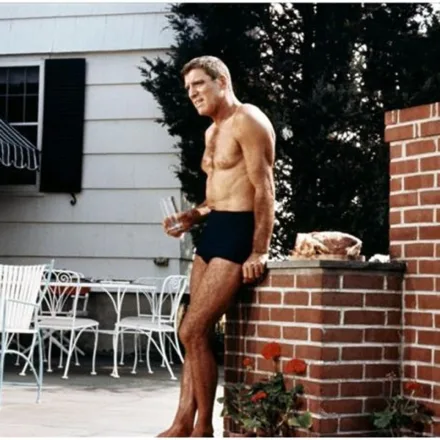
The Swimmer (1968)
Shared: Cinematographer David L. Quaid
Justin Bozung, Kate Buford, Preston Neal Jones, Rob St. Mary and others
Never Too Young to Die (1986)
Shared: Writer Lorenzo Semple Jr.
Gil Bettman, David Worth, Peter Kwong, Heather Drain and others
Being There (1979)
Shared: Composer Johnny Mandel
Aaron Hunter, Suzen Tekla Kruglinska, Maurice Bursztynski
The Parallax View (1974)
Shared: Writer Lorenzo Semple Jr.
William Daniels, Bonnie Bartlett, Barna William Donovan, Shane O'Sullivan and others
Comments (2)
El Rob Hubbard This was remade?!!?Anonymous Yes. The video is embedded above.