
Special Report · Film year 2017
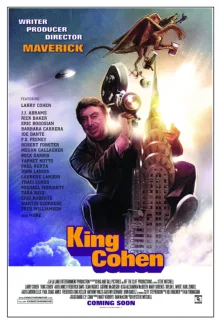
King Cohen: The Wild World of Filmmaker Larry Cohen (2017)
- Special Guests
- Steve Mitchell, Larry Cohen
Show notes
Mike also speaks to the film's subject, Larry Cohen (opens in a new tab), about his work on "Branded" and "Columbo" as well as several of his films.
Labels: Andy Kaufman Columbo Documentary Fred Williamson Joe Dante John Landis Larry Cohen Martin Scorsese Michael Moriarty Yaphet Kotto
Transcript
An automatic transcript, tidied into paragraphs. It has not been proofread, so names, titles and spellings may be wrong, and it does not say who is speaking.
Show the transcript (about 17,000 words)
You're listening to an airwave media podcast, Christopher Media. Let's make some noise. Anybody here like me, if you had never seen a Larry Cohen film, you're going to be in for some really radically unique entertainment. Larry started as a writer, eventually became a director to protect Larry, the writer.
Yeah. Shut up. We don't need all this bullshit. Wow.
What was that? Larry Cohen is so much the invisible man. It 's entirely possible to have seen a lot of his work without knowing you were seeing his work, his movies have this energy and this t Larry Cohen writes a white Martin Luther King for movies. I don't know.
What black exploitation means. Every movie is exploitation. So what he's a madman, but he makes these great little films. There's a brilliance.
There's a childish naughtiness about him. He would do things that were dangerous. Larry would not only shoot in the streets of New York, he would drive cars up on the sidewalk on the streets of New York. This is New York City.
Please get out of the way when you're coming. I would go down to an area with 5000 policemen and shoot a movie without permission. But Larry gave himself permission. G cartridges were raining down into the streets of New York.
People think that there's a terrorist attack and he goes, get a cameraman and shoot somebody panicking. And then the next day there were articles about it. They went, oh, Larry. You know what you're really seeing, if somebody who looks deeply at the present moment.
Larry's movie is not necessarily subtle. They thought from their reflections of the world around him and the problems in that world. For all the movies. I do take you something which is considered benevolent and turning it into some kind of monstrosity.
What, what every time I make a movie, they always tell me that's not the way it's done, but I do it and it works. He is the true independent filmmaker. He is jump out of the chopper hunt and gun. Larry is the best gorilla filmmaker in the business, a wild maverick sense in the tradition of handmade picture.
He trusts his actors and they trust him. The greater dead beautiful Holy will. The reality of life is. You don't know what the answer is.
You don't know why these things occur. Let's face it. Anybody will put up with anything if they think a movie is being shit. Hey, folks, welcome to a special episode of the projection booth.
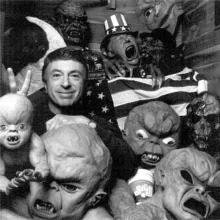
I'm your host, Mike White. Today, I'm talking to two filmmakers, Steve Mitchell and Larry Cohen. Larry Cohen is the subject of Steve Mitchell's documentary, King Cohen, the Wild world of filmmaker Larry Cohen from 2017. It is out and about and I would definitely check it out if I were you, Larry Cohen.
Definitely one of the less sung I can't say unsung because some of us sing them if that makes any sense. One of the lesser sung heroes of the modern day cinema definitely check out his work and check out King Cohen, the wild world of filmmaker Larry Cohen. First up, let's hear from director Steve Mitchell. Tell me, how did you get started in the business?
Well, the question is like which business because my first career was in the comic book business. I in comics for a long, long time. And one of the things that happened was because I was a freelancer. I decided to go west and leave New York.
I grew up in New York City and well, New York is a great city. It's probably nicer now than when I, when I left the city was kind of falling apart. I was tired of it. I was looking for a change and because I was working freelance, I could pretty much work from anywhere.
So, my buddy Jim Winski had been pounding me about moving west, moving west, moving west and, you know, eventually had an opportunity to get that done. So we packed up the wagons and hitched up the horses and went west and I lived out here a long time and haven't ever thought about leaving really like it out here. But my comics career allowed me to come west to sort of start my film career such as it is, such as it was et cetera. I work with Jim Winski.
I'm sure, you know, on shopping mall and that was one of those nepotism and things. It was, hey, you wanna write a movie kind of thing? Jim had been given an opportunity by Julie Corman and Jim called me up one night. You know, I don't, I think it was like a Wednesday night or Tuesday night.
It couldn't have been more ordinary. And he said, hey, you wanna go get some coffee and I said, sure what's going on and he said something interesting. So we went to a place and had a cup of coffee and some pie. And he told me that Julie had been approached by Best Run Video to do essentially, and this is uncharitable but a dead teenager movie.
Remember it's the eighties and they were all over the landscape, you know, Friday the 13th movies, I guess being the sort of the, you know, the granddaddies of that genre. And so Jim and I can't, you know, I mean, this is, this is fairly well known, but once again, Jim and I came up with an idea for a bunch of teenagers being chased around a shopping mall by, at the, at the time it was supposed to be sort of a phantom of the opera type killer. It was gonna be much more of a slasher movie and we kind of worked out the beats to it and we're all feeling very proud of ourselves.
It seemed like it was at least viable, if not good. I mean, who knows if it was good? But it seemed viable. And then Jim said those famous words, what if we do it with killer robot?
Yeah, I have one of those, those probably sitcom kind of takes where I'm going. I OK, I had to wrap my head around it. I mean, obviously, Jim had either thought about it beforehand or it was just a great moment of inspiration. So we took out the guy with the knife and we inserted the three killer robots and worked up a kind of a half outline, half beach sheet and gave it to Julie the next day and she forwarded on to Vestron and they said, ok, make it.
We had to go picture without a script. We had to write the script. I mean, based just based on the beats Vestron was going to finance this picture. And so Jim and I proceeded to write that and then we made it, I mean, I can talk about shopping mall all day, but there 's an awful lot of stuff on the record.
But I was doing that and then in addition to working on shopping mall and, you know, I was also writing animation because I had some friends who were in the animation business. And while I'm not really an animation kind of guy, I was approached by Steve Gerber who you may or may not know if you know anything about comics. But Steve was the story editor on the G I Joe TV S, you know, animated TV series and they needed a lot of episodes and Gerber knew that I, you know, I was a movie guy and I had some, you know, designs about, you know, towards writing.
And he approached me and I'm frankly, I'm just not really an animation guy, certainly TV, animation, certainly back then. And he said, well, don't think of it as animation, think of it as think of it as live action. And I said, oh, OK. And that's exactly how I wrote it.
And then the other mandate was, he said, write it like cut film and he call for the cuts, you know, don't allow anybody to sort of interpret what you want, be specific about what you want. So that was, that was great. That was a great experience. And I don't know how many, how many episodes that G I Joe wrote, I know I wrote one or two Transformers and a and a few other things as well, but when you're actually thinking about creating the pieces of film, it 's really a very useful exercise if you want to write film.
But of course, you don't really write film that way, you generally create situations for the actors and the directors and they usually sort of figure it out on set. But for animation, it was that specific. That was a lot of fun. So, you know, I did that, I've written a couple of other films, the animation thing kind of went away.
Although I worked at HBO on the spawn animated series, you know, I was a part of their storyboarding crew and I have just sort of this kind of bizarre mix master sort of career. And then, you know, in the nineties, I started doing DVD special features, you know, producing them and doing commentaries and stuff like that. And then all of that kind of led to. Larry talking about the animated script.
I'm very curious as far as are you going so far as to say, close up, this is happening or are you were talking about the cuts? Are you just saying like at this point? Yeah. No, it was, you know, I mean, it was one of those things where, I mean, I remember, I think there was, I was setting up kind of an action sequence in an alpine past or probably somewhere in Colorado or something like that where the cobra the cobra bad guys and their winter garb were about to ambush, you know, a bunch of G I Joe guys.
And literally, you're thinking of a silent movie montage where you have close ups of the bad guys, you have them raising their weapons, you have them inserting clips into them. You know, I think at one point I think I called for somebody maybe to use their thumb to take a safety off something. I mean, it was literally you're building the sequence through the cuts. And the one thing that was interesting about that was that it made for very long scripts.
Most animation scripts I was told were supposed to be around 30 pages. Well, G I Joe scripts were about 50 to 60 pages because there was so much specific information about cuts and pieces. And I later found out that I think it was Gerber trying to write storyboard artist proof scripts. You know, he didn't want to trust the storyboard guys to, you know, stage it, he wanted the writers to stage it.
He wanted, you know, he wanted the scripts to tell them what to do, which I think, you know, ruffled a few feathers maybe. But the quality of those, the quality of those shows was pretty good, you know, except for the kind of cheesy animation which, you know, on TV animation, let's face it's not gonna look like Disney, that 's for sure. I remember liking those shows quite a bit. I mean, I have to admit I didn't watch a lot of gem, which I think he wrote for as well.
Yeah. Yeah. Sadly I did but you know the money was good. So I didn't, I didn't want to say no to that.
But I do remember liking the G I Joe episodes quite a bit and because they felt more like little movies than television episodes. They were cinematic in their own way. And I think Steve Gerber deserves pretty much all the credit for that. I know that he inspired us to think that way.
He inspired us. And he says we're not, we're not doing Saturday morning cartoons here. We're trying to do stuff that has more value. And one of the things that was great was the only restriction we had in terms of the action was we couldn't kill anybody.
It was all that a team stuff where the things would blow up and, you know, guys would go running away and stuff like that. But there was, you know, there was a hand to hand Combat. We have no restrictions and limitations on that and you couldn't stab anybody obviously. But you know, it was, there was a lot of freedom and Steve was always saying, all right, think strange or think weird or different, think more cinematically.
He was always trying to push it. And so it was a great experience for me it was fun and I met a couple of good friends working over, you know, with those guys as. Well when you're freelancing for the comics industry, who are you freelancing for at that time? Because this was kind of a, an interesting age of comics because I remember there was kind of the splintering off of the other titles than just DC and Marvel around this time.
In the eighties. I was working mostly for Marvel. At that time, I started at DC, but in the eighties, I was working mostly for Marvel. I had a very long run on Iron Man with Luke mcdonald.
He was penciling and I was in it and I think we worked on that book at least for a couple of years. And that was the storyline which, you know, had Tony Stark, pretty much drinking himself into an alley on a snowy day. I think there was a, there was this great cover that, that Luke could pencil work, you know, Tony Starker sitting in the dead end alley and that's sort of a God's eye view of him. And, you know, he's just, he's pretty much at the end of his tether.
That was also the storyline, which I think introduced this character Obadiah Stein, who ultimately was played by Jeff Bridges in the first Iron Man movie. So I was somewhat involved with that, but of course, I never saw a nickel for it, but you know that showbiz. And so I had that long run over, over at Marvel on Iron Man. And then I think in the nineties I had about a three year run working with no boy Ogle on Batman.
I think I did two years on detective and I think a year or so on Batman and then there's other stuff in between. But, you know, you tend to remember the things that you were associated with the longest and then the nineties was just a wild and wacky period where I think I wound up going back. I mean, after I did the Batman run a PC, I think I was offered, yes, I was offered Iron Man again, which is hilarious because anybody who knows me knows that I hate ruling lines and using templates and I hate doing technical stuff.
I'm much more of a spontaneous kind of, you know, I just wanna go in there and whack away at it, with a brush or a pen or something like that and doing all the, that macao stuff was just not, it was never my thing. Some guys are great at it. You know, it's almost like they were born to do it. That was never me.
But somehow I, you know, they like, they like what I was doing. I also worked, you know, I don't know if you remember this company milestone, which was this company that was doing these urban characters and I worked on a one of their initial characters of static who I think has become fairly popular as an animated character. So, yeah, the nineties, I was very, very busy in the nineties. In fact, I was working mostly in comics in the nineties because the money was good, you know, sometimes real life and money make the decisions about what on what about what you do, you know.
And I was busy too. That was the other thing. I was really, really busy. One more question before I start asking about Larry Cohen when it comes to the extra work that you do.
And are you working with Mike Fel Felser on this stuff? No, I'm not working with Mike. I've heard of Mike, I've never met Mike. I know people who, who know Mike.
But no, I'm not working with him. I've never met him, you know, when I back in the night, you know, I started, you know, it's, it's funny I started doing this kind of work because I was a fan actually. You know, I had been, h I was a huge and I had been, I am a huge fan of the old Combat TV series. And my buddy Steve Rubin called me up and said, you know, I sort of heard that image entertainment is gonna do Combat on DVD.
And I said, oh, well, that's exciting. He said, do you think we gonna call him up and see if we can do some extras or something? Because he was Steve and I are both big fans of the show. We're also big war movie fans.
He had written a couple of books about war films and it was one of those, well, why not type thing? So we called them up and they said sure. And we did a bunch of extras for them for the first season initially for kind of next to nothing. Actually, it was, it was one of those things where I was able to jump in the pool on this stuff.
I had never really thought about doing it, although I had done film journalism 100 years ago in my youth when I lived in New York. And, you know, I'm, I'm a, you know, a huge movie guy, you know, what a surprise. And so I brought some of that skill set to bear with Combat and they were very happy with what we did because they didn't give us hardly any budget and we put together a bunch of commentary tracks and we did, I think I was about a 20 minute feature a or something like that for season one. And that show was very, very successful on DVD initially and then Steve sort of stepped out and I just continued to do it.
I produced all of the extras for all five seasons of Combat for image. And I think the big, the high point was that I managed to, yeah, this is in season one. That's true. This is in season one, I managed to get Robert Altman to do two commentary tracks.
I set it up. I flew back, I interviewed him. We watched two episodes together at his office. And the only thing I was unhappy about was that it was sort of, I was interviewing him and he was having a conversation with me, but basically I was the invisible interviewer.
And so a couple of spots where if you, if you really pay attention, you know, he's sort of talking to me when in point of fact, we're trying to create the sense that it's a monologue. But hey, I got Robert Altman to watch two episodes of Combat with me and talk about them. And, you know, it was interesting. He was, he was very pleased with what he watched and he was very proud of it.
And he said to me, he says, you know, I don't know that I could have done, could have done it any better, you know, you know, even later, you know, if he had more time or more money, he was very pleased with what he did. And if you watch those episodes that he directed, you can tell that there's something going on there that, that this is being directed by a guy who has a real, you know, eye for it and a real handle on how to direct. And, I, you know, as I say that I said, you know, I wish he'd maybe done one or one or two action movies of some kind, even if they weren't, you know, like, you know, you know, comic booky things, but more genre type things where I'd like to see him sort of, you know, use those skills that he had that he displayed on Combat.
He was very good with action. There are a couple of sequences in some episodes of Combat where I thought the action was really, really good and well staged. So, that was probably the real high point, but I continued to do these things after Steven went away and again, they were barely paying me anything. It was, I was doing it because I loved it.
And at one point, I think it was sometime in season two or maybe season three when I was putting some commentaries together. One of the editors up there, a guy named Kai Thomas who turned out to be, who's my editor on Larry Cohen. But I will, I won't get ahead of myself. He said, you know, you were chatting with the people before we get started and then it kind of gets formal and you remind them that they're not talking to me.
He says, well, why don't we do one where they are chatting with you. And so that was where my commentary career began. And I, and I said, how do I validate myself to the audience? You know, how do I let, let the audience know that I'm not just some schmuck.
And so I created the sort of semi famous intro of like, hi everybody. I'm Steve Mitchell DVD, special features producer for Combat insert season. And that was my introduction on virtually all my commentary tracks. And we did some nice stuff.
We, I got, I talked to some great people and we did some nice work and I, you know, got some nice insights and then I produced and directed a number of the featurettes for the later seasons that were done. So that kind of got me into the, you know, really into the filmmaking side of doing these, you know, mini documentaries and stuff like that. So I had that skill set and that 's just something that kind of helped get me to the point where I wanted to do Larry and point of fact, just to sort of foreshadow the Larry Doc when I was at image because I was doing a bunch of stuff for them.
I had the idea the original impulse to do this Larry documentary because I think I was looking at the IM DB and I was looking up some credit of Larry's and I think II, I noticed, I said, my God, I was shocked at the amount of stuff that he had done that I was unaware of because I was a fan of his movies and I was a fan of, you know, the TV, stuff aware of everything. You know, I was a big fan of the Invaders, you know, I kind of like blue light but as I saw that IM DB page of his, you know, which is as long as your arm, he had done so much work that I was unaware of.
In addition to all of the work that I was aware of. I said, man, this guy's got a hell of a career. And the other thing that I then noticed was how he was working independently and working in mainstream at the same time. And I said, this is different.
Nobody really has this career. So I was talking with one of the people up at image who was one of the business people. I was, I had a relationship with and, you know, I said, I wonder if it would you guys be interested in doing this? So we kind of, they said, well, look at the numbers and, you know, see what it's gonna cost.
You know, I think everybody wants to acquire stuff, they don't want to produce it, they want to acquire it. Because if you acquire it, you know, you spend far less than you do. If you actually write the producing check. So we did some of the math, we looked into the cost of the clips and what, what rentals would be and it would, it was gonna be kind of prohibitive, not the filmmaking part of it would have been reasonable, but the clip part of it would have been prohibitive.
Had we had we gone that route and then they kind of shot it down. But in the back of my mind, they said, I don't know if I can let this go yet. Here we are. Right.
So about what time was that? What, what year are we talking? I don't know, 0708, maybe 09. But I was thinking about that and then it kind of went away and then later on, I don't know, it's about three years ago, maybe, you know, time has just telescoped on this project.
My, one of my partners was saying, I think the first impulse for this thing started probably close to three years ago. And that sounds about right because before I hooked up with my producing partners, Matt Verbos and Dan Mckeon, I tried to do this on my own as an Indie Go Go crowdfunding project. I donated May 10th 2013. So it's been going on since at least then.
Ok. Well, so that's right. You did do that. And that was a, as crowdfunding goes, it was a colossal flop.
I was so not good at crowdfunding. And I think I've since sort of discovered you have that's kind of a very unique skill set. But again though, even after that falling on its face, I didn't let go. And what was interesting.
And then of course, the other thing is before I started the crowdfunding thing I had, I had to approach Larry. You know, I said to myself, well, I wanna do it. What if he doesn't want it done? I knew somebody who knew, I think Loreen Landon and I got the number through this friend of mine and I literally called Larry up one day and said, hi, I'm Steve Mitchell.
I'm, I'm interested in producing a documentary about you because I'm a big fan of yours. And I think, you know, your career should be celebrated. And then Larry said something very clever, like, well, I'm all for it, having my life celebrated, you know, or something like that. He says come up, come up to the house, I'll make you a cup of coffee and we can talk about it.
So we went up there and he made me a cup of coffee. He gave me a couple of pepper sham cookies and we discussed it and he said, well, if you can get it financed, I'll help you in any way I can. And I think at the time he gave me access to his, I ca I'll call it the archive. It wasn't anywhere nearly that well organized.
Trust me, it was a bunch of stills and a bunch of boxes, but still it was in its own way. His archives and that's where I got a lot of material to do the original trailer for the in Indiegogo thing, which again, like I said, I was a colossal failure in pretty much every way. But it's, you know, it was, it was an interesting experience. And then what happened?
I didn't want to let Larry down. I mean, I see, I went and met Larry. I mean, I told him I wanted to do this and, you know, I just didn't want to be some schmuck who as a good idea but can't follow through. So, sometime later, after that fiasco, I met Matt Verbos at Comic Con and Matt Verbos is one of the co owners of La La Land Records, the soundtrack label.
You know, they produce collectible limited edition C DS. They were a company that I knew because I'm a movie music fan and I met Matt at Comic Con and he said, have you ever seen this road shopping mall? And I said, yeah, and he says I'm a huge fan. I think that was the first inkling that I got that there was a huge shopping mall fan of them out there, which until that point I don't think I really knew and we made the movie, we were proud of that movie and it kind of went into the, you know, in, into the ether and, you know, it was, you know, popular enough, I guess.
And, but I had, we had no idea that it was, it was such a cult picture. It was an enormous cult picture. And I never knew that until, you know, years and years later that being said, that's how Matt knew, knew my name and we became very chummy and we socialized a little bit. I don't know, I think it was maybe had the better part of a year after we met.
I think some, I think months before II, I asked, he had said that La La Land was possibly looking to do other things, you know, they wanted to maybe try and do things other than soundtrack. And of course, it took months for that to sort of penetrate my marble thick head. And then I said, I wonder if you might be interested in doing the Larry thing because I knew he was a movie fan and he was a genre fan. So I called Matt up and I said that, hey Matt, it's Steve, you know, I got II I want to propose something to you know, because you mentioned about expanding and maybe trying to do different types of projects and, you know, I wanted to, you know, have lunch with you and talk about it.
He says, well, I'm, I'm not sure that we're in a position to do it. But let's have lunch. So we go have lunch at a restaurant which was about two blocks away from Warner Brothers, which seemed appropriate. And we, and I said to him, I said, well, the reason I wanted to get together with you is I've been, I've been trying to get this documentary done about Larry Cohen.
I wonder if you'd be interested in this. And he said I'm already interested. So, I mean, I didn't even have to pitch. I didn't have to tell him who Larry was.
I didn't have to say he's got this crazy co he was already pretty much there and by the time lunch was done, he said that, you know, the famous words, I don't know how we're gonna do it but we're gonna do it. And now here we are not ready to unleash it on an unsuspecting world. You have gotten so many terrific interviews for this film. I'm so curious how you went around doing that.
What did you employ some of those contacts that you're using when you were doing the DVD extra stuff? It all sort of started with Larry. We started interviewing Larry and God, I think we got 20 some odd hours of interview footage with him. Once you put Larry in front of a camera, you don't have to work.
I mean, I had done tons of, you know, pregame and prep and questions and stuff like that. It was the first day I learned, you sit Larry down, you put a camera on and you light them and you put a camera, you know, on and you say action and then we literally kind of gone out for lunch for a couple of hours and he wouldn't have noticed that we were gone. I mean, he just, he's off to the races. I mean, I've said this a million times, I'll say it a million more times.
Larry is the energizer bunny. He just keeps going and going and going. And that's in terms of his energy, but also in terms of, you know, his creativity, I mean, this, this guy is one of a kind. And so we started with Larry and then we started going after people that we sort of had easy connections to, I think our first day when we were doing interviews other than the Larry interviews, I think we scheduled five or six for one day.
And that first day included John Burlingame, who is a film music historian and a guy you always wanna have in any project. You know, he's, he's, he's fantastic. And we talked to David Scow who was somebody I knew and Dave Scow was the original writer of, pick me up, which was one of the masters of horror segments. And David wrote the short story and then wrote the script.
And so I knew David and yeah, a few other few other people, I think Ryan Turk maybe was one of our, our first interviews on that, that initial day, but we used a store in Burbank called Creature Features as kind of our studio slash set. And Taylor White who owns the store is a, is a good friend of ours. And he just said, well, the store is closed on Monday. So, you know, come in and shoot on Monday and then you can control it.
And because we had control that first day, we were able to get through, I think, five or six interviews. Yeah, it was about five or six interviews. And we, you know, we sort of started at about 10 and went to about, I don't know, seven or eight, but it was great to have that sort of control and it was also great to be able to just sort of, you know, on your first day bank, a bunch of interviews right out of the gate. And that was, and then we just started to do everything piecemeal.
We would find people, we would, we would find a way to get in touch with them and then we got in touch with them. And a lot of people said, yes, a few people said, no, it's like making a cake and you have to find the ingredients. You know, you can't just start with all the ingredients. You just sort of have to find the ingredients and that's sort of how we did it.
And then, you know, we had to hunt some people down, but somehow we managed to get it done. You mentioned before, what a prolific filmmaker, I mean, just his writing career alone, not even to talk about his directing career, but the guy has done so much stuff. How do you even begin to approach kind of form that into a 90 minute two hour, whatever your running time is documentary. At the end of the day.
My editor, as I said before was a fellow named Kai Thomas Ian, who I met at image and pretty much cuts everything I do. And Kai, if Kai was on this call, he would say, well, there 's usually a point when Steve melts down, freaks out and he needs to just be reassured that somehow we'll figure it out and that happens all the time. And when you do, when you're doing it, you know, I mean, and that was like doing featurettes that was like doing material that was less than an hour. And, but we're making a movie and a movie sort of has, has a different structure than a featurette does.
Sort of not entirely but sort of, and there was no script, you interview people. Basically, these things are made by interviewing sub people, subjects and you go through all the material and then you try and figure out how to tell the story and what we did was we use Larry's career as the spine. But what we were trying to do is create a picture of who Larry is as a creator. You know, it wasn't just, and then he did this and then he did that and then he did this and then he did that And there's a little bit of that because it's chronological, because the chronology of Larry's career is sort of interesting, especially when you know, when we found out that he started, he started his writing career in live TV, at the end of the fifties in New York, you know, and so we used the chronology as kind of the spine, but we use the movies to sort of illustrate an aspect of what he 's like as a creator.
And as a person, for example, when we talked about his Salem's Lot movie, return to Salem's Lot. It's not so much about Salem's Lot and Stephen King as it was about Larry's relationship with Samuel Fr. So that, that movie, that experience gave us insight into his relationship with Sam for and in a sense when you think about it, Sam Forr and Larry Cohen are cut from very similar plots, you know, the writer, producer, directors. And they have a very unique voice and what was nice about that was to show Ace Larry's relationship with Sam, but also to just to show that that there are no, not a lot of these guys around.
When you look at the history of film, there aren't many of those guys. The other guy. The modern day version of that is I think Tarantino, you know that there is AAA certain voice that comes from these guys when they make movies that is truly and uniquely their voice. I just as an aside, I'll tell you a little story.
A friend of mine, a guy that I wrote a movie with, a guy by the name of Bob Sheridan. Before we would write, we would usually get caught up on stuff we watched and, you know, talk about movies, you know, that, that we liked or didn't like and wanted to share and, well, I remember one day he said so, you know, well, I had an interesting way of talking, you know, he said he, oh, I saw this, Larry Cohen movie the other night. The Perfect Strangers, you know, it was kind of this, you know, almost like an underground type of movie that, you know, like a thriller.
And I said, so how was it? And, you know, he always smoked and he would take, took a drag on his cigarette and he kind of nodded his head and he goes it's a Larry Cohen film. I understood completely without knowing anything about the movie, what he meant. And how many filmmakers can you say that about you to say it's Quentin Tarantino movie?
Well, you know exactly what it is, it's a Sam Fuller movie, you know, I mean, I would add, say Sam Peck and pa to this list and certain not tours, you know, that's what I was trying to do with this documentary in a lot of ways is to, is to basically show people who Larry Cohen is what a Larry Cohen film credit really means at the end of all of his movies and try and create a portrait through the work that the career, you know, try to create a portrait of him, a professional portrait of him using his career as a spine.
And by the way, it takes you a long time to get there, it took us a long time to try and sort of figure out not so much the spine because we have the chronology, but to try and sort of figure out how to do that. There they have that there were more than one, the one of these instances where I did you ever see the movie castaway with Tom Hanks, where he, where he's at the crossroads. At the end, we had a lot of castaway moments when we were cutting this movie, you know, which way do we go with this. And, you know, when you do a documentary, at least in my case that sometimes there's a lot of throwing stuff against the wall of sea, it sticks and sometimes it doesn't.
And sometimes you have to take a sequence apart and tear it apart and sort of say, well, what are we trying to say with this? And that's why it takes a while to make one of these things, not just getting all the, you know, the ingredients, but then taking those ingredients and creating something from those ingredients. And it's maybe there's a better way to do it, maybe a faster and more efficient way to do it. But when it's just, you know, when, when, when, somehow, when I'm in the mix of my editor, that's kind of how we have to do it, but we sort of figure it out.
I mean, one of our monitors was we'll figure it out. When I think of Larry's work as feature films, especially, I tend to think of Michael Moriarty. It feels like he worked with him quite a bit. Was he pretty much the go to actor for him for a while or were there others that he really relied on for many, many films?
Well, James Dixon is in almost all of his movies but they're, they're old friends. I think they were in the army together. So they had that personal thing. But once he worked with Moriarty, on cue, he always was thinking of Moriarty.
I mean, Moriarty to Larry Cohen was John Wayne was to John Ford in a lot of ways, the go to guy. And, you know, once Larry knew how talented Moriarty was, Larry started writing with Moriarty in mind and their relationship was very, very interesting and Moriarty was a very, very big get for us. We kind of knew that if we didn't get Moriarty, we would be, I'm not gonna say in trouble, but I just don't know that we could have represented, you know, the career perhaps as accurately without Moriarty considering that they had done five projects together.
And it took a little hunting to get Moriarty. I gotta tell you'd asked before about, using connections. We had no idea how to get in touch with Moriarty. He didn't have any representation and he had become an exile living in Canada after law and order.
I think he had some issues with Dick Wolf. And I think then I think it was Janet Napolitano, who was our attorney general back back in the day and then he sort of exiled him up to Canada. And so we had no idea where the hell he was and how to find him and I'm going well, no, Moriarty, you know, I'm not gonna go, I'm not, I was gonna be that, that bleak and say no Moriarty, no documentary. But Moriarty was a very key player.
And then I remember one day I was looking at the cinema retro, I think website, I think maybe I saw something on Facebook that took me to the website and they had done something about Moriarty and they said that he was writing for a conservative blog. I think that was, I don't know if it was situated in Canada or where it was. But I think, I think that the Canada thing was present in this article that I think Lee Pfeiffer had written about Moriarty. So I said, well, let me send an email to the block and see if I can get some, you know, some conduit perhaps to Moriarty.
And so I wrote, I wrote this email and I sent it off and I was, I was cutting with Kai one day. It was literally, it was actually literally just about 24 hours later and my smartphone rings and I see on the, on the screen it says Vancouver BC. And I said, I said to Kai, I said, holy shit, this could be Moriarty and I pick up the phone and I go, hi, it's Steve. And he goes, hello, Steve, Michael Moriarty.
Nice to meet you. And I said, I said, boy, I've been looking all over for you and he goes, well, now you found me and he was the most delightful farming guy. I said, I was doing this project. He says, oh, I love Larry and I said, you know what, you know, where are you can, can we come and interview you?
And he mentioned that he lived in Canada. He was in British Columbia. I don't think he was in Vancouver. I think he was, but close enough to Vancouver.
And he said, you know, and so we had decided that we would come to Vancouver and he would come, you know, to Vancouver and talk with us and he wanted to know what the questions were. He says, I don't know if I remember very much, but maybe the questions will stir something in my memory. And I said, OK, well, let me work on those and I'll get an opportunity. He goes, all right, thank you.
And then, you know, so what a coup that day to know that we connected with him and he was open to it. And so I sent him the questions and we went to Vancouver one weekend and we talked to Michael Moriarty and it couldn't have been more fun. You know, he was a delightful, charming guy. And after we were done, you know, he was staying in this hotel that he liked and we shot it in his hotel room and he says, well, come on fellas, let me buy you lunch.
And we were, we wanted to buy him lunch, but he wouldn't be, you know, he wouldn't do that. And that was very nice. And we also were willing to pay for the hotel room too. And he just said that he had that gift.
He would, he wouldn't have it. It was great. I enjoyed Moriarty a lot and it was a huge get. He was a huge get and he was, he was terrific.
I mean, he was fun and he had some, he had a lot of good stuff to say about like, you know, the problem is when you do a project like this, there's so much you can't use. So what happens is you just say? Right. Well, what can I, what am I going to use?
That's going to tell the overall story. You know, you have to think of the whole picture, not just the parts and when this comes out on Blu Ray, I'm sure we will have so many deleted scenes or extra scenes. It all, it, that may actually be, might actually be hunker than the movie itself. But if you're into Larry and you're into the people who work for Larry, I pretty much can guarantee that there will be lots more stuff, lots more anecdotes, lots more to listen to, you know, and Moriarty will be in there along with other folks.
I have to ask you, what was your experience like with Ya Koto? That was an experience that was an experience. Larry helped, helped us with Ya. Ya is a huge fan of Larry's because Larry created a part for him.
That was, I think maybe Yaffa feels it if it's not his best role, it's one of his best roles and a very significant role for him at the time. You know, Bone, which is a very interesting movie. If you haven't seen it's, it 's crazy nutty cuckoo. And it shows to me a Larry that I sort of wish Larry had sort of stayed more on the track, you know, of Bone.
You know, to me, Bone felt almost like a play. You know, I felt Larry, the playwright coming through in that and I thought it was, I think it's a really, really interesting film. I'm not surprised it was not at all successful, but for Yaffa, it gave Yaffa a great part, a great opportunity and a very full blooded interesting role. And Yaffa's very grateful to Larry.
So we connected with Yaffa. Yaffa was coming into town. Larry helped set it up and we were going to interview Larry at a hotel in Burbank and that's when the adventure started. Gasset is a son of, I believe Nigerian Jews.
He is Jewish and he is not convert. I think, I think his parents were African and Jewish. And so, and he grew up in Harlem and he went to college and he was into Shakespeare. I mean, he's a very complicated kind of guy and he has a very sort of complex, interesting background.
And he and I had two conversations on the phone and he said, he says, well, you're gonna be doing the interview. And I said, yeah, I said, I feel like we're connecting and I said, well, I hope so. I just, you know, I look forward to chatting with you. I have so much to talk to you about, you know, and you're my favorite FBI agent of all time, you know, Agent Mosley, you know, from midnight run.
And so everything was in place. We got it set up and we arranged for the space in his hotel and then when we were ready to go, I called him up and he says, yeah, I'll be down, I'll be down, you know, and I'm going oh, I'm, I'm feeling you sort of developed 1/6 sense when you're dealing with people, you know, in a famous people that you want to interview. And my spidey sense was kind of telling me this might be a little difficult today because I think Yass had, I think had a little bit of an accident, he fell and hurt his knee the day before we were supposed to interview him.
And so I think that was bothering him and then we were going to interview him. I think it was the day after Obama and the Israelis were having issues. I th I think basically, yes, that, you know, came down the elevator and I said hi, I'm Steve and he goes, he goes, he goes, you know, I'm really pissed off. I'm, I'm real, I'm really pissed off about what 's going on in Israel and with Obama, I don't remember the specifics, but it was obviously they were, they, we were not getting along with Israel or Israel was not getting along with us that day.
So I'm going all right, I'm gonna have this, the kid glove. I immediately put on the kid gloves and because my goal is to get him in front of that camera and have him talk about Larry and hopefully with some enthusiasm. And so we eventually get him to the room where we're set up and he says to me, he says, I just want to go on the record and just say, say how I feel about what's going on with the US and Israel right now and you know, you can take it and you can sell it to a news outlet or something like that. But II, I just want to get it out of my system and I'm going, well, I'm gonna let him get it out of his system.
So we kind of vented, he vented for, it seemed like 15 minutes. It might have only been for five minutes. And then we basically got started, everybody in the room said how much they love him in midnight run and that we were just enormous fans and we kind of gave him the curtain call that he never had. You know, because I think he said he had only seen the movie once and I don't know if you saw it with the crowd, but, you know, we were all so very complimentary and, you know, I've seen all these other movies, you know, like I'm a big fan of report to the Commissioner and across on 10th street and everybody knows him from alien and the homicide.
He told us how Barry Levinson kind of tricked him into doing the homicide, which was sort of interesting. And then, you know, he, it just sounded like Yaffa always was having a problem with something at any given point. And, you know, for example, when he did midnight run, you know, he, I think he enjoyed the process and he, and he, and he did tell us one thing that was really interesting is that if you watch the movie and if you're a fan of the movie, you see every time you see Agent Mosley, he has more guys. His army kind of blows exponentially.
You know, like by, by the time they, that, you know, he catches up with him in Arizona, he's got, like, he's got 5060 guys, he's got a couple of helicopters, he's got cop cars, he's got the two guy and he suggested to Martin breast, he says, well, how about every time Mosley shows up, he has a bigger army and Martin breast went with that idea. I thought it was a great idea. And so anyway, we got the interview, we got this interview with him and you know, he says, I never give interviews. I turned Roger Moore down and he wanted to do something.
He wanted me to do something, but I love Larry so much. I'm willing to talk to you guys. So we got the interview, we signed a release. You know, we all beat the sigh of relief.
We talked to him a little bit more about his other movies and, you know, everybody that was in the room was a legitimate fan of his and it wasn't just, you know, alien, you know, which is probably a big one for him or midnight run, but, you know, the other pictures as well. So he kind of knew that we knew who he was and we paid attention to his career. And then he started getting political with me. It was interesting like he said, do you think America is weak?
And we're, we're literally walking away and I'm walking him back, you know, and I normally never do, I never bite on these things. I don't believe that that politics is the right place, you know, to go. When with these things. But he was very feeling, very political that day.
And he says, do you think we're America's weak? Obama is weak. And then I just said to him and I happened to hear this on Bill Maher some days earlier and he said, do you think we're weak? And I said, I said, yeah, but we're not weak.
I think we can kill anybody anytime, anywhere, if we can put a target on them. I said we have, we have more aircraft carriers than the next three superpowers combined. We can, we are not weak, we have the ability to do whatever is necessary to protect ourselves. He goes, yeah, you know, you might be right.
You might be honest, I wasn't trying to convince him I wasn't looking for a fight. I just, that was just, I just don't believe that we're weak and that was the reason why. And so that was the asset he was looking for a fight. He was pissed off.
But when it came to talking about Larry, he was, he was enthusiastic and articulate and very generous and he's a big fan of Larry's. So what is the plan for the release of the documentary? Well, the plan right now is we are, we have been selected by four film festivals and I, and I'm not, but being coy here, I can't tell you what they are because they have, they have to announce it. We're not allowed to announce it until they announce it.
But they're festivals of some size genre oriented. I'll give you a little clue there. And once we're done with the festival route, I think, you know, when you're doing a documentary, I think of any kind or an independent film of any kind. If you can get some Laurels from the festival that validates you in the eyes of a potential buyer or a distributor, getting those Laurels and being seen at festivals validates the movie and you know how it is in Hollywood.
Everybody wants something that's pres sold or pre validated or pres something nobody wants to feel like they're taking a chance. And so one of the reasons why it 's taken a while for us to get the movie out is the festival dance that you have to do, you know, submitting and getting accepted and dealing with schedules. I mean, the movie was fundamentally done at the end of LA at the end of last year, beginning of this year, I mean, we're, we're doing some final, you know, tweaks on it right now just because we have the time and we're doing, you know, some adjusting of graphics and things like that.
So, but the movie has been, has been done. But when you are doing un unless you just wanna throw the movie out and maybe get a, you know, a and I'll say lousy, that 's the first word that comes to mind. It's not really the right word, but if you get a lousy deal, well, then, then you make your movie, you throw it out, you get a lousy deal and that's it. So, unfortunately, you have to, we're adding the better part of a year after the movie was done to do the festival dance and to do the festival circuit.
But at the end of the day, I think it will be beneficial for us. So that's the one with an answer to your question. Your simple answer to your question is I'm not entirely sure, but I would like to think it would be sometime towards the end of the year. And where can folks go to get those announcements and see what festivals you're playing at?
Larry Cohen's Facebook page is something that we are, you know, we're working with Larry and we're doing a lot of announcements through, through that. My partner Matt has of course the La La Land website because La La Land Entertainment is the presenter of the movie. So we have that information. The guys, my two partners are, you know, doing tweet related stuff and I'm sorry, I'm, I'm not entirely 21st century.
I still don't understand how tweets work, but tweets are a form of getting the word out and getting, you know, eyes and ears, you know, to connect to your movie. And so we're doing a lot of the Twitterverse, I think you call it not you, but that the universe calls it. I'm doing, I'm, I'm starting to do a bunch of interviews with guys like you talking about the movie whenever and wherever I can, we already have a lot of awareness and I think that's just gonna start to grow, which is, which is all right. I don't, I don't mind trying to create a groundswell for this thing.
I want people excited to see it and I'm excited for people to see it, you know, at the end of the day, I mean, I think every filmmaker says, oh, I'm very proud of the movie, but I actually am just to sort of, you know, to digress for a second. Kai and I were taking a look at it, I think, not, not that long ago. It was probably a few months ago, but we haven't really looked at it from start to finish for a while and we sat down one day and we watched it. We were trying to figure out some stuff to tweet, but we hadn't really watched it from start to finish and we kind of turn to one another and we go, gee, you know, this isn't bad because as a filmmaker, you never know.
You know, I mean, if you're a raging egomaniac and you believe that everything you touch is gold. Ok. Well, but I'm not that guy but you know, Kai and I worked really hard on this thing and, you know, we were, like I said, we're in the middle of it. You know, you feel like you're in the middle of the ocean.
You don't know which way to paddle some days. And trust me, there were a lot of those days. But, you know, we sat, we watched with going, she, this really isn't that bad. And the other thing that, and this was, this was, this was intentional is we tried to make it fun because Larry is a fun guy.
And so that's partly, you know, that was part of our intention. And there are some, you know, if you've seen the trailer trailer, got some funny moments in it and I gotta give a shout out to the guy who cut my trailer, Zach Toe. I had nothing to do with the way the trailer was cut. We gave him the material and he said, well, this is, this is my take on it and we had, I took maybe a note or two at some point.
But you know, the funny that you get from the trailer is the funny that you get in the movie. And because Larry's a funny guy, Larry is a, you know, an outrageous character and whatever kind of storytelling you do, whether it's, it's fiction, nonfiction. I think audiences attach themselves to great characters. I mean, when you think about any movie that you really love.
My guess is great characters that are in there. What you think are great characters. And Larry is a great character. Larry is a character from almost like a movie and we sort of celebrate that, that's part of what we're celebrating.
The other thing that we're doing. And this was, I'd want me to say that this was intentional, but it kind of turned out to be sort of one of these sidebar things that kicked in is that it celebrates a kind of filmmaking that doesn't exist anymore. It celebrates a kind of filmmaking that, that I grew up with, which was low budget, sometimes very creative wacky. Let's get it done quickly.
And for no money is wrote against the wall kind of filmmaking. And the thing that we, that that was in play then is if you could get a movie made and it was remotely good or interesting or commercial, it would get released in a theatrical way, whether, you know, it's mostly drive-ins or grindhouse or wherever. I mean, I grew up in New York City, I didn't have any access to drive ins, but I had access to 42Nd Street which was grindhouse ago. Go.
I mean, I had plenty of access to grindhouse movies. Those movies could be seen theatrically, which they can't today. So an awful lot of movies get made as you know, and unless you hunt movies out on a daily basis. It's very hard to find some of these interesting gems that are direct to video type movies.
But Larry was making those movies and Larry's movies were, were going into theaters. Larry's movies, you know, played, you know, the black exploitation movies played at major venues in New York City. We have this one great photo in the documentary that Larry provided of where he's, he's in front of the Black Caesar logo at the, at the Arca O Cinerama theaters on Broadway. Those were big houses, you know, and IP was getting into these big a size houses and that was, that was, that was kind of the norm back in those days.
And I miss those days, I miss those kinds of movies. Now, you know, Hollywood determines what you want to see based on marketing as opposed to in those days. You go, well, maybe we can make some money from this and Larry was part of that and I, and we're trying and in our own sort of small sidebar kind of way. I want to celebrate that.
Well, Steve, thank you so much for your time tonight. Oh, it's been my pleasure. I, you know, obviously wind me up and I'm off to the races. I can talk and talk and talk.
Well, it was a real pleasure. I mean, you've got some great, great stories to tell. So this has been terrific. Hopefully the people who listen to this won't be pull it out of their mind.
But whether are they aren't, they should see the film because the movie is not boring and Larry is not boring. And that was, that was, that was always the goal and it's kind of fun and, we can all use a little more fun these things, can't we? Do you feel that the United States is weak? No, I don't feel well.
Now that 's a whole another podcast, man. I don't think the country is weak. I'm not, I'm not entirely sure about the people who are sitting in the front office if you know what I mean? But boy, now that would be a conversation with the iota, wouldn't it to see where, see where he falls on things?
It's, I'll put it to you this way. We live in interesting times. Some days may be a little too interesting. But, like I said, that's a, that's a whole another conversation for another time.
And now here's the man himself, writer director Larry Cohen was writing your first entree into the business. Yes. Writing was my way in. Yes, indeed.
I thought that's the best way to get in because people don't have to risk any money to see what you've got. You know, you go in the script and they've already written it and they can see what you've written and if they like it or not, or if they think it's promising, it's very hard to do it any other way you could make a film, of course. But it takes time and a lot of people and money to do it. Right.
And so I thought that was definitely the way to go. I enjoy writing too. So it was no problem doing it. What were those early days of television, like when you got into it?
Well, it was a wonderful period because it was mainly live television That was at the very tail end of the live TV, period. So you got to sit down with the actors and the director and have a read through of the script. And then there was rehearsals all week long. Not usually downtown Manhattan in some some loft, they would set the set up the furniture and simulate the set and they would have the actors perform in rehearsal and I'd be there.
And then, of course, on show day, I had to be there because after the run through in the afternoon, the show a little bit long or a little bit short and the writer had to make adjustments. So they had you there and then you sat through the show and in the control booth and watched them do it. There was no stopping. That was it.
So if anybody forgot their lines or forgot their blocking or something, you know, you hope that the audience wouldn't notice it was, it was a lot of fun. But then of course, tape came in and as soon as tape came in that was the end of life. So then they didn't, they didn't, just stop and go correct any mistakes that were made. And, it was never the same after that.
That was film. II I got so that they stopped doing, much of the web taping also except for sitcoms, because they thought that the film versions had more life and more rerun value over the years. So, and then that was that and they shifted the, mostly the Hollywood, pretty soon there was almost no television being done in New York City except for a couple of game shows. You know, it was, it was, it became a different television.
If you wanted to work in television, you had to go to California, which I did. Can you tell me how did branded come about? Brandon was my first series that I sold. We got on the air.
That was unusual because I, we got the show on with, just my six page treatment and Chuck Connor's commitment to star in it. R and Gamble agreed to sponsor the show on Sunday night at 830 which is a fabulous time period. And we came in after Walt Disney and we were followed by Bonanza. So these were terrific shows and they had built an audience.
So we came in a good spot in those days, the sponsors like Procter And Gamble on the time period and they could program anything they wanted into that time period. That's all gone today. There's no one, none of that anymore. But in those days you advertising agencies and their clients who were the big sponsors more or less on the time periods.
So, we got on the air, we got on the air within a few months time. We ever, never even shot a pilot. We actually got the commitment to go on the air and then we shot the first episodes and it was, it was a high rated show. It was up in the top 10 for quite a while.
What was that period of time like for you when you're doing both feature films and still working in television? Well, I like to write so it didn't matter to me, I was going to write something every day. So if I wasn't working on the television, the show, I would probably, you know, be writing a screenplay. The first screenplay I saw was return of The Magnificent Seven, which was made with U Brynner, produced by the Mir company.
And it was, it was quite successful, actually wasn't very good, but it was quite successful. Well, that must have been a little bit of pressure trying to follow up on the Magnificent Seven. Well, the way episode seven was a strange story and that when it first was released, it didn't do very well at the box office at all. In fact, it never even got a major downtown release.
It was real. It opened at the Brooklyn, Brooklyn theater and then played for, base on the low circuit and then it was gone. Nobody paid much attention to it at the time, it became very popular on television over the years because all the actors became stars, James Coburn, Charles Bronson, everybody became stars out of that picture and especially Steve mcqueen. So it built up its reputation from TV.
And that's why, the marriage company called me in and said, we want to make a TV series out of the window seven. And I said, no, don't do that. I said, hey, I mean, you could get a sequel, you can get a movie out of this. And I talked to him doing a movie version of it rather than going and trying to do a television series and you Briner agreed to start.
And so, we had something going for us and, you know, so I wrote the script, it took about two or three years for the damn thing to get made even after I wrote the script. But it did get made. And at the time, they said to me, well, we can't use the music from the original picture because it's being used as an automobile commercial theme. And I said, well, if you're not gonna use the mu music by Elma Bernstein and don't make the picture, there's no magnificent seven without that music.
And again, I talked him into it. So, and that, that, that score was for the sequel, was nominated for an Academy Award. It's funny that the original music for the first version was not nominated, but the same music over again was nominated for the sequel, didn't win, but it was nominated. Anyway, you've worked with Fred The Hammer Williamson a lot throughout your career.
And I'm curious, what was that first time meeting him? Like, oh, it was perfectly amicable. We had a very nice time. He's got a great sense of humor.
We could get around and needle each other. And I always enjoyed Fred. I had a great time with him on all the pictures. We did the movies that you've made with him, especially Black Caesar and Hell up in Harlem.
Those, they just really stand out as, I mean, he's made a lot of great pictures over the years. But those films really stand out as being just terrific. Well, he made a lot of bad pictures too over the years. But th those, those were two of the best and original Gangsters, which we did years later, I thought that was very well done and got very good reviews and in that one, Fred was actually the producer.
So we didn't get along quite as well because he was always worried about the money. He wanted to come in under budget so we could keep the money. And I told him we had to, we had to spend every penny to make a good movie. And we did, but he wasn't too happy about not having any leftover money for himself as a little bonus.
But we did get the movie made and we buried the hatchet after the picture was released and did well. We spent a lot of time together. He lives in Palm Springs. I go down to see him a lot.
You go golfing with him. Oh, no, I don't do that. I wouldn't go out in that hot sun in Palm Springs for the golf club for anything. What was your experience like working at Columbo?
Well, you know, Peter Falk made his television debut in the second live show that I wrote on Kraft Playhouse. It was called Night Cry. Jack Klugman was a star and Peter Falk came on and did like a five minute scene as a little informer trying to blackmail Jack Klugman. And I wrote the scene and they got this guy and as soon as we had had a reading of the of the play, everybody was amazed at how great this, this new actor was.
He was he, you know, he had a glass eye and in those days, he hadn't mastered the art of hiding that. So his eye, the eye kept swimming all the time back and forth and one eye would go in the wrong direction. It really, it's really worked for the character because he was supposed to be this underworld creature. And he was sensational in the part.
And after the show was over, phone started ringing and people were calling from all of the columnists and reviewers. They wanted to know who this guy was. And the producer of Murder Incorporated saw the show and decided to hire Peter Falk off that to play Aver Ellis in the movie Murder Incorporated, which was his motion picture debut in which he wore the exact same color he wore in my show and played the same character basically and got an E on the issue before. So then his career was on the way and we always stayed friends.
And years later, he asked Universal to hire me to write some Colombo episodes for him, which I did. Yours are definitely some of my favorite episodes, especially any port in a storm. Everybody likes that one. It's one of the best ones they ever did.
I actually wrote the very first one of the series when they were it was converted by the book and it was it was you know, acclaimed, he got a Emmy nomination and it was directed by Steven Spielberg. And the my, from my point of view, the tragedy of it, I was, I gave the, I gave the script to Levinson and Lee, the creators of the show as a gift and they turned around and gave it to Stephen Buck. So who put his name on it and collected the Emmy nomination and got to have a picture directed by Spielberg. He never said that, He never said thank you.
But he's been, he's been collecting the residuals on my story for maybe 30 years now. So it must have mattered to a lot of money that he got. I got no thanks at all from but and Levinson link never really thanked me very much and Universal sent me a color television as a gift. I hated that television show.
It just shows you that when you do a good deed. And you try to help somebody. It often doesn't work out that well, you should mind your own business. It's my own fault.
I thought I was so such a big shot. I could just give away a story. And so what? But I learned to regret it.
Can you tell me how did God told me to come about? Well, it was just another one of those ideas that came to me and I, and I wrote it. There was nobody else involved. There was no producer involved and nobody nobody looking over my shoulder, I just wrote the whole damn thing.
Then we went out and put it together and managed to get somewhere to put up some money and we made the picture. It was, it's very opera pos today because, all these terrorists, they're all killing everybody in the name of God. And usually before they blow themselves up or shoot somebody, they yell, God is good and pretty close to God told me too. So I never, I never thought that it would finally basically come through, but that's what's been going on and that's what was happening in the movie.
Can you tell me how Andy Kaufman got involved in the film, he got involved in the film because I saw him perform at the improv in New York and I thought he did a great job and I just went over to him afterwards and said, listen, I wanna put you in a movie. I wanna be the one who put you in your first movie. And, I told him the idea was that he was gonna be dressed as a police officer and March in the Saint Patrick's Day parade and then pull a gun and start shooting and assassinated a few people. And he looked at me, I'm sure he thought, I finally met somebody crazier than myself.
Everybody thought and he was nuts. But they thought I was nuts too. So we were a perfect match. And he came down and he took him into a, coffee shop so he could change into his police uniform.
He started a ruckus in the store in the store and I had to ask him to leave. He started clowning around as a police officer and we got him out in the street, you know, it, Saint Patrick's Day. There was a lot of drunks around and he's running over to the barricades and blinking his eyelashes at them and blowing kisses and, they were climbing over the barricades to kill him. I mean, I had to, I had to protect him from the crowd and he was provoking everybody and that was Andy, but he did get in the parade and he did, he did his job and I think he was very good in the very brief part that he had.
And then when he had to die at the end and he says, God told me to which is only, he's only line in the picture because he's lying there dying. And, we had no microphone, because we didn't record sound with this parade coverage. So, when we got into the mix, I had to do the lines for my, for myself. So actually, it's Andy's lips moving, but it's my voice coming out saying God told me to and when he finally saw in the movie and he said to me, well, I know you didn't have any microphone there.
How did you get my voice? And I said, Andy, it's not your voice. It's me. And he said, I know my own voice.
Don't tell me that. And he wouldn't believe it. And he, and this went on for years up until the time he died. Every time we ran into a big argument about whose voice that was on the screen.
And, anyway, we were, we were very friendly and I was talking to him about putting another picture and we were on the phone. He was calling me every couple of weeks. How is, how is it coming along? I love the script.
He got the money. When can we start? And all the time he was calling me, he was in a wheelchair dying and had, he couldn't have done the picture anyway. But, and then one day somebody called me up and said, Andy died.
I said, what are you talking about? I talked a week ago and that was the way it was. Maybe he had a hope that somehow or whether he be cured and be able to do the movie or maybe he was just putting me on, you know, but whatever it was, it was a sad, sad, sad thing to see him go. He was a wonderful kid.
Can you tell me about the American success company? That is such a fantastic film and it doesn't seem to get seen as much as it should. You know, I don't, I don't like that, that she particularly but it's, it's, it has its moments. I thought, I thought Jeff Bridges was wrong for the part at the time.
He wasn't much in the way of comedy and it needed, it needed a comedian of some kind. Somebody with a real comic sensibility. At one time, I had signed Peter Sellers to star in the picture. He was at the bar.
He was at the native of his career before the Pink Panther returns came and brought him back again. But for all while he was not able to get any pictures because he had a bunch of awful films that hadn't even been released. So when I got him for $100,000 he was at a bargain basement price and I couldn't get anybody in Hollywood to give me the $100,000 to pay his salary. I had to go back to the agency and beg them not to charge me the money because I couldn't deliver the package for him to start in.
And they were kind enough to let me off the hook. But that the meeting I had with Peter Sellers was very good and I'm sure we would, I would have had a lot of fun directing it. But anyway, when somebody came along and wanted to buy the script, I sold it to them. That was about it.
I didn't have anything to do with the actual production of the picture. And II, I think they shot about 50% of the actual script. They, there was a lot more to it and a lot more twists and they cut it down to a minimal. So what can you say?
I'm glad you liked it. And have you ever had your screenplays published? No, I would like that though. If somebody would like to publish screenplays, I've got a bunch of ones that had never been seen before.
That would be wonderful to be published. But I don't know if there's much, much of a market for published screenplays. Well, you've got so many stories that are just so tight. I mean, I'm not trying to butter you up, but it's just that so many of your films are kind of a master 's class to me of storytelling, things like the Ambulance and Phone Booth.
I mean, these, the scripts that the stories just ripple when they're on screen. I would love to be able to read those and just see the way that you put those together originally. Well, I would be happy to have them published if anybody came forward and said they want them, they're here, they're here and they're available and I just don't intend to go banging on doors, asking people to publish them. I'm too busy writing new scripts to be doing that.
You're still writing every single day just about you know, not on weekends anymore, but sometimes I even do it on weekends if I have an idea and I want to keep going with it. I just, you know, I don't care what day of the week it is. I'm going to write the damn thing. How did Steve Mitchell approach you about King Cohen?
They called me on the phone and said they wanted to do a documentary about me and I said, OK, but I'm not going to have anything to do with this making a documentary. I don't want to get involved in looking over your shoulder or critiquing what you're doing because I'm a control freak. And if I get involved with something, I want to be in absolute control of every phase of it. And I don't want to do that with this project.
I want you to go do what you wanna do and don't show it to me until after it's finished. So that's what we did. What did you think about when you finally saw the finished project? I only just saw it up in Canada and Montreal at the film festival.
The first time I saw the picture, I was pleased with it. There were some things I would have liked to have included that weren't in there but generally did a very good job that. Has to be difficult to see. Well, maybe not difficult, but it has to be interesting to see your career.
Being explored on screen by somebody else. As I say, I tried to be objective and let them do what they wanted to do with the picture and the audience seemed to like it and it won the best documentary up in the Montreal Festival. So I guess it went over well and I hear it went over very well in London just last week. So we'll see what happens.
I know it's going to play in, there's a engagement in Austin, Texas and one in Paris and one in Lisbon. And it's going into a lot festivals. So I'll see what happens. I know a maniac cop and it's alive have kind of taken on lives of their own and have gone on even past your involvement necessarily.
But I am curious when they do a remake of Maniac Cop or it's alive. Are you involved at all in those things? Well, certainly not in that last. It's a live fiasco that was done in Bulgaria.
It was, it was really an embarrassment but the money was very good. Iii I enjoyed cashing the check and that was the end of my enjoyment. The picture was just disastrous and I certainly urged everybody not to see it. So, you know, it was just, it was just a mess and they would, they wouldn't accept any help from me.
So that's the way it was. As far as the maniac cop. There's the three of them we made, there's talk about our fourth one. But, I didn't write, I have nothing to do with it and except that they have to pay me a good deal of money and I hope they make it.
So I'm looking forward to cashing that check as well, but I have nothing. I have nothing to do with it for some reason. They decided to, have another writer come in. I guess they're just afraid that, I would take control if I was involved and they didn't want to give up control.
So, that was the way it was. It's ok because, I had done enough maniac cops. I wanted to do something different. I don't want to write the same thing all over again.
Although I could have written, I think, better script than I came up with. But, apparently up to now they haven't raised the money and I don't know any details about the picture coming out, but I do wish to look, why not. I know that you've done a lot of work, adapting in Ed mcbain. S, books, The 87Th Precinct books.
Have you ever thought about or written any fiction on your own as far as paperbacks? No, never. No. There have been some paperbacks made of, it's alive in God's home too, but they were never written by me.
Your version of I the Jury I really enjoy. And I'm curious, what was it like adapting Mickey Spillane? Well, I never met Mickey Spillane. I had read in a, in a journal that the Jury was the high, highest grossing in the biggest best seller of any private detective or detective novel of any kind.
So I wanted to, why did they make such an awful movie out of it many years ago in 3D, which is what, what happened to it. And then that was followed by a bunch of really substandard movies about the character of Mike Hammer, except for the one that Robert Aldridge did with Ralph Meeker, and it's considered to be a pretty good movie, but all the others were just bad. And then I read an article by Bosley Crowd, the with a review of the movie, James Bond. Doctor.
No, the first Doctor, no film. And he reviewed it in The New York Times. And he said the character of Sean Connery plays Agent 007 and owes a lot to Mickey Spillane's Mike Hammer. So I said, well, there you are.
If they had made the Mike Hammer films in a quality way, spent some decent money and gotten some decent casting, they could have had a big series like James Bond. So I went out and optioned by Jury and wrote a screenplay and put it on the market and we made a deal with this company, American Cinema that really had no, had no decent credits. But they wanted to make, I didn't stop them. And finally, you know, they, I was supposed to direct the film but once I got involved with them, they were in the degree that I, so, you know, II, I worked on the thing for about a week and when they, I kept interfering all the time, so I decided I just don't want to do it.
I'll, I'll, I'll do something else myself. So basically, I left and started shooting Q the next day. We're actually in production and the day after I left out the Jury, we were working out of the same hotel in New York as the other, the Jury people that see me every morning with a different bunch of actors and crew members, they couldn't believe I was shooting in another movie. We finished, way ahead of them and on budget, they went way over budget and the company filed bankruptcy.
And finally six months later or so, the both movies opened in New York on the same day. Oddly enough, we were at the Rivoli and they were at the theater downs National down down the block about two blocks away. And their picture cost seven times as much as Q and Q did, four times my business. So it was a total vindication.
And I don't think is Jury is a bad picture. It's, it's based on the script that I wrote pretty much, you know, I like, I know Sonny was pretty decent characters, as Mike Hammer and Lauren Landon was excellent as his sidekick. So, it had some, some good points to it and a lot of people like that film. Yeah, I'm just reading, Kiss Me Dead right now.
And so Mickey Spillane's been on my mind a lot lately, so I want to go back and revisit that one. It's been a few years since I've seen either the Jury. Most of the, James movies were very poorly made and, it's a shame in those days back in that period. If you made sequel, the sequel was always supposed to cost half of what the pre the previous picture costs and then the next sequel even cheaper, today.
However, when they make Sequels, they spend more money on the sequel and spend more money on the second sequel. And it pays off at the box office. So, you know, cutting corners is not the best way to go, but the original, either the Jury which was made in 3D, was not a very good movie at all. So, you know, we had, we had nothing to beat.
You couldn't do worse than they did. When you're not writing. What else are you working on these days. Well, we got AAA musical Broadway that I'm working on, written by the Sherman brothers who, who wrote Mary Poppins and shitty Chitty Bang Bang and Jungle book.
And this is we're gonna have a production of it out here in for Thanksgiving for 10 days and hopefully get into one of the regional theaters and eventually go to Broadway. So that, that's something that's fun to do because I've never done a musical before. And so that's one project. And then I got a project with a bad robot company for a series of thrillers with cable, with JJ Abrams, who executive producer, I've written all the script for the whole first season and we're just putting it together now.
And I'm hoping, I'm hoping that we get it on the air and certainly keep me busy, although I've already written all the episodes, I'm working on the second season. So I'm, I'm keeping, I'm keeping the, that's the fate of television day and movies today is the that cable has come in and has really taken over as the premier entertainment entity no matter what, how you look at it. And the shows on cable are better than the movies that are in theaters. The theater, movies are very big spectacular, full of explosions and car chases, but not much content.
The really interesting stuff is being done on that Netflix, Showtime. So, that's what we're doing. Well, you've stuck around long enough that now things have gone back to television. Well, that's true.
And certainly in a much bigger way than we ever envisioned in T, in, at the time we were doing television in these certain studios in the RC A building. I mean, you know, the, today in the studios we shot our shows and are used mainly for news broadcasts. The, they're too small for any large scale production. But in those days, everything was done.
Little studios with some very, very good directors and some very fine writers, so, and great actors too. So that's the period. But if you look at the shows, I mean, that, that were done there, you know, they're deficient in many ways also. But, you know, I was pleased to work in that period at least for a couple of years and I certainly have never achieved anything quite like it was, it was great deal of fun because of your association with the director and the writers and the, and the cast that you know, you really felt you were part of a.
Team, Mr Cohen. Thank you so much for your time today. This has been a real pleasure. Well, I'm glad you called and I'm glad you've seen so many of my movies, you know, most of them are available on Netflix.
You just say my name and then my picture comes up and then an arrow and you can look at this 14 of the movies I think on there and you can order any of them, one of them instantly. So I hope you tell your readers that because they don't have to wait for a Revival House or to go out and seek the movies. These are right there for them in their own home. All we gotta do is punch the button, pay a few bucks and I get to see the movie.
It's it's wonderful for me because it makes my films available to people. That's really what you want in the long run is for people to be watching your films. All right. Well, thanks for the call and I hope, I hope I'll run into you sometime if you enjoy this show and want more people to know about it.
Head on over to itunes, leave a comment and rate it five stars. Make sure you like and share us on Facebook and don't forget to follow us on Twitter. Just search for Christopher Media. Thank you in advance for supporting Christopher Media by clicking on the paypal button and by clicking through to all the sponsors who support Cristopher media.net.
Most importantly, we would like to take the time to extend an extra special thanks to you. Cristopher media could not exist without your support. Thank you for visiting Cristopher.net and thank you for listening, Christopher Media. Let's make some noise.
Watch
Music credits
- "White Lightning" - James Brown
- "The Boss" - James Brown
Links & resources
- Follow King Cohen on Twitter (opens in a new tab)
- Buy Larry Cohen: The Radical Allegories of an Independent Filmmaker by Tony Williams (opens in a new tab)
- Buy Larry Cohen: The Stuff of Gods and Monsters by Michael Doyle (opens in a new tab)
- Like King Cohen on Facebook (opens in a new tab)
- Listen to our episode on Bone (opens in a new tab)
Related episodes
Episodes that share keywords with this one.

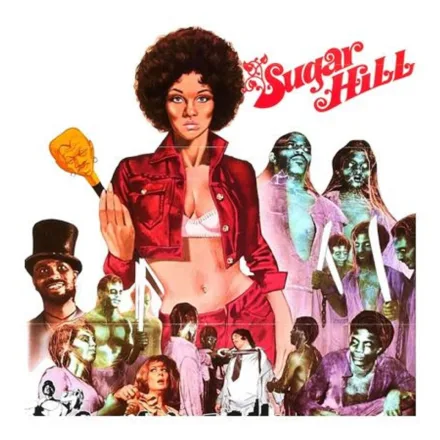
Sugar Hill (1974)
Shared: Larry Cohen, Fred Williamson
Paul Maslansky, Don Pedro Colley, Joy Bostic, Heather Drain and others
The Running Man (1987)
Shared: Yaphet Kotto
Steven E. de Souza, Kurt Fuller, George Linder, Rob Cohen and others
Comments
No comments yet.