Episode 686 · Film year 1994
The Hudsucker Proxy (1994)
- Guest Co-Hosts
- Rahne Alexander, David Kittredge

Show notes
Rahne Alexander (opens in a new tab) and David Kittredge (opens in a new tab) join Mike to discuss the ins, the outs, and the what-have-yous about this oft-overlooked tribute to classic screwball comedies told only in the way that the Coen Brothers (and Sam Raimi) could tell it.
Labels: Bruce Campbell Coen Brothers David Kittredge Jennifer Jason Leigh Paul Newman Rahne Alexander Sam Raimi Steve Buscemi Tim Robbins
Transcript
An automatic transcript, tidied into paragraphs. It has not been proofread, so names, titles and spellings may be wrong, and it does not say who is speaking.
Show the transcript (about 17,700 words)
Speaker 1: Hold your ears, folks.
Speaker 2: It's showtime.
Speaker 3: People pay good money to see this movie. When they go out to a theater, they want cold sodas, hot popcorn and no monsters in the projection booth. Everyone pretend podcasting isn't boring.
Speaker 2: Turn it off. Once upon a time, the American dream was power, wealth and success. But in the city that never sleeps, the American dream is about to get a wake up call. MIKE WHITE: I just got hired today, you know, entry level, but I got big ideas.
When the president and owner of 87% of the company's stock, then the company too has a problem that we need. Now is a new president. Some jerk. The light is on fire.
We can really push around.
Speaker 3: Yo. Yeah, yo, bonds. This letter was sent down this morning by the big man himself.
Speaker 2: Go ahead. Try it out.
Speaker 3: When I see a man when they promoted you from the mail room. MIKE WHITE: Well, I guess so.
Speaker 6: I don't think they promoted me because they thought I was a smo the guy's a real moron sigur. Thank you. What an imbecile.
Speaker 2: Come up with this from Joel and Ethan Coen.
Speaker 3: It's fun. It's healthy. The kids will just love it. And we put a little sand inside to make the experience more pleasant and to be such a huge response.
MIKE WHITE: This is the president.
Speaker 5: I don't think anybody expected this much.
Speaker 2: Hoops comes a comedy of fame, fortune vote, sex, greed and the American way.
Speaker 3: So, Amy, how about you?
Speaker 5: And I grab a little dinner and a show after work. I was thinking maybe the king. MIKE WHITE: How about Oklahoma?
Speaker 2: Tim Robbins, Jennifer, Jason Lee and Paul Newman. Ok. Proxy glass. The H Sucker proxy.
MIKE WHITE: Welcome to the projection booth. I'm your host, Mike White. Joining me once again is MS Rahne Alexander. Pleasure to be here.
Also back in the booth is Mr David Kittredge. DAVID KITTREDGE: I love this podcast and I love you, Mike. MIKE WHITE: Our month appreciating comedic films continues with the Coen Brothers' Hudsucker Proxy released in 1994. The film stars Tim Robbins as Norville Barnes, a graduate of Muncie Indiana's business school.
He gets a job at Hudsucker Industries whose CEO wearing Hudsucker happens to join the great hereafter the day. Norville begins work after a mix up Barnes goes all the way from the mail room to the boardroom and becomes the new interim head of the corporation. We will be explaining the ends, the outs and the what have yous about this story and ruining it. As we go along.
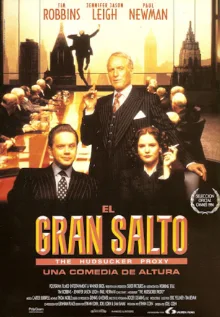
We'll also be talking a lot about the poster art for the movie and how it is a spoiler unto itself. So if you haven't seen the movie, try to track it down. But don't look at the cover photo Rain wasn't. No, it is.
The first time you saw the Hudsucker Proxy. What did you think? RAHNE ALEXANDER: 1994? And I loved it from the moment I saw it was such a thrill ride.
And I remember just sitting in my chair being blown away by it and somebody in front of me got up and started grousing about how it was the worst thing he's ever seen. And it was just one of those moments where I'm like, maybe I'll follow you out and fight you in the parking lot. I didn't do that but it had impulse where I'm just like, I'm having such an overwhelming moment of bliss. And here's a David.
MIKE WHITE: How about yourself? DAVID KITTREDGE: I first saw the Head Sucker proxy definitely on video probably in or around after I graduated college because I graduated college in 1994. But I did not see it in its very short release. It was only released for a very short amount of time.
And you could tell that the studio was very, despite it premiering at, I think Sundance and going to can and stuff. The studio didn't seem to have a lot of faith in it. And I think their lack of faith showed in the marketing showed in the marketing by and it had maybe it maybe it was like a week or a week or a couple of weeks in theaters and I really believe it got mixed reviews. I saw it on video.
I was tickled by it, but I did think it was a bit Arch when I first saw it and it took several times seeing it. And certainly this last time when I just saw it last week for the first time in, I don't know, like maybe 10 or 15 years. I am really blown away by this. I think that it's a mini masterpiece.
But one thing that I think we hope should talk about is this is one of those rare movies that 's a litmus test and it's a litmus test for something very particular about Cops. It's a litmus test for what one looks for in a movie or one. Really? How one views watching movies and what one wants from a movie when you sit down and watch it.
And I think that's like a longer and more interesting discussion. And this is one of those very few movies that if you like it or don't like it. I feel like it reflects on not the movie as much as what you want out of a movie and what you want out of cinema. RAHNE ALEXANDER: I agree with that fully.
This is everything I want in a movie from top to bottom. Everybody is funny, everybody's falling out of buildings, there's papers blowing all over. There's the romance of a fake New York and what newspapers could be and should be. There's a supernatural veneer.
Barely anybody gets in a car. It makes me very happy. It is literally my favorite movie. DAVID KITTREDGE: Oh, wow.
I can't say it's my favorite movie, but it's really great. And I see in our notes because Mike is amazing and he makes notes and we are so well prepared for this. But before we even talk about Hudsucker Proxy, I would ask, could we possibly talk about the Coen Brothers coming up to Hudsucker Proxy? Because these are legendary, important American filmmakers and very much they define their filmmaking errors in a couple of different ways.
And I feel like the Hudsucker Proxy is I'm not really a plug, but this does fit. I'm doing a documentary on Exorcist to the heretic. I have been for a couple of years and that was a movie in John Borman 's body of work that basically was such a catastrophe that it redefined the way he made movies. This was the Coen Brothers first really big budget movie.
This was a huge budget, studio production and they had never had that before and it bombed incredibly. And I, we're not talking about the quality of the film, we're talking about the box office. It was an incredible bomb. It was a huge bomb and working with studios also definitely was something that they weren't used to working with.
There's a make the Mercurial and I would say, I think pretty well documented, somewhat problematic at times, producer Joel Silver, who's best known for Lethal Weapon and I think die hard in the Matrix movies. And so he was like one of these big defined by the eighties, defined by Hollywood Excess, the Dime Simpson School Of Hollywood producing. So they really went into the Cauldron with this movie and I think we can say it 's also a testament to their artistic vision that it came out. So like them, I don't know if they had final cut, but it certainly looks like they did turning out there were these very low level independent filmmakers in Texas, right?
They make a movie called Blood Simple, which if you haven't seen it, please see it because it's so good. It's one of the best kind of American debut movies, probably ever. Francis Mcdormand 1984 Dan Hea. It's a noir.
It's a mystery and another amazing score by Carter Burwell who they work with on Hudsucker. And after that, they did raising Arizona, which was certainly much more expensive but still reasonably small budget. And that is a comedy classic. It's also, there's a lot in comparison to Hudsucker.
It's very anarchic, it's very kind of crazy. And then I bought Miller's Crossing, which is great. And then Barton Fink which won the palm door. They were on top of the world and then, then they was like, ok, you're getting your first big budget studio movie.
So the stakes really couldn't have been higher for them at this moment. And so they were breaking out with this incredibly referential film. It refers to dozen movies in the thirties, forties, Preston Sturges and a lot of his girl Friday with the Howard Hawks Classic from 1940. I think it's literally one of the best movies ever made and it's possibly the best comedy ever made.
And if it's not, it's in the top five, it's an absurdly great movie. And Jennifer, Jason Leigh patterns her performance and this in Hudsucker after Rosalind Russell and that. But yeah, I feel like a Hudsucker Proxy rewrote the Cohen's career for them because if this movie had been a hit, if this movie had been a big success and even a critical success because it got mixed reviews. So shockingly, I don't know if Fargo would have gotten made or certainly not, would have gotten made the way it was.
And Fargo was the next step in their path toward this American mid budget auteur path where they made such amazing films, not all great but a lot of great ones really an astounding run of movies. MIKE WHITE: For me too. The influence of Sam Raimi and the inclusion of Sam Raimi. Obviously, Michigan Boy here, I love Sam Raimi and the work that he did with the Coen Brothers, I always felt was very elevated, even when it comes to something like crime wave in crime wave.
You've got the Hudsucker State penitentiary. You've got Hudsucker Industries in raising Arizona. So, this has been cooking for a while before it finally came up here and was the Hudsucker Proxy. And I had no idea.
So I saw this at a, I think they call them a distributors screening, like one of these weird screenings that wasn't for press. It was, I think it was for the distributors to see if they wanted to carry the movie in their theaters. DAVID KITTREDGE: 00, you mean the exhibitor me thing? Because it was always Warner Brothers.
But it was, it was, it had a distributor. But this, you, they were screening for the theater owners and the Bookers. Right. MIKE WHITE: Yeah, exactly.
Exactly. So I went into this with a friend of mine who was a projectionist at the movie theater where I worked at when I was a kid. And so this is 94 and this is well after I'd worked at this theater, but a friend of mine knew how much I love the Coen Brothers and said, hey, why don't you come along? There's this new Coen Brothers movie.
So I went in completely cold. I had no idea throughout this entire movie. Please just try to picture this if you can't watching this entire movie. And every single time Norville Barnes reaches into his shoe and brings out that picture of his big plan that circle, you know, for kids and he just keeps showing this and he's got the nice drawing of it on his desk and he's refining his ideas and just keeps showing them to other people and they just think he's an absolute lunatic.
So when the moment comes that they reveal that his big idea is a Hula Hoop. I had no idea that it was coming as opposed to the people now who see him holding a Hula Hoop on the VHS or the DVD or the Blu ray cover. I'm just like, for fuck's sakes, you're ruining this movie. That was such a great reveal when they showed that it was a Hula Hoop.
I was just elated. I couldn't get over it. And that was one reason why I just fell in love with this movie because of that surprise and I fell in love with it then that day back in 1994. And I still love this movie and I'm just continuing to find more references that they're doing.
Finally sitting down and watching Mr Deeds goes to town and I'm like, oh, ok, Longfellow Deeds, Norville Barnes. These two hicks come into town getting picked up by this reporter who then starts to write all these unflattering things about him. Oh, ok. Or I'm watching a whole bunch of Preston Sturgis movies.
So Christmas in July and this whole idea of this guy who has an idea and that's enough to make it so that he gets promoted and put on this board and all of these great things, then when they find out that his idea just isn't what they wanted it to be or that it was a, another guy who was a contest winner. That's what it was, this whole contest thing that they have. And I love that. His idea is terrible as well.
This whole thing, he's fighting the system. Everybody says that coffee keeps you up at night. He knows that coffee does not keep you up at night because if you can't fall asleep, it's not the brew, it's the bunk. And when Jennifer Jason Leigh says it's the bunk, I'm just like, oh, that's where it's coming from.
I know it's a common phrase but just I know for sure that they're lifting that right out of Preston Sturges. DAVID KITTREDGE: They're nothing. If not students of cinema and you see this all through their work, all through their work, going back to what we were talking about like a litmus test for this movie. Even before we get into the plot.
Let's, I feel like there are almost two kinds of movie viewers and more and more, I'm beginning to people look at movies as merely an escape, purely an escape as in it's a passive experience. In other words, you sit there, you watch a movie, lose yourself in the movie and you get out and it's like, OK, that was a movie that was two hours and I was, yeah, I brought on this journey and whatever I feel that Hudsucker and a number of other movies that I really value are more active in the way that you would watch it. You have to be involved in it.
You're actively involved in how it unfolds and this movie being so referential. Even if you don't know the references and the classical, the music, the score is very referential to, I think Mike, you sent this link because I couldn't place it. I was like, I know I've heard that classical theme but I don't know where it was Kurian, right? And that's the main theme of Hudsucker Proxy and of course, film composers all throughout the time in memorial refer to other works in their scores.
But this movie, it's in, it's basically about as much, it's as much about movies as it is about the plot. It is as much about cinema and going to the movies and the experience of seeing a film and being involved in it as it is about anything that Norville Barnes does one way or the other. RAHNE ALEXANDER: Absolutely. And storytelling and who's in control of the story and just like that battle to be in control of who, who's in control of that story I think are at the heart of this.
Yeah, I agree. I feel this is a film that I really enjoy watching actively as an artist. I'm a collage artist and I think it would be one thing to watch this movie and think that it's really a past to you show this and that and the other thing and you could dismiss it. But I feel that would be a disservice, disservice to you as a viewer to say that because it's conscious and it's deliberate and it's pulling from, it's pulling from so many things.
I hadn't even realized there's a phrase that the editor uses which maybe I'll look it up. He, but it's pulled from mccabe and Mr Mrs Miller, look chief, if we had more accidents and it wouldn't bump his ass. MIKE WHITE: Ok? Which also they say in raising Arizona.
DAVID KITTREDGE: I had no idea they recruiting from Altman. You see, that's, this is one of the reasons why the coens are so like amazing, especially if you're a filmmaker, especially if you really like love cinema because I think that cinemas like any other art form you can just go into, if you like paintings, you can go into a museum and just experience the paintings, just look at the paintings, ok? But if you study art, if you have art history, background or whatever, going into a museum like that is a very different experience because oh, this artist did this and this was in this period of their career and they're doing this with a color and this with a thing and they're in, they're influenced by these other artists and it's a much more rich kind of thing if you know that.
But you don't with the Hut of proxy, I don't feel like you need to know that. But I do think that you need to view movies as more than just passive experiences. That's very much me, I can like an escapist movie. Like anyone, I can go watch a Marvel movie and enjoy myself for 2.5 hours and perfectly fine, whatever.
But the movies that really grabbed my heart are the movies that invite you to engage with it, to tease you and bring you on this journey. So you're in the movie, but you're not lost in the movie. You're active in the movie. I wouldn't even say you're half in, half out.
You're just like you're yourself, but you're thinking while the movie is happening, you're not just in a hypnosis and again, nothing against pure escapist cinema. I love a lot of pure escapist cinema, but I sometimes wonder, especially as the culture kind of progresses and this is more in the last 1020 years. I worry about the people who think that's all movies are. And I think that the Cohens Joel Cohen and Ethan Cohen are two filmmakers that really challenge that notion.
And I think the best filmmakers challenge that notion, especially if you like anything that the Coen Brothers have ever done, this is the movie that you need to see that kind of redefined their entire trajectory. MIKE WHITE: Yeah. I was really shocked. And I think part of the reason why I decided to do this episode was we had Joseph Mcbride on last year and he was talking about the Coen Brothers at one point when we were talking about raising Arizona and of all the movies in his book about the Coen Brothers, he doesn't like Hudsucker Proxy.
And I'm like, how can you not like this? Writing about the Coen Brothers and seeing how, like you're saying, all of their things that they had been playing with kind of lead up to this moment and it was almost good that it was a disaster for them because I do think that Fargo put them in a new direction and it's a phenomenal movie, but this one had to be made and it's made with so much money and with so much care so much just the, who 's the DP Roger Deakins on this? DAVID KITTREDGE: And Roger Deakins shot it. Shout out, let 's talk about the production design for just a moment even before the Dennis Gassner was the production designer and he does work here that is just astonishing and it refers to all sorts of other like cinema.
It refers to German expressionism, it refers to that. It's, it's I think my fiance Craig, who's who is an art history background was just like, so it was like, it's an art deco fever dream and it is. And if you like art deco, oh my God, will you love this movie? Because everything in this movie is art Deco and crazy and lovely.
And the proportions are insane and Arch and wonderful. MIKE WHITE: Just that h that comes up the Hudsucker H that comes up during the opening credits, that very particular font face that they're using throughout this whole thing. The clock is just amazing, especially the clock in Sidney Musburger's office where you see the shadows, the shadows and that it, the clock is going in the right direction, but where he's sitting behind the clock, it looks like it's going counterclockwise, which plays into the whole theme of time.
This whole movie takes place over a month and we start with a moment in the current, we're just about to go from 58 to 1959 and then we do a flashback. So then you've got that circle going on as well. I mean, circles run rampant through this thing talking about the production design, just how you see so many circles through this whole thing. The movie, it 's very desaturated.
You get to see just so many people wear browns and grays and that again, City Mus Burger's office just looks like it could be in black and white if you just turn the color down just a smidge because it is so desaturated with all of the whites and the grays throughout this whole thing. DAVID KITTREDGE: I wonder how this movie would look in black and white, like just bring it into an edit and like desaturating the whole movie. I bet it would be just gorgeous. MIKE WHITE: It's already gorgeous as a color movie.
I can only imagine. It looked just as gorgeous as a black and white. It looks fantastic. And like I said, there's so many of these recurring motifs through this whole thing.
I don't know why I didn't realize that this movie takes place over a month and it just, I mean, it comes along like all of these things are happening and you get this whole rise and fall and rise again type of imagery that happens. I mean that we start off with wearing Hut Sucker, the Charles Durning character taking nosedive out of his own office. And I don't think we ever really get the reason for that other than lost love. It feels like when he wrote that blue letter to Sydney Sydney was the one that ended up with the love of wearing Hut Sucker's life and he couldn't take it anymore.
After all this, everything is so empty. And then we get his amazing fall down the front of the building and talk about art deco. Like you were saying, David, these buildings are just amazing. The model work in this is freaking fantastic that all of New York City is built as this gigantic model and all of the details that go in on that just the way that the cameras moving across the bay and coming through these buildings and finally coming up to the Hudsucker building itself with that giant clock on it.
And just that time seems to be controlled by Hudsucker. I mean that when Moses sticks his broom inside of the clock, that it stops time for everyone except for an angel and Norville Barnes Moses himself. And then Aloysius who I believe is Satan 's emissary. RAHNE ALEXANDER: It would seem to be the case.
DAVID KITTREDGE: And it's interesting because it does Harken back to this kind of forties, post war idea of capitalism being the thing that runs the world. I think Moses even has a line about how money runs the world or money keeps the world turning or something like that. And so it's very much, it, this movie is about American movies in a lot of ways, but it's certainly about post war America and it's about just how, and you see it like when the, when he arrives in New York City and looks at that flipboard. We were before the recording, we were all talking about how much we love the flip boards, which were, I had to look up what it's called.
And it's a Solari board. The, which used to happen in Penn Station was like the those things. And there's a wonderful one that they constructed for this movie at the very beginning when he's looking at jobs and they're all printed up on the sign, the nus employment agency. MIKE WHITE: I had to look up what nus meant.
It's a place or situation in which something is developed or fostered. So there you go. Perfect for a job. DAVID KITTREDGE: Also, again, it 's the attention to detail and the attention to production design though, fonts on the board are perfect.
Everything in this movie is so meticulously detailed and perfect. It's one of those movies that is just like you realize that these are auteurs, they were given the enormous budget to realize their vision and they freaking realized it. Like this is the ok. We're gonna do this.
We have all this money from Warner Brothers. We're gonna do this movie. And fortunate, unfortunately, it didn't catch on with the public, but it's a movie that I feel it 's almost, it is, it's a litmus test. Really.
It's, I don't because looking back on it, I don't understand how any critic could have panned this movie and yet it got a lot of pans. There were a number of critics who just didn't like this film. And when you were talking about these people who are storming out of the theater and stuff and it's just, that's almost incomprehensible to me that you would be in this movie and not find something to like just watch. But even if you didn't like the movie, you just look at the pictures.
It is just a gorgeous looking movie. RAHNE ALEXANDER: Yeah, it's puzzling that anybody would not like this film even just a little bit if you like movies, if you like cinema, there's really something for everyone in this. DAVID KITTREDGE: But I feel like there are a lot of people who really do resent having to be involved in a work of art, having to actually engage. And certainly if you're exhausted and you want to flip on a movie at 2 a.m.
That's for you or me. It could be this because it is very Arch. It does keep, it doesn't embrace you as a viewer. It does keep you at somewhat of a distance because of the way that it is presented and the dialogue and the extreme stuff that happens even in the performances or Jennifer Jason Leigh's everything she says in this film.
And again, if we were gonna talk about performances, I think Jennifer Jason Lee steals every frame she's in, she gives a performance that is so good that you just wonder, oh God, could she have just like starred in like everything for 10 years after this because she is just that good. She is one of these actors that you drop her into anything and you just know it's going to improve the entire film. MIKE WHITE: I can see where her character would be very problematic for some people that just didn't like that mid Atlantic accent that she's doing.
I think it's fantastic and I love just that you're talking about his girl Friday that clipping along of the dialogue, especially to. DAVID KITTREDGE: Rosalind Russell it's absolutely Rosalind Russell, the whole movie. She's basically doing an impression of Hildy Johnson, except it's not just an impression she has this character. She is this character.
MIKE WHITE: Oh, she's a amazing, especially when she's in the newsroom and Trading Quips with Smitty when she's there typing. She's, she's got a cigarette in her mouth, got the phone under her ear. She's talking to the chief, she's talking to Smitty. She's writing her piece and she 's yelling out to the guy who creates the cross words like this bird and she's even doing words that the guy isn't setting, she's yelling out things to yell at her boss to yell at Smitty to take a more on a five letter word for whatever.
DAVID KITTREDGE: Exactly. What? MIKE WHITE: Oh, it's so good.
Speaker 6: And is this guy from Trumps? Hi. I can pull the old mother routine. That guy's got whiskers on it.
I'm telling you, Smith the bot suck up to something works a six letter word for an affliction of the hypothalamus. And it's a cinch, it's a cinch. This guy isn't in on it. Oh, she's right here.
How much time to make the late final chief? Hia chief. Just the person I want to apologize to. About seven minutes.
Yeah, I was all wet about your idea, man. Well, thanks for being so generous. It is human and you are divine. No, no, he's no faker.
He's 100% real mccoy. Beware of imitations. Genuine article. The guy's a real moron as in a five letter word or Ibes.
Oh, as pure a specimen as I've ever run across. Ok. For the August doesn't make me an expert and my name isn't Amy Archer. And I never won the Pulitzer Prize in 1957.
My old, my series on the Real United Triplets. Well, come on down here, Hammerhead and I show it to you. That's a three letter word for a flightless bird. Not now, Morris, I'm busy.
That's right. I said Hammer Head is in a 10 letter word for us. Not bullying South. Important newspaper man knew who couldn't find sgnu couldn't find nearby a state building with a compass, a road map and a native guide or is it emu?
And that's just potatoes. Minny, here comes the gravy. Trump really likes me, am girl better off falling for a rattlesnake. I'm telling you this guy's just a patsy and I'm gonna find out what for.
There's a real story here, Smitty, some kind of plot. I set up a Kabbalah. Oh NC. Did I tell you?
He didn't offer you money. A sub and Maack us, let's grab a highball. I'm not the bond. MIKE WHITE: There's her.
There's also Jim True who is basically playing a cartoon character as Buzz. Going back to our Raising Arizona discussion. We talked about how high is basically like Woody Woodpecker in this one, Jim True is just this crazy cartoon character that he's always got the quips. Hi, your buddy.
My name's Buzz. I got the fuzz. I make the elevator do what she does when, when he takes Norville all the way up to the board room or to the top level and he says, good luck buddy and then opens up the doors again. You're gonna need it.
And it's such a Warner Brothers cartoon type moment. It's like that. DAVID KITTREDGE: Scene in Roger Rabbit with droopy elevator operator drops Bob Hoskins off at some crazy floor. RAHNE ALEXANDER: The Roger Rabbit link is something that I was thinking a lot about re-watching this time because I feel like their version of New York is a really interesting parallel to Roger Rabbit's version of LA.
I find them treading in the same universe in so many ways, right? Places that exist but also don't quite exist in that same way, right? DAVID KITTREDGE: Well, the cinema versions of them, this is a take on the forties, fifties, synonym version of New York. The same way Roger Rabbit was a take on the forties, fifties L A.
This is the idealized L A. Even the dirt is placed. It's very strategic, like everything in the frame is so meticulously designed and so meticulously laid out on both of those films. Yeah, I'm glad you brought up Jim True because he's best known for being on the wire, which you if you watch the wire.
He is not recognizable in this film at all. You know, it's the same actor. But yeah, he's done everything. This guy, he's like a working actor.
He's, I believe he's still working today. He's done tons and tons of stuff. But I think he's best known because he was on the wire for the whole thyme or something. There's a whole population of actors out here in L A and elsewhere.
They're just in stuff and you see them like, oh, that guy and they make great decent living, good living. They're, they're working actors and they bring it and this guy brought it like you can tell like even the scene where he's pitching to Norville Barnes at the end or toward the end. Fantastic. Hilarious.
It's so good and I'm glad you brought up Sam Raimi in the writing because Sam Raimi has been a very early com collaborator with the Coen Brothers. You brought up Crime Wave which is a movie that not enough people know about or have seen. It's Sam Raimi directed it corrected, but the Coen Brothers wrote it and it again, that was a lower budget movie. Barely got released.
Very few people know this movie outside of like video of where it got a following because it's crazy movie anyway, but we should probably talk about the plot at some point. MIKE WHITE: I've been working at it. I've been throwing stuff in, it's my fault. DAVID KITTREDGE: I'm so sorry.
I have so much to say about the movie. RAHNE ALEXANDER: Me too. MIKE WHITE: But this is one of those movies where every single thing matters, every single scene adds to the next scene to the next scene, to the next scene. It's not like you could just throw away any one of these pieces the way that we're introduced to characters, we're introduced to Norval by his feet.
This whole montage of him coming into town on the Wolverine bus from Muncie to New York City. And I love that he's got the Muncie College briefcase suitcase with him and it's even got the eagle symbol on it. The two hands flapping in. I've always talked about how the Coen Brothers once they write something.
That's it, David you're talking about. I hope that they got final cut. I don't think that there's a way to get another cut of a Coen Brothers movie unless you completely fuck it up. But they don't rewrite once they have something that's ready for the screen.
But it was interesting reading one of their earlier drafts of the Hudsucker Proxy to read some of these things. There isn't the job board in the earlier draft of this, which I think is from May of 92 maybe. And then it's Norville comes into town and he tries to do some of these jobs. So he's trying to put a fat guy into his suit and it's way too small for him.
He's washing dishes and he keeps breaking the dishes. He's only handed two dishes and he manages to break those. So it was interesting to see the evolution of the script. I think the job board is much more efficient.
You get the whole thing with the words coming up on screen. Experience a must experience necessary seven years experience, all of these things. I thought those are very nice in the way that we dissolve from him. Getting that newspaper, seeing the future is now ad that's circled by the coffee ring again with the circle and again, the Wind taking over and bringing that newspaper back to Norville because the Wind is a player in this movie, believe it or not, the Wind from wearing Hut Sucker Renee jumps out the window and it's blowing all these papers around, which could be the Bumstead contract.
I'm not sure if it is or not, but then the Bumstead contract itself gets blown all the way around before we have Sidney Musberger out on the ledge and almost falling. And I'll talk about that in a little bit. But the introduction of Sidney Musberger because we see the rest of the idiots around the board table. All of these great character actors, so many good faces.
You've got Gary Allen, you've got Roy Brocksmith, just all of these guys in the. DAVID KITTREDGE: You have to mention the casting in this movie because the casting across the board, you don't even need to hear these men speak. You just see it in their faces. They are cast for their faces and you cut to them and it's almost like a punch line just cutting to them.
And you see this all throughout the movie. The two, what is it mailman in the bar for the taxi drivers? Excuse me. That's right.
The taxi drivers and the waitress and the secretaries to Musberger and the fat lady who screams after Charles Ding throws off the, there's nothing they're doing. It's just literally what they look like and how they take up the screen. And even if they have a line, the boardroom, everybody has a line in these kind of Greek chorus, you know, all over the place. Everybody has one line and they're all bouncing off of each other.
The casting throughout has to be perfect. Or else this doesn't work. The newspaper reporters just look at the faces and the bodies of these newspaper reporters in the newspaper reporter scene with John Mahoney telling him like.
Speaker 5: I wanna know what makes the idea, man, Tick. Where's he from? Where's he going? I wanna know what he's done about this guy.
Has he got a girl? Has he got parents? Everybody has parents. All right.
How many, how does it feel to be a millionaire? Is he gonna get married? What does he think of New York? Is he smart?
Is he dumb? A million angles? He's been here three days. And what have you numb skulls brought in any half wit novice could have done better.
We tried to, am I talking too loud or annoying anybody? You know, corny Cobb? He's keeping them under lock and key carb. Never mind about Cobb.
Use what little brains you've got? Find out something for yourselves. I want the real story. I want the inside dope on this guy, Tony, who is right.
What's his name? What's he got hidden under that cap of head batteries? Why did he show up last night? Dick?
Where does he come from? Does he have a girlfriend? What's his favorite ball team? Ken?
Now, listen to me, I tell you boys and girls, whichever one of you gets it out of him is gonna Wind up with the single most important interview since God talked to Moses. DAVID KITTREDGE: And you just look around the room and it's, that's the punch line. The casting is the punch line in this movie and that is Varsity Level Craft there. Varsity Level Craft and the casting.
Production design, cinematography like all of it. Varsity level. RAHNE ALEXANDER: Absolutely amazing. Yeah, there's not a wasted moment.
Everybody is interesting. They don't necessarily all have internal, they're all riveting. If they've got one line, they deliver it. MIKE WHITE: Mike Starr doesn't even have a line.
How about a Parkinson? You've been awful quiet over there. Still waters run deep. Chief.
The only thing that runs deep with Parkinson Of S in his ears. DAVID KITTREDGE: Richard Schiff of the West Wing is apparently a mail clerk, but he's in the mail room and he throws some letters on Norville Barnes in that incredible tracking shot where going by and there's this cacophony and chaos going on which I know if you've ever made a movie or if you, instead of a movie, a shot like that will take all day if you're lucky to get. Right. That is a very, very difficult thing that many people that much going on in the frame, that long a shot, that kind of choreography, that's like a dance that's so hard to do.
You know, you need to rehearse that for hours to get that right. It 's, it's astonishing. It's an astonishing film. MIKE WHITE: Let's talk about the villain of the piece with Sidney Musberger to call this movie the Hudsucker Proxy and to talk about the h throughout so much of this movie and that Mr Paul Newman was Hud in the movie named Hud, obviously a reference.
And then the whole thing of the guy who's giving Norville his orientation, what a wonderful orientation. He's given him that whole thing. You do this and they dock you and they do this and they dock you. That's straight out of cool hand Luke with the whole that you do this.
You spend a night in the box, you do that, you spend a night in the box.
Speaker 3: You punch in at 830 every morning except you punch it at 730 following a business holiday. Plus it's a Monday. Then you punch it at eight o'clock punch in late and they do this at seven Mr Beak. Our incoming articles get a voucher.
Outgoing articles provide a voucher who made the article without a voucher. And they docked you take us up the secretary of Paul Andre A S IP size, full size, a yellow voucher, partial size of a room voucher. This is where more to trot chop, chop wrong color voucher. And they docked you 6787049 slash six slash is your employee number?
It will not be repeated without your employee number. You cannot get your pay check. All right, this goes up to 27 return a waiver. Do not return.
Win out of outside. Wait, your office mail is code 37 in inter office mail is 37-3 outside Baylor 3-37. Code it wrong and they duck you. I was supposed to have this on 28 10 minutes ago.
I A boy, this has been your orientation. Is there anything you do not understand? Is there anything you understand? Only partially if you have not been fully oriented, you must file a complaint with personnel, file a faulty complaint and they duck.
Speaker 1: You, them clothes, got the laundry numbers on them. You remember your number and always wear the ones that has your number. Any man forgets his number spends the night in a box. These here spoons you keep with you and a man loses his spoon.
Spends the night in the box. There's no playing, grab ass or fighting in the building. You got a grudge against another man. You fight him Saturday afternoon and a man playing grab ass or fighting the building spends the night in the box.
First bell is at five minutes a week and we go again and go far. Last bell is at eight and a man knock in his bunk at eight, Spends the night in the box. There's no smoking in the prone position in bed to smoke. You must have both legs over the side of your bunk.
And a man caught smoking in the prone position in bed spends the night in the box. You get two sheets every Saturday, you put the clean sheet in the top sheet in the bottom, the bottom sheet, you turn in the laundry board. Any man turns in the wrong sheet spends the night in the box. So it's no one who sit in the bunks with dirty pants on.
Any man with dirty pants on, sitting on the bunk, spends a night in a box. Any man don't bring back his empty pop bottle, spends the night in a box. Any man allowed talking, spends the night in a box. You got questions.
You come to me here. MIKE WHITE: We have the tables turned. Now with Musberger up on the top floor when Musberger meets Norval, I just wanna throw this out there. I think that Musberger when he gets this idiot that comes into his office and he shows him the circle, you know, for kids shows in the circle in Musburger.
Oh, sit down here, take the cigar. I don't think that Musberger at that point even has Norville in mind for the proxy job. I think he's just there to humiliate him. At that point.
Speaker 2: You're from the basement, aren't you? And weren't blessed with much education? Well, I am a college graduate but you did not excel in your studies. Well, I made dean's list at the m he called your business administration.
Oh, and your friends, they called you jerk, didn't they do Dipstick? Blame brain smo, not even behind your back. No. As a matter of fact, they voted me most likely to succeed.
You're fired, get your feet off my desk. MIKE WHITE: Get out of my office had wearing Hut Sucker, not killed himself that morning. I think that he still would have done the exact same thing just to humiliate this dope from the mail room. That's my feeling anyway.
DAVID KITTREDGE: I don't know if he would have felt that he had the time. I think that II, I think he was just like, get out. MIKE WHITE: We don't crawl here at H Sucker, which Norville ends up saying again later on, which is great. DAVID KITTREDGE: Talk about casting against type.
There's not enough time on this podcast or really any podcast to talk about the work of Paul Newman and the career he's had and the impact that he had on Hollywood and then cinema at large. This is a late career casting choice, late career role for him. MIKE WHITE: And he looks fantastic. I used to always think that he looks on top of a man in this, but no, he looks great.
DAVID KITTREDGE: And he comes off as this growling lethal antagonist who's very sadistic and creepy. And there's a lot to him that is genuine, genuinely unsettling, you know him, you see him and you immediately know he's not someone to be messed with. This is a scary villain. MIKE WHITE: This guy, I had to look up Aloysius name just to because it's such an unusual name.
And it led me to another fantastic comedy, which was, it happened on Fifth Avenue where this tramp comes in. There's a very rich man who leaves his house every six months. He goes to, I think it's West Virginia. And so during the winter, it's completely open.
So Aloysius and his dog will sneak in through the back and spend the entire winter inside of this guy's house. And then when the guy comes back from the winter, Aloysius goes down to West Virginia and spend six months in that house. But Aloysius, I had to look up that name finding out that the, it has morphed into Lewis. And then I'm like, like, ok, Lewis as in Lewis cipher, is that what we're supposed to be getting out of this?
Because I don't think he has online. He just will growl or will glower at people and will use his thumb to indicate stuff. And otherwise he doesn't talk, he just is an agent of evil. RAHNE ALEXANDER: He beep.
Oh, yeah. I love how Sid Mussburger is so evil and growling, but he's still hilarious. And that is such a trick. Right.
When he gets in the cup, he says at some point, I'd like to hear about this too, right? It's like, how can you not just fall out of your chair? Laughing at that. MIKE WHITE: Sure.
For the dingus. What am I a head shrinker? And I have to tell you guys like I talked about how once the Hula Hoop came up, I was just like elated. Couldn't get any happier.
I might be lying because the whole scene of Sydney when he falls out the window and we had the flashback to the tailor and then the flashback that we should not have any information about at all where we go back to the tailor and we see him changing his mind about giving Mr Musberger a double stitch for his pants.
Speaker 3: Don't worry, Mr Musberger. I got you. I got you by your pants, the pants and Mr Moose Burger.
Speaker 9: I'm gonna give you pants a nice double seats. Hey, here make them real strong and you're gonna look real shocked.
Speaker 2: No, single stitch is fine but the double stitch she lasts forever. Why on earth would I want a double stitch. I've had your account. Single stitch is fine.
Damn.
Speaker 9: Ah, what the heck Mr Moose Burger is such a nice man. I'm gonna give him a double stitch anyway. That's some strong stitch. You better.
MIKE WHITE: Oh, my God. That is fucking amazing. Like, it's one of my highlights of all times. DAVID KITTREDGE: That's the kind of thing that would get cut if they didn't have all the money in the world to make this movie, that would have been cut in two seconds.
There's no reason for that little aside to be there except that it's just really, it 's part of the reason I think it 's funny is that it has no reason being there at all. There 's no, it has nothing to do with anything. It's not even, it doesn't even really make sense because Sidney Musberger is not a nice guy and he's not even, he's not even a nice guy to the tailor if they didn't have all the money in the world to make this, like that would've been like, yeah, cut that cut that day where we're shooting the tailor or the whatever it is that six hour period or eight hour period, we could do something else with that time or save some money.
No, we're gonna shoot this complete asterisk in the plot and stop everything for this. Basically, this weird non joke, which is really funny. RAHNE ALEXANDER: What I love about that scene is that it takes this precipitous moment where he could actually get some humanity. Right.
He's on the verge of plunging to his own death. And let's presume that he understands that he now has the double stitch in his. And so he gets to come away from this moment learning absolutely nothing. Right.
He gets to just completely continue on his path into evil. Right. Which becomes even funnier or later when he decides he's gonna try to jump out the window himself. And Phil just can't quite manage to do that of his own volition.
MIKE WHITE: Which that whole thing leads to the laughing montage. And this movie is just rife with just amazing montages to see the transition of Norville Barnes from the mail clerk into the President of Hudsucker Industries just through laughing, everyone laughing of the board, laughing at him. But him not realizing that they're laughing at him and he thinks that he knows what the joke is and we just go through that whole thing. We go back to the freaking tailor, see him getting his suit being made.
I just love it. Just that whole thing. That Montage is fantastic. But the montage of the Hula Hoop creation that is just brilliant and especially to see the way the whole thing is put together, that we have movements within that montage that we go from the creation of the Hula Hoop that we go through all those pneumatic tubes that we have.
All the rubber stamps are being put that, we've got the three guys behind the window that are trying to come up with the names for it. And then we move from that to the actual creation of the Hula Hoop. And then we move from that to then the stock ticker and waiting to see if the idea of the Hula Hoop is going to catch on and that being inter cutt. Then with that little kid, that freaky little kid who finds that Hula Hoop again, the circle finding this kid the way that the Hudsucker ad found Norval and the way that kid just picks up on that Hula Hoop.
And when those other kids see him and they're just enthralled with him when they move to him around the foot, I laughed harder when they moved him doing it around the neck. I was in stitches and all that whole montage from what I understand was all done by Sam Raimi. That's all second unit stuff that he shot. At least that all the stuff of the Hula Hoop and that's fucking brilliant.
And then again, going back to the soundtrack and putting the Saber dance on there. Amazing. DAVID KITTREDGE: If you're gonna have a second unit director, you might as well have someone like Sam Raimi who could do it basically better than anyone in the world. Exactly.
You amazing second unit stuff. Yeah. None of people understand in a movie like this and whenever you're not seeing like the basically the A stars or a major dialogue scene, that's what's called second unit. So all those inserts, all those shots of signs and people doing stuff and there's tons of stuff and like that in this movie, pneumatic tubes, tracking shots through pneumatic tubes that's all done by and managed by second unit.
And Sam Raimi is no slouch in that department. MIKE WHITE: And Sam Raimi was one of the three guys who are behind that window coming up with the different things. You can hear his voice while he's doing that. And I love that they've got the secretary reading War and Peace and an in and out out front.
It's just like to show that time is passing while these guys are trying to brainstorm this idea. And then when the guy finally gets it, Bellas Ellas and it's what is it, what could this be? And then we get the revelation of Hula Hoop. RAHNE ALEXANDER: Something that occurred to me watching it this during this bout of re-watching for the podcast.
It made me think about, we do have Sam Raimi actually behind the screen. But I was also thinking this in terms of the cab drivers, Benny and Lou is Benny and Lou enacting Joel and Ethan 's process here. Is this their way of their Alfred Hitchcock appearance on film, but still through other character actors. And it just, it never really quite occurred to me though.
Oh, yeah, this is a movie about storytelling and so it is actually revealing a little bit of their, what seems to be their process. They're narrating what they're seeing. We don't hear any of the dialogue but I'm speaking about the cab drivers. We don't hear any of the dialogue aiming or novel at all.
We all we hear are Benny and Lou going through the whole, her mother needs an, needs an operation. Adenoids. No, Lumbago, that cat.
Speaker 10: No whiskers enter the dame. There's one in every story. 10 bucks says she's looking for a handout. 20 bucks is not here.
She don't find one. She's looking for a Mark, she finds him. She sits down and orders a light lunch. How will she pay for this lunch?
She looks to her purse. No money to Mark out. This is, he's not noticing Benny. Maybe he's wise, he don't look wise.
Plan to here come the waterworks. Yellowstone old faithful alone Niagara. He notices she's distressed. He's concerned.
She explains her predicament and enter the light lunch. She's got other problems. Of course, there's illness in the family. Her mother needs an operation urgently.
Adenoid. So many Lumbago. Oh, that gag's got whiskers on it. He ain't biting many.
She's losing him. Lou, maybe he's wise. He don't look wise. How did she pull this out?
He's getting away. She better think fast. She isn't. Is she's good, Denny.
She's damn good.
Speaker 2: Lou, can I get your boys anything else? Bromo promo? DAVID KITTREDGE: Every movie has exposition. And Lord knows this movie has a ton of plot and you need to communicate that and they could have just shot a scene that would have been completely standard and understandable with Norval and Amy and she's doing all the things and he ends up taking her back to her office at his office because he thought she fainted.
But the creativity to bring up these two characters who've never met and never see again, narrating what they're doing. It 's a brilliant way to cover what would basically be a kind of standard, very basic bland boring exposition scene. It takes this exposition scene and you flip it on its head and you're like, no, we're not even gonna tell you what they say. We're just gonna, just like these people are just gonna watch and describe because that 's this movie, this movie is never going to come at you exactly from the straight line.
It's gonna come at you from the side and when you think it's gonna come at you from the left, it's gonna come at you from the right. And that's one of the reasons I think that people were turned off by this movie because they couldn't get a grip on it because the movie was always subverting expectations, subverting where you thought it was gonna go subverting even these basic scenes that every movie needs to have where the meet cute. Really? These two main characters are gonna fall in love have to meet and have the meet.
Cute. Totally. Just ditches it. We're not even, well, we're not even gonna talk about that when they, when they're not even gonna be talking, you don't even know what they say.
We don't care. We're just gonna be on these two people that you've never met have nothing to do with this movie and they're just gonna be like, yeah, she's doing this thing. Yeah, he's fallen for it. He's a sucker, whatever, that whole thing.
It's amazing. MIKE WHITE: And you get the echo of that gags got whiskers on it from Bruce Campbell later on as Smitty. RAHNE ALEXANDER: But I think this also touches on something else that I really like about this movie, which is that it is this romance but nobody's getting married at the end of the. So you've got all like feeling of it, but we don't have to get into the aftermath of oh marriage and kids and all the other stuff.
That isn't that terribly interesting. Wait, this is like in the same way that, like, this is a New Year's movie with barely any Christmas in it. Oh, yeah. Which I, which is another thing that I just love the less Christmas the better for me.
We get a little hint of it, but it's not the way that it would just dominate any other film set in this time frame. MIKE WHITE: When you get the little milestones as far as where we are in relation to Christmas where we are in relation to New Year. In that another montage for God's sakes the news on the March for lack of a better term. I'm trying to remember the name.
It does say Tempest Fugit. So again, time flies. So again, we've got the time aspect of that. But the news reel that John Goodman is not narrating this folks.
It's Karl Mundt is narrating this. He took his name from his character in Barton Fink to do that, which made me then think is Karl Mundt, is he related to Ole Munsch? I don't know if you watched the latest season of Fargo, but there's a character on there named Ole Munsch who just is another force of nature. I think he and Carl Munch could basically be brothers if they wanted to.
But yeah, I love when he is narrating this whole thing and talking about the Hula Hoop craze and that we actually get to see real stock footage of the Hula Hoop craze and then inter cutt with all this new footage. RAHNE ALEXANDER: Mom's taking a break from her chores and she's vacuuming with. MIKE WHITE: This whole thing of how Norval Bards was bringing everyone together. But actually, they're still apart spatially so good.
But yeah, they mentioned in that newsreel that New Year's is coming up. So you don't get, yeah, I like that. We'd get a little bit of Christmas time but that this is a New Year's movie that is playing in this time so much. I think it is very smart.
DAVID KITTREDGE: Didn't Joe mcbride write about this? There 's an element of chance that runs through all of the Coen Brothers work. Was it Joe mcbride or somebody else? And I know that I read something about how elements of and you see this in another filmmaker, Woody Allen is actually one of them as well.
Like he talks about luck all the time. And in fact, his last movie is 50th movie, Coup Dechamps is all about luck having a huge factor in one's life. There are elements of luck and the universe affecting things throughout all of the Coen Brothers movies. Their underlying theme.
A lot of the time is that we're all just these ponds in this giant space where anything can happen. It's how we roll with it is what interests them. It's not the fact that it happens because they're, you can't possibly control the crazy shit that happens to people. Crazy shit happens to everybody.
And more than I think any of us would care to admit a lot of the time. It's how we deal with it. It's how we roll with it. And I get if, if nothing else, Hudsucker Proxy is all about luck being a factor that profoundly changes the lives of everyone in this film.
MIKE WHITE: Even going back to that Bumstead contract and the whole thing inside of Sydney's office. That's one thing that leads to another that leads to another. It leads to another. We pretty soon we've got Norville with his foot in the trash bag and his leg is on fire or when he's carrying the water jug all the way from one end of the room to the other and there's just a couple drops left at the very end.
Again. That's another interesting one. I was talking about how Jennifer Jason Lee is having those multiple conversations. Sydney's also having multiple conversations in that scene.
He literally has two phones. He's talking to both people on both phones. He's got his intercom going off with his secretary, the amazing secretary talking about the Bumstead contract and then you've got Norville and he's also talking to Norville and it 's like Norville doesn't know if he's being talked to or not. And we, the audience, I don't think really know if Musberger is talking to him or somebody else.
Just the way that all of the ins and outs and whatnots are interacting with each other is fantastic. And that Sydney has the power to again, stop time when he says, wait a minute and the Newton's Cradle just stops right. Then it's amazing. And real quick, I wanted to talk about Bruce Campbell and his role in here and I know it's a very small role, but it's a great role.
And apparently he was more involved in the preparation for this movie than he actually was in front of the camera time, he was running lines with Paul Newman beforehand. So he was like, Newman's partner for this and was being basically being Norville Barnes throughout so much of this. And then I interviewed him, Bruce Gamble's the very first interview that I ever did. And when I interviewed her, she was like, hey, tell me about Jennifer, Jason Lee and what it was like.
And he was just like, she was the most professional person I've ever worked with and she knew every single line before she came on set. And when you hear her deliver that machine gun pattern that she's doing, especially when she gets upset at Norville after Norville is sending her a letter but doesn't know he's sending her a letter and he's just like, oh, don't worry about it, Amy, she's probably just some washed up career gal and just, I love that whole thing. And when she yells at him about.
Speaker 6: No, the bonds, you don't know a thing about that woman. You don't know who she really is and only on numsa who thinks he knows things about things. He knows nothing about what kids just that. MIKE WHITE: And that, that is such an overly written line, but she delivers with just perfect panache.
RAHNE ALEXANDER: Moses then throws back at her face. That scene where that scene between Moses and Amy is that still hits me so hard the way that he laughs at her, which is, but she 's, I'm happy enough. It's like that, that just being called on her bullshit in that moment is just a breathtaking moment. I don't think I've ever seen anything like that in any other movie ever.
MIKE WHITE: I love that. Norville is right next to the Clockworks, but he doesn't ever open up the door. She's the one that opens up that door and I think he doesn't open it because it says do not enter on it and she has no problems with that. Whereas Norville will follow the rules, right?
RAHNE ALEXANDER: Can we talk a little bit about to Tim Robbins? MIKE WHITE: Yeah, we've talked about everybody but Tim Robbins so far. RAHNE ALEXANDER: Because I came into this when I first saw it just like thrilled with the cast, right? Because I had already been a huge fan of Jennifer Lee, obviously a huge fan of Paul Newman Bruce Campbell.
But Tim Robbins had been just a recent discovery for me. At the time. I had really just started going to movies obsessively at this point. And so following like leading up to this, there was shortcuts where he's an insidious police officer.
And before that, the player and just these evil, awful and chilling characters, right? And to turn around and now we have him just being this innocent r. DAVID KITTREDGE: His breakout role was in Bull Durham who was about as ruby as possible. Like he played basically Second Banana and Kevin Costner, this dumb baseball player named Nuke who and basically Kevin Costner and Tim Robbins out for the affections of Susan Sarandon.
It's a great movie. But that kind of put him on the ma he had had these little roles in Top Gun and Howard The Duck. If you even want to talk about that, which I really don't because, oh my God, it's terrible. But he was also, is I the first leading role I remember seeing him in was Jacob 's Ladder.
I was just like, oh, wow, this is, and Jacob's Ladder is a very odd film. You can tell if you look at his, the films that he's chosen since he became a bigger star, even like Cadillac man. These are all really offbeat non-standard interesting choices. Even when they don't work.
They're like, ok, that's, that's very interesting. And he, of course, he directed Bob Roberts, which was, it made early nineties, made a sensation when it came out. I remember seeing it and being like, I don't know how it holds up now. I thought it was very deep in the early nineties because we were, you know, we had 12 years of Republican administration at that point and I think everybody was just a little bit, I mean, exhausted by the corporate rule.
And Bob Roberts was about this right wing political candidate, fictional one who he played. And it's very funny and then it gets very, not funny and it's a great little independent film. But yeah, he'd never had, I think a lead role in a big movie like this before. Hudsucker.
Proxy, Jacob's Ladder was mid budget kind of genre horror kind of thing. But everything else was just like Second Banana or these little smaller roles, like you said Shortcuts, which is a great movie, but he's a stand out in that. There are 20 it's a very typical Altman, 24 characters or whatever. But you remember him and maybe a couple of others, but you really remembered his performance in that.
And it's interesting that in the same year he did Hot Sucker Proxy Shawshank redemption released, which is a movie. It's very funny because you have these movies that I think that we can call Shawshank redemption right now. The ultimate dad classic movie, the movie that like all the dads like. But when it came out, it was a bomb.
They were both bombs. Hudsucker and Shawshank. Shaw Shank then came up in the way it was nominated for best picture. And that was a shock that year because no one expected it to be.
But when the Academy, when they sent out the tapes and the Academy actually saw it suddenly it got a bunch of nominations and I think everybody understood that. Wow, the marketing team failed on that again. Bad or tough title. I wouldn't say bad title.
Both Hudsucker Proxy and Shawshank redemption. There was a lot of talk about how the titles of both of these movies hurt the box office in a very tangible way, very tangible. Would you see if you're in Dubuque? Would you see a movie called Hudsucker Proxy?
If it's playing at the Multiplex? Maybe you wouldn't because maybe you don't, maybe you don't know what proxy means. Maybe you don't h circle proxy. What does that mean?
What is even that? It sounds like work? Maybe you don't want to go see that Shawshank redemption. What the hell does that mean?
That sounds artsy. That sounds Arch, that sounds whatever. Maybe you don't wanna go see that. But the fact that both these movies especially Shawshank found a love on home video and afterwards I think indicates what's in the film like after the marketing, after the title, after the initial perception and you got to give him credit for just pushing it and you were talking about villains.
I don't think there's a scarier villain in any movie than the one he played in Arlington Road, which is a really cool movie made by Mark Pellington. What year was that? I don't even know. I can look it up.
Wait, it was 9999. Oh my God. I dare anyone. If you have not seen Arlington Road, I dare you to sit down.
It's Jeff Bridges and Tim Robbins. I guarantee you will not be able to know where this goes and you will be on the edge of your seat in the last five minutes in a way that you are rarely on the edge of your seat. He is. Oh, good in this film.
RAHNE ALEXANDER: And Joan Cusack is also terrifying. Oh my God. DAVID KITTREDGE: Yes, Joan Cusack. I forgot.
Yes. Her performance is chilling. And she 's known for comedy. Like you think of her, you think of broadcast news, you think of in and out, you think of all these movies where she's just like Joan Cusack and Amazing.
But it 's Oh my God in this film. 00, it's a scary film. MIKE WHITE: He was also that same year. He was in ready to wear another Altman film and IQ where he was playing the love interest to Meg Ryan yet another.
Actually, I don't think he gets his heart broken. She loves to break hearts in movies. I'm, I'm thinking of you Bill Pullman first off. I can't let a discussion of Tim Robbins go by without talking about tape heads.
One of my most favorite films. He is so good in that. I love him in that. I tried to make my way through Eric The Viking.
I still haven't been able to do it. But yeah, he's fantastic. Yeah, this 12 punch of Hudsucker and Shawshank was just an incredible year for him. And it is amazing that, yeah, Shaw Shawshank became that TNT staple for so many years.
I kind of wish Hudsucker had gotten the same fate and we wouldn't be here defending it as much. But I don't think this movie needs defending. It stands on its own. It's so good and just, it continues to delight watching this again.
Last night. I have gotten some of the jokes that are here and just still continue to notice things and especially now watching it after so many years of Coen Brothers movies. I'm just like, oh, yeah, they like to have voiceovers so they like to have dream sequences. They like to play with high and low culture.
All of the use of the classical music that Carter Broo plays with. We've got the whole song during the dance slash dream sequence. You've got the chamber orchestra in there playing music for him along with his bodyguard who's reading the comics and everything. And I just love how he's becomes like king shit after he comes up with this one idea and everybody is just like, where's the next one?
Where's the next big idea?
Speaker 5: And how do you respond to the charges that you're out of ideas as Norville Barnes run dry? Oh, not at all. Well, just this week I came up with several new sweet ideas. A larger model Hula Hoop for the portly a battery option for the lazy or the spastic, a model of extra sand for the heart of hearing.
Oh yes. I'm earning my key. RAHNE ALEXANDER: I'm thinking about the episode that we just did with Tank Girl. So we're talking about a very similar time frame and that was another film where we've got a very fast talking.
Well, let's call her a career gal. I hate to just fall back on what seems like a maybe tired thing to say it. But I feel like misogyny plays into the failure of this movie at the box office. And I think it's because I think Hollywood still has a hard time knowing how to market a film with a fast talking career gal in it, right?
Like they don't have what it takes to put, put forward and part of what makes me think about this is that I feel like a lot of the things that I feel like they recycled some of the things from this film for the Big Lebowski, right? We got the mystical narrator right? In the Big Lebowski, we've got the big Dream Fever dance sequence, right? Like all these things are repurpose, but we in the Big Lebowski, we don't really have the archer like talking in your face at a million miles a minute.
And instead we have Julianne Moore who's being a little coy, a little selt, right? And it makes, and II, I remember seeing the Big Lebowski for the first time and feeling let down. That was I feel my very first moment of the Coen Brothers movie where I was like, I don't know, I don't know if this is the movie for me. And it's so interesting to me that like we're talking with the Shawshank redemption.
The Big Lebowski is the one that kind of like, really took off and became the cult favorite. And I find even when I was working in the video store for all those years, I was like, I if you like the Big Lebowski, I really think you should give Hud sucker a chance. And sometimes that recommendation worked and sometimes it just did not. MIKE WHITE: It's funny, I also did not enjoy Lebowski.
The first time I saw it, I don't know if it's because I was going through a divorce at the time and having a rough life. But I just didn't, it didn't click with me. But the thing that a friend of mine said to me years ago about Lebowski is also very true about this is that the Coen Brothers love to make movies at very specific moments in time. And I think that's also why the Fargo TV show works.
I know that they're not necessarily involved, but I think Noah Hawley has definitely picked up on that. This whole idea of Lebowski is set in 1989 and one year earlier, one year later, there wouldn't be so much of what's going on the whole thing with George Bush. This aggression will not stand all of that kind of stuff. You just get that very solid moment of this is 1989 and then you come to this movie and it's just ok.
Here we are. 1958. All of this stuff has to do with 1958 and I just love that we even have fucking Dwight David Eisenhower makes a cameo in this movie. It is so good actually, two cameos but one is as an American flag.
I just love that. It is so specific to 1958 and each one of their movies is very particular when it comes to Fargo is set in this very particular time and place. And this one, the place is as important as the time with this fake New York, which is just the New York of the movies. That is not a New York of a real place.
Like you said, Musberger getting into a car. I think he's the only person that is seen in a car this whole time. RAHNE ALEXANDER: I've done a little reading that talked about how this had been developed a little bit in response to Reagan politics, right? And it was funny because I do watch this movie frequently in a way that I don't tend to watch other movies.
I tend to watch this at least once a year and I found it really hard to re-watch it during the George W Bush reign because it was, it felt very close at that point because like, ok, so the president is clearly an imbecile, a rube.
Speaker 2: And your friends, they called you jerk, didn't they? RAHNE ALEXANDER: Wow. It really, just in that political moment, it made it really difficult for me to enjoy my favorite film. Fortunately, everything is better.
Now. Get Moses out here to laugh at me. I mentioned the video store. I wanna say that one of the, one of my favorite moments I used to manage a video marathon, this arthouse video store here in Baltimore for many years.
And there was a day where somebody came in and just have this long list of movies that they wanted to check out and it was more than our limit. So I was trying to kindly suggest this and on the list was Hudsucker Proxy. And he said, I'm trying to collect these because somebody in my family, I don't remember whether it was the father or grandfather John Seitz who was playing Benny, I believe in the film had just passed and I'm trying to pull together all of these clips. And so this is a, this is an actor that had been based in Baltimore that had been born in Baltimore, lived in Baltimore and there's a little bit of Baltimore pride in there because Bromo Seltzer came from Baltimore.
And so at the end of that scene where they go back and they need a Bromo, it just, it gives me this like little twinge of Baltimore pride. Every time I watch that film. MIKE WHITE: I love that Joe Grassi is the other guy. We talk about him so much because we do that podcast on Barney Miller.
And he's one of those character actors that just fell in with that group and he showed up a lot on there. And that's one of those things also, I want to say, yeah, the one of the guys, the guy who keeps saying 45 with the mezzanine, he's another character actor that I've seen in Barney Miller as well. The guy who I love the most is the one with the eyebrows that sticks, the one who tries to jump so good and just that he is crying and carrying on in the way that Musberger just poo poos him about things, just get a grip.
DAVID KITTREDGE: And the guy who was doing the initial speech where he was like at the very top of the film. Yeah, the psychiatrist in total recall the one who comes in the mid my favorite scene in total recall the one who comes in the middle. You're not really standing here right now, Arnold Schwarzenegger, except maybe you are. MIKE WHITE: This is twice this month that he's getting a men because he was also a police expert witness in tango and cash that movie from high comedy to low comedy.
We cover it all here. There's not a lot of Dick jokes in this movie. DAVID KITTREDGE: Not enough. We should have more.
MIKE WHITE: Never enough talking again about Jennifer Jason Leigh her whole thing that she keeps saying and has to repeat and then has to bring it back again when Norville picks her up, like literally picks her up and carries her into his office. The way that he is exhausted is sick, but just her whole.
Speaker 6: I arrived in town not 10 days ago, full of dreams and aspirations. Anxious to make my way in the world a little naive that but thank you armed with determination, a solid work ethic, an indomitable belief in the future. I can have that belief that unsullied optimism dashed against the marble and mortar of the modern workplace. But after all such is life seek and you shall find work and you shall prosper.
Thank you, seek and you shall find work and you shall prosper. These were the watchwords of my education, the ethos of my tender years. These were the values that were instilled in me while I was growing up in a little town you've probably never heard of. Do you mind if I join you to be my guest?
A little town? You've probably never heard of a Dusty Crossroads of which you've probably never heard. MIKE WHITE: So she will not stop. She's just amazing.
Oh, real quick, Peter Gallagher's cat, a cameo in this hilarious Peter Gallagher who was like at the top of his game back here. It was like a few years after sex lies and videotape. He's still making stuff. What was that one?
He did the remake of Crisscross. But it was like what happened to Peter Gallagher? He was everywhere for a while. RAHNE ALEXANDER: I was on the OC for a while I had a good job there.
But even that's been a little while, I'm not sure what he's up to these days. I gotta say I copped his drink holding in my performances because I do, I perform a lot and I think about, I know he's not the first one to do that. Pretend to take a drink but have to go into the lyric, right? And it's a stage device that I am brought into my own act.
And I think about Vic Netta all the time when I'm on stage. Just that little brief moment that he 's on camera. This is the power of the Hut Sucker proxy. Little tiny moments are forever in this film.
MIKE WHITE: Yeah, I love the women swooning. I love when Norville is between the two women. And then you find out later on that one of those women is the one that broke Waring's heart, which makes it even funnier when you realize that the way that he is squeezed between these two large women and that little devo is fantastic. And I love when Sydney comes over, he's just like, oh yeah, we're gonna talk to some of the investors.
Be careful what you say. Scratch that he's R one. And the other thing about Tim Robbins is performance that I love that I can't believe I didn't bring up is the way that he thinks about things and that ideas move around his head above his head where he'll looks up and starts looking for the idea and then it will finally come to him. He does have three times in this movie and I love it every single time.
RAHNE ALEXANDER: Then ST it speaks to the fact that he's not an idiot. No, he's naive for sure. I think that is what makes him a little more endearing than many of the other characters here. But I also think for me in the moment when I saw it, I was really recently out of college and trying to find my way in the world.
And one of the reasons that I love this movie so much that it did that note of me recognizing the ways that I was a corn fed rube like make my way into the world as a fast talking career gal. Like I felt like there was maybe some instructions in there somehow for me personally, right, real quick. MIKE WHITE: I want to talk about Tim Romans speech too that he gives to Jennifer Jason Lee at that party when he oh karma. But when he is just spinning this beautiful tale about how they might have been reincarnated again, that whole cyclical thing again of death, rebirth, life, death, rebirth, life.
And here he's talking about perhaps in another life, we had met each other and he just spins this beautiful yarn and it takes forever for him to get through there. Or perhaps we just touched antlers and never met again. And then he turns around and says, but is it ok? If I still call you dear?
It is just, oh my God. What did you just do. RAHNE ALEXANDER: A good life? MIKE WHITE: So great.
It is so great. Oh, man. Isn't that right? Zaza.
DAVID KITTREDGE: And a moment for Anna Nicole Smith, probably. MIKE WHITE: Her finest role and that she doesn't have to say any lines probably makes a lot of fun. RAHNE ALEXANDER: She's spectacular. I just love this movie.
It's so quotable. DAVID KITTREDGE: It's so perfect. MIKE WHITE: Yeah. And going back to what you said before David, this movie was pilloried.
There were so many people that just hated this for a first off with the box office which doesn't translate to reviews. But the box office budget of 25 million box office of 11 million so huge disaster like you were saying, and then so many people just didn't like this, so many of the critics, it ended up on a lot of top 10 year end list. I know it ended up on mine when back when I used to do that, but just people didn't get it. Like John Simon of the national review described it as asinine and insufferable.
DAVID KITTREDGE: John Simon was a curmudgeon though. He said a lot of things about a lot of movies that are somewhat problematic. MIKE WHITE: But yeah, Ebert saying it's all surface and no substance and I'm like, no, there is total a substance with this. This is not just this mindless pastiche of old films they take old films and they make them into something brand new and it's not like they're just aping the older movies.
I know that there was a, it was basically like a Doris Day Rock Hudson type musical that was redone with Ewan Mcgregor. And I can't remember who else. It wasn't Alicia Silverstein, but it was a, it was like one of these old school musicals and that got a lambasted when it came out. She was like, no, that 's old.
We can't do that. Like you have to come up with new stuff. So Hudsucker old stuff, we don't want that. DAVID KITTREDGE: That's a stylistic bias.
Really. What we're talking about here is, and this is the thing with critics. It's like they see so many movies and it, you have to look at the time when they review the film and how it hits whi which is basically one of the I, one of my theories about why genre movies, like horror movies, sci fi movies are routinely underrated because there are so many bad ones that come out that these critics have to sit through that. There's a general bias against that.
So when you have a movie that looks like a standard genre movie, but is actually much better. A lot of critics sometimes just don't see it, which is why you look back and it's like Halloween got bad reviews when it came out up until Ebert, I think Ebert was the one who like brought Halloween into. No, this is a great film. Sometimes one or two critics break on me.
Like everyone missed the boat. You should check this out. The Matrix didn't get great reviews. It got very mixed reviews.
There were a lot of people say, oh, it's another sci fi movie, blah, blah, blah, blah, blah, because they were just, they saw all of these sci fi movies that they, you know, and they were just, it's, they weren't thinking they weren't actually putting it together. I think Hudsucker Proxy was just basically, oh the Coen Brothers, they just won with Barton Fink which was this kind of like Impenetrable movie. And now they're doing this big budget movie and it's so Arch and who's gonna like this? And, you know, I'm just John Q public, I'm gonna no da da da da da.
And I think that it doesn't really reflect well on the critics that pan this film because I think clearly the pans of this film come from a more anti art, anti intellectual, anti cinema vibe like I know, just give me meat and potatoes. Just yeah, not everything needs to be meat and potatoes. This movie was not meat and potatoes. This movie was a filet and if you want to have a Big Mac, you can go have a Big Mac.
I have nothing against Big Macs. But if you can't appreciate a filet when it's put in front of you, maybe you need to take like a, you know, a vacation, you know, get back to it in a, get back to it in a month where you're a little more refreshed. MIKE WHITE: It down with love. RAHNE ALEXANDER: Yes, that's it.
MIKE WHITE: There we go. RAHNE ALEXANDER: Is that Renée Zellweger? MIKE WHITE: Renée Zellweger, Ewan Mcgregor? Sarah Paulson.
David Hyde Pierce. Yeah. All right. I got to it through David Hyde Pierce.
I couldn't find it on mcgregor's filmography. The other thing that drives me crazy about this movie is that it has been treated with such disrespect after it was released. I talked about the poster. I think the poster could have been better.
And this movie only released on Warner archives on DVD in the United States, at least it was released with a few extras, very paltry extras in Germany. And this is the cover of the German version and I'm showing this to my co-host. It is like Hudsucker taking a dive off the building, you get to see him as he's going down to the street. This is the only version that has extras that I could find.
It 's got the teaser, the trailer. What's it say? I can't read German. But luckily the interviews are all in English.
So it's got interviews with the cast. But and it's like, so that again, this should have a criterion release. Not just a shitty German, Blu Ray. RAHNE ALEXANDER: Hudsucker de Grocer sprung the big elite.
There you go. DAVID KITTREDGE: There you go. MIKE WHITE: So no mentions no shots of Hula hoops at all. This is the way this movie should have been marketed, in my opinion.
DAVID KITTREDGE: Ok. I know that you think that the poster is a spoiler, but he's just holding a red hoop. It's like there's, I did not get Hula Hoop off of that myself. I just, it's just weird.
He's holding this red oval thing and it's just, ok. What is the, I don't know what that is when the Hula Hoop is brought out in the film. And it 's a surprise. Yeah, I don't know.
I was delighted. I don't think it's as much of a spoiler as you think it is. But it's, and it's got a lovely little nod at the end as well. And the ending of this film is really nice.
RAHNE ALEXANDER: It's just one of many circles that's here. The halo that Charles Durning has the wearing hot outside is wearing or check this out. Everybody's wearing them up there. MIKE WHITE: He says, did you guys read about the wings that he's wearing?
That those wings were mechanical and actually worked and that they had, it was some crazy amount of turkey feathers that the hand stitched onto those. It was either 40,000 or 100 and 40,000 and I don't remember which, either one. It's crazy. RAHNE ALEXANDER: The detail in all the production is so phenomenal.
When I read the story of the creation of the city, they're making all these buildings in 1 24th scale in reading the article, I was like, ok, let me go do some math and of course this was answered in the article later. But the Hut Sucker Building that we see was even in real life was 20 ft, some 20 ft tall, right? And they filmed these falling sequences with such meticulousness. The Tim Robbins falling scene was filmed in reverse.
So he had to act in reverse. MIKE WHITE: Especially when it comes to a halt that had to be reversed, which was fucking crazy. RAHNE ALEXANDER: Yeah, the, that level of workmanship there was something like 15,000 windows that were created for the various buildings. All of the buildings were based on real buildings but then moved around in a way that was more aesthetically pleasing, which just among us wouldn't rearrange Manhattan in a more aesthetically pleasing way if we could.
MIKE WHITE: This is all set in Manhattan. These buildings are New York buildings, but they got a lot of inspiration from Chicago and the actual Hudsucker building that Tim Robbins goes in that is in Chicago. So it was nice that they're able to use that art deco ness of Chicago and move it into New York. New York's got plenty of art deco buildings.
Don't get me wrong. But that was nice that they were able to merge those two big cities. DAVID KITTREDGE: And they shot a lot of it in North Carolina, I believe on big sound stages in North Carolina, which was, which is at the time or maybe still is a right to work state. So there was a lot of production, Hollywood production for the tax incentives of the late nineties and all the Canadian shooting.
But there was a lot of shooting in the early nineties in North Carolina. MIKE WHITE: Oh, yeah, that was like Dino De Laurentis home away from home and then Joel Silver's no dummy. He knows where to go for some goods as well. Carol Co had a lot of stuff that was shot there.
So like you were saying, as far as Kim and his big budget action films, yeah, bunch of stuff was shot down in North Carolina. But this one was odd to be a North Carolinian production just because it doesn't feel it's not a big action film, but they have Joel Silver Bankrolling it. That was a weird marriage, but I'm so glad that it happened. All right, we're going to take a break and play a preview for next week's show right after these brief messages.
Speaker 2: It's time for a typical day at Weaver High. There's team sports cut in class. I wouldn't leave school without a good reason to fire drills and library skills. But the biggest event of the day we're gonna have a fight happens after school.
Three o'clock high rated PG 13 starts Friday at theaters everywhere. MIKE WHITE: That's right. We are wrapping up comedy month next week with a look at three o'clock high. Until then I want to thank my co-host Rain and David.
So David, what is the latest with you, sir? DAVID KITTREDGE: I am making a documentary as I said this on a number of podcasts and still happening of about exorcist to the heretic and it's called Heretics and it's about John Borman, the director and how he was an a list director and he was given the biggest budget in Warner Brothers history to make this crazy movie, which was a huge catastrophe, although an extraordinarily interesting film and I have filmmakers talking about it. I have a lot of the crew, much of the cast that, that were still with us talking about it.
And it's, I'm really excited about it. I really want to get it out later this year in 2024 if not in 2025. And we'll see. MIKE WHITE: Can't wait to see it, looking forward to it.
Still keep hope. And I get a screener link. One of these days. DAVID KITTREDGE: We have a cut, we have a rough cut of version eight, but we just shot another interview just yesterday.
The first interview we shot in 10 months because we thought we were done production. But we got a major filmmaker who is a fan of exorcist to the heretic who finally said yes, yes. And so we shot him yesterday. So basically in the next two weeks, I'm gonna be going through the cut and putting him in and yeah, we'll see where we are but things are coming along abreast.
And if you want to support this, I would love the support because basically there 's a documentary and it's, you know, mostly self funded and we need all the help we can get. Go to Heretics, movie.com. If you click on the link, you can give a tax deductible donation because we're going through a company, a nonprofit called the Film Collaborative. They have sponsored us, they have deemed us worthy of sponsorship and they don't do that for every movie, but it falls within their mission of cinema.
So if you give money to Heretics at Heretics, movie.com, you can get a tax deduction as because you're giving to a nonprofit and it would help us out immensely because we still have animation to make and music to do and some legal clearance and there's a whole long way to go, but it's getting done and Rain. MIKE WHITE: How about yourself? What's to do with you? RAHNE ALEXANDER: I've got a few things cooking in my art and music life that are not quite ready for public review.
But who knows when this podcast comes out, maybe I'll be able to announce some of them. You'll be able to find more of that at my website Rain.com rahne.com. But I've also in my work life just launched a podcast while she, I relaunched a podcast. I work for the Hopkins Press.
Johns Hopkins University Press, I publicized journal articles. And so I'm interviewing authors of amazing research in the various journals we published just finally relaunched what I'm calling season three of the Hopkins Press podcast. And I'm excited to host this and produce it. And so if you're out there and you're writing interesting journal articles and that Hopkins Press is publishing.
Hit me up. MIKE WHITE: Thank you so much folks for being on the show. Thanks to everybody for listening. If you want to hear more of me shooting off my mouth, check out some of the other shows that I work on.
They're all available at Weirding way. Media.com. Thanks especially to our Patreon community. If you want to join the community, visit patreon.com/projection booth.
Every donation we get helps the projection booth take over the world.
Watch
Music credits
- "Spartacus (Suite No. 2); Adagio Of Spartacus And Phrygia" - Aram Khachaturian
Links & resources
Related episodes
Episodes that share keywords with this one.
Barton Fink (1991)
Shared: Director Joel Coen, Director Ethan Coen, Cinematographer Roger Deakins
Christopher Murney, Adam Schartoff, Rob St. Mary
Raising Arizona (1987)
Shared: Director Joel Coen, Director Ethan Coen, Composer Carter Burwell
Joseph McBride, Keith Gordon, Rob St. Mary
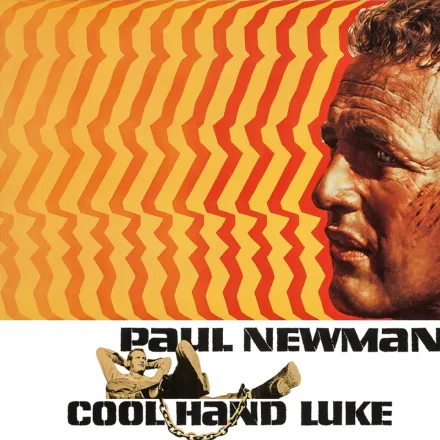
Comments
No comments yet.