
Show notes
Earl Jackson and Axel Kohagen join Mike to try and parse this dense tale of revolutionaries through the mid- to late-20th century.
Labels: Axel Kohagen Earl Jackson Japanese Yoshishige Yoshida
Transcript
An automatic transcript, tidied into paragraphs. It has not been proofread, so names, titles and spellings may be wrong, and it does not say who is speaking.
Show the transcript (about 12,100 words)
Speaker 1: Hold your ears, folks. It 's showtime people pay good money to see this movie. When they go out to a theater, they want cold sodas, hot popcorn and no monsters in the projection booth. Everyone pretend podcasting isn't boring.
Speaker 2: Turn it off. So my car down on the water don't know me had to be cheap. Still. You don't?
Speaker 3: So we take Kako sister Joda.
Speaker 2: Y IP. She was a shop when you cancel m one writer. Choose you of color. Do that.
You h you Ika Janet.
Speaker 3: I Yeah, the dust.
Speaker 4: There's no time now.
Speaker 3: That meet it.
Speaker 5: Ok. That's all.
Speaker 3: In I email Sanji KKK. I just, she can tell you tonight. MIKE WHITE: Welcome to the projection booth. I'm your host, Mike White.
Joining me once again is Professor Earl Jackson. Hi. Also back in the booth is Mr Axel Koha. Again a pleasure to be here.
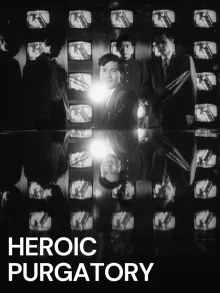
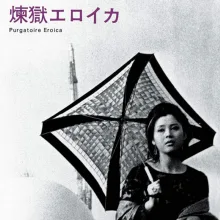
We continue our discussion of Japanese films this month by returning to the world of Yoshishige Yoshida and his 1970 film heroic purgatory. The film has been grouped with his Arrows Plus Massacre and Coup d'etat as a trilogy. With this being the middle film. This is The Empire Strikes back of the Arrows trilogy.
It's the story of Kanako played by Mariko Okada. She returns home with a lost teenager, AYU played by Kazumi to Tutsi. Meanwhile, a man posing as her dad tries to get her back causing Nakano s husband Shoda played by Kaizo Komoda to recall his youth as a revolutionary like Arrows Plus Massacre. The film moves by its own logic moving back and forth in time in order to tell its story.
If you have not seen heroic purgatory, I think you'll be OK listening to this episode as I'm not sure if I know what the heck is going on and you may get something out of this discussion before you even start to watch the film. So Earl, when was the first time you saw Heroic Purgatory? And what did you think? EARL JACKSON: I think it was around 2005 in Seoul.
And how I saw it is also I think important. I used to go to This Rage Theater in so called the Cinema Tech and for Aeros Plus Massacre. It was in the basement of this contemporary art museum in this very upscale neighborhood called Luong. So that probably my feelings about that felt too, it was very pleasant to watch.
But then the cinema moved to the rooftop of a five story rundown building that used to hold the Hollywood Cinema and to get to that theater, you had to go through an alley where every single shop was boiling pigs heads all day. Yeah, I have always had to hold my breath just about a few meters before I walk through that alley. So you walk through the alley of boiling pig heads to get into this elevator. And the fourth floor was this thing that is called the Koch, which is like this dance hall for people over 60.
So there'd be 70 year olds dressed up in these outlandish costumes and then you get up to the roof and you go to the Hollywood Cinema and that's where I saw heroic purgatory first. The first thing that, that struck me is how he used the screen space. That opening scene where most of the screen is part of the parking lot just completely won me over. It was drawn into that and then every single shot is practically a new way of designing screen space and Axel.
MIKE WHITE: Was this your first encounter with Yoshida's work? Axel Kohagen: Absolutely. I was not sure what I signed on for and I read the description on the IM DB and I thought that sounds sensible. This seems like the kind of movie I'll be able to pick up on and figure out some nuances.
I'm pretty smart and probably about a quarter of the way through. I realized the movie was winning and it wasn't even close every time I thought I figured out and kinda nailed down a part of the cipher, something else popped out at me or screamed out at me and I realized I didn't know what I was doing. EARL JACKSON: Yeah. It's a hard one.
It's a real challenge. MIKE WHITE: It is dense. It, this movie is very dense. We thought, like I said, we talked about Arrows Plus Massacre a few years ago and I remember like you Axel the movie won.
It was like, back when a mystery Science theater, there was one where it was like side hackers and I think side hackers won that episode because they just couldn't come up with enough good stuff. They were just stunned. I felt very much like that watching a Plus Massacre. Plus this film, even though this one, it's a lot shorter.
And I would say God help me, it's more straightforward, even though it jumps around in time, there are times where the characters will just say it's 1989 or they'll say it's 1952 and you can't really tell that it's 1989 1952 1960 1970 because everybody is dressed pretty much the same way. There's not a whole lot of old person makeup if at all, I know that there are a couple characters that wear wigs through here, but you don't really pick up on context clues through this because it is so stark and it's just beautiful.
It's a treat for the senses to watch this. But at the same time, it is very much a puzzle that I'm trying to pull apart while I'm watching this. And there are times like you, Ale where I'm like, OK, I'm good. I got this.
I know what's going on. I know this person's relationship to this person. All right, I got it. And then suddenly it's, who's this ambassador?
What are we trying to do? What year is this? But I'm ok with that. I still just roll with this film.
And that's the thing that I like about these Yoshida films is that there's such a wonderful look to them and even though I could find them incredibly pretentious, I'm so OK just being long for the. EARL JACKSON: Ride, I think it's so great to just enjoy what he did with screen space here in some ways. I think of this as absolute cinematic space. There 's nothing that could be naturalized.
It's like an extension of Antonioni's la Ventura where people pose around different parts of Rome. This one goes further because some of the ways the space is constructed really has no natural justification. It's much more experimental than his earlier work. And this is exactly the wrong film to watch as a first Jo film.
I hope you can go to the his earlier ones like in the sixties from there's one called Good For Nothing. There's another one escape from Japan that are far easier to watch. But having said that I completely endorsed this choice, it's just a little more adventurous. Axel Kohagen: I was definitely intrigued enough that I would like to check out more of his films.
The visual style is just stunning and I felt like a lot of the films I enjoy and directors I enjoy try for this kind of aesthetic and rarely achieve it. There were over a dozen times watching this film where I just proverbially took a step back and thought that looks amazing. And yeah, you just wanna capture that moment in time, but you can't because it's on to the next visual, on to the next moment. EARL JACKSON: It's true.
And then to go back to one of these things you're saying about when they say it's 1980 there's another complication there because when this film was made in 1980 it was the future. So he didn't know about 1980 yet. He didn't know that there was gonna be this amazing economic surge and then the bubble breaking. So that year has an association for us that he couldn't have anticipated.
So there's a lot of things here that really make viewing more participatory experience. If you wanna get sense out of it's up to you more than that. He's done his job. That was return.
MIKE WHITE: I think being a dumb American, I don't know the significance of 1952 when it comes to Japan. I don't know the significance of 1960 or 1970 when it comes to Japan. Luckily, there are things called books where you can actually read about things that happened in these years. It's amazing.
We are coming into this film called, wow, what is going on, what's happening here? But then you find out, 0, 1952 there was this big treaty that was being signed finally the end of the war. But America is gonna maintain its occupation of Japan in 1960. A different treaty is ratified very raw deal for Japan again.
And we've talked about these things before on the show because of the way that these treaties and the way that and I really appreciate seeing America from the point of view of Japan and having these things reflected back to me as a dumb American and realizing just what the history was of this time and how the oppressed felt about the oppressors, which was really fascinating for me because there are so many movies where there are things going on in the background and you just may not know about it until you dig into the history of things.
I'm trying to remember in a row in the senses, it's all set around a very particular instance of time that was going on. And if you didn't realize that maybe the front story wouldn't make as much sense if you didn't know what the back story was. EARL JACKSON: May 1st 1972 is a really big thing for the history of the Japanese left because there was the Mayday riots and they were, they used Mayday to protest sign me of that treaty. And this was one of the most violent police responses to a demonstration in the history of Japan.
Over 2000 people were injured and two of the participants were shot to death. The idea of Japanese soldiers turning firearms on the population by that time is really unusual. So that's, that is a pinpoint. The other thing is that the occupation itself was a weird contradiction because they came in and they made what they call compulsory democracy.
So that in itself is peculiar. But then they decided that some of the Japanese class, a war criminals weren't so bad because they were Communists. So some of these war criminals were actually released from prison and they became Yakuza and some of the Yakuza helped the US load ships for the Korean War. So this is one of the backgrounds here that the US occupation didn't just bring rationality and democracy to Japan.
There was a major problems. They even turned a blind eye to the mess trade because they wanted to make sure that they had enough workers to supply the ships. All of that's the background to the May 1st 52 thing then within the movement, though there was a struggle between the Japanese leftist per se and the Japanese Communist Party, which was still in some ways trying to rationalize Stalin. So that the division in the left is one of the things that Yoshida is talking about both the Yoshida and Oshima were part of the left back then.
And Oshima's film Night and Fog In Japan is his version of this, almost the same plot. It's his version of the division of the left and the aftermath of the failed response to the palace. The thing that they said is called ample, which is short, a shorthand for the American security treaty with Japan. That 's what they are both concerned with here.
But anything that's a trauma, sometimes reliving the trauma doesn't result in a coherent narrative. That's one of the things I would say about Roy. MIKE WHITE: There are sometimes where I wonder are these scenes a dream is that why time doesn't seem to matter that we're seeing characters who might already be dead in the present or maybe they're supposed to be dead in the past, but here they are in this particular sequence. EARL JACKSON: Yeah.
Some of our memories. Yeah. MIKE WHITE: So much of this movie is to your point, the whole idea of being so disillusioned about stalinism and now we are falling upon each other. So much of this movie feels like it's little, almost show trials of the people that are in these cells themselves and them falling upon each other and accusing one another being moles or spies and who knows what, when seems to be a big deal as far as what motivates these characters to do what they do.
And then you can never really trust what they're saying because of that dream logic. Sometimes there's this whole thing of the girl that our main character picks up and this man comes in and he's on her father and then the girls, no, he's not my father. And it's who do we believe in this case? And as the movie goes on, it's, that makes total sense that he's her father.
No, it doesn't make sense that he's her father and we're just being vacillated between the two as we go along. And we don't really know, I don't think by the end who she really belongs to. And there's one point in the movie that Axel and I were talking about yesterday where she gets replaced by another woman who looks similar to her. And I don't know if we're supposed to be confused by that or not because I know I was.
EARL JACKSON: Yeah, I think that the point was that the scrub is pretending to be AYU is actually one of the double agents that is trying to put Shotta on trial. Yeah, that I found it totally confusing too. And I don't know if you noticed this but at the towards the end when they kidnapped the ambassador and his wife, the wife talks for herself. But at one point they change actresses there too.
It's actually Okada Mariko with a wig that plays the ambassador's wife for a while and it's really easy to miss that, but it's, he is not doing us any favors. We really have to watch carefully. Axel Kohagen: I felt like I was losing my mind, during quite a bit of this, but it happened so slowly because I kept thinking I got this, I got, who 's that? I've got this.
Oh, no, that's that guy. Ok. I've got, no, that's the girl again. And it was, I watched it the first time through and was terrified of coming on the podcast because this is the first time I've watched a movie for the podcast and really felt like I didn't know what to say.
So I watched about half of it and I watched it without the sound or without the dialogue just to see what I could pick up from the movement and focusing on the actors. And then today I watched it a full second time through and I definitely picked up more. But I, the more I know the more I think there is to know. MIKE WHITE: It's a labyrinth.
EARL JACKSON: I've seen it several times, but I certainly can't give you any total interpretative key and I don't think that was his intention. Now, if you compare it to Knighted Fog, it also is somewhat experimental. It shows a marriage between a leftist activist, a woman and a former activist who's now a professor. But the marriage party, it's all on one log table facing the camera directly.
And the camera keeps doing this weird clock like tracking shot between the right half and the left half, but the man comes in and then accuses them of crimes and then you get flashbacks that are natural. So the flashbacks there actually locate things that you can understand. This one is far more radical. But what's interesting is that these tur this turbulence in the Japanese left cause both of them to make experimental films about the same drama.
Although that one was made in 1960 this one was made in 1970. But I think that's one way to look at it. I think one of the things I would say is don't worry about it for this film, but please watch his other films. I really love him as a director and I would definitely encourage people to watch earlier films.
He was even a shiko director. He met Okada Marco because he directed her 1/100 film which is called a Akis of Hot Spring, which is a technicolor cinema very traditionally made and beautiful. This is 1962 so that it would be good for you to go back. I think you'd be surprised how much easier he is to understand in those things.
He's also really an intellectual. I've been translating his film theory and man, he's really deaf, but I won't quote that because I this is not a lecture but he really is, he is really a thinker. Unfortunately, he passed away two years ago. I met him once I met him and Okada Mariko I had dinner with him, which is terrifying, but he really is a thinker.
He had this aura of the great thinker around him and I don't think it was an act. MIKE WHITE: No, I don't think it is either. Looking at his work. I'm like, there's a lot of stuff going on.
The person who makes something like this definitely seems to have much more substance than just style. But the style is fantastic. And I just love looking at this and I think what you did Axel by watching this without the subtitles and just paying attention to the visuals a lot more. There's so many rhymes when it comes to these visuals, the whole thing of these gates that will go up or like the blinds that will turn and then you see things in the background of some of these shots so often there's this big circular building, it looks like an oil tank or something.
And we get that quite a bit. There's, it's not an alleyway, but it's, it's a long space. It almost looks like a ditch or something. But it's much, it's concrete on three sides of it.
You get a lot of shots in there. I wanna say at one point, we get a woman 's dead body in there and we think that it's one person who has died, but then she comes back later, she's one of the ones who takes off a wig and says, oh no, I've been alive this whole time. But we do get this rhythm of these different places as well. And some of these different characters, like occasionally we get this filmmaker character who shows up and he seems to be spying on people has this camera that he's constantly shooting these folks with.
And at one point I wanna say the ambassador because there's two ambassadors, at least one of the ambassadors when they say, what would you have wanted to do if you weren't an ambassador? He's oh I wanted to be a filmmaker. So I'm like, is that maybe this guy as a different version of this person? I'm not really sure or of course, with this Yoshida because he is a filmmaker and this whole thing is looking at these images, sometimes we have images repeated 16 times on closed circuit televisions and we get things also being shown to us like I guess it would be almost a blackmail and that a few times.
And there's one version of it where the woman, I think it's Au that he is coercing into or caressing her breasts and all these kind of things. She's not even in it in one of these instances if memory serves because Right, OK, I wouldn't swear to anything with this because it feels like you're watching a dream. It felt a lot of times like I was high while I was watching this movie, even though I was totally straight. EARL JACKSON: And the other complication there is that the guy with the movie camera and the sunglasses, that's Yoshida.
Ok. He plays that guy. MIKE WHITE: That makes a lot of sense. EARL JACKSON: Yeah, definitely.
I think that's the only time he 's ever done that. I don't recall him in any of his other films. MIKE WHITE: I thought he looked very familiar. So maybe it's just like photos I've seen of him and to go back to the framing and things just, it is interesting when you're talking about how he's using technicolor and the wide screen, this isn't 4 to 3, but it's pretty darn close 1 to 1.661 to 1.85 at the most and all black and white.
And you get those same frames that we talked about a lot. When we talked about Aeros Plus Massacre, we have just down in the corner of a frame, you'll have a person's face or when they have a close up half of their face will be missing some of these framings that they have. There's one sequence early on in the film all around, it looks like a drafting table and the way that this arm, this mechanical arm comes out of it, even when it comes to later on, some of the light fixtures that they have some of these lamps that are on tables, the way that it bisects people's faces or will frame them inside of a frame inside of a frame, stunning.
EARL JACKSON: Stuff early on there's one that's shot from inside of a car outwards and I use is outside. But then if you look carefully, you can see show us image in the rearview mirror on the side. This is compositions are fantastic. That's what I take away from the film and that's where the pleasure in looking is like, I think for this film for sure, which again reminds me of Antonioni quite a bit, but this is far more political than Antonio was the.
Axel Kohagen: Effect it had on me with the just massive shots where the ceilings taking up the whole top of the frame or where some things right in front of someone's face. It made me feel like all of these people are very disconnected and cold and just unable to form those human connections. And I think it's, if I remember right? It's not until 30 or 40 minutes into the movie where you really see the married couple talking to each other without it being a shot and a reverse shot or without IU being in between them.
EARL JACKSON: Yeah, that is true. And just think that using such widescreen techniques and then not using most of the screen is such a, it's an amazing risk. I think the first time that's done is in 1929 with Carl Dreyer, the Joan of Arc film because he actually constructed a set that was so large that the cast actually lived in it during the shooting and then he never films it as an establishing shot. I think some of the things that Yoshi does here is every bit as radical as that.
MIKE WHITE: It feels like these characters. A lot of times are gonna be crushed by the settings that they're in. There's one part in a warehouse where you just get two little people walking into this warehouse and just the rest of it around them surrounding them and it's just spectacular. And like you said, Axel, this whole idea of who's talking to, who, who's looking at, who's looking in a mirror, looking at, who you get a lot of mirror shots in this.
And also, I don't think that anybody trusts anybody else. It feels like everyone has their own agendas even when it comes to our married couple. I don't know if they necessarily trust one another. And then we have the introduction of this girl in here which immediately sets the couple on edge even though at one point she's, oh no, your mommy and your daddy and you get a lot of that stuff.
There's a really twisted scene at one point where she's talking with the wife and has a rope and eventually makes a collar and puts gives the wife the end of the collar or the end of the leash and is being led through this apartment and that rope comes up a few times because there's that scene, there's Shoda I believe hangs himself at one point. Don't worry, he's ok. And then there's even a what I guess is a sex scene and I thought that she was dead at some point because of this rope around her neck. But then when Au comes in and takes the rope off, she just wakes up and is ok.
Constantly getting this rope through here used in different fashions. EARL JACKSON: And then also the language is weird because almost everybody speaks informal Japanese for the entire film. The only ones that speaks formal Japanese is like the secretary and where wherever that is that he works. But that's that without that, the Japanese like social linguistic hierarchies, you can't tell how who, what their relations are because they all speak the same politeness level.
It's really disorienting. MIKE WHITE: Something I would not ever be able to pick up on. But I'm glad that you were able to, I don't know what these people's relationships are to one another unless they say specifically this is an ambassador, this is the ambassador's wife. There's too many times.
I'm like, who is this person? And how are they related to this other person? EARL JACKSON: Yeah. And the relationship that's established may only last for that scene too.
It will change the next scene. But in some ways, this film is hard to talk about without stills. I hope your listeners are looking at YouTube for something for these things because you can't really appreciate it without actually seeing the amazing look of this film. MIKE WHITE: I think there's a whole thing too that Shoda is a scientist.
I think you mentioned that already. Is he a scientist of lasers or is he a scientist of nuclear bombs or is he a scientist of. EARL JACKSON: Both, both in some of the interpretations said that he works for the Atomic Energy Commission? But I don't think there is one in Japan for obvious reasons, but I love this one line that he says is that if you hit the this material with the lasers, you get a 3d space, but we can't get people to enter it.
I think that's very interesting. Yoshida also did a whole series of documentaries about Western painters Bruegel and stuff. They're really interesting. But one of the things that I translated, he said that his two, the way he looks at paintings is what's the frame of the painting and what is your point of entry and in some ways I think this film needs both a frame and a point of entry.
His other films, you can actually identify it like with but it's a hot, hot spring, it's the end of the war and figuring out that the emperor is human. That is the point of entry for that film. And very clear here, we can't tell, I think it must be the trauma of 1952. Whereas the with Oshima, the trauma of 1960 I feel pretty bad by saying that there is the actress that comes in and for me, she gets lost and I think that she's, I o, I think she's awful that neither her nor the guy that plays sh, as ever appears in another film.
I think that they were amateurs. I think they just found them or something. But is this is an Art Theater guild film which is one of those independent high art things and they never seem to really care about acting quality. And in this case, you really, I don't see a lot of acting going on this one.
I know that sounds a little petty. But Ka Mariko is, she's, she's one of the last classical Japanese actresses left. She was in Ozu films and everything as and she doesn't get a lot to do in this film at all. But yeah, I think that a U is really a placeholder and she disappears after this film.
Axel Kohagen: I have to say I took a liking to show to as a character because he has what I'll refer to as George Clooney Smugness when he's standing there watching these scenes. And to me it felt and this may be obvious, but here's a man looking at his life out of joint, he's looking at things that have happened or will happen to him. And his whole demeanor is this sort of wry distance from it. Like he almost can't be bothered with his own life.
He's so disconnected and scientific and aloof And for me I thought that worked. EARL JACKSON: Oh, yeah. I think that's a really good observation. I hadn't thought of it in those trips.
But, yeah, he has a very different relationship to the narrative than others. Yeah. And he's the only one that seems to have any charisma at all. I think it.
MIKE WHITE: Is tough to even tell. Is he our main character or is it knocking out? Because even though she does disappear for times, he will disappear for times as well. And to your point, she is the best actress in this whole movie.
And so she shines every single time she's on screen. I would rather have her be on screen every single moment just because she's so intriguing. EARL JACKSON: Watch her in a pizza Hot Spring. She's absolutely exquisitely beautiful.
I think she's one of the great beauties of Japanese cinema along with the Oka Ao and Yamamoto. Oh I can't think of her. No, that's so embarrassing. But there are several people who are just stunning and Okada Marico is one of them.
She is getting older already by this time and this performance is a bit reserved, but her screen presence is really quite phenomenal. Axel Kohagen: My theory on the star of the movie is that the star quote unquote was the couple, the marriage. And for the first half of the film, it focuses on the narrative structure and Shoda and he's the main lead. And then as it gets to the end of the film, it transitions more to the personal and the emotional and the symbolic.
And that's when Nakano, that's when it becomes more her movie. So I think it's about the things that they symbolize as a couple that should meld together. But in the movie they never really connect. EARL JACKSON: Yeah, that makes sense.
And she stars in most of his films. After 1963 or four, they married in 1963 and she actually funded a lot of his films because she was extremely successful actress and was still doing major television roles. And they should use should do that to fund Yoshida's films because he, as you probably wouldn't be surprised, had trouble getting funding for these movies. He left Sho Chiku.
Both he and Oshima were in Shochu early in the sixties and Shochu decided to allow young experimental filmmakers. But Shoigu pulled night and fog in Japan after three days and Oshima is so bad. Mad. He left Chiku.
Same thing happened a couple of years later with Yoshida, he made this interesting film called Escape From Japan. And at the end, the protagonist ends up in a mental hospital. But for some reason, Chiko cut that scene without telling him and then he got really angry. He also left, they both have their origins in studio and his history is even longer because he used to be the assistant director for Chino Stoke in the 19 fifties then with Okada, she 's, that's so amazing because she was really one of the established institutional stars and she left it all to be in these experimental films is astonishing.
To me, it still, still astonishes me. MIKE WHITE: I want to sound like a total hipster and say some people can get into their a 24 films. But I'm all about the AT TG films because I think that the Art Theater guild funded some weird shit, man. And I just always enjoy whatever it is.
EARL JACKSON: Just amazing. MIKE WHITE: Yeah. Everything that I've ever seen that has been released by a TG. I like it.
EARL JACKSON: Which ones did you like? MIKE WHITE: I love everything that Terri Yama did. I wanna say that some of oh gosh, Human Bullet, I wasn't that a ATG film. EARL JACKSON: I love that film.
That is one of the best anti-war films I've ever seen. That is so great. MIKE WHITE: There was a time of my life where I would just look for a TG films and try to track these things down just because I knew every single time it was gonna be something challenging and something if I didn't enjoy it, I would at least be happy that I had seen the film like. EARL JACKSON: Death By Hanging O Oshima's film about the Korean God.
That's a TG. MIKE WHITE: Cancer that have seen a ton of Oshima films. But that is definitely one of them. And I think that I really go towards that era of his career more than anything else.
EARL JACKSON: There's even a gangster film from a ATG that's very different from anything else. N Nakashima Sada was one of the great gangster directors, but he made one from a TG. That is so weird. It's called Aesthetics of a bullet.
I highly recommend it. But it's, you've never seen a gangster film like this. I don't know how they did it. That's true of all A TG.
But when they actually moved into genre, I find that really interesting. Rome of the sensors ended up being shot in France because every time they try to shoot it in Japan they were raided by the police. MIKE WHITE: Which was weird that there was that movement of because I know Terria did what story of, oh, was, or his version of that was also a French co production. EARL JACKSON: The French Love Hiroyama.
MIKE WHITE: Oh, who doesn't, you know, other than his own mother? EARL JACKSON: Yes. She has reasons. MIKE WHITE: He only murder her, murdered her in film so many times.
EARL JACKSON: But then she comes back, she is like one of those imaginary murders. Yeah. Like in Farewell to the Ark. And what's the other one?
Yeah. Couple of those. I love those. I recently tried to show one to my graduate students and they couldn't stand it.
They thought it was too obscene that my God, what is wrong with students today? They've never seen a body in a circus before. It's just, it was so amazing to me. MIKE WHITE: I'm sure people would be just horrified by Emperor Tomato ketchup these days with all the child nudity.
EARL JACKSON: Oh, I wouldn't show that. I definitely gonna show that. No, that, that's a headache. I do not need no.
MIKE WHITE: I have yet to see. So I'm going through these Yoshida, this trilogy very deliberately. So I have yet to see coup d'etat. But I hear that it might be easier to understand than heroic purgatory and I found heroic purgatory, easier to understand than Arrows Plus Massacre.
EARL JACKSON: Oh, I found it just the opposite because I know the story of or Osaka, the anarchist and Ito Noe that those are the two people who were murdered by the police. It's a true story in 1923 the, with the Great Kanto Earthquake, the Japanese use that as a an excuse to put violently, put down the foreign resident population, especially the Koreans that as many as 1800 or even more Korean residents of Japan were probably murdered by the police and then dissidents and Ito Osis Aai and his young nephew were all strangled.
That 's true. And Ito was a feminist and a writer rather amazing. So when you know that story that 's easier to follow because he even though it goes back and forth and it pretends that she survived for a minute. But there is actually a guideline in that ST in that film that there isn't in heroic purgatory.
MIKE WHITE: I wish you were doing the commentaries for these because I know the commentaries that are on the nice box set that was released a few years ago, ah, for a two hour movie. The guy talks for 40 minutes and I'm like, really, there's so much you could be talking about. Our conversation right now has been 40 minutes long and we barely have scratch the surface. But we would, I have already put things in more of a historical perspective than I think that this gentleman did.
And it's give me more, there's gotta be more to these movies. EARL JACKSON: Yeah, but that's really hard to do. I did one of those. I did the commentary for Masumura is a blind beast and it 's really hard to keep talking and that you don't really have to keep talking, but you want to make sure what you're saying is relevant to the great to the scene in question.
Sometimes I give them a pass. Although the ones that I think are really crimes against nature is when they do a anime and the people who are doing the commentary are the American voice actors. That's just ridiculous. But it's really hard to keep touch.
I'll tell you I wouldn't ever do a full length one again. I do video essays or Arrow Blu Rays. But boy, is that a hard thing to do? MIKE WHITE: I know that pain, I think I could find more than 40 minutes of material to talk about this film, especially if I had a nice long conversation with you around some of these historical events because I don't know those things.
There were some resources where I was able to say, ok, when 1952 what's going on and so much stuff doing around these treaties and even when we watched Battle stout honoring humanity, it's, that is so much about the relationship between Japan and the US and there's, I think there is talk of an po in there. It's the background to so many of these movies that otherwise you would just be like, oh, that 's a movie and it's no, there's a whole, this whole world outside of it. They are reflecting the times and. EARL JACKSON: This was about Hiroshima.
Remember a lot of it takes place in Hiroshima? Battles of Yeah. And there's five of those films, I think that's one of the great contemporary documents in cinema history. A lot of it.
And the other thing that's wonderful about those five is that they'll kill off a character and then they rehire the actor for the next film with a different, with a, as a different character. There's something so jarring about its relationship to identity that I just love that. There's a lot of complaints about that very thing, but I absolutely love it. MIKE WHITE: And perversely, that 's what I was gonna say earlier is that I felt a little bad because that I was mixing up the one actress with a, you and that I really was taking her to be the same person the whole time.
It took me so long to realize. Oh, no, there's a different actress that's in here that also has this long hair. And when I watch it back again now having finally realized that I'm like, oh, that was so offensive that I thought they were the same person. But that's just the way that I took it.
EARL JACKSON: Oh, I did too. I thought so too. The first time I saw it and she has a diff, very different personality, but I think we're supposed to think she's the same person. MIKE WHITE: Ok.
Good. I'm glad it's not just me. Then if you. Axel Kohagen: Look at it, the character's personalities change on a dime regardless of who's playing them.
And the movie has a lot of people in the shadows or in bright spotlight and in the beginning they did a very nasty trick. I think it's very cruel if a filmmaker introduces a main character in sunglasses because that means later on when I see them without the sunglasses, I won't recognize them. I would be fooled by Clark Kent. EARL JACKSON: I realized, I think he looks much better in glasses.
MIKE WHITE: Actually, we talked about the framing but we didn't talk about the camera movement and that's either actual dolling, tracking shots and they do a ton of them. There's also a lot of great just pans and tilts going on and then the use of the Rack focus. He is rack focusing crazy. And it's always so interesting to see to the point where sometimes characters will go out of focus so much that they don't even exist anymore.
It's almost a transition. And then he loves the fades to white. When we get white things in this movie, I'm thinking of the wife's white coat that she has with black buttons. It almost glows, it is so white.
And then when we move to the outside world, there are so many times where we just get completely washed out with whites. EARL JACKSON: Or the like the lens flares when during the interrogations, when they turn the lamp on people and the screws up the light meter. I love that. There's one scene where there's a close up of Okada's face where she puts her hand on her face and you can see these nails, her nail polish is like shiny and she has this shiny square ring on.
Just those moments alone are just terrific. And just in terms of cinema working, I. MIKE WHITE: Have to say, I'm a little jealous of you having been able to see this on the big screen because again, even though I don't understand everything that's going on in this movie, it just washes over me in such a pleasant way and to see these images projected so large, I think would just be such a treat. EARL JACKSON: Yeah, you really have to.
Yeah. And also in coup d'etat, they do a lot of empty screen space too. There's a scene where this political, this right winger has sent, he has copied a sutra and he sent it to the imperial palace and they, the messenger brings back the response and it's in this huge box and it's not a scroll but it unfolds. It's this big white paper and it, and there's nothing on it, which is an insult.
But while he's unfolding it keeps taking up more and more of the screen because it's white until there's only the top of his head left and the rest is white paper. Things like that are just, they're just so Yoshida at this period. But on big screen, these are utterly overwhelming. In fact, they almost intimidate you into not trying to figure out what they mean because is bigger than you are.
MIKE WHITE: I feel that I also appreciate to the use of audio so often he will just completely take audio out other than just sound effects, the sound of people walking or he will add music. We've got some dtic music in here. We'll call it music where it's people sitting on a piano and playing the piano with their feet and it just becomes this real discordant awful thing, but it just keeps going on and then others seem to have this ethereal choir playing which really matches well with what is going on screen, especially when it's the people turning on each other and there's one scene where everybody's pointing their fingers at Shoda and just accusing him of being the traitor before he ends up hanging himself.
It just works so beautifully. EARL JACKSON: Really redefines what coherence is and it teaches us to be more tolerant of lapses in coherence. Axel Kohagen: I definitely think this is a film where I wanna talk about sex and sexuality because from the reading, I did some of which you sent along mic and then from watching it. And that's my background.
Anyway, this is a film where sex and sexuality is not able to be separated from politics and class and your identity for these characters. It's very much based on where they are at and there's a thrown ness to it. They were just thrown their position in life and they can be married because they have the money and they have that stability when they were younger, they were the revolutionaries and there are a couple lines in there and I think this is maybe problematic in 2024 in some ways. But I think there's also some interesting aspects of it, of the idea of being gay or lesbian, being a political decision.
And I know there's a wealth of writing about that and gender studies too. The idea of not behaving like a traditional family as a way of showing that you were truly free. I think at one point they asked the ambassador if in their words, homosexuality was a new way of being free. EARL JACKSON: I left at that one.
It was it and for men, right? It said how do men become homosexual to become free? I thought that was extraordinary. It is a really funny line.
And then also the strange quasi lesbian boss when A U tries to leave for work early that this also comes out of left field. MIKE WHITE: It's like a rape scene that's going on. And I love how that's shot through the camera viewfinder or camera screen from the old school television cameras. That was great.
Axel Kohagen: That scene was a little problematic for me in that I felt they were adding sinister lesbian character to the film and they didn't do as much with it as they were hoping they do that character. What was her name? EARL JACKSON: Sometimes they call her Ono and then there's another name too, but Ono is also an incredibly weird name. I've never heard that name before, but I can't remember her other name.
But yeah, Uno is one of the names they call her, but that's not the same woman. Axel Kohagen: Ok. Then that, that changes my reading of it because I was under the assumption they were the same woman and I was waiting for that to play out. I thought uncle or uncle was a really interesting character in that pops up from time to time and pushes the narrative forward.
But if I remember right, she was caught and tortured and then returned. So as a character she goes through this, there's this interesting arc of her life but it's all in the background. MIKE WHITE: Is Ono is the one that you're talking about. Is she the one that's, it looks like she's attacked by five or six guys that have her down?
Ok. That same type of pit but not the same pit that I was talking about before. EARL JACKSON: Yeah, that was creepy. Yeah, that was so creepy.
But women had a very strong role in the Japanese left, especially later with the Japanese Red Army when there's several major women left us still in the is still in prison or the crimes of the Japanese Red Army. And there's whole books written about those women is weird. It's a strange, there 's actually even a one on Eng in English called the Co Ed revolution. This is one of the places where women found avenues to power really fast and the Japanese left.
They also committed heinous complains too. So I think that her, especially when she keeps saying we must go forward, we must go forward. I have to get to the station. Now that is a very much how women are portrayed in the historical reconstructions of what happened in the leftist movement.
MIKE WHITE: There's a moment where she's given a monologue and it's her in the middle. And I think it's one of the ambassadors question Mark on one side and another older gentleman on the other side and then they're reflected up as well and they're in front of a movie screen and so their shadows are against the screen and their reflections are there. Who would even think of a shot like that? It's so gorgeous.
EARL JACKSON: These setups must have been really fun to make. The cinematographer is also the same one for the other two films in the trilogy. I think that's one of the things that makes it a trilogy is this look, the look that the three films have, which is very different from his other films. And his other films usually are more classically constructed.
MIKE WHITE: I mean, I love good framing. That's one reason that I love Kurosawa so much is that he always knew how to frame a shot so perfectly and these are just studies and unusual and interesting framing. EARL JACKSON: Yeah, and also how to make something interesting with no budget. This is a very low budget film.
So I think they depend on the peculiarity of the architecture that they found a lot and it really almost looks like a science fiction movie. It looks like I remember Godard's wonderful thing about another planet which is just a neighborhood in France. MIKE WHITE: It really reminds me a lot of last year, Marion bad too, I think with the stark black and white and just that there are so many times, I guess the moving camera also helps out quite a bit and also the dense dialogue where it's stuff to get a beat on what's happening.
EARL JACKSON: I think that comparing it to last year, everybody is actually a really good thing to do because we watched it and it really doesn't bother us as much that we can't tell what's happening in some ways. It's such a gorgeous film in some ways European films get away with more than Asian films would because there's a tradition of us of the West looking at Asian films as just cultural information. And this is definitely not what a Yoshida does. Axel Kohagen: And that serves as my regular reminder that I actually need to cure my blind spot and watch last year at Marion bad because it's been on my, I need to do this list for a long time.
EARL JACKSON: I'm gonna completely disqualify myself here now because when I was 15 years old, I found out that film was going to be shown at the University Of Buffalo. So I took two buses there to see it for free and I loved it so much. I walked all the way home and I went back every night. It is the turning point of my life.
So that at 15, when I saw that film on screen, it just seemed like there was a different way of relating film to the world. I absolutely loved it. Then when I went to my first year in Minnesota, I had a friend I was taught in Minnesota and he said, oh, what film can you recommend it I recommended last year at Marriott Pot. And then the next day I got a answer message of my voice mail that said Earl do not ever recommend a film to me again.
And he hung up. That film is very special to me both as a revelation to me, but also to a warning to others that you may not want to take my recommendations. MIKE WHITE: I highly recommend starting up a podcast about movies and then making a list for yourself of things that you've never seen, but really should see somehow that's how I end up seeing a lot of these movies that I've never seen. And that's a really one of the reasons before we started recording or you would ask me why this one in particular, it's a challenge.
I am challenging myself with some of these, I saw Aeros Plus Massacre. If I didn't have to watch this and watch it several times and read about it and do all this, I probably wouldn't watch Heroic Purgatory. And there's a lot of movies that I probably wouldn't have watched for the show, but making myself watch them is hopefully making me a better person. EARL JACKSON: I also give myself permission not to watch a movie.
I have never seen Oppenheimer and I'm completely comfortable with that. You know, I won't watch a movie where I know the dog is hurt, hurt or killed. I've never watched the John Wicks film. I'm completely comfortable with that.
I wanna guard areas of my unconscious. I don't want those films occupying. Axel Kohagen: Dutch to give you a little bit of context to how I found this movie. I wanna bring up.
I have a seven year old daughter and so I don't get to watch as many movies as I used to before. I had a kiddo and a lot of what I do watch is skewed younger. So I'm used to watching cartoons and TV, shows aimed at kids and going from those things to finding myself halfway through heroic purgatory was, it was like when it's a nice day out and you jump into a cold lake, it was a big change of pace, ultimately refreshing or I liked it. I'm, I'm glad I watched it.
I'm even glad I watched it twice. I think Earl, you had said that it pleasantly washed over you and pleasant wasn't my experience with this. I felt very nervous about this film. It reminded me of not to sound terribly pretentious, but Sartre and Kamu and Kafka and this idea of yourself and your identity being on trial fighting for existence.
Here are these people who are confined by, not only who they are, but society and economics and politics and over determined in all of these ways trying to make the right decisions. And I felt, and for me, the movie really culminated with the hanging scene which it got a jolt out of me when you see Shoda walk up to the gallows, they put the noose on him and you see the shot from behind and he jerks up just that one small difference from everyone I'm assuming, expects him to drop down. Yeah. And that seem to me was this character has gone through all of these memories and then these ideas and tried to connect with his wife and tried to connect with a U and tried to be revolutionary or a counterrevolutionary.
And at the end of it, he's found wanting and agrees to his own death. And then after that, the last half hour for me is Manico coming to terms with how she feels. So it's like the language is gone and now it's the language of pure emotion. MIKE WHITE: Scenes of people almost shooting each other, not shooting each other.
A lot of guns being pointed at us, the audience and we get faked out at one point with a gun. And then when I see a gun again, like Ron, I'm like, oh, no worries. There won't be any bullets in there. There were, there definitely were.
And we get to see a character die a pretty bloody death. Yeah. EARL JACKSON: For a while then they come back. Yeah, everything's in brackets.
And in parentheses in this film. MIKE WHITE: You get the recurring thing of the paparazzi going through here or the reporters and even to the point where we have a reporter who is introducing a TV show or signing off from a TV show. Oh, you've just been watching this and then the ambassador's wife comes up and it's just like, no, that it takes the microphone away and just takes the power from him. So I guess going back to what you were saying as far as the power of the women in this film.
EARL JACKSON: Yeah, but these, the whole idea of paparazzi in Japan that also has a terrible incident that happened around this time. There was a gangster who had decided to turn evidence against the gang and he was out on parole or whatever, but he was under guard, but he was essentially de facto guarded by the paparazzi because they were around his house. But while they were around his house, a black car came up and people came out with guns, went into the house and killed him and then the paparazzi just filmed it and the film, the escape that that really happened.
And there's something very Ominous about these people with cameras in this film. This had already happened by this time there's a film about that I highly recommend is called, we don't need no comic magazine that takes on that case. But Yoshida would have been very aware of that. So in some ways, I think these people aimed with cameras are just another way of aiming with guns.
The anybody that's up on like scandals or political scandals were really hunted down by the cameras of the press that in Masumura, Masamoto Yasuzo brilliant film that a wife confesses how the cameras hunt her because she may have killed her husband. I find the king was in the film Ominous. Axel Kohagen: Two macguffins in this movie that drove me absolutely bonkers trying to ferret out their meaning and maybe there is a deeper meaning I didn't pick up on. But number one, it drove me nuts that they tried to kidnap ambassador Jay and got ambassador out.
It was such a specific detail that I kept expecting something to come out of that. And the other one is, this probably comes from having grown up on too many American sci fi movies, the discussion of the weapon and the weapon must go to the agent at the station and they must meet at 4 p.m. And the weapon will be exchanged and the weapon needs to be there. And so I assumed that there was gonna be some symbolic revelation involving the weapon.
And all we see of it is it falls into a toilet and never gets delivered. So those were two places where I was expecting that I would find a payoff or a key. And I was, in my opinion, I was deliberately thwarted. EARL JACKSON: Yeah, I don't understand what who the ambassador Jay was either.
M is definitely the American ambassador, that's for sure. But I don't know who Jay was supposed to be because Japan was not paying attention to anybody else's country again, other than America. Unfortunately. MIKE WHITE: Yeah, I noticed that thing about the weapon and I was just like, is that it, is there gonna be more to this because it just falls in the toilet?
And then I, that started me on this whole rabbit hole of, do Japanese people have Western style toilets or do they have the same types of toilets that they have in China where you just, it's the kind of squatty potty. EARL JACKSON: They both exist. They're both. You see both.
If you go to a public restroom, they're marked on the door. Which one they are? So you always have the choice. MIKE WHITE: Are you good at squatting Earl.
EARL JACKSON: I had that there was my toilet when the first time I lived in Japan in my apartment, it's, you get used to it, you get used to everything. It, that's the secret of learning a language. You get used to everything. It's amazing what you can get used to it.
MIKE WHITE: I was very fortunate. I never had to worry about that when I was in China. I don't know if I was just going to the right places or Shanghai is just so westernized. I know at the movie theater they had urinals, but then if I was to go into the stalls, they had the floor one.
So luckily I was just using the urinal at that point, but my wife was having a hell of a time. EARL JACKSON: The worst thing I saw was in Mongolia where you go into a restaurant bathroom and they might have five toilets there, but no stalls just right, five toilets right there next to each other. MIKE WHITE: At least the people in the east have the full length bathroom doors, which I don't understand why they don't have those over here. EARL JACKSON: It does make a lot more sense.
So, in women's bathrooms in Japan, they, the stalls play music because they don't want that you're in, people try to record the sound of urination. So they defeat it with like waltzes. Axel Kohagen: How much of Japanese culture, particularly around the time this was made would have been well versed in Western psychoanalytic theory or would that have not been something on the forefront of the filmmaker's mind? EARL JACKSON: He read Marylou Ponti in French.
Now the Japanese have constantly translated Western works from about 1870. By 1920 there was a complete Japanese translation of the complete works of Hegel. There isn't one yet in English. So the cosmopolitanism of the Japanese cannot be overestimated.
They would be very aware of everything. And but in saying that doesn't mean that they copy it. It means that they metabolize it. Yeah, they, he would be very aware of it.
Yeah, but he was more interested in phenomenology and in politics. He's much more interested in the construction of space in the mind. But I don't think that you can't be in the 20th century and pretend that Freud didn't exist for sure. I'm, I actually am a big Freud fan which may disqualify me too.
But anything that we're aware of, the Japanese are aware of in Spades, you know. Axel Kohagen: That makes a lot of sense because I wasn't getting much out of it thinking of it from a psychoanalytic reading and it makes sense that his vein was more phenomenological and political. EARL JACKSON: Now, remember this language is so hard to read that pe seniors in high school are still learning to read it. And even then it has not Japan has a 98% literacy rate.
Just think of that it. Axel Kohagen: So they really know what they're doing, who would have been aware of this movie in the United States, what was its path or has been its path to American audiences, international film festivals. EARL JACKSON: So like the San Francisco International Film Festival and also a couple of wonderful art theaters in New York, the theaters in Manhattan that would regularly show Kar would also be showing Yoda. Axel Kohagen: The reason I asked that is because, and I'm probably stretching quite a bit here, but I couldn't help but see David Lynch's whole career throughout this movie.
And I feel like it's always dangerous to posit a direct influence. But the usage of industrial spaces as spiritual and supernatural, the use of sound and noise making the comments seem alien that it really submitted for me. There's a moment when I use theoretical father shows up and the buzzer goes off and it sounds exactly like the buzzer from Lost Highway. And I feel like this movie has similar filmic language.
EARL JACKSON: Wow, that's interesting. I never thought of that. I have no information was Lynch ever saw these. But it 's certainly, it's a possibility.
He seems to like commercial films better in terms of what he draws on. But I have no idea. Lynch is also a major favorite of mine. I think Inland Empire is one of the greatest films of all time.
But I don't know where he you can't see a light bulb swinging from a ceiling without thinking of ledge or a ceiling fan now. But I see what you mean. Axel Kohagen: Yeah, it may be just convergent evolution. I need to Rewa Inland Empire.
It missed me, but I've come across it in so many other conversations and readings that it's clear to me, I need to give it another shot. EARL JACKSON: When you do make sure you get the set that has the deleted scenes. There's one deleted scene for that scene alone should have gotten Laura Dern the Academy Award. It is the most amazing performance of a Dom and that woman talking to a social worker.
I don't know why they didn't leave that in the film. But I really love that movie. I saw that again. I saw that in Korea to it and I remember being the only person in the audience awake by the end of the movie.
Once again, don't trust me. Axel Kohagen: Oh, the only thing I'll say and there's nowhere this will fit in. But I'm just gonna say it. I kept thinking Angel Heart every time they showed the back of the factory with the fan moving.
Oh, wow. EARL JACKSON: Elevator. Yeah. Axel Kohagen: Yeah, I was watching that and I'm like, oh, Harry Angels in trouble again.
EARL JACKSON: Wow. That's an interesting. I always, I love to think about Angel Heart. That's another film that should have gotten a lot more attention than it did.
Axel Kohagen: If we could just go back to Angel Heart and digitally remove the baby's yellow eyes in the final scene, it would play so much better. Yeah, that's. EARL JACKSON: A Yeah, that's a good point. MIKE WHITE: All right guys, let 's go ahead and take a break and play a preview for next week's show right after these brief messages.
Speaker 5: St Go. You ma I will. Oh my God Lord, you've been me. None of us.
Nigel. Christel Nigel kissed on the begin more.
Speaker 9: No more. Talking about ST Cos I'm saying Kojima. No, Jack on the car.
Speaker 5: Go, go, go. Oh oh you to some what they says so, no, he never grew up. Oh Yeah. Oh He got you, man.
You the morning, the owner of a secret. Come on. MIKE WHITE: That's right. We conclude Japanese month with a look at Toshio Matsumoto's demons until then I want to thank my co-host Earl and Axel Earl.
What is the latest with you, sir? EARL JACKSON: I'm co editing a book with David Desser on the films of Kino Stoke, who is one of my favorite directors. So that's a great honor for me and I my own book on film. So theory and practice in Japan.
I'm nearing the end of it and I'm going to be giving a lecture and a round table about that book in, at the University Of London in the summer. So I'm really excited to go to the UK. MIKE WHITE: I'm excited to read your book. Thank you and Exel, how about yourself?
Axel Kohagen: Busy as a dad, busy with work. I've got some fiction writings that I'm putzing around with. There's one novel I wouldn't mind sending out and another one that needs to be edited and I'm dragging my heels on that part. I still have an idea for a podcast that I have blocked out in my head that I wanna get started.
I just need to actually that doing it part, it turns out that's a big part of the podcast. Thinking about it is nice, but they actually doing the podcast is that's the real thing you gotta do. MIKE WHITE: There is a little hump there. They gotta get over it.
Thank you so much guys for being on the show. Thanks to everybody for listening. If you want to hear more of me shooting off my mouth, check out some of the other shows that I work on. They are all available at Weirding Way Media.com.
Thanks especially to our Patreon community. If you want to join the community, visit patreon.com/projection booth. Every donation we get helps the projection booth take over the world.
Watch
Music credits
- "Purgatory" - Vangelis
Links & resources
Related episodes
Episodes that share keywords with this one.
Eros + Massacre (1969)
Shared: Director Yoshishige Yoshida, Writer Masahiro Yamada, Mariko Okada
Dick Stegewerns, Chris Stachiw, Samm Deighan

Comments
No comments yet.