Show notes
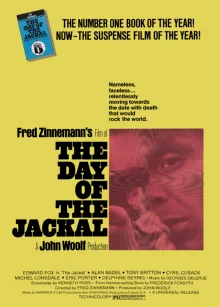
Ian Brownell (opens in a new tab) and Rich Edwards (opens in a new tab) join Mike to discuss Zinnemann's film and the 1997 remake with Bruce Willis and Richard Gere, The Jackal.
Labels: Bruce Willis Fred Zinnemann Ian Brownell Jack Black Richard Edwards Richard Gere
Transcript
An automatic transcript, tidied into paragraphs. It has not been proofread, so names, titles and spellings may be wrong, and it does not say who is speaking.
Show the transcript (about 25,600 words)
Speaker 1: Hold your ears, folks. It's showtime people pay good money to see this movie. When they go out to a theater, they want cold sodas, hot popcorn and no monsters in the projection booth. Everyone pretend podcasting isn't boring.
Speaker 2: Turn it off. This was the sixth attempt on the life of President De Gaulle. In desperation, the OAS terrorists hired a professional killer, his code name. But Jackal, this is a once in a lifetime job.
Whoever does it can never work again. How much do you want? Half a million? What in cash?
I'd like to know how you expect us to find half a million dollars so quickly, a desperate plan. Nothing left to chance. Every chilling detail timed to the second. How do you stop the Jackal?
How do you stop the clock? Commissioner Berthier. We were in trouble in this one since not even the o hes know who he is. Action service can't destroy him.
Territorial surveillance can't pick him up at the border because they don't know what he looks like. An unparalleled manhunt. A determined and relentless killer. Impossible to know.
Impossible to stop every chilling moment of Frederick Forsyth's sensational book brilliantly. Filmed by director Fred Cinnaman is vanished. I don't think we really ever had any idea what kind of man you've been pursuing. E excuse me, it's just occurred to me that we've got two days to catch the Jackal.
Of course, liberation. That's what he's been waiting for. Step by step with fascinating precision. The Jackal moves closer to the moment of kill to the Day Of The Jackal.
MIKE WHITE: Welcome to the projection booth. I'm your host, Mike White. Joining me once again is Professor Richard Edwards. RICHARD EDWARDS: Hi, Mike.
Good to be here. MIKE WHITE: Also back in the booth is Mr Ian Burnell. IAN BROWNELL: How did you know which podcast to listen to? I didn't.
So I listened to them all. MIKE WHITE: We wrap up a month of requests and the year 2023 with a look at Fred Zinnemann's the Day Of The Jackal based on the book by Frederick Forsyth. The film stars Edward Fox as the titular Jackal, an Assassin, as cool as a cucumber in a bowl of hot sauce. He's hired by members of the las, a group of paramilitary terrorists who were holdouts who tried to keep Algeria a French colony.
They hire the Jackal to assassinate President Charles De Gaulle in August of 1962. We will be spoiling this film as we discuss it. So if you don't want anything ruined, be sure to watch the movie and the Bruce Willis remake and then come on back, we will still be here So Ian, when was the first time you saw the Day Of The Jackal? And what did you think?
IAN BROWNELL: I first saw this at the Harvard Film Archive? I guess that was in the nineties because that's when I was working by office there, a very lonely job. It's in a windowless, airless fluorescently lit basement and you just sell cash only tickets. But the screening room is quite beautiful.
And my memory of the film was that it was cinemascope because early seventies widescreen technicolor is absolutely looks best on that particular screen. And I remember getting very lost in this movie. I didn't know anything about it. I hadn't read the novel and of course, now that I've rewatched it's not in cinemascope at all.
It's the regular 185 movie, but I loved the movie. I didn't read the novel until you booked me for this podcast and I loved the novel, loved it. I think it's a superb book and a very good movie and Rich. MIKE WHITE: How about yourself?
RICHARD EDWARDS: So I've been a fan of this movie for a long time. I saw it first back in my college days. So back in the 19 eighties was the first time I saw it. It is a film I saw after reading the book first.
So to just echo what Ian just said, I found the book to be a superb master class and how to write a Chase Against Time Thriller and the movie it did not disappoint. I watched it the first time without really being familiar that time with Fred Zimmerman's entire film like output and now post graduate school and post being a film professor, I've placed it within a different context, but I always remember from the very first time I viewed this film that what left the biggest impression on me was the dueling characters of Edward Fox playing to Jekyll and the French Detective Label.
MIKE WHITE: Labelle is pretty legit. I really like him as a character and Edward Fox is fantastic as the Jackal. I'm trying to think of when I saw this movie the first time because I think kind of like you and I got lost in. It wasn't exactly sure what was going on and also like you, I'm really glad that we did this episode because I got to read that Forsyth book and that book is fantastic.
It is everything that Robert Ludlam wishes he could do and just doesn't do it nearly as well. This, it really is a very, very taught, taught thriller. IAN BROWNELL: I read the books like decades after seeing the movie for the first time. So I read it pretty fresh and when I was reading it, I certainly didn't picture Michael Lonsdale as Labeau reading the book.
I was surprised re-watching the movie when he shows up. I'm like, oh, wow, that's who I guess I was picturing someone a little more spry, but no matter I've always loved Michael Lonsdale and everything I've seen him in and it's great to see him in this movie. But yeah, he's just less, I guess a picture of a younger person in my brain while I was reading the novel. MIKE WHITE: I was confused the first time watching the movie because I actually thought the guy who got shot for the assassination attempt at the beginning was Michael Lonsdale.
Younger version. I was like, oh, he must have really escaped and he's now got older and he is maybe he's in disguise, he's putting no, it's two totally different characters. I was just being a complete a hole. So I just didn't get it whatsoever.
RICHARD EDWARDS: And I think the other point to note about the book is how faithful Zerman is to the book because there are a lot of different ways to do this type of political thriller, which that involves the assassination of a major political figure. And what I like about both the book and the film is the way they adopt this journalistic tone. It's just the facts. There's really not a lot of moral judgment, there's not a lot of investigation as to the political motives behind all of this.
It's a clinical study in cold realism that still stands up when I rewatched the film for this podcast. I was actually a little bit shocked how prescient and current it feels. It feels more of course, than the second film we're gonna talk about today. The Jackal.
MIKE WHITE: Yeah. And I like that very terse tone. I mean, they have a voice over at the very beginning, but I think he fades out pretty quickly, but he at least explains a little bit about who the A OAS are. And I was reading a biography of Fred Zimmerman and the author, there was just like, it kind of almost feels like Zimmerman is on the side of the OAS just because it is so detached.
But I don't know if he necessarily is, but it is a strange thing and something that we've seen so many times before where you're watching an assassination film and you really don't want the person to be assassinated. But yet you're so invested in the main character that you hope that they succeed. So I don't really want Charles De Gaulle killed. Not that I know that much about Charles De Gaulle, but I'm rooting for the Jackal.
I'm just like, well, now he's on the run and now I really care about this guy and the tone of this movie shifts several times. It is very much like the book which has three different distinct sections. But this whole idea of him just operating under the radar, nobody knows what's going on. He's taking care of all of this business.
And then once they kind of find out who he is, then it's, oh, well, now he's being pursued and then suddenly it's like race against time and what is his motivation is he just so determined to kill De Gaulle, but he has no stakes in it. The only thing he's going for is the money, but it feels like he is almost a terminator by the end of this movie and that he has to kill De Gaulle. He's like, like Reggie Jackson in the naked gun. IAN BROWNELL: I must kill De Gaulle.
That narration is so interesting also just like being so many years removed from when the book was written because it's, this is what was going on 10 years ago to like the audience of the Day or not six years ago. Now, everybody who was seeing that movie and reading the book knows that Charles De Gaulle was not assassinated but still in the book, it says something like this attempt would not succeed. De Gaulle would die in his bed in whatever year he died nowadays. And even like when I saw it in the nineties, I couldn't be sure because I'm an ignorant American.
I certainly know who Charles De Gaulle is because he's got an airport named after him just like JFK whose assassination was successful. So I think a lot of people might come to this movie nowadays going oh was the French president assassinated in the 19 sixties? And the movie makes it very clear just like the book that no, this, you are not going to watch a mystery suspense thriller. You are going to watch a story about an assassination that fails and it's going to be a long procedural and you know, the outcome.
And that's the unique thing about the book and the movie is that it's like an author setting a challenge. Can I write a suspense story where 100% of my readers know how it ends? RICHARD EDWARDS: I love the opening. This is Cinnamon at his finest.
This is his roots in documentary storytelling and he brings us into the world of France 1963. This is he does it with brilliant location shooting. He's using narration to create this documentary realism. But what was fascinating as I was watching it this most recent time is just how much it echoes Jf K's procession through Dallas.
He's very literally hauling back the Kennedy assassination and it really sets us up as Americans to regardless of whether we know who Charles De Gaulle is. We definitely know who JFK is and because the Jfks assassination was successful, it creates an a anxiety in us in the audience because then we start to be like if JFK died, maybe De Gaulle really does die. Maybe I forgot my history that this is actually the way the guy dies, maybe in a fictional sort of ramp up. But the part I just wanted to build on is this whole sense of this great depth of realism that is really absent from most of our action films.
Nowadays, there really was a meticulousness of Zimmerman to in ways that I would actually think echo the spirit of the Jackal. Is, there is a cold efficiency in Zinnemann's direction that echoes what Edward Fox is doing as the character of the Jackal. IAN BROWNELL: Yes, you root for the Jackal. And I think in a lot of these movies, you're, you're rooting for the hero or the antihero, the main protagonist, you want them to succeed.
But I think also in terms of Cinnamon's, the movies that he is drawn to. They're very much often like the individual against the system type theme, whether it's obviously a high Noon, but even like none story and man for all seasons and even some of the characters in from here to eternity have that sort of, yeah, it's this little guy and Edward Fox is a little guy. He's super powerful and so slick, but he is this very compact. You compared him to the Terminator original casting.
When James Cameron wrote the Terminator was he wrote it for Lance Hendrickson as a guy who could just blend in a robot that could just blend in anywhere and not be noticed. And that's very much what Edward Fox is like. I was listening to another podcast about this movie and they were like, what was the Jackal's plan for escape? He never would have escaped.
And I was like, you don't think he would have escaped even if two or three things hadn't gone seriously wrong near the end, he just walks out of that house after killing the president and the he's not going to get stopped. There's 1000 million people, hundreds of thousands of people. How many people are at that parade? He just blends in and disappears.
MIKE WHITE: And when he walks out of the house, what's he going to look like? Because he changes his parents so many times when he just slips right into the guise of the school teacher from Copenhagen. It's amazing. And that's how I picture Edward Fox on a Day to Day basis.
But then you get all of the other Edward Fox that are in there. And I'm just like, oh yeah, this guy can really change what he's doing when he shows up as the disabled army veteran. I love that because they're doing something with his eyes where they're pulling down the corners of his eyes and it looks really good. And yeah, that he's holding his leg up the entire time.
It looked terrific. IAN BROWNELL: Which looks so convincing. And then when he like unhooks it and he just has a technique for bringing the blood circulation back in really quickly. RICHARD EDWARDS: So in Fred Zinnemann's autobiography, he talks about the leg way that Edward Fox did it on set and he was told by the medic on set that Edward Fox could only have his leg in that position for five minutes at a time.
But in most of the shots they took, it took upwards of 15 minutes. And he tells a humorous anecdote whether or not it's true. It's in his autobiography where another person who was missing a leg actually came up to them on set thinking that this was another veteran with a missing an amputated leg, which Zinnemann accounted for saying my attention to the realism and the authenticity of all this really was paying off that it really on film. I am shocked at how it works.
Like really doesn't look like a gimmick. It really looks like they thought through how one would do this. And this level of artistry and technical craft is throughout the whole film. Another detail that I researched for this podcast is that Cinnamon actually had that gun constructed the rifle that is used in the assassination and he actually required the British Gunsmith who built it that it could be assembled in two minutes according to the novel because that is the technical precision Zinnemann brought to this film.
And also to refer back to, would he escape from that department? Of course, he would because he had everything down to the second. This is the guy who got on trains at the last possible second, this was a guy who would spend three days with binoculars watching people getting off the planes to figure out how to do fake passports. If he didn't have plans A B and C, it was only based on the cat and mouse game that the cat finally caught up to the mouse.
But other than that, had it not been, had the little bell not foiled it. He gets away every time I have no doubt that he escaped. MIKE WHITE: And there's a part in the book where they're saying. And again, the book is interesting because it is written so factually that for the longest time, for the longest time, I will come 100% clean with everybody.
I thought that the Day Of The Jackal was a fictionalized accounting of Carlos The Jackal. I had thought that Carlos The Jackal came first, then Day Of The Jackal, the book and then the movie and then all of these other Carlos, the Jackal films and things. And I just didn't realize that Carlos The Jackal was named after Day Of The Jackal. But I think that he comes between the book and the movie.
I think they found the book in some of his things. I was conflating these and then when you get to the book and it's written so factually, you know, there's a part in the book which I was trying to get to earlier, which is they talk about how, oh, yeah, the French police were taken over to the US and shown all of the precautions that the American Secret Service uses to protect President Kennedy and they were very glad that they ignored them. I don't know if that's actually true because it's all conflated in fiction.
And realism with the way that Forsyth presents his book. IAN BROWNELL: You gave us a fair amount of lead time before recording this podcast. So the first thing I did when I knew I was going to be on was to go back and rewatched the whole French mini series Carlos, which I had seen in 2010 when it was released in the US as like a three hour movie. But I wanted to watch the full 5.5 hours of the series just to see if there was any mention of him getting known as Carlos The Jackal, which there isn't.
But it's very funny again, ignorant American. Like when I first saw that movie 13 years ago in one of the very first scenes, someone asks Edgar Ramirez, asked his character. So will you use a code name? And he's, yeah, I've got one all picked out and me the Dumb American is thinking, oh, it's the Jackal but of course, it's Carlos.
It's like the movie is called Carlos. That's his name. But it is amazing to think of like just how much still things just take hold from one journalist writing something and we're still talking about it all these decades later, some assumption or mis assumption from the first draft of history. There was another film this year 2023 about the Boston Strangler.
And it's literally all about the female reporters who coined the name, the Boston Strangler and it takes that factoid and builds an entire like modern Day true crime style adventure around it. And this happens in the film world so much. The term final girl was coined by an author like writing a serious book about gender dynamics and horror movies. But like the term Manic Pixie Dream girl was just like something a film critic from the A V Club wrote in a single review I think of Cameron Crowe's Elizabeth Town referring to the Kirsten Dunce characters fulfilling this empty trope.
But I don't think there's a single millennial who's even a casual filmgoer that does not know that's not really well acquainted with both the terms Final Girl and Manic Pixie Dream Girl as if they're as common as antihero or Femme Fatale. And it's just because of somebody dashing something off in one small article that just goes viral as we say. RICHARD EDWARDS: Day of the Jackal goal wasn't done justice in the early reviews because I went back to read reviews of the film when it was released in 1973. And it was overwhelmingly talked about as just an exercise in technical proficiency on Zinnemann as if this is just some type of aesthetic exercise that he just decides to spend a year of his life rolling out as I really started to dig into why I would think this film and the screenplay attracted so much interest for Zinnemann is I really think he was seeing this as an exercise in pure cinema.
I really think he saw this as a chance to really tell the flip side of the high Noon story in which we're no longer, it's still the story of the loner. It's still the story of the loner at the crossroads, but it's standing out of its head because we have to actually root for the villain this time. And as Mike said, at the start of this podcast, the villain, in this case, the Jackal is the one the audience identifies probably more than Juan Dale's, the French Detective of labelle. And where this all becomes interesting to me is what I think the early reviewers missed is that they were trying to fit this in to the guy whose last film he made was a man of all seasons for all seasons and they just didn't know what to make of this film.
But one of the things that I find so fascinating that ties a lot of the different threads we've been talking about today together is I actually think Zinnemann was doing several things that were very interesting to me. As a cinephile first, I think upon reflecting on this film, its tone is British. This is a British film and it's British through and through all the way to the one of the producers, John Wool, actually to avoid issues with the film board in Britain emphasized the efficiency and the Cooper operation of the British authorities such as Scotland Yard and the Ministries because they didn't want it to play like the British again killing a French icon like Joan of Arc.
But it's not that it's just a British film in terms of its style. It's a European film. This thing reminds me all over the place of films being made in Europe in the 19 seventies. From Costa Gravas work such as Z or Ponte Carvo is the Battle Of Algiers or even Chabrol's Nada.
You start to see this European sensibility. I think they really would have appealed to Zimmerman who really always was a Hollywood director who is comfortable in multiple film styles. Finally, it the mood of the film is American paranoia. So it's, it's just this fascinating amalgam to me of tone style and mood that depending on which audience was watching, it would react to it very differently.
So what becomes interesting is the film was not that successful in France, it did not do huge box office and the French audiences were not that interested in the film. It was a much bigger success in America because I think it really tapped in to the Watergate Era and was dealing with issues of political intrigue and corruption and the audiences in America could really adapt to that. And I think in Britain because it really does show a kind of upper class British stiff upper lip. We can't let the Jackal off the hook because it's gonna reflect badly on the crown.
And so the way that I, you know, and I'm building this point to a closure is really just thinking about the way that the source material, which really could just be a crime caper and be done with a minimum of style and still probably succeed on some sort of merits, becomes a much more layered, meaningful cinematic exercise that I think all these elements are why we're still talking about it 50 years later because I think the investments that Cinnamon put in this are all on the screen and we don't have to overread this film to feel those effects because he put them in there.
IAN BROWNELL: That's such an excellent point about how this is like a bridge from those European documentary Battle Of Algiers and Z. And it's half that and half like Alan Pakula seventies, paranoid American thrillers. What's the one parallax view and all the President's men? It's a bridge between those two.
RICHARD EDWARDS: And then it also builds in the British tradition on the John Le Carre films. So I got a lot of taste of the spider came in from the Cold Or The Looking Glass War and it just it is. So Ian, we're in agreement become so fascinating is when one of the reasons that I've talked to Mike about this outside of our podcast engagements, one of the reasons why 68 to 73 is possibly my favorite period of films is because in this five year time frame before we got into the Blockbuster mentality in America, we were making interesting films in Hollywood and they were morally ambiguous.
They were aesthetically pleasing. They brought to the foreground, a whole new set of actors that were not the actors that Hollywood was picking before. And part of what I think is so stunning about Edward Fox in this is he was an unknown. There was a lot of pressure on Fred Zimmerman to cast an American star to make box office.
But he was correct saying that you need an anonymous person to audiences for the Jackal to be this kind of guy who blends in. Because if this was actually Robert Redford, who is actually considered for the role as he was for every role at this point, you would see Robert Redford in a wig and it would just not work. But Edward Fox being a an actor but basically unknown to American audiences had that anonymity that allowed his style of the character to be his characterization versus any pre-existing persona he was bringing to the screen.
IAN BROWNELL: The sort of traditional rap on this movie is that because it had no big stars, it wasn't commercially successful, but I would push back on that. I actually think it has something to do with the way it's translated the screenplay by Kenneth Ross and Zimmerman. As we've been talking about, we love how meticulous and procedural it is. But I do think that it's the fact that the main characters are introduced so late in this movie version, it's no later than in the book, but a book is a book and we spend, I counted, I checked it in.
The Jackal doesn't show up until 23 minutes into the movie and labelle doesn't show up until 50 minutes into the movie. If you're coming to it cold and you haven't read the novel, you really have to have patience for characters that in the book become major characters. But in the movie aren't really major characters. And so we spent all this time setting up the other plots against De Gaulle's life and the old boy network and the way the authorities work and the interrogation.
But they also spend a lot of time setting up that Mole in the French security forces, the woman. And I do question whether that's the best use of screen time in a feature film like in a John Le Carre mini series. Like that would be great and it's awesome to get all that back story from her. She is the most developed character in this movie by leaps and bounds.
And that's a very strange choice I think because in terms of the narrative, you don't need to set her up at all. You don't need to see her meeting the minister. You don't need to know that her boyfriend was murdered. You see this old fuddy duddy guy with this hot woman.
And obviously she's fighting for the resistance. If the movie had spent less time with her, it would get us to the main character sooner and it would free up more time in the middle of the movie so that the sequence with the Countess doesn't get so truncated because in the book, that's a wonderful lengthy section where the Jackal sort of disappears off the radar of the authorities. But we are still reading chapter and chapter about him having this illicit or just not illicit but just this sexual adventure and then going to her house and we can talk about that later when we get into the plot.
But I do wonder if this movie would have been far more successful if it had simply streamlined part of the Mole and just gotten us to the main characters a whole lot quicker. RICHARD EDWARDS: I would agree with you, Ian, I think you put your finger on the pulse for why it wasn't a Blockbuster or why it didn't really attract a larger audience because Zinnemann isn't going for a normal thriller because if he would have been doing that, he would have probably had some type of opening scene where we at least see one of the main characters.
Either label because label in the 15 minute Mark when he's introduced is coming out of a cage of pigeons, you know, reminding me of on the waterfront. And then all of a sudden when you first see the Jackal where it works in the book because Forsyth is really a journalist trying to actually use the historical reality of the French resistance to the Gaulish policy during the Algerian War, which caused a lot of rifts within their internal politics. That chick can set up in a book. And I find it interesting and fascinating.
It was much more complicated in the film. They decided to cut out a lot of the history because they were worried about getting sued. So John Wolf, the producer actually asked for real names not to be used where Forsyth was using real names in the book. But the other part that's interesting is why I still love the film 50 years later is he didn't do any of the things that would be part of a propulsive thriller.
He really is setting up this intricate watch mechanism and every single screw he's making on the dial of his mechanism is just as precise as the Jackal twisting his screwdriver into his sniper skill. This is an exercise in an absolute setting up a mechanism that everything that happens has a realistic rhyme or reason and nothing feels like a Hollywood shortcut where you just are groaning. No one would act like that. That's completely unbelievable.
The believability factor is so high all the way through. Like when they have that scene with the OAS interview to see if they can hire the Jackal, if they don't do all that time setting it up that scene, scene could feel a little phony. Like, why are they putting up with this bravado of this stranger they've never met? Why is it this weird sort of job interview?
But by taking its time, audiences might not have appreciated at the time. And I actually think that, you know, based on today's, you know, editing pages and films, I don't think, you know, we would make a film like this quite the same way. Even today, we'd, you know, and we'll talk about the Jackal being like the inverse of this exercise. But the point I would want to just add is, yes, I think you're spot on.
There's all this set up that takes almost half of the running time before they really go like into the part that becomes propulsive. And the film really is built around three set pieces. The opening is a set piece really at the middle Mark of the film. You have the great testing out of the rifle in the bucolic setting as the second set piece and then the magnificent Day Of Liberation celebration that was built out of real life stuff.
They shot at the 14th July Liberty Day and then they interspersed that with getting three days of shooting at the Arc De Triomphe and they actually shut off all of the traffic for three days to get those shots of De Gaulle at the eternal flame. And they could only shoot that during the middle of August when everyone in France was on holidays, the film is really three set pieces, but I don't think any of them would work if he tried to do the screenplay. I give a lot of props to Kenneth Ross on the screenplay because I think it is probably as solid a slimming down of the book as I think in a screenwriter could do without fundamentally rewriting the source Tech.
IAN BROWNELL: The only, yeah, the only part that I'm questioning on both a commercial and artistic level is the amount of time devoted to that Mole. She's the only other female character in the movie. They didn't really pay much attention to stuff like that at this decade of in film. But I just see that you could cut five minutes out of that beginning and not hurt any of what you're talking about.
And I wonder if that would have just increased the popularity of the film by leaps and bounds because she does. She is not a main character in the book either. I feel like she gets more screen time in the movie than in the book. MIKE WHITE: I can see why Ross would do that just to give it a little bit more of an emotional heart because the only time you really see a lot of emotion on person's face is when that older guy, the, yeah, when he burns the photos and she's got the tears in her eyes.
And it's like, oh, ok. Yeah, this means a lot to her and this is the real human emotion behind all of this. And that's why I think some people are like, well, he's Zimmerman is a little, you know, on the side of the OAS and I really, after watching, yeah, I watch Battle Of Algiers for this as well. And I'm like, ok.
Yeah. No, they're definitely the bad guys. These are not people that I have a lot of sympathy for. So them hiring this Assassin.
I'm kind of glad we don't spend a lot of time with the OAS and the OAS politics because they were not good. People does feel very interesting as we're still going through all of the rigmarole with January 6th where even look at like the parallels with what was going on with the Bay Of Pigs. Just how so many people were angry at Kennedy for, you know, giving up on certain things. It's amazing to see how just the story goes over and over from one country to another.
I mean, also like you guys, I was thinking of Z Costa Garvis Z and I kept waiting for Jean Louis Trenter to show up in this movie at some point. I just thought for sure. But once we get label later on, I was very happy and it took me a while to realize he was Michael Lonsdale for whatever reason. Maybe because I'm just used to him in the Nehru Jacket and Moonraker.
RICHARD EDWARDS: One of the things I wanted to hear from both of you guys is I was fascinated this viewing time with all the clocks. There are just clocks in almost every other shot. One scholar said it's 31. I didn't bother fast forwarding through the film to do my own counts.
So I'll just stick it that there's approximately 30 clock shots in this. But it's interesting in a race against time film. It's not a countdown clock, the clock, the times almost never match anything of narrative importance. But I was fascinated like halfway through the film, I kept one of the things that was exciting me was just what's gonna be the next clock shot and what's it gonna tell us about the difference between British time telling and French time telling and the urgency of it.
Did the clocks hit either of you as like a very prominent motif? And what do you think Zimmerman was trying to do with that? IAN BROWNELL: It's not just clocks, it's calendars too unlike high Noon where it's all building to this. Oh my God, it's almost Noon.
It's, this is dragging on the authority. The book, especially the authorities are like he's given up, he knows his cover has been blown. The more months this drags on the less urgency it has in some ways. I feel like those clocks are reminding us that this is not happening over a weekend.
This is going on a lot. This is a long period of time. This guy is slow. He's meticulous.
He has a plan but nobody figures out the plan until 48 hours before they're like, oh, of course, of course, he's going to attack at this very moment. But that's not something that we start out with. So I just like it as the reverse of the ticking clock. It's like the ever unfolding clock and the calendar.
It's not one of those forties or twenties movies where the passage of time montage with the calendar moving, tearing pages off. It's just, here's another calendar, here's another calendar. Oh, ok. It's April now.
Ok. So it's got that kind of, it has a momentum to it. That's more about like draining the momentum. MIKE WHITE: I really like this idea that he knows what's going on.
But we, as the audience don't know what's going on and it's really that, that doling out of information because we get to see everything, you know, we get to see the buying of the papers, we get to see the creation of the rifle, the testing of the rifle. Just all of these pieces that he's putting up the stealing of the passports, all this stuff, just, you know, one after another after another. But like the police, we don't know when he's going to strike only he knows when he's going to strike. And then that's revealed to us, I think a little bit before the police and it's like, oh, ok.
Now we know now we suddenly have that ticking clock and then we are saying, oh, well, he's got to get all this stuff done before this particular date now. And really like rooting for this guy, like, oh, well, you better hurry up. Now, we know that, you know, this, this date in August is the one that you're going to have to hit and, oh my gosh, the cops are closing in. RICHARD EDWARDS: The film's tone is fascinating around the two stories of the Assassin versus the state apparatus that's trying to capture the Assassin on the one hand.
Just to build on the point you just made, we see everything that Jackal is doing in preparation and I call it assassination tourism. He just is going around Europe and just, here's where I get my fake papers, here's where I go to the Gunsmith and oh my God, the scene with the Gunsmith is just phenomenal for its absolute chillings that they're talking about a sass person or more concerned about. Is it a head shot or is it gonna be a chest shot? Is the person gonna be moving?
But what's interesting is while we see all the meticulousness of what the Jackal is going to have to do to achieve the aim of killing De Gaulle, we also in parallel to everything the state's going to do to stop him. And so we get a lot of the boredom that would go into routine police work like going through 8000 passports in a couple of days by hand because this is precomputer. But also this insane torture sequence that reminds me of the brutality of film Noir that you don't. You usually get in these types of things that the torture of Wsky.
And part of why I want to bring it up is it's one of the more brutal scenes in Zinnemann's cannon. It's shot in a very tough way where we first see Zelinski from the back and the three interrogators in a very film Noir pallet interrogating them. But then showing the apparatus of the state of the people who then have to decode the testimony that's coming from a tortured person and the person flipping off their headphones going, what the hell are they doing to this man? And you start to see the state resorting to their own type of savagery to stop terrorism by being terrorists themselves in ways that of course, are very resonant in America now, over the last 25 years and you start to see at least I do that.
This is very prescient on the part of Zinnemann with almost no commentary. He's actually port telling us in advance that when the state resorts to these methods, the state is no better than the criminals they're trying to catch. And he even brings this point up in his autobiography. And I find this line if it's ok for me to read a passage from Zinnemann's autobiography.
But he said the film was made in 1972 only 19 years ago. So he writes his autobiography in 1991 when aerial hijackings and massive organized homicides were more a thing of the future. We felt safe in our belief that governments could cope with terrorism. One can only help but marvel at the speed of the collapse of our innocence.
And quote, Fred Zinnemann said that in his own autobiography, I think he's correct. There's also an innocence in this film that even with the torture scene, they use an archaic word. It's like a gentlemanly game of cat and mouse and both sides are playing by rules that when I think about a film like zero Dark 30 these ain't the rules anymore. I felt that creative friction that this is a film that would be viewed differently in 2024 than it would have been viewed in 1973.
Sure, with many films. But I think this idea of what the state went through to capture the Jacqueline. What it's at all costs mentality was, is probably more viscerally painful to a watcher in 2024 than it might have been to a watcher in 1973. IAN BROWNELL: Neil SARD, the author who does the video essay on the Arrow Blu Ray.
Like he talks a lot about this in the end of that essay. He makes the zero, dark 30 comparison. And he, I didn't write down what he said, but he basically is asking the question of. So, is it OK?
If it's a 1 to 1, you torture one guy to save the president, how many like regular people? Is it OK to torture in order to save the president. How about a whole people? How about an entire nation?
He just makes that point very eloquently. If anybody has the DVD, it's a nice DVD, the arrow set. But that's like the biggest bonus features. I don't know this author.
Do you know this author, Neil SARD? I didn't know who he was that. MIKE WHITE: I ended up downloading his book and read that and about Zinman and that was really good. RICHARD EDWARDS: He's a film scholar who wrote the book Fred Zinnemann in Films of Conscience and Character.
And it makes a lot of sense because what's really interesting in the Sinard chapter on David Jackal that I read for this podcast. He says I just wrote an entire book about how every character in a Zinman film has a conscience. And then he goes and makes the Jackal the one film where the character has no conscience. It's, this was like, he's done an Auris study book length every film and I just wanna finish my book and it's called Character and Conscience.
And oh my God, he finally makes a character with no conscience. What Sinard is really getting at is very authentic. Because in the film, there's no moralizing on this point by Zimmerman, he's putting his thumb on no scales. As far as I'm concerned, there's a literal reportage going on here that I think he has served the film incredibly well.
And why I still think it holds up because I think had it been more of a film with a political agenda or a moral agenda, it could have worked, but it would have been a very different film. IAN BROWNELL: And also he doesn't have a code. The Jackal doesn't have some bullshit like killer code or whatever that we were so used to nowadays. Like he, I'm sure all professional killers is just his code is to take care of himself basically and make sure he probably isn't killing people.
Willy Nilly. Like he's not psychotic, but if somebody's in his way, he kills them, doesn't matter if they're an honorable person or not, they're a liability for him. So he's gonna take him out. MIKE WHITE: Well, that's the one I wanted to talk about when it came to the Delphine Seri character.
And then as well as the guy who he kills, he picks up this guy or lets this guy pick him up in a Turkish bath and you're like, is he just having fun now? No, he has to have a reason why this is happening and then he starts this relationship with this guy and they don't really bat an eye in the movie. It's not like they're condemning that they're having this homosexual relationship because the Jackal is just having a false relationship on top of all of the other false relationships that he's having in order to get to that next step.
I think at this point, he just needs a place to lay low for a while and needs to change his mo but then when the poor guy happens to see or hear the news report on the TV, that is super chilling. And that's one of the deaths I think of a lot of deaths because saving also dies off screen. You get that off screen, you know, gunshot or whatever. And you're like, oh, that was horrific.
And we'll definitely talk about the way that that's portrayed differently in 1997 or whenever the Jackal came out because all of these years later and some things are worse than they were in 1973 when this movie came out. But the South character, I was so glad to see her show up, but she just, her appearance is just so brief was it was a tragedy for that. IAN BROWNELL: This is going back to my point about, I wish that there was a little less time in the opening 23 minutes specifically. So we could spend more time with this character because it isn't just that in the book, it's a great interlude where all of a sudden the pressure is off.
Like, and it is a little bit James Bond. The, just like with the guy in the steam bath is a little John Le Carre, like in the best way. And then when he goes to her house later in the book, she still doesn't know who he is in the movie. They truncate that by having LeBeau come and tell her who the Jackal is.
So as soon as he shows up, she's like on guard, but in the book, when he shows up, she's, oh, that guy from the hotel has figured he's followed me. What a romantic gesture. I'm gonna like invite him to stay for a while. And again, you just feel like all the time that you're spending with those two characters, you're like LeBeau, it must be going out of his fucking mind because he has no idea he's searching every hotel, every airport.
Meanwhile, this guy is just hanging out at this country estate of this Countess, having a lot of sex and coffee and croissants with her. So sweet and I wish that could have made it more into the film. RICHARD EDWARDS: Yeah. And I think it's interesting Ian, because in my research for this podcast, Zinnemann says that the producers cut out 25 minutes of footage.
He saw a longer film here and he admits in one of his interviews that probably the producers were right about 20 minutes of it, but he's, I really had five minutes that I really wish they would have kept. And I wonder if it's not around that piece because it feels very truncated, especially relative to the novel and also relative to the way that it reveals. Yet another aspect of the character's meticulousness continues to define each one of these things that he encounters on the road strikes me a little bit of like the way Hitchcock would do his type of chase film like that.
When a character falls into a new setting, it gives you a way to reread the character's previous operations. I agree with you very fully that there's just all of these moments that I do wish could open up a little in the film. But I do think that at this time, there was gonna be no way in the early seventies to this film to go much over two hours. And so it has a pretty concise running time given how many stories it's trying to tell.
IAN BROWNELL: Yeah, another thing we lose from the book, which makes much more sense in terms of translating is after he crashes the car, before he gets to the countesses, he spends the night with a farmer and his wife who pick him up on the road and he's injured and so he heals himself a little bit. And then later when the police are like knocking on that farmer's door, they're like, I'm not telling the fucking police, fuck those guys again. The sort of individualist farmer who has no tolerance for the state or the authorities or anything like that is a nice detail in the book.
But that's the kind of cut that it's, yeah, obviously you would take that out of a feature film because it doesn't really, in a movie you can just accept. Yeah, he shows up, he crashes his car and then he's walking perfectly fine in the next scene. Even in the seventies. That was a convention that we all just accept it.
People heal a lot faster in movies than they do in real life. RICHARD EDWARDS: One of the things that I do hope we get a chance to talk about is the great scene in the woods when he tests the rifle for the first time because that scene is the iconic scene I believe for the film. It's the one that I would, if I were teaching a film course, that's the film. That's the scene I would exert, it's 17 shots, it's 2.5 minutes and I think it's a master class in how you do that type of scene.
The part that's amazing again, in ways that for lovers of the history of cinema, Zinnemann's playing with so many conventions and doing it so deftly, you don't even pay attention sometimes to just how much the audience gets implicated into the plot and into the pain of this film. Because when he's first testing out the rifle, you're not even quite clear why he's picking up this melon and why he's drawing faces on it. But when he starts to test out the rifle, you start to feel you see the technical side of the Jackal, just the great precision of this filmic character.
But then when we see the bullet finally explode the melon, it's actually we in the audience are seeing it head on. And so again, in ways that cinema can play with this type of danger, the gun is pointed at us in the audience and we are seeing the exploding melon in my sense in a very important way that ties back to the beginning of this film. As I said previously, I think the opening of the film is really a takeoff on the Dallas Motorcade in the assassination of JFK. And if that's the preamble, then this high point in the middle of the film is actually the assassination that is the type of head wound that JFK had it definitely for me, recalled the Zapruder film of watching Kennedy's head explode and watch that come out.
And there is no way in my mind that I don't think Zimmerman there is not bringing up the Zapruder film and trying to echo consciously that this is a couple of things going on here. This is a historical referent that is shadowing this whole film. Secondly, it shows the technical proficiency of the main characters that you absolutely believe that if he gets a shot, the Gauls dead and then the third one is, it's all about the way audiences perceive violence in film and when it's coming headlong at us, it has more of a punch, it has more of a visceral feel.
It is not cartoonish violence to me. What is so incredible about that scene is its carefulness, its silence, its precision and then its climax is really the foreshadowing of what's going to be the end of the film, which is the mist assassination. But all that I ever see when the bullet misses is the exploding melon that had it happened, that would have been De Gaulle's head. MIKE WHITE: I love how precise the Jackal is in the book when he is doing all of that, he says to himself, my target is 100 and 30 m away and he just knows that that's what the distance is.
And so he aims everything, gets it all set for that and then puts glue on those screws that he's using to adjust all the sites and everything so that his gun is basically a one use gun for something that's 100 and 30 m away. And that's it. Why make it for 100 and 20 or without a good adjuster for anything else? No, it has to be for that.
He is of single purpose and that's the dedication to this job because there's one part where he gets a phone call and it's, hey, your cover has been blown. They know who you are. And he's driving away and then it comes to that literal fork in the road and it's like, ok, go and left, going to go back to Paris. I'm going to take care of this job because that's why they hired me.
IAN BROWNELL: Both scenes that you just referenced the lengthy watermelon scene and the incredibly brief crossroad scene. These are scenes that can be done better in a movie that can ever be done in a novel. Testing out the rifle is a great scene in the novel for sure. But it doesn't have that visceral quality of the gun being aimed at you.
And especially in the early seventies and especially for British audiences, you can talk about caliber of bullets and steel tips and explosive tips. But that's all just words, you might as well be talking dilithium crystals or something like here, you're actually seeing this type of bullet that I'm putting in that looks identical to the other bullet, except it's got a black tip instead of a red tip. This when I shoot it just makes a little hole in the watermelon and I take my little screwdriver and I adjust it so that I'm fixing the site and then I shoot another of those bullets and it makes another like little tiny hole.
Then I put the actual bullet that I'm going to use shoot and I completely eviscerate that melon. It's so cinematic. And then in the scene where he's making that crossroads choice in the book. It's all like in his head and he's having this debate with himself.
Should he give up? Should he keep going? And in the movie, you don't need that debate. You don't have an inner monologue, you don't have one angel on the shoulder and a devil on the shoulder saying, hey, Jackal, what do you know, he just looks and he's no, I'm the fucking Jackal.
I'm gonna go through with this because I need the money and I'm good enough. I'm better than all these people that are against me and he just drives on. It takes two seconds and it's incredibly effective as a movie. RICHARD EDWARDS: You're so correct that these are cinematic moments and not literary moments.
And what I always remember about the crossroad scene is he puts the, he's driving in a White convertible and I don't know why it matters to me, but he puts the roof back on the car before he makes the decision. That's cinema. We can't get into the voice of the head. You can do that in cinema.
So you got to do something to show his men to the choice. And so he puts the roof of the convertible on and that's when I know this guy ain't stopping, like even going left, he might have some doubts. But the second he puts the roof on, I know he has no doubts and that's what cinema gives us. It gives us these moments.
These iconic moments that that's what lives in our brains. I might not watch this film again for 30 years, but I will see that scene in my head and it's not just a car going left or right at the proverbial crossing the roads. It's what the actors do and why they're so meaningful. And what so many great directors from Orson Welles to Francis Ford Coppola always know these small little details are the ones that just stick in the guts of the audiences.
MIKE WHITE: I was pretty confused. The very first time I watched this movie that I wasn't sure when we were in because you're talking about how it's like a travel log. He's going over here to get the gun, he's going over here to get the papers. But everybody's speaking English, we're going to do accents kind of thing.
Yeah, there are plenty of accents but they're almost all British accents. But then it took me to realize, oh, it's the very Posh British. That is the French and it's the very coarse English, which is England itself and this whole idea because they talk a lot in the book about how flawless the Jackal's French is and that he could just become anybody. So he has that Posh accent down, but he can also do other accents as well and he can just dive into these other characters.
But yeah, for a long time, I was like, are we, are we back in France now England, like what's going on and luckily you finally figure out like, oh, ok. I get the structure of this. RICHARD EDWARDS: Part of that mic is choices that were made before the film was even shot. So Fred Zimmerman wanted to have an all British cast because that what he saw in these different characters and he looked at whether or not these British actors could do French accents and he was trying to figure out and there's letters he's writing during pre-production to the producers.
Going, should I do accents? Should I not do accents? What's gonna work best? He decided just for audience reasons because this was gonna mostly be a British and American audience release that he didn't want British actors attempting French accents.
Although as you watch the films, some of them do, some of them are trying to at least do a little bit of a French accent. But I think again, this is one of those parts about the commerce side of cinema where I think nowadays no director would make that choice. They would probably go very, I actually think a remake of this that was faithful to the book would have these scenes in French with subtitles for American audiences now versus even trying to do French accents. But I think the part that's also interesting about the lack of accents where I think he was hoping as the director to split the difference is it creates this kind of homogeneity as you cross all of these different boundaries that we are not getting confused additionally by accents.
I agree with you. I'm never quite sure in Europe in the first half of the film, I don't always know my Paris is for my genoas and stuff. But as a travel log, he does such a good job of at least cross cutting between the two different stories that the sense of place just always feels on one level like we're in the Assassin's space and now we're in the state space. And like somehow that Syncopation creates a logic for me that doesn't like make me worry about what train station are they at is that the Guard De Nord.
It's like, where is he at? And it is this idea of two very different timetables. The Jackal has a definitive timetable and the authorities until they figure out the exact Day that they think the Jackal is gonna hit, they have no idea time frame. So they're just operating in the dark.
IAN BROWNELL: Modern critics and viewers often mock movies of this vintage for having everybody speaking British. And it's usually they're talking about movies that are a little less classy than this one. But the knock on movies like this is the filmmakers and the producers didn't have enough faith in their audiences to read subtitles. I actually think that it is modern films are just as guilty of this.
Modern films will write absolutely terrible asinine dialogue. But since it's spoken in the correct language and their subtitles, it's oh, that we don't have to worry about that. And really, I say they're not giving modern contemporary audiences enough faith that they have enough understanding of international situations and dynamics to be able to follow a story where people are from different nations. Yet they all speak with the same dialect or accent.
You guys have probably seen the Desert Fox, the story of Rommel Henry Hathaway's movie. Like that's a movie about the British and the Germans and they're all upper class British. It's none of this. Like the Germans have Cockney accents and the British have, they're all speaking in that kind of BBC receive pronunciation style of talking, I think also at the time, this particular movie, it's an Anglo French American co production and the late sixties, early seventies, this is how a lot of movies got made.
The studios weren't making movies like this. There's a lot of independent money that's raising money from different countries. A lot of the movies in the sixties are dubbed because you're getting international stars that don't speak the language that's native to the film. I think audiences were also really used to this type of movie.
Now this is not a movie that has dubbed it, you know, there's no Italian actors in here passing for French. I like that. I can spend as much time with as much complexity with all the characters from all the nations as opposed to having the non English speaking scenes be reduced down to something that a contemporary audience can maybe handle seven lines of subtitled foreign dialect. MIKE WHITE: Oh, yeah.
I'm definitely not complaining when it comes to this is what I'm used to. All foreign people speak with British accents, even people in outer space speak with British accents. You know, you get your, your graham off tins, those kind of people, You know, all the guys that are on the Empire's Council there on the Death Star, they all definitely have the British accents to them. So, yeah, I'm, I'm definitely used to it.
It's interesting how we will handle languages in different ways. I always love the hunt for an October way where we're going like all, all Russian and then we kind of move in on their mouth and then eventually come back out and now they're speaking, you know, Scottish English with Captain. IAN BROWNELL: I think that's genius. I remember when I saw that thinking that was the most intelligent way of saying we're all going to speak English now that I've ever seen because they're also reading the Bible too.
So let's take the oldest book that exists in every language and we'll read that and we'll transition out of the subtitled Russian into Sean Connery language that everybody can speak for me. MIKE WHITE: It's that it's top secret when the person says it's too expensive to subtitle anymore. So that they're going to suddenly speak English. And then it's also the 13th Warrior where you are sitting around that campfire and you start to pick up words as you are inside of the Antonio Banderas character's head.
And pretty soon he starts to speak to them in their own language. And you realize, oh, they can understand him now and he can understand them. I love that. That's one of the great moments.
A lot of people bag at that movie, but there's some great, great moments in there. IAN BROWNELL: I do like in Mel Brooks' remake of to be or not to be like the whole first backstage scene of him and Anne Bancroft arguing fiercely in Polish. And it just goes on a little bit so long the audiences at the time were like, is this whole movie gonna be Polish? And then this voi voice of God comes in and says the rest of this film will not be in Polish.
Richard mentioned the scene with the Gunsmith and I feel like we would be remiss not to just shout out Cyril Cusack. I was saying these scenes are better in a novel. The scenes are better in a movie. That's a scene that I think is equally good on the page and in the film on the page, you get to spend so much more time with the forger and the Gunsmith.
And it's really fascinating. That's where I think the book really hooked me was reading those scenes and also just the amount of travel the Jackal has to do to get to these different individuals. And obviously that's much, much shorter, both those characters in the movie. But because you have Cyril Cusack playing this Gunsmith with this like fastidious, like it's so underplayed.
He's just a guy who takes pride in his work and is really good at it and doesn't think about the moral implications of it or anything. And he also, it's another thing that this isn't really a spy movie, but because it has that Lacore feel, Syracuse played control in the Martin Ritt movie. Man, the Spider came in from the cold and because of that Mole character that I was saying got too much screen time. But those two like those help give this movie the feel that it's an espionage movie when it's really a hitman movie, but it feels like a spy thriller.
It almost fits in that genre because of these little tangential things. So just a shout out to Cyril Cusack. RICHARD EDWARDS: And the scene is important because it shows you the cleverness of the Jackal because he's not only needing an assassination weapon, it has to be camouflaged so that you can actually get it through a heavily guarded area on the Day of the choose that he chooses in order to do the assassination attack. What I love about that scene is it's played properly by those two actors.
It, there's nothing Hammy about it. Now, this is also the era of James Bond. There is like the cue where these things can be parodied very easily. Oh Let me show you how I can create the ultimate killing machine.
And I'm looking at you Jack on 97. But with this film, it's two crafts people. If you just remove the assassination piece, which is, of course, morally do to be a to do. But if you just remove that piece, the scene works as two consummate professionals solving a problem and just being buried in the problem.
And where I do think it has that spy flavor is the garden has to be camouflaged. It has to have that spy element of it has to be fully concealed. Then we're gonna have to do it in a very clever way. And for people who haven't seen the movie or read the book, the part that's always interesting, especially the first time I read the book because when I figured out what the way he was camouflaging it because Forsyth is so clever and not giving away what all this tubing is going to be used for and then to watch the care later in the film.
I'm so glad you gave a shout out to the scene. And because it just reminds me again, then the way the gun has to be transported is a theme in itself in the film, but it has to be hidden underneath cars. It has to be assembled in all these precise ways. And so as a prop, it's one of my favorite props.
It's a memorable prop. It is absolutely essential and integrative to the plot. So it's not a macguffin. This rifle has to exist otherwise there's no movie and the casting was premium that you could not have had a better two British actors underplay the scene and make it magnetic because that's, that seems magnetic.
But if either of them tried to ham it up, I don't think it would have worked for a second. MIKE WHITE: What do you guys think about the idea that the Jackal fails because he is British that he's not used to the custom of De Gaulle leaning down and giving this war veteran a kiss on the cheeks because that's what he does. And that's when the Jackal fires not realizing that he's going to bend down and kiss this guy on the cheeks. I thought there was actually kind of a clever reading to think about the differences because we do have the part later on.
I remember one of you guys mentioned this, this whole, we have to distance ourselves. We can't say that this guy was a British Assassin. He's got passports from everywhere. Let's call him off on a different country because we don't want to be known.
The Brits don't want to be known as the country that produced this Assassin. I love that, but I love the idea of he makes this mistake because of the cultural difference. RICHARD EDWARDS: It's a great point, Mike because the last line of the film is who the hell was this guy? He's just going to be buried in a Pauper's grave.
But your theory is important because it places him as British because not knowing that French custom, he can't be French because he would absolutely know as a French Assassin. But then I start to think if he's a Dane, he probably knows that as well. I think what's always interesting is we will never know the actual identity of the Jackal. There's the real fun word pun with Charles Caldecott or however that works or the first six initials are spelled out Jackal, which was just a coincidence that actually started to lead towards the capturing of the actual Jackal.
But the central mystery of the film is who is the Jackal and we'll never know. But your theory there is we at least probably know that he's British. And the other reason why I think he's British is he knew how to use the British Museum. He's very up to date on how Rectory and birth certificates work in England.
Probably beyond what someone just in regular Europe is. I think there's a lot of clues that we can at least say that the character to Jacky is probably not pretending to be an upper class brit. And of course, in the book, we know he's British, but the film, it's a little more ambiguous. IAN BROWNELL: I did not get that reading in any of the times I had read it and it's certainly not alluded to in the book.
Oh, the silly Jackal. He didn't realize that people kiss each other in this country. But it is a great reading. I had just assumed that because De Gaulle is so tall and the soldier he's awarding is so short that all that precision he did with the watermelon didn't factor into the fact that the watermelon is just hanging there on a tree.
And Charles De Gar is obviously a moving figure. And just because he's standing still in a very stationary position, doesn't mean that he's not moving his torso. And I remember when I first saw that just going holy shit. After two hours, the Jackal missed and he even the scene with the Gunsmith, he's, I only have one shot and they like he's got a couple of bullets, but he's, I probably only have one chance and he would have gotten him on the second chance if LeBeau hadn't burst in there.
But it's also, I don't know, I was reading that the actor who played De Gaulle, this very tall man was often mistaken for the actual De Gaulle. Even two years after De Gaulle death, people would see him walking down the street and faint. So I don't know if that guy is actually an actor or if he's just like this guy who is such a dead ringer for the former president that they were like, oh, we got to bring this guy in, but he is so much taller than all the soldiers. He's awarding not just the guy who he leans down to kiss that.
RICHARD EDWARDS: It is an actor that had played De Gaulle in other movies and made a living as a de call look alike. But the part that's interesting is that wasn't Zimmerman's first choice for this film. He actually tried to do this using newsreel footage because he thought that was gonna work better for the verve similitude that he wanted for this ending. So what was interesting in the research I did, he started to do colorization tests of the newsreel footage to try to match it with this film.
So he was giving a challenge to his production team who we colorized these black and White newsreels and try and insert actual images of the Gaul into this moment where we could actually see him leaning down and kissing a soldier on both cheeks. So I thought that was fascinating that Cinnaman was trying to do something that right now with digital technology, we'd be able to do seamlessly. But back in 1972 when this film was shot and being crafted, it's a 73 release but shot in 72 we didn't have the technology. We didn't even basically have the Zelig technology that Woody Allen would have even nine years later.
That's one point, the second point is that you're absolutely spot on that. It's not really anything that would be necessary for understanding the film. I definitely always get the sense from the great scene with the Gunsmith that you've already cited that we did the classic Heinrich Ibsen foreshadowing, will the target be moving? So guess what?
In act three, the target's gonna be moving when someone asks because it's the target gonna be moving. But then the second one is Zinnemann actually did intentionally put a shorter soldier there and you can actually see it in the long shot of the scene that all the other soldiers in the row would have been taller and probably there would have been a glancing head wound with a taller soldier. But it was intentional to sell the mist that he intentionally put an extra in who was shorter, which reminds me about the only other piece of trivia towards the ending that I thought was exquisitely Bonkers on the part of Zinman.
He wanted the crowd seems to be so authentic in that shot. When he talked to the person who was casting the extras, he didn't do it the normal way. They did extras back in the early seventies of saying I need a crowd of 502 150 men, 250 women. He actually came up with a list that said, I want 10 bakers.
I want three policemen. I want this. He wanted Edward the in the crowd side. So the extras coordinator had to go out and recruit people by their professions.
So that would look like a diverse crowd that would actually be at a ceremony like this, which again, I think brings us full circle that the state of the Jackal was not some accidental exercise in technical prowess. You added a master of their craft Day. Hollywood director known for some of the most magnificent films in Hollywood history. High Noon from here to eternity.
A man for all seasons taking on what should have just been a pop boiler by the books, thriller and imbuing it with so much craft and technique that it still survives as an amazing film 50 years later, which just again shows you that in the hands of a craftsperson, even any pop boiler can just transcended genre roots. IAN BROWNELL: Pretty above average pot boiler though. This is a great book, but I totally agree. I so miss the days when filmmakers would stage things like this because you're right nowadays, we would either recreate it with actual historical documents which I always find not always but often takes me out of a movie unless it's really well done or it would be all be digital extras.
Anyway, you wouldn't get that feeling you could do anything you want with creating a crowd digitally, you can have as many bakers and as many auto mechanics and house Fras or whatever that you want. Instead it's just going to be the sort of generic bodies that just, I don't know, it's never as good as what you get here. And also it's good publicity for the film, man. I know it's expensive to get all those extras out.
But back in the seventies, everybody would have come out because there was nothing else to do. And a movie coming to town was cool. And nowadays people like, oh God, a movie crew fucking up my commute man. But in the seventies or recreating this, oh my God, I'm totally there.
I'm taking the whole Day off. MIKE WHITE: Yeah, I love the use of those shots as we're setting up for that Day and you get all the, it's, I think it's almost completely silent because the city is closed down. We are not doing anything. So you have just shots of guys walking by barriers and the use of the silence is even more effective than the use of the soundtrack in a lot of ways, like just to have those silent scenes sets up that tension so well.
All right guys, let's go ahead and we're going to take a break and we'll be right back after these brief messages.
Speaker 6: Hello everyone. This is Malcolm Mcdowell. I just want to say that this is a request to listeners of the projection booth podcast to become patrons of the show via patreon.com patreon.com/projection booth. That's pretty simple.
I think you can do that. It's a great show and Mike, he provides hours of great entertainment. So now it's time to give back. My little druggies settle down and take a listen and have a sip of the old Moloko and then you'll be ready for a little of the old in, out in out real horror show.
Bye bye.
Speaker 2: I suppose we were all dangerous people, but he was, different. There's supposedly a killer for hire who uses that name, but we've never been able to prove if he even exists. Can you kill this person? Yes, this man was Ice.
How much 70 million they call him the Jackal. They don't know who he is. The CIA can't track it, but we have a physical description, at least that isn't gonna change. He's got a lot of faces.
This one, no K member has ever seen him, but he's about to meet his match de with Bull Queen Ira Sharpshooter. He's currently serving time for some old weapons charges. MIKE WHITE: Who are you really looking for a pro? He calls himself the Jackal.
I can identify him by his face and more importantly, by his methods, he'll likely be using four false identities. Three will be on him and one in reserve at a dropbox somewhere. Enjoy your stay, Mr Ali. MIKE WHITE: Thank you.
I will. This is a remote firing station. You can send off 100 bullets before the first one ever hits the target. IAN BROWNELL: This state of.
The art run contact Interpol and the French at that. I want to know what's going on. He knows all your moves back your front. You think he's the one who's up against this?
It's other way around Bruce Willis, Richard Gere, Sidney Poitier. The Jackal. MIKE WHITE: That's right. We are back and we're talking about the Day Of The Jackal or wait for it.
The Jackal as it would be called in 1997 when it was remade. And we've hit on a lot of the points from the first Jackal from the Day Of The Jackal that we invert in this. Which is interesting. Let's talk about this 1997 remake of the Jackal where we don't have the wonderful Michael Lonsdale instead, we've got Richard Gere with one of the worst Irish accents maybe since, Harrison Ford in.
IAN BROWNELL: Go to it's full Tommy Lee Jones and blown away. It's that bad. It's that bad. MIKE WHITE: Why, why did he have to be Irish?
Was it the troubles because they really, they mentioned the Ira, but it just doesn't seem like they tie much in otherwise. IAN BROWNELL: His wife, character or whatever. That's obviously got some history with the troubles there. But yeah, it's a little convoluted.
RICHARD EDWARDS: That's what troubles you about this film that they don't tie it back to the Ira root. They'd never tie it back to the Russian roots. They never tie half of the things back to anything. It is a classic film that sets up all of these thematics to just jettison them at will.
MIKE WHITE: There's one scene in this movie that in particular I want to talk about because we can talk about how they flip flop, the blackmail that the forger was trying to do in Day Of The Jackal versus, you know, the professional relationship with the Gunsmith where now that's on its head and it's the forger who's immaculate and it's the Gunsmith who's not even a gun. He's just, he's a tripod Smith. Yes. Jack Black, a very young thinner Jack Black in here who I guess they just told him like, literally they told him just be as obnoxious as you possibly can and make Bruce Willis mad.
So it feels very much like he's, I mean, he's basically the, you know, the Tracy character from Cop out in this movie where he is just loud and abrasive and obnoxious, but I think he could have gone even farther with that. But the scene that I really want to focus on is Bruce Willis as the Jackal has picked up his awesome crazy machine gun. So we're going away from the elegance of the rifle that we have to just pure maliciousness of this crazy fucking. I mean, it looks like something that James Cameron would be like, whoa, whoa, that's a little too sci fi like even the space marines and aliens wouldn't have a gun like this.
This is nuts. He picks that up and then he's suddenly being trailed. He thinks that his cover is blown. But no, it's hijackers that are trying to get this gun from him.
So he goes into halls ass and goes into, I'm guessing it's like a mall or something. But he parks in this parking garage. He changes the color of his car, but it's un affective because there's a guy who ends up finding it and I guess he sprays Bruce Willis' character poisoned onto this thing. And the guy grabs this handle and he starts to foam at the mouth and he collapses.
Meanwhile, he has two friends and they're walking through this mall or hotel or whatever. And then the scene ends and we never see what happens to these guys. This is the opportunity for us to see what a badass the Jackal is and they just disappear and they're even cast by people who I'm like, I think I recognize that one extra. I think I've seen him before.
I think he's the guy that causes the distraction at the game, the boxing match and snake eyes. I didn't look up the guy but I'm just like he looks like that and I'm waiting for him to be discovered killed. But no, it just goes away. And that's what this whole movie, like you said, Richard jettisons everything.
It just, if something doesn't fit, we'll just go to something else like Matilda. Matilda may showing up at the end of this movie for no fucking reason to solve it. When I read that they had multiple endings shot for this movie and they just were trying to decide which one I'm like, yeah, that's sloppy. That's real fucking sloppy.
You don't get that in Day Of The Jackal the book or in the movie. IAN BROWNELL: This is the oddest type of remake. But unfortunately, it's very common. It's stopped now because people, we don't base movies on novels anymore, but like big budget studios will spend a bunch of money optioning a popular novel from which a hit movie has already been made.
So it's like a popular title as well and then hire multiple screenwriters to turn the story into something so different from what the novel actually is. So this film went into production with the Title Day Of The Jackal and Frederick Forsyth and Fred Zimmerman and John Wolf, all like filed injunctions against universal pictures to prevent the use of the title. This isn't really a remake of Day Of The Jackal at all. It's a completely original story about two rival guys that uses five key scenes from the movie and the novel, which are not narrative scenes.
That's the thing that's so crazy. These scenes have nothing to do with the plot. They're good scenes from the novel and the book, but they are not key. Now this whole film is set during Glasnost.
So you think, oh, so this is Day Of The Jackal set in glass. No it's obviously going to be a plot about a Russian secret organization wants to kill Mikhail Gorbachev to bring back communism because that's how you update this book. And it's no, actually, it's just about this really cool hit man. And then this, the only person who knows his identity is this Ira terrorist who's in prison.
So we'll get him out and we'll stop whatever this plot they don't really know, plot. It is an assassination plot. But as you said, an assassination with a gigantic gatling gun that is overwhelming. It's basically gonna kill the entire stage.
Not just the one person standing on the stage. If you were gonna take out Charles de Gaulle with this gun, you would take out everybody, he's giving a medal to the entire band, the 1st 100 people in the first line of Watchers. It would a serious change so far. RICHARD EDWARDS: I agree with everything that's been said about the Jackal.
Let's just walk through why it doesn't even need to name check the Day Of The Jackal because I agree with you and there's just a few loose, this is a, there are strict adaptations. We just talked to one with Fred Zimmerman. Then there's loose adaptations, which I think this is just Paul's adaptation. There's so many different ways to take this film.
And I just wish I was just at the storyboarding part of this film because there's all sorts of things where I just put up my hand going. Really? That's where you're going next. That's where you think this set of mechanics that you're doing.
So first if you're dealing with the Russian mob, which is where this film starts and you kill the brother of someone into Russian mob or however you want to talk about this, we know how this script goes. You go full John Wick and everything's gonna be fine. Just you have the Assassin, you're going to have this person go against the whole Russian mob and you can make an entire franchise out of it. But no, well, let's wait.
Somehow the Russian mobster feels that who's responsible is the FBI for all of this. And so decides that the vendetta is going to be against an American, decides to, decides in their own head that the person has to pay for his brother or son or whoever is being murdered by Russian tactical forces is the logical payback person is the first lady of the United States. Like how you get to that narrative logic. I am just, I am No Michael Canton Jones.
So I don't know, perhaps people smarter than me understand this chain of logic. But even if you, because you can't take care of, you gotta win this to finish just my preamble. So then let's say that's logical and some alternative universe, let's just say, OK, fine. We're gonna go with this Bonkers thesis.
That person in Moscow who has a person, a blood relative killed by Russian forces is going to decide beets against the first lady. Ok? We just go with it. We just say, fuck, that is the logic here.
So then you go hire an Assassin who tells you this is going to have to be the last job of my career because once you do this one, I'll never have another job. I'm like, why if you do it successfully, you can do all sorts of things. The Jackal in a different that the 73 film is talking all about really clear barriers to why it has to be the final job here. It's just, no, it doesn't.
The first thing I would say if I was to run in mobster is no, it isn't. This is just a very simple hitman type thing. The price goes up. The Jackal was willing to kill the goal for $500,000 which was a lot of money back then, but still not retiring to the Bahamas type money.
Bruce Willis is ordering as is Jack Lee gets 70 million. So we changed the bank roll. But then it takes a detour to go into an Ira Irish rebellion subplot. That makes no sense.
I still have no idea why Sidney Poitier is in the film, what his role is. Although the terrible material he was given, he at least did Sidney Poitier with terrible material. He's the best thing in the movie and then to kill the first lady, you have to build this cannon on a tripod to do what a rifle does this take a dynamite under the least secure setup in history. There is no state apparatus protecting the first lady.
He could go for Travis Bickle and get this thing done in a matter of seconds. This film never attempts after the 1st 10 minutes to make any sense. Every one of its plot points is Hollywood made up pretend stuff all the way to that. The most powerful FBI agent at the end of the film who commands all of the resources of the FBI is Richard Gere's Ir IRS terrorist who just starts like gotta give this guy a go.
And I'm like, yeah, you really gotta, they really think that this is by the book FBI. So that's my preambles, Mike White made me watch this film. IAN BROWNELL: I'm gonna stick up for this film a little bit because I think I liked it a lot more than you guys did. It's not a good film, but I think by junkie nineties action movie, it's a great fucking film because the nineties was a terrible error for this.
There's 12 good action movies, but most of them are pretty unwatchable. And I think were this movie not attempting a remake of Day Of The Jackal? If it was just a typical story of two rival movie star roles, it doesn't make a whole lot of sense as a movie, but I do find it pretty entertaining in a way that lots of nineties action movies just, I get so bored with even all the Pierce Brows and James Bond movies. The first one is good, but like, I would much rather watch this than any of the Pierce Brow and James Bond movies.
Aside from Golden Eye, I find those movies very difficult to sit through and I'll just talk about a couple of things that I like about this movie in terms of Day Of The Jackal. So we just spent a lot of time waxing poetically about how great that gun testing scene is. Many movies since Day Of The Jackal have that scene. There's a whole George Clooney movie called The Assassin, which is basically about a Jackal on a vacation.
It's like all of the subtext backstory and inner monologue that you don't get in Day Of The Jackal. You can live with George Clooney playing this guy and he has, it has a scene very much like this of testing the gun. And I'm like, why would I watch the scene? I don't care about the scene.
There's a much better scene. They have Jackal so they don't even try to recapture the magnificence, the quiet magnificence of the scene in the seventies movie. They do the exact opposite with a giant gatling gun and Jack Black, good dude, whatever. Hey, and getting his hand, his arm blown off and it's totally over the top and silly, but I still found it entertaining in terms of when he does the car, the paint job.
I actually think that's an improvement because in the novel, it's the best, obviously in the novel that all the stuff about the car and the novel is so great why he picks the specific car because he can actually fit the pipes with the gun parts only in this one model that you can get under and take pieces apart. He like does all this research. It's fantastic, but obviously you can't get into all that in the movie. So he's doing this quick paint job.
It takes many hours to paint a car. Whereas in this movie, they're like, oh no, we'll just put latex paint, soft latex paint over the actual paint job and then use a power washer and it's really cool to watch him time. Like he can actually completely change the color of his car in about three minutes. Timing it with a watch by just power washing off the latex paint and having the proper paint underneath it.
I thought that was clever. I wish I had that spray can that has poison. Like the second your fingertips, it enters the pores of your hand and works on your nervous system. I don't know, but that's a way easier way to kill the first lady.
You just put some of that on the podium and she's dead along with everybody else who goes up to the mic, but that's gonna happen with your gatling gun anyway. So that part was a little ridiculous. The other thing I think that I liked is in the book, it really does feel like two character story where you're spending all this time with LeBeau. I feel like every movie that followed Day Of The Jackal, especially in the nineties from the rock to the fugitive in the line of fire to spy game and heat.
It is all about these two big actors. They get equal screen time and we're following them in their separate movies and finally they come together and there is an element of that that I feel. I wish I had a little bit more in the seventies version that I feel like I get from the novel, even though there's all these other characters that the novel is a get going against the Chapel. I do like that.
I just wish it wasn't Richard Gere with a horrible accent. Wasn't Liam Neeson working at this point. You can't get Liam Neeson to play this role that would have worked. I don't know, I thought it was fun.
I'll stick up for it. It's not a good movie. I didn't, I've never heard of it until you said there was a remake. So I dutifully watched it, but it was not one of the worst movies I've ever had to watch for a podcast.
Let's just say that. MIKE WHITE: I saw it at the theater man. RICHARD EDWARDS: It's not the worst film ever. Michael Bay has still directing.
It's not going to be the worst film ever. But the scene with Jack Black is the only one that I'd ever watch again. That scene is a master class in action and film stupidity. That is just lovely.
That's the one time in the movie that Bruce Willis's wise cracking persona works brilliantly. I said, Ron. Ron and then when he was giving the instructions, Dick Carson in the car, first of all, Jack Black with a completely severed cartoonish arm wound is Monty Python and Holy grail. Awesome.
And he needed to say it's just a flesh or is all I needed Jack Black to say right there and it would have been magnificent. You're right that it's the inverse of the original film. That part of the film was actually very well done. I could accept it on its own merits and recognize the creativity and the choices.
The only problem is that, that exists in a different movie than the one I was watching because the set pieces too often had an incoherence for me. Now, I'll stick up for bad action movies because I love a slew of them. This one didn't connect to me and I've been trying to figure out why because there's all these pieces that I adore. I love my JK Simmons.
He's always good and he does a great job with terrible material here. I love me, my Sidney Poitier, I can even watch Sneakers, which I don't think is a great film, but he can elevate material in that late career, trying action, thriller stuff. I'm a fan of Richard Gere when he has to write material. I don't dislike Richard Gere.
This Irish accent is unlistenable to the problem I have with this film in general is one that and again, I'll lay out all my biases. My heart is in classical Hollywood. I'm a film Noir scholar. I love European art films.
So action films are not my go to genre. I just don't like when people do things that only a screenwriter would make people do the unbelievable ability of the cannon blowing off Jack Black's arm. I'm perfectly fine with because it's so cartoonish. It works.
But other things they're actually attempting to claim there's some type of logic and they're just from Bruce Willis getting into Mackinaw Regatta to the costumes that he was wearing. I love me some moons, light moonlighting. But my God, these costumes are terrible. And the other part is I'll give you an example of something where it's just the cognitive dissonance for me.
So Die Hard is one of my all time favorite films. So I'm just gonna go against what I just said. But if I do like an action thriller, it's die hard. Always loved that show.
I saw that when it came out and I've seen it 50 times since that film works for me on every single level. And I quote Hans Gruber probably nonstop every single Day of my life. Now, the Bruce Willis in that film is not the Bruce Willis in this film. And he doesn't have to be hero versus antihero.
Bruce Willis is best when he's not this guy. I, he doesn't have that intelligence that I associate with Bruce Willis. And there's even shots in this movie, literal shots like he's supposed to be the best Assassin on the planet and he misses people. I don't like my assassins who can't like use automatic weapons to kill people and miss people.
So I just want to say I can defend films that I don't like, but I would encourage people on YouTube just to watch the Jack Black scene because I do think that's memorable and very fun. MIKE WHITE: That's the scene that I remember the most from this movie and that I was just laughing my ass off and he plays obnoxious. So well that when he gets his arm shot off, I'm like, OK, that works for me. I'm having a good time watching this movie.
IAN BROWNELL: I also a adore, die hard. I saw it in the theater many times. I've also probably seen it 50 times and quoted all the time. I like Bruce Willis.
I wish I actually feel like this could have been a good Bruce Willis movie because he doesn't have a lot of range. But what he does well, and there's an opportunity. It's a missed opportunity unfortunately, to have this character who plays different characters, play all the things that Bruce Willis is good at the smug guy, the quiet brooding guy, the sort of Seagram's golden wine, cool. A guy who could be like the fisherman.
And you're right. This definitely has the feeling of a movie that is being rewritten as they go. I think they brought Kevin Jar on who wrote Glory and Tombstone to add Richard Gere into this, the original draft that they had written, I think. And that Richard Gere stuff is the worst stuff, not just because of his accent, but because as you said, it doesn't make sense.
The back story doesn't make sense. The involvement of the Ira doesn't really make sense with the Russian story. It's too bad. But I feel like I actually like the regatta thing like again, like the gun in the peugeot or whatever the vehicle is that they use in Alpha Romero.
Like in the real movie, let's call it the real movie because that's what it is in the real movie he gets at Alpha Romero because that's how we can fit these like special little pieces of this gun in the remake. It's a gigantic gun. There's no way he's bringing it in through customs. So like it that he like hides it in the mast of a sailboat and then like sails from Canada to Michigan with all these other boats where security is probably high, but they're not looking for smuggling.
They're probably looking for all kinds of other things. Like I thought that was a nice touch too. RICHARD EDWARDS: I had some cognitive dissonance with that scene as well for this reason because we talked on the first film, the real one that Edward Fox was a great casting choice because of his ability to, for American audiences come across as an anonymous Assassin. I just was laughing at the scene and maybe that's what they were going after as filmmakers when he just liked to hide his Bruce Willis.
This, he's gonna put a baseball cap on. Don't like movies where like the quick change artist is like, hey, no one's gonna notice me if I put out baseball cap on. And so there's all these things that are funny that way. Now I did some of the puns on the boat.
So like I remember him like the boat that he buys is Deja Vu, which of course reminds me of top secret. And so I don't know, maybe there is a secret tie in to top secret all over the place here, but then that he rebranded it. Insolent. Minx just makes me laugh.
So there probably is a cartoonish finding that they were doing and I wish, I guess here's where I'm going make Richard Gere, just the FBI agent. Keep him in an American accent and just do a face off between a highly paid a Samson and the un and unc corruptible law enforcement agent. And I probably can watch that film of just two pros who have great faces just staring each other down the regatta scene works for one moment when they see each other on the dock. And that moment again, a different film for me.
But in that moment because this film has 12 minutes that are a different film that are actually there's talent on display. But in that shot, Willis does his nonchalant. You can't get me look that he can play all Day long because he was in, when he sees Richard Gere on the docks, he's hey, I was just coming to Chicago to have a few laughs to have a few drinks. I see, you know, and then I love when gear goes, he knew I was coming.
He didn't show any shock that I was there. So now we know we have a Mole. I love when dots can be connected that quickly because that was a leap. No.
So I'm with you, Ian, I'm not trying to bash on the film that way. IAN BROWNELL: I just thought I just wanted to say, I thought it was, I thought it was ok. I think you're right that if there was, if he had Richard Gere had played the Sidney Poitier role, we wouldn't have gotten Sidney Poitier. And this was his final role.
And as goofy as that last scene is that you point out it's like ridiculous on a narrative or FBI level. I actually do think it's like not the worst last scene for Sidney Poitier to have. If you think of some of the legendary actors who had just awful final films and awful final scenes, it's a nice scene. But watch the Odessa file for this broadcast.
That was the movie that John Wolfe and Kenneth Ross made like a year after Day Of The Jackal with based on a Frederick Forsyth novel, interesting movie. But like it's Ronald Ne Not Cinnamon. So it doesn't quite have the Majesty. But man, talk about a convincing accent.
It's like John Voight who's just like four years out of playing Joe Buck the second he opens his mouth. I buy him as a German guy. No question. And Richard Gere is just one of those actors that has ever successfully done accents.
Like he also has a fairly narrow range that he's very good at in his narrow range. And it's just really unfortunate that he would like want to try to stretch in such a silly project where there's no way he comes off well in this and how he ever thought he could have is crazy. MIKE WHITE: Doesn't help either that I'm a big fan of 12 monkeys. So when I see Bruce Willis walking through an airport, constantly dressed as like the beach bum or the Canadian businessman or any of these other, you know, it's like a wig show that he's doing with all of these different outfits.
I'm like, ok, well, where's the redheaded wig when he's trying to kill David Morse? You know, just, it feels so familiar to me as a fan of 12 monkeys that I get to see Bruce Willis in this whole weird series of outfits. Personally, I liked the idea of the latex paint. I thought it should have been more successful.
It was like, well, why did you just leave the van park there so that you can see the drips off of it and see all the paint that's on the floor. It felt like that was a big miss for him. This is like Bruce Willis in funny outfits and driving a whole series of minivans like this movie has minivans galore and I do like that. It's the only vehicle that can carry his big ass gun, but it's like, wow.
All right. Which minivan is Bruce driving now? And what outfit? I didn't mind it if anything, I was encouraging Rich to watch this because I was just like, you're really gonna like that scene with Jack Black.
RICHARD EDWARDS: The scene with Jack Black is gold. Let's talk minivans, let's just talk minivans for a moment because this film really brings back a kind of Chrysler minivan from the graveyard. He's getting paid up front $35 million and he's gonna get 35 million on the back end for being successful. So he has $35 million.
I know minivans were expensive in the 19 nineties, but they weren't that expensive, especially if you have 35 million in the bank. I understand he repaints it four different times, but it's the same minivan when you have 35 million. Like when you cross the border, just go buy a town and country, go buy another minivan, you just keep painting the same minivan and changing the license plate. And then at the end of the film, with the most unbelievable moment in the film of he went for Star Wars.
This is not the minivan you were looking for and I'm like, OK, that just passed muster for me. And the plan was idiotic for the Jackal. He was setting to wait for the moment when the Gaulle would be stationary with that Bazooka killing machine, gatling gun, tripod machine of mass destruction that he can play with his old flip phone. Why not?
Just when they're on the stage? Just do it and finish everybody. There is no need to stage or wait with that weapon. That weapon is just designed for maximum carnage.
So again, these are the types of films that over a couple of beers. I enjoy just debunking everything because I struggle to understand what the filmmakers are trying to attempt in these types of films. Because there are five different films I could watch, I could watch a remake of basically two actors who I enjoy watching through the scenery, through the scenery to just go John Wu face off with it and don't worry about what the plot is. We're just gonna watch it for the scene showing.
Or you can go down a good guy, bad guy thing, go full heat. Just put these two guys at a dinner table and let me watch 10 minutes, two pros, just talk dialogue to each other and the way Michael Lynn would do it or there's another film just make it be a kind of lethal weapon. We got two people, the unhinged Assassin and by the book cop and they're just going to be having three or four clashes make that movie. But instead it be this one and this woman doesn't make any sense to me.
I need someone to tolerate. Why did the Russian solo matter? They did, they never go back to it. It makes, it's completely irrelevant.
MIKE WHITE: Well, that way we get the Russian woman character who we get to watch die brutally. I did. RICHARD EDWARDS: That's enough of a motivation to bring in the Russian mob. At the beginning.
IAN BROWNELL: It was the mid nineties. You had to have the Russian mob in an action movie. It was mandatory. RICHARD EDWARDS: I get it then just make this as a precursor to John Wick.
Just have the un the Assassin who's just wiping out the Russian mob. Because see, here's the problem. The problem is that you have the inverse of the logic that works in the John Wick films. The Assassin needs to be the one that has the harm done to them if you're not trying to do a remake of the Day Of The Jackal, because then Bruce Willis is going full hans grouper on everyone and I'm all in that film all Day long and like the inverse of die hard.
Instead, this falls into my category of massively confused film that never knew what film he wanted to be on the first Day of shooting. And I don't tend to enjoy those as much. I can definitely have some fun throwing some barbs at it, but I can guarantee you, I'm never watching this film again a Day in my life and I two hours of my life are just too valuable for me to wanna re-watch this one. IAN BROWNELL: Mike, you nailed it when you said like the whole paint job thing doesn't really work because he just, he washes it off, but that he leaves the smoking gun of all the dripping paint right behind it.
And I think it is indicative obviously of a film that went into production without a final screenplay or was being really rewritten because that's also a scene from the book which again, they don't need, they don't need any of these scenes from the book. In order to make this movie, I like watching the initial scene of him doing the power wash. I'm like, this is so great. This is such an improvement over Day Of The Jackal because of course, this is what you would do.
And even if you're going to one of these Fancy hotels, you probably don't even have to bring the power washer with you. They're probably just there. But then by the time they actually get to that scene so much has been rewritten upstream or downstream that doesn't pay off the painting of the car is totally unnecessary. And especially if you've got that poisonous spray paint doesn't matter if they recognized the car.
Oh, that's his car. They reach for the thing and they die. It doesn't have to paint it. I do think the reason why they set up the gun thing is that if he, if they know the Jackal is out there, all the FBI guys are looking for a guy with a rifle.
So he doesn't want to be a guy with a rifle. That's why he's got this remote control gun. It so that he can be sitting on a park, be still looking suspicious with a big briefcase open and like a joystick. And if I was a FBI sniper looking around, I'd be like, who's that loner with the fucking briefcase and wires coming out of it?
But whatever, it's far enough away from the gun, it's just so unnecessary to have it be that if it was a gigantic tripod that had one bullet, then it would make much more sense. But then you wouldn't have the Jack Black scene. So yeah, everything you're saying is totally right. It is a complete hodgepodge of ideas and two different stories that never really worked together.
Apparently the actors didn't like working together either. They're barely in the movie together. But it was one of those things where they were like fighting about billing and who comes out of their trailer first and all that nonsense. RICHARD EDWARDS: Like we were talking about in the first film, there was this delayed introduction, both the Jackal and the police inspector, but they have narrative payoffs for when they're entered here.
We have a delayed introduction to Richard Gere needing needlessly needing to be a prisoner in an American prison. And then the introduction of Willis actually comes much sooner in this film than the Jackal does in the first film because basically after the Russian person's blood relatives killed, he instantly summons up the Jackal. But we're all in agreement. There definitely are amusing things and there's definitely things to be on the lookout for.
If you really do wanna watch this film as a completist of nineties action films of this ilk Poitier's last film is worth watching. I do agree with Ian. There's much worse last scenes than watching the dignified Sidney Poitier just walking off the set to go get a coffee. You know what I respect that move.
That's a power move and it's, it's understated just like that man is ok, just I'm gonna go get me a coffee. I'm out of this movie. You go do whatever you need to do. I'm done being in this movie parts of the Bruce Willis performance because this had all the earmarks of something that could play within his range.
And I just got so disappointed and what they were trying to do with it because I think they're trying to be somewhat risque or bold with him, picking up the gay patron in the bar doing it much more explicitly than they would have done in the 73 film. They were trying to increase the stakes and make it believable that someone could be getting through all of these defenses with in a more technologically sophisticated age because that's the one thing 1963 had going forward was pre digital, pre electronic. Everything. I definitely would just still say I will that the hill that I will die on this film is on Jack Black's eviscerated right arm.
That is the hill I'll die on and I will stay there. MIKE WHITE: So apparently about just about a year ago, it was announced that there's going to be a Day Of The Jackal TV series, which I think could work out if they stick with the book and really build it out. But I have a feeling they're going to change it completely, maybe update it, maybe make it a different target, which then changes the original purpose of stuff. Unfortunately, it is Eddie Redmayne is going to be playing the Jackal in that.
So maybe he'll scream, maybe he'll whisper. We don't know which Eddie Redmayne we're going to get because he likes to do both. IAN BROWNELL: I do think that the book would make an excellent BBC style if they had made that the way they did Tinker Tailor Soldier by the book really feels like that type of five part mini series where you actually do recreate every scene from the book faithfully, it's not my favorite type of adaptation. I like movies that take liberties with books because I like adaptation.
But I do think this, the book just plays that way reads like that. So I think that could be great. RICHARD EDWARDS: I actually think when you start to think about a character like the Jackal who is cold cunning, intelligent, single minded, doesn't matter what stands in his way, he'll kill five or six people with no remorse because it's a singular goal. It reminded me a lot.
If we're gonna talk television of the mentality of Walter White in breaking bad, you could do a Day Of The Jackal story now more in the line of a Walter White because the Jackal is very similar to Walter White, very methodical, very precise, but would not hesitate to murder anyone to get to his end goal. One of the things I was thinking when I saw that Mike mentioned in his notes that there is a TV series coming up, let's just have Vince Gilligan be the showrunner for Day of the Jackal of the TV series. And I think you could have something very interesting here.
MIKE WHITE: Be interesting because while I was watching this movie, I kept thinking or reading the book and especially watching The Jackal, I kept thinking of other assassination films and I know there are Diamond Dozen. I know, like you know, you mentioned parallax View. I love that movie. I love a really good assassination film Manchurian candidate, etcetera.
But I was thinking of more modern ones. So things like in the line of fire, which I really had a problem with in the line of fire, I really like the Malkovich character way better than the Clint Eastwood character. I thought the special effects which they use a ton of in that movie for no good reason were just awful looking. And I found that there's that weird homoerotic subtext that's going on in the movie, not even subtext.
It's super text where, where fucking John Malkovich puts Clint Eastwood's gun in his mouth and basically starts giving it a blow job. I'm just like, what the fuck is this? But I was also reminded Anton Fuqua's Shooter, which I really like Shooter and I mean, it's a fucking Mark Wahlberg movie, but I found it just to be really good and I like this whole idea of setting up an assassination but having the person not be the Assassin. But they're just the patsy for that, which then took me to Jack Reacher, which that first one with Tom Cruise was all about, you know, setting up this guy and then trying to figure out what that setup was and going through it and taking that whole mystery apart.
Yes, Tom Cruise isn't 6 ft seven and £350 of muscle with a huge vein going down his dick. Like the author loves to write about. But I thought it was a great movie and those are movies. All especially Shooter and Jack Reacher are ones that, you know, like you said, Rich, I probably won't be rushing out to see The Jackal again.
But I really like those movies and watch those anytime I've never seen Shooter, I got to see it. Oh, it's fun. It's fun. RICHARD EDWARDS: It's a Mark Wahlberg film.
It has been its moments. I don't hate the Shooter in terms of what you're saying about this genre though. I'm a fan. I had also throw in films like the professional and others of this ilk and I also like the accountant.
I think that the Ben Affleck that take on the Paid Assassin doesn't get enough love because I just think that's another one of them. That's crazy. Any movie that has, you know, an, you know, rare paintings on the roof of a RV van, walked in a storage lockers, a movie after my own heart. In some weird way.
Cruise in all of his films has again, the same type of precision that Cinnamon has. That's why I love the mission impossible films. You can get so far with technique and cruise of nothing else else hires the right crafts people whose films make sense, not counting to Mummy. And they are all really well done cinematic fair.
One of the things that is a recurring theme here is that these are films of technique. It's also why I'm a huge fan of the heist film. I love they're going against time because to me, I'm a big fan of film as being stories told during time and that it's always dwindling time novels. You take your own time to read films, you gotta consume at the pace that the director is giving it to you.
And so I love heist films and I do love Assassin films. The heist film has to have the right group around it going all the way back to the Asphalt Jungle. It's an ensemble piece, the Assassin film. What it needs is it needs to have that precision of the high quality Assassin.
If you're not enthralled by The Assassin, that's the genre. And you can't make up the lack of that with other people, even if you have great secondary and tertiary characters will fail. I agree with you, Mike within this genre, the Day Of The Jackal has inspired a lot of other films that want to plumb the depths of this type of hired killer and the multiple variants of it. And I would just, again being now like more of a film scholar just ask people in the audience to go out and seek some of the finer ones of this ilk.
And you could probably just pass on the Jackal from my perspective. IAN BROWNELL: Oh, yeah. If it's between watching Jack Reacher and watching the Jackal by all means, watch Jack Reacher because I agree, Mike, it's a really solid film and I like that if you're not gonna cast someone who fits the description of the book cast, the opposite cast, the small live muscular guy. I really love what they did with Jack Reacher in the first movie.
I didn't think the second one was very good, but I remember it came out, I think the year before John Wick, I can't like for 20 years, I've been frustrated that nobody knows how to shoot fight scenes anymore. They just shake the camera around and you can't tell who's fighting what and like Jack Reacher has wonderfully choreographed fight scenes just the way John Wick did. And I thought that film was great. I watched in the line of Fire again this week.
It wasn't a movie I ever liked all that much and again, nineties action movie and yes, the special effects are terrible, like all nineties movies. They're, they get, they bog the movie down like an anchor. But I do the movie. It's a movie that's definitely grown on me and part of it is because I really do like Clint Eastwood in the movie.
I think it's an excellent role for him. He is the only person alive at that point who credibly could have been a secret service agent in Dallas when Kennedy was shot. So it's perfect for that. Like one other actor could pull that off and still be a guy who's supposed to be too old for this shit, but still credibly can be assigned presidential detail in 93.
And all Clint Eastwood movies have homosexual, erotic tones, like something he leaned into. He wasn't afraid of it. Thunderbolt life, but it's like more than super text. It's basically what the movie is about.
But I always like that about Clinton. And I have to say I like that about Bruce in the Jackal. I thought in 97 for Bruce Willis of all people to do a full on open mouth, male to male kiss was I give Bruce credit for that. I was like, Stallone wasn't fucking doing that.
MIKE WHITE: That's true though. I feel so terrible about the death of the Steven Spinelli character, right? He's the one that's playing the gay guy and he just gets GED right there on screen in a very unceremonious way and I felt that they handled a lot more classy in 73. But yeah, I mean, apparently Chaz Bono actually gave some advice about that scene because he heard that that was happening and made that happen, which I thought was kind of good.
IAN BROWNELL: I think the open mouth kisses actually was a result of a reshoot that they wanted to make Bruce more actively gay. Obviously, he's doing it for the same reasons the Jackal is doing it but to make it less. Yeah, let's shoot a gay guy. It was like, no, this, we're gonna shoot people.
He's an Assassin, but he's also credible. Again, within that narrow Bruce Willis range as a gay hustler, he's actually credible because he's got the drinks. He's at the bar. This is a guy who started out as a bartender fits within his wheelhouse.
And I like that scene in the gay bar. I think it's another good scene and it's also a scene you could do and still not call your film Day Of The Jackal because even though they have the same scene, there's no copyright. There. All spies of that ilk use their sexuality in ways for all kinds of nefarious things and it was used against them.
So much of what Graham Greene and all these writers would write about was like how homosexuals were brought into espionage and all the ways that they were controlled. And it's always a part of this type of story or at least should be, especially if you're doing a period piece. MIKE WHITE: I didn't do my full due diligence and watch August 1st, which was a movie from 1988 which was directed by Sibi Mila. Ye, I don't remember what language that one was in Mala.
Yala. And I also didn't watch the remake of that that was done in, I think it might have been Tale, but I watch parts of them because they are both available on YouTube in full in their original language. Unfortunately, no subtitles. But I didn't see a lot of similarities while I was scanning through those.
So I think they probably have as much to do with Day The Jackal, the Jackal Head with the Jackal. There might just be a few set pieces that are similar, but really what I saw looked more like a wacky comedy than assassination film. But you never know with Indian movies, what they're going to take, what they're going to leave that kind of stuff. So didn't watch those but was happy to revisit the Jackal and to especially see all of Day Of The Jackal.
I mean, it is. Yeah. What a remarkable movie this is. And I'm so glad that this was a request this month because I don't think I would have given this as much time as I did.
Had it not been and I'm really glad to be able to dive in deep on this one. IAN BROWNELL: Yeah, me too. It was a great excuse to go back and watch it a couple of times and I'm so grateful to have read this book because I don't think I would have and this was just phenomenally fun read. RICHARD EDWARDS: This is a great book and every and this is going to always be the debate in my head.
Should you read the book first or see the movie? I don't think you can go wrong this one because when I was rereading the book, I had already seen the movie multiple times and the book came out as fresh as ever. There's just something in the way, Forsyth tells this Tale that even when you know what's going to happen, the book is just in its own world that it's building for you that you can just lose yourself in. So I would absolutely urge everyone that a really great pairing of this is the book and the movie.
And don't think if you see the movie that you should skip the book, I think both should be consumed separately because they each have very different pleasures that they'll activate within your self. And I am thankful that I had a chance to dive back into this movie because reminded me again of why I love this period in American and international film history. So many of my absolute favorite films were made between 1968 and 1973 because we're really coming out of all the new waves that were rushing over Europe and we're just before Jaws and Star Wars put us on the trajectory that it seems like unless you're a superhero now, you don't get a movie.
Great and let, and so you just had these stories that got into the depths and the meaning of the human condition. And even though this one's about assassinating a world leader, it just has this gravitas that's worth revisiting, especially in our era of greater moral ambiguity. It's sometimes good to see that an earlier period in American history that was also riddled with corruption and wars and a lot of terrible things happening on the planet. We're also grappling with these exact same things.
And I will always say when I'm looking for answers, I turn to movies more than philosophers. IAN BROWNELL: You bring up an interesting question. Are you are either you guys the type of person who, when you hear a big movie is coming out based on a big popular book that you haven't read, do you go rush out and buy the book so you can read it before the movie comes out? MIKE WHITE: I don't, I have a friend, Mike Thompson that's been on the show several times.
He will do that. I'm usually too busy with this freaking podcast that I can't just drop everything and then read another book because you know, this book for this one was 13 some hours to listen to. So it took a long time and then I have to like plan out like, OK, if it's 13 hours and my drive is approximately this much then how many days before we record the podcast? Do I have to start listening to it?
So, yeah, I can't do that. But yeah, I know some people that do and more power to them. But if I really like the movie, then I'll go and check out the book. RICHARD EDWARDS: So I am the person who has to read it before the movie.
That's who I am. So like the Reacher film, I had read every Lee child version of Reacher and I knew one shot very well. And so I was like, this is a remake of one shot, which I think was a pretty good choice out of the first say 9 to 10 novels. But then what I this happens and is the other issue of the embarrassment of something that I haven't read.
And then I tried to quickly get up which like the last time that really happened within like a circle of other friends I have was like, everyone talking about the Handmaid's Tale. And I'm like, you had to read that. I'm like, I haven't read it yet. And two days later, I'm like, OK, we can talk again.
Everything's good inverse. So like it goes both ways. Sometimes I can't wait for the movie because I'm a fan of either the writers, like I read a lot of detective and crime fiction, which is My bread and butter. So there's so many films that I'm waiting for out of contemporary writers that I just can't wait to see turned into films.
But then when I see some films green lit and I know they're coming out. Yeah, I'm gonna rush to the bookstore and I'm also really old school about this. I just have to do a shout out. I'm gonna go to the actually used bookstore, local bookstore type of guy.
I like to just buy physical books. Right. Just to shout out that when you go by Day Of The Jackal, go to your local, a used bookshop because they'll appreciate the business. IAN BROWNELL: Amen.
And you can get a copy that has a nice smell that might even be from the seventies. It'll add to your experience, I fully understand wanting to experience a work of art in its original form. I'm very much a purist in most things. So I get that, but I've never wanted to read a book before seeing a movie because a book is a almost always going to be so much more detailed and you can do so much with story and character in a book that you can't do with a movie, especially if you've just read the book and then you watch the movie.
It's like watching cliff notes and you get nothing out of the movie. Unless it's like a very short novella, like Brokeback Mountain or like Stephen King short story, that's five pages where a film can actually expand on the original story. But I usually like to see a film. And then if I really like the film, I'll go read the novel because I can get so much deeper into the characters and the narrative and it feels, oh, I really like this story but I had no idea of how expansive and great it actually is.
RICHARD EDWARDS: So, but there's the reverse problem in so I'll give you my reverse problem. So, one of my favorite books is one Who Flew Over The Cuckoo's Nest. I love Ken Kesey. Once I saw the movie, you couldn't not see Jack Jack Nicholson, only way you can see that character.
So there's a reverse problem sometimes that when a film nails it, the characterization in your head, when you're reading the novel is imprinted in my opinion by the previous work. So it cuts both ways. I agree. I'll give you a good example of your thesis.
I think there is absolutely no order in which you have to read the book misery or watch the film that mystery by Stephen King might as well just be the screenplay for the movie. There's very little deviation. There is a slightly bit more characterization of the relationship between James Caan and why am I blanket the debates but not much, not enough to be any different. And then the other thing is like what Mike K us have access to.
I also love reading screenplays. So that's the other part of this. I'm a huge fan of reading screenplays, but I always read screenplays after the movie. So that's the one place where I do want to see how the director adapted.
I'm not a big fan for serialized novels, although there's a few I have read, I'm much more interested in actually what the pre pres shooting script is because I'm always interested in the creative deviations that happened between the screenwriter and the director and the cinematographers at designer and all that stuff. But this is a great conversation because I think far too often, especially nowadays in the omnivorous mo of streaming. I do think reading is something that's getting lost. And I'm glad that we're giving a shout out that in whatever order you consume them, please add to your diet alphabetic text.
It'll be good for you. It's fiber. IAN BROWNELL: It's funny. The only novelist who I ever see the actor is Vassal Hammett.
So if I read the Thin Man, I see William Powell. If I read Maltese Falcon, I see Bogart. But I remember when I read Cuckoo's Nest, I read it on a plane and I knew in the back of my mind that Kirk Douglas had wanted to play that part and he's written much more like Kirk Douglas. So I pictured Kirk Douglas.
I never pictured Jack Nicholson and not like 1 to 1 Kirk Douglas, but a much more Kirk Douglas like character was in my mind, even though I'd seen the movie, a bunch of times, but I get it because I can't not see Bogart when reading Sam Spade. So I get it. MIKE WHITE: All right, guys. Let's go ahead and take a break and we're going to play a preview for next week's show.
Speaker 7: BR and A RJ UE TV. Ya, Mo Me ve Yeah, Rosie and I are full of iso your main nephews got to a toy inside a Aeeiy Rosie. MIKE WHITE: Go on that. We'll be back next week with a Finnish sci fi film.
A Time of Roses. I find there's no better way to ring in the New Year with the traditional Finnish sci fi film. It's a rather quaint custom that we have until then. I want to thank my co-host Ian and Richard.
So Ian, what's the latest with you, sir? IAN BROWNELL: You can follow me on letterbox that Ian Anthony Brownell. You can read my reviews and musings at my little website, Film Five thousand.com and you can hear me every month on the Brattle film podcast talking about movies through the art house, film programmer. MIKE WHITE: Lens and Rich.
How about yourself? What's up with you? RICHARD EDWARDS: I have been spending a lot of time recently coordinating goods, Khan and Noir, Khan, which are two conventions dedicated to film Noir and film and Noir literature. We just had Ghi Khan Two after a 16 year absence in Riverside where I'm working right now.
And Mike White actually came to the gathering and we had three days in Southern California, all dedicated to the novels and films of the Great David Goodis. So again, if we're in a reading mode audience, go pick up some David Goodis books and there's several great ones that were made into important films. Like Shoot The Piano Player by Truffaut is by David Goodness or the Humphrey Bogart. Since we've already named Humphrey Bogart Dark Passage, the film he does back in the late forties, that's also David Goodis.
So if you're looking for some good reads, you're not gonna find much better than David Goodis, who's every bit as good as the names, you know, Jim Thompson and Dash. Hammett and Raymond Chandler. But he's the one you probably don't know. And already in the works for the sister project to that, which is Noir Khan and I'm in the early stage development of Noir Khan Eight, coming to you on November 7th through 11th, 2024.
So more details to come. But the eighth gathering of Noon, which is our bigger convention dedicated to all things. Noir is coming in November of next year. So stay tuned and I'm sure I'll be able to ask Mike to put out a notice once we have all the details in place for that.
And everyone's welcome to come to our Noir Khan and talk about sell Noir Noi literature to your heart's designer Wild Horses. MIKE WHITE: Could not keep me away. Rich. I will definitely be there.
Yeah, I'll come too. IAN BROWNELL: What what's the date? RICHARD EDWARDS: November 7th to the 11th and it'll be in Southern California. We just haven't finalized the venue yet.
The Noir Con. Com, noircon.com is the website and there will be updates right after the first year about no Khan eight, which is coming in November of next year and it's three Day festival. Really well, actually, it's gonna be four days this year dedicated to bringing together Noir artists, Noir writers, filmmakers. And we talk about Noir novels, short stories, paintings, films.
It's a really great gathering. It's been going on since 2007. MIKE WHITE: And Rich will TLC be there performing again? RICHARD EDWARDS: No.
So at the next con, we're not going to have a so at Good Con which I held on the campus of UC Riverside. We picked the same weekend as homecoming and we were drowned out of one of our sessions by the band TLC doing a sound check. IAN BROWNELL: I was trying to put the connection of film, the Wire and TLC together and I, my brain just couldn't fuse those two somehow. RICHARD EDWARDS: No, we tried to do it through waterfalls, but we couldn't just quite get there and sexy.
Crazy, cool. Felt a little too on the nose. But definitely again, Mike White's been Mike White's the person who actually introduced me to Noir Khan. So he's the one who introduced me and told me you like, go out and meet these guys in Philadelphia where it started.
MIKE WHITE: Wow. I don't remember that at all. Holy cow. I'll take credit.
Sure. RICHARD EDWARDS: You're the only person I knew who went the goodest count one. So, yeah, it was you. And you said Rich, there's this convention in Philadelphia next year, you should go.
And then it's when I had Drag Shan Include. And we did a podcast. That's when I used to do the, out of the past that the game film Memoir podcast. And we did a live podcast from the 1st 08 back in my podcasting days, which I abandoned in 2010.
So I got into podcasting as they say, probably a bit too soon. I did a podcast from 05 to 10 that still exists on the online. If you just wanna other meetings, we have 52 episodes, different Films Noir with my collaborator Shannon Klu. And we recorded episodes between 2005 and 2000 and 10.
MIKE WHITE: It is the gold standard of podcast for me. IAN BROWNELL: It's called out of the past. Yeah. RICHARD EDWARDS: So my podcast I did with Shanon Clu is out of the past, investigating film, wherever you find your podcast, it's still there.
We've paid hosting fees for the last 15 years to keep it alive. And the convention is called Noir Con Noyrcon. IAN BROWNELL: Ok. Yep, I got it here.
MIKE WHITE: I'll start following it. Well, thanks so much folks for being on the show. Thanks to everybody for listening. If you want to hear more of me shooting off my mouth.
Check out some of the other shows that I work on. They're all available at Weirding Way Media.com. Thanks especially to our Patreon community. If you want to join the community, visit patreon.com/projection booth.
Every donation we get helps the projection booth take over the world.
Watch
Music credits
- "Day of the Jackal" - Diesler
Links & resources
- Become a supporter of The Projection Booth (opens in a new tab)
- Buy The Day of the Jackal on Blu-ray (opens in a new tab)
- Buy The Day of the Jackal by Frederick Forsyth (opens in a new tab)
- Buy The Jackal on Blu-ray (opens in a new tab)
- Read The Day of the Jackal and the joys of logistics porn by Andrew Nette (opens in a new tab)
Related episodes
Episodes that share keywords with this one.
A Man for All Seasons (1966)
Shared: Director Fred Zinnemann, Composer Georges Delerue, Fred Zinnemann
Spencer Parsons, Robert Bellissimo

Shoot the Piano Player (1960)
Shared: Composer Georges Delerue, Richard Edwards

The Fifth Element (1997)
Shared: Bruce Willis
Robert Mark Kamen, Mark A. Mangini, John A. Amicarella, Paul Zimmerman and others
Comments
No comments yet.