Episode 643 · Film year 1996
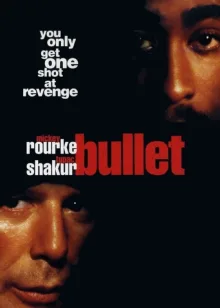
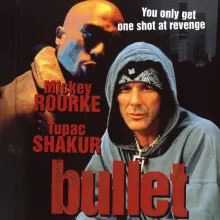
Bullet (1996)
- Special Guest
- Bruce Rubenstein
- Guest Co-Hosts
- Chris Stachiw, Father Malone
Show notes
Chris Stachiw and Father Malone (opens in a new tab) join Mike to discuss the film while co-screenwriter Bruce Rubenstein (the inspiration for Ruby) spills the beans about the making of Bullet.
Labels: Adrien Brody Bruce Rubenstein Chris Stachiw Father Malone Mickey Rourke Ted Levine Tupac Shakur
Transcript
An automatic transcript, tidied into paragraphs. It has not been proofread, so names, titles and spellings may be wrong, and it does not say who is speaking.
Show the transcript (about 24,100 words)
Speaker 1: Hold your ears, folks. CHRIS STACHIW: It's show time.
Speaker 3: People pay good money to see this movie. When they go out to a theater, they want cold sodas, hot popcorn and no monsters in the projection booth.
Speaker 4: Everyone pretend podcasting isn't boring. Turn it off.
Speaker 3: Mickey Rourke and Tupac Shakur star in Bullet. After eight years in prison, he's back on the streets. I robbed the old man's liquor store. All Bullet did was drive the car up to the free world, bitter rivalry.
He just robbed two of my best customers up my man flock in the eye. I took off of my product and my cast is said the blood is mine. Hank was coming after had a dead one.
Speaker 1: It's just blue as Elvis.
Speaker 3: You pound of flesh. Why don't you do it yourself?
Speaker 5: I've been waiting for a long time. Game's gonna be gunfire with the bottom. MIKE WHITE: Welcome to the projection booth. I'm your host, Mike White.
Join me once again is Father Malone. FATHER MALONE: Oh, my drawing hand. MIKE WHITE: Also back in the booth is Mr. Chris Stachiw...
CHRIS STACHIW: Since when you become my proctologist or something. MIKE WHITE: Our first month of requests wraps up with one from our mutual friend, Andy Hendrickson. It's Julien Temple’s Bullet from 1996. The film stars Mickey Rourke as the titular Bullet or Butch, an ex-con back on the streets and reunited with his dysfunctional family.
Or is this movie really about Bullet's brother Ruby played by Adrien Brody. We'll be discussing that as well as spoilers as we go along. So if you don't want anything ruined, turn off the podcast, come back after you've seen the movie, it's available on archive dot org. We will still be here.
So Father Malone, I have a feeling that this might have been a first time watch for you. FATHER MALONE: And Chris shockingly correct, Mike. CHRIS STACHIW: This is second. Who now?
Cow. Yeah, totally. FATHER MALONE: Yeah. First time watch Air Baby somehow avoided this movie all these years.
No, not somehow. I definitely avoided this movie for all these years. Mid nineties, Mickey Rourke is not my favorite and this type of straight to video thing just makes me sad when I know he's done it. So yes, I'm glad I have watched it, you know, as a completed, but it's staggering to me that Julian Temple directed this movie.
I'll just say that. MIKE WHITE: I concur and yeah, we'll definitely get into that. Chris. What were your thoughts on watching Bullet for the first time or had you already seen this?
Do you have like a tattoo of Tank on your chest that I'm unaware of? CHRIS STACHIW: I have a Tupac Shakur tattoo. Actually, he's the best part of this movie. I'm kidding.
He's barely even in this movie having done all these Mickey Rourke movies over on the Kulturecast. I think I can say at this point, like Mickey Rourke is a weird actor and this movie is just another weird ass movie that exists. That Mickey Rourke is kind of being weird and like help me out here. I'm not gonna say what is the appeal of Mickey Rourke?
But is this supposed to be serious? Because it just is like border line like he's, it's almost like a Tommy Yo thing. I don't know how else to describe it. He's so aloof and strange.
I mean, the proctologist line feels like it's straight out of the room. Like I think you're late and homosexual. What the fuck? Like what the fuck is this?
I get that they're having this whole weird familial conversation but this is such a weird mish, mash of things that doesn't really work and oh, by the way, Ted Levine is the best part of the movie. So ha there you go. MIKE WHITE: That's not shocking to anybody. Ted Levine is always the best part of the movie that he's in.
CHRIS STACHIW: It's shocking because he's really just like his character makes the least amount of sense of all of the characters in the movie. MIKE WHITE: There are points in this movie where it looks like they just shot cutaways of Ted Levine and then entered them in later on, like when he is watching a fight. They just cut to him behind a fence and you're like, oh, and he's here as well. Why is he here?
He doesn't like his brothers. Why is he following them around? And there's a few times where we just get these weird inserts of Ted Levine. I'm not complaining because I love Ted Levine.
CHRIS STACHIW: But whoa, he didn't make any sense other than them trying to make the ending, make sense. FATHER MALONE: That's exactly what it is because if he's not at that fight, then he isn't going to repeat. Tank's line back to him. I doubt there were some reshoots on this film.
But yeah, it seems like a lot of pick up stuff just, just to make things make sense and it doesn't ultimately Chris to your point. I'm not blaming Mickey Rourke for this movie other than he's as a writer, as one of the cow writers. It's perhaps the worst screenplay of the 19 nineties. CHRIS STACHIW: And that is saying something, well, it's also based off of Bruce Rubenstein's life.
FATHER MALONE: Yeah. Yeah. Yeah. Yeah.
Yeah. Everyone is so hardcore. Everyone who is from the streets in the nineties. This is the prime time for that.
Everyone's doing heroin, man. We're all being real, we're being really real here. And you know what I think Rourke's performance is actually really good here. I believe that that guy exists in the world.
It's just that why would anyone want to fucking spend 90 minutes with him. CHRIS STACHIW: I ask myself that every time we've seen a Mickey Rourke thing. FATHER MALONE: Angel Hard. You yourself?
CHRIS STACHIW: That other than that one, other than that one like Barfly, come on. His appeal is so strange to me is all I'm saying. It's, it's very hard to pin down what his appeal is. MIKE WHITE: He made a lot of movies that I liked a lot.
But when they talk about all of his wasted potential in this movie, I just kept thinking, are they talking about Bullet or are they talking about Mickey Rourke? CHRIS STACHIW: That one scene is a little too on the nose. When Suzanne Shepherd's like, you wasted, it didn't, you know, you could have been something and you fucked up. But it's like, oh what the fuck is this like some sort of he is a writer on the script.
So maybe he was just like, well, you know everybody's saying it might as well, you know, Michael Jackson, so many other people have just turned into it and you take the piss out of it. I don't know if that's what it was though. FATHER MALONE: He seems to be an actor who has spent his entire career beating himself up. So it would seem stand to reason that in 1996 after Marlborough Man, which he acknowledges Harley Davidson, the Marlboro man is his lowest point and like he felt broken after that's when he got back into boxing.
So this is like one of these movies kind of while he's boxing, he hasn't gone too far. He hasn't smashed his face too, quite, to the point where it'll get here though. MIKE WHITE: He gets the shit kicked out of him in this movie and wears all these prosthesis later on. And I was like, oh, man, you don't look nearly as ugly as you look.
FATHER MALONE: Now, he could not have predicted where his face was going. He just thought, oh, we'll just have some bruises on here because that's what I usually have when I, when I'm concussed. MIKE WHITE: Though, there are, there's a couple shots in here where he looks like his character from Sin City. FATHER MALONE: 100%.
Yeah. BRUCE RUBENSTEIN: Yes. Thank you. CHRIS STACHIW: It's towards the, it's really towards the end of the movie once he's, once the movie decides, hey, it's time to wrap it up, which is, you know, I mean, again, one of the, one of the things that this movie has that it's just like the third act to just fell apart, but I'm not sure the 1st and 2nd act really brought it.
But he looks, he looks like Marv from Sin City at the end, like straight. I mean, his one eye is completely closed by the time Tupac shows up for the third time in the movie to do something. MIKE WHITE: His right eye is fucked up and Temple keeps shooting him from the right and I'm like, shoot him from the left. So that way you can actually see the working eye because he's emoting with his eyes.
And instead I'm, I'm missing his acting when he's got the one eye completely covered and you just see like a sliver of nose in his mouth. But I'm not seeing the look in his eyes. But this is putting me into a very difficult situation, this particular episode because it's one, it's a request. Thank you Andy Hendrickson for being a loyal Patreon donor.
And also we've got an interview with the writer of the film Bruce Urens. Later on. In this episode, Bruce was super generous with his time and yet I have a hard time with this movie and I think he knows and he definitely agrees that the direction isn't there. I don't know if it's all on the direction.
I don't think that it is because there's a lot of times where I'm watching this movie. Remember audience, this is 1996 that this is coming out. This is two years post pulp fiction and this is feeling very much and I don't understand how Temple is doing this. This feels like this is my first movie I made post college and I was a huge Tarantino fan.
This is like sub sub sub truth or consequences. New Mexico. Sub, the usual suspect, sub loving a 45. I mean, sub all of these movies.
I'm surprised that when they shoot guns that they aren't holding them sideways. FATHER MALONE: It's the all missing from the nineties, nineties ness of it. And yet the, just the bottom of the barrel of all of those movies, the impact Tarantino had when Pulp Fic, it was unbelievable whether or not you'll like him, but it seemed in the independent world in particular, any time anyone just said the words gun or heroin or crime or whatever, they're like, yeah, go ahead and do it because that's all we're about. And this was just like, appreciate that the guy was so generous with his time.
But this script is really, really bad. There is no plot here at all. Right. There's a story going on, but it's just meandering and dumb and all these characters are just behaving badly because they think that's somehow edgy.
Like that's what it felt like. It felt like this is the edgiest thing you're gonna see ever. And no, it's just the lamest. CHRIS STACHIW: Mind reminds me of if someone tried to castt Mickey Rourke as James Gandolfini and the Sopranos, it has that feel to it.
It really does. If you, if you sit with it has like that weird familial thing that the Sopranos really mines in the first season. And this whole movie is just, it's really only about his family. I mean, we've, we've kind of alluded to it, the whole Tupac thing.
It feels so tacked on that, that to put Tupac on the poster is just to capitalize on the fact that Tupac is fucking massive in 1996. But it's about Mickey Rourke and his family, which reminds me so much of those early seasons of the Sopranos when Tony is talking to his mom all the time. And then you have Suzanne Shepherd in this movie who plays, I guess she would be Tony Soprano's mother-in-law in the Sopranos. And she's doing kind of this, you know, worried mother thing in this movie and she kind of, and she's pretty even keeled here compared to the character she plays in the Sopranos.
But it does feel just like a lesser version of that because again, the problem is Mickey Rourke's character of Bullet is not charismatic, the way Tony Soprano is at all like Tony Soprano is still a charismatic character. Bullet's just off putting, but intentionally off putting what kind of. MIKE WHITE: People are these? He's not Jewish.
Do you know how these people live? You don't know where he is. I kept waiting for her to say that about Lester or somebody. CHRIS STACHIW: She plays Italian and Jewish very well because in the soprano, she's Italian and yeah, Goodfellas, she's Jewish.
Right. MIKE WHITE: Yeah, just the good half. FATHER MALONE: Lany Kazan is every ethnicity like you just stick her in anywhere. She could have been in this as the mom or the Italian guys or the Irish guys.
Oh boy. Hey, we haven't spoken anything about the fantastic work Donny Walberg was doing as big balls. MIKE WHITE: I knew that was him though. I was watching it.
I was just like, is that Tommy Walberg? And there's that other guy Patty who played such a big role at the end, I was like, was he in this movie before? Like, there were a lot of times, like, even so eventually we'll get to talking about the movie. But the white kids at the beginning that he gets out of prison and I'm not sure if he's getting on a fish kill or sing, sing, sing, sing is too close for it to be singing.
So I think it's fish kill because they go past the marker that says 68 miles to New York and man, oh man, we're talking Brooklyn big time in this movie. They talk Brooklyn in this. They are all about the ethnicities and all these things and he gets out of prison. He sees he's talking with Lester his best buddy and Ruby, his brother played by Adrien Brody.
And they're like, oh yeah, these two kids, they keep coming around here and buying this heroin. And so they follow them up to the roof, sorry. They follow them into this building, take them up to the roof of the building, take off their clothes, threaten to rape these guys. It becomes this big thing.
These kids, they don't have any clothes, they're going around knocking on doors, yada yada. And I'm like these fucking kids better come back. Otherwise this is such a wasted scene and they do come back and they threaten his life and then they just leave again two minutes before the end of the movie. FATHER MALONE: Now there's five of us and we have a knife.
Oh, it's the exact same scene again. CHRIS STACHIW: What did you do in a movie in the 1st 10 minutes? As Mickey Rourke stab a guy in the fucking eye? MIKE WHITE: There's that whole eye trauma.
CHRIS STACHIW: Here's your hero, folks. I was like, wait, wait a second. FATHER MALONE: Does not have a, does he not have a parole officer? CHRIS STACHIW: He doesn't have a lot of things like a fucking throttle on his ability to exist within the real world like everything he does is just so abrasive constantly.
He can't get along with anybody. It's like this is a character who just, he walks into a room and everybody just goes, oh my fucking God, it's this fucking guy again. MIKE WHITE: Well, his little brother Ruby seems to really like him. His pal Lester, a late homosexual seems to really like him which comes to nothing, that whole thing.
FATHER MALONE: They have a scene to like course correct that with him fucking two girls at once. Like just in case you thought I was a homosexual, I am not audience. CHRIS STACHIW: That's why I said the room. MIKE WHITE: Cross cutting the fucking with all of these like gangster types coming, wannabe Gangsters coming to get Bullet and we're cross cutting with the guy fucking these two women.
And I keep hearing this like noise in that scene and I'm like, did they turn the gas on? Is there gonna be an explosion in this scene? I'm not sure what's happening. CHRIS STACHIW: It's called.
They picked the most obnoxious song to have in the club which is, I like to move it, move. MIKE WHITE: It almost as good as the right said, Fred earlier, which I guess is a gay signifier. So count me as queer because I love that song. CHRIS STACHIW: Who the hell don't?
That's why I said it reminded me a little bit of the room because all of a sudden there's just these like, like vestigial plot lines that go nowhere like, oh you're, you're gonna be sucking all these black dicks in prison. Like where are you getting this information from? Dude? Like chill out Mickey Rourke.
Like your, your armchair psychology is again, that's why I said it kind of reminds me of the Sopranos because there's some of that in the Sopranos, but it's actually done well. MIKE WHITE: Well, you're bringing up the room in the scene that I was just talking about on the roof is totally when Denny's getting roughed up by the drug dealer. CHRIS STACHIW: That's again, kind of what I was saying. Like there's just some stuff that reminds me of the room unintentionally and Nicky Rourke kind of looking again, like with the prosthetics, he looks Tommy Yo esque, I mean Mickey Rourke with short hair.
I mean, we're gonna be talking about Marlborough Man and Harley Davidson or whichever combination is the correct one to say it. I like Mickey Rourke with that really short hair. I think he looks good with really short hair. MIKE WHITE: I agree though.
He covers it up with that stupid hat through almost all that. He looks like mush mouth from the Cosby kids. FATHER MALONE: As if the character isn't off putting enough. He just kind of hides as well and he wrote this movie.
Why didn't he just write it about the little brother and have his character show up and be this malevolent force? Like you're right, Chris, this is a movie about that family and every time they're around the family, I kind of like it. In fact, the scene between Bullet and his mom where he's like, you know, telling her how much he loves her. Like I thought that was a great scene.
It's the only sort of true scene in the movie. MIKE WHITE: There's that whole running thread of Lewis being the Vietnam veteran and I'm sorry to say it, the crazy Vietnam veteran, the stereotype that we had from veterans for a long time just playing right into that. And apparently he's got the whole house worried for sound, but at the same time that comes to not because at one point he's like, oh, hey, and Bullet, and he starts quoting pretty much what he said to Lester, what Bullet said to Lester. And it's like, yeah, ok.
He can hear everything. We've seen like shots of him and we have little microphone or little speakers and stuff coming out. I'm like, OK, well, when is that gonna come back? How about this stun gun slash taser that he is begging his mother for throwing this little childish fit that never comes back either.
FATHER MALONE: How about the training these young men to be killers sequence this army thing about some or he's got some project going on up there. What is that project? This is why the Ted Levine character is the best character in the movie because he just left all these unanswered questions that were so intriguing to begin with and how can it not be given that everyone else is a dullard. CHRIS STACHIW: If you just sit and think about it doesn't even make any sense.
Like none of what he adds to the movie makes a whole lot of sense in terms of like, other than again, he plays the Mark Wahlberg character in the Departed where he just shows up in the last 10 seconds of the movie and data. Sex fixes everything. And we go, ok, that's fine. MIKE WHITE: I guess the Mark Wahlberg, we've got Donny.
CHRIS STACHIW: Yeah, but Mark Wahlberg in the Departed does the same thing where he just shows up and it's like, ok, well, all right, that's the end of the movie then. Sure. FATHER MALONE: Yeah. But at least you were expecting that character to do that and everything else.
He did was part of the plot. It wasn't just, and now let's go upstairs and see what, what's his names up to. Let's do that being insane. MIKE WHITE: We'll have Lewis do a Tom Cruise from mission impossible and just slide down that rope and lit Tupac's throat spoilers.
Glad I said that when you look at the trajectory of work at this point, like you mentioned Harley Davidson and the Marlborough Man was 91. We talked about him a lot when we covered White Sands a few years ago, which I really like. You get this movie called FTW, which is also known as the last ride. Not to be confused with the last Outlaw, which was his previous film.
And FTW is almost like the stepping stone for him because one, he plays an ex con and two, it's all about rodeo, which White Sands is also about. And that movie also has John Enos the third who must have been a big old pal. That's the guy that plays Lester in this who again, what a wasted character. He just, he just is there for almost the entire movie.
He just comes in and starts looking at himself in the mirror. He's such a one. FATHER MALONE: No character like everyone, it wasted potential here because there's some good performers on display, doing some interesting things. Not all of them are great.
Oh my God. Every minor character seems to be like a buddy or a friend or a boxing aficionado, just Peter Peter. MIKE WHITE: Best actor in the movie. And he's just in there for 1 32nd scene hanging out at the hill, which is super interesting.
I'm like, oh, please tell me more about the hell hole. Show me more of the inside of this. That'd be great. FATHER MALONE: But no, we have to do heroin so we can get back to the tele goddamn awful visual effect of the mirrored warping in and out sort of point, the heroin addicts point of view.
How long has that finally gone away? Where we try to visualize a drug trip by, by making everything look a little bit odd and skewed. I hope so. MIKE WHITE: I wish I could say that it has, but I think that doing drugs and movies has kind of gone away quite a bit.
Julian Temple had no right to make this movie and he should have done it so much better. I mean, I've seen Earth Girls are easy multiple times, much better movie really put together very well. His music videos very put together very well. This movie, like I said, it just feels so amateur hour.
CHRIS STACHIW: Earth Girls are easy is great. I think Father Malone You Heather and I covered that on my show a couple of years ago. I mean, again, if they had just focused on the stuff with Mickey Rourke and his family, I think there's actually a movie there. And again, Bruce Rubenstein, if, if this is based off of his life, which I mean, he talks about in the behind the scenes stuff.
Then I don't think he was getting into fights with one eyed Tupac Shakur or his analog in Brooklynn. FATHER MALONE: What this movie wants to be about really is the older brother is a fuck up and he's influencing his good younger brother and taking him down a dark path. Just tell that story. We're all bored.
All of these actors can tell that story and to move us instead of like, just engaging in all of the bullshit nineties, shoot em up nonsense that they thought made their movie better or try and get it made, like, as a, as a serious film and couldn't, they were like, no, no, we gotta drug it up. CHRIS STACHIW: I doubt that on the action in the movie, the action scenes are prolonged nonsense and when they have these shootout in this diner, 4 ft from one another and they're missing with Z, it's just not the most kinetically directed scene either.
FATHER MALONE: Like Julian is many things, but evidently action director is not one of them. CHRIS STACHIW: Yeah, it's, it's, and you look, you look, the climax of the movie is essentially similar where it's just like one character standing with another character pointing a gun at him. It is nothing. There's one scene that's kind of actiony and that's with the kind of the bare knuckle boxing, which is fine.
But again, like knowing what we know about Mickey Rourke's actual life. It feels just kind of strange. She's like, hey, I wanna have a bare knuckle boxing part in this movie. They're like, all right, Mickey Rourke, music supervisor and written by and main actor in this.
MIKE WHITE: Movie, Mickey Rourke must really like Barry White. I love Barry White. I grew up on Barry White music and by the end of this movie, I was just like, you gotta be fucking kidding me. You're playing Barry White again.
And it's only like two songs that they just keep going back to. CHRIS STACHIW: If that it's the that's the heroin music when he's doing heroin. It's Barry White for whatever reason. That's what I think of when I think of Harwood is Perry White.
FATHER MALONE: And a lot of really poor hip hop, like, you know, just Randall poster I think was the music supervisor in this movie and he ended up like he's on all, all of Wes Anderson's movies these days supervising that, that music so humble beginnings, let's say. MIKE WHITE: And I also feel that this is a little bit of a prequel to Iron Man two. But instead of a Boyd in the prison, he has his rat, Tony Curtis, which I was so glad that Tony is the one that really gets the last laugh in this movie just. CHRIS STACHIW: Like they departed with the rat walking around at the end.
FATHER MALONE: No, it's Anton's rat check offs. Rats. If you better pay it off in the final one. MIKE WHITE: Yeah, just like those white boys.
It's like, what? Really? CHRIS STACHIW: I like the idea that the movie that has, it's set up, that Tupac is a character who rides in a limousine, constantly protected by feeble, constantly has bodyguards with him. There's no way he couldn't find more bodyguards and yet the movie just like, clumsily stumbles into the final couple scenes.
It's just, I don't understand. It really feels like three movies, two movies, maybe even three. I don't know. I think if you took the stuff with Tupac out, I mean, yeah, it's less than an hour but it could be like a pilot for a TV show like, you know, like, and I would have watched that.
That could have been interesting, you know, like a Jewish crime family. Sure. Why not? MIKE WHITE: The scenes with the family remind me a lot of dinner scenes from Saturday Night Fever.
The sons can't do anything right by the dead except for the one son who's the good son. But then you have this dinner scene and Adrian Birdie is more fucked up than anybody else in here where he's just so high on heroin and basically making fun of his dad. I'm like, you're not gonna say anything to this son like he does a little bit but not nearly as much as Bullet where he's just like you fucked up all those baseball scholarships. You're weak.
He just makes fun of Adrien Brody calling them Salvatore Dolly, which is ironic because he plays Salvador all in what? Midnight in Paris, right. That's not the porn film. That's the Woody Allen film one night Paris.
CHRIS STACHIW: Mike. Not to be confused with the Joie La China sex tape one night in China. So, you're welcome. You're welcome for everybody else.
Adrien Brody is a weird actor. MIKE WHITE: Yeah. I've never been a big fan of his. There's very few things that I can tolerate him in because I first saw him in summer of Sam and I still just have a visceral reaction thinking about that movie.
CHRIS STACHIW: But you're gonna say you saw him on SNLSNL with a Rosto wig getting himself banned. He's one of the few people that's gotten banned from SNL because he just, it went off script and just. FATHER MALONE: It's my understanding that was not off script by the way that they know about that and that his band is not actually a band but they, it's sort of gone into the public that, you know, because people complained about it. CHRIS STACHIW: But your mom, your mom, your mom, your mom, your mom, your, you know, you know, rush stuff, you know, you got family in the house, you know, a Patois is a Adrien Brody doing it.
I mean, look, I always, I always thought somebody made him do it because there's no way somebody who's an actor would do something that unself aware. But Adrien Brody. I just have never understood what his deal is, I guess because I kind of find him to be overacting in this movie like a lot. He just has these, like, soliloquize is what it feels like.
And he just starts pontificating is the, is, it's just, it's a little much because it's every time he opens his mouth. FATHER MALONE: Yeah, but that's, again, that's a problem with the script because I think you might specifically be talking about the scene in the women's bathroom at the club where he's gone in and painted something and now tells them his philosophy. But out of nowhere, this, this vignette shows up because of Adrien Brody. I realized just how great an actor, Mickey Rourke is because because he continued non flinching playing dead while Adrien Brody basically drooled all over him in that final sequence where he's just like, he's just like, oh I love him and he's just like kissing him and like his open mouth just like dragging his open mouth up down Mickey Rourke's face.
Oh my God, Mickey Rourke disturbed in an Oscar. CHRIS STACHIW: I mean, that's what this, this feels like Mickey Rourke trying to get an Oscar. It's like this is a serious moment of the year Mickey Rourke. FATHER MALONE: No, I disagree with that.
I think Mickey wanted to be the fucked up person that he was and wanted to show the world exactly what he thought of them at that time. If if, if anything was coming out of this movie as far as a signal by Mickey Rourke, that's, it wasn't give me an award. It was, look at, look at what you did to me. MIKE WHITE: I have a very serious question about this movie.
There's two times in here where Rourke's character is doing heroin and he sees This African American guy in his dreams and his fantasies, his recollections because we get some memories of prison. Of course, we get more Barry White music, that visual effect that you were talking about, which was very not good. Who the hell is that black guy? Because it's not Tupac?
FATHER MALONE: That's a very good question. MIKE WHITE: You know what I'm talking about, right? Yeah, I just kept saying, who is this guy? Is he gonna come back later?
Like I have no idea. I'm guessing that he took Tupac's eye. So I was like, oh, well, there's history between these guys but then who's this other. FATHER MALONE: Dude by this point in the movie?
I think all of us were going had so many. I hope that's gonna pay off stacked up and that some just started falling out. Like who's the guy in the hallucination? Because there's so many other bigger problems going on.
CHRIS STACHIW: You mean the guy dressed like Gilligan for whatever reason? He's dressed in a red sweater and a bucket hat. Yeah. MIKE WHITE: Meanwhile, Tupac looks like he's Slick Rick with the eye patch and the candle and stuff.
I was just like lady daddy, we like to party. CHRIS STACHIW: Tupac and this like, I love Tupac's music but he's just Given Short Shrift did this movie just, just say like the most horseshit stereotypical thug gangster things that I'll throw the N word in there a couple of times because Mickey Rourke saying the N word. I'm sorry, him saying the N word never gets old. It feels so just I'm not saying he enjoys it, but he makes it seem effortless.
Let's put it that way. FATHER MALONE: I don't level that at Mickey. CHRIS STACHIW: He's so good at portraying these kinds of characters that I believe that like whatever rage he has because that's the whole thing. It's rage against these two people.
I don't think it actually matters that Tupac is black. I think he just, he saying that to Tupac to get a rise out of him. But every time time he says that he's just like that like grunty thing he does. MIKE WHITE: He's calling the one guy Mexican or Latino slur.
But then he ends up trying to have sex with the Latino woman and I'm just like, OK, so he doesn't have necessarily something against Latinos. And that, I mean, she's just amazing and then we get to find out that his dick doesn't work. So there's that he's got. FATHER MALONE: A lot going on.
He should be prison. That's what the best place for him. MIKE WHITE: And you got all those shots of the L going through this whole movie all the time and we almost end with the L with going up over and into the graveyard. But we've got the L everywhere and there's one point where they're, doing the right before they shoot Bullet and the way that the L just keeps going by and keeps going by, keeps going by and the lights from it looks almost like a lightning storm going on.
I was like, well, that's kind of a cool thing. But you've been showing us the through the other 90 minutes of this movie so much that by now I'm just sick of it. CHRIS STACHIW: Like all those establishing shots of a golden gate Park in the room just like, what the fuck are you doing? Just stop.
Well, it's like, I mean, that scene in the club, I can't believe how long that scene takes for them to just get across from one side of the club to the other. Jesus. Yeah, I just like the weird, the weird angles that this movie takes, it doesn't know what it wants to be and then when it kind of picks something it has a hard time even executing on that genre like or subgenre within the kind of crime film world. I mean, again, like this is such a weird mishmash of things.
It almost doesn't necessarily just exist within crime films. MIKE WHITE: And by the way, the only reason why I was focusing so much on those white kids earlier was just because I started this movie like three times and I kept turning it off. And so I'm very familiar with the beginning of this movie. Why did you.
CHRIS STACHIW: Keep turning it off? MIKE WHITE: Because I didn't like it, I couldn't stand this fucking movie. I was just like, oh man, I can't take this. I mean, it's that, that bullshit dialogue that they're doing, like you said, it's just subbasement, you know, oh I want this guy, you bring it to me.
I'm gonna be here, you know, just like what a generic gangster speak. 101 is what all of these guys are speaking, you know what happened to him? You know, you want to talk about this old man. Well, you know what?
I, he took the wrap for me while you were still in your fucking diapers. This guy was doing a 99 year stint upstate at the prison. You know, you need to show him some fucking respect. I'm like, OK, who are you, Patty?
Why are you in this movie? What happened with this nine years? Ok. How, what is your relationship like with bullets since he took the fall for you?
Who are you Patty. FATHER MALONE: Up once or? And he has like one conversation and I only recognize because he called him Patty and I went Mickey Rourke. You ought to know better.
CHRIS STACHIW: It's like another thing that the movie just adds and doesn't do anything with. And it's like, it's so content to add more things but not to think about whether or not they work. And to your point about the dialogue, it's like in, it's like in like like the Call of Duty video games with the like overly military dialogue. It's like guys, they don't always talk this way all the time.
Four clicks X fill that and it's like, shut the fuck up like cool. It's not this intense all the time. It just makes everybody seem like everything is super intense and it's super high. It kind of, you know, I would say it feels like a John Moo movie but it's not good enough to even be considered a better tomorrow.
But it's trying to be that level of like melodrama. It really is attempting to be this like really sad. I mean, again, if you're not thinking about the subtext, like you mentioned Father Malone about Mickey Rourke taking to task his detractors. I mean, they have a moment where he says you could have been a contender.
Come on guys and he's being compared to Marlon Brando all the time. He's punching a shitload of mirrors like he did in Angel Heart. Like to your point, Father Malone, like there is a lot of weird subtext shit in this movie like I obviously intentionally because Mickey Rourke's name is on it 100%. FATHER MALONE: Yeah, I think that's, that's the only good parts of the movie that I was able to mine out of it.
Honestly, like, I was not a good time. It felt like, honestly, it felt like not so much a Tarantino rip off but a Nick Gomez rip off. Like this movie wants to be the Laws of Gravity or Mean. MIKE WHITE: Street or an Ed Burns movie.
CHRIS STACHIW: Oh God. BRUCE RUBENSTEIN: Yeah. MIKE WHITE: The Brothers mcmullen. FATHER MALONE: Oh, like, that's what it just feels like.
Like, but like eight heads in a duffel bag bad. MIKE WHITE: Like little Odessa. FATHER MALONE: I made it mccool's bad. Yeah.
MIKE WHITE: Yeah. Shit, I forgot all about that one until you just said it. FATHER MALONE: Jessica maintained that that was the worst movie ever made. Ii, I always maintained, I answer that question because the worst movie must be the movie I can't get through.
But I think she was actually right. So this is a strong contender. I'd probably watch schools again. If you had to make me watch one or one or the other of these.
CHRIS STACHIW: I just want to know where that headstone with Mickey Rourke's face on. It is in 2023. If somebody kept that thing because that, that is the, he looks, he looks nothing like the character in the movie. He looks like Mickey Rourke from the early eighties.
And it's like, because that's a real headstone that someone clearly made and it, like I said, I hope to God it exists somewhere. But by the end of the movie, I was like, you know, like you mentioned already, Mike either in prison are dead. Like, these are the only two places for this character. Like, and I'm not sad at all that he's dead, but it's like, it seems like a burden was lifted off of his shoulders in a way, frankly.
MIKE WHITE: Oh, yeah, that family has to be much better off now. If they can only get Lewis some help, they'll be OK. CHRIS STACHIW: But Lewis the voice of reason, he's like, they, he's a fucking terrible person. He say he's like he's spot on the entire movie.
He's like this guy is a piece of shit again just because he's the main character of the movie does not mean he's not a piece of shit because he's about as bad as his character. And Barfly is like, there's very little redemptive qualities about this character. MIKE WHITE: And it so should have been about Ruby if it's, I mean, if it's written by Bruce Rubenstein and it's based on his life, it's like we get a little bit just a touch of him when we get that one scene where it really again doesn't make any sense where he's painting all this stuff and that's great.
But they keep doing these dissolves and then they do this cross cutting with other things that are going on and the other things that are going on are probably take, it feels like they're taking days to happen. Meanwhile, we're still stuck here at night with, Ruby A K A Mazel, tough doing his painting, which is right out of his life where you've got knife through the hand and all that stuff. I'm like, ok. Yeah, all pretty obvious stuff here.
But the pacing of this thing is just ridiculous. FATHER MALONE: They're pacing. It's just meandering left to right and front and center, like, and now here's the Irish guys and now here's Frankie eyelashes and the Italian crew. None of these characters will amount to much of anything and none of them are going to pay off, but we will give them all enough rope just so you can think that they're gonna hang themselves, but they won't do.
MIKE WHITE: Women find Frankie eyelashes attractive, you know, that's fucking makeup that he's wearing on his eyelashes, right? You know that right? Jesus Christ again. CHRIS STACHIW: It's like, who is this compelling to?
Is my question? Like when they were reading these, these lines of dialogue, doing their table read, which they undoubtedly did in this movie before they made it like somebody had to go, is this really compelling or is this just lazy lazier than lazy? There are parts of dialogue that are really good and there are parts of it that just seem like somebody was just like give me gangster dialogue T GP T please write this movie for me like there's no creativity. It's so generic.
And I, again, I'm not gonna blame Mickey Rourke or Bruce Rubenstein because I don't know who did it. But somebody added that because there are parts of this movie that are well written and there are scenes that are pretty compelling. MIKE WHITE: Is Mickey Rourke's skull so thick that, that one black guy breaks his hand on Rourke's skull. Or how does he break his hand?
FATHER MALONE: He punched past Rourke and punched the ground? MIKE WHITE: Oh, ok. Thank you. FATHER MALONE: That was the only thing that makes sense to me.
MIKE WHITE: I wasn't about to rewind. You know what I'm saying? FATHER MALONE: I expected at one point in the movie that there's going to be a boxing match. You know, you gotta figure it.
If, if that's where he is, then this point, right? So he starts to happen and he pulls off his gear and I'm like, holy shit. Here we go. And then it's just the most lackluster slug fest I've ever seen just like all the other action in the movie.
It's just set up the camera and you know, we cut it and yeah, throw some blood and glass shatters. Like hate to keep picking on Julian Temple. I mean, he's produced some of my favorite things like Juno Temple, but his action sense is just really terrible. MIKE WHITE: No, he directed the music video for Jump by Van Heen, one of the classics.
CHRIS STACHIW: Yeah. Julian Temple. Juno Temple. Great.
Thanks Ted Lasso fans. We appreciate that. And fans of Killer Joe, that's a great, that's a fucking, have you ever covered that movie on your show, Mike. Speaking of June, that's a, speaking of William Friedkin even.
That's a and Juno Temple. That's a good movie. You should check that out. And it was like one of those early Matthew Mcconaughey is back on the right track movies.
MIKE WHITE: I also get that one mixed up with. There was a Nick Cage movie, wouldn't, didn't he play Joe, as opposed to Peter Boyle. CHRIS STACHIW: Joe just called Joe? Yeah.
Now, Killer Joe's great. It's a, that's a, that's a one of those weird William Friedkin movies. But yeah, Julie, I wish I knew what Julian Temple's interest was in this project because like there doesn't seem to be anything that he brings to it. It seems like he more just gets in the way of, I don't, again, I don't know if any, any specific director could have changed the fact that the script is so all over the place, but at least some of the more frenetic stuff wouldn't feel so flat.
FATHER MALONE: But yeah, I just think it's really poorly made for him. Like I was shocked throughout the entire film to continue to remember that he made this fucking movie. It's really, I don't know what the appeal was, Chris that, that other than he liked to work, you know, and made him, here's. MIKE WHITE: What really got me was the pacing, the use of all the dissolves that they were doing, which normally I would think that's a you know, passage of time.
But sometimes they're just using dissolves to dissolve and sometimes it's during the heroin trips. Yeah. Ok. That's great.
That's a good way to show that they're, you know, nodding off and that they're traveling and they're having their heroin experiences all the while. We've got Barry White on the soundtrack. That's great. But when they're just having like normal speeches, like, rather than exchanges, I would say that there's so many speeches you already talked about that.
But it's just like, all right now is the time for Mickey Rourke to give us a little speech here. And it's like, yeah, some of them are great. Like when he's talking to his mom and then other times just like, wow, I don't give a shit about anything you are saying right now. You are not some sort of philosopher Khan, but you would really like to think you are if.
FATHER MALONE: Only they had written some philosopher type stuff for him, other than just gay panic moments. MIKE WHITE: Well, and then poor Lester, I mean, the guy is obviously gay. He's, he's got a parasol who uses a parasol that's not gay. Come on.
CHRIS STACHIW: I always have a hard time with someone who mythologizes their upbringing. I mean, Spielberg did it last year with that Fable Men's movie and that's what it feels like here. It's just, it's not as compelling because it's not as well done. But I'm sure Bruce Rubenstein like, again, like he's bringing his own feelings and like personal experiences to this.
But you, yeah, you don't have to make everything so grandiose, like, it's just a conversation but it's the last conversation he's going to have with his mother and blah, blah, blah, blah. It's like, so Shakespearean in a way, it's, it's ok, but you don't necessarily succeed. And again, this is not necessarily the setting that would work, I would think. I mean, you could make it work but it's not, not this movie.
MIKE WHITE: I just, I mean, it's so on the nose that when he gets shot, he throws his arms out and falls like Jesus. And I'm like, really? You were Jesus this whole time? Ok.
CHRIS STACHIW: Yeah, he died so they could live. FATHER MALONE: He did hit the ground really hard. Mickey Rourke. I noticed, I appreciate no stunt man.
MIKE WHITE: He Lester gives Ruby some money, you know, get on out of here, go away. Like you said, we have him crying over his brother. But is that the last time that we see Ruby is after the funeral when Lester gives him the money and then that's it because then it's her revenge moment. Yeah, it's, it's Tank in his limo.
It's, it's Lewis sliding down the ropes like cutting the guy's throat, repeating the paybacks of motherfucker line. And then I wanna, I see there's like a shot with some slow motion and rain coming down and in my notes, I was just like Wow, deep. CHRIS STACHIW: So full of itself. And, like, again, like, it's that mythologizing of your own life where you can't, where it can't just be a conversation.
It has to be this whole thing. Yeah. And they get finale of the movie has ended so poorly. Like, he's just Tupac is just stumbling around out in the open with no bodyguards.
No, nothing. And yes. Yeah. I guess you don't expect that Ted Levine is just gonna drop out of the fucking sky and kill you so fair.
But it does happen apparently because that's what happens to Tupac and I rewound it like three times. I was like, wait, that's the end of the movie. Like that's it like fuck like this is abrupt. This is like an Indian movie.
How abrupt it is. FATHER MALONE: Tupac walks up to unlock his clubs so he can go in was the rope already there because I might have looked away or something because he's standing there and I saw the rope and I went, why is he not wondering what that rope is? Is that a cable? Is that a power cable?
What is that? Come on, man. And you think he would be paying a little bit more attention? Like maybe turn around and look, look around while, while you're fumbling for your keys, considering everyone in your crew just got murdered again.
CHRIS STACHIW: You just don't expect a stealth ninja, Ted Levine to drop from the sky with a 12 inch knife and cut your throat. MIKE WHITE: So I kind of wish that he had those night vision goggles from si what's on. Right. Just to see the hand out there.
BRUCE RUBENSTEIN: Oh, that'd be great. CHRIS STACHIW: Can I just mention again, like Ted Levine for whatever reason? And I mentioned this to y'all off recording, like I've been seeing a lot of stuff with him in it and he's just such a fun character actor. He makes that second Jurassic world movie, mildly more entertaining by being just a magnificent dickhead.
I mean, he just plays a dickhead so well, he's not someone I really associate with playing hero characters given what he's what he is known for so well. MIKE WHITE: Isn't he the whole hero of wild, wild West. CHRIS STACHIW: Chery, Bloodbath mcgrath with the horn. God.
That is the greatest part of, I mean, that again, I have no problem with that movie. Fucking Fight me on that, that movie has some really fun, weird stuff going on. I wish I could say the same about this. I just wanted to ask is Tupac good in anything.
I have not seen him in anything else. FATHER MALONE: I liked him in poetic justice. I thought he was, that was kind of a nuanced performance in that movie. MIKE WHITE: I don't think I've ever seen him in anything and I kind of missed the whole Tupac train, I guess because I kind of quit listening to a lot of music around 94.
And so when he started to get popular. Like, I remember California likes to party but to me that was more of a Drey song than a Tupac song. So, yeah, I'm, I'm familiar with his whole, I mostly know him as a dude that got shot. CHRIS STACHIW: Yeah.
I, that's the only thing I've seen him in. Like I said, I listen, I listen to a fair amount of Tupac. I like Tupac a lot like west coast rap. I really like it.
But yeah, I mean, fine, they have Tupac in this movie and he's more well spoken on the behind the scenes stuff than he is in the movie. Like he's a really, I mean, obviously he's a very well spoken guy. I mean, he wrote, he wrote a lot of stuff and I mean, his music is really well written but yeah, it seems like a kind of waste turned Tupac into just kind of a thug like he's, he could have been an actual like menacing threat in the movie and instead they just make him kind of a generic character just like everything else.
FATHER MALONE: So you watched the scenes thing as well, right. You're saying about Tupac seem seeming like so thoughtful and well spoken. Like during the same thing with Mickey Rourke, during those interviews, I was like, oh, look at, look at him, go look at him talking and expressing himself in a normal fashion. Where was this in the part of the character?
Like certainly, Bullet could have been more than monosyllabic, they could have given us some little lifeline to grab on to. So we could like this character because the guy talking here in the behind the scenes thing is intriguing. Whereas Bullet just seems like a drain. CHRIS STACHIW: Well, that's the thing.
Like watch stuff where it's just Mickey Rourke and he seems like a, an interesting person, which is a great thing for an actor. I just can't understand the roles he picks because they're just, they're literally all over the place in a way that like, we talk about people like Nick Cage and like other, I mean, I would even say like, like Bruce Willis even like just taking all kinds of things and just the level of success is pretty wide scale. MIKE WHITE: Obviously, there's that one moment where Lester gets stabbed through the hand and I said, we see that later on in the art work, but I don't think he really talks about it.
FATHER MALONE: You know what, what's funny is I've been around a lot of artists. So as soon as the knife went through his hand, that's all I was thinking. And then he screamed it. So then I thought, well, we're gonna see this payoff, but again, we didn't pay off with Patty or anybody else here.
So we do get the moment where we see him lashing the brush to his hand, using it like a, I don't know, like a glove or something like that. So is he like gonna go to art school or something? Like, is he training for something like, so we don't know any of the reasons why he's needs any money or getting out of the neighborhood, pursue his love of art? But like to your point.
No, it never comes back. He never even mentions the fact. Like somebody could have said, how's the hand? Oh, feeling a lot better.
MIKE WHITE: Nothing I understand with Saturday night fever, which I brought up earlier with Saturday night fever. You got Tony and you got his brother and his brother's supposed to become a priest. And it's a big deal when he says that he doesn't want to become a priest and that affects Tony and that affects the family and all this. You would think that that same kind of dynamic would be here but almost like, oh there's Bullet and then there's Ruby and Ruby wants to go to art school, but they don't have the money.
And so that becomes like this driving force and that affects the family and that affects Bullet that affects the relationship. And you know, Lewis is there kind of like, yeah, Bullet is a bad guy. You know, we got to take care of Ruby and even Bullet recognizes. You know, Ruby's a good kid.
We got to do something to protect him, but there's no plan. There's no like, oh my gosh, Ruby needs $5000 to go to art school. He's got to go to Juilliard or to wherever. Like, there's nothing, there's no plan, there's nothing there.
And again, it's like you're losing who I think is a better main character. And you've got, you know, like there could be moments where, oh, he's stealing all this jewelry, this really shitty looking costume type jewelry. He's stealing all this jewelry just to pay for Ruby to get out of here or? Oh, look, he got robbed at this drug den.
There's that whole weird thing where somehow they were selling Bullet, a hot shot, but he didn't know it. And this other guy ends up stealing the heroin from him specifically from, and I don't even know, was that Patty and his boys or somebody else that comes in, steals the heroin from Bullet. Next thing we know we see there's a dead junkie in this shooting gallery and then we determined or I determined, I don't know. I felt like a genius by being able to connect these dots.
I was like, oh, that's the guy that stole from Bullet or somehow ended up with bullets, heroin and now he's dead somehow. Tank specifically set up this heroin to go to this one guy. He knew that he's gonna be at the shooting gallery on this day and buying this heroin and give him this package and whoops, it was stolen. CHRIS STACHIW: I guess he just like he gave it to him.
So that they would sell it to Mickey Rourke when he came there. But I don't understand the guy who stole it. FATHER MALONE: That was a random event that occurred. CHRIS STACHIW: This movie just needed like a second or third pass, like straight up.
And honestly, like, that's just all it is or like, don't add things. It honestly felt like maybe it was the added things. MIKE WHITE: You know, that whole thing could have been a real story. You could have made that an interesting thing.
Like, oh yeah, my brother, this heroin and he bought it from this dealer who hated him and the dealer poisoned it. But we don't get that. All those connecting dots are just gone. And it's like that could have been an interesting thing like, oh wow, you dodged the Bullet ha ha because this guy stole this heroin from you.
And that was really was a blessing in disguise. But I don't even think that like one point somebody tells Bullet he was trying to give you a hot shot. And I don't think he even like registers Simon's face. I'm like, what you should have been like, whoa, I dodged death again.
FATHER MALONE: In that same behind the scenes featurette they're speaking to. He's either one of the producers or the writer. I don't know, I don't remember but he was informing us everything that I had not realized while watching the entirety of the movie. He's like, well, really, it's about the love of this brother and like, oh, we're talking about what, what the movie actually should have laid out for us so that we understood somewhere along the way instead of just dropping stuff at the very end or not even really giving it to us at all.
MIKE WHITE: Oh, guys, let's go ahead. I'm gonna take a break and we'll be back with an interview with screenwriter Bruce Rubenstein right after these brief messages.
Speaker 9: Hello, everyone. This is Malcolm Mcdowell. I just want to say that this is a request to listeners of the projection booth podcast to become patrons of the show via Patreon dot com. Patreon dot com slash projection booth.
That's pretty simple. I think you can do that. It's a great show and Mike, he provides hours of great entertainment. So now it's time to give back my little dries settle down and take a listen and have a sip of the old and then you'll be ready for a little of the old in out in out real horror show.
Bye bye.
Speaker 3: I'm Chris Cooling from Forgotten TV. And you're listening to the projection booth, the ultimate movie podcast. MIKE WHITE: You went to school in New York, right to Parsons. BRUCE RUBENSTEIN: Yeah, I was born in Brooklyn and my dad was a builder.
So he used to move job sites every few years from like Brooklyn and then we went to Queens Laurel and then we settled in Long Island. I was about nine. I went to elementary, junior high and high school in Long Island. And then my parents moved to Staten Island and I got the fuck out.
I moved to Manhattan with my friends when I was there for about 10 years. But I've been in L A since 85. I go back often but I have no family left so I don't go back to New York as much because they're all gone. I have my art shows there twice a year.
I go, we go for business and stuff. I'll always be a hardcore New Yorker. MIKE WHITE: How did you get interested in visual arts? BRUCE RUBENSTEIN: I've been an artist my whole life.
Really? I was always a painter. Like when I was younger, that's what I majored in. And then I went to school.
Here's a funny Mickey Walk story which will segue into Bullet in 85. I was working as a window dresser in Soho New York at a store called and very famous kind of crazy clothing boutique on spring and ster. And my job was to like decorate the windows. I had a shop downstairs.
I had insisted and we used to come up with these crazy concepts for the window to dress the windows. It was a great job, very creative. And I had a lot of freedom. This guy Gil co owned the store and he gave me a lot of freedom to build all my own stuff and design the windows.
And I was there for about three years and one day they were shooting Angel Heart, the movie Angel Heart and all the trailers were parked in front of the store and all around Worcester and Green Street. They took up five blocks in the village and one of my childhood friends named Les was Mickey's trainer at the time. So Mickey had this tricked out motor home, re motor home that it converted into a dressing room slash mini gym. Like really, there's nothing like it.
It's really incredible. One day Les comes into my store and he comes downstairs to my shop and he goes, hey, I'm working with Mickey walks outside and there's something wrong with his makeup mirror. It doesn't go up and down. It might be a good idea to grab your tool bag and come on up and see if they can fix it.
So I went upstairs and went into Mickey's trailer and he was in there at the time. Mickey was like legendary. This was after 9.5 weeks and he was in his prime. The Brando just a really like unique character.
I don't know how old you are back then. It was like the of the light of time. I think I was 30 maybe 29. And I started talking to Mickey probably talking way too much because I could see him like rolling his eyes and the side of his head saying, I wish this motherfucker would shut up.
But I just kept babbling away time. I was on a methadone program and they call that shit disco juice because it makes you just like babble. At the end of it all, we had some mutual friends from Long Island that Mickey knew. And then he asked me, I was there for two hours to fix the mirror.
The mirror started going back up and down and he was very impressed with my fix shit. So he goes, let me ask you something, man. Do you know your way around New York? I said, of course, what do you mean?
I said, yeah, this is where I live. No, no, like the back of my hand. And he said, do you know it well enough to drive me around. I said, I don't have a car, I don't need a car in the city.
So he goes, no, I have a Mercedes. It's part, it's a rental from, from the movie and I don't like the guy I have, it's all fucking teamsters and the movie had just started Angelo. He goes can offer you 2500 a week. So back then that was like eight grand a week.
So I was like 2500 a week. He's like, yeah, I walked into my bo to my workplace and I walked right over to Gil calling the owner and I said, Gil, fuck you. I quit. So that was it.
I started working with Vicky the next day, which was insane. Like from jump, I'm driving this big Mercedes around Manhattan and he's, there'd be like a red light. He go up on the side, walk, go around this motherfucker. I'm like, I'm like, Nick, you can't really do that.
He goes, you wanna work or not? So, I go, I, you know, so I'm honking the horn and pulling up on sidewalks and then he go, oh, stop at this pizza place and I'm like three deep from the curb, it's bumper to bumper traffic and he's just fucking pull the car over me. So I'm like literally stopped in the middle of Second Avenue cause cursing me out and Ricky would go inside and sit around, he'd stay there and order pizza for 10 minutes and then come back with a pie and get in the back seat and start eating. And so that was the, but I kept up with the man.
He loved me because I was just crazy as he asked like anything he demanded of me. I fucking did it, which is the way I've been with everything in my life. So I basically began working for him and work. Then we went to New Orleans.
We were in New York for five weeks and then we shot the rest of it in New Orleans with for five weeks. So if you can imagine, my first experience in the movie business was with Mickey Walk and Bobby De Niro was the other star Lisa Bonet and a lot of like great casts. It was a great movie, Angel Heart. So when it was all wrapped or you were in New Orleans and he goes, why don't you move out to L A?
Like he said, I have a house and my wife lives there and I have my own apartment in Beverly Hills. You could stay at my house. So that was it, man. By then we were like super tight and I lived in the is in a condo in Far Hills.
So I went back to New York and I packed up all my shit and I was back in L A about 10 days later and that's it. I was living at Mickey's house and I started working as his assistant and then I worked on about six movies as his assistant. And then I started working my way up the ladder. He started a production company and I became the head of the production company with another girl named James and we had an office on in Hollywood and I just started learning the movie business inside out.
So every movie that Mickey did, I was a copro producer on it. And then there's a guy from Long Island named Rob Weiss, who did a movie called the Monks Friends. And Robley is like the hot thing in Hollywood and all these guys like idolize Mickey. So he was a Long Island guy.
So he contacted me and said I got this movie to pitch Mickey. And now remember I'm now with Mickey for like six years. So I'm like running the show with an iron fist. So Rob comes into the office and he's pitching the, his movie idea and the whole time by this point in my career and I been in the business and worked on six movies.
I'm saying to myself, my inner voice, I can write a fucking script. You know, I have to listen to this crap. I can do it. Now, remember it's funny because computers just came out like my friend had the first Mac and I had a big one of those big Motorola phones, the brick.
That, that, that's what he was like the first guy to have it. So I used to walk around London. I was in London with a brick people like, what the fuck is that? I'd be walking up and down Kings Road like creaming into the phone and it was never seen before.
Like the concept of a portable phone was like space age. Yes. So anyway, he comes over to my house and he brings this Mac computer and he shows me how to, and I had a lot of experience reading screenplays because that's, that was part of my job. So he showed me how to use it.
And I would take this spiral notebook to the office every day and I started I read a lot of scripts and I had some reference in front of me like great scripts. I all the scripts that Mickey was offered by, by Academy Award winning directors and actors and writers. So I was able to thumb through and just figure out the basics of structure. So I've always known my whole life that my fucking life story was insane.
And I said, if I can just extrapolate and distill the important information and learn that through screenplay writing. So initially I started writing my story like longhand who was born here and this happened and my brother went to jail and he robbed the mcdonald's and went to jail and became a junkie. Then I became a junkie and my other brother was in the Navy and he was a junkie. So I start writing this story.
And about four days later, I said to Mickey, I go to the old circle, Nick, I'm writing this my story of my life. I would would, would you just sit and listen to me as let me read like three pages because Vicky had no patience, you know what I mean? But he loved my brother Bullet. His name was Bart and actually bark out in a prison.
He was upstate in New York and he was like, he had done five years for armed robbery, pulled £200 of muscles, coveted Betty boot tattoos and Mickey fell in love with them. The minute he met him. He's your brother is the toughest Jew I've ever met in my life. Why can't you be tough like him?
I said, Mickey one barn is enough for any family. So Mickey immediately hired my brother right out of prison to be his kind of bodyguard slash head crusher because Mickey always loved the lack of a better word violence. So it was the perfect path. So we had a Rolls Royce, We had a black Mickey had a Black Rolls Royce convertible and my brother used to drive, Mickey would sit in the back and my brother had to do rag and he would covered in tattoos.
But back then nobody had tattoos. It was like you were like a murderer. You look like you were a convict. If you had that many tattoos, it was unheard of now every Jewish gangster slash accountant that I grew up with had sleeves.
They're all like tatted out head to. So it became like popular thing. But back then it was not. Anyway, I read these pages to Mickey and Mickey goes nuts.
He goes, this is fucking great. Oh my God, I'm dying. This is hysterical. It's insane.
He goes, I want to write it with you. Let's sit here and we'll do it together because Mickey knew my own life story and my brother started working with us. So we sat down for a month and literally, and Mickey Mickey is a workaholic when he focuses on something he's like really into it. And he's also an amazingly gifted.
He's not focused like many of these kind of genius, the actors, but he's a real poet. Are you familiar with Bukowski? Yes, from Barfly and all that. So that's the style that Mickey wrote in.
And I have a lot of his original poems that he wrote on scraps of napkins when we were flying all over the world. I saved everything. He was writing all this really cool poetry and I have it all, man. I told him I gotta wait till he dies though.
He, you know, I said, are you still alive? I call him the other day. How the fuck are you still alive, man? It's mind boggling.
So he goes, I know keep going. So anyway, right? Like a basically a first draft which was 100 and 40 pages, which is way too long as a screenplay needs to be about 90 neither one of us knew what we were doing as far as like really telling structure. That's Mickey's problem.
He's not a screenwriter. So he likes to really paddle on and that doesn't work in a screenplay. But once you get somebody that knows what they're doing, they can carve away the bullshit and find the gold. So we had this law and the name of Bullet was Mole Tough and made Zeltufs Puff being a play on Mozzie Cove.
And that was my, that's my character in movie. That's the character that a Adrian Brodie plays is May Ruby and he signed his, the paintings Moskos was a Jewish star. So that's how I was known in Brooklyn as Moskos because I used to paint on the side. I used to do murals on the sides of buildings, abandoned buildings.
So I had like a cool following and we just transposed all that into the screenplay. So at the time, Mickey was with, managed by Bernie Brillstein, who was the biggest manager in the business, who was Bernie Brite was like there was the company Brillstein Gray and they were the a list premier manager in Hollywood. So Mickey said I wanna send this to Bernie. I think he's gonna love it because he's a Jew.
So I go OK as opposed to a non Jew not liking it. And he goes, no, you gotta be a Jew to again, he goes, who's that? Whoever wrote a movie about Jew junkies? So anyway, he sends the script to Bernie and about a week goes by and it's Sunday morning at nine o'clock and my phone rings and I pick it up and it's Bernie Brustein.
He talks like this. He's Bruce. Is this fucking true? I go.
Which part? He goes, any of it. I said, let's say it's loosely based on my life, Bernie and he starts laughing. He goes, this is fucking fantastic.
We're getting this made. So now remember this is the first thing I ever wrote. He goes, it's way too long, but I'm gonna get a director on board immediately and we will get this thing carved up. Now, at the time, Mickey still had a lot of juice and you could raise enough money independently just on Mickey's name through Foreign.
Back then it's not, doesn't work this way anymore because streaming just killed this part of the business. But back in the day you get a one star attached like a guy like Mickey and you can pre sell your territories in France and Germany and Italy and you can raise $6 million in two weeks. And then you keep a piece for domestic like the distributors don't want to give away domestic. So initially, we went to Abel Ferrara who had just done king of New York and who we all knew.
And Abel was a, just a incorrigible junkie like like a lot of us. So we bring able to the office to meet with Barry Harrington who was the manager at Bernie Brillstein. And Abel was nodding out, he had a cigarette, he would like chain smoke and as he was talking, he would bend down, he nod out and burn his leg through his jeans with the cigarette because he was so high and then Jerry Ari is looking at me going Yeah, Bruce, this is not gonna work out and I'm screaming at Abel, I'm going ab you got, if you want to fucking be involved in this.
You're like, you gotta get off the junk, man. You can't. No, I'm gonna get clean, man. I'm gonna get.
So obviously he never did. And Jerry recommended a guy named Julian Temple who's from London. And Julian was known for doing MTV videos like David Bowie videos. He wasn't really a film.
He did Earth Girls are Easy. That was this kind of only film critic. So he wrote, he loved the script and he wrote like a 90 page kind of a thesis almost of how he envisioned the movie. You know what I mean?
No, no, this is an Oxford graduate and it was one of the most beautiful things I've ever read. But I kept saying producers, John Flock, the guy at Village Roadshow who was gonna put up the money. He said, I love the guy. He Julian's an amazing, gifted, super genius guy.
I go but he's not like a Jew from New York. He doesn't understand the essence of the streets and that's why we wanted Abel Ferrara because Abel's like born in like the East Village and, you know, hardcore and the kind of movies that Abel made was exactly the tone that we wanted, but he couldn't do it. He just was not in the physical shape and then it, Julian spoke a great game, you know what I mean? So he sat with me and Mickey and he's a very hard guy.
Not to very amicable guy. And again, just a brilliant super educated guy. So he was able to tell this beautiful artistic story. And John Flock who was the producer that was put on my Village Road Show who produced it paid for it.
They're out of Australia. He said, look, if you guys wanna get this into production, we can be in pre in three weeks. But Julian's the guy. I don't wanna start shopping it around and we got cast the other two major roles.
So Mickey and I had seen Adrien Brody. He had one scene, a five minute scene in the Steven Soderbergh film. I forgot the name of the project off the top of my head and we both agreed there was something about Adrien Brody that was so special, like just Mickey loved him and so did I and I said to John, I go, what about Adrien Brody? He goes who?
So I said this kid he's gonna blow up. I'm telling you this guy has something really unique. So John watched the movie. He goes, yeah, he's good.
But he has one fucking scene. I can't sell the movie on him. So we went to Larry Fishburn Play Tank and Larry was very good friends with Mickey, but he was booked for like the next year. So Larry passed.
Then we went to Wesley Snipes who was also friends with Mickey and Wesley passed and Mickey goes, what about Tupac? So I go, Tupac, you fucking get Tupac. So Don Flock leaves. First thing Mickey goes, call Adrian Brodie.
I just got his number from Bernie Brillstein. I call Adrien Brody and I go, Adrian, my name is Bruce Rubenstein and I'm sitting here with Mickey Walk. He goes, get the fuck out of here. Mickey goes.
Hi, Adrian. It's me. I'm here. I'm right here.
So he goes, all right, what can I help? I go? Listen, I wrote a script about my life and one of the lead characters is Ruby. It's based on me and Mickey goes, Mickey grabs the phone out of my hand.
He goes, hey, Adrian, it's Nick. Listen, you don't have to come in and read for this. I'm gonna offer you right now. You got the role 50 K, you know, and then Mickey had no authority whatsoever to make an offer and nobody even talked about how much he has to offer is Adrian?
The role and Adrian goes done. I'm in Mickey puts the phone, gives me the phone. He goes, my manager is Joanne Colonna. Here's her number.
Please call her and be just so thrilled about this. I can't believe this is like a dream. Now, remember a year later, Adrian goes on to do the pianist and wins an Academy Award. So I had Adrian did a guest star when I did when I produced the dice show.
I think I told you that we talked about it I was an EP on the Andrew Dice Clay show and I brought Adrian and Mickey as guest stars. But anyway, Mickey was so famous then he could get anybody, anybody any time if you call me, I got Mickey Rourke on the phone. So we got Tupac's home number and the same thing I called Tupac. I go, hey Park, it's my name is Rubenstein.
I'm sitting here with Mickey Rourke. He goes get the fuck out of here. So I said, yeah, wrote a movie about my life and there's a character named Tank. And again, Mickey grabs the phone.
I just two boxes, Mickey and they just, when they spoke for an hour dying, laughing and telling fucking jokes and screaming and yelling. I go and I'm covering my hand, the phone and going do not make him an offer, do not make him an offer. So he goes, I know, I don't know Bruce is screaming about an offer. I'm not gonna make.
He goes, you got the part if you want it, you got it. I go maybe he wants to read the script. No, Nicky and Park goes, I don't need to read the script. I'm in and he also this was like doing poetic justice.
Park was blowing up. He was huge. He was becoming huge. So he hangs up.
He calls John Flock. He goes, I just got the Tupac Shakur and we locked in Brodie. So John was not thrilled about brody, but he goes with Tupac and Nicky, we're done. I'll sell the shit out of this thing.
So that was it, man. We started doing production meetings and my problem with Julian Temple, which started from jump was I said, look, I understand you're a visual Adria Julian. But I'm, this is the first screenplay I've ever written and you know, I feel like it needs somebody, a director like yourself to come in and weave this thing together because right now it's just reading is a bunch of vignettes because neither Mickey nor I that time had the ability to really just carved it and find the voice. Who are we telling the story?
Whose voice? It's Luby's story. But it's about three brothers. And I said, but there has to be like a through line like you've gotta have an antagonist to carry the story.
Otherwise it's because Julian just doesn't know how to do that. He's everything with him was about visual style. I know you've seen the movies. So that's my critique years later.
And when the first rough cut was done, I knew we were in trouble and I called John Flock and I go look John, I know how to fix this. You've gotta create a voiceover track. It should be Adrien Brody and you get brody into the studio for two days and just weaves this whole thing together because we have a lot of montages and you it would be fantastic for Adrian to talk about his perspective, but they shot it down said, fuck you, we're not doing that. But that was so that was how the, so we were in production.
Maybe that I would say we were in Brooklyn shooting the movie three months after I wrote it and gave it to Bernie. Three months after I gave it to Bernie, we were literally in Brooklynn shooting. So that is a very rare thing indeed. And that was the power of Mickey back then, the behind the scenes of the making of Bullet is the better movie and should have been a documentary because it's almost too hard to believe the insanity of it all.
And again, I don't mind, I won't mention names because I don't wanna get killed. But at the time, Mickey was very friendly with John Gotti's crew and John John loved Mickey, loved him, idolized him. They, because Mickey always played that kind of guy, that tough guy and a lot of these guys wanted to be actors. So we went to Brooklyn, we were in Bensonhurst.
We started shooting and I'm introduced to a captain of that area who's part of the crew, got his crew. He calls me to the side and he goes, yeah, he told me to talk to you about doing some location scouts, location scouting. I got all the places lined up. Who do I talk to about getting paid?
So I'm like, I don't wanna say his name. I said, excuse me, I go no disrespect. I, we have a line producer, this guy, John Flock, he 66 £280 a monster and said I can't do that because we have a location scout. So he goes, wouldn't you just say to me?
So I go I was shitting. This guy was a captain. Ok? And a very known, very scary guy.
I grew up hearing his name and reading about him and now here I am with him and he's telling me how we're gonna shoot the movie. And he's got another guy, Tommy who I'll use his name because he's actually in the movie and I love him. Tommy is a funny motherfucker. He plays the loan shark is a scene where Mickey, they Rob the house and then they bring that jewelry, ok?
So the guy who's the fence is the main guy, a real guy and he talks like this, you know, he would come in the morning and he goes, didn't I leave you on the highway? I love that line. I said, can I use that line in the movie? That's fucking great.
He's boo hop in the Trump. I'll give you some ride, you know, I'm Yeah, I ain't getting in your fucking trunk buddy. Oh The entire fucking movie the first week obviously better to think the way it's shot. So the first scene we were shooting at a titty bar.
So the guy, the captain calls me over again. He goes, let me ask you something. Do I look like a guy that would ever have a meeting in a titty bar? And I'm like, excuse me?
No, dude, it's not real. It's a movie. It's just so like this is the eighties, nineties. It was 95.
I go, everybody, you shoot a low budget like street movie. Titty bars are very, he goes, no, we're not shooting it there. We're gonna shoot it. My friend loves the Italian restaurant.
So tell you guy John to bring me 25 in a bag and we'll we'll make the arrangements. I fucking I go to John, I remember 662 80 John's like a Ivy League fucking lawyer but also a giant scary guy. He's just got his lawyer Bruce Cutler. They called him, cut him loose, Bruce and he talked like this and he was a Cornell graduate.
But I said to John, I go John, listen, you're probably not gonna like this. I need 25 in the bank in like twenties and he goes, what, what the fuck are you talking about? So I go I explained to him the situation and he's just his mouth as a gape. He goes, you gotta be fucking kidding me.
I said if we're gonna get through this movie John and we wanna shoot in Brooklyn, this is the way it's gonna be. So next day I get a bag and I deliver it and we're shooting a lot of it was made like that. Now, not to mention the half of the movie is about a bunch of junkies and half the actors are getting high. Everybody's disappearing during lunch, running on the train from Brooklyn to up to Harlem and they're copping dope and coming back and they're nodding out on every, it's like method acting.
101. The only one that didn't get high is Mickey. Mickey hated drugs. Everybody thinks he's a complete like drug addict.
He fucking hated drugs. That was a stipulation that he made with me in the beginning because he knew my past and he said, if you wanna work for me, man, you gotta get off that shit, you gotta get clean. I don't wanna be around it. I don't wanna be around it.
You'll have a drink now and then now and then occasion as I guess as the years went on, he started dipping and dabbing but not men. So half, half the crew was high on dope. Heroin and then Park started shooting two weeks later and Park showed up. He had his whole entourage but they were just like smoking a lot of weed.
They weren't like doing hardcore shit. They thought we were all like fucking the white devil like nuts. But I have to say this and I've gone on record before Tupac Shakur was the most professional, pleasant, cool guy. I've ever had the pleasure of working with in the business.
He came to set on time every day. Look, he had his whole crew there and it was a little crazy chaotic, but he knew all of his dialogue. He was polite to the director and to wardrobe and he was just such a likable guy and him and Mickey just became best friends. They really hit it off when the movie wrapped a week later.
That's what, when Park got shot. Not when he got killed. The first time he got shot in a recording studio where he blamed Biggie. That was a week after they rapped, we rapped and Park used to have all the jewelry and we'd be in Coney Island and I stand, I was standing on the corner with him.
I go, you sure you wanna wear all that shit out in public? He goes, well, this is the food of my labor. No motherfucker is taking this. I go.
Right. He got a point. He got a point there but he was just, he was just great man. He was just a pleasure.
Very professional and really just special guy. It's funny we just had problems with everybody else but never Tupac. He was really very, he's really stand up guy. And originally the role of Tank was written for a, it's a real guy from a that we grew up with.
It wasn't my friend. He was a dope. Dealer in the projects in Redfern. In a, he was £400.
He used to wear a big white mink coat and his hands were the size of like baseball gloves. They were all swollen from shooting dope into his hands. A lot of junkies like they want their veins collapse. So they, it's very hard to find a vein.
So he used to shoot it in his hands and there's a famous story everybody knew in far a he his hands were so puffy and he carried a little Mossburg sort of shotgun under his mink coat. And he had a wire attached to the trigger and wrapped around his wrist because his fingers were too fat to fit inside the trigger. If he had to use the weapon, he would just pull the wire back on his wrist to pull it to pull the trigger. But these are, this is one of those like these stories that are told as a kid and he became like legendary, but I knew I'd seen them.
I used to go to the projects all the time and cop dope there with my brother. So Hank was a real guy. So when I wrote the script and we were thinking of the baddest motherfucker dope dealer in the projects, it was Hank. So the actual screenplay, that's how I described it £400 swollen hands.
He described the whole thing in the script of what he looked like I said, which I said it was almost like Barry White. If Barry White weighed £100 more than he did with a white mink coat. That's what, and he wore a white mink hat that matched the coat. So it was like like a gigantic pimp and the scariest motherfucker on the planet and known to be.
So that's who I wrote. That was the character. So it was hard in the beginning to wrap my mind around Tupac because it was so physically different than this character that I envisioned in the movie. But again, it's Tupac, that's how movies get made.
You have to give up your initial vision to get the quality sometimes because they had to hire a name in that role and remember and I tell this openly to anybody, ok? The movie is so fucking racist. Like it's many years later, 30 years ago, I'm so fucking ashamed of half. And I'm being honest, a lot of language was used in that movie that and that was what was happening back then.
Like those little street movies were a dime a dozen and it was all based in like just ignorance and racism. And, but that's what growing up in New York was. A lot of my friends were black dudes and we never even thought about it. We used to make fun of each other and call each other and nobody.
It wasn't like this woke bullshit like nobody fucking cared. I was telling the story, which is funny, my best friend Bernard, who was from the Lower East Side and he used to come to my apartment when I lived on Long Island and my dad was from Brooklyn and thrown out of me sitting in my room and my dad, he was in the kitchen and he would scream out and he goes, hey, is the colored kid staying for dinner? And I'm like, not anymore dad, you know I'm looking at Bern on, he's just shaking his head, but that's the way it was.
We both started laughing that my father like had the ignorance and balls to scream that out. Like he didn't think there was anything wrong with it. That was just normal. So using the N word was like so common and so you didn't get killed for it back then on the street, the white guy goes but like I would tell like we're trying a *** to fucking back off, man.
He wouldn't say, what did you just say? So you know what I mean? It was like it was a term and in the movie John Enos's character who plays less than the molester. These are all based in real people.
Lester the molester is a real guy and Enos portrayed him just like a real one dimensional dumb Brooklynn, fuck like super racist, not the sharpest knife in the draw kind of a guy. But that was the neighborhood. Those were the guys that I grew up with a lot of really great talented people. But there's a cliche, that's why these movies could never work today.
You couldn't make Bullet today. If you had Tom Cruise in the lead role, you can't get away with it anymore. It's too dark and that the woke thing will crush it. I think Tarantino's tirades, racist tirades were kind of the last time you're gonna see any of that shit.
I don't think you would get a producer would be able to find the funding for exactly that reason. That kind of overt racism, nobody's gonna touch it even though it exists, it still exists, obviously. But back then in the nineties, that was the thing, man. Everybody was making like $6 million like really cool.
You get a good star attached and you can make anything you wanted like the bad Lieutenant Ab Far did the bad Lieutenant mean Harvey Keitel? That was a fucking toward the force. That was the period. That was the period that we made Bullet.
It was right then. That's why I saw that movie and I go Mick, we gotta get able to do Bullet and it sucks in retrospect. And as much as I like Julian Temple, if Abel Ferrara had done Bullet, it would have been a fucking classic. It would have been legendary because Abel would have known exactly what to do with the characters instead of not understanding how to delve into the depth of the essence of the character and figure out what was driving him.
It's there. Mickey plays my brother Bard, he plays Bullet and Mickey's so good. I mean, he really captured and the guy who plays my other brother Bryant, Ted Levine was phenomenal. Levine is like fucking let that guy is.
He met with my real brother for two hours and my brother is combat man. He was not alive anymore, but he was that guy in Bullet. And I think he feels the movie and he should have had a bigger better part because the dynamic between those two brothers, my favorite scene which I'll always be very proud of is the dinner scene. Ted Levine sitting in his, in the room with his hand down his underwear watching Vietnam shit.
And if I was ever gonna be proud of an achievement as a writer, I would just take that five minute dinner scene and that will live in infamy that it's genius. And I'm not just saying it was written because Mickey wrote a bunch of it too. I just think of the dina mic between the family was what the movie should have been about. More this dysfunctional fucking insanity.
But Ted so Ted met with my brother for two hours, walked out of the meeting, sat down with me and became my brother right in front of me to the point where it was frightening. And he was my brother. He literally all the idiosyncrasies and the syntax, all that stuff. He Ted is such a brilliant actor.
I hired him from Silence of the Lamps. I'm like, that's the guy. We gotta get to play my to play Brian because Brian is that fucking crazy. You know what I mean?
So it was a great mixture, plot wise. His work got really being spread out. And again, that was Julian not having the ability as a screenwriter director to break it all to apart and put it back together. He was just shooting anything that was written in the script and trying to like do it with like cool camera angles and shoot it through a fish hole.
You know, everything was about a video, you know. And there was just no time man, it was so hectic, but when you do a movie and then you're on set three months after writing it, there was no time to really polish it properly. It just was just like it happened so fast. It was a lot of fun when I think back on it.
My brother was dying of AIDS bought Bullet at the time. And so that was really sad because it was the, he actually lived long enough to see the first cut. He was in a hospice on the west side of New York City on 11Th Avenue. It was the worst thing I've ever seen in my life and I've seen a lot of bad shit but it was an Aids Ward and it was just woes, mostly gay guys, you know, and junkies.
Those were the only real people that were getting it and dying. So I can't say that either in today's world, but that's the reality of it. And when my brother got sick, he came to the set and I hadn't seen him for a long time because I live in L A and then we flew to New York and set up production and my brother came to the set in for no, in Coney Island and the door opened up and John Fluck goes, oh your brother is here and he walked and he weighed £95 and he was £200 of muscle and my heart sank and Nicky loved him.
Nicky. We were all, we were just heartbroken but he was there and he hung out and he was great. He was like having a blast because it was him. It's his life.
And before he died, he got to like participate in it all. So I just brought him to almost what legendary status That Mickey Rourke was portraying my brother in a movie. So as bad as he was, that's pretty fucking cool. A lot of people can't say that when he got to hang out with Tupac and he idolized Tupac.
So my brother was big into rap back then it was exciting for him. And then like two weeks later, he became too ill to even be on the street anymore. So that's when he went into the host. So that was always like a dark cloud hanging over the set myself and Mickey.
And right after we wrapped the hospice nurse called me and said, I don't think Bart's gonna be around for another three weeks. And Mickey said I do not want your brother dying in that fucking place. Let's go get him. So Mickey had this beautiful apartment on Central Park West the 73rd.
We so Mickey hired a limo. This is on a podcast, whatever. This is an important story that people should know about Mickey Walkman. There's a lot of people say a lot of bad shit about him like he's a crazy motherfucker for sure.
But Mickey walked into that ward picked my brother up in his arms and he looked like an Auschwitz victim. Carried him into the limo, brought him back to his apartment, hired two full-time hospice nurses and converted his apartment. And when I say apartment, it was huge in New York. It was like 3000 square feet and a big burning fireplace.
And the living was gorgeous and Vicky paid for the whole thing, brought a special bed in and my brother passed away in Mickey's apartment three weeks after we brought him there, it was full time care 24 hours a day round the clock and Vicky had to leave, he had to go to Europe. But let us all stay in the apartment. And that's when my brother died. I'll never forget that connection with him.
That actually makes me emotional because that, that's what brothers do. Like, I'll always, I've been through hell and back with Mickey or always who goes back 30 years. But we are family. He's like a brother to me and what he did was unbelievable.
It was an unbelievable gesture and he stayed with my brother and held his hand and fed him through a tube and stroked his hair and stayed with him until he died two days after Mickey left. But it was all at the end of making the movie. So these things, then you look back on your life. 25.
How many years in those Bullet? Yeah. It's like almost 30 years. 95.
It seems like yes, there were days if I think about it now, it seems like we were there yesterday. I had not seen the movie probably 10 years. I can't watch it because I have so much critique about it. It's really hard for me.
I'm like, oh fuck why I did. But there's a lot of like amazing stuff in it. I love a lot of it. But I don't know, you know, my parents came to the set, they were mortified because those two actors Suzanne Shepherd also just is my mother, it's the same woman.
And the guy Jerry Grayson who played my dad was, they were exact. So my parents came to the family dinner scene to watch it. They lived up in Long Island at the time and they drove out and my father goes, that's supposed to be me. I go -huh, he goes, why is this guy drinking so much?
I go, I don't know that. And there's that scene where my mother fills the vodka to the top. He goes the Hanna whatever cookie bring me another double. But that was what it is when people see themselves being portrayed, your parents.
And I was, I had that scene with the we use the Bullet kept the his works in the bag which is a, the Jewish little velvet bag where you put your to, which is super religious. What a fucking disgraceful thing to do. But that's what that was real. That's what we did.
We were smart. We're like, I don't wanna get popped if we're driving, I don't think a cop would ever have the balls to open up my fucking poli bag and look for heroin in a inside the bag. My parents knew that we were fucking animals. They weren't surprised Bart was in prison for five years.
My younger brother, combat man was in the Navy in the Bronx. He was at Fort Skyler and he was thrown out of the service for dealing two and all to his commanding officer. So he got thrown out of the service for dealing drugs. The older brother went to prison and I always, I got, I was in rehabs and all that.
But I somehow I got busted once. This is fucking great story, man. I got busted coming out of a hole in a wall on Ebony seat and eighth street out of a place where you buy dope because Alphabet City was the place where you buy heroin back in the and Coke back in the eighties, seventies and eighties. He had all these white kids from Long Island to Jersey, like climbing through these fucking holes of these burnt out tenements.
The fact and I don't know how I'm gonna lie. I don't know how I live plenty of that shit and then sticking things in your arm that you don't know what the fuck it is. It's not like that anymore. Now it's my friend's daughter goes to fit.
She has a, she lives in a third story. Walk up brownstone. She pays 4200 a month, which is crazy. It's crazy like the New Yorker I knew that I grew up in is not the same.
All those fucking places have been gentrified. Well, even bed sky is now super high end bed sty was you couldn't, a white kid couldn't go to bed, you get killed. But now it's all super expensive high end like Fancy part of Brooklyn the only part that has been cleaned up is Brownsville, but I'm sure they're gonna push further down beds sty into Brownsville and clean that as well. They just throw everybody out.
They don't give a fuck if the real estate is valuable. They don't care about people. So all that being said that was, I'm bringing it all up because it's all part of the flavor of the film that was so prevalent back then. It's like the sit in Nancy Days, the seventies in Manhattan, the lower Manhattan was just fucking crazy with Basquiat and the birth of that whole movement with Keith Herring and remember I'm an artist.
That's what I do for a living that I dabbled, I was a writer, I was in the movie business. I was never an actor but I leave that up to others. But to me it's the musicians and the, I was in the jazz world as well and it's all the same, the movie business, the jazz, the artist. It's the same crazy motherfuckers just with different, different way of showing it.
Anyway, Mickey's stories you can tell is many Mickey's great man. He has, again, Mickey has a great sense of humor about how fucked up he is and all the damage he's done to himself and everybody around him even about his face. I was at Nicky's house maybe a year ago and he was like flipping through his ipad of like his like from his image from 9.5 weeks that he would go to Angel Heart and it all started on Wild Orchid, all the face stuff. He's a boxer.
So he would get his face punched in all the time. Tommy Arts broke his cheek. And that was like three weeks before we started Wild Orchid. That piece of shit that we shot in Brazil with his ex-wife carry.
But three weeks before we started shooting, Nicky Tommy Hearns broke Mickey's cheek and it blew up like a fucking squirrel. So we showed up on set in Brazil and Mickey's cheek was broken and they're like, why the fuck wouldn't you tell us? But Mickey, yeah, you know, I thought the would have cut it down by, oh my God, he's crazy. So if you watch Wild Ork and Mickey has like chipmunk cheeks in the whole movie because because Hearns cracked both of his cheekbones and they just swelled up.
MIKE WHITE: How close is Adrien Brody to you as far as the character that he's playing a little bit. BRUCE RUBENSTEIN: I love that guy. I can't say enough nice things about Adrien Brody. He is the consummate actor.
Just the nicest fucking guy in the world. Cool as hell. Just a pleasure. Really?
So to have a guy like that portray me with such an honor because he's just so fucking great, but we're not really like each other. He's not really like me at all. He doesn't have the edge. The character was portrayed a lot softer than I am in person.
But he wanted to juxtapose that personality trait against Mickey who was the tough guy. So Mickey was an ex baseball player, my brother Bart was a basketball player. So Mickey just felt more comfortable as an actor using the best baseball thing as his downfall, you know, which is when he became bad when his career collapsed. There's all these delusions or dreams of becoming, getting a scholarship and becoming a pro baseball player that's real to Mickey.
So Mickey used that as opposed to my brother who went to the University Of Cincinnati on a scholarship to play basketball. And my brother was 5 ft 11 white kid that could fucking Tomahawk dunk. He held the ball like a grapefruit. He was fucking great.
He was an amazing basketball player, but he had a lot of, a lot of fun, but he could never have made it as a pro and he had so many head problems that he was just impossible to deal with. We just took all that and turned it into drugs into heroin, the drug that kills all the dreams. So I don't think Adrian, yeah, his character portrayed and Bullet was much softer. I was like much more crazy and I would fight with people all the time and get in fist fights and I was a lot more because that's the family.
I grew up in a very violent family, three brothers, just fucking maniacs. So Adrian would not have been able to portray that. So we took more of an artistic and again, for lack of a better word, Bukowski esque approach, more of a poet searching for himself. There are some great moments with Mickey and Adrian regarding the art but not enough.
I don't think in retrospect, I don't think that part of the story was fleshed out enough. If I had to do it again, I would have really went back in and worked on that more. That's what I'm talking about. The point of view of whose story it was got a little muddled.
But I like, I really like the way Adrian portrayed it again because the most important thing is the dichotomy between the brothers. You're trying to create a story where one is soft and one is hard. He just got out of jail and, but he loves his brother and he wants him to succeed, which was that scene on the swing. If he has that scene on the wing with the mom and the thing where remember he burns the piece of paper, he goes, you could really be something.
So it's there like he felt like shit that he didn't want his brother to become like him. But I think all these guys, all the guys in this, in reality were just so caught up in that world. So that you can't ever have a strong vision for your future. And that's the dilemma of being a junkie when you're a junkie, it's like nodding out and laying on a raft on a river and dreaming about all the things you're gonna be, but you never get there.
So you'd rather just live in this fucking dream world because you snot dope or shoot dope, whatever, any of these opiates, which all this new shit that was, they didn't have those kind of drugs back then. But the, that's what heroin does. Just, you're very artistic and creative. You just nod off and you just fantasies and delusions, you have Walter Mitty syndrome.
You just ever, you don't have to focus the drives, you just dream about it. So you just, usually that's why junkies die very young. Most of them, they don't, it's hard to find the successful junkie. They're either dead, they either die very young or they get clean and sober and they've had that experience like me, I'm the only, I'm the only one in my family left.
Everybody died and I have my own family. I have two beautiful daughters and my wife and I reinvented myself. It, I was a dope thing for 25 years and convinced myself that I couldn't paint and I couldn't be creative without being high. And that was the complete opposite.
But it took me when I got married and my wife said not spending a day with a guy that does drugs and I wanna have a family. I wanna have kids. So it's either me or the drugs. So I detoxed.
It took me like a year and a half to get off this shit and I did it, but I never went back, man. I've been clean 20 years and I'm alive and I'm 67 and I'm, I have a solo, I have a solo exhibition in Taiwan in October. I had a solo exhibition in New York City. In December.
My art career fucking took off because I worked my ass off. I always have. So in retrospect, when you look at the movie, that fucking movie is a dead end for all those guys, it really didn't end well for anybody. So I guess that's really subliminal message that was, I came from a really kind of shitty street environment and in life in reality, a lot of the crew and cast from Bullet died.
Vicky still going. And Ted Levine, I spoke to three years ago. He's doing great and brody Adrian, a lot of the actors, but a lot of the b actors who were all friends of mine that I helped out and had the opportunity to help them because they were studying acting and they couldn't get a fucking job to save their lives. So I was putting a lot of my friends in a lot of the roles and about seven or eight of those guys died tragically.
So really it's left behind a trail of death and it's a dark fucking movie, man. All right. All right, Mike. MIKE WHITE: Oh, thank you so much.
This was so great talking with you. BRUCE RUBENSTEIN: Ah I enjoy that now. I don't have to go through my flight, my brother. MIKE WHITE: Don't do it.
All right, we are back and we are talking about Bullet and I was just so nonplussed by this movie that I didn't write a lot of notes for the second half. So I guess if we just have any more thoughts about this or mid nineties, gangsterism. Yeah, I still can't one night at mccool's. So, I'm not even gonna talk about Destiny turns on the radio.
FATHER MALONE: You can call me Johnny. CHRIS STACHIW: I will say I will say I was slightly surprised that it wasn't a Miramax film. MIKE WHITE: It kind of feels that. CHRIS STACHIW: Speaking of nineties movies.
Yeah, it has that vibe to it. I, maybe it's not a Miramax movie because it's not as good as the Miramax movies that were coming out at the time. Like, that's the thing. It's like, it is like one of these, just another movie made in the nineties.
It was like, Tim Roth and Chris Penn movie I covered last year and it was like another one of these movies that came out in the nineties. It was like a crime detective movie. And, yeah, I don't even remember its name. It was so not like, so not anything.
And this reminds me so much of those except it's Mickey Rourke and Tupac. So it is kind of, it stands out because of just the strange casting. It's like that Jay Leno and Pat Marita movie. Like in what universe are Mickey Rourke and Tupac Shakur sharing the same screen.
MIKE WHITE: We, I tried to watch collision course recently and I actually had to turn it off. FATHER MALONE: Me too. I thought, oh be a hoot and then I got like maybe 15 minutes and I went there was life is short. CHRIS STACHIW: A hoot has been had yet.
MIKE WHITE: I mean, this was the same year that like Sleepers came out. Remember that is a gut punch and it kind of has some similar vibes to it as far as this is what happened to us and this is why we're so fucked up, but it just Bullet does not carry any of that weight minus the characterization plot and everything else and the self awareness of the characters because in something like Sleepers, those characters have some self-awareness as to why they're in those scenarios. CHRIS STACHIW: And this Bullet doesn't give a singular shit.
He's like, I'm gonna do some fucking heroin. I'm, I'm, I've been out of jail for 10 minutes. Let's get high on H y'all. And it's like, all right, cool, fine.
But man, like where if this is where the characters start at the beginning of the movie, like we're just essentially vertical cliff face. Wiley Coyote ourselves. Like that's, it's just, and they never like, well, let's try to get back up on the other side. It's like, nah, just let him, just let him die because this character is so beyond flawed.
There's nothing and that, and like, it's, it is, this should have been Adrian Brodie's movie and Mickey Rourke should have been like the Christian Bale character in that Mark Wahlberg, speaking of Wahlberg brothers, that the fighter, like Christian Bale is not the main character of that movie, but he's at, he's at presence throughout the film and that's how you do that. You don't have to have the imminently flawed character be the main character because unless they're really exciting and worth talking about, they just, it's kind of like, oh my God, it's just like a fucking downward spiral.
MIKE WHITE: Of the whole movie. And it's like when he gets out of prison, I never hear if he has a plan, which I understand like, ok, he's a loser. He's a deadbeat, all this kind of stuff. But like you would think he would get out and be like, you know what, I'm gonna go straight, I'm gonna have, I'm gonna do everything right or you know what, I'm gonna take back my property, I'm gonna take back the streets and I'm going to become the baddest ass of whatever block.
I'm a something just something instead of, yeah, I'm gonna shoot heroin Rob people and try to have sex with Latina girls and not get a hard on. Oh. FATHER MALONE: And which is exactly what this, this movie is all about? So, yeah.
You know, if that's your thing. Oh boy, then Bullet for you. If you like meandering plots that go nowhere and characters stumbling around and being monosyllabic and not being, engaging in any way, shape or form. This needed, not a second or third draft.
This needed a ground up page one to rewrite. Yeah. Now that's the only way you would make Adrien Brody the main character, it's indicative of everything you were saying. We've been saying about nineties sort of crime movies and particularly when it comes to independent cinema at the time, it's like horror movies forever are the cheapest thing to do.
You can just crank them on out. All you need is a girl and a gun, right? So we got a glut of them in the nineties and this is, this is an incredibly poor showing from everyone involved. I'm really wish I hadn't watched it.
CHRIS STACHIW: I will ask the question. So the poster says you only get one shot at revenge. And the only character that actually takes revenge on another character is the Tupac character, taking revenge on the Mickey Rourke character who stabbed him in the eye in prison. So is this Tupac story then about how he kills Mickey Rourke and gets what he wants ultimately.
And pays the price. But I mean, again, when you set out for revenge, dig two graves type thing, I mean, that's, again, what a circular way to get there. FATHER MALONE: I think that's a very viable possibility that this is actually the movie about Tupac, the Bullet we're describing is the one he pumped into his enemy at the end. Like what was their beef?
We don't even get that. CHRIS STACHIW: He stabbed him in the eye in prison. That's it. MIKE WHITE: That's all we don't know.
The motivation was it that black guy, did he have something to do with it? CHRIS STACHIW: It was Gilligan. The skipper wasn't there. I have, I don't know, they linger on that guy for so long.
It's like guys forget that there was like a scene here. You maybe forgot to like put in the movie. MIKE WHITE: I am so glad that you guys are as equally confused because I thought for sure I'd come on here, I'd start talking and you guys would both be like, oh you idiot. That's so and so and yeah, they had beef from way back and that's the guy who initially gave Bullet heroin and got it.
And like, I'm glad and I'm not glad because I really was hoping that you guys had the answer for this one. FATHER MALONE: You were confused. I was expecting a Stephen Steve mcqueen movie. CHRIS STACHIW: A Bullet.
Are you gonna catch this guy? That's what I think of when I think of Bullet is that fucking about. Speaking of Steven mcqueen, I guess that's the question for a follow up question for Bruce Rubenstein is who was that guy in the red shirt? We were so perplexed also, you know, don't listen to the episode.
MIKE WHITE: Yeah. It's gonna be tough for me to share this one. I'll tell you that. CHRIS STACHIW: Oh yeah, I mean, again, like, look, you, ultimately, you have a movie in Hollywood.
It got made and it's your story about, it's the story you wanted to tell. And if it's not, then your name is on the script with Picky Rourke. So I don't know what to say. FATHER MALONE: I always think of that.
Yeah, Mistress. The Robert Wool film where, and the filmmaker trying to get there and at one point he's talking to Eli Wallach, I believe, who says like, yeah, it doesn't matter if it's a piece of shit you're in the club. And so when I, when I see a movie like this and I go like, well, that's not very good. I go, it's more than you did motherfucker.
Like they got a movie made. So, on that level. CHRIS STACHIW: Ah, and it's a new line movie, like, it's a movie from a, like a big studio that's still around. Like, again, like, if for all of its failures, it's still a major motion picture that came out in the Hollywood system.
MIKE WHITE: So this is also the same year, ironically that the Adam Sandler Damon Waynes, joint bulletproof came out. So as I look up, Bullet, I see bulletproof all the time. So almost makes me want to watch that movie again because I know I saw it at the theater. FATHER MALONE: I've never seen that film.
MIKE WHITE: It is basically a subpar midnight run, rip off. FATHER MALONE: I love midnight run. So I'll give that a shot. It has to be better than Bullet.
CHRIS STACHIW: The thing that I wanna watch walking away from this is the 1997 gridlocked with Tim Roth and Tupac Shakur, another bizarre pairing of actors and it's a comedy, apparently a comedy crime film. MIKE WHITE: You still want to go back and see more Burke. I want to go back and finally see Johnny Hansome and I think I saw his version of Desperate Hours. Yeah, I've enjoyed a lot of the stuff that I've seen.
I still haven't seen the Pope of Greenwich Village his early days of because we talked about fate the black years ago. Body heat when we talked about double indemnity. I mean, diner. If you haven't seen Diner, Chris, you owe it to yourself.
I have not. Oh, it's a good one. FATHER MALONE: Yeah. If you want to see what the big deal is about Mickey work, he's, he's the most charming.
He will ever be on screen in that movie. MIKE WHITE: It might be his career highlight. Wow. Which is really sad since it's so early in his career.
But when you talk about all that waste of potential. That's the movie I immediately think of. Look at how good you were in Diner. Look at how good you were.
Even in something bad. Like you're the dragon. FATHER MALONE: So much potential. He, they're all, there's so many bad movies but found myself watching them a lot in my youth because he's so good.
Well, to me, he's so good. CHRIS STACHIW: It just seems, it just seems like now that I've seen some of his movies, it's like there start to be some things that are box checks in his movies, like small animals. And, you know, in this movie there's small animals, there's like a cat or something. Right?
And then, yeah, it's like. MIKE WHITE: There's the cat and the rat. CHRIS STACHIW: Yeah. Yeah.
And then, yeah, and the rat, and then in, once upon a time in Mexico there's the dog and it's like, man, like Vicky Rourke has these like things that always show up and it's like, hey, you're a idiosyncratic guy. Clearly, cool, good profession to be in. MIKE WHITE: All right. Kevin Faggy, I'll do your movie.
But, I'm gonna need a cockatoo. You want a cock or two, a bird?
Speaker 10: You want a bird, but I can get you a bird. I get you 10 birds. I, but, well, ok, nothing's impossible. I could.
Are we talking about, is this a bird back in Russia? CHRIS STACHIW: Well, his character's name is Whiplash and you could be remiss for thinking he has something to do with B DS M. MIKE WHITE: All right. We're gonna take another break and play a preview for next week's show.
Just a mess.
Speaker 4: I just let me tell you something. Yeah, that is a nostalgic it up. It's just a I Yeah. MIKE WHITE: It's my.
No, that's right. We'll be back with a selection of check films for September. We are doing a whole murder themed month kicking it off with murder check style Until then I want to thank my co-host, Father Malone and Chris. So Chris, what is keeping you busy these days, sir?
Lots of Mickey Rourke. CHRIS STACHIW: Mickey Rourke was what we covered in August for our Patreon month. So we've been talking a lot of Mickey Rourke. So Mickey Rourke movies on the Kulturecast, Father Malone and I did an episode on Angel Heart and then we did an episode on the Martin World man and Harley Davidson, which I keep saying wrong unintentionally not on purpose two times in a row.
Now I've said it wrong, you know what I'm talking about. So but yeah, that's what I'm doing over at Weirding Way Media dot com. I'm covering Mickey Rourke movies on the Kulturecast and then other things on other shows which can be found at Weirding Way Media dot com. MIKE WHITE: And I believe Father Malone, you also produced some shows for Weirding Way Media dot com.
Can you talk a little bit about those, sir? FATHER MALONE: I can I co-host a show called Noise Junkies. It's a music podcast I do with Mondo Heather Heather Drain and HP. I also do a show called Midnight Viewing The Night Gallery Podcast with a couple of degenerates that can all be found at Weirding Way Media dot com.
MIKE WHITE: Well, thank you so much guys for being on the show. Thanks to everybody for listening. If you want to hear more of me shooting off my mouth, check out some of the other shows that I work on. They are all available at Weirding Way Media dot com.
Just like these fine gentlemen, shows as well. Thanks especially to our Patreon community. If you want to join the community visit Patreon dot com slash projection booth. Every donation we get helps the projection booth take over the world.
Speaker 1: Ok. Party people in the house, you're about to witness something you've never witnessed before. Yes, it's the original human beatbox doggie for and it's party the Grand Wizard M CD D and that's me in the place to be and we're gonna show you how we do it for 85 kicks, right? Because I got a funny feeling you're all sick of all these crap rappers biting their rhymes because I'm their backstabbers.
But when it comes to me and my friend Doug fresh here, there is no competition because we are the best. Yeah, when that's impressed, which we prove and y'all will realize that we are the move. So listen close. So you all don't miss as we go with it or something like this.
Oh yeah. You know what bloody bloody la la, you know what your people love it. We like the party. We don't cause trouble, we don't bother nobody.
We just something that's on the mic and when we rock up on the mic, we rock up the mic for all of y'all keeping y'all in help just to see you smile and enjoy yourself because it's cool when you cause a cozy condition and that we create because that's our mission. So listen to what we say because this type of shit it happens every day. I woke up around 10 o'clock in the morning, I gave myself a stretcher morning, went to the room to watch show, had some soap on my face and my hands up on a cup. I said on the wall, who is the top choice of them all?
There was a rumble. Dumb five minutes. It lasted. The Mirra said, you know how you can see this bastard.
But that's true. That's why we never have no beef. So then I washed off the soap and brush the gold teeth. You know, I love a because my skin gets pale and then I got the files for my fingernails due to the night and on my behalf at the top.
So I have a bubble la clean dry with my body and hey, y'all, I want my brand new Gucci underwear for all the girls. I might take home. I got the baby powder and the polo cologne, fresh dress like a million spots through all the ballet shoes and the fly green socks. Stepped out my house.
Stop short. Oh, no, I went back in, I forgot my can and then I nearly, I ran through her. I bumped into my old girl from the house. This is a girl.
Play hard again. So I said, what's wrong? Because she looked upset. She said, oh, it's I'm feeling sane and you went away and now to fill with rainy days and I love you.
So how much you'll never know you. The guy a from me. Yeah. Now what was I to do?
Just crying over me and she was feeling blue. I said, no, don't cry. Try your eye. Here comes your mother with those two little guys.
I mean, mother stepped upset to me in the face and neck it in the eye. Punched her in the belly and stepped on her, slammed the child on the hard concrete. The bitch was strong. The kids was gone.
Something was wrong. I said, what is going on? I tried to break it up. I said, stop it, sleeve her.
She said it, I can't have you. She can't either. She grabbed a little slip, all my socks. So I broke the hell out like I had the chicken pot but she gave chase.
She caught up her finger in the face of Rick. She said, why don't you give me a plan so we can go in my o jail. And if you give me that phone, can I give you all my love today, Rick and Rick and Ricky, can't you see somehow your words just in and I just love your jazzy when he's on. I said, Rick, my love is here to stay and on and on and on.
She kept on the bitch been around before my mother's born. I said, shut up. I gave her a kiss. I said, you can't have me.
I'm too young for you. Miss. She says, no, you're not. Then she starts crying.
I says, I'm 19. She said stop lying. I says I am go ask my mother and with your wrinkle pussy, I can't be a lover to the TikTok. You don't stop to the tick tick on.
You don't quit hit it. The don't never forget.
Watch
Music credits
- "Never, Never Gonna Give You Up" - Barry White
- "La-Di-Da-Di" - Doug E. Fresh & The Get Fresh Crew
Links & resources
Related episodes
Episodes that share keywords with this one.
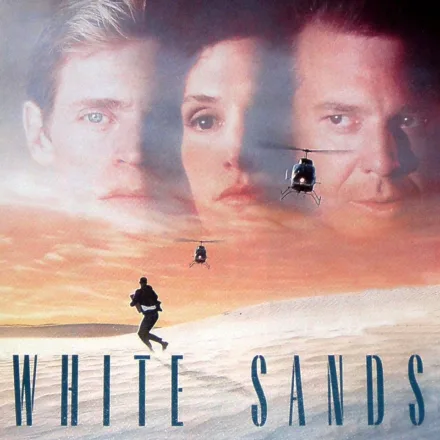
Battle Beyond the Stars (1980)
Shared: Father Malone, Chris Stachiw
Allan Holzman, Father Malone, Chris Stachiw
Comments
No comments yet.