
Special Report
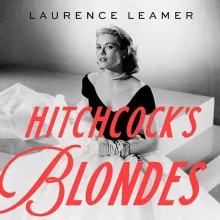
Hitchcock's Blondes
Show notes
Perfect for the holidays, pick up a copy at your local bookstore or https://amzn.to/3FnsYEa (opens in a new tab)
Transcript
An automatic transcript, tidied into paragraphs. It has not been proofread, so names, titles and spellings may be wrong, and it does not say who is speaking.
Show the transcript (about 2,600 words)
Speaker 1: Hold your ears, folks. It's showtime.
Speaker 2: People pay good money to see this movie. When they go out to a theater, they want cold sodas, hot popcorn and no monsters in the projection booth.
Speaker 3: Everyone pretend podcasting isn't boring. MIKE WHITE: Turn it off. Hey, folks, welcome to a special episode of the projection booth. I'm your host, Mike White.
On this episode, I'm talking with Lawrence Lamer about his latest book, Hitchcock's Blondes. It's a look at the blonde actresses that worked with the master of suspense and the trials they underwent. The book is now available where finer books are sold. Thank you so much for listening and I hope you enjoyed the interview.
Tell me a little bit about you and how you got involved in writing. LAURENCE LEAMER: I was in the Peace Corps in Nepal. I came back, I was a graduate student at the University Of Oregon and I hated it. I took a course in magazine writing just as a fluke talked my way into George Wallace's plane.
It was his first visit to the North running. As a spent a week with him on the plane, submitted an article just not, not knowing anybody or anything. To the New Republic, they printed it. That's in like, wow, that was so much more exciting than studying when I was studying, which is international development.
So I got a fellowship to the Columbia University School Of Journalism. I got three job offers, Wall Street Journal, the Washington Post and Newsweek. I superly chose Newsweek, which was, which was a disaster and I was fired. Well, I started out and I started writing and I wrote books.
I had a some very lean years, just terribly lean years. Yeah, I just, I was persistent and eventually began to work out. MIKE WHITE: You run the gamut when it comes to subjects. Can you tell me how you choose what you're gonna write about or does what you write about, choose you.
LAURENCE LEAMER: I'm stupid. A smart person would choose some genre and just keep like John Grisham and just keep doing the same, not the same books, not fair to him. But so this, so he builds an audience. I don't do that.
My books are so different and each time I have to build a new audience. But hey, it's more exciting for me, it's more fun. It's like living all these different lives. I've written 19 books and I feel I've lived, I haven't lived one life.
I've lived 20 lives. Only one of mine is in my body. MIKE WHITE: Why Hitchcock's Blondes? How did this one come to you?
LAURENCE LEAMER: That one was my editor's idea. And I looked into it and I thought this is gonna be great. These women Hitchcock early on realized women were the key to his success in the theaters. Most of the audience was largely women and even the men were often brought there by their wives or lovers, right?
So he had to do, he had to do films that pleased women and women buy both books. So a book about women focused on women is probably gonna do pretty well. Plus the women are fascinating. Far more past fascinating when I got in it than I realized people think.
Oh, I'm an actress. She's there a role on this, on the film. Other than that, she's not so interesting, not true. Each one of these women is fascinating.
MIKE WHITE: Since you deal with so many different subjects and so many different areas of interest. What's your way of doing your research? Because I imagine you have to go to different sources each time. LAURENCE LEAMER: Yeah.
And I love that. I love the journey of exploring and I say it's like, look, it just like picking up cigarette butts. Ok? Every little story.
That's what it builds, get enough cigarette butts and you put it in every detail that Tom Wolf, he was a master of this, choosing the right detail. So I worked very hard to get those details and then it really begins to build, but you gotta get those and you gotta do the research and you gotta be lucky, you gotta be lucky in what you get. MIKE WHITE: So, how did you go about researching Hitchcock's Blondes. LAURENCE LEAMER: Look, most of the people want to interview were dead.
Ok. I interviewed, Kim Novak and E Marie Saint and they were both terrific when I talked to Eva Marie Saint. I just, how do you reach her brilliant technique? I just found her phone number on the internet and called her and she picked up the phone, her publicist wasn't too happy.
I did that. But there's nothing illegal about that. She lives for, she's 99 years old now and she lives in an apartment in Wiltshire Boulevard. And her daughter was quite upset that I was gonna write that because she thought it would seem that I, she wasn't a good daughter because her mother was living by herself in an apartment when I'm 99.
If I'm living by myself in an apartment, it's not gonna be because my daughter doesn't love me. It's because it's so much better to live by yourself. No. And Kim Novak struggled with mental disease her entire life with manic depression, po polar polar disease.
And she was a good interview, but she has, she's had the courage to talk honestly about this. MIKE WHITE: Yeah. It's not necessarily the most savory subject the way that Hitchcock treated people and especially women. LAURENCE LEAMER: No, he didn't treat them very well.
He didn't treat them well, very well at all. He wanted to run them through the gamut of pain in the end they came out. Ok. But in each film that's what he wants to do.
And the other thing that's interesting is he early on said if he, if he didn't marry Alma, the wonderful wife who devoted herself to him for 50 years, I might have become a puff. His words are gay. Right? And of his films, all the gay characters are evil.
Every, every single one of them you can't have one decent gay. MIKE WHITE: Character by 2023 standards. It's a little politically incorrect, but definitely at the time, that was the way you coded. LAURENCE LEAMER: Oh, yeah.
Look, Lincoln wanted to send the blacks back to Africa. That wasn't exactly political. I got it correct now too. But that was the time, right?
And he then he turned around and saved the sla slaves, the breed the slaves. MIKE WHITE: So what were the, some of the more interesting things that you found when you were putting together Hitchcock's plans? LAURENCE LEAMER: One thing I found particularly interesting was with Grace Kelly. Some people have accused me of writing too much about sex.
I don't write too much about sex. It's, these lives are full of sex was astounded. I wish there was as much sex in my life as it was in, is in their lives. But it's just amazing.
Grace Kelly slept with everybody. Ok. You, she slept. Hitchcock was in love with her and he was so angry with it.
She even slept with the screenwriter even I think nobody would sleep with the sleep with a screen write. But she slept with them. And, but in the end, and she became a great actress and you saw a country girl. She's magnificent in that.
And if she had gone on, she would have been, she could have become one of the great actresses in the 20th century. But then this a bizarre thing happens where she meets Prince Rainier. She's in Khan and he's late for their meeting and she only spends a half hour with him and they're starting a correspondence. And six months later he comes in, he's looking for a bride where if he doesn't get married now, male heir Monaco is gonna become a part of France.
Ok. So he's, he wants to get married and he comes to her house on Christmas Eve and her parents up to that point were despise all the young men that she would bring to the house. But Prince veneer, they were Irish Americans and boy, they have Prince Van. It was something there.
So in the late in the evening, Prince Rene and race go back in one of the back rooms and have sex. He just, this is the first time they're having time together and her parents are perfectly happy with that and they don't even meet, they hardly meet and three or four days later she's gonna marry the guy. He marries and she says what the hell she's doing. And she goes inside this palace and hardly ever leaves.
MIKE WHITE: And it seemed like for years it was all about trying to get her out of retirement and back onto the silver screen. LAURENCE LEAMER: Yeah. And Ro didn't want her to do. They blamed the people.
Monaco didn't want her to go. No, he wanted to have her in his grasp. MIKE WHITE: I appreciate that. You go all the way back to the earliest days with the Lodger and 39 steps and just really take us through his whole career with all of these different blondes that he has.
The Lodger. LAURENCE LEAMER: If you go on prime video and plug in Hitchcock, there are over 40 of his films. Imagine over 40 if you could watch today for pleasure. And one of those films is The Lodger was a scion film for 1927 and it is a magnificent film.
When you watch it after a while, you don't even think of it. So like you feel that people are talking and he uses these innovative shots and that and the acting is just great. So it's a wonderful film. MIKE WHITE: How do you know when you're doing your research that you have done enough?
How do you say I really need to stop doing this part and concentrate more on the writing and the editing. LAURENCE LEAMER: When things get redundant? Ok. Well, you're just hearing the same thing over and over again.
MIKE WHITE: And Yeah, it must be tough with all of these older subjects. The only other person I can think of that's still around is Tippy Hedron. And I'm sure she's talked about this so much. LAURENCE LEAMER: She has been, she's not doing any more interviews.
She's in her early nineties. MIKE WHITE: That's one of the worst things that I have read and just the experience of being attacked by all those birds over. And would you say five days she was doing there? LAURENCE LEAMER: Five days?
Ok. It was terrible. But that's Hitchcock. He's such a perfectionist to him.
Actors are just these statues that you have to move around the stage, right? And it is so hurtful. He didn't care. He did it for five days and the fifth day, imagine taking the same shots in the film where she goes upstairs and she opens the closet door and all the birds go out.
It's maybe two minutes in the film maximum. Ok. So he films it for five days and at the fifth day, he still doesn't have what he wants. And they put the, they attach the some of the birds to her or to her wrists and they attack her face and they could have came very close to putting out her eyes.
MIKE WHITE: What was the most surprising thing that you discovered when you were putting this together? LAURENCE LEAMER: I guess it's not just surprising, but I have such appreciation of what this man did. I mean, he didn't think he was doing masterpieces. He worked in the commercial center of film.
Ok. And he never tried to do Lawrence Of Arabia or on the waterfront. He never tried to do anything outside the genre that he did, which is these dark ironic films. That's what he knew.
That was his soul and that's what he did. And he did it all the time. He just one after the other and worked so hard. I think it's the way that he wouldn't be depressed.
He always had to work. So whatever the family was doing, he was preparing the next one with the same detail. MIKE WHITE: When did you. LAURENCE LEAMER: Actually write the book?
I finished it maybe a year ago. It takes a year to be published. MIKE WHITE: So, are you doing this during the pandemic? Was this your one of your pandemic projects?
LAURENCE LEAMER: Yeah, this is my pandemic book. So the pandemic pandemic didn't bother me because what do I do? I'm by myself in the house working. So I did the same thing.
The pandemic is over, but I couldn't travel as much as I would like to. And I had researched, I was likely to have researchers. MIKE WHITE: What do you think has been the most research you've had to do for a project? LAURENCE LEAMER: I spent five years writing the Kennedy Women and it's 900 page book and it was the number two Night New York Times best seller.
If it were published. Now that, that long, I don't think it would have been that successful. MIKE WHITE: So, what's next for you? I'm sure you always have to have something like Hitchcock, something else brewing and that you're looking forward to.
LAURENCE LEAMER: Yeah, I got, I guess being depressed too. Warhol's muses. Andy Warhol. And I have the most amazing new research on this and my life in my life.
I've never had the kind of research I have for this, which I think will change the way we view Andy or? MIKE WHITE: Oh, that's fantastic. I can't wait to read it first. LAURENCE LEAMER: You gotta reach Hiscox blondes.
MIKE WHITE: I have, I wouldn't talk to you if I hadn't. LAURENCE LEAMER: I know, I know. Believe, believe me, some, some of your colleagues would let me tell you. MIKE WHITE: The general public out there who's listening to us now needs to read Hitchcock's.
LAURENCE LEAMER: Yes, they should do. They should do. MIKE WHITE: Is there a good place for people to keep up with you and all of your work? LAURENCE LEAMER: I guess Lamer dot com is our website le am E I dot com.
That's it. MIKE WHITE: Thank you so much for your time today. This was great talking with you. LAURENCE LEAMER: It was great fun.
It was the doctor Andrew. It was just like gave that conversation. MIKE WHITE: I hope we can do it again sometime. I'd love to talk to you about Warhol.
LAURENCE LEAMER: Oh, I'll be there. Ok. Thank you. MIKE WHITE: All right.
Thank you so much. You have a good rest of your day. LAURENCE LEAMER: Ok. Ok.
Hi there.
Comments
No comments yet.